Rankings
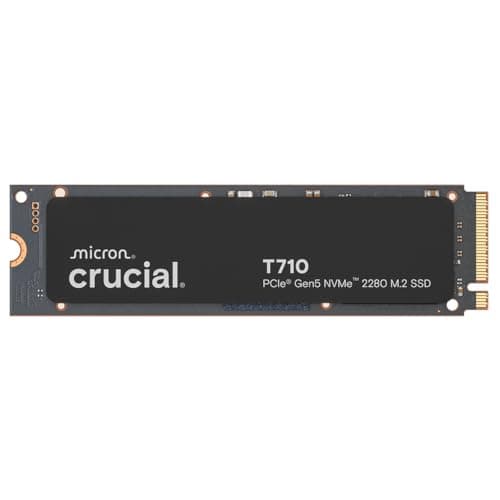
The Crucial T710 4TB PCIe Gen5 SSD provides record-breaking sequential speeds around 14.5 GB/s and high random IOPS while consuming ~25 % less power. It requires a Gen5 slot and may need a heatsink for sustained loads. Perfect for gamers and creators with Gen5 platforms demanding top performance.
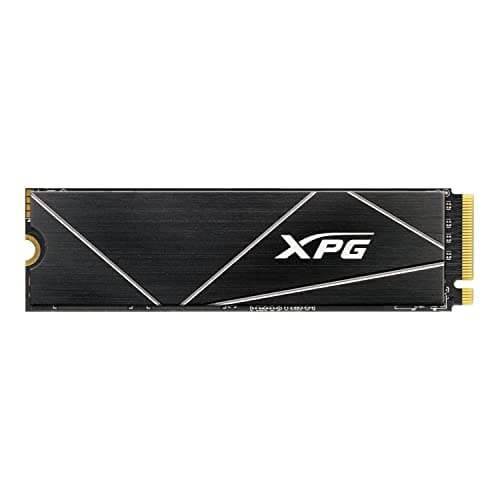
The XPG GAMMIX S70 Blade is a high-performance PCIe Gen4 M.2 SSD delivering top-tier sequential speeds and strong endurance. Its power draw and possible thermal throttling require good cooling, especially in compact builds. Ideal for gamers and creators who need fast load times and large capacity on a PCIe 4.0 platform.
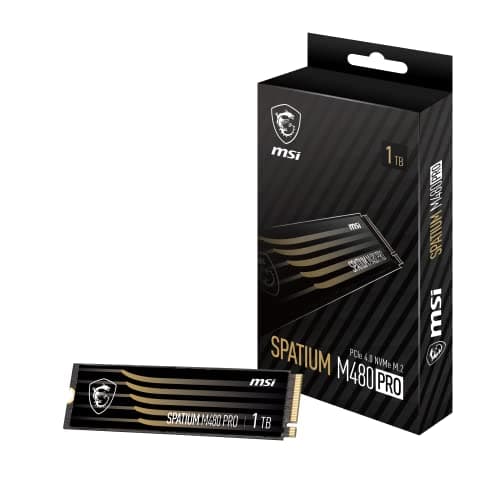
The MSI SPATIUM M480 PRO 1TB is a high-performance PCIe 4.0 NVMe SSD offering up to 7400 MB/s reads and strong random I/O, aimed at gamers and creators. Its drawbacks include real-world speeds that may not hit advertised peaks and a relatively high power draw. Ideal for users with modern Gen4 platforms who need top speed and data-security features.
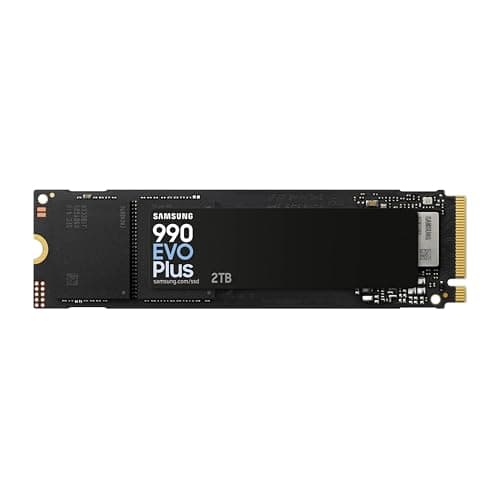
The Samsung 990 EVO Plus 2TB is a DRAM-less NVMe SSD delivering up to 7,250 MB/s read and 6,300 MB/s write speeds with excellent power efficiency. Its reliance on Host Memory Buffer may limit sustained heavy-write performance once the TurboWrite cache is exhausted. Best for laptop owners and gamers who prioritize speed and low heat over continuous write workloads.
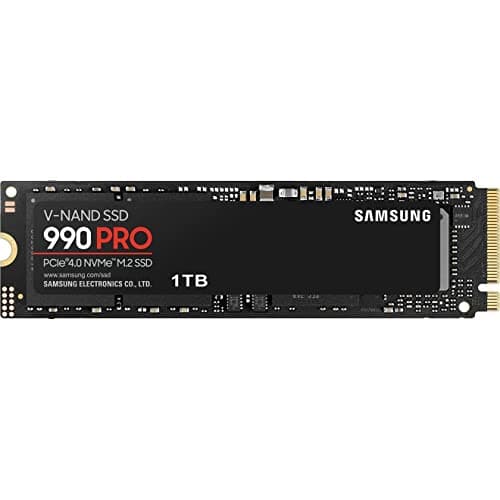
The Samsung 990 PRO 1TB is a high-performance PCIe 4.0 NVMe SSD delivering up to 7,450 MB/s read and 6,900 MB/s write speeds with strong security features. Its heatsink-less design and limited pSLC cache can limit sustained heavy workloads. Best suited for gamers, content creators, and professionals who need maximum PCIe 4 throughput on desktops or laptops with adequate cooling.
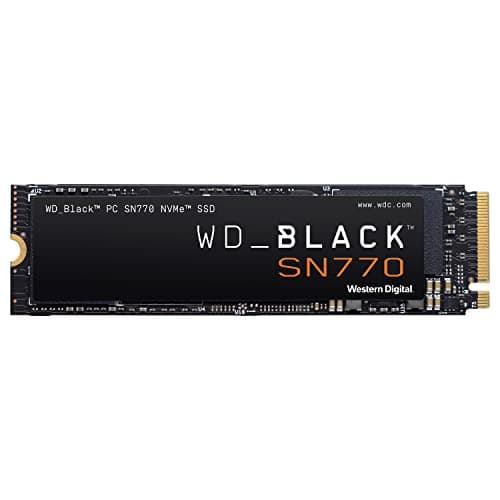
The WD_BLACK SN770 2TB is a DRAM-less PCIe Gen4 SSD delivering up to 5150 MB/s reads and 4850 MB/s writes with a robust 1200 TBW endurance. Its budget-friendly price and low power draw come at the cost of no onboard DRAM and no included heatsink, which can limit sustained performance under heavy loads. Ideal for gamers and mainstream builders seeking fast sequential performance without the premium price.
The Crucial P310 2TB M.2 SSD offers flagship-class PCIe Gen4 speeds of up to 7,100 MB/s read and 6,000 MB/s write in a budget-friendly, single-sided package. Its QLC NAND limits endurance and performance falls after the cache is exhausted. Suited for gamers and laptop upgraders seeking high speed at low cost.
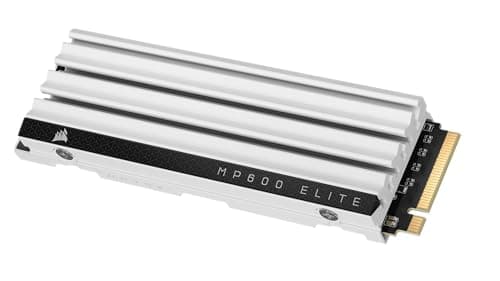
The Corsair MP600 Elite 2TB is a budget-oriented PCIe 4.0 NVMe SSD delivering up to 7,000 MB/s read and 6,500 MB/s write speeds with AES-256 encryption and a low-profile heatsink. Its DRAM-less design and limited cache reduce sustained write performance compared to higher-end models. Ideal for gamers and laptop users who want solid PCIe 4.0 performance without a premium price tag.
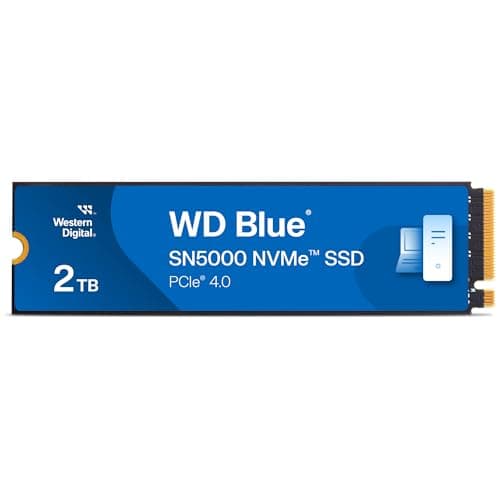
The WD Blue SN5000 2TB is a DRAM-less PCIe Gen4 SSD with up to 5150 MB/s reads, a large >300 GB pSLC cache, and 900 TBW endurance for creative workloads. While it offers strong performance, the lack of DRAM can affect random I/O and real-world speeds may fall short of advertised peaks. Suited for creators and professionals needing high sequential throughput on a PCIe Gen4 platform.
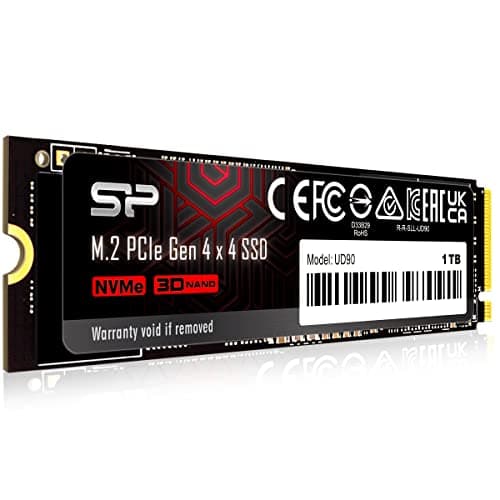
The Silicon Power UD90 1TB is a PCIe 4.0 NVMe SSD achieving up to 5,000 MB/s read and 4,800 MB/s write with a large 69 GB SLC cache. Write performance throttles once the cache is exhausted and the drive lacks DRAM and hardware encryption. Targeted at gamers and creators seeking high speed on a budget.
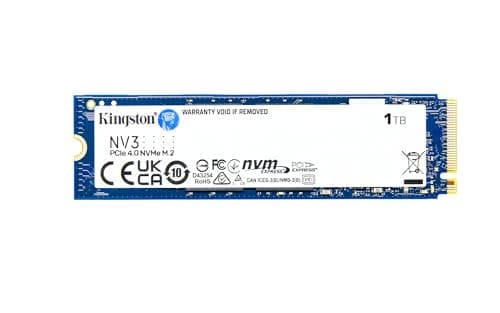
The Kingston NV3 1TB is a budget-oriented PCIe 4.0 NVMe SSD delivering up to 6,000 MB/s read and 4,000 MB/s write in a tiny single-sided M.2 2280 package. Its DRAM-less design leads to inconsistent random performance and occasional throttling under heavy loads. It is ideal for gamers and creators who need high sequential speeds without the premium price.
| Attribute | | | | | | | | | | | |
|---|---|---|---|---|---|---|---|---|---|---|---|
1,024 GB | 2,048 GBbest | 2,000 GB | 1 GB | 1,024 GB | 2,000 GB | 1 GB | 2,000 GB | 4 GB | 2 GB | 1,000 GB | |
7,400 MB/s | 7,250 MB/s | 5,150 MB/s | 7,400 MB/s | 7,450 MB/s | 7,000 MB/s | 6,000 MB/s | 5,150 MB/s | 14,900 MB/sbest | 7,100 MB/s | 5,000 MB/s | |
6,800 MB/s | 6,300 MB/s | 4,850 MB/s | 6,000 MB/s | 6,900 MB/s | 6,500 MB/s | 4,000 MB/s | 4,875 MB/s | 13,800 MB/sbest | 6,000 MB/s | 4,800 MB/s | |
750,000 IOPS | 1,000,000 IOPS | 650,000 IOPS | 750,000 IOPS | 1,200,000 IOPS | 1,000,000 IOPS | — | 730,000 IOPS | 2,200,000 IOPSbest | 1,000,000 IOPS | — | |
750,000 IOPS | 1,350,000 IOPS | 800,000 IOPS | 1,000,000 IOPS | 1,550,000 IOPS | 1,200,000 IOPS | — | 770,000 IOPS | 2,300,000 IOPSbest | 1,200,000 IOPS | — | |
740 TB | 1,200 TB | 1,200 TB | 700 TB | 600 TB | 1,200 TB | 320 TB | 900 TB | 2,400 TBbest | 440 TB | 600 TB | |
2,000,000 hoursbest | 1,500,000 hours | — | 1,825,000 hours | 1,500,000 hours | — | 2,000,000 hoursbest | — | 1,500,000 hours | — | 1,500,000 hours | |
— | — | 0 MB | 1,024 MBbest | 1,024 MBbest | — | 0 MB | 0 MB | 1,024 MBbest | 0 MB | 0 MB |
Click an attribute name to sort · Green = best, red = worst (relative to this comparison)
| Attribute | | | | | | | | | | | |
|---|---|---|---|---|---|---|---|---|---|---|---|
Connectivity(1) | |||||||||||
Interface | PCIe Gen4 x4 | PCIe 4.0 x4 | PCIe Gen4 x4 NVMe 1.4 | PCIe 4.0 x4 NVMe | PCIe 4.0 x4 | PCIe Gen4 x4 | PCIe 4.0 x4 NVMe | PCIe Gen4 x4 NVMe 1.4 | PCIe Gen5 x4 | PCIe Gen4 x4 | PCIe 4.0 x4 |
Performance(5) | |||||||||||
Sequential Read Speed (MB/s) | 7400 MB/s | 7250 MB/s | 5150 MB/s | 7400 MB/s | 7450 MB/s | 7000 MB/s | 6000 MB/s | 5150 MB/s | 14900 MB/s | 7100 MB/s | 5000 MB/s |
Sequential Write Speed (MB/s) | 6800 MB/s | 6300 MB/s | 4850 MB/s | 6000 MB/s | 6900 MB/s | 6500 MB/s | 4000 MB/s | 4875 MB/s | 13800 MB/s | 6000 MB/s | 4800 MB/s |
Random Read IOPS (4K) (IOPS) | 750000 IOPS | 1000000 IOPS | 650000 IOPS | 750000 IOPS | 1200000 IOPS | 1000000 IOPS | — | 730000 IOPS | 2200000 IOPS | 1000000 IOPS | — |
Random Write IOPS (4K) (IOPS) | 750000 IOPS | 1350000 IOPS | 800000 IOPS | 1000000 IOPS | 1550000 IOPS | 1200000 IOPS | — | 770000 IOPS | 2300000 IOPS | 1200000 IOPS | — |
DRAM Cache (MB) | — | — | 0 MB | 1024 MB | 1024 MB | — | 0 MB | 0 MB | 1024 MB | 0 MB | 0 MB |
Storage(2) | |||||||||||
Storage Capacity (GB) | 1024 GB | 2048 GB | 2000 GB | 1 GB | 1024 GB | 2000 GB | 1 GB | 2000 GB | 4 GB | 2 GB | 1000 GB |
NAND Type | TLC | TLC | TLC | 3D NAND | TLC | 3D TLC | — | TLC | TLC | QLC | 3D TLC |
Features(1) | |||||||||||
Hardware Encryption | true | true | — | true | true | true | — | — | true | — | false |
General(1) | |||||||||||
Warranty (years) | 5 years | 5 years | 5 years | 3 years | 5 years | 5 years | 3 years | 5 years | 5 years | 5 years | 5 years |
Reliability(3) | |||||||||||
Total Bytes Written (Endurance) (TB) | 740 TB | 1200 TB | 1200 TB | 700 TB | 600 TB | 1200 TB | 320 TB | 900 TB | 2400 TB | 440 TB | 600 TB |
Mean Time Between Failures (hours) | 2000000 hours | 1500000 hours | — | 1825000 hours | 1500000 hours | — | 2000000 hours | — | 1500000 hours | — | 1500000 hours |
Operating Temperature (°C) | — | 0-70 °C | — | — | 0-70 °C | 65 °C | — | — | — | — | — |
Power & Reliability(2) | |||||||||||
Active Power Consumption (W) | — | 4.6 W | — | 9.5 W | — | — | — | — | — | — | — |
Idle Power Consumption (W) | — | 0.06 W | 0.0033 W | 0.04 W | 0.05 W | 0.005 W | — | — | — | — | — |
Design & Build(3) | |||||||||||
Form Factor | M.2 2280 | M.2 2280 | M.2 2280 | M.2 2280 | M.2 2280 | M.2 2280 | Single-sided M.2 2280 | M.2 2280 | M.2 2280 | M.2 2280 | M.2 2280/2230 |
Weight (g) | 7 g | 9 g | 5.5 g | 1 g | 9.1 g | 30 g | 6.57 g | 5.70 g | 7.3 g | 9.92 g | 8 g |
Dimensions (L×W×H) (mm) | 80x22x3.3 mm | 81.3×22.9×2.5 mm mm | 80x22x2.4 mm mm | 22x2.15x80 mm mm | 80.3×22.1×2.3 mm mm | 10.6x24.1x80.4 mm mm | 0.1496x0.8861x3.1496 inches mm | 129.5x101.6x20.3 mm mm | 80x22x2.3 mm | 80x21.8x2.3 mm | 80.01×22.10×3.56 mm mm |
Products in the top-left offer the best value (high score, low price).
Professional reviewers commend the S70 Blade for its blistering sequential performance, solid endurance, and cost-effective pricing, while noting that sustained write speeds can dip after the cache is filled and that adequate cooling is essential to avoid throttling.
Consumers consistently praise the drive's rapid boot and game load times, quiet operation, and straightforward PS5 installation, but they also report occasional thermal throttling in poorly ventilated cases, higher heat during long writes, and the need for firmware updates on older systems.
“Fast game loading and smooth performance in PCs/PlayStation 5”
“"low-power PCIe Gen 5 speed demon" - Professional reviewer (unspecified)”
“"modern Gen5 SSD" - ThePCEnthusiast”
Choose Samsung for maximum random performance and premium support; choose XPG for better value and higher endurance.
Professional reviewers praise the 990 EVO Plus for its impressive sequential performance, excellent power efficiency, and thermal management, noting that the nickel-coated controller and TurboWrite 2.0 keep temperatures low. However, they caution that the lack of DRAM can hurt sustained heavy-write workloads once the SLC cache is used up.
Everyday users appreciate the easy installation, cool operation without throttling, and fast boot and file-transfer speeds, especially on laptops. The most common complaint among consumers is the potential slowdown during prolonged heavy write tasks due to the DRAM-less design.
Professional reviewers regard the WD_BLACK SN770 as a compelling budget-friendly PCIe Gen4 SSD that punches above its weight class, delivering flagship-like sequential speeds and solid endurance while keeping costs low. They commend its value, fast load times, and low power draw, but warn that the DRAM-less design and lack of a heatsink could limit sustained performance in demanding scenarios.
General users praise the drive for its rapid game loading, smooth everyday performance, and easy installation, seeing it as a solid value for a 2 TB capacity. Recurring concerns revolve around thermal throttling without a heatsink and occasional slowdowns during long write operations, especially for those expecting flagship-level consistency.
Professional reviewers consider the MSI SPATIUM M480 PRO one of the fastest Gen4 SSDs, praising its high sequential and random performance while noting that real-world speeds fall short of the advertised peaks and that the 1 TB model's write speed is limited. They also highlight its strong endurance, five-year warranty, and comprehensive data-security features.
Everyday users have limited feedback available, but the few retail mentions emphasize the drive's "incredible speed" and easy installation, while the lack of extensive reviews leaves some uncertainty about real-world performance consistency.
Professional reviewers commend the 990 PRO for its exceptional speed, gaming-optimized random performance, and strong reliability, while noting the smaller DRAM cache and lack of a heatsink as potential drawbacks under heavy sustained loads.
Everyday users praise the drive's blazing speed and security, but note concerns about the smaller DRAM cache and possible throttling without a heatsink.
Professional reviewers commend the MP600 Elite for delivering strong sequential speeds and impressive endurance at a budget price, while praising its low power draw and solid warranty. However, they caution that the limited 50 GB cache and DRAM-less design lead to a sharp drop in sustained write performance, making it less suitable for workloads that require continuous high-speed writes.
Professional reviewers consider the Kingston NV3 a solid, affordable SSD that delivers the advertised 6,000/4,000 MB/s sequential speeds and low power consumption, but they caution that its DRAM-less design and batch-to-batch controller variations can lead to inconsistent performance, especially in random I/O workloads, keeping it a step below premium PCIe 4.0 offerings.
Everyday users generally appreciate the noticeable speed boost for booting and gaming, the straightforward M.2 installation, and the attractive price for a 1 TB PCIe 4.0 drive, while recurring complaints focus on occasional batch-related performance dips and minor throttling due to the lack of DRAM.
Professional reviewers consider the WD Blue SN5000 a solid mid-tier PCIe Gen4 SSD, highlighting its strong sustained mixed I/O performance, large pSLC cache, and reliable Polaris 3 controller. While they note the DRAM-less design can affect random workloads and that real-world sequential benchmarks fall slightly below the advertised maximum, they appreciate the inclusion of migration software and the 5-year warranty for creative professionals.
Professional reviewers commend the T710 as a low-power, high-performance Gen5 SSD that leverages Micron's efficient TLC NAND and a 6nm SM2508 controller to deliver record sequential speeds while staying cooler than rivals. They appreciate its DirectStorage focus and value proposition, but warn that without a Gen5 slot or adequate cooling the drive cannot realize its full potential.
Everyday users praise the SSD for noticeably faster game loads, quick file moves, and straightforward installation, especially noting its low heat output in laptops. The main frustrations revolve around the need for a heatsink in sustained desktop use and the inability to hit top speeds on older PCIe platforms.
Professional reviewers commend the Crucial P310 for delivering flagship-class sequential speeds at a budget price, emphasizing its power-efficient single-sided design and the novelty of a 2 TB 2230 form factor. However, they also warn that the QLC NAND limits endurance and that sustained write performance suffers after the pSLC cache is used up, making it less suitable for heavy write workloads.
Everyday users are enthusiastic about the drive's fast boot times and file transfer speeds, describing it as "blazing fast" and a great value. The main pain points revolve around warranty handling and the performance dip after the cache is depleted, but overall sentiment remains positive for typical consumer use.
Professional reviewers consider the UD90 an excellent value proposition for PCIe Gen4x4, applauding its TLC NAND, high sequential speeds and efficient DRAM-less design, while noting the inevitable write throttling once the SLC cache is exhausted and the modest performance of the 2230 variant for demanding workloads.
Everyday users appreciate the fast boot and game load times, low power draw and the large SLC cache that handles typical multitasking well, but they frequently complain about noticeable write speed drops after the cache fills, higher temperatures without a heatsink, and lower random I/O performance compared to higher-end drives.
