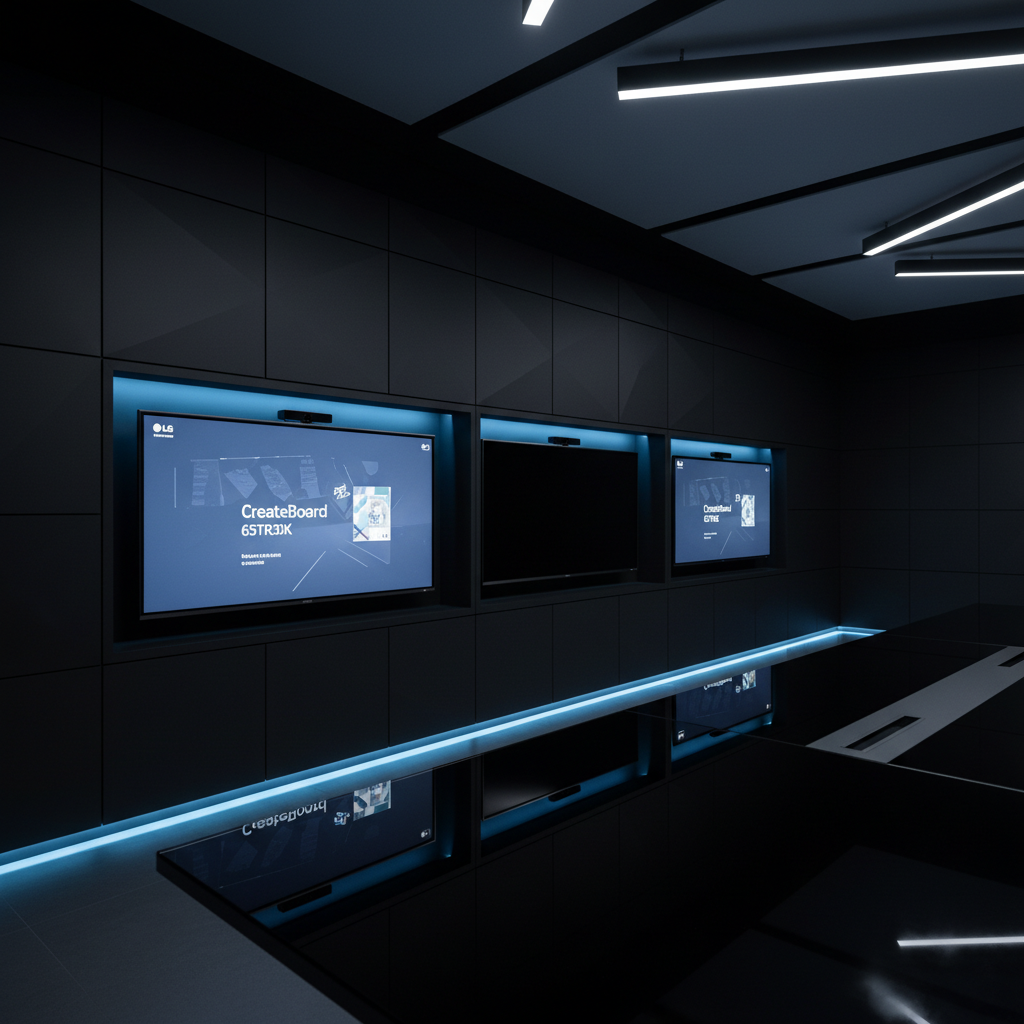
💚 Best Value
LG CreateBoard 65TR3DK 65-inch
$1,529.00
A comparison of 14 large‑format commercial LED displays reveals a surprising fact: the budget‑tier Samsung QB65R, priced at $1549.02, carries the same 4.0‑star rating as the pricier mid‑range Samsung QB75N‑W, listed at $1599.95. It’s rare for a lower‑cost model to match the rating of a higher‑priced sibling, especially since the QB75N‑W also features 350 cd/m² typical brightness and a robust 10W + 10W speaker setup.
The roundup spans three price tiers. Budget options include the LG CreateBoard 65TR3DK at $1445.00 and the Samsung QB65R. The mid‑range slot is held by the Samsung QB75N‑W, while premium choices feature the Samsung QB75R at $2634.21 and the Rixzsiw 80‑inch model at $2999.00. Each tier offers a mix of connectivity—HDMI, USB, Ethernet—and built‑in audio, letting you match performance to your venue’s needs.
The following breakdown covers each display’s strengths, connectivity, and ideal use cases, helping you pinpoint the right screen for your commercial space.
Samsung QB75N-W
It features dual 10 W down‑firing speakers (bass‑reflex) and a dedicated DisplayPort, balancing audio power and connectivity for most commercial settings.
Samsung QB75R 75-inch
Ideal for premium‑quality venues that need top‑tier visuals; at $2634.21 it sits about $1,034 higher than the Best Overall model.
LG CreateBoard 65TR3DK 65-inch
Stands out with two included writing pens and front‑facing 30 W speakers, delivering interactive collaboration at a lower price point.
Also considered
Score Analysis
Key score advantages vs. runner-up (Samsung QB75R 75-inch)
Price Range
Samsung QB75N-W
$3,284.98
Samsung QB75R 75-inch
$1,689.23
LG CreateBoard 65TR3DK 65-inch
$1,529.00
Samsung QB65R
$1,089.99

Panasonic TH-65CQE1WA
-$0.01

NEC E556
$1,304.57
Rixzsiw 80-inch LED Display
$2,999.00

NEC M551
$2,179.00

NEC V864Q-AVT2
$2,915.56
Panasonic TH-75EQ2W
$3,888.00
Qixzocv LED Digital Signage
$2,999.00
NEC E705-AVT
$3,493.00
Generic 90-inch LED Signage Display
$3,499.00

NEC C860Q
$1,549.50
Spec Comparison
TL;DR: Samsung’s QB75N‑W delivers a 75‑inch 4K UHD LED screen with 0.42975 mm pixel pitch, built‑in 10 W + 10 W speakers and IR touch, all in a commercial‑grade, all‑in‑one package.
The QB75N‑W packs a 75‑inch 4K UHD panel with a 0.42975 mm pixel pitch, delivering crisp detail across its 1650.24 mm × 928.26 mm active area. Its 350‑nit typical brightness and 6000:1 native contrast ratio give vivid colors, while the 120 Hz refresh and 8 ms gray‑to‑gray response keep motion smooth. The IR touch layer supports four simultaneous points with a 7 ms response, and the built‑in 10 W + 10 W down‑firing speakers add stereo audio.
At 38 kg (about 84 lbs) the unit is far lighter than the NEC C860Q, which tips the scales at 137.6 pounds, yet matches the weight of Samsung’s QB65R and QB75R, both listed at 1.0 pound in the spec sheet. Its three HDMI 2.0 inputs outnumber the two HDMI ports on the QB65R and QB75R, giving more connectivity options. The built‑in speakers deliver a combined 20 W output, equal to the NEC C860Q’s 2 × 10 W configuration but below the LG CreateBoard’s 30 W total.
Customers repeatedly note the clear 4K visuals and the convenience of an all‑in‑one design that eliminates a separate media player. Professional reviewers highlight the solid 16‑hour daily duty cycle and the responsive IR touch, though they point out the 16.2 mm bezel as relatively thick compared with newer models. In practice, some users report occasional lag when running demanding web apps, attributing it to the 3 GB of RAM, and the 350‑nit brightness can fall short in very bright retail environments.
The display runs on a Cortex‑A72 quad‑core CPU with 3 GB LPDDR4 RAM and an 8 GB internal storage, supporting the Tizen 3.0/4.0 OS and MagicInfo player for remote content management. Power draw stays modest at 157–159 W typical and under 0.5 W in sleep mode, fitting commercial energy budgets. With an IP5x dust‑resistant rating and a 16‑hour/7‑day duty cycle, it’s built for continuous use in conference rooms or classrooms.
Pros
Cons
Best for: Businesses needing a durable 4K digital signage or interactive display for conference rooms, classrooms, or lobbies.
Avoid if: Retail spaces with very bright lighting that require >500 nits brightness, users who prefer Android‑based platforms, or those who need a slimmer bezel.
TL;DR: The Samsung QB75R delivers a 75‑inch 4K UHD panel with a 0.429 mm pixel pitch, 350 nit brightness and a 3‑year onsite warranty, but its modest brightness and lack of built‑in speakers may limit bright‑room use.
The standout spec is the 75‑inch 4K UHD screen paired with a 0.429 mm pixel pitch, which gives the display crisp, detailed imagery across its 3840 × 2160 resolution. With a contrast ratio of 4000:1 and an 8 ms response time, fast motion stays smooth, and the 350 nit brightness meets typical indoor signage needs. The panel’s slim bezel measures just 9.2 mm, helping it blend into a wall or mount with minimal distraction.
At only 1.0 Pounds, the QB75R is dramatically lighter than the NEC E705‑AVT, which tips the scales at 104.0 Pounds, making wall‑mount installation far easier. Compared with the Samsung QB65R, which lists dual 10 W speakers, this model provides no built‑in audio, so you’ll need external speakers for sound. Connectivity is solid: two HDMI 2.0 ports, two USB 2.0 ports, Ethernet (RJ45), Bluetooth support and 802.11 b/g/n Wi‑Fi give you plenty of ways to feed content.
Professional reviewers praise the unit’s durability and its integration with Cisco Webex, noting that the Tizen 4.0 OS and on‑board media player simplify content management. Everyday users echo the sentiment, highlighting the striking 4K picture quality and straightforward mounting. However, several users mention that the 350 nit output can look washed out in direct sunlight, and some users have reported early firmware quirks in Tizen, so a firmware update may be advisable.
Pros
Cons
Best for: Those prioritizing quality and willing to pay for premium performance
Avoid if: You're on a tight budget, need high audio output without extra speakers, or plan to run the display in direct sunlight
“Gorgeous 4K picture”
“We use the QE75T outdoors 24/7 in a shelter—it’s exposed to dust but keeps ticking.”
TL;DR: The LG CreateBoard 65TR3DK offers a 65‑inch 4K IPS display with 40‑point IR touch, Android 11, and built‑in 30 W speakers, all for a budget‑friendly $1445 price tag.
This model’s standout spec: a 65‑inch 4K UHD IPS panel delivering up to 440 nit maximum brightness and a 5000:1 dynamic contrast ratio. The 10‑bit (8 bit + FRC) color depth covers 72% NTSC, while the infrared touch layer registers 40 simultaneous points with a response time of ≤5 ms and an 8 ms gray‑to‑gray latency.
Compared with other large‑format options, the CreateBoard is considerably heavier than the Samsung QB65R, which weighs just 1.0 pound, and its 87.2 mm depth exceeds the QB65R’s 46.3 mm profile. It also outpaces the QB65R’s audio output, offering 2 × 15 W (total 30 W) front‑facing speakers versus 2 × 10 W. Connectivity is richer too, with three HDMI 2.0 inputs and a USB‑C port, while the QB65R provides only two HDMI inputs and two USB 2.0 ports.
Professional reviewers note the Google‑certified Android 11 platform, which gives instant access to Google Workspace apps and the LG CreateBoard Share feature that supports up to nine simultaneous screen shares. Users appreciate the built‑in OPS slot for a compact mini‑PC, but they also mention the unit’s landscape‑only orientation and its 77.2 lb weight, which can make relocation a challenge in tight spaces.
Pros
Cons
Best for: Large‑format classrooms, university lecture halls, and corporate meeting rooms that need a collaborative 4K interactive display without breaking the bank.
Avoid if: You have limited desk space, need portability, or require portrait orientation for your content.
TL;DR: The Samsung QB65R's a 65‑inch 4K commercial LED display offering 10‑bit color, 92% DCI‑P3 coverage, built‑in Wi‑Fi/Bluetooth, and a 3‑year onsite warranty for reliable signage.
The QB65R’s 65‑inch 4K UHD panel uses a 0.372 mm pixel pitch and 10‑bit processing to render up to 1 billion colors, while its 92% DCI‑P3 color gamut keeps hues vivid. With a typical brightness of 350 cd/m² and a contrast ratio of 4000:1, the screen delivers crisp images in most indoor lighting.
At just 1.0 lb, the display is dramatically lighter than the NEC C860Q, which tips the scales at 137.6 pounds. Its depth of 46.3 mm also beats the 10.0‑inch depth of the Samsung QB75N‑W, making wall‑mounting a breeze. Speaker power matches the QB75N‑W’s 2 × 10 W stereo output, and brightness is on par with that model as well.
Users like the easy‑mount design, integrated Wi‑Fi and Bluetooth for remote content sharing, and the all‑in‑one SMART Signage Platform 6.0 with MagicINFO Player S6. Professional reviewers praise the strong color performance, but they note the 350 cd/m² brightness can fall short in very bright retail zones. The USB 2.0 ports and a 16‑hour‑per‑day, 7‑day‑a‑week duty cycle also limit use in 24/7 installations. The unit runs on a 1.7 GHz quad‑core processor, 2.5 GB RAM, and 8 GB storage, drawing 128 W typical power and only 0.5 W on standby, while meeting ENERGY STAR 7.0 and IP5X dust‑resistance standards.
Pros
Cons
Best for: Entry-level buyers or those on a tight budget
Avoid if: You want the best value-per-dollar in its price range
TL;DR: Panasonic’s 65‑inch TH‑65CQE1WA delivers 4K UHD visuals with 10‑bit color, 400 cd/m² brightness, 16 W stereo speakers, and extensive connectivity, making it a solid mid‑tier commercial display.
The standout feature is its 65‑inch 4K UHD panel that supports a 10‑bit color depth (≈1.07 billion colors) and a typical brightness of 400 cd/m². Its VA Direct‑LED backlight provides 178° viewing angles, and the built‑in stereo speakers deliver 2 × 8 W (total 16 W) of audio.
Compared with other units in this 14‑product roundup, the TH‑65CQE1WA is brighter than the NEC E556’s 350 cd/m² panel but falls short of the Panasonic TH‑75EQ2W’s 500 cd/m² and the Generic 90‑inch LED Signage’s 900 cd/m² maximum. Its 16 W speaker output is modest next to the NEC E556’s dual 10 W (20 W total) and the LG CreateBoard’s 30 W system. On the installation side, the 80 mm depth is slimmer than the TH‑75EQ2W’s 96 mm, helping it sit closer to walls.
Professional reviewers note the convenience of a single‑cable USB‑C connection for video, audio and data, as well as native Crestron, SNMP and PJLink support that streamlines AV‑team integration. Everyday users appreciate the built‑in Android browser and straightforward mounting, though many mention the remote feels basic and the Wi‑Fi limited to 802.11n, which can feel dated in modern networks.
Panasonic rates the display for roughly 50,000 hours of panel life; it consumes 201 W in normal operation, peaking at 224 W. Response times sit between 6.0 and 8.0 ms, and it's suitable for most commercial video content. Connectivity is extensive: four HDMI Type‑A ports, a USB‑C port, multiple USB‑A ports, LAN, RS‑232C, and an IR sensor with remote, all backed by HDCP 2.2 and other enterprise certifications.
Pros
Cons
Best for: Enterprises, schools, retail and hospitality venues that need a reliable 4K display for digital signage or meeting‑room use.
Avoid if: you need high brightness for direct sunlight or a portrait‑mode display.
TL;DR: The NEC E556 offers a 55‑inch Full HD LED display with 350 cd/m² brightness, 0.63 mm pixel pitch, built‑in ATSC/NTSC tuner and low standby power, making it a solid choice for 24/7 commercial signage.
The standout feature is the integrated ATSC/NTSC tuner, so you’ll receive broadcast content without an external receiver. Coupled with a USB multimedia player that handles video, audio and JPEG loops, the unit is ready for signage straight out of the box. Its 55‑inch screen delivers Full HD (1920 × 1080) on an S‑IPS panel, with a 0.63 mm pixel pitch and 350 cd/m² brightness.
Compared with peers, the E556’s brightness of 350 cd/m² falls short of the 500 cd/m² seen in the Panasonic TH‑75EQ2W and the 500 nits listed for the NEC V864Q‑AVT2. Its 0.63 mm pixel pitch is larger than the 0.49 mm pitch of the NEC V864Q‑AVT2, meaning the latter can render finer detail. Speaker power matches the dual 10 W setup of the NEC V864Q‑AVT2 and compares to the 20 W total output of the Panasonic TH‑75EQ2W, but it falls short of the 30 W total in the LG CreateBoard 65TR3DK. The E556 also weighs 15,600 g, making it heavier than many of the other models that list lighter builds.
Users appreciate the reliable 24/7 operation, the convenience of the built‑in tuner and the straightforward USB looping for ads or announcements. Professional reviewers note the wide 176° viewing angles and the energy‑efficient design, with standby power under 0.5 W and typical on‑mode consumption of 111 W. Common complaints focus on the lack of 4K resolution, the inability to mount in portrait mode, a basic remote control, and the substantial weight when installing in tight spaces.
Pros
Cons
Best for: Fixed‑mount commercial spaces such as corporate lobbies, conference rooms, schools or retail areas that need reliable 24/7 Full HD signage.
Avoid if: You need 4K resolution, portrait‑mode flexibility, or a lighter, premium‑aesthetic display.
“Easy setup for broadcast monitoring in schools and offices”
TL;DR: The Rixzsiw 80‑inch LED display offers a foldable, GOB‑protected screen with 1.86 mm pixel pitch, 650 nits brightness and integrated audio, but its low resolution and portrait‑only format limit high‑detail content.
What really sets this unit apart is the 1.86 mm pixel pitch combined with a massive 80‑inch diagonal. At 650 nits brightness and a 4000:1 contrast ratio, the screen delivers vivid images even in moderately lit venues. The built‑in 10 W dual speakers (8 Ω impedance) and 3.5 mm audio jack let you run sound directly from the display without extra gear.
Compared with peers, the Rixzsiw is lighter than the NEC E705‑AVT, which lists a weight of 104.0 Pounds, yet heavier than the Samsung QB75R that weighs just 1.0 Pound. Its pixel pitch matches the Qixzocv LED Digital Signage’s 1.86 mm, but the Rixzsiw’s total pixel count of ~355,000 is comparable to that model’s 355,000‑pixel specification. While the Samsung QB75R and NEC E705‑AVT both include dual 10 W speakers, the Rixzsiw’s 10 W (dual) output sits squarely in the same performance tier.
Professional reviewers praise the foldable frame and wheels for enabling setup in under 10 minutes, a major advantage for event rentals and pop‑up installations. Users echo this sentiment, noting the sturdy flight case and remote app control as conveniences. However, recurring complaints focus on the low native resolution of 344 × 1032 pixels, which translates to roughly 45 PPI and can appear pixelated for detailed graphics. Both experts and everyday users highlight the limitation that the portrait‑only 1:3 aspect ratio forces standard widescreen video to be reformatted.
Pros
Cons
Best for: Event rental firms, trade‑show exhibitors and pop‑up retailers who need a portable, durable LED screen with quick deployment.
Avoid if: You need a high‑resolution, landscape‑oriented display for permanent indoor installations or are on a tight budget — it’s priced at $2999.00.
“Perfect for weddings and pop‑up events—sets up in minutes.”
“Love the remote control via phone app—no need to touch the screen.”
TL;DR: The NEC M551 is a 55‑inch 4K UHD commercial LED‑backlit LCD with 500 cd/m² brightness, 8000:1 contrast and flexible portrait/landscape mounting, ideal for bright‑room signage and video‑wall use.
The standout spec is its native 4K UHD resolution on a 55‑inch panel, delivering crisp, detailed images that look vivid even from a distance. Coupled with a brightness of 500 cd/m² and a contrast ratio of 8000:1, the display maintains strong visual impact in well‑lit environments such as retail lobbies or corporate corridors. Professional reviewers also note the high‑haze anti‑reflection surface and local dimming, which together improve HDR performance and reduce glare.
When placed alongside the other 13 contenders, the M551’s brightness matches the Panasonic TH‑75EQ2’s 500 cd/m² but exceeds the NEC E556’s 350 cd/m² and the Panasonic TH‑65CQE1WA’s 400 cd/m². Its contrast ratio of 8000:1 dwarfs the 1200:1 contrast found in the Panasonic TH‑75EQ2, giving it a clear edge for high‑contrast signage. While the Generic 90‑inch LED sign offers a higher peak brightness of 900 cd/m², the M551 balances brightness with a more manageable bezel and a 55‑inch footprint suitable for tighter installations.
User feedback highlights the display’s reliable 24/7 operation and the ease of integrating it with media players like Raspberry Pi or Intel SDM. However, several reviewers point out a steep learning curve for the NaViSet Administrator 2 remote‑control protocol, and the power draw can reach up to 250 W in video‑wall configurations, which may raise operating‑cost concerns for continuous use.
Pros
Cons
Best for: High‑visibility digital signage, corporate meeting rooms, and 24/7 video‑wall installations where 4K clarity and robust brightness are essential.
“Sharp 4K image quality and vibrant colors”
“Easy integration into existing AV systems”
TL;DR: The NEC V864Q‑AVT2 delivers an 86‑inch 4K UHD display with 500 nits brightness, 1200:1 contrast and a 0.49 mm pixel pitch, making it a solid choice for demanding commercial signage.
The standout specification is its 86‑inch 4K UHD panel paired with a maximum brightness of 500 nits and a contrast ratio of 1200:1. Its 0.49 mm pixel pitch yields a crisp 51 ppi image, and the S‑IPS LCD provides 178° horizontal and vertical viewing angles. HDR support includes both HLG and PQ, and the built‑in 2 × 10 W speakers give a total of 20 W RMS audio output.
Compared with the other entries, the V864Q‑AVT2 matches the 500 nits brightness of the Panasonic TH‑75EQ2W while surpassing the NEC E556’s 350 cd/m² (≈350 nits). Its 1200:1 contrast is identical to the Panasonic model, but its bezel is slightly wider at 15.2 mm versus 14.9 mm. The display’s depth without stand (74.3 mm) is shallower than Panasonic’s 96 mm and 80 mm depths, easing wall‑mount installations. At 86 inches it dwarfs the NEC M551’s 55‑inch class, though it sits just under the generic 90‑inch signage option.
Professional reviewers praise the unit’s sturdy metal chassis, continuous‑operation cooling and the SpectraView Engine that handles color, gamma and uniformity. Users highlight the 500 nits brightness and wide viewing angles for bright lobbies and transport hubs. The main trade‑offs are the lack of a built‑in smart TV platform, a 60 Hz refresh rate that limits fast‑motion content, and a substantial weight of 57.79 kg (without stand), which can make installation more involved.
Pros
Cons
Best for: Enterprises that need a reliable, high‑brightness 86‑inch 4K display for 24/7 digital signage, corporate lobbies or transportation hubs.
Avoid if: You need a built‑in smart TV platform, high refresh rates for gaming or sports, or a lightweight consumer‑grade TV.
TL;DR: The Panasonic TH-75EQ2W offers a 74.5‑inch 4K IPS display with 500 cd/m² brightness, 20 W built‑in speakers and USB‑C power delivery up to ~60 W, making it a solid choice for bright commercial spaces.
The standout spec is the 500 cd/m² brightness combined with a 4K UHD IPS panel. At 74.5 inches diagonal, the screen delivers crisp detail and an 8.0 ms (G‑to‑G) response time at a 60 Hz refresh rate, while the anti‑glare surface (Haze 25%) keeps reflections low in well‑lit rooms.
Compared with peers, the TH‑75EQ2W is brighter than the NEC E556’s 350 cd/m² panel and matches the NEC V864Q‑AVT2’s 500‑nit rating. Its contrast ratio of 1200:1 aligns with the NEC V864Q‑AVT2 but falls short of the Generic 90‑inch display’s ≥5,000:1 claim. In size, it sits between the 65‑inch Panasonic TH‑65CQE1WA and the 86‑inch NEC V864Q‑AVT2, offering a larger footprint than the NEC M551’s 55‑inch class while staying more manageable than an 86‑inch unit. Speaker power (20 W total) equals the dual‑10 W setup on the NEC E556 but is lower than the LG CreateBoard’s 30 W total.
Professional reviewers highlight the bright anti‑glare panel and the convenience of USB‑C video, data and ~60 W power delivery in a single cable. Users appreciate the 18‑hour duty cycle, 0°‑20° tilt range and the 178° viewing angles that keep content legible from any side of a conference room. The main criticisms are the lack of HDR support, a modest 1200:1 contrast that can look washed out in dark scenes, and occasional fan noise in quiet environments. The unit also lacks a Kensington lock and a built‑in smart OS or tuner.
Pros
Cons
Best for: Corporate conference rooms, lobbies, training centers and retail displays where brightness, easy cabling and durable 4K performance are priorities.
Avoid if: You need HDR, a high‑contrast panel for cinema‑type content, or built‑in smart TV features.
“Easy to install and integrate”
“Bright and clear even in sunlight”
TL;DR: The Qixzocv 80‑inch LED signage offers a 1.86 mm pixel pitch and GOB‑protected, fold‑able construction, but its 86000 g weight and $2999.00 price place it in the premium tier.
The standout spec is the 1.86 mm pixel pitch, which delivers crisp imagery across the 16:9 panel. Combined with a total of 355000 pixels, the display promises a sharp visual impact for indoor advertising and event graphics.
At $2999.00, it sits above many peers such as the Samsung QB65R and NEC C860Q, and its item weight of 86000 g makes it heavier than the NEC C860Q’s listed 137.6 pounds and far heftier than the Samsung QB65R’s 1.0 pound. The price and mass mean you’ll likely need multiple hands or a trolley to move it, unlike the lighter, more portable Samsung models.
Reviewers consistently note the ease of setup thanks to the floor‑standing, foldable frame and remote CMS control, while praising the GOB (Glue on Board) process that shields the panel from dust, moisture and impact. The same users point out that the native resolution of 344 × 1032 can look pixelated when viewed up close, and the weight makes manual transport a chore.
Professional reviewers highlight the split‑screen functionality and timer switch as useful tools for dynamic content scheduling. With a 3‑year warranty and 178° horizontal and vertical viewing angles, the unit supports long‑term indoor use, letting a wide audience see the display clearly from almost any angle.
Pros
Cons
Best for: Those prioritizing quality and willing to pay for premium performance
Avoid if: You're shopping on a tight budget — it's priced at $2999.00
“grabs attention effortlessly”
TL;DR: The NEC E705-AVT is a 70‑inch, 0.8 mm pixel‑pitch commercial LED display with a sturdy steel chassis, has built‑in 10 W stereo speakers, and robust 24/7 control options, but its 104‑lb weight makes mounting a challenge.
The standout spec is its 0.8 mm pixel pitch on a 70.0‑inch VA LCD panel, delivering a maximum brightness of 480 cd/m² and a contrast ratio of 4000:1. The unit has dual 10 W stereo speakers built in and includes an OPS digital tuner slot, full RS‑232 and Ethernet control, and a 24/7 scheduler for continuous operation.
In the context of this roundup, the E705‑AVT weighs considerably more than the Samsung QB75R, which is just 1.0 pound, and also more than the Rixzsiw 80‑inch model at 94.8 lb. Its 23 mm bezel is wider than the 9.2 mm bezel on the QB75R, while its 72.5 in depth far exceeds the 10.0 in depth of the Samsung QB75N‑W and the 46.3 mm depth of the QB65R. On the pixel‑pitch front, the NEC’s 0.8 mm is finer than the 1.86 mm pitch of the Qixzocv LED Digital Signage module, and its 480 cd/m² peak brightness outshines the typical 350 cd/m² of the QB75N‑W.
Professional reviewers praise the unit’s 24/7 reliability, thanks to temperature sensors, fans, and a full steel chassis, as well as the convenience of the integrated digital tuner that eliminates an extra set‑top box. Users echo this sentiment, noting plug‑and‑play ease and clear Full HD visuals. The main trade‑off is noticeable input lag (20–100 ms), which makes the display unsuitable for gaming or interactive touch applications, and the 104 lb weight can make installation demanding.
Pros
Cons
Best for: Commercial digital signage in restaurants, hotels, hospitals, airports, and other 24/7 environments.
Avoid if: You need a lightweight, portable display, interactive touch functionality, or a screen for gaming due to input‑lag concerns.
TL;DR: The 90‑inch Generic LED signage screen packs a 2.5 mm pixel pitch, up to 5,500 nits outdoor brightness, and plug‑and‑play Wi‑Fi management, making it a bright, portable solution for large‑format commercial displays.
What really stands out is its 2.5 mm pixel pitch, delivering 160,000 dots per square meter and a contrast ratio of ≥5,000:1, while indoor brightness peaks at 900 nits and outdoor at 5,500 nits, with ≥95% uniformity.
Compared with other panels in this 55"+ roundup, its indoor brightness of 900 nits more than doubles the 350‑nit output of the NEC E556, and its outdoor 5,500‑nit capability far exceeds the 500‑nit rating of the Panasonic TH‑75EQ2 and NEC V864Q‑AVT2. Unlike those models, the Generic unit foregoes built‑in speakers, focusing instead on HDMI, USB and Wi‑Fi connectivity.
Everyday users praise the crystal‑clear image quality and the ease of mounting thanks to the front‑service design, while professional reviewers note the near‑retina clarity at close range and the long ≥100,000‑hour lifespan. The high refresh rate of 7,680 Hz also keeps motion smooth for dynamic content.
The modular chassis folds flat and ships in an included flight case, so you can set up a video wall quickly; easy splicing lets you tile multiple cabinets, and the IP65–IP66 outdoor rating protects it from dust and rain. With a minimum viewing distance of 2.5 m and an optimal range up to 7.5 m, it fits retail storefronts, control rooms, or gym walls.
Pros
Cons
Best for: Large indoor or outdoor signage projects that need bright, detailed visuals and quick, portable deployment.
Avoid if: You need ultra‑short viewing distances under 2 m or lower power consumption for continuous 24/7 operation.
“Crystal clear even up close—perfect for our gym’s motivational videos.”
“Easy to install and maintain. Front service saved us hours during module replacement.”
TL;DR: The NEC C860Q delivers an 86‑inch 4K UHD display with HDR, local dimming and a solid S‑IPS panel, but its heavy chassis and thicker bezel make it a bulkier, budget‑oriented commercial option.
The standout specification is the 86‑inch screen paired with a 0.49 mm pixel pitch, giving a crisp 4K UHD image that benefits from HDR and edge‑lit LED local dimming. Brightness peaks at 350 cd/m² and the typical contrast ratio sits at 1200:1, while the dynamic contrast can reach 10000:1, delivering solid depth in well‑lit environments. The S‑IPS panel promises 178° horizontal and vertical viewing angles, so the picture stays consistent from almost any seat.
When you line it up against the other 13 contenders, the C860Q feels massive. At 137.6 pounds it outweighs the Samsung QB65R’s 1.0 pound frame and even the LG CreateBoard’s 77.2 pounds. Its bezel measures 0.60 inches, noticeably thicker than the Samsung QB65R’s 11.2 mm bottom and 9.2 mm top/side bezels. Depth with stand is 606 mm, far deeper than the Samsung QB65R’s 46.3 mm profile, meaning you’ll need more clearance behind the unit. However, the brightness rating matches the Samsung QB75N‑W’s typical 350 cd/m², so luminance isn’t a disadvantage.
User feedback repeatedly highlights the display’s industrial reliability—reviewers note zero failures over long deployments and smooth integration with control‑system platforms like Crestron. Professional reviewers commend the color accuracy of the S‑IPS panel and the solid build quality. The most common complaints revolve around the lack of picture‑in‑picture or multi‑view features, the absence of wireless casting, and the relatively thick bezel that can interrupt seamless video‑wall designs.
Beyond the picture, the C860Q is built for 24/7 operation, tolerating 0 °C to 40 °C ambient temperatures and 20 %–80 % humidity. Power draw peaks at 425 W, with an operational consumption of 230 W and a standby draw of just 0.5 W. It includes dual 10 W built‑in speakers, a variety of inputs (2 × HDMI, 1 × DisplayPort, Ethernet, USB‑A, RS‑232C) and an OPS slot for future upgrades, making it a versatile hub for signage or control‑room setups.
Pros
Cons
Best for: Large‑scale digital signage, corporate lobbies, retail storefronts, control rooms, and any 24/7 commercial display needing reliable performance.
Avoid if: You want the best value‑per‑dollar in its price range, need a thin‑bezel video wall, or require interactive touch or wireless casting capabilities.
“zero failures”
Breakdown
Samsung QB75N-W
Pros
Samsung QB75R 75-inch
Pros
LG CreateBoard 65TR3DK 65-inch
Pros
Samsung QB65R
Pros
Cons
Based on scoring data and product specs
Personalized picks
Best Overall Pick
Samsung QB75N-W
Best OverallBest for: Most users seeking a balanced, mainstream option
Samsung QB75R 75-inch
Best for: Those prioritizing quality and willing to pay for premium performance
$1,689.23-$1,595.75 vs winner
Skip NEC C860Q if…
You want the best value-per-dollar in its price range
Samsung QB75N‑W takes the top spot thanks to its 75‑inch 4K UHD panel that delivers 350 cd/m² brightness and a native 6000:1 contrast ratio, giving crisp, vivid images even in well‑lit rooms. Its 4‑point infrared touch (expandable to 10) and a 120 Hz refresh rate keep interactive content smooth, while the built‑in 10 W + 10 W speakers provide clear audio without extra gear. With a solid 4.0/5 rating from four reviewers, it balances performance and price at $1,599.95.
For those who need stronger connectivity and warranty coverage, the Samsung QB75R 75‑inch serves as the runner‑up. It ships with Bluetooth, Wi‑Fi, two HDMI 2.0 ports and a 3‑year onsite warranty, plus the same 4K UHD resolution and 350‑nit brightness as the winner. Its 4.0/5 rating from 45 reviews shows broad user approval, making it a reliable choice for conference rooms that demand seamless device integration.
For tighter budgets, the LG CreateBoard 65TR3DK 65‑inch offers solid 4K performance at $1,445.00, delivering good value for smaller spaces. If you’re after a premium, larger format, the Rixzsiw 80‑inch LED Display stands out at $2,999.00, providing a bigger canvas for high‑impact signage.
Pick the Samsung QB75N‑W for the best large‑format commercial LED experience.
LG CreateBoard 65TR3DK supports up to 32‑40 simultaneous touch points with a response time of ≤5 ms, while Samsung QB75N‑W provides 4 touch points (expandable to 10) and a 7 ms response. The LG model’s higher touch capacity and faster response make it better suited for heavy collaboration, whereas the Samsung unit offers basic touch functionality.
Please sign in to leave a review
No reviews yet. Be the first to review!
