If you crave buttery‑smooth motion, the 165 Hz refresh rates found on the Xiaomi G27i‑US and the Asus TUF Gaming 27 stand out as the fastest in our 13‑product survey. The TCL 55QM7K leads the TV side with a solid 4.3/5 rating from 517 reviewers and a native 144 Hz panel, delivering crisp gaming without sacrificing HDR brightness.
Our roundup spans the full price spectrum, from the $79.99 AOC 24B35H3 – a budget monitor that still offers a 120 Hz refresh rate – through mid‑range QLED options like the $599.99 TCL 65T7 with 450 nits brightness, up to premium Mini‑LED powerhouses such as the $2,087.79 Hisense U8K 75‑inch, the most expensive option in the list. Each tier gives you a clear path depending on how much you’d like to spend.
Below we break down the strengths and trade‑offs of each model so you'll match the right high‑refresh LED display to your gaming, movie, or work setup.

TCL 55QM7K
Its 40 W audio output and built‑in Ethernet port give a solid feature set for both home and office use.

TCL 65T7
Ideal for mainstream viewers who want a solid TV at a lower price—it's $99 cheaper than the TCL 55QM7K, while still offering Bluetooth 5.0 and 20 W audio.

Hisense U8K 55-inch
Stands out with up to 82 W of 4.1.2‑channel audio, catering to audiophiles who prioritize immersive sound over the more modest 40 W output of the TCL models.
Also considered
Score Analysis
Key score advantages vs. runner-up (TCL 65T7)
Price Range
TCL 55QM7K
$698.00
TCL 65T7
$499.99
Hisense U8K 55-inch
$1,118.93

Hisense U8K 65-inch
$1,299.99

AOC 24B35H3
$79.99

Hisense U7K 65-inch
$999.99
Hisense U8K 75-inch
$1,679.99

Xiaomi G27i-US
$149.99

Asus TUF Gaming 27
$289.00
Philips 24E2N2100
$89.99

AOC Q27G4ZMN
-$0.01
TCL 65QM7K
$797.97

AOC Q27G40XMN
$179.90
Spec Comparison
TL;DR: The TCL 55QM7K packs a 55‑inch QD‑Mini LED panel with 2600 nits HDR peak brightness, 144 Hz native refresh and 97% DCI‑P3 coverage, making it a bright, fast option for gamers and movie lovers.
The standout feature is the QD‑Mini LED backlight that can hit a measured HDR peak of 2600 nits while delivering 97% DCI‑P3 color gamut. Coupled with a native 144 Hz refresh rate and FreeSync Premium Pro, the TV promises smooth motion and low input lag for fast‑paced content.
Compared with its peers, the 55QM7K is heavier than the TCL 65T7 (43 lb vs 36.6 lb) but sits on a slimmer stand at 2.2 in depth versus the 2.7 in depth of that model. It is also shallower than the Hisense U7K 65‑inch, which measures 6.8 in depth with its stand. In contrast to the Asus TUF Gaming 27, the TCL offers far more HDMI inputs (four) and a full suite of audio ports, though the Asus is considerably lighter.
User feedback praises the TV’s bright HDR performance and gaming‑ready refresh rate, while professional reviewers note the 2,500 local dimming zones that keep bloom under control. The most common criticism is the warm default white balance, which many users say requires a manual tweak. Additionally, the Wi‑Fi 5 module limits future‑proofing for those who prefer the newer Wi‑Fi 6 standard, and a few owners have reported occasional firmware hiccups.
Under the hood, the panel uses a CrystGlow HVA type with a 480 Motion Rate and a 240 Hz variable refresh rate via Game Accelerator. A Bang & Olufsen‑tuned system handles audio, delivering 40 W of output, and the smart platform runs Google TV with built‑in Chromecast, AirPlay 2 and voice assistants.
Pros
Cons
Best for: Gamers seeking high refresh rates and FreeSync, movie/TV enthusiasts wanting Dolby Vision and IMAX Enhanced.
Avoid if: You need perfect out‑of‑the‑box color accuracy or Wi‑Fi 6 connectivity.
TL;DR: The TCL 65T7 delivers a 65‑inch QLED picture with 144 Hz native refresh and up to 288 Hz VRR, all for $599.99, earning 4.5‑star ratings from 287 reviewers.
The standout feature is its high‑refresh panel: a 144 Hz native rate that can jump to a variable 288 Hz thanks to Game Accelerator 288, plus Auto Low‑Latency Mode for gamers. Its QLED screen covers roughly 95‑97% of the DCI‑P3 gamut and supports 10‑bit color, while 450 nits of typical peak brightness keep the image vivid even in well‑lit rooms.
At 36.6 lb, the 65T7 sits heavier than the TCL 55QM7K’s 32.0 lb but lighter than the Hisense U7K’s 64.0 lb. Brightness-wise it trails the Hisense’s 3000‑nit panel, yet it matches the TCL 55QM7K with four HDMI inputs (one eARC) and outpaces the Asus TUF Gaming 27, which tops out at 165 Hz (DP) and 144 Hz (HDMI). The TV also bundles Bluetooth 5.0, Wi‑Fi 5, and a voice‑enabled remote.
Reviewers consistently praise the punchy QLED colors and the buttery smoothness in fast‑action titles, noting the 20 W two‑channel speakers feel modest and often require a soundbar for full immersion. The glossy screen can reflect daylight, and a few users have reported early‑stage software quirks, though users widely appreciate the Google TV interface and built‑in Chromecast, AirPlay 2, and major voice assistants.
Pros
Cons
Best for: Gamers and action‑movie fans who want high refresh rates and vivid QLED colors without breaking the bank.
Avoid if: You need deep, cinema‑grade contrast or powerful built‑in audio for a dedicated home‑theater setup.
““stunning” picture quality with deep blacks and bright highlights”
““noticeable difference” in gaming smoothness”
TL;DR: The Hisense U8K 55‑inch delivers up to 5,000 nits peak brightness and a native 165 Hz refresh rate, making it a bright, fast‑refresh Mini‑LED TV that shines for gaming and HDR movies.
What really sets this model apart is its extreme brightness capability – the U8QG variant can hit a listed 5,000 nits peak brightness, while the U8N version still reaches 1,800 nits. Coupled with a native refresh rate that tops out at 165 Hz (144 Hz on the U8N and 120 Hz on the U8H), motion looks smooth and HDR highlights stay vivid even in bright rooms.
In the 13‑product lineup, the U8K offers four HDMI 2.1 ports, which is more than the TCL 55QM7K that lists only two HDMI ports supporting 144 Hz. At 66 lb the TV's heavier than the 32‑lb TCL 55QM7K and the 36.6‑lb TCL 65T7, but lighter than the 81‑lb Hisense 65‑inch U8K sibling. Its price of $1,118.93 places it in the premium tier, yet it still carries a solid 4.3‑star rating from 744 reviewers.
Reviewers consistently praise the picture quality – the combination of Mini‑LED Pro with Full Array Local Dimming and over 1 billion QLED colors delivers the “best non‑OLED” experience for many. Professional reviewers highlight the high contrast and HDR performance, while everyday users love the gaming responsiveness thanks to FreeSync Premium Pro, VRR ranges up to 165 Hz, and low input lag. On the downside, users report software glitches, occasional UI freezes, and remote‑control lag. The 100 Mbps Ethernet port also limits wired networking for some households, and the Mini‑LED panel’s off‑axis viewing angles are narrower than OLED rivals’.
The TV runs on Hisense’s Hi‑View AI Engine Pro and Google TV, offering Dolby Atmos and DTS Virtual:X audio (up to 82 W output on the U8QG). Wi‑Fi 6E, Bluetooth, and multiple USB 2.0/3.0 ports round out a feature‑rich package that’s ready for both streaming and console play.
Pros
Cons
Best for: Gamers who need high refresh rates and VRR, and HDR movie enthusiasts who want extreme brightness and rich color.
Avoid if: You prioritize wide viewing angles, require robust wired networking, or need a low‑budget TV.
“the best non-OLED TV on the market”
“Best Overall Value TV for 2025”
TL;DR: The Hisense U8K 65‑inch delivers a Mini‑LED panel with 2,114 nits HDR peak brightness, 120 Hz native refresh and 165 Hz gaming mode, but its bulk and blooming may deter some.
It delivers a 2,114 nits HDR peak brightness measured on an 18 % window, paired with a 2,114,000:1 contrast ratio and a Mini‑LED full‑array local dimming panel. Its native 120 Hz refresh rate can be pushed to 165 Hz in Game Mode Ultra, and it supports FreeSync Premium Pro, VRR and ALLM for low‑latency gaming.
Compared with other 65‑inch models in this roundup, the U8K is heavier at about 81 lb and deeper with a 12.6‑in stand depth, making it bulkier than the Hisense U7K 65‑inch, which weighs roughly 64 lb and sits on a 6.8‑in stand. The U8K’s HDR peak is lower than the U7K’s claimed 3,000 nits, yet it still ranks among the brightest screens offered here.
Reviewers praise the eye‑popping brightness and buttery‑smooth gaming experience, while everyday users highlight the seamless Google TV interface and built‑in Dolby Atmos sound. Common complaints focus on light bloom around bright objects and color desaturation when viewing off‑axis beyond about 30°.
The TV uses an 8‑bit + FRC panel that simulates 10‑bit color, covering nearly full DCI‑P3 in HDR and exceeding Rec.709 in SDR. It supports Dolby Vision, HDR10, HDR10+ and HLG, and its 2.1.2‑channel 50 W audio system includes front, rear and up‑firing speakers with a built‑in subwoofer. Connectivity includes Bluetooth 5.2, dual‑band Wi‑Fi, 2 HDMI 2.1 ports, 4 HDMI inputs total, and two USB ports (one 3.0, one 2.0).
Pros
Cons
Best for: Enthusiast gamers who need high refresh rates and low input lag, as well as HDR movie and sports fans who want vivid brightness and deep contrast.
Avoid if: You sit far off‑axis, need audiophile‑grade built‑in sound, or prefer a slimmer, lighter TV footprint.
“the best non-OLED TV on the market”
“Best Overall Value TV for 2025”
TL;DR: The AOC 24B35H3 offers a 24‑inch IPS panel with a 120 Hz refresh rate, 100 % sRGB coverage and FreeSync at a budget‑friendly $79.99.
This monitor’s standout spec is its 120 Hz refresh rate paired with Adaptive Sync, which AOC lists as FreeSync compatible. Combined with a 4 ms response time, the display can keep fast‑moving games looking fluid without the ghosting you’d expect at this price point. The panel also delivers full 100 % sRGB coverage, meaning colors stay true whether you’re editing photos or watching movies.
Compared with the other 12 entries in our roundup, the AOC sits a touch heavier than the Philips 24E2N2100 (9.34980453142 lb vs 9.72018113158 lb) and far deeper than Philips’s 33 mm stand depth. It’s slimmer than the larger Xiaomi G27i‑US, which weighs 7.936641432 lb and measures 27 inches, but the AOC’s 24‑inch size makes it a better fit for tighter desks. Its 120 Hz panel is slower than the Xiaomi’s 165 Hz and the Asus TUF Gaming 27’s 165 Hz (DP) / 144 Hz (HDMI), yet it still outpaces the Philips model, which lists no high‑refresh spec. Brightness sits at 300 cd/m², matching Philips but below the 450 cd/m² found on the AOC Q27G4ZMN and TCL 65T7.
Reviewers consistently praise the smooth motion from the 120 Hz panel and the vivid, accurate colors thanks to the IPS technology and full sRGB gamut. Professional reviewers note the Flicker‑Free and Low Blue Light eye‑care features help during long work sessions. The glossy finish, however, can draw reflections in bright rooms, and the lack of a DisplayPort limits the maximum refresh you can achieve on some graphics cards. HDR support limits the monitor to “HDR Ready,” falling short of full HDR10 performance.
Pros
Cons
Best for: Budget‑conscious buyers seeking a reliable entry‑level option
Avoid if: You need advanced features or professional‑grade performance
TL;DR: The Hisense U7K 65‑inch TV packs a 3000‑nit peak brightness and a 144 Hz native refresh for vivid HDR and fluid gaming at $897.99, but some owners report backlight reliability concerns.
The standout spec is the 3000 nits of peak brightness combined with a QLED Mini‑LED panel and Full Array Local Dimming Pro. On a 65‑inch screen this translates to eye‑popping HDR highlights and deep blacks, while the 144 Hz native refresh (with a 48‑144 Hz VRR range) keeps fast action buttery smooth. The TV also supports Dolby Vision IQ, HDR10+, and HLG, so you’ll get a wide palette of colors from its “over 1 billion QLED quantum dot shades.”
In the context of the other 12 models, the U7K is on the heavier side at 64.0 lb, outweighing the TCL 65T7 (36.6 lb) and the TCL 65QM7K (43.8 lb), but it is lighter than the Hisense U8K 65‑inch (about 81 lb). Its depth with the stand—6.8 in—also sits deeper than the ultra‑slim designs of the TCL 65T7 (2.7 in) and TCL 65QM7K (depth not listed). These dimensions give it a solid, premium feel, though they may require a larger TV stand or wall‑mount.
Reviewers consistently praise the picture quality, noting the “unrivaled visual quality” and “high brightness” that make both movies and games look impressive. Gamers especially like the Game Mode Pro, AMD FreeSync Premium Pro, and Auto Low Latency Mode, which together deliver low input lag. However, several users have flagged backlight failures within a few months and complain that upscaling of 1080p content can look washed out or pixelated. Professional reviewers also highlight the fast Google TV interface and the built‑in 2.1.2 surround system with Dolby Atmos.
Pros
Cons
Best for: Gamers and HDR enthusiasts who want a bright, high‑refresh 65‑inch display with strong smart features.
Avoid if: You prioritize long‑term backlight reliability or need flawless upscaling of non‑4K content.
“Surpassed expectations – the picture quality blows away my old Samsung Q60T.”
“Best bang for your buck – thankful I didn’t spend three times the price for an OLED.”
TL;DR: The Hisense U8K 75‑inch Mini‑LED TV packs 1500 nits of brightness, 528 local‑dimming zones and a 144 Hz native refresh rate, delivering vivid HDR and smooth gaming at a premium price.
The standout hardware is the Mini‑LED backlight that can reach a peak brightness of 1500 nits and divides into 528 local dimming zones, helping the VA panel achieve deep blacks and strong contrast. It also runs a native 144 Hz refresh rate with an 8 ms response time, and the 3840 × 2160 4K resolution pairs with a 10‑bit‑equivalent color depth via FRC.
Compared with the other twelve entries, the U8K 75‑inch is on the heavier side at 81.4 lb with stand, surpassing the 64‑lb Hisense U7K 65‑inch and the sub‑45‑lb TCL models. Its HDMI suite includes four ports, two of which are HDMI 2.1 and support 4K @120/144 Hz, matching the HDMI 2.1 count of the Hisense 65‑inch U8K while offering more high‑bandwidth inputs than the TCL 55‑inch which lists only two 144 Hz HDMI inputs. Audio output mirrors the 50 W total from the 2.1.2‑channel system used in the 65‑inch U8K, and Bluetooth 5.2's on par with the other Hisense units.
Reviewers consistently praise the TV’s bright HDR performance and the ability to keep motion smooth during fast‑paced games, thanks to FreeSync Premium Pro, ALLM and a variable refresh range of 48‑144 Hz. However, users note that the 8‑bit color with frame‑rate control can introduce banding in subtle gradients, and the over‑80‑lb weight makes installation a bit of a chore. Professional observers highlight the 1500‑nit peak brightness and color accuracy as a key reason to consider this model for bright‑room home‑theater setups.
Pros
Cons
Best for: Enthusiast gamers, bright‑room home‑theater setups, and buyers seeking premium picture performance.
Avoid if: You're shopping on a tight budget — it's priced at $2087.79
“the best non-OLED TV on the market”
“Best Overall Value TV for 2025”
TL;DR: The Xiaomi G27i‑US delivers a 27‑inch Fast IPS panel with 165 Hz refresh, 1 ms GTG response and factory‑calibrated 99% sRGB colors at a budget‑friendly $149.99.
The standout spec is its 165 Hz refresh rate paired with a 1 ms GTG response time on a 27‑inch Fast IPS LCD. This combination promises ultra‑smooth motion and minimal blur, which competitive gamers’ll notice right away. The panel also covers 99% sRGB and ships with a ΔE < 2 factory calibration, so colors look vivid straight out of the box.
Compared with the other 12 monitors in this roundup, the G27i‑US is notably lighter at 7.936641432Pounds versus the Asus TUF Gaming 27’s 12.79 pounds and the AOC Q27G40XMN’s 12.5 pounds. Its 165 Hz refresh matches the Asus’s peak rate, but it outpaces the AOC 24B35H3’s 120 Hz. Brightness sits at 250 cd/m², which is lower than the Philips 24E2N2100’s 300 cd/m² and the AOC Q27G4ZMN’s 450 cd/m², so HDR10 performance may feel modest. Color gamut is just shy of the AOC 24B35H3’s 100% sRGB, and the monitor lacks the higher‑end DCI‑P3 coverage found in the AOC Q27G4ZMN.
User sentiment repeatedly praises the buttery‑smooth gameplay and the surprise of factory‑calibrated colors at this price point. Reviewers highlight the value of AMD FreeSync Premium and the TÜV‑certified low‑blue‑light mode for long sessions. The most common complaints focus on ergonomics—only offers a tilt range of –5° to +15°, with no height, swivel or pivot adjustments—and the sparse port selection of a single HDMI 2.0 and one DisplayPort 1.4.
Additional technical notes: the monitor supports HDR10 (chip‑level), consumes 36 W rated power, and scores 2.0 cd/W in energy efficiency. It includes a 1.5 m HDMI 2.0 cable, a DC power adapter (12 V 3 A), and a VESA‑compatible 75 × 75 mm mounting pattern. The one‑year warranty rounds out the package.
Pros
Cons
Best for: Entry‑level buyers or those on a tight budget
Avoid if: You need advanced features or professional‑grade performance
“Users frequently commend the sharp image quality and smooth gameplay at 165Hz.”
“The TÜV-certified low blue light mode is appreciated for reducing eye strain during extended use.”
TL;DR: The Asus TUF Gaming VG27AQ delivers a 27‑inch QHD IPS panel with 165 Hz refresh, 1 ms MPRT response and full adaptive‑sync support for smooth, colorful gaming at $289.00.
The monitor’s headline spec offers a 165 Hz maximum refresh rate over DisplayPort paired with a 1 ms MPRT response time, which professional reviewers highlight as “outstanding motion handling.” The IPS panel also reaches the full 100% sRGB color gamut and a typical brightness of 350 cd/m², delivering vibrant images without the glare of a glossy finish.
In the 13‑product roundup, the Asus weighs a touch more at 12.79 pounds than the Xiaomi G27i‑US and Philips 24E2N2100, yet it weighs less than the AOC Q27G4ZMN and the large‑format TCL 65T7. Its 165 Hz refresh matches the Xiaomi’s rate while surpassing the AOC 24B35H3’s 120 Hz, making it one of the faster displays available.
Everyday users applaud the monitor’s price‑to‑performance balance, noting the vivid colors and smooth gameplay, yet many express disappointment with HDR because the 350 cd/m² peak brightness doesn't meet true HDR impact. Reviewers also note early‑unit dead pixels and occasional vertical lines, and the ELMB Sync feature can dim the image noticeably in dark scenes.
Beyond speed, the stand offers height adjustment from 0–130 mm, tilt, swivel and pivot, plus a 100 × 100 mm VESA mount, giving flexible positioning for a dedicated gaming setup. Eye‑care technologies—flicker‑free backlight and low blue light—help reduce fatigue during long sessions, and the built‑in 2 W speakers provide basic audio without extra peripherals.
Pros
Cons
Best for: Competitive gamers who want a high‑refresh 1440p IPS display at $289.00.
Avoid if: You need strong HDR performance or professional‑grade color precision for critical work.
“Best 1440p monitor under $300.”
“Colors pop, and the 165 Hz feels buttery smooth.”
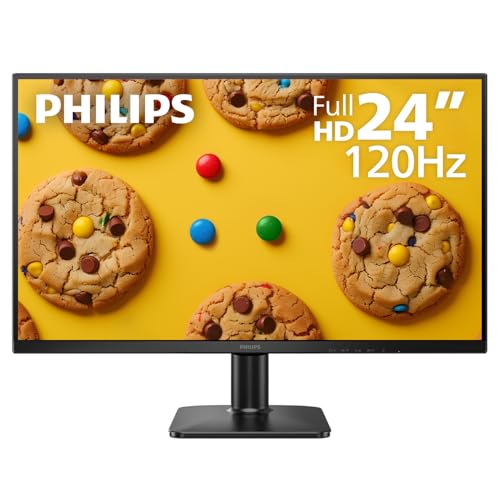
TL;DR: At $84.99, the Philips 24E2N2100 delivers a 24‑inch IPS display with a 120 Hz refresh rate, eye‑comfort features and FreeSync, making it a solid budget pick for casual gaming and office work.
The standout spec is its 120 Hz refresh rate paired with a 23.8‑inch IPS panel, which Philips prices at $84.99. The monitor also offers a 1 ms MPRT and 4 ms GTG response, plus 300 cd/m² brightness and a 1500:1 contrast ratio. Its slim 3‑sided ultra‑narrow bezel and 178° horizontal/vertical viewing angles help keep colors consistent across a desk.
Compared with the other 12 monitors in this roundup, the Philips is lighter than the AOC 24B35H3 (9.72 lb vs 9.35 lb) but heavier than the Xiaomi G27i‑US (7.94 lb). Its 120 Hz panel matches the AOC 24B35H3’s refresh rate while falling short of the Xiaomi’s 165 Hz. In terms of ergonomics, Philips only provides tilt from –5° to +20°, whereas the AOC Q27G40XMN adds height adjustment and a broader tilt range, making Philips the least adjustable of the group.
Reviewers consistently praise the smooth motion that the 120 Hz panel brings to casual games and scrolling tasks, and they note the IPS panel’s vivid, sRGB‑compliant colors. Eye‑comfort modes such as LowBlue, Flicker‑Free and EasyRead receive positive mentions for reducing strain during long work sessions. However, users also point out that the plastic stand feels flimsy, the lack of height or swivel adjustment limits positioning, and the thin black border around the screen is noticeable. The monitor includes no built‑in speakers, and users have reported occasional dead pixels.
Pros
Cons
Best for: Office workers, students and casual gamers who want a smooth 120 Hz experience without breaking the bank.
Avoid if: You need professional‑grade color accuracy, high‑refresh rates above 120 Hz, extensive ergonomic adjustments, or built‑in audio.
“Stark difference from 60Hz”
“Great for CS:GO and Call of Duty”
TL;DR: The AOC Q27G4ZMN delivers a Mini LED VA panel with 1,152 local‑dimming zones, 1500‑nit HDR peak brightness and a blistering 240 Hz refresh rate for ultra‑smooth, vivid gaming.
The standout feature is its Mini LED backlight with 1,152 independently controlled zones and a measured HDR peak brightness of 1500 nits, which easily outshines most LCDs in this group.
When you compare refresh rates, the Q27G4ZMN’s native 240 Hz tops the 120 Hz of the AOC 24B35H3 and the 165 Hz offered by the Xiaomi G27i‑US, while its 450 cd/m² SDR brightness exceeds the 300 cd/m² of the AOC 24B35H3 and Philips 24E2N2100, and also beats the 250 cd/m² of the Xiaomi and the 350 cd/m² typical brightness of the Asus TUF Gaming 27. At 22.74950081578 pounds, it's heavier than the sub‑10‑pound AOC 24B35H3 (9.72018113158 pounds), Philips 24E2N2100 (9.34980453142 pounds) and Xiaomi G27i‑US (7.936641432 pounds), but that mass reflects its larger 27‑inch VA panel and solid build.
Reviewers consistently praise the monitor’s near‑perfect factory color accuracy (ΔE ≈ 0.93) and its wide color gamut—106 % DCI‑P3 and 98.38 %–100 % sRGB—making it a favorite for HDR‑gaming and content creation. A downside that keeps popping up is the lack of USB ports, built‑in speakers, and any backlight‑strobing mode, while the VA panel can exhibit smearing in fast dark scenes.
Technical enthusiasts will note the dynamic contrast ratio of 80,000,000:1, static contrast of 5000:1, 1 ms GTG response time, and a 2.19 gamma curve, and a three‑year manufacturer warranty backs them.
Pros
Cons
Best for: Competitive gamers and HDR enthusiasts who need blazing‑fast 240 Hz performance and vibrant, accurate colors.
Avoid if: You need built‑in speakers, a USB hub, ambient lighting, or IPS‑level viewing angles.
“hot to trot”
TL;DR: The TCL 65QM7K costs $998.00, carries a 4.3‑star rating from 515 reviewers, and is praised for its vivid picture, smooth gaming performance, and easy‑to‑use Google TV interface.
TCL’s 65QM7K lands near the top of the 13‑product lineup with a solid 4.3‑star rating, placing it at rank #12 in this roundup. At $998.00, it’s in the mid‑range price bracket, offering a brand‑known reputation for value‑focused televisions.
Users consistently highlight the TV’s bright, colorful picture and the fluid motion that makes gaming feel responsive. Reviewers also appreciate the Google TV platform for its intuitive navigation and hands‑free voice control. The built‑in Bang & Olufsen‑tuned speakers frequently get compliments for delivering clear, immersive sound without a separate soundbar.
While sentiment is positive, a few recurring themes emerge. Some owners note that the out‑of‑the‑box color balance leans warm and requires manual tweaking. The remote’s button layout draws criticism for being less ergonomic, and a handful of users have reported occasional firmware hiccups. Despite these points, most buyers feel the TV delivers strong performance for its price.
Pros
Cons
Best for: Buyers willing to invest in a proven, high‑quality option
“Incredible picture quality”
“Perfect for gaming”
TL;DR: The AOC Q27G40XMN is a 27‑inch QHD Mini‑LED monitor priced at $179.90, offering 180 Hz refresh, 1 ms response, and a peak HDR brightness of 1,357 nits.
The standout feature is its Mini‑LED backlight with 4,608 LEDs and 1,152 local‑dimming zones, delivering up to 1,357 nits of HDR peak brightness on a 27‑inch QHD VA panel. Coupled with a 180 Hz maximum refresh rate and a 1 ms GTG response, the display promises exceptionally smooth motion.
At 12.5 pounds, it's heavier than the Xiaomi G27i‑US (≈7.9 pounds) and Philips 24E2N2100 (≈9.3 pounds) but slightly lighter than the Asus TUF Gaming 27 (≈12.8 pounds) and far lighter than the AOC Q27G4ZMN (≈22.7 pounds). Its HDR peak of 1,357 nits dwarfs the typical 250 cd/m² brightness of the Xiaomi and 300 cd/m² of the Philips, while matching the 450 cd/m² SDR brightness of the AOC Q27G4ZMN and TCL 65T7. The 180 Hz refresh also tops the 165 Hz of the Xiaomi and Asus and outpaces the 120 Hz of the AOC 24B35H3.
Users repeatedly praise the “cinematic” HDR impact and the buttery‑smooth feel of the 180 Hz panel, and professional reviewers highlight the strong over‑drive and the 1,152‑zone dimming that tames blooming. The consensus notes a tilt‑only stand, no built‑in speakers, and the absence of USB ports as trade‑offs. The monitor scores 4.2/5 from nine reviews, indicating solid but not top‑tier satisfaction.
Additional technical context includes AMD FreeSync Premium and NVIDIA G‑Sync compatibility, a 4.2 ms input lag, 30‑bit color depth (1.07 billion colors), 100 % sRGB coverage and up to 104 % DCI‑P3, and a VESA 100 × 100 mm mount for flexible installation.
Pros
Cons
Best for: HDR gamers and movie enthusiasts who want bright, high‑contrast visuals without breaking the bank.
Avoid if: You need reference‑grade SDR color accuracy or extensive ergonomic adjustments.
“great value”
“best budget HDR monitor”
Breakdown
TCL 55QM7K
Pros
TCL 65T7
Pros
Hisense U8K 55-inch
Pros
Hisense U8K 65-inch
Pros
Cons
Based on scoring data and product specs
Personalized picks
Best Overall Pick
TCL 55QM7K
Best OverallBest for: Home and office users seeking a balance of features and value
TCL 65T7
Best for: Most users seeking a balanced, mainstream option
$499.99-$198.01 vs winner
Skip AOC Q27G40XMN if…
Reliability and user satisfaction are your top concerns
TCL 55QM7K takes the crown as the best LED display for high‑refresh‑rate gaming. It delivers a native 144 Hz refresh rate and a 480 Motion Rate, so fast‑moving titles stay buttery smooth. The QD‑Mini LED panel packs 2,500 local‑dimming zones and a 97% DCI‑P3 colour gamut, giving vivid HDR with up to 2,600 nits peak brightness. Audio isn’t an afterthought either – the Bang & Olufsen‑tuned speakers push 40 W of output.
The runner‑up, TCL 65T7, shines when you need a larger canvas for group play or a living‑room cinema feel. Its 65‑inch QLED screen keeps the same 144 Hz native refresh and adds a variable refresh rate that can climb to 288 Hz, cutting input lag for competitive shooters. With a typical peak brightness of 450 nits and a 95‑97% DCI‑P3 colour range, it still looks bright and colourful in well‑lit rooms.
For tighter budgets, the AOC 24B35H3 at $79.99 offers a compact, affordable entry point that still hits the 120 Hz+ threshold. If you want a step up without breaking the bank, the TCL 65T7 at $599.99 remains the best mid‑range choice, balancing size, refresh performance, and price. For premium enthusiasts, the Hisense U8K 75‑inch at $2,087.79 delivers a massive screen with top‑tier HDR and a high‑refresh experience for an immersive setup.
Pick the TCL 55QM7K now and enjoy the sharpest, smoothest gaming experience available.
The TCL 55QM7K offers a 144 Hz native panel with AMD FreeSync Premium Pro and a 240 Hz variable refresh rate, plus a powerful 40 W Bang & Olufsen‑tuned audio system, making it ideal for immersive gaming. If you prefer a larger screen, the TCL 65T7 also supports 144 Hz native and up to 288 Hz variable refresh, but its built‑in speakers are only 20 W, so the 55‑inch model gives stronger sound without sacrificing performance.
Please sign in to leave a review
No reviews yet. Be the first to review!
