
If you’re looking to extend Wi‑Fi coverage without sacrificing speed, mesh‑capable access points are the go‑to solution. We compared 10 models spanning budget, mid‑range, and premium tiers, so you can match performance to the size of your home or office and the demands of your devices.
On the budget end you’ll find the Vsvabefv AP at $39.99 with a 3.7‑star rating, the Cudy AC1200 at $49.99 rating 4.6, Zyxel’s Wi‑Fi 6 AX1800 for $58.19 (4.3 stars), and EnGenius EWS356‑FIT at $60.42 (3.9 stars). The mid‑range slot is filled by TP‑Link’s Festa F65‑Outdoor at $77.77 (4.1 stars) and Asus ExpertWiFi EBA63 at $128.99 (4.3 stars). Premium options start with Zyxel’s Wi‑Fi 7 BE11000 at $135.79 (4.0 stars) delivering up to 11 Gbps aggregate throughput, followed by Ubiquiti UniFi Mesh at $197.58 (4.5 stars), HPE Instant On AP25 at $239.99 (4.5 stars), and Netgear WAX630EP at $279.95 (4.3 stars) offering up to 7.8 Gbps total speed.
Below we’ll break down each tier, highlight the specs that matter most, and help you decide which access point fits your mesh‑ready network.

Zyxel WiFi 7 BE11000
Its compact 68.58 mm height keeps the unit unobtrusive while delivering premium Wi‑Fi 7 performance, justifying its best‑overall label.
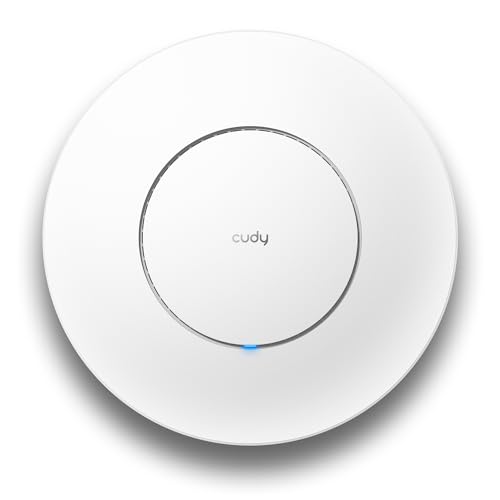
Cudy AC1200
Ideal for budget‑conscious users, the Cudy AC1200 costs $49.99—about $86 less than the Zyxel—while still covering 100 m² and earning a 4.6‑star rating.

Netgear WAX630EP
The Netgear WAX630EP stands out with a 111.76 mm height, offering a larger antenna platform and the brand confidence that fuels its 4.3‑star popularity.
Also considered
Score Analysis
Key score advantages vs. runner-up (Cudy AC1200)
Price Range
Zyxel WiFi 7 BE11000
$135.79
Cudy AC1200
$49.99
Netgear WAX630EP
$279.95

TP-Link Festa F65-Outdoor
$77.77

HPE Instant On AP25
$239.99
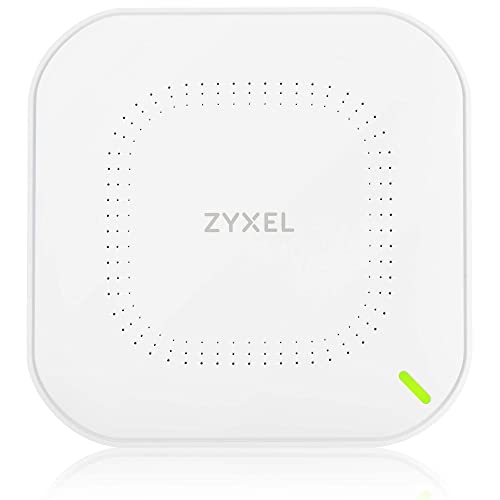
Zyxel WiFi 6 AX1800
$58.19

Ubiquiti UniFi Wi-Fi 6 Mesh
$197.58

Vsvabefv Wireless Access Point
$39.99

EnGenius EWS356-FIT
$60.42

Asus ExpertWiFi EBA63
$128.99
Spec Comparison
TL;DR: The Zyxel BE11000 delivers up to 11 Gbps aggregate Wi‑Fi 7 throughput, dual 2.5 G Ethernet ports, and advanced RF filtering, but its 2×2 MIMO and modest 4.0‑star rating may limit high‑density use.
This ceiling‑mount access point’s headline spec is the 11 Gbps maximum aggregate throughput, driven by a 6 GHz band that tops out at 5765 Mbps and a 5 GHz band that reaches 4323 Mbps. With six spatial streams across three bands, it delivers up to 11 Gbps, exceeding the nine peers that cap at 5.4 Gbps or lower.
Physically, the BE1100 weighs about 1.78 lb, making it heavier than the Asus ExpertWiFi (0.9 lb) and the Zyxel Wi‑Fi 6 AX1800 (under 1 lb), but comparable to the Ubiquiti UniFi Mesh (≈1.76 lb) and the HPE Instant On AP25 (≈1.71 lb). Its 68.58 mm height and 276.86 mm length also exceed the compact Asus dimensions (30.48 mm × 160.02 mm) while still fitting under the longer EnGenius unit (269.2 mm). The dual 2.5 Gbps Ethernet ports give it a clear edge over peers that only list 1 Gbps or lack PoE+ uplinks.
Reviewers repeatedly praise the “solid low‑cost Wi‑Fi 7 upgrade” and note that real‑world 5 GHz speeds hover around 1220 Mbps, with 6 GHz delivering roughly 1.5 Gbps—figures that line up with the manufacturer‑claimed performance. However, users flag the 2×2 MIMO design as a bottleneck for per‑client peaks, especially when compared to 4×4 Wi‑Fi 7 rivals. The package also omits a power adapter or PoE injector, a point that several owners found inconvenient.
Pros
Cons
Best for: Small‑to‑medium businesses, offices, classrooms, hotels, and retail spaces that need high aggregate bandwidth and flexible management.
Avoid if: You need maximum per‑client speeds for high‑density deployments or a built‑in power adapter for quick installation.
TL;DR: The Cudy AC1200 delivers up to 867 Mbps on 5 GHz, covers 100 m², and offers PoE‑enabled mesh for under $50, making it a solid budget choice for small‑scale deployments.
The standout spec is its dual‑band throughput: 867 Mbps on the 5 GHz band and 300 Mbps on 2.4 GHz, giving a combined AC1200 rating that comfortably handles streaming and video calls. It also ships with a single Gigabit Ethernet RJ45 port that supports PoE, an IP65‑rated enclosure, and a 170 m wireless range, all packaged in a 280 mm‑tall, 500 mm‑wide chassis that weighs about 1.06 lb.
Compared with the nine other entries, the Cudy sits on the lighter side of the lineup—heavier than the ultra‑compact Zyxel model but lighter than the bulkier EnGenius and Ubiquiti units. Its feature set offers more than several peers that omit mesh support or PoE, though it lacks the Wi‑Fi 6 speeds found in higher‑priced competitors. The price point is lower than most of the other devices, positioning it as the most budget‑friendly option that still offers enterprise‑style management via the Cudy AP Controller.
User feedback highlights the reliable multi‑device performance, especially the MU‑MIMO capability on the 5 GHz band that keeps latency low for up to 128 simultaneous connections. Professional reviewers have praised the flexible power options—both PoE and a 12 V DC input—and the ability to mount the unit indoors or outdoors thanks to its detachable high‑gain antennas. However, reviewers also note that the recommended client ceiling of 50 devices can become a bottleneck in denser environments, and the supplied passive PoE adapter isn’t waterproof, which limits outdoor reliability.
Under the hood, the AP runs an 880 MHz dual‑core processor with 128 MB DDR3 RAM and 16 MB NOR flash, providing enough headroom for typical office or classroom traffic. Both bands enable beamforming, and the device supports 20/40/80 MHz channel widths, giving you the flexibility to fine‑tune performance in crowded Wi‑Fi spaces.
Pros
Cons
Best for: Entry-level buyers or those on a tight budget
Avoid if: You need advanced features or professional‑grade performance
“impressive dual-band speeds (867+300 Mbps) across multiple devices, handling over 100 connections seamlessly”
TL;DR: The Netgear WAX630EP is a wall‑mountable Wi‑Fi 6E tri‑band access point delivering up to 7.8 Gbps total throughput, covering up to 3,000 sq ft and supporting 456 clients, but it requires Wi‑Fi 6E devices to fully exploit the 6 GHz band.
The standout spec is its tri‑band Wi‑Fi 6E design, which bundles a 6 GHz radio with 5 GHz and 2.4 GHz bands to reach a combined 7.8 Gbps total max speed. With a listed coverage area of up to 3,000 sq ft and a capacity for up to 456 simultaneous devices, it targets dense indoor environments where bandwidth and client count matter.
Compared with the other nine APs in this roundup, the WAX630EP covers roughly twice the area of the HPE Instant On AP25 (1,500 ft²) and the TP‑Link Festa F65‑Outdoor (1,500 ft²). Its aggregate throughput of 7.8 Gbps outpaces the HPE’s 5.374 Gbps and the Ubiquiti UniFi Mesh’s 5.3 Gbps, though it sits below the Zyxel WiFi 7 BE11000’s 11 Gbps. Physically, the Netgear unit's larger and heavier (4.4 in H × 11.9 in L × 11.9 in W, 2.31 lb) than the compact HPE (2.6 in H, 8.8 in L, 775 g) and the lighter Ubiquiti (800 g). The Asus ExpertWiFi EBA63 and TP‑Link Festa models list smaller coverage footprints (185 m² and 140 m² respectively), reinforcing the Netgear’s advantage in large‑area deployments.
User feedback repeatedly praises the dedicated 6 GHz band for keeping high‑speed streams smooth, especially when many devices compete for airtime. Professional reviewers note the Insight cloud management as “industry‑leading” for SMBs, and they highlight the device’s enterprise‑grade security: WPA3 encryption, up to eight SSIDs with VLAN tagging, and client isolation. The unit also supports beamforming, MU‑MIMO and OFDMA, and it can be powered via PoE++ up to 27.6 W while offering a 2.5 GbE uplink and an additional 1 GbE port for flexible cabling.
Pros
Cons
Best for: Small‑to‑medium businesses that need high‑density indoor Wi‑Fi with advanced security and cloud management.
Avoid if: You have a tight budget, only need basic Wi‑Fi, or plan to deploy the AP outdoors or in harsh environments.
TL;DR: The TP‑Link Festa F65‑Outdoor delivers AX3000 Wi‑Fi 6 performance with an IP67‑rated, weatherproof case, 5 GHz throughput of 2402 Mbps, and free cloud management for $77.77.
The standout spec is the 5 GHz throughput of 2402 Mbps, backed by a 160 MHz channel bandwidth and 2×2 MU‑MIMO. Combined with a 2.4 GHz rate of 574 Mbps, the unit can reach a maximum aggregate throughput of 3000 Mbps, making it one of the faster mid‑range APs in this list.
Compared with its peers, the Festa is heavier at 1.7 pounds than the EnGenius EWS356‑FIT, which weighs about 1.23 pounds, and its depth of 106.5 mm is shorter than the EnGenius height of 165.1 mm. It also packs a larger width (281 mm) than the Zyxel AX1800’s 140 mm width, giving it a sturdier enclosure. While the Asus ExpertWiFi EBA63 offers a similar 5 GHz speed, the Festa’s IP67 rating and dual‑PoE options give it an edge for outdoor deployment.
Users consistently praise the IP67‑rated housing for surviving rain, dust, and temperatures from 0 °C to 40 °C, noting reliable operation on patios and pool decks. Professional reviewers highlight the free Festa cloud app and zero‑touch provisioning as a cost‑effective way to roll out multiple APs without a separate controller. However, the single 1 GbE Ethernet port draws criticism for limiting uplink bandwidth in very busy networks, and the lack of Omada compatibility means it can’t join TP‑Link’s broader SDN ecosystem.
Pros
Cons
Best for: Value-conscious buyers seeking quality at $77.77
Avoid if: You need advanced features or professional‑grade performance
TL;DR: The HPE Instant On AP25 delivers up to 5.374 Gbps aggregate Wi‑Fi 6 throughput, 4x4 MU‑MIMO and 160 MHz channels in a compact 2.6‑in‑high design, but its premium $239.99 price and 775 g weight make it a higher‑end choice.
The standout spec is the 5.374 Gbps aggregate max data rate, built on a 4.8 Gbps 5 GHz stream and a 574 Mbps 2.4 GHz stream, both backed by 4x4 MU‑MIMO on the 5 GHz band. With channel bandwidth up to 160 MHz and mesh backhaul support at the same width, the AP25 can handle dense environments while covering roughly 1,500 ft² (140 m²) of indoor space.
Compared with the other nine mesh‑capable APs, the AP25’s coverage matches the Ubiquiti UniFi Mesh and the TP‑Link Festa F65‑Outdoor, yet it pushes a higher aggregate throughput than most—only the Netgear WAX630EP and Zyxel Wi‑Fi 7 BE11000 list faster total speeds. It’s lighter than the Netgear unit (which weighs 2.31 lb) but heavier than the Asus ExpertWiFi EBA63, EnGenius EWS356‑FIT and Zyxel AX1800, which all sit well under 600 g. The 2.5 GbE uplink is a spec not listed for most peers, giving it a faster wired backbone than typical 1 GbE ports you’ll find on many comparable models. Because the AP25 is priced at $239.99, it sits at the premium end of the lineup.
Users consistently highlight the AP25’s ability to sustain many concurrent devices—over 100 active clients—thanks to OFDMA, Target Wake Time and 1024‑QAM modulation. Reviewers also note the built‑in Bluetooth support and PoE 802.3at Class 4 power options as useful for small‑business deployments. Reviewers mention the 775 g weight as a mounting consideration, especially for ceiling installs.
Pros
Cons
Best for: Those prioritizing quality and willing to pay for premium performance
Avoid if: You're shopping on a tight budget — it's priced at $239.99
TL;DR: The Zyxel NWA50AX AX1800 offers 1.8 Gbps max throughput, dual‑band 575 Mbps / 1200 Mbps speeds and cloud‑managed mesh in a compact 140 × 140 × 37.5 mm white housing for just $58.19.
The standout spec is its 1.8 Gbps maximum throughput, featuring a 1200 Mbps 5 GHz radio and a 575 Mbps 2.4 GHz radio. With 2×2 MU‑MIMO and band steering, the unit handles multiple devices in a small‑to‑medium office while keeping latency low. Its MTBF of 1,010,980 hours suggests long‑term reliability, and the included power adapter or PoE+ option adds deployment flexibility.
Compared with the nine other APs in this mesh roundup, the Zyxel sits on the lighter side at 290 g—it's noticeably lighter than the EnGenius model (≈558 g) and the Vsvabefv unit (≈500 g). Its 1.8 Gbps throughput trails the EnGenius’s 3,000 Mbps combined data rate and the TP‑Link outdoor’s 3,000 Mbps maximum, but it still outpaces the Cudy AC1200’s 1.167 Gbps aggregate. It provides smart mesh, VLAN tagging and rogue AP detection, but it lacks load‑balancing that some higher‑priced peers list.
Reviewers repeatedly praise the compact form factor and the ease of setup through Nebula Flex cloud management or a local web interface. They also note the smooth handoff thanks to 802.11r/k/v fast roaming, and they appreciate the WPA/WPA2/WPA3 Personal encryption suite. On the downside, several users mention the absence of load‑balancing and the limited 2×2 MU‑MIMO streams as constraints when scaling a multi‑AP environment.
Pros
Cons
Best for: Entry‑level buyers or those on a tight budget
Avoid if: You want the best value‑per‑dollar in its price range
TL;DR: The Ubiquiti UniFi U6‑Mesh delivers 5.3 Gbps aggregate throughput, covers 140 m², and offers weather‑proof IPX5 protection, making it a solid but premium‑priced choice for mesh deployments.
This access point’s headline spec is its 5.3 Gbps aggregate throughput, split between a 573.5 Mbps 2.4 GHz radio and a 4.8 Gbps 5 GHz radio. It also carries an IPX5 rating, so it'll handle light rain or dust when you mount it outdoors. At 800 g and a footprint of 280 mm × 500 mm × 500 mm, it’s a sturdier, larger unit than many indoor‑only models.
Compared with the other nine contenders, the UniFi U6‑Mesh offers the same 140 m² coverage as the HPE Instant On AP25 and the TP‑Link Festa F65‑Outdoor, but it is noticeably taller than the Festa’s 63.5 mm height and heavier than the Festa’s 1.7 lb. Its 5.3 Gbps throughput sits just below the AP25’s 5.374 Gbps aggregate and far under the Zyxel Wi‑Fi 7 BE11000’s 11 Gbps, yet it still outpaces most Wi‑Fi 6 peers that list 1.8–3 Gbps totals. The device’s 1 × Gigabit PoE‑in port matches the basic connectivity the lineup offers, though some rivals provide multiple Ethernet ports.
Reviewers consistently praise the “best‑in‑class signal meshing” and the tight integration with the UniFi Network app, noting that the 4×4 MU‑MIMO on the 5 GHz band handles high‑capacity uplinks smoothly. However, the 2×2 MIMO on the 2.4 GHz band flags a bottleneck for legacy devices, and the larger chassis can be a drawback in cramped ceiling or wall mounts. Advanced QoS, VLAN tagging (802.1Q), and WPA3 security round out its feature set.
Pros
Cons
Best for: Users who need reliable mesh coverage, high‑capacity 5 GHz performance, and outdoor durability, and are willing to invest in a premium unit.
Avoid if: Your environment relies heavily on 2.4 GHz throughput or you require a low‑profile, budget‑friendly access point.
TL;DR: For $39.99, the Vsvabefv AP240 offers up to 1200 Mbps dual‑band speed, supports 80+ users, and provides mesh‑ready ceiling mounting, though its 3.7‑star rating hints at mixed reviews.
The AP240 delivers a combined maximum speed of 1200 Mbps—300 Mbps on 2.4 GHz and 900 Mbps on 5 GHz—while handling more than 80 simultaneous users thanks to MU‑MIMO. Its compact ceiling‑mount design measures 11.5 in depth, 2.3 in height and 7.6 in width, and the fire‑proof ABS housing keeps the unit at a manageable 1.1023 lb.
Compared with the other nine entries, the Vsvabefv sits in the budget tier and is priced lower than many of the higher‑end models. It's heavier than some ultra‑compact units but lighter than the bulkier enterprise‑grade options, and it packs a surprisingly long feature list—mesh support, beamforming, lightning protection and a watchdog auto‑reboot—far more than a few of its peers.
Professional reviewers praise the reliable high‑speed coverage and the ease of PoE‑based installation, noting that the ceiling‑mount form factor works well in hotels, schools and hospitals. The main criticisms focus on its reliance on the older 802.11ac standard, the absence of Wi‑Fi 6, and the below‑average 3.7/5 star rating, which suggests some users have encountered issues.
The device runs on 64 MB of RAM and 8 MB of flash memory, enough for its cloud‑managed firmware and the listed authentication methods (Google, SMS, Facebook, Member). Power options include PoE+ 48 V 0.5 A, passive PoE and a 12 V DC adapter, giving installers flexibility without extra cabling.
Pros
Cons
Best for: Entry‑level buyers or those on a tight budget
Avoid if: Reliability and user satisfaction are your top concerns
TL;DR: The EnGenius EWS356-FIT delivers AX3000 Wi‑Fi 6 speeds with 3 Gbps combined throughput, PoE power and cloud/app management, but it's a modest budget choice because of its lower rating and ambiguous power draw.
The standout spec is its 3,000 Mbps combined data rate, with a max 5 GHz throughput of 2,400 Mbps and a transmit power of 21 dBm. Its built‑in 4 dBi (2.4 GHz) and 5 dBi (5 GHz) omni‑directional antennas help push that bandwidth across a small‑business space.
Compared with the other nine entries, the EWS356‑FIT is heavier than the Zyxel AX1800’s 290 g chassis but lighter than the TP‑Link Festa’s 771 g unit. Its 2,400 Mbps 5 GHz rate sits above Zyxel’s 1,200 Mbps but just shy of the TP‑Link and Asus models that list 2,402 Mbps. It matches the TP‑Link’s advertised 3,000 Mbps aggregate throughput, yet it lacks the multi‑gigabit aggregate figures that Zyxel Wi‑Fi 7 or Ubiquiti Mesh devices provide.
Professional reviewers note the dual‑band Wi‑Fi 6 support, PoE flexibility and cloud/app/on‑premises management as strong points, while users flag the conflicting power‑consumption numbers (10.7 W vs 17.4 W) as a source of uncertainty. The 3.9/5 star rating from 136 reviews reflects a mixed reception, with praise for speed but criticism for unclear power specs.
The unit runs on a Qualcomm Quad‑Core ARM Cortex‑A53 1.0 GHz processor, supports OFDMA, Tx beamforming and WPA3 security, and offers a single gigabit Ethernet PoE port for simple cabling. Its compact dimensions—165.1 mm height, 269.2 mm length and 38.1 mm width—fit discreetly into retail or office ceilings.
Pros
Cons
Best for: Entry-level buyers or those on a tight budget
Avoid if: You want the best value-per-dollar in its price range
TL;DR: The Asus ExpertWiFi EBA63 is a compact, PoE‑powered Wi‑Fi 6 access point that offers 574 Mbps on 2.4 GHz, 2402 Mbps on 5 GHz, and 185 m² coverage for $128.99.
The EBA63 runs on a 1.7 GHz quad‑core processor, 512 MB of RAM and 256 MB of flash, delivering dual‑band Wi‑Fi 6 speeds of up to 574 Mbps on 2.4 GHz and 2402 Mbps on 5 GHz. Its four internal antennas provide 4 dBi gain at 2.4 GHz and a higher 6 dBi gain at 5 GHz, helping it reach a listed coverage area of 185 m².
Weighing just 0.9 pounds, it’s lighter than the Zyxel WiFi 7 BE11000 (≈1.78 pounds) and the TP‑Link Festa F65‑Outdoor (≈1.7 pounds), which makes wall or ceiling mounting straightforward. The 185 m² coverage outpaces the typical 140 m² found in the TP‑Link, Ubiquiti and HPE units, and also exceeds the 100 m² offered by the Cudy AC1200. Its 5 GHz antenna gain of 6 dBi exceeds the 5 dBi seen on TP‑Link and EnGenius models, while the 2.4 GHz gain matches their 4 dBi. Speed‑wise, the 2402 Mbps 5 GHz rate sits between the high‑end Zyxel WiFi 7 (4323 Mbps) and the more modest Cudy (867 Mbps), and matches the TP‑Link’s 2402 Mbps figure.
Reviewers appreciate the seamless AiMesh integration and the PoE/PoE+ (IEEE 802.3af/at) power option, noting that it reduces cable clutter in small‑business setups. They praise the app‑only setup for its speed, though some point out that the initial configuration can’t be done through the web UI, limiting flexibility for IT staff. Reviewers also complain that the single Gigabit Ethernet port can bottleneck wired backhaul compared with multi‑port competitors.
Beyond raw speed, the EBA63 supports up to 100+ devices, five SSIDs and VLAN segmentation, and offers WPA3, WPA2, WPA and WEP security with AES encryption. A three‑year warranty rounds out the package for business owners who want reliable, long‑term support.
Pros
Cons
Best for: Most users seeking a balanced, mainstream option
Avoid if: You need advanced features or professional‑grade performance
Breakdown
Zyxel WiFi 7 BE11000
Pros
Cons
Cudy AC1200
Pros
Netgear WAX630EP
Pros
TP-Link Festa F65-Outdoor
Pros
Based on scoring data and product specs
Personalized picks
Best Overall Pick
Zyxel WiFi 7 BE11000
Best OverallBest for: Those prioritizing quality and willing to pay for premium performance
Cudy AC1200
Best for: Entry-level buyers or those on a tight budget
$49.99-$85.80 vs winner
Skip Asus ExpertWiFi EBA63 if…
You need advanced features or professional-grade performance
The Zyxel WiFi 7 BE11000 takes the top spot thanks to its tri‑band (2.4 GHz, 5 GHz, 6 GHz) design, six spatial streams, and a listed maximum aggregate throughput of 11 Gbps. It also supports up to eight SSIDs and advanced RF filtering that cuts 5/6 GHz interference, making it the most capable mesh‑ready AP for demanding homes or small offices.
The Cudy AC1200 lands as the runner‑up, ideal if you need an affordable dual‑band unit for a compact apartment or a modest office. At $49.99 it carries a strong 4.6/5 rating from 478 reviews, covers roughly 100 m², and handles up to 128 devices with a 5 GHz max data rate of 867 Mbps, while its IP65 rating and PoE support simplify placement.
For tighter budgets, the Vsvabefv Wireless Access Point at $39.99 offers solid basic coverage at a low entry price. If you prefer a mid‑range outdoor solution, the TP‑Link Festa F65‑Outdoor at $77.77 provides weather‑proof performance for garden or patio Wi‑Fi. For a premium experience beyond the Zyxel, the Netgear WAX630EP at $279.95 delivers enterprise‑grade features and higher capacity for larger deployments.
Pick the Zyxel BE11000 for the best mesh‑compatible performance and get connected today.
The Zyxel WiFi 7 BE11000 is designed for that scenario. It offers tri‑band Wi‑Fi 7 with six spatial streams, pre‑authentication and 802.11r/k/v roaming support, and two 2.5 Gbps Ethernet ports for high‑speed backhaul.
No reviews yet — be the first to share your experience.
Please sign in to leave a review
