Rankings
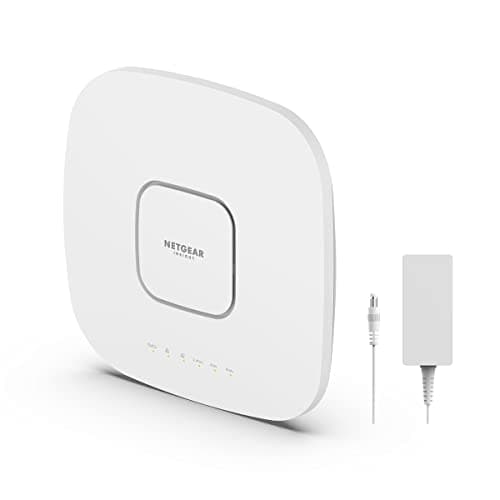
The Netgear WAX630EP is a cloud-managed Wi-Fi 6E tri-band AP delivering industry-leading throughput and dense client capacity. Its premium price, higher power draw and indoor-only design limit suitability for budget-conscious or outdoor deployments. Ideal for SMBs needing future-proof high-density indoor Wi-Fi.
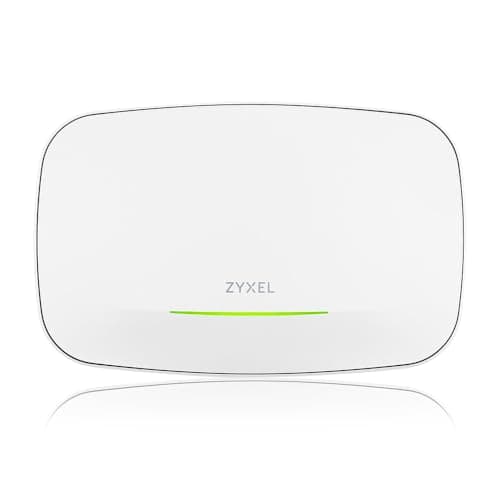
The Zyxel NWA130BE provides tri-band Wi-Fi 7 performance with up to 11 Gbps aggregate throughput, dual 2.5 G Ethernet ports, and advanced RF filtering. Its 2×2 MIMO design and lack of an included power adapter limit per-client speeds and ease of installation. Best for SMBs and classrooms looking to adopt Wi-Fi 7 without extensive cabling upgrades.
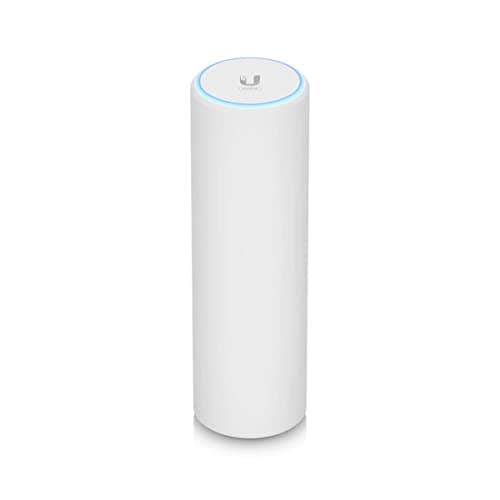
The Ubiquiti UniFi U6-Mesh is a Wi-Fi 6 mesh-capable AP providing up to 5.3 Gbps aggregate throughput and IPX5-rated weatherproofing for indoor and outdoor use. Its single 1 GbE uplink and limited 2.4 GHz MIMO may constrain very high-density scenarios. Perfect for deployments requiring robust mesh coverage and UniFi integration.
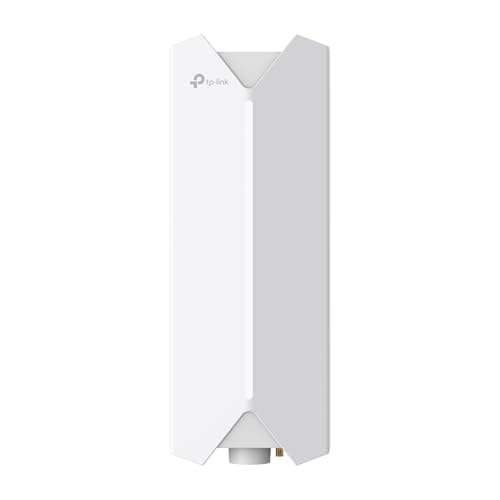
The TP-Link Festa F65-Outdoor is an AX3000 outdoor Wi-Fi 6 access point offering up to 2.976 Gbps total throughput, IP67 weatherproofing, and free cloud management. Its single 1 GbE uplink and incompatibility with Omada may restrict larger deployments. Best suited for small-business outdoor environments requiring robust Wi-Fi 6 coverage.
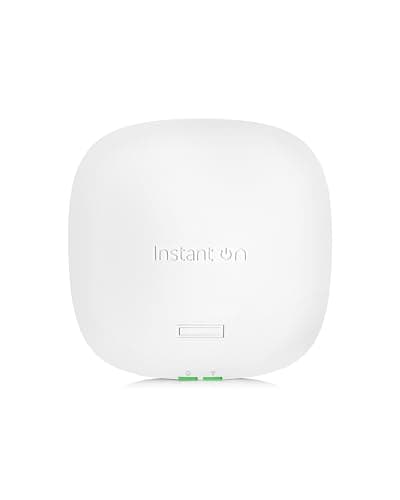
The Aruba Instant On AP25 delivers up to 5.3 Gbps aggregate Wi-Fi 6 throughput with 4x4 MU-MIMO and a 2.5 GbE uplink. Its larger size and higher power draw can be drawbacks. Designed for high-density indoor environments such as tech offices or gaming cafés.
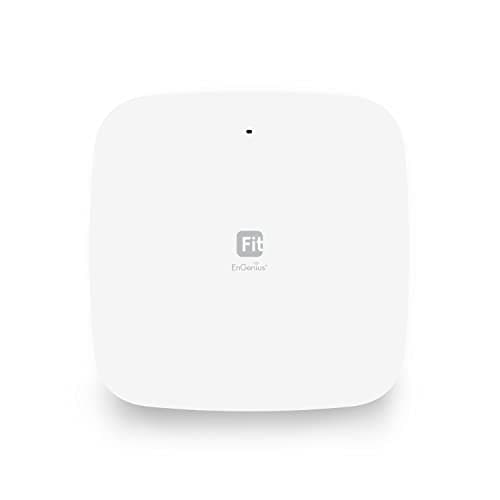
The EnGenius EWS356-FIT is a ceiling-mount indoor Wi-Fi 6 AP providing up to 2.4 Gbps on 5 GHz, with MU-MIMO, OFDMA, and mesh capabilities managed via cloud, app, or on-premises. Inconsistent power specifications and a ceiling-only form factor may pose deployment challenges. Best for small-business environments seeking high-speed Wi-Fi 6 with flexible management.
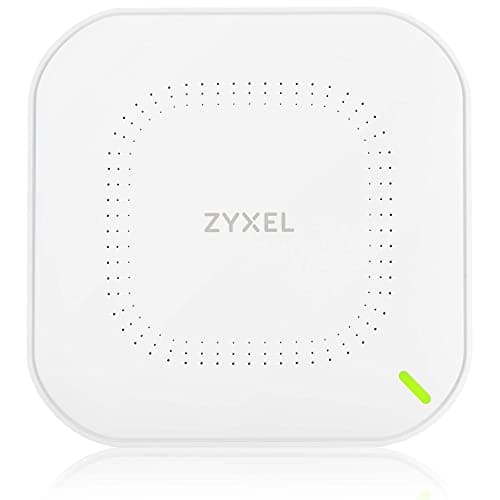
The Zyxel NWA50AX is an indoor AX1800 Wi-Fi 6 access point offering up to 1.8 Gbps aggregate speed and built-in mesh capability. Its absence of load-balancing and reliance on external power adapters limit flexibility for more demanding networks. Suited for small-to-medium offices or homes needing compact Wi-Fi 6 coverage.
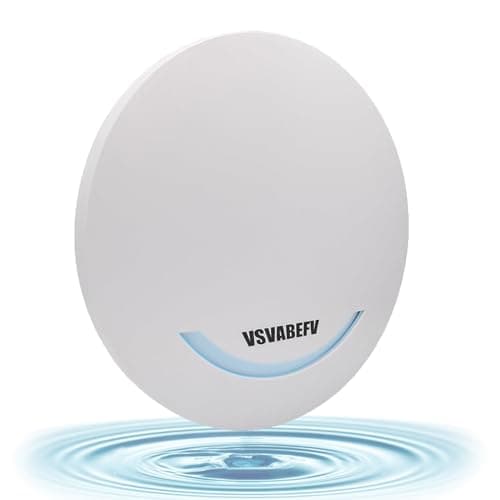
The VSVABEFV AP240 is a ceiling-mounted dual-band 802.11ac access point delivering up to 1200 Mbps combined throughput and featuring PoE, MU-MIMO and mesh support. Its reliance on the older 802.11ac standard and lack of outdoor rating limit future-proofing. Best suited for indoor small-to-medium enterprises needing affordable high-density Wi-Fi.
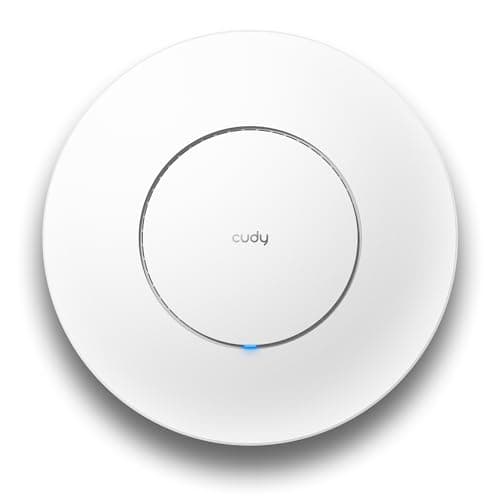
The Cudy AC1200 AP1300 is a dual-band Wi-Fi 5 access point delivering up to 867 Mbps on 5 GHz and 300 Mbps on 2.4 GHz, with MU-MIMO, beamforming and IP65 outdoor durability. Its reliance on Wi-Fi 5 and a single Ethernet port may limit performance in high-density or future-proof scenarios. Ideal for small-business or home deployments that need a rugged, budget-friendly AP with mesh capability.
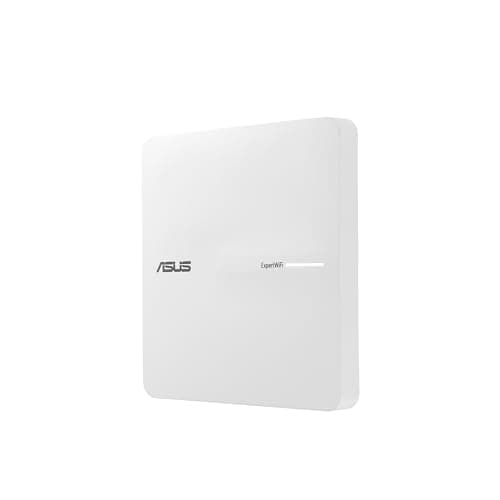
The ASUS ExpertWiFi EBA63 is a dual-band Wi-Fi 6 AP offering up to 2.4 Gbps combined speed, PoE+ power and AiMesh integration for small-business or large-home environments. Its single Gigabit Ethernet port and reliance on PoE+ limit flexibility for higher-performance deployments. Ideal for users who value easy PoE installation and mesh compatibility over multi-gigabit wired backhaul.
| Attribute | | | | | | | | | | |
|---|---|---|---|---|---|---|---|---|---|---|
4,323 Mbps | 867 Mbps | 4,800 Mbpsbest | 2,402 Mbps | 4,800 Mbpsbest | 1,200 Mbps | 4,800 Mbpsbest | 900 Mbps | 2,400 Mbps | 2,402 Mbps | |
— | 100 sqm | 279 sqmbest | 140 sqm | 140 sqm | — | 140 sqm | — | — | 185 sqm | |
688 Mbpsbest | 300 Mbps | 600 Mbps | 574 Mbps | 574 Mbps | 575 Mbps | 573.5 Mbps | 300 Mbps | 574 Mbps | 574 Mbps | |
2best | 1 | 2best | 1 | 1 | — | 1 | 1 | 1 | 1 | |
6best | — | — | 4 | 4 | 2 | 4 | — | 2 | — | |
| ↓ lower better | — | 5 Wbest | — | 13.3 W | — | — | 11.4 W | — | 10.7 W | — |
| ↓ lower better | — | 18 W | 27.6 W | — | — | — | — | — | 17.4 Wbest | — |
| ↓ lower better | 808 g | 480 g | 1,050 g | 771 g | 775 g | 290 gbest | 800 g | 500 g | 558 g | 408 g |
Click an attribute name to sort · Green = best, red = worst (relative to this comparison)
| Attribute | | | | | | | | | | |
|---|---|---|---|---|---|---|---|---|---|---|
Network(2) | ||||||||||
Wi‑Fi Standard | Wi‑Fi 7 (802.11be) | Wi‑Fi 5 (802.11ac) | WiFi 6E | 802.11ax | 802.11ax | 802.11ax | 802.11ax | 802.11ac | 802.11ax | Wi‑Fi 6 (802.11ax) |
Frequency Bands | 2.4 GHz, 5 GHz, 6 GHz | 2.4 GHz, 5 GHz | Tri-band | 2.4 GHz, 5 GHz | 2.4/5 GHz | 2.4 GHz, 5 GHz | 2.4 GHz,5 GHz | 2.4 GHz,5 GHz | 2.4 GHz, 5 GHz | 2.4 GHz, 5 GHz |
Performance(4) | ||||||||||
Max Data Rate (5 GHz) (Mbps) | 4323 Mbps | 867 Mbps | 4800 Mbps | 2402 Mbps | 4800 Mbps | 1200 Mbps | 4800 Mbps | 900 Mbps | 2400 Mbps | 2402 Mbps |
Max Data Rate (2.4 GHz) (Mbps) | 688 Mbps | 300 Mbps | 600 Mbps | 574 Mbps | 574 Mbps | 575 Mbps | 573.5 Mbps | 300 Mbps | 574 Mbps | 574 Mbps |
Coverage Area (sqm) | — | 100 sqm | 279 sqm | 140 sqm | 140 sqm | — | 140 sqm | — | — | 185 sqm |
Spatial Streams | 6 | — | — | 4 | 4 | 2 | 4 | — | 2 | — |
Features(1) | ||||||||||
Security Protocols | — | — | WPA3 | WPA/WPA2/WPA3, 802.1X, RADIUS, captive portal, MAC filter, VLAN, wireless isolation, WMM | WPA3 | WPA3 | WPA3,WPA2,WPA | — | WPA3, WPA2 | WPA3, WPA2, WPA, WEP, AES |
Power & Power Supply(3) | ||||||||||
PoE Standard | 802.3at | 802.3af/at | PoE++ | 802.3at, 48V passive | 802.3at | 802.3at | 802.3af | 802.3at | 802.3af, 802.3at | IEEE 802.3af/at PoE+ |
Power Consumption (W) | — | 5 W | — | 13.3 W | — | — | 11.4 W | — | 10.7 W | — |
Maximum Power Consumption (W) | — | 18 W | 27.6 W | — | — | — | — | — | 17.4 W | — |
Design & Build(4) | ||||||||||
Ethernet Ports | 2 | 1 | 2 | 1 | 1 | — | 1 | 1 | 1 | 1 |
Mounting Options | Ceiling | — | Wall | Pole, Wall | Indoor wall or ceiling | — | Wall, Pole, Desktop, Ceiling | Ceiling | Ceiling | Wall, Ceiling |
Dimensions (L×W×H) (mm) | 7.1×2.7×10.9 inches mm | 500x280x500 mm mm | 302.26×111.76×302.26 mm mm | 281×63.5×106.5 mm mm | 8.7×2.6×8.8 in mm | 140×140×37.5 mm mm | 500x280x500 mm | 193x58x292 mm | 1.5 in × 6.5 in × 10.6 in mm | 6.3x1.2x6.3 inches mm |
Weight (g) | 808 g | 480 g | 1050 g | 771 g | 775 g | 290 g | 800 g | 500 g | 558 g | 408 g |
General(1) | ||||||||||
Warranty (years) | — | 2 years | 5 years | 2 years | 2 years | 2 years | — | 1 years | 1 years | 3 years |
Products in the top-left offer the best value (high score, low price).
Professional reviewers describe the NWA130BE as a solid, low-cost entry into Wi-Fi 7, praising its real-world speeds, dual 2.5 G Ethernet ports, and the flexibility of NebulaFlex management. They also note the inherent limitations of a 2×2 MIMO design, the lack of an included power adapter, and the need for professional installation due to its ceiling-mount form factor.
Professional reviewers commend the Cudy AP1300 for delivering strong dual-band throughput, handling over 100 connections smoothly, and offering versatile power and mounting options. The inclusion of a centralized controller and Mesh capability is seen as a solid value proposition for small-business and home deployments, especially where outdoor coverage is needed.
“impressive dual-band speeds (867+300 Mbps) across multiple devices, handling over 100 connections seamlessly”
User-generated feedback is scarce, but the limited comments that appear are generally positive, noting reliable multi-device performance and satisfaction with the outdoor-ready version. No major recurring complaints were identified in the available sources.
Professional editors praise the WAX630EP for its industry-leading Insight cloud management and the added 6 GHz band, noting that the extra spectrum provides significantly more channels, which translates into higher speeds and capacity in dense environments.
Professional reviewers appreciate the Festa F65-Outdoor for its rugged IP67 enclosure, strong Wi-Fi 6 performance, and the zero-cost Festa Cloud that makes deployment straightforward for small businesses. However, they caution that the single Gigabit uplink, 2×2 MIMO design, and lack of Omada integration may make it less suitable for larger, high-density networks that require more advanced SDN features.
Professional commentary is limited to vendor-provided statements, which emphasize the U6-Mesh's best-in-class meshing capability, high-capacity 160 MHz uplinks, and deep integration with the UniFi management platform, positioning it as a strong choice for enterprise-grade mesh deployments.
Editors and professional reviewers consistently commend the AP240 for its solid 1200 Mbps dual-band throughput, PoE-driven easy installation, and reliable MU-MIMO performance in high-density indoor settings such as hotels, schools, and hospitals. The device's fire-proof ABS housing and watchdog auto-reboot are highlighted as stability-enhancing features, though its reliance on the older 802.11ac standard and lack of Wi-Fi 6 limit its long-term competitiveness.
Consumer feedback is virtually absent in the available sources; listings emphasize ease of install and capacity, but no direct user reviews or complaints were found.
Professional reviewers and editors have not published in‑depth evaluations of the EWS356-FIT, likely due to its recent market introduction. Promotional materials emphasize its suitability for small‑business deployments, high‑speed Wi‑Fi 6 performance, and easy cloud‑based management.
No consumer reviews or feedback were found in the research results, so everyday user sentiment cannot be assessed at this time.
Professional reviewers praise the EBA63 for its solid AiMesh integration, compact PoE-ready design, and straightforward app-based setup, making it a reliable choice for small-business or large-home deployments. However, they criticize the single Gigabit Ethernet port, the requirement for PoE+ despite a 1 Gbps data rate, and the lack of a web UI during initial provisioning, which may limit its appeal for more demanding enterprise scenarios.
Everyday users praise the ease of PoE installation, high throughput for multiple high-definition streams, and the space-saving wall-plate form factor. Recurring themes of criticism include a steeper learning curve when using the Omada controller, perceived reduced range versus ceiling APs, and the limited number of wired pass-through ports.
