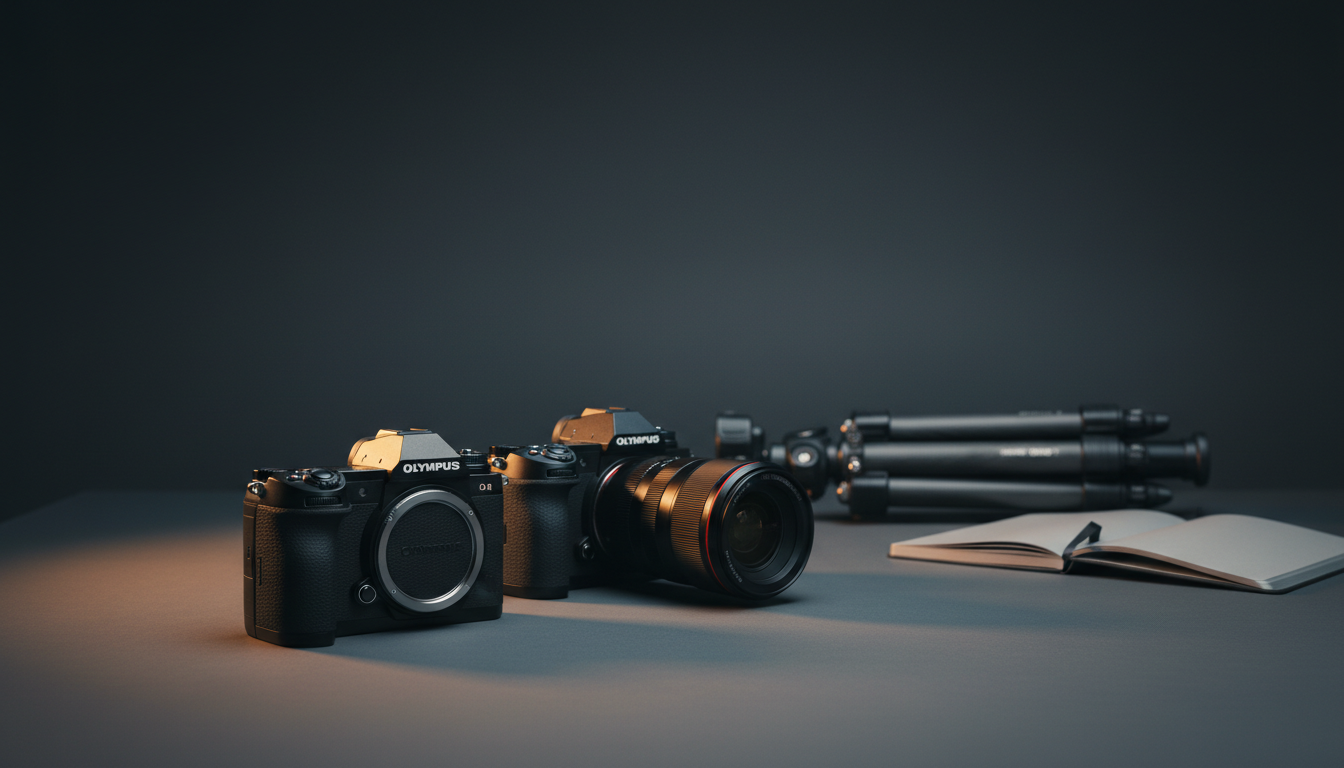
Finding a camera that pairs solid image‑stabilization with a friendly price can feel like hunting for a unicorn. In this roundup of 4 Micro Four Thirds mirrorless models with IBIS, the cheapest option – the Olympus OM‑D E‑M1 Mark III at $788.98 – actually holds a 4.5‑star rating from 220 reviewers, nudging it ahead of the higher‑priced Panasonic LUMIX G97 in sheer popularity.
The four contenders split neatly into two price tiers. Our budget lane features the Olympus and Panasonic bodies, while the premium tier houses the OM‑5 Mark II at $1,499.99 and the flagship OM‑1 Mark II at $1,999.99. All four offer five‑axis in‑body stabilization, with the Olympus and OM‑5 providing up to 7.5 stops, the OM‑1 Mark II reaching 8.5 stops, and the G97 delivering reliable IBIS for video and stills alike.
Next, we’ll break down how each camera handles real‑world shooting, so you can match the right mix of price, performance, and portability to your creative needs.

Olympus OM-D E-M1 Mark III
It's 20.4 MP sensor delivers solid resolution while the 1720 mAh battery supports long shoots, giving great value for entry‑level buyers.

OM System OM-1 Mark II
Ideal for enthusiasts demanding premium performance, the OM‑1 Mark II justifies its $1,211 price premium over the Best Overall model, delivering top‑tier quality for serious shooters.

OM System OM-5 Mark II 150mm
Stands out with up to 7.5‑stop 5‑axis sync IS and an 80 MP resolution, catering to professionals who need extreme detail and stabilization beyond the other picks.
Score Analysis
Key score advantages vs. runner-up (OM System OM-1)
Price Range
Olympus OM-D E-M1 Mark III
$788.98
OM System OM-1 Mark II
$1,999.99
OM System OM-5 Mark II 150mm
$1,499.99

Panasonic LUMIX G97
$847.99
Spec Comparison
TL;DR: The Olympus OM-D E-M1 Mark III packs a 5‑axis, 7‑stop IBIS system, a 20.4 MP Live MOS sensor, and a rugged magnesium body for $788, making it a solid, weather‑sealed Micro‑Four‑Thirds option for outdoor shooters.
What really sets this camera apart is its 5‑axis in‑body image stabilization delivering up to 7 stops of shake reduction, or 7.5 stops when paired with Sync IS lenses. The 20.4 MP Live MOS sensor works with the TruePic IX processor, and the EVF offers a 2.36‑million‑dot OLED view with a 6 ms lag and a 120 fps refresh rate, giving you a clear, real‑time preview.
At 580 g (with battery and card) the OM‑D E‑M1 III is heavier than the Panasonic LUMIX G97, which weighs 478 g, and also heavier than the OM System OM‑5 Mark II’s 418 g body. It’s a bit shorter in depth (69 mm vs. 77.4 mm on the G97) and slimmer than the OM‑5’s 49.7 mm depth. Both the Olympus and the OM‑5 claim up to 7.5 stops of IBIS, but the OM‑5 lists fewer megapixels (80 MP maximum resolution from a multi‑shot mode) compared with Olympus’s 50 MP handheld and 80 MP tripod high‑res modes. The G97’s continuous‑shooting speed tops out at 9 fps, while the Olympus can reach 60 fps with fixed focus, a notable advantage for fast action.
Reviewers consistently praise the camera’s rugged magnesium alloy chassis and dust‑/freeze‑proof sealing, noting that it holds up well on long hikes and in wet weather. Many highlight the IBIS as a major advantage for handheld sharpness, especially in the high‑resolution modes. On the downside, users say the 580 g weight feels bulky on extended treks, and some find the menu system complex for newcomers. Some experts point out that the 2020 sensor and processor feel dated next to newer flagships released after 2022.
Pros
Cons
Best for: Outdoor enthusiasts, hikers, wildlife photographers, and astrophotographers who need rugged weather sealing and strong handheld stabilization.
Avoid if: You need top‑tier low‑light performance, studio lighting control, or the very latest sensor technology.
“held off plenty of rain”
TL;DR: At $1999.99, the OM‑1 Mark II earns a 4.6‑star rating from 103 reviewers, who praise its rugged build, strong stabilization and fast autofocus, though newcomers may find the menus daunting.
OM System’s OM‑1 Mark II sits near the top of this IBIS‑focused Micro Four Thirds roundup, carrying a premium price tag and a solid 4.6‑star rating. The camera’s reputation for durability and weather‑sealing adds confidence for outdoor shooters, while the brand’s legacy in the mirrorless space reinforces its premium positioning.
Users consistently highlight the camera’s compact, weather‑sealed magnesium body as ideal for travel and harsh conditions. The built‑in image‑stabilization and rapid autofocus frequently earn commendations for keeping handheld shots sharp, especially when shooting wildlife or action scenes. On the downside, several reviewers mention that the menu system can feel complex for those new to the platform, and the grip size may be less comfortable for larger hands. High‑ISO performance also draws criticism when pushing beyond the camera’s comfortable range.
Based purely on price and rating, the OM‑1 Mark II stands out as a high‑end option within the group, offering a blend of rugged construction and performance that justifies its cost for serious enthusiasts. While it doesn’t provide the most budget‑friendly entry point, its strong user approval suggests it delivers value for photographers who prioritize durability and speed.
Pros
Cons
Best for: Those prioritizing quality and willing to pay for premium performance
TL;DR: The OM System OM-5 Mark II delivers 80 MP resolution and 7.5‑stop in‑body stabilization in a pocket‑sized, weather‑sealed body for $1,499.99, making it a premium choice for travel shooters.
What really sets the OM‑5 Mark II apart is its 80 MP sensor paired with up to 7.5 stops of 5‑axis sync image stabilization. Housed in a body that weighs just 366 g and measures only 49.7 mm deep, the camera feels like a premium compact rather than a traditional mirrorless rig.
Against the three other cameras in this roundup, the OM‑5 sits in the middle of the price band—cheaper than the OM‑1 Mark II but pricier than the Panasonic G97 and Olympus E‑M1 III. In terms of weight, it’s lighter than the G97’s 2.54 lb chassis and also lighter than the Olympus’s 1.28 lb body, while still feeling solid enough for field work.
User reviews repeatedly mention the camera’s pocket‑friendly size and the IP53 weather‑seal as lifesavers on hikes and city trips. Professional reviewers praise the dedicated computational photography button and Pro Capture mode for delivering creative flexibility without sacrificing image quality, and they note the autofocus’s reliability on moving subjects.
The camera also offers a 2‑× teleconverter effect, a 2‑axis level gauge for precise horizon alignment, unlimited 4K video recording and vertical‑video support, making it a versatile tool for both stills and video creators.
Pros
Cons
Best for: Those prioritizing quality and willing to pay for premium performance
Avoid if: You're shopping on a tight budget — it's priced at $1499.99
TL;DR: The Panasonic LUMIX G97 packs a 20.3 MP Micro Four Thirds sensor, 5‑stop 5‑axis IBIS and 9 fps burst into a compact DSLR‑style body for hybrid creators at $847.99.
The standout feature is its 5‑axis Dual I.S.2 system, rated at up to 5 stops of shake reduction, which pairs with a 20.3 MP CMOS sensor (17.3 × 13.0 mm) to keep handheld shots sharp. Continuous shooting reaches 9 fps, and the vari‑angle 3‑inch touchscreen delivers a 1.84 M‑dot view.
Compared with the Olympus OM‑D E‑M1 Mark III, the G97 is heavier at 2.54 lb versus Olympus’s 1.28 lb, and its body is deeper (77.4 mm vs 69 mm) and wider (130.4 mm vs 91 mm). The OM‑5 Mark II is lighter at 366 g, while the G97 tips the scales at 478 g, but it offers a larger grip that many users find more comfortable for extended shoots. All three peers list fewer IBIS stops, making the G97’s 5‑stop stabilization a clear advantage.
Reviewers consistently praise the DSLR‑style grip and the effective IBIS, noting the camera feels solid in the hand and delivers sharp images straight from the kit lens. However, reviewers view the modest 1.84 M‑dot screen as only a slight upgrade over previous models, and they criticize the contrast‑detect 49‑area AF system for lacking phase‑detect speed. Professionals also point out the absence of weather sealing and higher‑bit video options, which limits its appeal for demanding videographers.
Pros
Cons
Best for: Hybrid photo/video creators and travelers who want a compact Micro Four Thirds system with solid in‑body stabilization and a comfortable grip.
Avoid if: You need weather sealing, phase‑detect AF, or professional‑grade video features such as 10‑bit 4:2:2 recording.
“great value DSLR styled camera”
Breakdown
Olympus OM-D E-M1 Mark III
Pros
OM System OM-5 Mark II 150mm
Pros
Cons
Panasonic LUMIX G97
Pros
Cons
Based on scoring data and product specs
Personalized picks
Best Overall Pick
Olympus OM-D E-M1 Mark III
Best OverallBest for: Entry-level buyers or those on a tight budget
OM System OM-1 Mark II
Best for: Those prioritizing quality and willing to pay for premium performance
$1,999.99+$1,211.01 vs winner
Skip Panasonic LUMIX G97 if…
Reliability and user satisfaction are your top concerns
We’re naming the Olympus OM‑D E‑M1 Mark III the clear winner of the IBIS‑enabled Micro Four Thirds roundup. Its 5‑axis in‑body stabilization promises up to 7 stops (7.5 with Sync IS), which translates to steadier handheld shots in low light. Pair that with a 20.4 MP Live MOS sensor and a fast 121‑point autofocus system, and you’ve got a camera that balances resolution and focus accuracy. The body stays light at 1.28 pounds and can fire up to 60 fps in fixed‑focus burst mode, while the 420‑shot CIPA‑rated battery keeps you shooting longer.
The runner‑up is the OM System OM‑1 Mark II, ideal if you need the newest tech and are willing to invest more. It debuted on 2024‑02‑26, it carries a strong 4.6‑star rating from 103 reviewers and sits at $1999.99, positioning it as a premium option for photographers seeking high performance.
For other budgets, we recommend the Panasonic LUMIX G97 as the best budget pick at $847.99, offering solid core features without breaking the bank. The OM System OM‑5 Mark II (150 mm) serves as a mid‑range choice at $1499.99, delivering many of the flagship capabilities at a more approachable price. And for those who want top‑tier specs, the OM System OM‑1 Mark II remains the premium selection.
Pick the Olympus OM‑D E‑M1 Mark III today and get the most versatile IBIS‑enabled Micro Four Thirds camera for your money.
The Olympus OM-D E-M1 Mark III features a magnesium‑alloy chassis and dust/freeze/slash‑proof sealing, giving it the highest level of weather resistance among the list. The OM System OM-5 Mark II also offers an IP53 rating and is lighter at 418 g, but its protection is slightly less comprehensive than the Olympus’s full sealing.
No reviews yet — be the first to share your experience.
Please sign in to leave a review
