Rankings
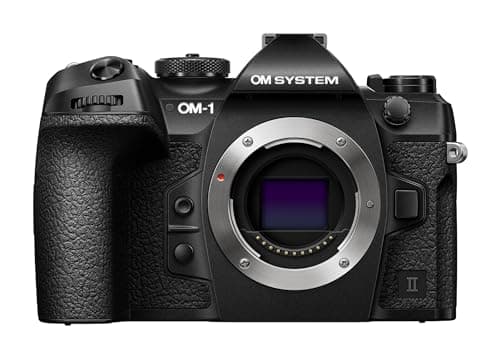
The OM-1 Mark II is a flagship Micro Four Thirds camera offering 8.5-stop IBIS, 120 fps burst, and advanced autofocus for demanding outdoor work. Its limitations include a smaller sensor that hampers low-light performance and the absence of built-in ND filters or higher-resolution video. Ideal for wildlife and action shooters who need speed and stabilization in a compact, weather-sealed body.
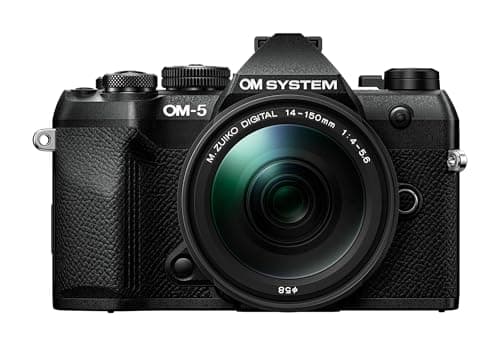
The OM SYSTEM OM-5 Mark II combines an 80 MP sensor-shift system with up to 7.5-stop IBIS in a lightweight, IP53-sealed body, targeting travel photographers. Limited disclosed video specs and battery details leave some uncertainty. Ideal for travelers seeking high-resolution stills and robust stabilization in a compact package.
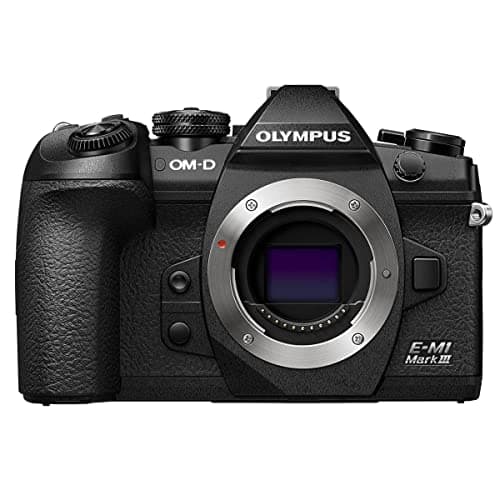
The E-M1 Mark III is a rugged Micro Four Thirds flagship offering industry-leading stabilization, ultra-fast 60 fps burst, and high-resolution EVF. Its drawbacks are a relatively heavy body, limited low-light capability, and aging firmware. It suits outdoor and action photographers who need robust build quality and speed over the absolute best sensor performance.
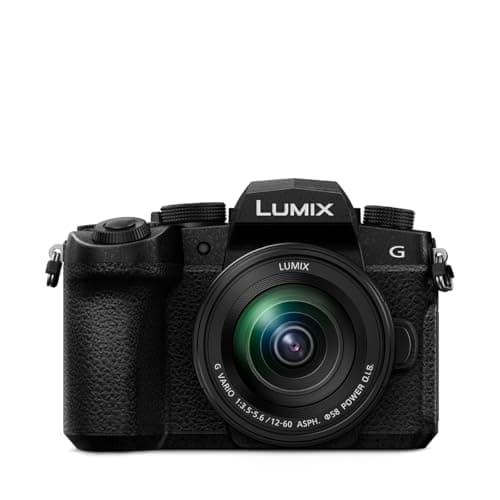
The Panasonic LUMIX G97 is a 2025 mid-priced, compact hybrid Micro Four Thirds camera delivering a 20.3 MP sensor, 4K/30p video and 5-axis in-body stabilization in a DSLR-style body. While its ergonomics and IBIS are strong points, the modest screen resolution, lack of phase-detect AF and no weather sealing limit its suitability for demanding professional work. It is best for hybrid creators and travelers who want a portable, well-rounded system without the bulk of higher-end models.
| Attribute | | | | |
|---|---|---|---|---|
20.4 MP | 20.4 MP | 80 MPbest | 20.3 MP | |
25,600best | — | — | 25,600best | |
420 shotsbest | — | — | — | |
60 fps | 120 fpsbest | — | 9 fps | |
| ↓ lower better | 580 g | 599 g | 366 gbest | 478 g |
1,720 mAhbest | — | — | — | |
3 inbest | — | — | 3 inbest | |
1 MP | — | — | 1.84 MPbest |
Click an attribute name to sort · Green = best, red = worst (relative to this comparison)
| Attribute | | | | |
|---|---|---|---|---|
Image Sensor(1) | ||||
Megapixels (MP) | 20.4 MP | 20.4 MP | 80 MP | 20.3 MP |
Performance(1) | ||||
Continuous Shooting Speed (fps) | 60 fps | 120 fps | — | 9 fps |
Build & Design(3) | ||||
Body Weight (g) | 580 g | 599 g | 366 g | 478 g |
Dimensions (W×H×D) (mm) | 91 x 134 x 69 mm mm | 7.2 x 5.63 x 7.6 inches mm | 125.3x85.2x49.7 mm | 130.4 x 93.5 x 77.4 mm mm |
Weather Sealing | true | true | true | false |
Display(2) | ||||
Screen Size (in) | 3.0 in | — | — | 3 in |
Screen Resolution (MP) | 1.0 MP | — | — | 1.84 MP |
Connectivity(2) | ||||
Wi‑Fi Connectivity | true | — | — | false |
Bluetooth Version | true | — | — | Improved |
Products in the top-left offer the best value (high score, low price).
Professional reviewers commend the E-M1 Mark III for its industry-leading stabilization, blistering 60 fps burst, and high-resolution EVF, positioning it as a top-tier Micro Four Thirds flagship for outdoor and action photography. They also note that while the build quality and weather sealing are exemplary, the sensor technology and firmware are aging, and the menu complexity may deter newcomers.
Everyday users love the camera's ruggedness, battery endurance, and especially the IBIS that lets them shoot sharp handheld images in challenging weather. Common praise centers on the compact travel-friendly kit and high-res modes, while recurring complaints focus on the weight during extended hikes, a steep learning curve with menus, and less impressive low-light performance compared to larger-sensor rivals.
“held off plenty of rain”
“"great value DSLR styled camera"”
Professional reviewers consider the OM-1 Mark II a flagship that delivers pro-grade performance in a remarkably lightweight and rugged package. They commend its 8.5-stop stabilization, high-speed burst capabilities, and advanced computational features, while noting the inherent limitations of the Micro Four Thirds sensor and the absence of higher-resolution video or built-in ND filters.
Everyday users consistently praise the camera's portability, weather-sealing, and handheld stability, especially for travel, wildlife, and landscape photography. Common criticisms focus on the steep learning curve of the menu system, high-ISO noise, and occasional autofocus struggles in very low light.
Professional reviewers commend the OM-System Mark II cameras for marrying compact ergonomics with high-end performance. The OM-5 excels as a travel-focused, ultra-light body with strong stabilization, while the OM-1 delivers a feature-rich, weather-sealed platform that rivals larger full-frame systems in speed, autofocus, and computational capabilities.
Professional reviewers view the G97 as a solid, value-focused upgrade to the G90, commending its DSLR-style ergonomics, improved USB-C charging, and higher-resolution vari-angle screen. However, they note the lack of phase-detect AF, weather sealing, and advanced video codecs as drawbacks that keep it from competing with higher-end MFT models.
Consumers generally praise the G97 for its portability, comfortable grip, and effective 5-axis stabilization that yields sharp images straight out of the kit lens. The added USB-C charging and Bluetooth are welcomed, while the modest screen upgrade is seen as a minor benefit.
