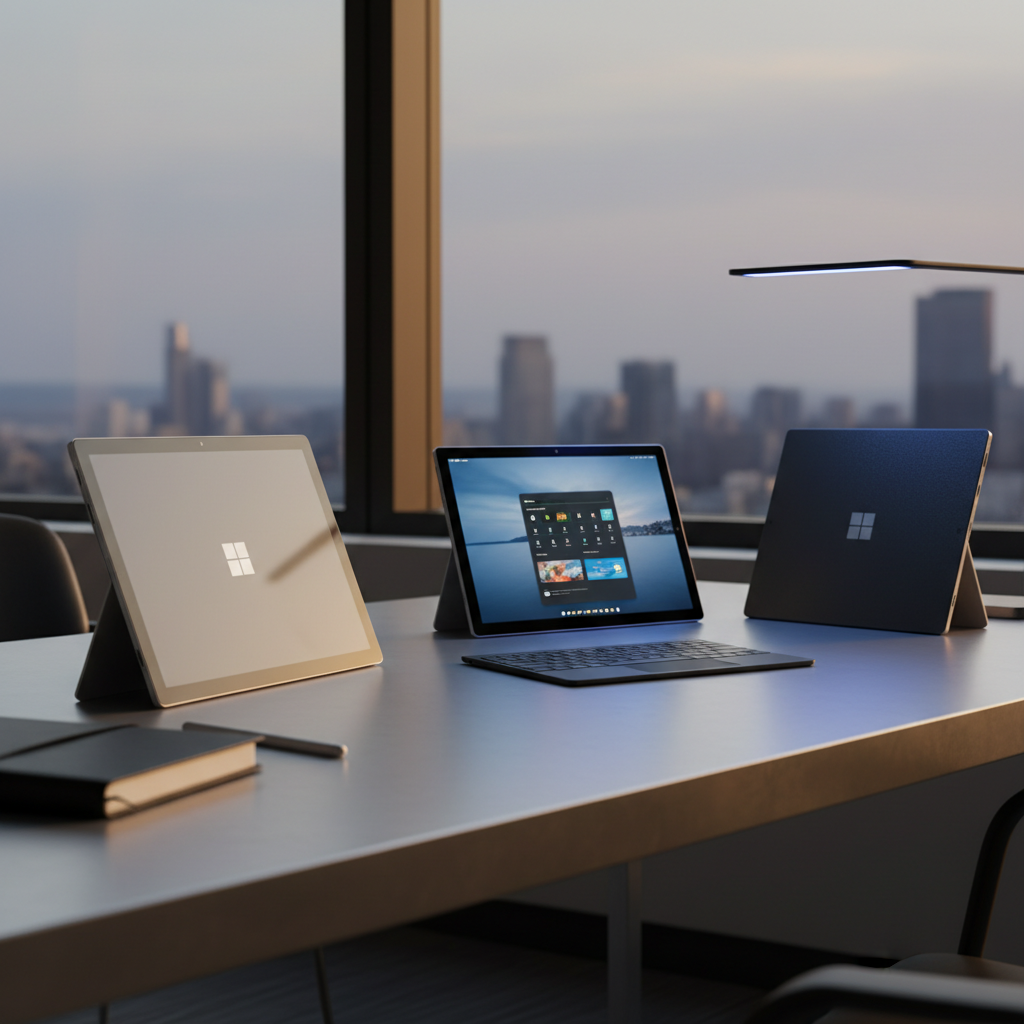
Choosing the right Surface tablet can feel overwhelming, especially when you’ve got 7 models to compare. In this roundup the price spread stretches from $134.32 for the entry‑level Surface Go 2 4GB up to $1600.99 for the premium Surface Pro 2024, so you’ll find something whether you’re hunting for a budget companion, a mid‑range workhorse, or a top‑tier creator’s device. The lineup is split into three clear tiers: Budget (the three Go variants), Mid‑range (Surface Pro 7+), and Premium (the 2024, 2025 and 12‑inch models).
All three premium picks share a solid 4.4/5 rating, with the Surface Pro 2024 pulling in 813 reviews and offering up to 14 hours of video playback on Wi‑Fi. If battery endurance is your priority, the 2025 and 12‑inch versions both promise 16 hours of video playback and weigh 2.20462262pounds, making them easy to carry. The mid‑range Pro 7+ lists a 15 hour Wi‑Fi battery life, while the budget Go models keep weight low at 1.15 pounds and deliver 9 hours of video playback.
Below we break down each model’s strengths, so you can match a Surface tablet to your workflow and budget.

Microsoft Surface Pro 2024
Its 53 Wh OLED battery gives longer unplugged use than typical tablets, supporting demanding workdays without hunting for an outlet.

Microsoft Surface Pro 12-inch
Ideal for students or freelancers who need a capable tablet without the premium price—costs about $751 less than the Surface Pro 2024 while still offering Dolby Atmos stereo speakers.

Microsoft Surface Pro 2025
Stands out with up to 16 hours of video playback and 12 hours of web use, delivering the longest on‑the‑go endurance among the three Surface Pro options.
Also considered
Score Analysis
Key score advantages vs. runner-up (Microsoft Surface Pro)
Price Range
Microsoft Surface Pro 2024
$1,616.00
Microsoft Surface Pro 12-inch
$849.97
Microsoft Surface Pro 2025
$649.99

Microsoft Surface Go 2 4GB
$128.96

Microsoft Surface Pro 7+
$494.99

Microsoft Surface Go 2 Pentium
$203.00
Microsoft Surface Go 2
$214.50
Spec Comparison
TL;DR: The 2024 Surface Pro delivers a 13‑inch OLED screen at up to 120 Hz, 32 GB RAM and a 45 TOPS NPU for AI‑heavy work, but its $1,600.99 price and limited ports keep it in the premium tier.
The standout feature is the optional OLED panel that reaches 900 nits HDR peak brightness, 1,000,000:1 contrast and a refresh rate of up to 120 Hz on a 13‑inch 2880 × 1920 display. Coupled with 32 GB LPDDR5x RAM and a 1 TB Gen 4 SSD, it offers a desktop‑class experience in a detachable form factor.
Compared with the other six Surface models in this roundup, the 2024 Pro is considerably pricier than the Surface Pro 12‑inch ($849.97) and Surface Pro 2025 ($649.99). It also weighs more—3.30693393 lb versus roughly 2.6 lb for the 12‑inch and 2.2 lb for the 2025 version. The 2024 Pro offers a larger battery capacity—48 Wh (LCD) or 53 Wh (OLED)—and fast‑charging power tops out at 65 W+, while the 12‑inch and 2025 models list 38 Wh and 45 W charging respectively. Brightness is another win: the 2024 Pro’s 900 nits HDR far exceeds the 400‑nit maximum of those peers. However, it shares the limited‑port approach of the Surface Go line, offering only two USB‑C/USB4 ports and no HDMI or SD slot.
Reviewers consistently praise the AI acceleration from the 45 TOPS NPU, noting smooth live translation and Windows Studio Effects. The Quad‑HD front camera (1440p) and 10 MP rear shooter also earn compliments for video calls and occasional snaps. On the downside, users flag the absence of a headphone jack and the reliance on USB‑C for audio, plus the premium price tag. Professional outlets highlighted the OLED display’s cinema‑grade quality and the fluid 120 Hz touch response.
Under the hood, the device can be configured with either a Snapdragon X Elite (12‑core, up to 3.8 GHz) or a Snapdragon X Plus (10‑core, up to 3.4 GHz) processor, both paired with a 45 TOPS NPU for AI workloads. Connectivity includes Wi‑Fi 7, 5G NR, Bluetooth 5.4 and a Surface Connect port for accessories. The tablet also supports the Surface Slim Pen (2nd Edition) with integrated storage in compatible keyboards.
Pros
Cons
Best for: Buyers willing to invest in a proven, high‑quality option
Avoid if: You're shopping on a tight budget — it's priced at $1600.99
TL;DR: The Surface Pro 12‑inch delivers a 12‑hour web‑use battery, 16 GB RAM, and a bright 400‑nit LCD in a sleek 2.5683853523‑lb form, but lacks an OLED panel and 120 Hz display.
At the heart of the Surface Pro 12‑inch sits a Snapdragon X Plus processor that can reach 3.4 GHz and a 45 TOPS neural processing unit, paired with 16 GB LPDDR5x RAM and 512 GB UFS storage. The 12.0‑inch PixelSense LCD delivers 400 nits of brightness and a 90 Hz refresh rate, while the 38 Wh battery promises up to 16 hours of video playback and 12 hours of web use, refueled quickly by a 45 W fast charger.
Weighing 2.5683853523 lb, the device is heavier than the Surface Pro 2025’s 2.20462262 lb and lighter than the older Surface Pro 2024, which tips the scales at over 3 lb. Its battery life matches the Pro 2025’s 16‑hour video claim, and both share the same 45 W fast‑charging capability. Wi‑Fi 7 and Bluetooth 5.4 put it on par with the Pro 2025, while the Surface Pro 7+ offers a slightly older Wi‑Fi 6 connection.
Everyday users rave about the all‑day endurance and the convenience of the integrated Surface Slim Pen storage, noting the pen’s haptic feedback and wireless charging. Professional reviewers highlight the up to 16 hours of video playback battery life and AI‑ready NPU. On the downside, owners point out that the LCD’s 400 nits peak brightness can feel modest in bright environments, and the UFS storage doesn’t feel as snappy as the faster SSDs found in competing laptops.
Audio gets a boost from 2 W stereo speakers with Dolby Atmos and dual studio microphones that focus on voice, while the 10 MP rear camera and 1080p front camera cover video calls and quick snaps. The tablet also includes two Thunderbolt 4‑compatible USB‑C ports, a DisplayPort 1.4a, and a TPM 2.0 for enterprise‑grade security.
Pros
Cons
Best for: Mobile professionals who need a lightweight, long‑lasting device for presentations and video calls.
Avoid if: You're on a tight budget, need an OLED display, higher peak brightness, or a 120 Hz screen.
TL;DR: The Surface Pro 2025 delivers a 12‑inch, AI‑enhanced tablet with 16 hours of video playback, 16 GB RAM, and fast 45 W charging, all for $649.99.
What really sets the Surface Pro 2025 apart is its AI‑first architecture: a Snapdragon X Plus processor that can boost to 3.4 GHz paired with a 45 TOPS NPU, plus 16 GB LPDDR5x RAM and 256 GB UFS storage. The 12‑inch PixelSense LCD offers 220 PPI, up to 90 Hz dynamic refresh, 400 nits brightness and a 1200:1 contrast ratio, while the front 1080p camera and rear 10 MP shooter round out the media experience.
At $649.99, the Pro 2025 sits above the Surface Pro 7+ (priced at $499.95) but well below the Surface Pro 12‑inch ($849.97) and the Surface Pro 2024 (well over $1,600). It weighs 2.20462262 pounds—lighter than the 12‑inch model’s 2.5683853523 pounds yet heavier than the Go lineup’s sub‑1.2‑pound options. Its 36.3 mm thickness matches the 12‑inch sibling but is noticeably thicker than the Go 2’s 8.3 mm profile. Battery life shines with 16 hours of video playback, edging out the Pro 7+’s 15‑hour Wi‑Fi claim and the Go series’ 9‑11 hour range.
Everyday users rave about the 16‑hour video playback battery, the tablet’s featherlight feel for a 12‑inch device, and the on‑device AI that makes Copilot+ features feel snappy. Professional reviewers echo the battery praise but flag the UFS storage as slower than the SSDs that higher‑end Surfaces use, and they note the lack of an OLED panel and a modest 400‑nit peak brightness for bright‑outdoor work. The limited port selection—just two USB‑C/USB4 sockets—also surfaces as a common trade‑off.
Beyond the AI core, the Pro 2025 packs Wi‑Fi 7 and Bluetooth 5.4 for future‑proof connectivity, supports fast 45 W USB‑C charging, and includes dual 2 W Dolby Atmos speakers with Bluetooth LE Audio. Sustainability isn’t an afterthought either: the battery uses 100 % recycled cobalt, the enclosure is 82.9 % recycled aluminum alloy, and the packaging is 75 % recycled wood‑based fiber.
Pros
Cons
Best for: Those prioritizing quality and willing to pay for premium performance
Avoid if: You're on a tight budget or only need basic functionality
TL;DR: The Surface Go 2 4 GB packs a 10.5‑inch PixelSense screen, 1.6 GHz Pentium CPU, and a 1.15‑lb magnesium body for under $140, making it the most portable Windows tablet in the lineup.
Corning Gorilla Glass 3 protects the 10.5‑inch PixelSense display, which offers a 1800 × 1200 resolution and 220 ppi. Under the hood lives an Intel Pentium Gold 4415Y dual‑core processor clocked at 1.6 GHz, paired with 4 GB LPDDR4x RAM and 64 GB eMMC storage. At just 1.15 pounds (522 g) it’s the lightest Surface tablet offered.
Compared with the other six Surface models, this Go 2 is noticeably lighter than the Surface Pro 2025 (≈2.20 lb) and the Pro 2024 (≈3.31 lb with keyboard). Its depth of 6.8 inches (172.72 mm) is a touch shorter than the standard Surface Go 2’s 175 mm depth, and its weight matches the 522 g listed for the Surface Go 2 Pentium. Battery life tops out at up to 9 hours of video playback, a bit less than the 10‑hour video claim on the regular Surface Go 2 but on par with the Go 2 Pentium’s 9‑hour figure. The 2 W stereo speakers with Dolby Audio equal the original Go’s speakers and out‑power the 1.6 W speakers found on the Surface Pro 7+.
Users consistently praise the tablet’s portability and full Windows 10/11 experience for note‑taking and light productivity. Professional reviewers note the premium magnesium build and vivid display, while many point out that 4 GB of RAM and eMMC storage can feel sluggish when multitasking. Battery endurance often falls short of the advertised 9‑hour video claim in real‑world use, and Microsoft sells the Type Cover and Surface Pen separately, adding to the total cost.
Pros
Cons
Best for: Entry-level buyers or those on a tight budget
Avoid if: Reliability and user satisfaction are your top concerns
TL;DR: The Surface Pro 7+ packs a 12.3‑inch PixelSense screen, 8 GB RAM and up to 15 hours of Wi‑Fi battery life into a 770 g magnesium chassis for a solid, portable Windows tablet.
The standout spec is the 12.3‑inch PixelSense display with 267 PPI and 10‑point multi‑touch, delivering crisp visuals for productivity and media. Under the hood you get a quad‑core 11th‑Gen Intel i5, 8 GB LPDDR4x RAM and a removable 256 GB SSD, all powered by a 45.8 Wh minimum battery that lasts up to 15 hours on Wi‑Fi (13.5 hours on LTE).
At 770 g, the Pro 7+ is lighter than the Surface Pro 2025 (which tips the scales at 1000 g) and considerably lighter than the Surface Pro 12‑inch (over 2.5 lb). Its 8.5 mm thickness rivals the slim profile of the Surface Go 2 Pentium’s 8.3 mm, yet it’s thicker than the Go 2 Pentium’s 245 mm length and 175 mm width, giving it a more substantial tablet feel. Battery life sits between the Go 2 Pentium’s up‑to‑9‑hour claim and the Pro 2025’s 16‑hour video playback, offering a practical middle ground. Connectivity is modest: a single USB‑C and one USB‑A port, offering fewer ports than the richer mixes on the larger Pro 12‑inch and Pro 2024 models.
User feedback praises the lightweight magnesium body, the bright 12.3‑inch screen and the long‑lasting battery that often reaches the advertised 12‑14 hour range in everyday use. Professional reviewers also note the refined design and solid performance for business tasks. The common downsides include the soldered RAM that can’t be upgraded, the modest 256 GB base storage, and the lack of Thunder‑bolt 4 or a larger port selection, which can feel limiting for power users.
Pros
Cons
Best for: Business professionals, remote workers, digital nomads, and students in professional programs who want a balanced, mainstream Windows tablet.
Avoid if: You need advanced features like Thunderbolt 4, larger internal storage, upgradeable RAM, or high‑end graphics for demanding creative work.
TL;DR: The Surface Go 2 with a Pentium Gold CPU packs a 10.5‑inch 220 PPI PixelSense display, 8 GB RAM and a 9‑hour battery into a 522 g, 8.3 mm‑thin chassis for $247.56.
The standout feature is the 10.5‑inch 1920 × 1280 PixelSense screen, shielded with Corning Gorilla Glass 3, delivering 220 PPI and a crisp 3:2 aspect ratio. Coupled with a lightweight magnesium body that weighs just 522 g and measures only 8.3 mm thick, the tablet feels almost like a premium notebook you can carry in a small bag.
Compared with the other six Surface models in this roundup, it sits at the higher end of the price band—more expensive than the base Surface Go 2, which lists at $209.99—but it adds 8 GB of RAM and a full‑size 128 GB NVMe SSD. It is lighter than the Surface Pro 7+ and far lighter than the Pro 2025, Pro 12‑inch and Pro 2024, all of which tip the scales at roughly 2 lb or more. Its 26.81 Wh (3500 mAh) battery has a smaller capacity than the Pro 7+’s 45.8 Wh minimum, yet the manufacturer claims up to 9 hours of use, matching the base Go 2’s advertised endurance.
Everyday users praise the tablet’s portability, bright display and all‑day battery for note‑taking and media consumption. Professional reviewers echo the sentiment, noting the premium build and accurate colors, but they also point out that the entry‑level Pentium Gold 6500Y (1.1 GHz base, 2.8 GHz turbo) can feel sluggish when juggling several apps. The 128 GB SSD leaves roughly 118 GB usable, which many find limiting, and the single USB‑C 3.1 port often forces the purchase of dongles for extra peripherals.
Pros
Cons
Best for: Entry‑level buyers or those on a tight budget
Avoid if: You want the best value‑per‑dollar in its price range
TL;DR: The Surface Go 2 offers a lightweight 10.5‑inch PixelSense screen, 8 GB RAM and up to 11 hours of battery life for under $210, making it a solid budget 2‑in‑1 tablet.
The standout spec is the combination of 8 GB LPDDR3 RAM and a 128 GB NVMe SSD, delivering snappy everyday performance in a fanless design. Its 10.5‑inch PixelSense touchscreen packs 220 PPI, so text and images look sharp on the 3:2 aspect ratio.
Compared with the other six Surface models, this Go 2 is noticeably lighter than the Pro‑class devices, while only a few grams heavier than the lower‑spec Surface Go 2 Pentium (522 g) and the 4 GB Go 2 (522 g). Battery life reaches 11 hours in typical use, a modest bump over the 9‑hour claim on those same Go 2 variants. The display size and pixel density match the other Go 2 models, but the Pro line offers larger screens and higher‑capacity batteries, albeit at a much higher price.
Users consistently praise the tablet’s portability and the vibrant, responsive display, noting that the magnesium‑alloy chassis feels premium for its weight of 544 g. Reviewers also highlight the silent, fanless operation. On the downside, the base 128 GB storage can fill quickly, and the single USB‑C port means you’ll likely need an adapter for extra peripherals. Microsoft sells the keyboard and Surface Pen separately, which adds to the overall cost.
Running on an Intel Core m3‑8100Y processor with a 1.6 GHz base clock and a 3.4 GHz turbo boost, it pairs with Intel UHD Graphics 615. Connectivity includes Bluetooth 5.0, Wi‑Fi 5, a 3.5 mm headphone jack, a USB‑C 3.1 Gen 1 port, and a micro‑SDXC slot supporting up to 1 TB. Front and rear cameras are 5 MP and 8 MP respectively, both capable of 1080p video and Windows Hello facial recognition.
Pros
Cons
Best for: Entry-level buyers or those on a tight budget
Avoid if: You need advanced features or professional‑grade performance
Breakdown
Microsoft Surface Pro 2024
Pros
Cons
Microsoft Surface Pro 12-inch
Pros
Microsoft Surface Pro 2025
Pros
Microsoft Surface Go 2 4GB
Pros
Cons
Based on scoring data and product specs
Personalized picks
Best Overall Pick
Microsoft Surface Pro 2024
Best OverallBest for: Buyers willing to invest in a proven, high-quality option
Microsoft Surface Pro 12-inch
Best for: Those prioritizing quality and willing to pay for premium performance
$849.97-$766.03 vs winner
Skip Microsoft Surface Go 2 if…
You need advanced features or professional-grade performance
Microsoft Surface Pro 2024 takes the top spot as the best Surface tablet. It packs a 13‑inch OLED display with up to 120 Hz refresh, a bright 600 nits SDR panel and 900 nits HDR peak, while the 32 GB LPDDR5x memory and 1 TB Gen 4 SSD keep demanding apps buttery smooth. Battery life stretches to 14 hours of video playback, and the device stays connected with 5G, Wi‑Fi 7 and Bluetooth 5.4, all in a chassis that weighs 3.3069 lbs with the keyboard.
The runner‑up, Microsoft Surface Pro 12‑inch, shines when you need a lighter, more affordable tablet for everyday media and light productivity. Its 12.0‑inch PixelSense LCD delivers 2196 × 1464 resolution at 90 Hz, and the 16 GB of RAM plus 512 GB UFS storage handle multitasking comfortably. A 38 Wh battery provides up to 16 hours of video playback, and the 45 W fast‑charging capability gets you back in action quickly.
For tighter budgets, the Surface Go 2 4GB model offers essential tablet functionality at just $134.32, while the Surface Pro 7+ hits the sweet spot for mid‑range shoppers at $499.95, delivering solid performance without the premium price tag.
Pick the Surface Pro 2024 today—it's the most capable Windows tablet Microsoft currently offers.
The Microsoft Surface Pro 2024 leads with a 13‑inch OLED panel that can reach 900 nits of HDR peak brightness and supports up to a 120 Hz refresh rate, delivering vivid colors and smooth motion. Its 2880 × 1920 resolution and 1,000,000:1 contrast ratio give it a clear advantage over the LCD‑based models.
Please sign in to leave a review
No reviews yet. Be the first to review!
