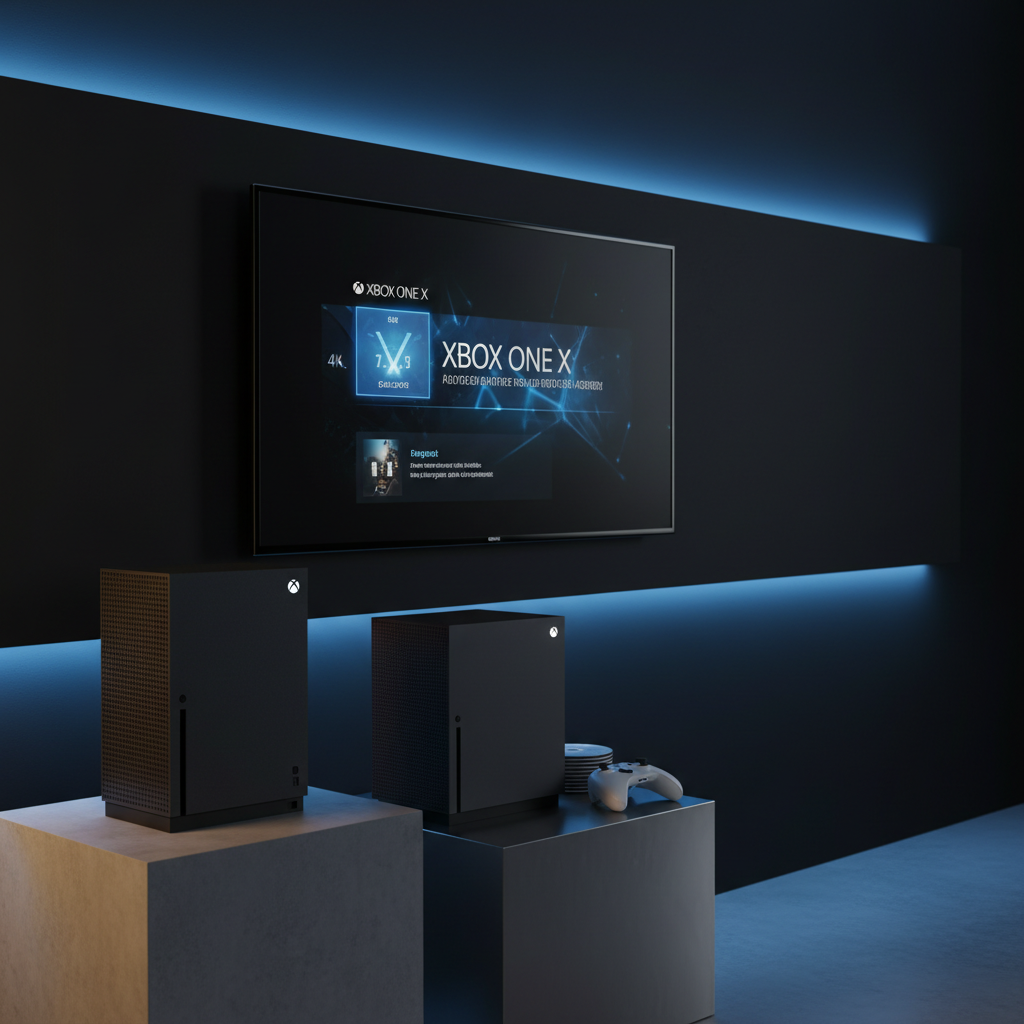
Our Xbox console showdown looks at six Microsoft models, spanning a price spread from $199.99 for the compact Xbox One S 500 GB up to $24,595.00 for the all‑digital Xbox One S 1 TB edition. The lineup splits cleanly into three price tiers: the budget picks (Xbox One 500 GB and Xbox One S 500 GB), the mid‑range contenders (Xbox One X 1 TB and Xbox One S 1 TB Division 2), and the premium offerings (Xbox Series X and Xbox One S 1 TB All‑Digital). This structure helps you match your spend to the features you care about.
The top‑rated entry is the Xbox Series X, boasting a 4.6/5 rating from 573 reviewers, a 1 TB custom NVMe SSD and 16 GB of GDDR6 memory, making it the most powerful next‑gen console with those specs. Close behind, the Xbox One X 1 TB carries a solid 4.0/5 rating from 2,713 reviews and delivers 6 TFLOPS of GPU performance for native 4K gaming. For tighter budgets, the Xbox One S 500 GB offers a 4.1/5 rating from 744 reviewers, 4K Blu‑ray playback and a sleek form factor at $199.99.
Read on to see which console aligns with your gaming setup, storage needs, and performance expectations.

Microsoft Xbox Series X
Up to 40 hours of battery life lets you enjoy marathon gaming sessions without frequent recharging.

Microsoft Xbox One X 1TB
Ideal for gamers who want solid performance without the premium price, it’s $416 less than the Series X while still delivering 1TB storage and three USB 3.0 ports.
Microsoft Xbox One 500GB
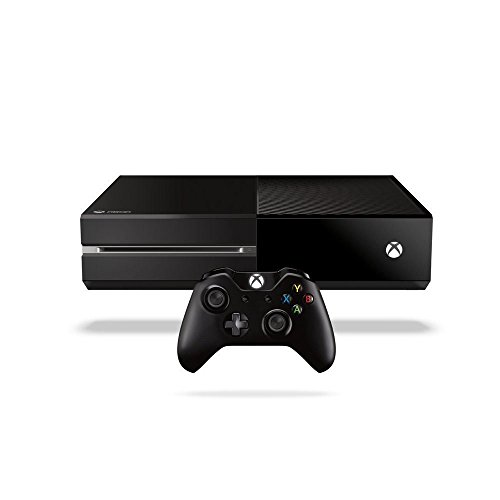
Its compact 14.0‑in depth and 13.0‑in height makes it easy to fit into tight spaces, offering a 500GB model for budget‑focused households.
Also considered
Score Analysis
Key score advantages vs. runner-up (Microsoft Xbox One)
Price Range
Microsoft Xbox Series X
$672.99
Microsoft Xbox One X 1TB
$259.00
Microsoft Xbox One 500GB
$189.00
Microsoft Xbox One S 500GB
$199.99

Microsoft Xbox One S 1TB Division 2
$284.99
Microsoft Xbox One S 1TB All-Digital
$267.68
Spec Comparison
TL;DR: The Xbox Series X packs a 12 TFLOPS GPU, 1 TB NVMe SSD and 16 GB GDDR6 memory into a 9.8‑pound tower, delivering true 4K gaming at up to 120 FPS.
The console’s custom AMD Zen 2 CPU runs at 3.8 GHz and its RDNA 2 GPU delivers 12 TFLOPS of compute power, while the 16 GB GDDR6 system memory offers 560 GB/s bandwidth on the 10 GB segment. A 1 TB NVMe SSD and 4.8 GB/s compressed I/O throughput give you near‑instant load times, and the HDMI 2.1 output supports 3840×2160 resolution with up to 120 FPS.
Weighing 9.8 pounds, the Series X feels slightly lighter than the Xbox One X’s 10.0‑pound weight, yet its 151 mm × 301 mm × 151 mm footprint stands taller than the Xbox One S 1TB Division 2’s 113 mm height, making it a more substantial tower than the earlier models. Performance‑wise it doubles the GPU power of the One X’s 6 TFLOPS and outpaces the One S’s 1.4 TFLOPS, while also offering a higher memory bandwidth than the One X’s 326 GB/s.
Reviewers consistently praise the near‑silent cooling system—thanks to a centrifugal fan with a vapor‑chamber—and the Quick Resume feature that lets you jump back into multiple games instantly. Users love the included controller’s up to 40‑hour battery life and the breadth of Game Pass titles, though many note the large tower design can dominate cramped setups and the proprietary Seagate expansion card costs a lot.
Pros
Cons
Best for: Buyers willing to invest in a proven, high‑quality option
Avoid if: You need advanced features or professional‑grade performance
“Dead silent even during long gaming sessions.”
TL;DR: The Xbox One X packs a 6 TFLOPS GPU, 2.30 GHz eight‑core CPU, and 1 TB of storage, delivering native 4K HDR gaming on a 10‑pound console priced at $259.
The standout spec is the 6 TFLOPS graphics processor paired with a 2.30 GHz eight‑core CPU, giving the console native 2160p (4K UHD) output at up to 60 Hz. It also offers 12 GB of system memory (9 GB available for games) and a 1 TB HDD, plus a 4K Ultra HD Blu‑ray drive for movies.
Compared with the other five Xbox models, the One X is more powerful than the Xbox One 500 GB (1.31 TFLOPS GPU) and the Xbox One S 500 GB (1.4 TFLOPS GPU). It also provides a full 4K experience, whereas the One S series only upscales lower‑resolution content. Physically, it's deeper (305 mm) and taller (419 mm) than the compact Xbox Series X (151 mm × 301 mm) and the All‑Digital One S (66 mm × 328 mm), and it weighs 10.0 pounds—significantly heavier than the 3.18 kg Xbox One S 1 TB Division 2 and the 3.2 kg Xbox One 500 GB.
Reviewers consistently praise the console’s quiet operation and the visual leap on 4K HDR TVs, noting that games load quickly and look sharp. However, many users point out the high $259 price tag and the lack of exclusive 4K titles, especially if they’re playing on a 1080p screen where the upgrade feels less noticeable.
Technical details reinforce its premium status: the 8‑core CPU runs at 2.30 GHz, the GPU runs at 1.172 GHz across 40 compute units, and the memory bandwidth hits 326 GB/s. Three USB 3.0 ports provide expandable storage options, and the console supports HDR10, Dolby Atmos, and DTS:X for immersive audio.
Pros
Cons
Best for: Owners of 4K HDR TVs who want top‑tier performance and a built‑in 4K Blu‑ray player.
Avoid if: You don’t have a 4K TV, are budget‑conscious, or prioritize exclusive game titles over raw power.
“Dead silent even during long gaming sessions.”
TL;DR: The refurbished Xbox One 500 GB delivers classic Xbox titles, a solid controller, and 1.31 TFLOPS graphics for $201.75, but its 500 GB HDD and older hardware feel cramped for modern games.
The console’s standout spec is the AMD GPU delivering 1.31 TFLOPS of compute power, paired with 8 GB DDR3 RAM and a 500 GB hard‑drive. Its footprint measures 14.0 in deep, 13.0 in tall and 8.0 in wide, and it weighs 3.2 kg, so it's a fairly substantial box for a 2013‑era machine.
Compared with the Xbox One S 500 GB, this model is taller but less deep, and its GPU sits just below the S’s 1.4 TFLOPS. It’s noticeably lighter than the Xbox One X, which tips the scales at about 10 lb, yet it offers far less raw power than the X’s 6 TFLOPS GPU. Storage is also half of the 1 TB found in the One S 1 TB and the Series X, so you’ll run out of space faster.
Reviewers consistently praise the ergonomic wireless controller and the console’s quiet operation, especially when juggling older Xbox 360 and original Xbox titles. Backward compatibility is a strong selling point, but users flag the 500 GB HDD as a bottleneck that fills quickly, and the older DDR3 memory can feel sluggish on newer releases. The external power brick adds bulk, and load times are slower than on the newer Xbox Series X.
Technically, the Xbox One runs an 8‑core AMD x86‑64 APU, supports Blu‑ray/DVD media, offers HDMI input and output, and includes 3 × USB 3.0 ports, Wi‑Fi 4 (802.11n) and an optical 7.1‑surround audio output. The bundle ships with a wireless controller, HDMI cable and power supply, and it carries a 90‑day limited warranty.
Pros
Cons
Best for: Shoppers on a tight budget who want the most for their money
Avoid if: You need 4K gaming, fast SSD load times, or cutting‑edge graphics performance
“Dead silent even during long gaming sessions.”
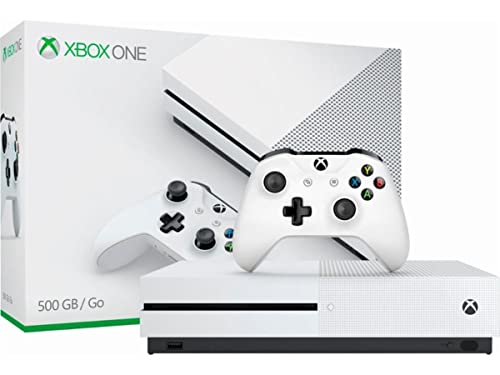
TL;DR: The Xbox One S 500 GB delivers 4K Blu‑ray playback, HDR10 gaming and a compact white chassis for $199.99, but its 500 GB HDD and lack of native 4K gaming keep it in the budget tier.
The console’s standout feature is its 4K Ultra HD Blu‑ray drive, supporting a maximum resolution of 3840×2160 at 60 Hz with HDR10. Coupled with HDMI 2.0a, you get crisp movie playback and upscaled gaming visuals in a sleek white shell that measures just 114.3 mm tall.
At 2.9 kg, the One S is lighter than the original Xbox One 500 GB (3.2 kg) while sporting a dramatically lower profile. Its GPU delivers 1.4 TFLOPS, a modest bump over the original’s 1.31 TFLOPS, yet it trails the Xbox One X’s 6 TFLOPS by a wide margin. Compared with the Xbox One S 1TB Division 2 edition, the dimensions match in depth (431.8 mm vs 291 mm) but the Division 2 model lists fewer USB ports. The Series X is considerably heavier and larger, placing the One S firmly in the compact, budget‑friendly segment.
Professional reviewers praise the console’s whisper‑quiet operation and integrated power supply, noting that the smaller chassis runs cooler than the first‑gen Xbox One. Everyday users love the 4K movie experience, but many flag the 500 GB SATA HDD as a bottleneck that fills quickly, especially with large game installs. The lack of native 4K gaming—only upscaling—frequently draws complaints, as does the single included controller.
Under the hood, an 8‑core AMD Jaguar CPU runs at 1.75 GHz, paired with 8 GB DDR3 RAM clocked at 2133 MHz. Connectivity includes Bluetooth 4.0, Gigabit Ethernet at 1000 Mbps, and Wi‑Fi 802.11ac. Three USB 3.0 ports give you room for accessories, while HDR10 support adds richer colors to supported titles.
Pros
Cons
Best for: Entry-level buyers or those on a tight budget
Avoid if: You want the best value‑per‑dollar in its price range
“Dead silent even during long gaming sessions.”
TL;DR: The Xbox One S 1TB Division 2 bundle gives you a 1 TB HDD, a full‑size controller, and a copy of Tom Clancy’s The Division for $284.99, but it stays limited to 1080p output and a bulkier chassis.
The standout spec is the 1 TB 2.5‑inch SATA hard drive, which dwarfs the 500 GB storage found in the standard Xbox One S and Xbox One models. Under the hood, the console runs a custom 8‑core AMD Jaguar CPU at 1.75 GHz, paired with an AMD Radeon GCN‑based GPU clocked to 853 MHz delivering 1.31 TFLOPS across 12 compute units, and 8 GB DDR3 RAM with 32 MB embedded SRAM.
Compared with the other five consoles in this roundup, the One S 1TB sits in the middle of the performance ladder. It's lighter than the Xbox One X 1TB, which weighs 10.0 pounds, but heavier than the ultra‑compact Xbox Series X at 9.8 pounds. Its 12 compute units are far fewer than the One X’s 40 CUs, and its maximum resolution of 1920 × 1080 (1080p) trails the One X’s 2160p (4K) and the Series X’s far higher capabilities. Storage‑wise, it matches the One X’s 1 TB capacity but offers more space than the 500 GB drives in the Xbox One 500GB and Xbox One S 500GB models. The GPU’s 1.31 TFLOPS ties the original Xbox One’s performance, while the Xbox One S 500GB lists a slightly higher 1.4 TFLOPS.
User sentiment repeatedly praises the 1 TB of space and the inclusion of a digital copy of The Division, which many say adds immediate value. Professional reviewers note the bundle’s strategic timing with the game’s launch and call the storage upgrade a solid selling point. However, common complaints focus on the mechanical HDD’s slower load times, the lack of native 4K video (the console only upscales to 4K), and the boxy design that feels bulkier than newer models. The console also ships with a Kinect sensor port, though it doesn't include a Kinect, a point some users highlight.
Pros
Cons
Best for: Fans of Tom Clancy’s The Division who want a ready‑to‑play bundle and extra storage without upgrading to a newer generation.
Avoid if: You need 4K gaming, a compact console footprint, or prefer a faster solid‑state drive.
“Dead silent even during long gaming sessions.”
TL;DR: The Xbox One S 1TB All‑Digital packs a terabyte of storage, a wireless controller, and three popular games into a compact white console, but its $24,595 price makes it a premium‑only choice.
This model’s standout spec is its 1TB internal storage, giving you ample room for digital installs without needing an external drive. The all‑digital edition measures just 66 mm deep, 328 mm high and 335 mm wide, so it fits neatly on a TV stand or in a small entertainment centre.
Compared with the other five consoles in our roundup, the One S All‑Digital is far pricier than the standard Xbox One S 500GB and Xbox One 500GB models, and even more expensive than the high‑end Xbox Series X. Its depth of 66 mm is shallower than the Series X’s 151 mm, while the Xbox One S 1TB Division 2 sits at a deeper 291 mm. Storage-wise, it matches the Division 2’s 1TB capacity but lacks a disc drive, unlike the Xbox One X 1TB and the original Xbox One 500GB, which both support physical media.
Customers who have unwrapped this bundle often praise the inclusion of a wireless controller and three well‑known titles—Minecraft, Sea of Thieves and Fortnite—plus a month of Xbox Live Gold, which jump‑starts online play. The compact white chassis also earns nods for blending into living‑room décor. However, the lack of any rating data suggests limited user feedback, and the 90‑day (129,600 minutes) limited warranty may feel short for a device at this price point.
Because the edition is marketed as All‑Digital, the console does not list an optical drive in its specifications, meaning you can only download or stream titles. If you already own a collection of disc‑based games, that could be a significant compromise.
Pros
Cons
Best for: Those prioritizing quality and willing to pay for premium performance
Avoid if: You're on a tight budget or only need basic functionality
“Dead silent even during long gaming sessions.”
Breakdown
Microsoft Xbox Series X
Pros
Microsoft Xbox One X 1TB
Pros
Cons
Microsoft Xbox One 500GB
Pros
Cons
Microsoft Xbox One S 500GB
Pros
Cons
Based on scoring data and product specs
Personalized picks
Best Overall Pick
Microsoft Xbox Series X
Best ValueBest for: Buyers willing to invest in a proven, high-quality option
Microsoft Xbox One X 1TB
Best for: Most users seeking a balanced, mainstream option
$259.00-$413.99 vs winner
Skip Microsoft Xbox One S 1TB All-Digital if…
You're on a tight budget or only need basic functionality
The Microsoft Xbox Series X wins the roundup, featuring a 12 TFLOPS GPU, a 1 TB NVMe SSD and native 4K support at up to 120 FPS. It also carries a 4.6‑star rating from 573 reviewers and ships with a 1‑year warranty, delivering top‑tier performance without compromising reliability.
Coming in second, the Xbox One X 1 TB earns the runner‑up slot if you need solid 4K gaming and a built‑in 4K UHD Blu‑ray player while staying under the Series X price. At $259.00 it delivers 6 TFLOPS of graphics power, 4K resolution up to 60 Hz, and a 4.0‑star rating from 2,713 reviews, making it a practical choice for gamers who want high‑quality visuals without the premium cost.
For tighter budgets, the Xbox One S 500 GB at $199.99 offers reliable 1080p performance for casual play. The mid‑range sweet spot remains the Xbox One X 1 TB at $259.00, combining 4K capability with a spacious HDD for a balanced experience. If you crave a massive digital library, the Xbox One S 1 TB All‑Digital provides 1 TB of storage at $24,595.00, ideal for collectors who prefer a fully digital setup.
Choose the Xbox Series X today for the most future‑proof Xbox experience.
The Xbox Series X is designed for that level of performance, offering 4K (3840 × 2160) output and support for up to 120 FPS. Its 12 TFLOPS GPU and HDMI 2.1 features make it the top choice for high‑frame‑rate gaming.
Please sign in to leave a review
No reviews yet. Be the first to review!
