Mini drones have become the go‑to tool for anyone who wants aerial shots without hauling a bulky rig. In this roundup we compare 7 models that span three price tiers – budget options like the Holy Stone HS440G at $119.99, a mid‑range pick, the DJI Neo, and premium contenders such as the DJI Mini 4K Combo at $389.00. The spread from $119.99 to $389.00 means there’s a fit for casual flyers, travel vloggers, and those chasing higher‑end performance.
What’s surprising is how many high‑end features show up in the lower‑priced segment. The Potensic ATOM SE, priced at $198.99, weighs just 0.55 lb, sports a 12 MP sensor, and holds a solid 4.4‑star rating from over 6,000 reviewers. Meanwhile the DJI Mini 4K Combo commands a 4.5‑star rating from nearly 20,000 users and pushes the weight limit to 0.54 lb while still staying under the 250 g registration threshold. Both deliver 4K video, but the ATOM SE does it at a fraction of the premium price.
We’ll walk through each model’s flight time, camera quality, range and smart‑flight modes so you can match the drone to your skill level and shooting style.

Potensic ATOM SE
Its 2500 mAh battery gives longer flights, delivering strong value for entry‑level pilots.

DJI Mini 4K Combo
Ideal for enthusiasts ready to spend about $190 more for a proven brand, the DJI Mini 4K Combo offers a 2250 mAh battery and top‑tier features.
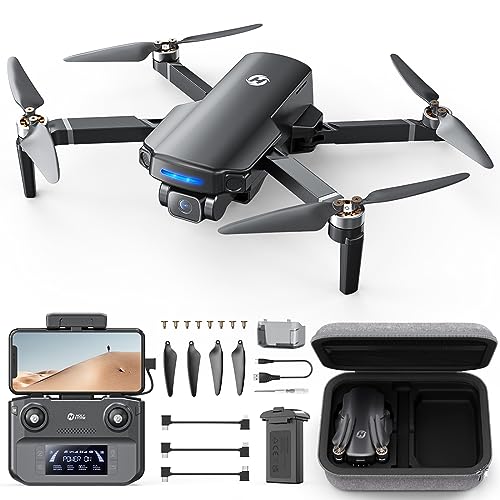
Holy Stone HS360S
Stands out with a 5–7 hour charge time and 20‑minute flight window, offering a compact, quick‑ready option not detailed on the higher‑priced rivals.
Also considered
TL;DR: The Potensic ATOM delivers 4K video, a 2230 mAh battery and a sub‑250 g frame for about $279.99, making it a premium‑grade mini‑drone that feels surprisingly capable for its size.
The ATOM’s standout spec is its 2230 mAh battery paired with a 15 W charger that tops out in 100 minutes. Weighing just 0.55 pounds, the drone stays comfortably under the 250 g registration threshold while still packing a 17.18 Wh energy cell. Reviewers consistently award it 4.6 / 5 stars across 3,761 opinions, indicating strong overall satisfaction.
Against the six other mini‑drones in this roundup, the ATOM is lighter than the Specta Mini (2.20 pounds) and considerably lighter than the Holy Stone HS360S (0.47 pounds). It sits between the DJI Neo (0.30 pounds) and the DJI Mini 4K Combo (0.54 pounds) in weight, matching the Potensic ATOM SE’s 0.55 pounds. Its 2230 mAh capacity is on par with the Specta Mini’s 2250 mAh and the DJI Mini 4K’s 2250 mAh, but exceeds the DJI Neo’s 1435 mAh. The 100‑minute charge beats the 5–7‑hour charging cycle listed for the Holy Stone HS360S, and the 78‑minute parallel‑charging hub time adds a fast‑swap advantage.
Users love the ATOM’s ability to stay aloft for up to 32 minutes per charge, a figure that feels generous for a sub‑250 g craft. The 4K 30 fps video and 3‑axis mechanical gimbal earn praise from both hobbyists and professional reviewers, who note the smooth footage and manual camera controls rarely seen at this price point. Its ultralight build means you can fly it in most regions without registration, a practical perk for beginners. On the downside, the drone lacks obstacle‑avoidance sensors, carries a fixed‑focus lens that struggles with close‑ups, and ships without ND filters, limiting performance in bright conditions.
From a technical standpoint, the ATOM folds down to 88 × 143 × 58 mm, with a diagonal span of 219 mm when unfolded. The remote controller houses a 3000 mAh battery that delivers 138 minutes of operating time, ensuring you can keep the drone in the air while the main unit recharges. All dimensions and capacities are listed as manufacturer‑claimed, giving you a clear picture of the drone’s footprint and endurance.
Pros
Cons
Best for: Buyers willing to invest in a proven, high‑quality option — the Potensic ATOM offers Capacity: 2230 mAh
Avoid if: You're on a tight budget or need obstacle‑avoidance sensors and macro‑ready optics for professional‑grade shooting
TL;DR: The Specta Mini delivers 4K video, a 10 km transmission range and a 3‑axis gimbal, but its $209 price and 23‑minute real‑world flight time put it at the premium end of the mini‑drone market.
What really sets the Specta Mini apart is its advertised 9,998,400 mm (≈10 km) maximum control range, a figure that eclipses the ranges listed for the other six drones in this roundup. Coupled with a 4K UHD camera at 30 fps and a 3‑axis mechanical gimbal, it promises cinematic footage from a pocket‑sized platform.
In comparison, the Specta Mini is heavier than the DJI Neo and Potensic ATOM SE, both of which weigh well under one pound. It also carries a higher price tag than those two models, while its 2,250 mAh battery capacity sits between the DJI Neo’s 1,435 mAh cell and the Potensic ATOM SE’s 2,500 mAh pack. The drone’s dimensions (55.88 mm high, 243.84 mm long, 289.56 mm wide) make it larger than the compact DJI Neo, yet still portable enough for travel.
Users consistently praise the 4K clarity and the “unmatched” long‑range link, noting that beginners find the flight experience stable even in winds up to Level 5 (≈38 km/h). Professional reviewers highlight the smooth gimbal work and the reliable GPS‑assisted hovering. The most common complaints revolve around the real‑world flight time of about 23 minutes, which falls short of the advertised 31 minutes, and occasional app connectivity hiccups on certain Android devices. The drone also lacks front or side obstacle sensors and does not offer Follow‑Me or Waypoint autonomous modes.
Additional technical context includes a downward‑vision sensor for altitude hold, a USB‑C port for charging and data transfer, and support for up to a 256 GB microSD card. The battery charges in roughly 90–120 minutes, and the drone’s 12 MP photo sensor (1/2.3" CMOS) adds still‑image versatility to its video‑first design.
Pros
Cons
Best for: Those prioritizing quality and willing to pay for premium performance — the Specta Mini offers Advertised Flight Time: 31 minutes
Avoid if: You're shopping on a tight budget — it's priced at $209.00
“spectacular candidate for Best DJI Alternative Drones”
TL;DR: The Holy Stone HS440G delivers 4K video, 23‑minute flights and brushless motors in a sub‑250 g, fold‑able package for $119.99, making it a solid entry‑level choice despite a long charging time.
The standout spec is the 4K UHD camera that records at 3840×2160 px @ 25 fps, paired with a 120° field of view and an 8 MP photo sensor. Combined with electronic image stabilization and a 90° manual lens tilt, the HS440G gives beginners a surprisingly cinematic toolkit without the bulk of a gimbal‑stabilized system. Its brushless motors and 5 GHz Wi‑Fi transmission further boost efficiency and signal clarity.
Compared with the six other drones in this roundup, the HS440G sits in the middle of the performance spectrum. It weighs 154 g, which is heavier than the DJI Neo’s 0.30 lb frame but far lighter than the Specta Mini’s 2.20 lb build. Flight time reaches 23 minutes, outlasting the Holy Stone HS360S’s 20 minutes and the DJI Neo’s 18 minutes, yet it falls short of the Specta Mini’s advertised 31 minutes. Its 500 meter control range is respectable for a budget model but considerably shorter than the HS360S’s 3,048 meter range and the Specta Mini’s roughly 10 km reach.
Everyday users praise the drone’s intuitive handheld controller, the convenience of the included shoulder bag, and the freedom of flying without FAA registration thanks to its sub‑250 g weight. However, reviewers consistently note the 3‑hour charging cycle, which eclipses the 23‑minute flight window, and the reliance on electronic stabilization, which can feel shaky in windy conditions. Professional reviewers highlight the brushless motors and dual‑satellite GPS + GLONASS as strong points for stable hovering, while also pointing out the lack of a mechanical gimbal as a limitation for serious video work.
Pros
Cons
Best for: Entry‑level buyers or those on a tight budget — the Holy Stone HS440G offers Charging Time: 3 hours
Avoid if: you need professional‑grade stabilized 4K footage, fast charging turnaround, or long‑range operation.
“Best drone I’ve ever had!”
“The Follow Me and Waypoint modes work reliably for hiking and outdoor adventures.”
Breakdown
Potensic ATOM SE
Pros
DJI Mini 4K Combo
Pros
Cons
Holy Stone HS360S
Pros

Potensic ATOM
Pros
Based on scoring data and product specs
Personalized picks
Best Overall Pick
Potensic ATOM SE
Best OverallBest for: Budget-conscious buyers seeking a reliable entry-level option — the Potensic ATOM SE offers Capacity: 2500 mAh
DJI Mini 4K Combo
Best for: Buyers willing to invest in a proven, high-quality option — the DJI Mini 4K Combo offers Battery Capacity: 2250 mAh
$269.00+$70.01 vs winner
Skip Holy Stone HS440G if…
Reliability and user satisfaction are your top concerns
Potensic ATOM SE takes the crown as the best overall mini‑drone. It offers a 31‑minute maximum flight time, a 4 km unobstructed transmission range, and a lightweight 0.55 lb design that stays under the EU C0 sub‑250 g class—all for $198.99, well below its $299.99 list price.
The runner‑up is the DJI Mini 4K Combo, which shines if you need cinematic quality footage thanks to its 3‑axis mechanical gimbal, 4K video at up to 100 Mbps, and a longer transmission reach of up to 10 km (FCC). It’s the go‑to choice for creators who prioritize stabilized video and extended range.
For other budgets, the Holy Stone HS440G is the best budget pick at $119.99, delivering solid indoor‑outdoor flight for casual hobbyists. The DJI Neo serves as the mid‑range option at $199.00, offering reliable performance and brushless motors without the premium price tag. The premium tier remains the DJI Mini 4K Combo, delivering top‑level video and range for serious enthusiasts.
Pick the Potensic ATOM SE today and enjoy pro‑level features without breaking the bank.
Please sign in to leave a review
No reviews yet. Be the first to review!


