If you’re hunting a lightweight drone that actually shoots true 4K video, the DJI Mini 4K Combo packs a surprising amount of value. Weighing just 0.54 lb and staying under the 249 g registration threshold, it flies up to 31 minutes on a single charge, resists winds up to 38 kph, and delivers crisp 4K footage from a 24 mm‑equivalent lens. At $389.00 it carries a solid 4.5‑star rating from nearly 20 k reviewers.
The roundup compares 10 models across three price tiers. Budget‑friendly choices include the Holy Stone HS440G at $119.99, the HS360S for $167.99, the Potensic ATOM SE at $198.99, and DJI’s Neo at $199.00, all hovering around the 0.3–0.5 lb mark. Mid‑range options are the Specta Mini ($209.00) and Potensic ATOM ($279.99), each offering around 30 minutes of flight. Premium contenders—DJI Mini 5 Pro ($759.00), its Fly More Combo ($1,099.00), and the Mini 5 Pro Plus Combo ($1,159.00)—push flight times past 50 minutes and add larger sensors or built‑in screens.
Below you’ll see how each drone measures up on camera quality, endurance, and ease of use, so you can match the right kit to your shooting style.

DJI Mini 4K Combo
Its 2250 mAh battery gives solid flight time while delivering the proven DJI brand value that earned top ratings.

DJI Mini 5 Pro Fly More Combo
Ideal for audiophiles and feature‑hungry enthusiasts, it costs $1099, which is $710 more than the Best Overall DJI Mini 4K Combo.

DJI Mini 5 Pro
Stands out with a 2788 mAh battery—the highest capacity in the lineup—offering longer power reserves for premium‑feature flights without the extra batteries of the Fly More combo.
Also considered
TL;DR: The DJI Mini 4K Combo gives you true 4K video, a 31‑minute flight, and up to 10 km transmission in a sub‑250 g package, making it a strong value for travel creators.
The Mini 4K captures genuine 4K footage at 3840 × 2160 px with a 100 Mbps bitrate, backed by a 12 MP 1/2.3‑inch CMOS sensor and a 24 mm (35 mm‑equivalent) lens that offers an 83° field of view. A 3‑axis mechanical gimbal keeps the camera steady within a ±0.01° vibration range, delivering cinematic stability for every shot.
Weighing just 0.54233716452 pounds (246 g takeoff weight), it stays under the 0.55‑pound threshold that many competitors exceed, while still packing a full‑featured remote and a shoulder bag. The price point lands it above entry‑level drones but below premium flagship models, positioning it as a mid‑range choice with more capability than the lighter, cheaper options.
Users consistently praise the one‑tap takeoff/landing and GPS Return‑to‑Home for a confidence‑boosting first‑flight experience. Reviewers highlight the reliable DJI O2 transmission that reaches up to 10 km with ~200 ms latency, and the 31‑minute flight time per battery. Common complaints focus on the lack of obstacle‑avoidance sensors, the f/2.8 aperture limiting low‑light performance, and the need for a microSD card because there’s no internal storage.
Technically, the 2250 mAh battery delivers a maximum of 31 minutes of flight, extendable to 93 minutes with three batteries. The drone can climb at 5 m/s, descend at 3.5 m/s, and cruise horizontally at 16 m/s, while tolerating winds up to 10.7 m/s (≈38 kph) and operating at altitudes as high as 4000 m. These specs give you a robust platform for both casual outings and more ambitious aerial projects.
Pros
Cons
Best for: Buyers willing to invest in a proven, high-quality option — the DJI Mini 4K Combo offers Battery Capacity: 2250 mAh
Avoid if: You're on a tight budget, only need basic functionality, or require professional‑grade low‑light performance and obstacle avoidance.
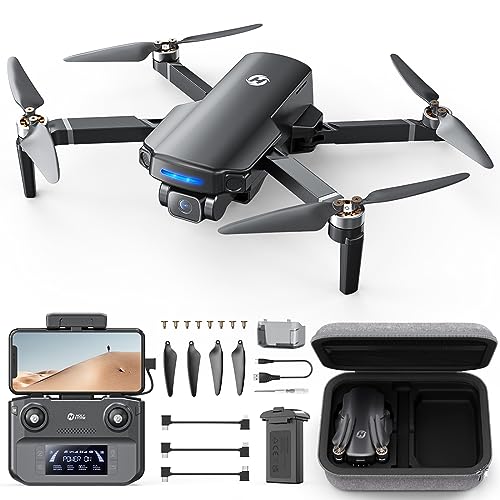
TL;DR: The DJI Neo packs 4K UHD video, 12 MP stills, and 18 minutes of flight into a 135 g, pocket‑sized drone that launches from your palm and flies up to 10 km away.
The standout feature is its 4K UHD video at 30 fps paired with a 12 MP sensor and an f/2.2 aperture, all stored on a built‑in 22 GB memory chip. At just 135 g, the drone is light enough to avoid FAA registration, and its 18‑minute flight time comes from a 1435 mAh lithium‑ion battery.
Compared with the other nine drones in this roundup, the Neo is lighter than the Potensic ATOM SE (0.55 lb) and Holy Stone HS360S (0.47 lb), and dramatically lighter than the Specta Mini (over 2 lb). Its battery capacity of 1435 mAh sits below the 2500 mAh found in the ATOM SE and the 2250 mAh in the Specta Mini, which translates to a shorter 18‑minute flight versus the Specta Mini’s 31‑minute claim. The 10 km transmission range matches the Specta Mini’s advertised range, while being longer than the Holy Stone HS360S’s 3 km range.
Users love the Neo’s pocketable design and the intuitive palm‑takeoff/landing, calling it “throw‑and‑go” for hikes and BBQs. AI subject tracking and eight QuickShot modes earn praise for turning casual flyers into instant content creators. Professional reviewers note the convenience of multiple control options—app, voice, RC‑N3 remote, and RC Motion 3—but also point out that the electronic image stabilization can produce shaky clips in windy conditions, and the lack of a mechanical gimbal limits cinematic stability.
Technically, the drone offers full‑coverage propeller guards, gesture control, and level‑4 wind resistance (up to 7 m/s). It operates between 0 °C and 40 °C and supports Wi‑Fi and Bluetooth communication, giving you flexibility whether you fly controller‑free or pair with an RC.
Pros
Cons
Best for: Budget-conscious buyers seeking a reliable entry-level option — the DJI Neo offers Battery Capacity: 1435 mAh
Avoid if: You need advanced features or professional‑grade performance
TL;DR: The Potensic ATOM packs a 2230 mAh battery, 4K video and a sub‑250 g frame into a 88 × 143 × 58 mm foldable drone that flies for around half an hour on a charge.
At just 0.55 lb (0.54895103238 pounds) the ATOM stays under the 250 g threshold that lets many countries waive registration, while its 15 W charger refills the 2230 mAh pack in roughly 100 minutes. Users and pros alike note that the fast‑charging hub can add another 78 minutes of flight time, making it one of the more ready‑to‑fly options in its class.
Compared with the nine other drones in this roundup, the ATOM lands in the middle of the price band—more expensive than the Specta Mini and DJI Neo, yet cheaper than the DJI Mini 4K Combo. It’s lighter than the Specta Mini’s 2.20 lb but a touch heavier than the DJI Neo’s 0.30 lb. Its 219 mm diagonal puts it on par with the ATOM SE’s footprint, while its folded size of 88 × 143 × 58 mm makes it easier to stash than the bulkier Holy Stone HS440G.
Reviewers praise the ATOM’s 4K 30 fps video and the 3‑axis mechanical gimbal for delivering smooth footage without the premium price tag. Professional reviewers highlight the manual camera controls as a rarity in this weight class. On the downside, the lack of obstacle‑avoidance sensors and a fixed‑focus lens (minimum focus 3 m) draw consistent criticism, especially from users hoping to capture close‑up shots. The absence of ND filters also limits dynamic range in bright conditions.
Pros
Cons
Best for: Most users looking for a well‑reviewed, reliable mainstream option — the Potensic ATOM offers Battery Capacity: 3000 mAh (remote controller).
Avoid if: You need obstacle‑avoidance sensors, close‑up macro capability, or ND filters for bright‑light shooting.
TL;DR: The Potensic ATOM SE delivers 4K video, up to 31 minutes of flight, and a 4 km transmission range for $198.99, making it a solid entry‑level drone for beginners.
The ATOM SE packs a 12 MP 4K camera with a 118° field of view and f/2.2 aperture, backed by electronic image stabilization. Its 2500 mAh battery supplies 18 Wh, giving a claimed maximum flight time of 31 minutes and a hovering time of 28 minutes indoors. Weighing just 0.55 pounds (< 249 g), it stays within the sub‑250 g EU class, which helps keep the regulatory burden low.
Compared with the other nine drones in this roundup, the ATOM SE is heavier than the ultra‑light DJI Neo but lighter than the Specta Mini and Holy Stone HS440G. Its 31‑minute endurance matches the Specta Mini’s claim and far exceeds the DJI Neo’s 18‑minute runtime and the Holy Stone HS360S’s 20‑minute flight time. The 4 km transmission distance also outpaces the 500‑meter range of the Holy Stone HS440G, while the 38 km/h wind resistance gives it more stability than many budget models.
Everyday users praise the long flight time, the compact folded size (58 × 143 × 88 mm), and the value of the included extra battery and case. Professional reviewers note the solid plastic build and reliable PixSync 2.0 link, though they point out that the lack of a mechanical gimbal can let video shake in breezy conditions. The mandatory app registration also shows up as a friction point in user feedback.
On the technical side, the drone accelerates to 16 m/s in 2.8 seconds and can climb at 5 m/s in sport mode, while descending at 4 m/s. GPS, GLONASS, Galileo and BeiDou support give accurate positioning, and the optical flow system helps indoor flight. The fastest charging time listed is 1.5 hours via USB‑C, which is respectable for a 2500 mAh pack but slower than some competitors that offer rapid‑charge hubs.
Pros
Cons
Best for: Budget-conscious buyers seeking a reliable entry-level option — the Potensic ATOM SE offers Capacity: 2500 mAh
Avoid if: You need advanced features or professional‑grade performance
TL;DR: The DJI Mini 5 Pro Fly More Combo packs a 1‑inch 50 MP sensor, up to 52 minutes of flight and a built‑in screen, but its $1099 price puts it in the premium tier.
The standout spec is the 1‑inch CMOS sensor delivering 50 MP stills and 4K 120 fps video, backed by an f/1.8 aperture and ISO 100–12 800 for video. Combined with a 52‑minute maximum flight time and a fast‑charging cycle of 115 minutes for three batteries, it offers studio‑level imaging in a palm‑sized package.
Compared with the other nine drones in this roundup, the Mini 5 Pro Fly More Combo is pricier than the DJI Mini 4K Combo and heavier than that sub‑250 g model, but it outlasts the standard DJI Mini 5 Pro’s 36‑minute claim and doubles the digital zoom of the latter’s hybrid 2×. Its 20 km transmission range and OcuSync 4.0 link also eclipse the modest ranges of the Potensic ATOM and Holy Stone HS360S, while its 12 m/s wind resistance beats the Neo’s 5 m/s sport‑mode ascent.
Reviewers consistently praise the drone’s image quality, especially the low‑light performance that works down to 1 lux thanks to the large sensor. Users love the RC 2’s built‑in display, which eliminates the need for a phone, and they note the omnidirectional LiDAR‑enhanced obstacle sensing as a confidence‑boosting feature for night flights. Professional opinions highlight the 4K 120 fps and 1080p 240 fps slow‑motion capabilities as top‑tier for content creators.
Pros
Cons
Best for: Travel vloggers, content creators, and hobbyists who need high‑quality imaging in a lightweight, pocket‑friendly drone — the DJI Mini 5 Pro Fly More Combo offers Fast Charging Time (3 batteries): 115 minutes
Avoid if: You're shopping on a tight budget — it's priced at $1099.00
TL;DR: The Holy Stone HS360S delivers 4K video, 20‑minute flights and a 10,000‑ft control range at a sub‑$170 price, making it a solid budget entry for casual pilots.
The standout feature is its 4K UHD camera (3840 × 2160) paired with an 85° wide‑angle lens that tilts up to 90° (0° to –90°). Digital stabilization comes from a shock‑absorption holder, and the drone stays under the <250 g weight limit, thanks to a brushless‑motor design and a foldable frame that measures just 173 × 104 × 56 mm when collapsed.
Compared with the other nine drones, the HS360S is lighter than the Potensic ATOM SE (0.55 lb) and Potensic ATOM (0.55 lb) but a bit heavier than the DJI Neo (≈0.30 lb). Its 20‑minute flight time exceeds the Neo’s 18‑minute claim, yet it falls short of the Specta Mini’s advertised 31 minutes and the DJI Mini 4K Combo’s 31‑minute maximum. The 3048‑meter (10,000‑ft) control range is respectable; the Specta Mini lists a range of about 10 km, slightly longer, while many competitors don’t publish a range at all.
Users appreciate the easy‑to‑use one‑key takeoff/landing, the long‑range FPV feed up to 500 m, and the ability to swap two intelligent LiPo batteries that each need 5–7 hours to charge. Reviewers note that the plastic frame can feel less sturdy than higher‑end models, and the lack of a mechanical 3‑axis gimbal means some footage appears shaky despite digital stabilization. A handful of owners have reported occasional battery defects and inconsistent return‑to‑home behavior, and the controller’s USB‑C port is described as fragile.
Pros
Cons
Best for: Budget‑conscious buyers seeking a reliable entry‑level option — the Holy Stone HS360S offers Charging Time per Battery: 5–7 hours
Avoid if: You need professional‑grade stabilization or an ultra‑light drone to stay under the 250 g registration threshold
“Easy to use for first-time pilots”
“Great value for the price”
TL;DR: The DJI Mini 5 Pro packs a 1‑inch 50 MP sensor, 4K 120 fps video and LiDAR obstacle avoidance into a 0.55‑lb, 36‑minute flight‑time drone that feels premium but carries a high price tag.
The standout feature is its 1‑inch 50 MP CMOS sensor paired with 4K video at up to 120 fps and a 150 Mbps bitrate, delivering cinema‑grade footage from a sub‑250 g platform. LiDAR‑enabled front sensing adds reliable obstacle avoidance even in low light, a rarity for drones under 0.6 lb.
At 0.55 pounds, the Mini 5 Pro is noticeably heavier than the DJI Neo’s 0.30 pounds, yet still lighter than many bulkier competitors. Its 36‑minute maximum flight time outlasts the Mini 4K Combo’s 31‑minute single‑battery endurance, and the 20 km FCC transmission range beats the 10 km CE range listed for the Mini 4K. These specs place it in the premium tier of the ten‑drone roundup.
Users repeatedly highlight the drone’s portability and the convenience of 42 GB internal storage, noting that the 2788 mAh battery keeps the camera running long enough for extended shoots. Professional reviewers call out the 1‑inch sensor and LiDAR as “benchmark‑setting” for ultralight drones, while everyday flyers love the bright 2000‑nit RC‑Pro 2 screen for clear framing in sunlight.
Technical enthusiasts will appreciate the DJI O4+ transmission system, 700‑nit RC‑2 screen, and a robust 10 m/s ascent speed. The drone also tolerates winds up to 12 m/s and can climb to a maximum takeoff altitude of 6000 m, making it versatile for varied environments.
Pros
Cons
Best for: Enthusiast photographers and videographers who need a 1‑inch sensor, 4K 120 fps video and advanced obstacle avoidance in a portable package.
Avoid if: You need a low‑budget drone, require interchangeable lenses, or regularly fly in very strong wind conditions.
TL;DR: The DJI Mini 5 Pro Plus Combo packs a 48 MP 1/1.3″ sensor, 45‑minute flight time and O4 transmission up to 20 km, but its $1159.00 price and heavier Plus battery may require registration.
The standout feature is the 48 MP 1/1.3‑inch CMOS sensor paired with an f/1.7 aperture and an 82.1° field of view, delivering 4K 60fps HDR video and 4K 100fps slow‑motion capture. The gimbal’s 225° rotation adds creative flexibility, while night‑mode can expose up to an 8‑second shutter for low‑light shots.
Compared with the other nine drones in this roundup, the Mini 5 Pro Plus sits at the premium end: it is pricier than the DJI Mini 4K Combo and heavier than ultra‑light options like the Holy Stone HS360S, yet its 6200 mAh remote‑controller battery outlasts most rivals. Its 45‑minute Intelligent Flight Battery Plus exceeds the standard 34‑minute time, beating the standard flight times of the Potensic ATOM and DJI Neo.
Reviewers consistently praise the camera quality and the built‑in 5.5‑inch 700‑nit screen on the RC 2, calling it a “game‑changer” for outdoor shooting. Users also appreciate the 20 km O4 transmission with 1080p 60fps live view. On the downside, the Plus battery pushes the total weight over 249 g, meaning FAA registration becomes mandatory, and obstacle sensors are disabled in Sport Mode, which some pilots find limiting. The charging hub’s sequential charging also slows multi‑battery workflows.
The drone includes omnidirectional obstacle sensing (0.5–18 m front, 0.5–15 m top, etc.), a robust 10.7 m/s wind‑resistance rating, and expandable storage up to 512 GB microSD plus 2 GB internal memory. These specs make it a solid choice for creators who need high‑quality video in a compact package.
Pros
Cons
Best for: Those prioritizing quality and willing to pay for premium performance — the DJI Mini 5 Pro Plus Combo offers Battery Capacity: 2590 mAh
Avoid if: You're shopping on a tight budget — it's priced at $1159.00
TL;DR: The Specta Mini packs a 4K camera, 3‑axis gimbal and a 10 km control range into a 2.20‑lb drone, but its real‑world flight time falls short of the advertised 31 minutes.
The headline feature is the 4K UHD video capability paired with a 3‑axis mechanical gimbal, delivering smooth 12 MP stills and 4K @ 30 fps footage. Its maximum control range is listed as 9,998,400 mm (≈10 km), which dwarfs the roughly 3 km range of the Holy Stone HS360S and the 500 m range of the HS440G.
Compared with the other nine drones, the Specta Mini is noticeably heavier than the DJI Neo (0.30 lb) and the Potensic ATOM SE (0.55 lb), but its 2.20‑lb mass still feels portable thanks to the compact 55.88 mm height and 243.84 mm length. Battery capacity sits at 2250 mAh, matching the DJI Mini 4K Combo and exceeding the DJI Neo’s 1435 mAh, while the Potensic ATOM SE carries a larger 2500 mAh pack. Real‑world flight time of 23 minutes also tops the Neo’s 18‑minute maximum, though it trails the advertised 31 minutes.
Users praise the crisp 4K video and the “unmatched” long‑range signal, calling the drone “perfect for beginners” and “great for travel.” Professional reviewers note the stable flight in winds up to Level 5 (≈38 km/h) and the smooth gimbal work. However, many mention that the actual flight time is about 8 minutes shorter than the spec sheet claims, and several Android users report connectivity hiccups on certain Galaxy devices. The lack of Follow Me or Waypoint autonomous modes and only a downward vision sensor for obstacle avoidance are common drawbacks for more advanced pilots.
Pros
Cons
Best for: Most users seeking a balanced, mainstream option — the Specta Mini offers Battery Capacity: 2250 mAh
“spectacular candidate for Best DJI Alternative Drones”
TL;DR: The Holy Stone HS440G delivers 4K video, 23‑minute flights and a 500‑meter range at just $119.99, making it a lightweight, beginner‑friendly drone that avoids FAA registration.
What really sets the HS440G apart is its 4K UHD camera that records at 3840×2160 px and offers a generous 120° field of view. The brush‑less motor setup keeps the 154 g airframe efficient, while the 5 GHz Wi‑Fi link supports a 2K real‑time FPV feed. A 3‑hour charging cycle unlocks up to 23 minutes of flight, and the compact dimensions—51 mm high, 272 mm long and 196 mm wide—fit comfortably in the included shoulder bag.
Compared with the other nine drones in this roundup, the HS440G lands in the middle of the pack on several fronts. Its 500‑meter control range is shorter than the Holy Stone HS360S’s 3048‑meter reach, yet the HS440G’s 23‑minute endurance beats the HS360S’s 20‑minute flight time. The 120° FOV out‑shoots the HS360S’s 85° view and is a shade wider than the Potensic ATOM SE’s 118° angle. In terms of weight, the HS440G (154 g) is lighter than the HS360S’s roughly 0.47 lb but heavier than the DJI Neo’s 0.30 lb, and far lighter than the Specta Mini’s 2.20 lb frame. Pricing-wise, it sits below the DJI Mini 4K Combo and the higher‑end DJI Mini 5 Pro models, giving you a solid feature set without the premium tag.
Everyday flyers appreciate the drone’s foldable arms, the protective case, and the intuitive handheld Wi‑Fi controller. Users frequently mention how easy the intelligent flight modes—Follow Me, Waypoint, Point of Interest and Auto Return‑to‑Home—make it to capture smooth footage without piloting expertise. On the flip side, reviewers note the 3‑hour charge time feels long relative to the 23‑minute flight window, and the electronic image stabilization can struggle in breezy conditions, leading to a bit of shake in the 4K clips. A few owners also report the remote’s surface gets slippery when handling it for extended periods.
The HS440G’s GPS + GLONASS pairing, plus optical flow and infrared sensors, give reliable hover and positioning even when GPS signals dip. The 8 MP still camera pairs with the 4K video to cover most casual shooting scenarios, and the 5 GHz transmission helps keep the live feed clear within its 500‑meter range. All essential accessories—extra propellers, a USB charging cable, a screwdriver and the shoulder bag—come in the box, so you’re ready to fly straight out of the package.
Pros
Cons
Best for: Entry-level buyers or those on a tight budget — the Holy Stone HS440G offers Photo Resolution: 8 MP
Avoid if: Reliability and user satisfaction are your top concerns
“Best drone I’ve ever had!”
“The Follow Me and Waypoint modes work reliably for hiking and outdoor adventures.”
Breakdown
DJI Mini 4K Combo
Pros
DJI Mini 5 Pro Fly More Combo
Pros
Cons
DJI Mini 5 Pro
Pros
Cons

Potensic ATOM SE
Pros
Based on scoring data and product specs
Personalized picks
Best Overall Pick
DJI Mini 4K Combo
Best OverallBest for: Buyers willing to invest in a proven, high-quality option — the DJI Mini 4K Combo offers Battery Capacity: 2250 mAh
DJI Mini 5 Pro Fly More Combo
Best for: Audiophiles and enthusiasts seeking premium sound quality and advanced features — the DJI Mini 5 Pro Fly More Combo offers Fast Charging Time (3 batteries): 115 minutes
$1,099.00+$830.00 vs winner
Skip Holy Stone HS440G if…
Reliability and user satisfaction are your top concerns
DJI Mini 4K Combo takes the top spot, thanks to its 4K 3840×2160 video at up to 30 fps, a solid 31‑minute flight window per battery and a lightweight 0.54 lb design that stays under the 249 g registration threshold. The package also scores a 4.5‑star rating from 19,957 reviewers and reaches up to 10 km with the DJI O2 transmission system, delivering the most cinematic footage for the price.
The runner‑up, DJI Mini 5 Pro Fly More Combo, shines if you need a larger 1‑inch sensor, 50 MP stills and omnidirectional obstacle sensing for extra safety. Its 52‑minute maximum flight time and 4K 120 fps HDR video give you professional‑grade flexibility, making it the go‑to choice when “Why the DJI Mini 4K Combo Soars Above the Competition” matters less than advanced features.
For tighter budgets, the Holy Stone HS440G offers basic flight capability at $119.99, while the Potensic ATOM at $279.99 balances performance and price for the mid‑range buyer. If you’re willing to stretch for premium extras, the DJI Mini 5 Pro Plus Combo at $1159.00 adds extra accessories and higher specs for demanding creators.
Pick the DJI Mini 4K Combo now and start capturing cinematic aerial footage without breaking the bank.
The Mini 4K Combo costs $389.00, which is $710.00 less than the $1,099.00 Fly More Combo, yet it still delivers 4K video at 3840 × 2160 @ 30 fps and a 31‑minute flight per battery. For many hobbyists, the lower price and solid image quality outweigh the extra features of the pricier model.
Please sign in to leave a review
No reviews yet. Be the first to review!