⚡ Quick Answer
Choosing the right multi‑bay NAS can feel overwhelming, so we narrowed the field to 11 models that cover everything from compact rack‑mount expanders to full‑tower powerhouses. The list spans four price tiers: budget options like the Qnap TR‑004U and Asustor Flashstor 6, mid‑range choices such as the Synology DS925+ and Asustor Lockerstor 4, and premium machines including the Buffalo TeraStation Essentials, Terramaster F4‑424 Pro, Qnap TS‑873A‑8G and QNAP TVS‑h874‑i7‑32G.
Among the budget set, the Qnap TR‑004U has a list price of $413.58, a 4.3/5 rating from 348 reviewers, and a claimed read speed of 239.1 MB/s. Its sibling, the Asustor Flashstor 6, retails for $414.99, scores 4.1/5, and offers 283 MB/s sequential reads. Mid‑range contenders bring more memory and faster Ethernet, while premium picks push performance with 32 GB DDR4, dual 2.5 GbE, and even GPU pass‑through.
Below we break down each model’s strengths, specifications, and ideal use cases so you'll match a NAS to your home office, media studio, or small‑business workflow.

Qnap TR-004U
Its 540 mm depth accommodates multiple drives, delivering strong value for entry‑level buyers on a tight budget.

Asustor Flashstor 6 FS6706T
Ideal for entry‑level buyers who need a compact 48.6 mm height unit, it’s just $1.41 more than the Top Pick.
Asustor Lockerstor 4 Gen2 AS6704T
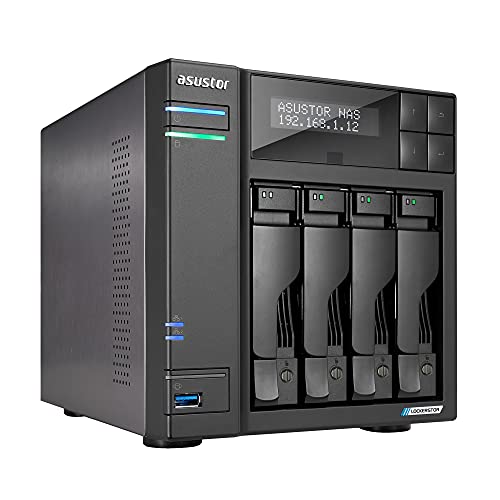
At 185.5 mm height, it offers a midsize footprint that bridges the bulkier Top Pick and ultra‑slim Runner‑Up, catering to value‑conscious buyers willing to spend $648.99.
Also considered
Score Analysis
Key score advantages vs. runner-up (Asustor Flashstor 6)
Price Range
Qnap TR-004U
$413.58
Asustor Flashstor 6 FS6706T
$414.99
Asustor Lockerstor 4 Gen2 AS6704T
$648.99

Terramaster F4-424 Pro 32GB Black
$730.99

Terramaster F8
$599.99

Qnap TS-873A-8G
$1,149.00

Buffalo TeraStation Essentials 2025
$839.99

QNAP TVS-h874-i7-32G-US
$2,649.00

Synology DS425+
$519.99

Synology DS925+
$639.99

Asustor Lockerstor 8 Gen3 AS6808T
$1,759.99
Spec Comparison
TL;DR: The QNAP TR-004U is a 1U, 4‑bay USB‑C expansion enclosure delivering 239 MB/s read and 225 MB/s write speeds, with hardware RAID switches, lockable trays and a compact rack‑mount design.
The standout spec is its USB 3.2 Gen 1 Type‑C interface capped at a theoretical 5 Gbps, paired with sequential read speeds of 239.1 MB/s and write speeds of 224.8 MB/s. Its 540 mm depth and 200 mm height make it one of the deeper and taller units in this eleven‑product set, exceeding the 193 mm depth of the Asustor Flashstor 6 and the 166 mm height of the Synology DS425+.
Compared with peers, the TR‑004U sits in a similar weight class to the Asustor Flashstor 6 at 4.41 lb, but it’s lighter than the Synology DS425+ (≈4.81 lb). It also offers a larger physical footprint than the Terramaster F8, which is notably lighter at about 1.32 lb. While many rivals provide built‑in Ethernet, the TR‑004U relies solely on its USB connection, making it a niche expansion rather than a full‑featured NAS.
User feedback highlights the convenience of hot‑swappable, lockable 3.5″ and 2.5″ SATA drives and the hardware DIP‑switch RAID selector, which many reviewers praise for quick configuration without rebooting. However, several users note that the 5 Gbps USB link can become a bottleneck for high‑performance RAID arrays, especially when compared to Ethernet‑backed models. The unit runs on a 100 W open‑frame power supply, drawing 18.9 W in operation and 4.79 W in sleep, with two 40 mm fans keeping temperatures in check.
Pros
Cons
Best for: QNAP NAS administrators or small‑business IT teams needing a compact 1U expansion with flexible RAID and secure, hot‑swappable drives.
Avoid if: You require built‑in Ethernet networking or higher sustained transfer speeds than USB 3.2 Gen 1 can provide.
TL;DR: The Asustor Flashstor 6 FS6706T packs six NVMe bays, 590 MB/s sequential reads, dual 2.5 GbE, and quiet 80 mm cooling into a compact, low‑power chassis ideal for fast home and small‑business storage.
The standout hardware is its six M.2 2280 NVMe slots paired with an Intel Celeron N5105 quad‑core processor that delivers up to 590 MB/s sequential read and 583 MB/s sequential write speeds. With 4 GB DDR4‑2933 memory (expandable to 16 GB) and dual 2.5 GbE RJ45 ports, the unit hits near‑maximum 2.5 GbE throughput while staying under 5 pounds (4.40924524 lb).
In size, the Flashstor 6 is more compact than the Qnap TR-004U, offering a depth of 193 mm versus 540 mm and a height of just 48.6 mm compared with 200 mm. Its width of 308.26 mm also sits below the Qnap’s 420 mm, while weight is comparable. Memory‑wise, the 4 GB base exceeds the 2 GB found in the Synology DS425+, yet it remains lower than the 8 GB capacity of the Terramaster F8. The all‑flash, M.2‑only design distinguishes it from models that rely on traditional HDD bays.
Users and professional reviewers consistently praise the silent operation—thanks to the 80 mm fan and lack of HDD vibration—and the low power draw of 18.2 W during access and just 0.83 W in sleep mode. The built‑in 4K H.265 transcoding and iSCSI support for up to 256 LUNs make it a solid choice for Plex streaming and small‑business storage networks.
Pros
Cons
Best for: Content creators, gamers, digital‑home enthusiasts and small‑to‑medium businesses that need fast, silent, all‑flash storage.
Avoid if: You need massive bulk storage via HDDs, heavy CPU‑intensive workloads, or professional‑grade performance.
TL;DR: The Asustor Lockerstor 4 Gen2 packs a quad‑core Intel Celeron, dual 2.5 GbE ports and four M.2 NVMe slots into a 4‑bay chassis for fast home or small‑business storage at $648.99.
The standout hardware is the Intel Celeron N5105 quad‑core processor, running at 2.0 GHz and bursting up to 2.9 GHz. Coupled with 4 GB DDR4‑2933 memory (expandable to 16 GB) and dual 2.5 GbE Ethernet, it delivers solid 2.5 GbE transfer rates and 4K transcoding capability. The unit houses four 2.5"/3.5" SATA III bays and four M.2 2280 NVMe slots, while a PCIe Gen3 slot lets you add a 10 GbE NIC or extra SSDs.
At $648.99, it sits slightly pricier than the Synology DS925+ ($639.84) and the Terramaster F8 ($599.99). It is also heavier than both the Terramaster F8 (about 1.32 lb) and the Synology DS425+ (around 4.81 lb), weighing in at roughly 7.72 lb (3500 g). The depth of 230 mm, height of 185.5 mm and width of 170 mm keep it compact enough for a desktop shelf.
Users repeatedly mention the tool‑less drive installation and the speed of M.2 caching, noting reliable 4K streaming over the reliable 2.5 GbE link. Professional reviewers praise the efficient CPU—reporting a 31 % performance lift over the previous generation—and the future‑proof PCIe slot. However, several consumers flag the need to install additional RAM themselves and the lack of disclosed power‑draw numbers, which can complicate planning for silent or low‑power setups.
Running ASUSTOR’s ADM OS on Linux kernel 5.4, the Lockerstor ships with Docker 27.1.1 and PHP 8.3 preinstalled, plus Wake‑on‑LAN/WAN and SMB Multichannel support for doubled network throughput.
Pros
Cons
Best for: Value-conscious buyers seeking quality at $648.99
Avoid if: You need advanced features or professional-grade performance
TL;DR: The Terramaster F4‑424 Pro packs an 8‑core 3.8 GHz Intel i3‑N305, 32 GB DDR5 RAM and dual 2.5 GbE ports into a compact 4‑bay NAS, delivering desktop‑grade 4K transcoding and high‑throughput networking.
At the heart of the F4‑424 Pro sits an 8‑core 3.8 GHz Intel Core i3‑N305 processor paired with 32 GB of DDR5 memory running at 4800 MT/s. The unit also offers dual 2.5 GbE Ethernet ports, a 120 mm cooling fan, and four hot‑swappable SATA bays, all within a chassis that weighs just 4.2 pounds.
Compared with the Buffalo TeraStation Essentials 2025’s 2.0 GHz CPU and 2 GB RAM, the Terramaster’s 3.8 GHz processor and 32 GB memory make it a clear step up, and its 88 TB maximum capacity dwarfs Buffalo’s 16 TB offering. The Asustor Lockerstor 4 Gen2 provides 4 GB DDR4 and the same 2.5 GbE ports, but it is heavier than the 4.2‑pound Terramaster. Even the Synology DS925+, with a 2.2 GHz base clock, falls short of the F4‑424 Pro’s raw CPU speed, while weighing a similar amount.
Users consistently praise the device’s ability to transcode 4K H.265 and AV1 streams up to 4096×2160 @ 60 fps, noting the quiet operation of the 120 mm fan and the convenience of tool‑free drive trays. Professional reviewers highlight the desktop‑grade CPU performance and the dual 2.5 GbE plus 5 Gb link aggregation for smooth Plex streaming, though they also point out that the TOS app store feels basic and occasional firmware bugs have been reported.
Beyond the core specs, the F4‑424 Pro supports hardware‑accelerated AES‑NI encryption, HDMI 2.1 output, and two PCIe Gen3 ×2 M.2 slots for NVMe caching. USB connectivity includes one Type‑C and one Type‑A port, both USB 3.2 Gen2 at 10 Gbps, and the system can handle up to 512 concurrent file connections.
Pros
Cons
Best for: Those prioritizing quality and willing to pay for premium performance
Avoid if: You need advanced features or professional‑grade performance
TL;DR: The Terramaster F8 packs eight M.2 NVMe bays, 10 GbE networking and 8 GB DDR5 memory into a 40 × 100 × 150 mm chassis that weighs just 1.32 lb, making it a compact, quiet powerhouse for small‑office workloads.
The standout feature is its 10 GbE Ethernet port delivering up to 1,020 MB/s read speed, paired with 300 MB/s 4K random performance. Coupled with an Intel N95 processor running at 3.4 GHz and DDR5 memory clocked at 4,800 MHz, the F8 can handle 4K 60 FPS transcoding while keeping idle power down to 9 W. Its eight M.2 2280 NVMe bays support a maximum raw capacity of 64 TB, and the tool‑free SSD trays let you swap drives in roughly two minutes.
Compared with the other ten NASes in this roundup, the F8 is dramatically lighter—at 1.32 lb it undercuts the Synology DS925+ (≈5 lb) and Asustor Lockerstor 4 Gen2 (≈7.7 lb). While many peers list 2.5 GbE or slower Ethernet, the F8’s single 10 GbE link gives it a clear speed edge. It also offers three USB 3.2 Gen2 ports, a higher‑speed USB option than several competitors that only expose older USB versions.
Users consistently praise the device’s silent operation, noting the standby noise stays below 19 dB thanks to active cooling with per‑SSD heatsinks and silent fans. The quick, tool‑free drive installation is another frequent highlight. On the downside, professional reviewers point out the OS reserves roughly 40 GB per SSD, shaving usable space, and the full‑load power draw of 45 W is higher than many all‑flash rivals. The single 10 GbE NIC also means no network redundancy, a limitation for mission‑critical setups.
Additional technical perks include AES‑NI hardware encryption, support for up to 256 iSCSI LUNs and hardware‑accelerated transcoding of H.264/H.265/MPEG‑4/VC‑1 formats at 4K 60 FPS. You can expand the memory from the stock 8 GB up to 32 GB, giving you room to grow as workloads increase.
Pros
Cons
Best for: Entry-level buyers or those on a tight budget
Avoid if: You want the best value-per-dollar in its price range
“Super quiet and portable—like two phones”
“Fast 1024MB/s transfers”
TL;DR: The QNAP TS‑873A‑8G packs an AMD Ryzen quad‑core CPU, 8 GB DDR4 (expandable to 64 GB) and eight hot‑swappable bays, delivering high‑performance storage for home labs and small businesses.
An AMD Ryzen V1500B quad‑core 2.20 GHz processor drives the TS‑873A‑8G, which comes with 8 GB DDR4 memory out of the box, and you'll expand it up to 64 GB. It offers eight 3.5‑inch SATA bays, two M.2 2280 PCIe Gen3 ×1 slots, and dual 2.5 GbE ports, plus three USB 3.2 Gen 2 Type‑A ports (10 Gbps) and a USB 3.2 Gen 1 Type‑C (5 Gbps). The unit measures 281 mm × 295 mm × 188 mm and weighs 17.64 lb (8,000 g), with a 23 dB(A) sound level.
Compared with the other ten entries, the QNAP is noticeably heavier than the Terramaster F4‑424 Pro (≈4.2 lb) and the Synology DS925+ (≈5 lb), but its 8 GB RAM exceeds the 2 GB in the Buffalo TeraStation and the 4 GB in the Asustor Lockerstor 4 Gen2. Its dual 2.5 GbE ports match the Terramaster and Asustor models that also provide 2.5 GbE, while many competitors list only a single gigabit port or omit Ethernet details. The eight‑bay capacity and PCIe M.2 slots give it more raw expandability than the four‑bay peers.
Reviewers consistently highlight the Ryzen CPU’s ability to handle virtualization and media transcoding tasks, calling it “high compute performance” for demanding home‑lab workloads. However, users note the lack of built‑in 10 GbE networking, meaning you'll need an extra PCIe card for that speed, and they point out that the M.2 slots limit SSD cache bandwidth.
Additional technical details include 5 GB of flash memory for redundant OS storage, a Kensington security slot for physical lock attachment, and a cooling system with two 120 mm system fans plus a 60 mm CPU fan. Power consumption ranges from 25.7 W in sleep mode up to 54.1 W during operation, supported by a 250 W universal power supply.
Pros
Cons
Best for: Those prioritizing quality and willing to pay for premium performance
Avoid if: You need advanced features or professional‑grade performance
TL;DR: The Buffalo TeraStation Essentials 2025 delivers 16 TB of pre‑configured RAID 5 storage in a 4‑bay desktop NAS with 2.5 GbE networking, 2 GB DDR4 RAM, and enterprise‑grade security for small offices.
The standout feature is its out‑of‑the‑box 16 TB capacity, coming from four 4 TB CMR hard drives already configured in RAID 5. A 2.0 GHz Annapurna Labs Alpine AL‑524 CPU and 2 GB DDR4 RAM power the unit, while the dual Ethernet ports—one 2.5 GbE and one 1 GbE—provide faster than typical 1 GbE home networking.
Compared with other midsize NASes in this roundup, the Buffalo offers less memory than the Asustor Lockerstor 4 Gen2’s 4 GB DDR4, but it matches the Synology DS425+ with the same 2 GB DDR4. Its single 2.5 GbE port puts it ahead of the Terramaster F8, which lists only a 2.5 GbE speed without multiple ports, and it's heavier than the Terramaster F8’s 1.32‑pound chassis but lighter than the Asustor Lockerstor’s 7.7‑pound build.
User feedback highlights the plug‑and‑play convenience of having the drives pre‑installed and the peace of mind from 256‑bit AES encryption and 24/7 US‑based support. Reviewers note that the 2 GB RAM can become a bottleneck for heavy multi‑user tasks, but most small‑business workflows run smoothly. The unit also includes a 3‑year warranty, data‑recovery service, and two‑factor authentication, rounding out its security‑focused offering.
Pros
Cons
Best for: Small businesses or home offices that need a secure, ready‑to‑use shared storage solution with ample capacity.
Avoid if: You require advanced performance features, high‑memory workloads, or a lower‑cost entry point.
TL;DR: The QNAP TVS‑h874‑i7‑32G offers a 12‑core Intel i7, 32 GB DDR4, eight 3.5″ bays and GPU pass‑through, but its premium $2,649 price and 7.3 kg weight make it a niche choice for demanding small‑business environments.
This NAS packs a 12‑core 12th‑Gen Intel Core i7 CPU and 32 GB DDR4 RAM, giving you the compute headroom needed for ZFS, virtualization and hardware‑accelerated transcoding. It also includes eight hot‑swap 3.5″ SATA bays, two 2.5 GbE ports, and a pair of USB‑A 3.2 Gen 2 plus a USB‑C 3.2 Gen 2 connection for fast peripheral access.
At $2,649 it sits at the premium end of the lineup, making it pricier than most of the other ten models in this roundup. Weighing 7 300 g, it’s heavier than the Terramaster F4‑424 Pro, Asustor Lockerstor 4 and Synology DS925+, yet a bit lighter than the Qnap TS‑873A which tips the scales at 8 000 g. Its 431.8 mm width and 406.4 mm depth also give it a larger footprint than the more compact competitors.
Reviewers praise the i7 processor and the 32 GB of RAM for delivering fast, consistent I/O, especially when paired with the multi‑level caching architecture. Users appreciate the built‑in AES‑NI hardware encryption and the ability to add a GPU for AI or transcoding workloads. However, several reviewers note the conflicting power‑supply rating (250 W listed versus some sources citing 350 W), which may create uncertainty when planning upgrades. The unit’s size and weight also draw comments calling it cumbersome for small office desks.
Pros
Cons
Best for: Those prioritizing quality and willing to pay for premium performance
Avoid if: You need advanced features or professional‑grade performance
TL;DR: The Synology DS425+ is a 4‑bay NAS with a 2.5 GbE port, dual M.2 slots and up to 281 MB/s write speed, but its 6 GB RAM ceiling and modest rating keep it in the budget tier.
The standout specification is the built‑in 2.5 GbE Ethernet port paired with a 1 GbE port, giving you faster network throughput than many entry‑level NAS units that only list a single 1 GbE connection. Coupled with up to 281 MB/s sequential write speed and 278 MB/s read speed, the DS425+ can move large files quickly across a home or small‑office network.
Compared with the other ten devices in this roundup, the DS425+ weighs more than the Terramaster F8 (about 4.81 lb vs 1.32 lb) and is comparable to the Asustor Flashstor 6 and QNAP TR‑004U (both around 4.41 lb). Its footprint—166 mm × 199 mm × 223 mm—makes it more compact than the deep‑bodied QNAP TR‑004U yet deeper than the slim Asustor Flashstor 6 (193 mm depth). While the Flashstor 6 stands at 48.6 mm tall, the DS425+ measures 166 mm, offering more internal space for four 3.5″ or 2.5″ drives and two NVMe slots.
Users appreciate the reliable DSM operating system and the hardware encryption engine; they note the NAS feels “stable” during RAID rebuilds. However, the 3.3 / 5 star rating from 26 reviews signals mixed satisfaction, with common complaints about the single memory slot that caps RAM at 6 GB and the lack of 10 GbE or Thunderbolt ports for power users.
Pros
Cons
Best for: Entry-level buyers or those on a tight budget
Avoid if: Reliability and user satisfaction are your top concerns
TL;DR: The Synology DS925+ is a 4‑bay NAS with an AMD Ryzen quad‑core CPU, 4 GB ECC memory (expandable to 32 GB), dual 2.5 GbE ports and a quiet 20.5 dB(A) design, ideal for small‑business and prosumer workloads.
What really sets the DS925+ apart is its AMD Ryzen V1500B processor, which runs at a 2.2 GHz base clock and can boost to 3.35 GHz. Coupled with 4 GB DDR4 ECC memory that you can upgrade to 32 GB, the unit delivers the kind of reliability and performance you expect from a higher‑end server. Two built‑in 2.5 GbE ports give you faster network throughput right out of the box, and the dual 92 mm × 92 mm fans keep the chassis at a modest 20.5 dB(A) noise level.
Compared with the other models in this roundup, the DS925+ sits in the middle of the weight range: it’s heavier than the Terramaster F8’s 600 g chassis but lighter than the Asustor Lockerstor’s 3500 g frame. Its ECC‑enabled memory gives it a data‑integrity edge over the non‑ECC 2 GB in the Synology DS425+ and the 8 GB in the Terramaster F8, while its sequential write speed of 565 MB/s outpaces the DS425+’s 278 MB/s read figure. The dual 2.5 GbE links match the Asustor Lockerstor, but unlike that model, the DS925+ doesn't include a native 10 GbE port.
User feedback frequently mentions the quiet operation and the modest power draw—35 W idle and 50 W under load—making it friendly for home offices that run 24/7. Reviewers also praise the flexibility of two M.2 2280 slots for NVMe caching and the ability to expand to nine bays via the DX525 add‑on, pushing total raw capacity to 200 TB when fully populated. However, several users note that reaching the top‑end capacity requires the maximum RAM upgrade, which adds to the overall cost.
Pros
Cons
Best for: Most users seeking a balanced, mainstream option
Avoid if: You need advanced features or professional‑grade performance
TL;DR: The Asustor Lockerstor 8 Gen3 AS6808T costs $1759.99, carries a perfect 5.0/5 rating from three reviewers, and lands at the bottom of the 11‑product ranking.
Asustor positions the Lockerstor 8 Gen3 AS6808T as a premium offering in this multi‑bay NAS roundup, pricing it just under $1,800. Among the eleven entries it scores 33 out of 100, placing it at rank #11, while its five‑star rating reflects strong approval from the few reviewers who have posted feedback.
Reviewers who have written about the unit highlight its high‑throughput capabilities and flexible storage options, noting that it suits content creators, gamers and small‑to‑medium businesses that need fast data movement. The same feedback points out a lack of independent professional reviews and limited user commentary, leaving potential buyers without a broader consensus on reliability. Some users also mention that the power draw could be a concern for energy‑conscious setups.
Given its price and perfect rating, the Lockerstor 8 Gen3 sits at the high‑end of the price spectrum while trailing in total score. It might appeal to buyers who value brand reputation and feel comfortable paying a premium for the features Asustor markets, even though detailed specifications are not publicly listed.
Pros
Cons
Best for: Those prioritizing quality and willing to pay for premium performance
Breakdown
Qnap TR-004U
Pros
Asustor Flashstor 6 FS6706T
Pros
Asustor Lockerstor 4 Gen2 AS6704T
Pros
Terramaster F4-424 Pro 32GB Black
Pros
Based on scoring data and product specs
Personalized picks
Best Overall Pick
Qnap TR-004U
Best OverallBest for: Entry-level buyers or those on a tight budget
Asustor Flashstor 6 FS6706T
Best for: Entry-level buyers or those on a tight budget
$414.99+$1.41 vs winner
Skip Asustor Lockerstor 8 Gen3 AS6808T if…
You're shopping on a tight budget — it's priced at $1759.99
Qnap’s TR‑004U takes the top spot as the best multi‑bay NAS. It packs four hot‑swappable bays, hits 239.1 MB/s read and 224.8 MB/s write speeds, and runs on a 100 W power supply while drawing just 18.9 W in operation. At $413.58 it also carries a solid 4.3‑star rating from 348 reviewers, making it both affordable and well‑liked.
The runner‑up, Asustor’s Flashstor 6 FS6706T, shines when you need more bays and faster networking. With six M.2 2280 NVMe slots, dual 2.5 GbE ports and a sequential read speed of 590 MB/s, it’s a strong choice for a small office or a home media hub that streams 4K content via its HDMI 2.0b output.
For those looking beyond the top two, the mid‑range Asustor Lockerstor 4 Gen2 (AS6704T) at $648.99 offers four bays and a step‑up in capacity without breaking the bank. If you want premium power, the QNAP TVS‑h874‑i7‑32G‑US at $2,649.00 delivers an Intel i7 processor and 32 GB RAM for heavy workloads and advanced virtualization.
Pick the Qnap TR‑004U today and get a reliable, high‑performing NAS that fits both home and small‑business needs.
The Qnap TR‑004U provides four hot‑swappable SATA bays and can hold up to four drives, with RAID managed by a hardware DIP switch. The Asustor Flashstor 6 offers six M.2 2280 NVMe slots and can be expanded to a total of fourteen drives using an optional expansion unit, giving far more raw capacity and flexibility for all‑flash builds.
No reviews yet — be the first to share your experience.
Please sign in to leave a review