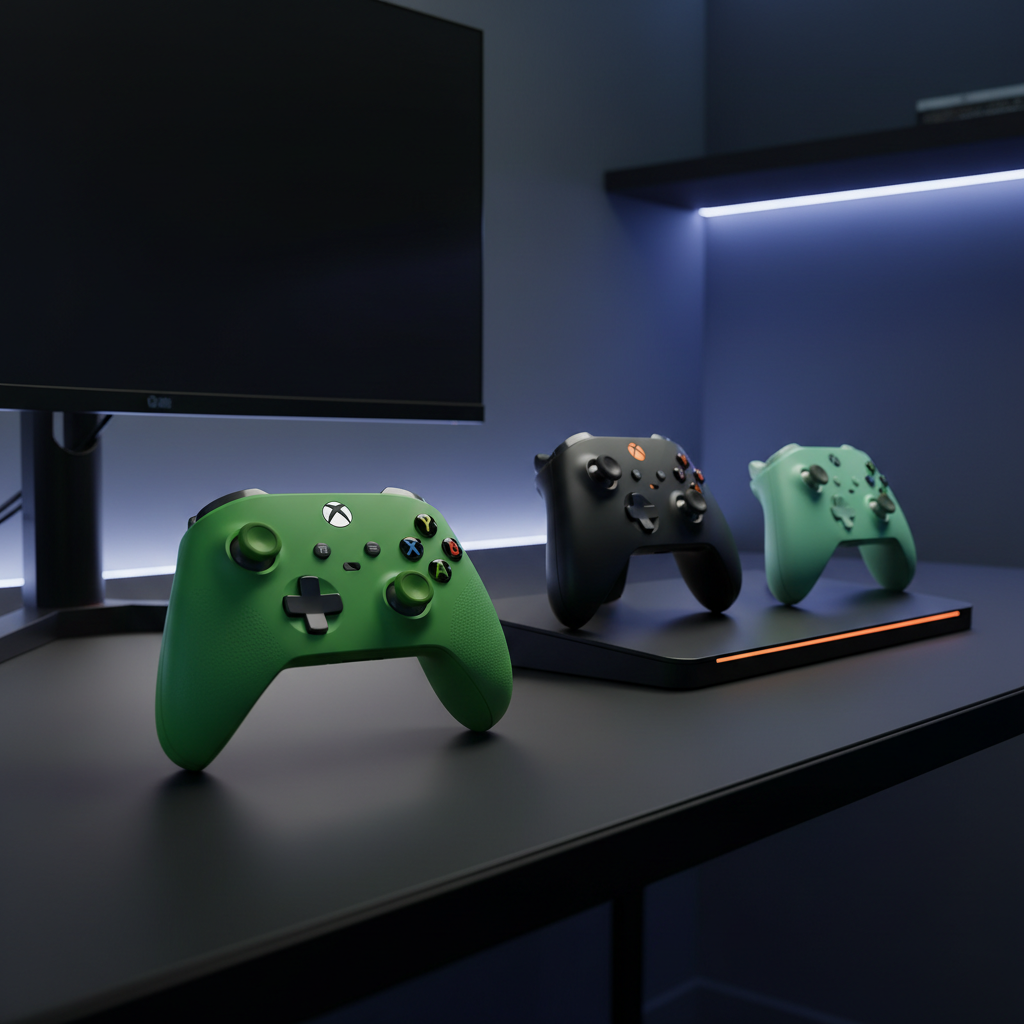
Finding a controller that works across Xbox, PlayStation, Switch, PC, and mobile devices can feel like hunting for a unicorn. We compared 14 multi‑platform gamepads, from plug‑in basics to feature‑rich premium rigs, to see which ones actually deliver on comfort, latency and battery life.
The lineup splits into three price tiers. At the budget end you’ll find the Voyee XB‑01 Wired Controller for $15.98 with a 4.3/5 rating and a 7.2‑ft cable, plus the 8BitDo Ultimate 2C Wireless at $29.99 and the AceGamer Aurora II at $24.99. Mid‑range options like the EasySMX X20 ($49.79, 4.2/5) offer a 720‑minute battery life and a 1000 Hz polling rate, while the GameSir G7 SE provides a 3‑m detachable cable and Hall‑Effect sticks. The premium tier leads with the Xbox Wireless Controller Velocity Green at $54.00, rated 4.6/5, which delivers up to 2400 minutes of play on AA batteries and a hybrid D‑pad for precise input.
Now that the tiers are mapped out, we’ll explore each category, highlight the top pick for console, PC and mobile gamers, and explain where the trade‑offs lie.

Xbox Wireless Controller Velocity Green
Its 2400‑minute battery life lets you game for hours without frequent recharging.

EasySMX X20
Ideal for gamers who crave premium performance, the EasySMX X20’s 12‑bit ADC delivers precise control, and it costs about $4 less than the Xbox controller.

8BitDo Ultimate 2C Wireless (Mint)
It offers a 480 mAh battery delivering 19 hours of 2.4 GHz wireless play, and at $29.99 it’s the most affordable, well‑reviewed choice.
Also considered
Score Analysis
Key score advantages vs. runner-up (EasySMX X20)
Price Range
Xbox Wireless Controller Velocity Green
$63.13
EasySMX X20
$49.79
8BitDo Ultimate 2C Wireless (Mint)
$29.99

GameSir G7 SE
$44.99

Thrustmaster T-Flight Hotas X
$74.24

AceGamer Aurora II
$21.98
Voyee XB-01 Wired Controller
$17.99
GameSir G7 Pro
$79.99

GameSir G8 Plus
$79.99

PowerA Advantage Midas
$47.99

EasySMX Wired Controller
$18.99

EasySMX Wireless Controller
$22.78
ZD V+ Black
$20.99

EasySMX X05
$29.99
Spec Comparison
TL;DR: The Xbox Wireless Controller Velocity Green delivers a comfortable, textured grip, hybrid D‑pad and up to 40 hours of AA‑battery life for $54, making it a solid multi‑platform choice.
This controller’s standout spec is its 2400‑minute (40‑hour) battery life on two AA cells, backed by Bluetooth 4.0 and a USB‑C port for wired play. Professional reviewers highlight the hybrid D‑pad and textured grip on the triggers, bumpers and back‑case as precision‑enhancing features, while the dedicated Share button lets you capture screenshots or recordings in a single press.
Compared with peers, the Velocity Green’s 0.85 pound weight is slightly heavier than the EasySMX X20’s 0.7 pound frame, yet lighter than the GameSir G7 SE’s roughly 0.93 pound build. Its 70 mm height also edges out the EasySMX X20’s 68.6 mm, giving it a marginally larger feel. Most importantly, its 40‑hour endurance dwarfs the EasySMX X20’s 720‑minute (12‑hour) battery life, positioning it as the longest‑lasting option among the budget‑oriented controllers in this roundup.
Everyday users praise the controller’s ergonomic contours and the vibrant green finish, noting that long sessions stay comfortable thanks to the textured grip. Reviewers also commend the smooth device switching across Xbox consoles, Windows PCs, Android and iOS. On the downside, several owners report occasional Bluetooth pairing hiccups and wish the AA compartment were sturdier. The lack of an integrated rechargeable cell means you’ll need to buy the optional Xbox Rechargeable Battery + USB‑C cable separately.
Additional technical details include a 3.5 mm stereo headset jack for chat, a 90‑day manufacturer warranty, and dimensions of 70 mm × 175 mm × 142 mm. The controller runs on the Xbox Wireless protocol for low‑latency play on consoles, while Bluetooth 4.0 ensures broad compatibility with mobile devices.
Pros
Cons
Best for: Buyers willing to invest in a proven, high‑quality option
Avoid if: You're on a tight budget or only need basic functionality
TL;DR: The EasySMX X20 delivers Hall‑Effect sticks, 3 ms wired latency and a 12‑hour battery at a sub‑$50 price, but its Bluetooth lag and plastic grip may turn off demanding players.
The standout hardware features magnetic‑mount Hall‑Effect analog sticks, offering 12‑bit (4096 levels) resolution and about 2 % centering error across roughly 2000 effective positions. The sticks rotate 90° for height adjustment, and the controller hits an ultra‑low 3 ms wired latency with a 1000 Hz polling rate, backed by dual asymmetric vibration motors for nuanced feedback.
At 0.7 pounds, the X20 is heavier than the PowerA Advantage Midas (0.452 lb) but lighter than the Xbox Wireless Controller Velocity Green (0.85 lb). Its 1.8 m cable is shorter than the GameSir G7 SE’s 3 m lead, yet the X20 packs four programmable rear paddles—double what the G7 SE provides. A 12‑hour battery (720 minutes) and 1000 mAh capacity place it ahead of many entry‑level rivals, while the 1000 Hz wired/2.4 GHz polling matches the top‑tier specs in the lineup.
Reviewers love the crisp click of the full‑mechanical microswitches and the vibrant RGB lighting that can be customized through the Keylinker app. Battery endurance (12 hour life) and cross‑platform support receive frequent praise. On the downside, users note that the D‑pad’s pre‑travel feels shallow for fighting games, the plastic grip can become slippery during intense sessions, and some report rear‑paddle breakage. Professional reviewers also point out that Bluetooth latency climbs above 30 ms, making wired or 2.4 GHz modes the better choices for competitive play.
Beyond the sticks, the X20 includes a 6‑axis gyroscope, a dedicated “C” macro button, and a turbo function. The 1000 mAh battery recharges in about 120 minutes, and the controller supports both Bluetooth (110 Hz polling) and a 2.4 GHz dongle with 12 ms digital latency. The Keylinker configuration app for Android, iOS and PC handles all button mapping, macro creation and sensitivity tweaks.
Pros
Cons
Best for: PC and Nintendo Switch gamers who want a high‑performance, highly customizable controller without breaking the bank.
Avoid if: You need ultra‑low Bluetooth latency, a premium‑weight feel, or a precise D‑pad for competitive fighting games.
“I did not expect that any controller based on the JH16 would be able to impress me. And yet, the X20 successfully replaced the Flydigi Vader 4 Pro on my desk.”
“The trigger locks are simply perfect for FPS and racing games.”
TL;DR: The 8BitDo Ultimate 2C Wireless (Mint) packs Hall‑Effect sticks, 1000 Hz polling and up to 32 hours of Bluetooth play into a sub‑$30, 0.75‑pound controller.
The standout hardware is the Hall‑Effect joystick and trigger sensors, which promise long‑term durability and precise analog input. Coupled with a 1000 Hz wireless polling rate on the 2.4 GHz dongle, the controller delivers ultra‑low latency that rivals higher‑priced options. Its 480 mAh lithium‑ion cell powers 19 hours of 2.4 GHz play and 32 hours via Bluetooth, and a 2‑hour recharge gets you back in action quickly.
Compared with other mid‑range controllers in this roundup, the Ultimate 2C is lighter than the EasySMX X05 (0.75 lb vs 0.7716 lb) and the ZD V+ Black (0.75 lb vs 0.476 lb ‑ the latter's actually lighter, so the Ultimate 2C's heavier). Its 480 mAh battery capacity is smaller than the EasySMX X05’s 750 mAh and the AceGamer Aurora II’s 1000 mAh, yet its Bluetooth runtime of 32 hours exceeds the “>20 hours” claim of the EasySMX X05.
Reviewers consistently praise the premium feel of the Hall‑Effect sticks and the 1000 Hz polling for competitive play. Users highlight the long battery life, sturdy matte finish and strong rumble feedback. However, several users describe the D‑pad’s mecha‑tactile design as “loose”, and the quiet membrane ABXY buttons feel less clicky than mechanical alternatives. Professional reviewers also note the slim, Switch‑Pro‑style shape can be cramped for larger hands, and the lack of gyroscope or back paddles limits simulation‑type games.
Beyond the core specs, the controller ships with a color‑matched 2.4 GHz USB‑A dongle, a 1 m USB‑C charging cable and built‑in shortcut mapping, so you’ll reassign buttons without installing extra software. The mode‑switch button lets you toggle between 2.4 GHz and Bluetooth on the fly, making it a versatile choice for Windows PCs and Android devices (Android 9.0+).
Pros
Cons
Best for: Budget‑focused PC gamers and Android cloud‑gaming fans who want low‑latency wireless performance with premium stick feel.
Avoid if: You need advanced features like gyroscope, back paddles, trigger locks, or a larger hand‑friendly layout, or you plan to use it on Nintendo Switch.
“Just plug in the dongle and go.”
TL;DR: The GameSir G7 SE offers drift‑free Hall‑Effect joysticks, magnetic faceplates and a detachable 3 m cable for $44.99, but its membrane ABXY buttons and heavier build may deter some gamers.
The standout hardware is the Hall‑Effect sensors on both joysticks and analog triggers, which the manufacturer says eliminate stick drift and provide a linear response. The controller also includes magnetic, paint‑friendly faceplates that snap on for quick personalization, and two rear paddles with physical quick‑latch switches for on‑the‑fly remapping.
Compared with the other 13 controllers in this roundup, the G7 SE is heavier than the EasySMX X20 (0.7 lb), Xbox Wireless Controller (0.85 lb), PowerA Advantage Midas (0.452 lb), 8BitDo Ultimate 2C (0.75 lb), EasySMX X05 (0.7716 lb) and AceGamer Aurora II (0.7099 lb). Its 3 m detachable USB‑C cable is longer than the EasySMX X20’s 1.8 m lead and roughly matches the 3.05 m cable on the PowerA Midas, giving you plenty of room to sit back from your screen. The up‑to‑1000 Hz polling rate lines up with the high‑speed wired specs of several peers, while the Xbox Wireless Controller and EasySMX X20 also hit 1000 Hz when wired.
Reviewers consistently praise the drift‑free performance and the ergonomics of the G7 SE, noting that the long cable feels sturdy and the Nexus software makes button mapping painless. Professional reviewers highlight the “wonderful construction” of the magnetic faceplates and the “fantastic ergonomics” of the overall shape. The most common complaint is the mushy feel of the membrane ABXY buttons, which some users find less crisp than mechanical switches, and the lighter joystick tension compared with stock Xbox pads.
Additional technical context: the controller packs four rumble motors (two in the grips, two in the triggers) and offers a dedicated microphone mute button, 3.5 mm combo audio jack, and Hall‑Effect anti‑drift glide rings on the sticks. All of this runs through the wired connection, meaning there’s no battery to manage, but also no wireless freedom.
Pros
Cons
Best for: Most users looking for a well‑reviewed, reliable mainstream option
Avoid if: You're shopping on a tight budget — it's priced at $44.99
“so close to perfection”
“build quality and performance”
TL;DR: The Thrustmaster T‑Flight Hotas X offers a detachable throttle, dual‑rudder system, and 14 programmable buttons on a sturdy 4.7730079723pounds controller, delivering solid PC and Xbox flight‑sim performance at $74.24.
The standout feature is the detachable full‑size throttle paired with a dual rudder system, giving you both a twist‑handle and a progressive tilting lever. Combined with 5 fully programmable axes and 14 action buttons, the controller packs a lot of control for its price. At 264 mm depth, 265 mm height and 242 mm width, it occupies a compact footprint while weighing 4.7730079723pounds, which helps keep the joystick stable during intense maneuvers.
Compared with the handheld GameSir options, the Hotas X is considerably heavier than the EasySMX X20 (0.7pounds) and PowerA Advantage Midas (0.452pounds), and even heavier than the GameSir G7 Pro (1.7196056436pounds) and G8 Plus (1.3889122506pounds). It’s also pricier than the EasySMX X20 ($49.79) but sits below the $79.99 price point of the GameSir G7 Pro, making it a mid‑range choice in this lineup. Unlike many peers that target pure gaming, the Hotas X supports both PC (Windows 10/11) and Xbox One/Series X|S, giving it broader platform reach.
Users highlight the controller’s plug‑and‑play ease, realistic feel, and strong value, especially for casual flight‑sim fans. However, several reviewers note that the plastic construction feels less premium than metal‑based alternatives and that the precision may fall short for hardcore simulators. Professional reviewers also point out the absence of force feedback and occasional stability concerns when you detach the throttle, which can affect the most demanding flight scenarios.
Pros
Cons
Best for: Buyers willing to invest in a proven, high-quality option
Avoid if: You're shopping on a tight budget — it's priced at $74.24
“makes Flight Sim much more realistic than using keyboard commands or the Xbox controller.”
“excellent product and right price”
TL;DR: The AceGamer Aurora II offers Hall‑Effect joysticks, 2 programmable rear buttons, and up to 8 hours of playtime on a 1000 mAh battery, all for $24.99, making it a solid budget multi‑platform controller.
The Aurora II’s standout feature is its Hall‑Effect joystick sensor, which the manufacturer claims reduces drift. Coupled with a 1000 Hz polling rate in 2.4 GHz mode, the controller promises responsive input. It weighs 0.70988848364 pounds (322 g) and measures 30.7 mm deep, 103.4 mm high and 165.1 mm wide, fitting comfortably in most hands. Its 1000 mAh battery delivers up to 8 hours of wireless play before needing a 2‑3 hour charge.
Compared with other options in this roundup, the Aurora II is heavier than the EasySMX Wireless Controller, which weighs 0.47 pounds, but it matches that controller’s 1000 mAh battery capacity. It offers fewer programmable rear buttons than EasySMX Wireless’s four, yet it still provides two fully programmable M1 and M2 paddles. In terms of weight, it sits between the ultra‑light EasySMX Wired (0.004 pounds) and the heavier 8BitDo Ultimate 2C (0.75 pounds).
Users consistently praise the drift‑free joysticks and the convenience of the two rear buttons for complex combos. Professional reviewers highlight the Hall‑Effect sensors as a premium touch for a budget controller. However, several owners note that Bluetooth pairing appears as an “Xbox Wireless Controller,” which can be confusing, and the lack of Xbox or PlayStation support limits console use. A few reports mention occasional firmware hiccups that require a reset.
Beyond the core specs, the Aurora II includes Bluetooth 5.0, a 2.4 GHz encrypted receiver, and customizable RGB lighting on the sticks. Dual rotary vibration motors offer four intensity levels, enhancing immersion in action titles. The controller also supports both PC (Windows 7/10/11) and Nintendo Switch, including the upcoming Switch 2—it's a versatile choice for hybrid gamers.
Pros
Cons
Best for: Budget-conscious buyers seeking a reliable entry-level option
Avoid if: You want the best value-per-dollar in its price range
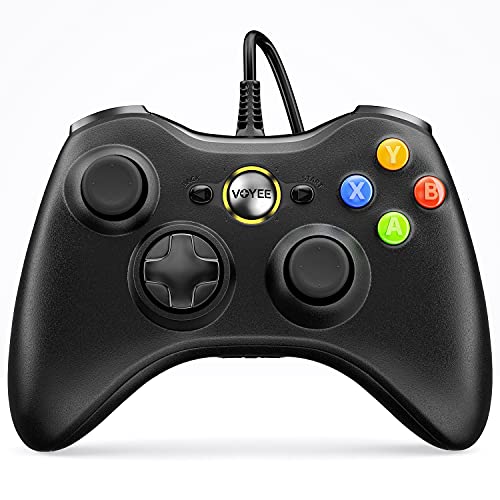
TL;DR: The Voyee XB-01 Wired Controller offers a full Xbox‑style layout, dual rumble motors and a 7.2‑ft cable for just $15.98, making it a solid budget pick for casual PC and console gamers.
What sets this controller apart is its 7.2 ft (2.19 m) Micro‑USB cable, which gives you enough reach to sit comfortably away from your PC or TV without stretching. The gamepad packs 9 action buttons, an 8‑way D‑pad, two analog sticks with upgraded sensitivity, and analog L2/R2 triggers, all housed in an ABS‑plastic shell that feels solid in hand. Dual rumble motors add vibration feedback that many reviewers say enhances immersion.
Compared with the other 13 controllers in the roundup, the Voyee is priced lower than most and carries a heavier build than the EasySMX Wired Controller (which lists a weight of 0.00440924524 pounds). Its 7.2 ft cable also exceeds the 2000 mm cable on that EasySMX model, giving it a practical edge for living‑room setups. While some peers list wireless capabilities or extra programmable buttons, the Voyee sticks to a straightforward, plug‑and‑play design.
Users consistently praise the ergonomic contours that let you game for hours without hand fatigue, and users note the upgraded joysticks and triggers respond quickly. Professional reviewers highlight the controller’s comfort and value, but they also point out that the wired connection can feel limiting for those who prefer a clutter‑free desk. A few owners mention occasional stick drift after months of use, which aligns with the “analog stick looseness” complaint seen in community feedback.
Pros
Cons
Best for: Budget-conscious buyers seeking a reliable entry-level option
Avoid if: You have limited desk space or need portability
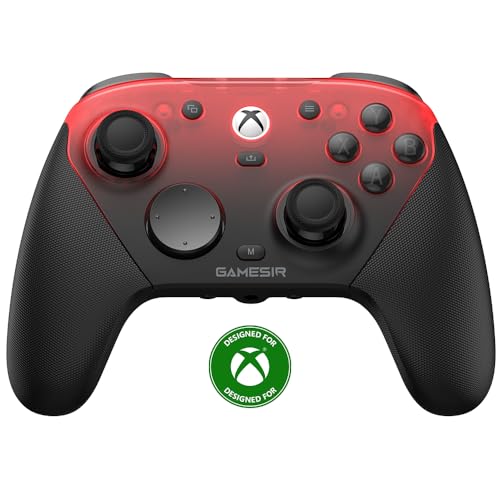
TL;DR: The GameSir G7 Pro packs a 1200 mAh battery, 1000 Hz polling and magnetic TMR sticks into a 1.7196056436‑pound controller that’s built for Xbox, PC and Android gamers willing to spend $79.99.
The standout spec is its 1200 mAh battery paired with a 150‑minute charging time, giving roughly 10–12 hours of play before you’ll need to plug back in. Its 1000 Hz polling rate provides lag‑free input on PC, while the magnetic TMR thumbsticks and Hall‑effect analog triggers promise drift‑free precision and long‑term durability.
Compared with the other 13 controllers in this roundup, the G7 Pro is heavier than the GameSir G8 Plus (1.3889122506 pounds) and the Xbox Wireless Controller Velocity Green (0.85Pounds), but far lighter than the Thrustmaster T‑Flight Hotas X (4.7730079723pounds). Its 1200 mAh cell outpaces the 1000 mAh batteries of the GameSir G8 Plus and EasySMX X20, and its 1000 Hz polling matches the EasySMX X20’s wired rate, putting it near the top of the performance tier.
Reviewers consistently praise the magnetic TMR sticks for staying steady during marathon sessions, and professional critics highlight the Hall‑effect triggers as a “responsiveness and durability” win. Users love the swappable faceplates, D‑pad variants and eight stick‑cap options that let you personalize the feel. One downside that surfaces in both consumer and expert feedback is the 10–12 hour battery window, which is shorter than the official Xbox controller’s endurance, and the clicky optical ABXY buttons that can feel “odd” until you’ll get used to them.
Pros
Cons
Best for: Buyers willing to invest in a proven, high-quality option
Avoid if: You're shopping on a tight budget — it's priced at $79.99
“so close to perfection”
“build quality and performance”
TL;DR: The GameSir G8 Plus offers Hall‑Effect sticks, 1000 mAh dual batteries and Bluetooth 5.3 latency under 13 ms, but its $79.99 price and bulky 1.3889‑lb build may deter budget‑conscious mobile gamers.
What really sets the G8 Plus apart is its Hall‑Effect analog sticks and triggers, which use non‑contact magnetic sensors for drift‑resistant performance. The controller packs a 1000 mAh battery (500 mAh per side) and runs on Bluetooth 5.3, delivering latency of less than 0.013 s on Switch and under 0.026 s on iOS/Android devices. Its dimensions—230 mm tall, 107 mm wide and 55 mm deep—give it a solid, premium feel.
Compared with other controllers in this roundup, the G8 Plus is lighter than the GameSir G7 Pro (1.7196 lb) and far lighter than the Thrustmaster T‑Flight Hotas X (4.773 lb), but it is heavier than the Xbox Wireless Controller (0.85 lb), EasySMX X20 (0.7 lb) and PowerA Advantage Midas (0.452 lb). Its 1000 mAh capacity matches the EasySMX X20 but falls short of the G7 Pro’s 1200 mAh pack, meaning it may need more frequent charging than some higher‑capacity rivals.
Reviewers consistently note the controller’s sturdy, drop‑tested build and the premium feel of its magnetic faceplates and interchangeable stick caps. Professional outlets highlight the Hall‑Effect sticks as a major upgrade over traditional potentiometer sticks, and they praise the low‑latency Bluetooth 5.3 connection as competitive with first‑party hardware. On the downside, users repeatedly mention the lack of pass‑through charging, which forces the phone’s battery to drain during long sessions, and the controller’s size can feel bulky on smaller smartphones.
Pros
Cons
Best for: Buyers willing to invest in a proven, high-quality option
Avoid if: You're shopping on a tight budget — it's priced at $79.99
TL;DR: The PowerA Advantage Midas delivers Xbox‑licensed wired performance with two rear paddles, adjustable trigger locks, and a 10‑foot cable, all in a lightweight ergonomic shell for under $35.
The controller’s standout feature is its 2‑way rear mappable paddles paired with 3‑way adjustable trigger travel, giving you extra inputs without sacrificing the familiar Xbox layout. Weighing just 0.452 pounds (205 g) and measuring 65 mm tall, 156 mm long and 107 mm wide, it feels compact enough for extended play sessions. Its 10 ft (3.05 m) non‑removable USB‑C cable ensures you stay connected even when you sit far from the console or PC.
Compared with the other controllers in this roundup, the Midas weighs less than the 8BitDo Ultimate 2C (0.75 lb) and the EasySMX X05 (0.77 lb), and only marginally heavier than the EasySMX Wireless (0.47 lb). Its cable runs longer than the GameSir G7 SE’s 3 m lead, giving you more freedom of movement on a desk. Height‑wise it matches the GameSir G7 SE at 65 mm, but it's considerably shorter than the 8BitDo’s 147 mm profile, making it a good fit for smaller gaming spaces.
Reviewers consistently praise the controller’s comfortable diamond‑textured grip and the usefulness of the rear paddles and trigger locks, noting that it feels “solid” despite its budget look. However, professional outlets such as IGN and CGMagazine point out that the lightweight plastic construction can feel “flimsy” and that the lack of Hall‑Effect thumbsticks may lead to drift over time. Users also mention the fixed 10‑ft cable as a drawback for those who prefer a detachable lead.
Xbox officially licenses the Midas, which works with Xbox Series X|S, Xbox One, Windows 10 and Windows 11, and connects via a wired USB‑C port. It includes a 3.5 mm stereo headset jack, dual rumble motors in the triggers, and the free PowerA Gamer HQ app for button mapping, audio tweaks, and dead‑zone adjustments.
Pros
Cons
Best for: Most users looking for a well‑reviewed, feature‑rich wired controller that balances price and performance.
Avoid if: You have limited desk space or need a portable, detachable‑cable solution.
TL;DR: The $19.99 EasySMX Wired Controller offers a 2 m cable, dual‑motor vibration, and customizable turbo on a lightweight 220 g frame, but its stick drift and lack of Xbox support limit serious gamers.
This controller’s most eye‑catching spec is its 2000 mm (2 m) USB cable, giving you plenty of reach for a couch‑side PC or a TV‑connected Android box. It also packs dual vibration motors in the side grips and a customizable turbo function for each button, all while weighing just 220 g (about 0.49 lb).
Compared with the other 13 controllers in this roundup, it’s noticeably lighter than the ZD V+ Black and the EasySMX Wireless Controller, and its cable is longer than the ZD V+’s 1.5 m but a touch shorter than the Voyee XB‑01’s 2.19 m. While it lacks a backlight or audio jack that some peers list, its core feature set sits comfortably in the middle of the pack.
Users consistently praise the ergonomic asymmetrical stick layout and the dual‑motor feedback, calling the turbo button a handy cheat for indie titles. Professional reviewers note the plug‑and‑play convenience on Windows, PS3 and Android TV. On the downside, several owners report joystick drift after six to twelve months and occasional A‑button miss‑fires, and several owners frequently complain about the controller’s incompatibility with Xbox consoles or iOS devices.
Technical details include an operating current under <40 mA when the vibration motors are idle and under <150 mA when active, all powered directly from the USB connection (no battery required). It supports Windows XP through 10, PS3, and Android 4.0+ with OTG, making it a solid budget pick for PC and Android TV gamers.
Pros
Cons
Best for: Entry‑level buyers or those on a tight budget
Avoid if: You need powerful performance or professional‑grade features
TL;DR: The EasySMX Wireless Controller offers a 0.47pounds, 14‑hour rechargeable gamepad with four programmable back paddles, LED‑backlit buttons and wide PC‑to‑Switch compatibility at a budget price.
This controller’s standout spec is its long‑lasting battery: a built‑in 1000 mAh lithium‑polymer pack delivers up to 14 hours of play before the 5‑minute auto power‑off kicks in. At 77 mm tall, 175 mm long and 135 mm wide, it feels solid yet stays under 0.47pounds, making it easy to grip for marathon sessions.
Compared with the other 13 controllers in the roundup, the EasySMX weighs slightly less than the ZD V+ Black (0.47619848592pounds) and noticeably less than the Voyee XB‑01 Wired Controller (0.5732018812pounds). Its 2‑meter USB‑C cable outlasts the ZD’s 1.5 m lead but falls a touch short of Voyee’s 2.19 m cable. While the AceGamer Aurora II also lists a 1000 mAh battery, it only manages 8 hours of play, so the EasySMX’s 14‑hour claim gives it a clear endurance edge.
Professional reviewers praise the controller’s plug‑and‑play simplicity, dual asymmetric vibration with five intensity levels, and the four programmable back buttons that let you assign macros without extra accessories. Everyday users echo these points, noting the strong vibration feedback and the convenience of the LED‑backlit ABXY buttons, which offer five brightness settings. The most common complaints revolve around the lack of Bluetooth, a cheap‑plastic feel that some say feels less durable, and occasional Android disconnections.
Pros
Cons
Best for: Entry-level buyers or those on a tight budget
Avoid if: You want the best value‑per‑dollar in its price range
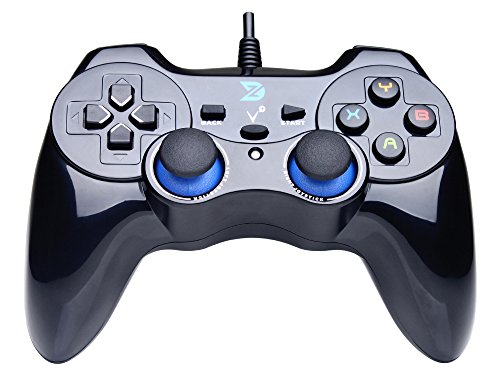
TL;DR: The ZD V+ Black is a $20.99 wired controller with a 1.5 m USB cable, high‑precision D‑pad, JD‑SWITCH swapping feature, and basic vibration, aimed at budget‑conscious PC and PS3 gamers.
The standout element is the JD‑SWITCH function, which lets you swap the D‑pad and left analog stick duties in XInput mode by pressing BACK + LSB. That flexibility, combined with a separated high‑precision D‑pad and textured non‑slip joysticks, gives the ZD V+ a more tactile feel than many entry‑level pads. The controller measures 150 mm × 105 mm × 65 mm and weighs 0.47619848592 lb (216 g), has a solid build for its price tier.
Compared with the other 13 controllers in this roundup, the ZD V+ is heavier than the EasySMX Wired model (which weighs far less) but about the same as the EasySMX Wireless option. Its 1.5 m cable is shorter than the 2 m cables found on both the EasySMX Wired and Wireless controllers, and it lacks the wireless capability and programmable back buttons that some peers tout. While it offers both XInput and DirectInput modes, it doesn't support Xbox, PS4, or Mac platforms, making its compatibility narrower than a few of the multi‑system rivals.
Professional reviewers praise the plug‑and‑play experience on Windows 10/11 and highlight the JD‑SWITCH as a unique selling point. Everyday users appreciate the sturdy feel and the ease of connecting to PC or PS3 without installing drivers, yet many note the short 1.5 m cable and the fact that vibration works only in XInput mode. Android owners must snag a separate OTG adapter, which some consider an extra hassle. In practice, the controller suits casual gamers, retro titles, or anyone needing a reliable wired pad without the bells and whistles of higher‑priced models.
Pros
Cons
Best for: Entry-level buyers or those on a tight budget
Avoid if: You need powerful performance or professional‑grade features
“stiff and durable”
“plug-and-play success with Windows 10”
TL;DR: The EasySMX X05 packs Hall‑Effect joysticks, a 750 mAh battery that lasts over 20 hours, and programmable RGB lighting into a 350 g, multi‑platform controller for under $30.
What really sets the X05 apart is its Hall Effect magnetic sensors on both analog sticks and triggers, which the manufacturer claims eliminate stick drift. Pair that with a 750 mAh NMC lithium‑ion cell delivering more than 20 hours of playtime, and you’ve got a controller that stays steady and powered through marathon sessions.
When you line it up against the other 13 entries, the X05 is a bit heavier than most – at 350 g it outweighs the 8BitDo Ultimate 2C, PowerA Advantage Midas, AceGamer Aurora II, and the various EasySMX wired and wireless models, all of which sit under 250 g. Battery capacity sits in the middle of the pack: larger than the 8BitDo’s 480 mAh but smaller than the 1000 mAh cells that the AceGamer Aurora II and EasySMX Wireless Controller use. Its 250 Hz Bluetooth and 1000 Hz wired polling rates match the 8BitDo’s figures, keeping latency on par with the top‑rated peer.
Reviewers consistently applaud the X05’s long battery life and drift‑free sticks, especially on the Steam Deck and mobile devices. Professional reviewers note the inclusion of Hall Effect sensors at this price as a strong value add. On the flip side, users flag the membrane face buttons and large tactile D‑pad as “mushy,” and the lack of gyro or motion controls limits its appeal for motion‑heavy titles.
Beyond the core controls, the X05 offers programmable RGB lighting in seven colors across five modes, a turbo function adjustable via the left stick, and dual vibration motors with five intensity levels. It ships with a USB‑C ceramic‑coated charging cable and a 2.4 GHz dongle, and a ceramic chip antenna complements the anti‑drift Hall Effect design for stable wireless performance.
Pros
Cons
Best for: Budget‑conscious gamers who need a drift‑free, multi‑platform controller with long battery life and customizable lighting.
Avoid if: You prioritize ultra‑light weight, mechanical button feel, or built‑in gyro/motion controls for competitive fighting or rhythm games.
“Lasts over a day of gaming on one charge.”
“No stick drift even after months of use — huge plus.”
Breakdown
Xbox Wireless Controller Velocity Green
Pros
EasySMX X20
Pros
Cons
8BitDo Ultimate 2C Wireless (Mint)
Pros
GameSir G7 SE
Pros
Cons
Based on scoring data and product specs
Personalized picks
Best Overall Pick
Xbox Wireless Controller Velocity Green
Best ValueBest for: Buyers willing to invest in a proven, high-quality option
EasySMX X20
Best for: Those prioritizing quality and willing to pay for premium performance
$49.79-$13.34 vs winner
Skip EasySMX X05 if…
Reliability and user satisfaction are your top concerns
The Xbox Wireless Controller Velocity Green claims the top spot thanks to its solid overall stats. It holds a 4.6‑star rating from 26,462 reviewers, shows a hefty 2400‑minute (about 40‑hour) battery life, and weighs just 0.85 lb, making marathon sessions comfortable. At $54.00 it also undercuts the list price of $69.99, delivering strong value for a controller that works across Xbox, PC, Android, iOS and even Smart TVs.
The EasySMX X20 lands as the runner‑up, perfect for gamers who crave deep customization on a competitive setup. Its 12‑bit Hall‑effect sticks give roughly 2000 detectable positions, while four programmable rear paddles and fully programmable RGB lighting let you tailor inputs on the fly. With a 720‑minute battery, a 1.8 m detachable cable and support for Windows, Android, iOS and the Nintendo Switch, it offers a versatile option for low‑latency play.
For tighter budgets, the Voyee XB‑01 Wired Controller at $15.98 offers a simple plug‑and‑play experience without breaking the bank. If you want a step up without splurging, the 8BitDo Ultimate 2C Wireless (Mint) at $29.99 balances wireless convenience with solid build quality. For premium features, the GameSir G8 Plus at $79.99 delivers high‑end ergonomics and advanced programmability for serious enthusiasts.
Pick the Xbox Velocity Green today and enjoy reliable performance across all your devices.
The Xbox Wireless Controller Velocity Green offers the longest listed battery runtime at 2400 minutes, far exceeding the EasySMX X20’s 720 minutes. Its AA‑battery option and optional rechargeable pack give flexibility when charging isn’t convenient, while its rugged textured grip adds durability for on‑the‑go play.
Please sign in to leave a review
No reviews yet. Be the first to review!
