If you’re hunting a cable modem that can keep up with a 2.5 Gbps plan, the Nighthawk CM3000 pushes the ceiling at 2.5 Gbps download and 1 Gbps upload, while still pulling a solid 4.2/5 rating from 2,947 reviewers.
Our roundup looks at six Netgear models, spanning three price tiers. On the budget end, the CM500 sits at $47.49 and the CM400 at $64.99, both delivering DOCSIS 3.0 speeds of 680 Mbps and 340 Mbps respectively. The mid‑range tier offers the CM700 for $116.43 with a 1.4 Gbps theoretical ceiling, and the CM1200 at $107.54, which can reach 2 Gbps when you enable link aggregation. Stepping up to premium, the CM1000 Black costs $134.99 and caps at 1 Gbps actual downstream, while the CM3000 commands $299.99 for its top‑tier 2.5 Gbps capability.
The review examined each model’s speed specs, power draw and user feedback to determine which fits a small apartment, a family home or a tech‑heavy office. Below you’ll find a deeper dive into performance, setup ease and value, so you can match a modem to your internet plan without guessing.
Netgear CM500
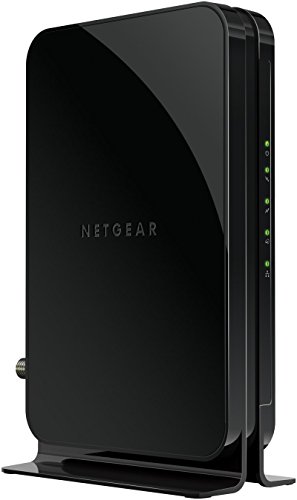
Its compact 124 mm depth and 60 mm height deliver strong value and fit tight spaces, aligning with top‑rated features and brand confidence.

Netgear CM700
Ideal for mainstream users who want a well‑reviewed, reliable modem; at $116.43 it’s roughly $69 pricier than the $47.49 CM500.

Netgear CM400
At 52.07 mm tall—the smallest of the trio—and a 217.17 mm depth, it provides a distinct form factor for tight vertical spaces while staying budget‑friendly.
Also considered
Score Analysis
Key score advantages vs. runner-up (Netgear CM700)
Price Range
Netgear CM500
$47.49
Netgear CM700
$117.38
Netgear CM400
$64.99

Netgear Nighthawk CM1200
$107.54

Netgear CM1000 Black
$134.99

Netgear Nighthawk CM3000
$269.99
Spec Comparison
TL;DR: The Netgear CM500 delivers up to 680 Mbps download and 132 Mbps upload on a compact DOCSIS 3.0 platform, making it a solid budget choice for 300‑600 Mbps cable plans when you already have a router.
The standout spec is its 16 downstream × 4 upstream channel bonding, which Netgear advertises as supporting a maximum download speed of 680 Mbps and an upload speed of 132 Mbps. It runs on 18 W of power and packs 8 MB of NOR flash plus 128 MB of RAM, while the single Gigabit Ethernet port handles wired traffic.
Compared with the other five Netgear models, the CM500 is heavier than the ultra‑light CM700 (0.55 lb) and the CM400 (1.08 lb) but lighter than the high‑end Nighthawk CM3000 (2.45 lb). Its maximum download speed falls short of the CM1200’s 2 Gbps, the CM1000’s 1 Gbps actual rate, and the CM3000’s 2.5 Gbps, placing it squarely in the budget tier. Power consumption is modest at 18 W, well under the CM1000’s 30 W draw.
Users consistently praise the CM500 for its straightforward self‑activation with major ISPs like Xfinity, Cox, and Spectrum, and for delivering reliable wired speeds for HD streaming and online gaming. Reviewers often highlight the modem’s advanced QoS and IPv6 support as forward‑looking features that keep latency low on busy networks, while also noting the lack of built‑in Wi‑Fi as a trade‑off.
Pros
Cons
Best for: Budget‑conscious households on 300‑600 Mbps cable plans who already own a Wi‑Fi router and want a reliable, easy‑to‑activate modem.
Avoid if: You need an all‑in‑one modem‑router, require Wi‑Fi out of the box, or plan to upgrade to multi‑gigabit cable services.
TL;DR: The Netgear CM700 packs 32 downstream × 8 upstream channel bonding, a 1.4 Gbps theoretical ceiling and a feather‑light 0.55 lb chassis for reliable wired internet on plans up to 500 Mbps, all for $116.43.
The modem’s standout spec is its 32 downstream and 8 upstream channels, powered by an Intel Puma chipset that lets it reach a maximum theoretical download speed of 1.4 Gbps through a single Gigabit Ethernet port. Its compact dimensions—132.08 mm deep, 167.64 mm high and 43.18 mm wide—keep it unobtrusive on a shelf or behind a TV.
Compared with the other five Netgear models in this roundup, the CM700 is the lightest at 0.55 lb, noticeably lighter than the CM1000 Black (0.84 lb) and far lighter than the Nighthawk CM3000 (2.45 lb). Its download ceiling of 1.4 Gbps sits below the CM1200’s 2 Gbps and the CM3000’s 2.5 Gbps, yet it outpaces the CM500’s 680 Mbps limit and the CM400’s 340 Mbps ceiling. Size‑wise it’s shorter than the CM1200’s 6.1‑inch depth and slimmer than the CM1000’s 150 mm width.
Users consistently praise the browser‑based setup that works from a tablet, smartphone or computer, noting how quickly the modem syncs with Xfinity, Cox, Spectrum, Charter and Time Warner Cable. Professional reviewers highlight the built‑in DOCSIS QoS and IPv4/IPv6 support as future‑proofing features. The downside that shows up in many comments is the Intel Puma chipset’s occasional dropouts, and the DOCSIS 3.0 standard caps certified speeds around 500 Mbps, making the unit less suitable for true gigabit plans. It also lacks integrated Wi‑Fi or VoIP, so a separate router is required.
Pros
Cons
Best for: Most users looking for a well‑reviewed, reliable mainstream option
Avoid if: You're shopping on a tight budget — it's priced at $116.43
TL;DR: The Netgear CM400 is a compact DOCSIS 3.0 modem that delivers up to 340 Mbps download and 122 Mbps upload through a single Gigabit Ethernet port, making it a solid budget choice for basic cable plans.
The standout feature of the CM400 is its 8‑by‑4 channel bonding, which the manufacturer lists as supporting a maximum downstream speed of 340 Mbps and an upstream speed of 122 Mbps. Coupled with a Gigabit Ethernet RJ‑5 port, it gives you a wired backbone that can handle HD streaming and online gaming without a separate router.
Compared with the other five Netgear models in this roundup, the CM400 is lighter at 1.08 lb versus the heavier CM500 and CM1200 units. Its power draw of 12 W is also lower than the CM500’s 18 W. However, its 340 Mbps ceiling is well below the CM500’s 680 Mbps, the CM1200’s 2 Gbps, and the high‑end CM3000’s 2.5 Gbps, so it sits at the entry end of the performance spectrum. It also lacks advanced features such as link aggregation, QoS, and built‑in Wi‑Fi that appear on the higher‑tier models.
User feedback repeatedly mentions the modem’s plug‑and‑play feel – reviewers note the CD‑less setup and auto‑sensing Ethernet port as hassle‑free. Professional reviewers highlight the 8x4 bonding and CableLabs certification as signs of reliable operation on most cable providers. Common complaints focus on the absence of Wi‑Fi or VoIP, and the DOCSIS 3.0 limitation that prevents the device from supporting gigabit‑plus plans.
Technical details round out the picture: the CM400 runs on 12 W of power, tolerates temperatures from 0 °C to 40 °C, and can handle up to 90 % non‑condensing humidity. It ships with 128 MB of flash memory and 128 MB of RAM, and supports both IPv4 and IPv6. The black desktop form factor measures 52.07 mm in height, 217.17 mm in depth, and 182 mm in width.
Pros
Cons
Best for: Entry-level buyers or those on a tight budget
Avoid if: You need gigabit‑speed internet, built‑in Wi‑Fi, or future‑proof DOCSIS 3.1 capability
TL;DR: The Netgear Nighthawk CM1200 is a $107.54 DOCSIS 3.1 modem delivering up to 2 Gbps download speeds, four Gigabit Ethernet ports, and Wi‑Fi 6 support, ideal for gigabit cable plans.
Its standout spec is a 2 Gbps maximum download speed, which it achieves via link aggregation across four Gigabit Ethernet ports. It comes in a desktop form factor measuring 3.4 inches wide, 10.3 inches high and 6.1 inches deep, and weighs 1.22 pounds, making it sturdy enough for a permanent setup while still easy to place on a shelf.
Among the five Netgear cable modems in this roundup, the CM1200 sits in the middle of the weight spectrum—lighter than the high‑end Nighthawk CM3000 but heavier than the entry‑level CM700, CM1000 and CM400. Its 2 Gbps download ceiling outpaces the CM700, CM1000, CM400 and CM500, though it falls short of the CM3000’s top‑tier speed.
Reviewers consistently praise the modem’s multi‑gigabit capability and future‑proof DOCSIS 3.1 design. Professional reviewers highlight its ability to handle up to 2 Gbps when paired with a compatible router, while users note the OFDMA 2×2 and QoS features keep streaming and gaming smooth, even with many devices. The unit supports 32 downstream and 8 upstream channels, can manage 25 concurrent devices across a 2 500 sq ft area, and includes a USB 3.0 port for added flexibility.
Pros
Cons
Best for: Value-conscious buyers seeking quality at $107.54
Avoid if: You need advanced features or professional‑grade performance
TL;DR: The Netgear CM1000 Black is a DOCSIS 3.1 cable modem delivering up to 1 Gbps download, with a single Gigabit Ethernet port, IPv6 support, and a premium price for solid performance.
The standout spec is its DOCSIS 3.1 compatibility, which offers a downstream theoretical rate of 6 Gbps while the actual supported download speed tops out at 1 Gbps. It also provides 8 SC‑QAM upstream channels (DOCSIS 3.0) or 2 OFDM channels (DOCSIS 3.1), and consumes 30 Watts of power.
Compared with the other five Netgear models, the CM1000 is heavier than the CM700 at 0.55 pounds but lighter than the CM500’s 1.43 pounds. Its depth of 137 mm exceeds the CM700’s 132.08 mm, while its height of 223 mm is taller than the CM700’s 167.64 mm yet shorter than the CM1200’s 10.3 inches. It also weighs less than the high‑end CM3000, which tips the scales at 2.45 pounds.
Users consistently praise the modem’s reliable 1 Gbps performance and the ease of browser‑based setup, noting that it eliminates rental fees. Professional reviewers highlight its straightforward operation and extensive channel bonding. The most common complaint is the upright chassis with a flimsy base that can tip over when the coaxial cable is pulled.
Beyond speed, the CM1000 supports IPv6 and DOCSIS QoS, which prioritize traffic on busy networks. Its single Gigabit Ethernet port aligns with the 1 Gbps downstream limit, making it a solid match for households that already have a separate router.
Pros
Cons
Best for: Those prioritizing quality and willing to pay for premium performance
Avoid if: You're on a tight budget or only need basic functionality
TL;DR: The Netgear Nighthawk CM3000 is a DOCSIS 3.1 modem that delivers up to 2.5 Gbps download, 1 Gbps upload, and link‑aggregation, but its premium $299.99 price and lack of Wi‑Fi make it a high‑end choice for power users.
The standout spec is its maximum download speed of 2.5 Gbps paired with a 1 Gbps upload ceiling, thanks to DOCSIS 3.1 mid/high‑split technology. It also offers a 2 Gbps combined link‑aggregation speed across two 1 Gbps Ethernet ports and a dedicated 2.5 Gbps Ethernet port, giving you plenty of headroom for multi‑gigabit plans.
Weighing 2.45 pounds, the CM3000 is considerably heavier than the CM1000 (0.84 pounds) and the CM700 (0.55 pounds). Its depth of 234.0 mm exceeds the CM1000’s 137 mm, while its height of 121.9 mm is shorter than the CM1000’s 223 mm. The width of 222.0 mm also makes it wider than the CM1000’s 150 mm. Price‑wise, it sits above the CM1000, CM700, CM1200, CM400, and CM500, positioning it as the premium tier in this lineup.
Professional reviewers note the “blazing‑fast 2.5 Gbps speeds” that keep 4K streams smooth and gaming lag‑free. Everyday users echo this, praising reliable high‑speed performance on demanding tasks like large file transfers. The downside is the absence of built‑in Wi‑Fi, meaning you’ll need a separate router, and the modem does not support Xfinity Voice plans.
The modem runs on a low‑power chip for energy efficiency, though exact wattage isn’t listed in the specs. It supports 32 downstream SC‑QAM channels and 8 upstream SC‑QAM channels, plus 2 OFDM downstream and 2 OFDMA upstream channels, and includes IPv6 support. The package comes with an AC power adapter, Ethernet cable, and quick‑start guide.
Pros
Cons
Best for: Tech‑savvy households with multi‑gigabit cable plans who want top‑tier speed and robust Ethernet options.
Avoid if: You need built‑in Wi‑Fi, voice‑over‑IP telephone service, or are on a lower‑speed plan.
Breakdown
Netgear CM500
Pros
Cons
Netgear CM700
Pros
Cons
Netgear CM400
Pros
Cons
Netgear Nighthawk CM1200
Pros
Cons
Based on scoring data and product specs
Personalized picks
Best Overall Pick
Netgear CM500
Best OverallBest for: Users with specific technical requirements or compatibility needs
Netgear CM700
Best for: Most users looking for a well-reviewed, reliable mainstream option
$117.38+$69.89 vs winner
Skip Netgear Nighthawk CM3000 if…
You need advanced features or professional-grade performance
Netgear’s CM500 takes the top spot as the best overall cable modem. It’s priced at $47.49, carries a solid 4.2‑star rating from 14,792 reviewers, and supports DOCSIS 3.0 with 16 downstream and 4 upstream channels that deliver a maximum download speed of 680 Mbps. The single Gigabit Ethernet port and a compact 1.43‑pound chassis make it a straightforward, budget‑friendly choice for most broadband plans.
The CM700 lands as the runner‑up and shines when you need extra headroom for faster plans. Its Intel Puma chipset and 32‑downstream × 8‑upstream channel bonding push the theoretical download ceiling to 1.4 Gbps, while the modem fully supports carrier‑specific limits like Xfinity 800 Mbps and Cox 500 Mbps. At $116.43 and a 4.3‑star rating from 1,822 reviews, it’s a solid upgrade for households that anticipate higher speeds or multiple devices.
Looking beyond the top two, the mid‑range CM700 (already mentioned) offers a clear step up in speed potential without breaking the bank, while the premium Nighthawk CM3000 provides the highest‑end performance for users who want to future‑proof their home network.
Pick the CM500 for reliable, cost‑effective connectivity today.
The CM500, priced at $47.49, gives solid DOCSIS 3.0 performance with up to 680 Mbps download and a gigabit Ethernet port, making it the most cost‑effective choice for most broadband packages. Its compact size and one‑year warranty add to the value proposition.
No reviews yet — be the first to share your experience.
Please sign in to leave a review
