Rankings
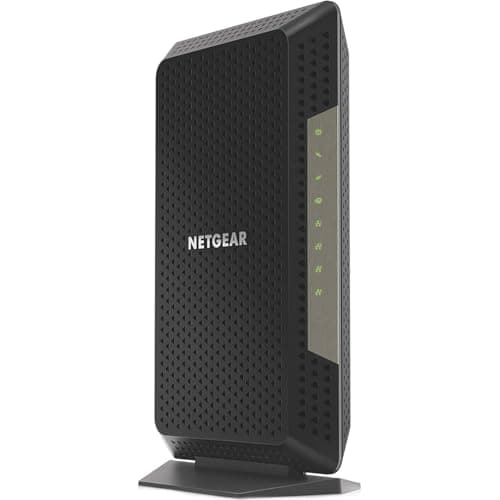
The NETGEAR Nighthawk CM1200 is a DOCSIS 3.1 desktop modem with integrated Wi-Fi 6, four Gigabit Ethernet ports, and USB 3.0, supporting up to 2 Gbps download via link aggregation. While it provides extensive connectivity, it still relies on a separate router for advanced networking and lacks 2.5 Gbps Ethernet ports. It fits power users who need high-speed wired and wireless performance on gigabit-class plans.
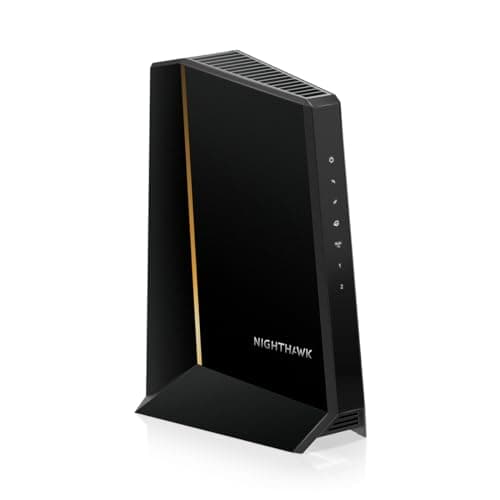
The NETGEAR Nighthawk CM3000 is a high-performance DOCSIS 3.1 mid/high-split modem offering up to 2.5 Gbps download and 1 Gbps upload, featuring a 2.5 Gbps Ethernet port and link-aggregation on two 1 Gbps ports. It lacks built-in Wi-Fi and carries a premium price, which may be unnecessary for lower-speed plans. Best suited for tech-savvy users with multi-gigabit cable subscriptions seeking future-proof throughput.
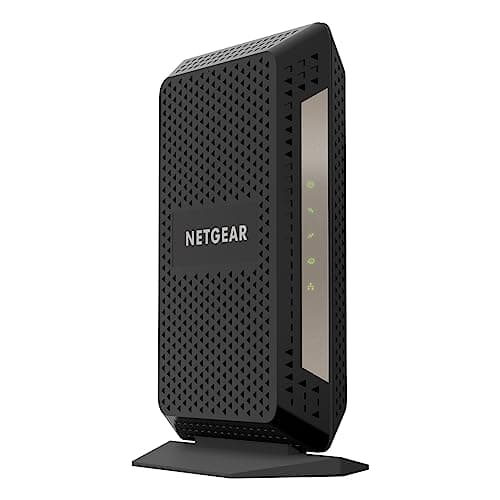
The NETGEAR CM1000 is a DOCSIS 3.1 modem delivering up to 1 Gbps download with IPv6 and QoS support. Its single Ethernet port and top-heavy chassis are trade-offs. Ideal for gigabit cable users who already have a separate router.
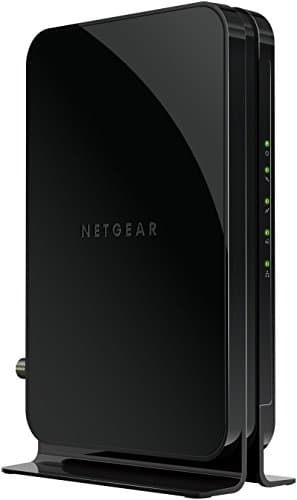
The NETGEAR CM500 is a compact DOCSIS 3.0 cable modem delivering up to 680 Mbps download and 132 Mbps upload with advanced QoS and broad ISP compatibility. Its main trade-off is the lack of built-in Wi-Fi and a single Ethernet port, limiting flexibility for higher-speed or wireless-only setups. Ideal for budget-conscious households on mid-tier cable plans that already have a separate router.
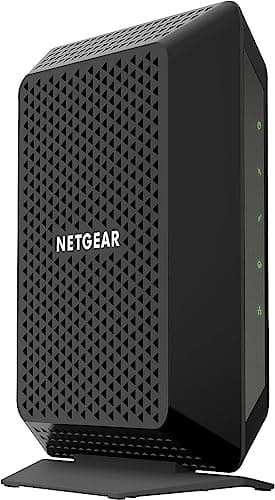
The NETGEAR CM700 is a DOCSIS 3.0 modem with 32 downstream and 8 upstream channels, offering up to 1.4 Gbps theoretical download speed through a single Gigabit Ethernet port. Its Intel Puma chipset can cause occasional dropouts, and it cannot reach true gigabit-plus speeds, limiting its suitability for higher-tier plans. It works well for budget-oriented households on sub-gigabit cable services.
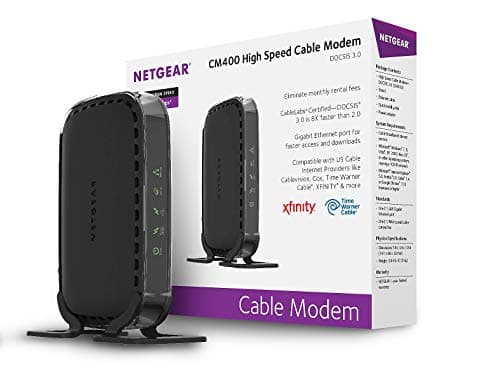
The NETGEAR CM400 is an entry-level DOCSIS 3.0 cable modem offering up to 340 Mbps download and a compact desktop design. Its lack of Wi-Fi and DOCSIS 3.0 limitation make it unsuitable for higher-speed plans. Best for budget-conscious households with existing routers.
| Attribute | | | | | | |
|---|---|---|---|---|---|---|
680 Mbps | 1,400 Mbps | 340 Mbps | 2,000 Mbps | 1,000 Mbps | 2,500 Mbpsbest | |
132 Mbps | — | 122 Mbps | — | — | 1,000 Mbpsbest | |
1 ports | 1 ports | 1 ports | 4 portsbest | 1 ports | 3 ports | |
— | — | — | 1 portsbest | — | — | |
| ↓ lower better | 18 W | — | 12 Wbest | — | 30 W | — |
| ↓ lower better | 0.648 kg | 0.249 kgbest | 0.49 kg | 0.553 kg | 0.381 kg | 1.111 kg |
1 yearsbest | 1 yearsbest | 0 years | 1 yearsbest | 1 yearsbest | 1 yearsbest |
Click an attribute name to sort · Green = best, red = worst (relative to this comparison)
| Attribute | | | | | | |
|---|---|---|---|---|---|---|
Performance(2) | ||||||
Maximum Download Speed (Mbps) | 680 Mbps | 1400 Mbps | 340 Mbps | 2000 Mbps | 1000 Mbps | 2500 Mbps |
Maximum Upload Speed (Mbps) | 132 Mbps | — | 122 Mbps | — | — | 1000 Mbps |
Network(1) | ||||||
DOCSIS Standard | 3.0 | 3.0 | 3.0 | 3.1 | 3.1 | 3.1 |
Ports(2) | ||||||
Ethernet Ports (count) (ports) | 1 ports | 1 ports | 1 ports | 4 ports | 1 ports | 3 ports |
WAN Port Type | Coaxial | Coaxial | Ethernet | Coaxial | Coaxial | Coaxial |
Power & Energy(1) | ||||||
Power Consumption (W) | 18 W | — | 12 W | — | 30 W | — |
Build & Design(3) | ||||||
Weight (kg) | 0.648 kg | 0.249 kg | 0.49 kg | 0.553 kg | 0.381 kg | 1.111 kg |
Dimensions (HxWxD) (mm) | 60x185x124 mm mm | 167.64x43.18x132.08 mm mm | 52.07 x 182 x 217.17 mm mm | 10.3x3.4x6.1 inches mm | 223 x 150 x 137 mm mm | 121.9x222.0x234.0 mm mm |
Form Factor | — | — | Desktop | Desktop | Upright | — |
General(2) | ||||||
Provider Compatibility | Xfinity, Cox, Spectrum, Cablevision | Xfinity, Cox, Spectrum, Charter, Time Warner Cable | Xfinity, Spectrum, Cox | Xfinity, Cox, Spectrum | Xfinity, Spectrum, Cox | Comcast Xfinity, Cox, Spectrum |
Warranty (years) (years) | 1 years | 1 years | 0 years | 1 years | 1 years | 1 years |
Products in the top-left offer the best value (high score, low price).
Professional reviewers consider the CM500 a reliable, entry-level DOCSIS 3.0 modem that excels on cable plans up to 600 Mbps, thanks to its 16×4 channel bonding, IPv6 support, and easy ISP activation. However, they caution that its speed ceiling and lack of Wi-Fi make it less suitable for users seeking future-proof gigabit performance.
Everyday users generally praise the CM500 for its straightforward setup, solid wired speeds for streaming and gaming, and the savings from avoiding ISP rental fees. The most common criticism centers on the absence of built-in Wi-Fi and the limitation of only one Ethernet port.
“"outstanding" for reliability”
The CM700 is a modest step up from the CM600 but still falls short for gigabit users; the CM1000 is the better choice for future-proofing.
The CM500 is a cost-effective DOCSIS 3.1 option for current gigabit plans, but the CM1000 offers more channel bonding for better long-term performance.
Professional reviewers consider the CM700 a solid, budget-friendly DOCSIS 3.0 modem that excels in channel bonding and ease of setup, making it well-suited for HD streaming and gaming on sub-gigabit plans. However, they caution about the Intel Puma chipset reliability issues and the inherent speed ceiling of DOCSIS 3.0, recommending newer DOCSIS 3.1 models for users needing true gigabit performance.
Everyday users generally praise the CM700 for its quick, browser-based installation and dependable performance on mid-tier cable plans, noting noticeable savings after ditching ISP rentals. Recurring complaints focus on occasional dropouts linked to the Intel Puma chipset, the inability to fully utilize gigabit-plus services, and the need to buy a separate Wi-Fi router.
Professional reviewers position the CM400 as a solid, budget-friendly DOCSIS 3.0 modem that excels in simplicity, provider compatibility, and value, but they caution that its 340 Mbps ceiling and lack of Wi-Fi make it less suitable for future-proof or high-speed deployments.
Everyday users appreciate the easy setup, reliable wired performance, and the savings from dropping ISP rental fees, while recurring concerns focus on the absence of Wi-Fi, the outdated DOCSIS 3.0 standard, and occasional quality issues with refurbished units.
Retailer and editorial listings emphasize the CM1200's ability to handle the fastest cable tiers, citing its DOCSIS 3.1 chipset, four Ethernet ports for link aggregation, and advanced OFDMA/QoS features as strong points for power users and gamers. The consensus is that it offers a solid, future-ready solution for households upgrading to multi-gigabit plans, though reviewers remind buyers that a separate Wi-Fi router is still required.
Professional reviewers consider the CM1000 a reliable and straightforward DOCSIS 3.1 solution that delivers fast gigabit speeds, broad ISP support, and useful features like IPv6 and QoS. However, they caution about its unstable base and the limitation of a single Gigabit Ethernet port despite the high theoretical bandwidth.
Consumers generally appreciate the modem's consistent high-speed performance, easy setup, and cost savings from avoiding rental fees, but they frequently mention the top-heavy design that can tip over and the absence of built-in Wi-Fi as drawbacks.
Professional reviewers commend the CM3000 for its top-tier download and upload capabilities, emphasizing the 2.5 Gbps speed ceiling, low-interference DOCSIS 3.1 design, and the convenience of a 2.5 Gbps Ethernet port with link aggregation. They position it as a future-proof solution for high-speed cable plans, noting its energy-efficient chipset and compact size as additional strengths.
Everyday users consistently highlight the modem's reliable high-speed performance, often seeing real-world speeds close to the advertised 2.5 Gbps download. Reviewers appreciate its seamless integration with mesh Wi-Fi systems like Orbi and its ability to handle multiple 4K streams and large uploads without hiccups. No major complaints were recorded.
