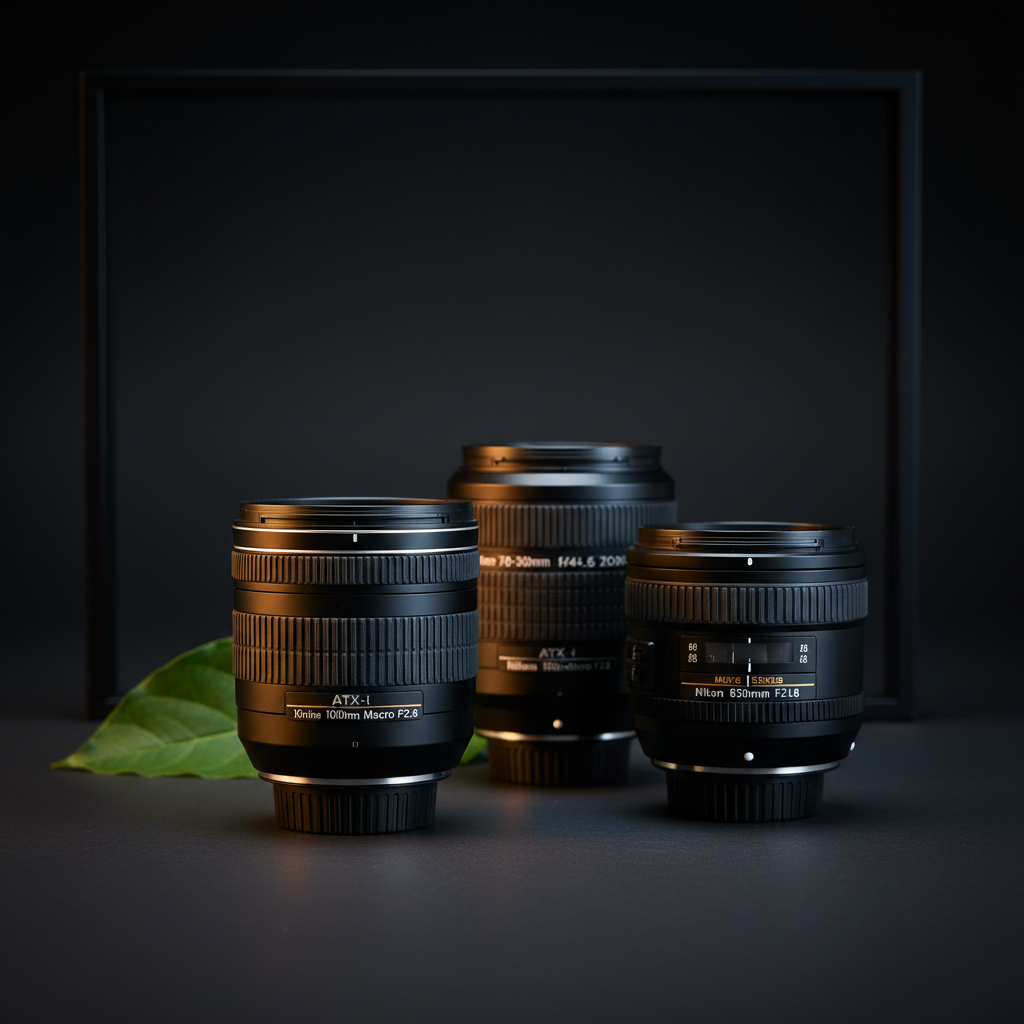
We’ve lined up 9 Nikon F‑mount lenses and sorted them into three price tiers – budget (from $59.39), mid‑range (around $180‑$400) and premium (up to $16,499). That spread lets you see what’s possible whether you’re hunting for macro detail, flattering portrait blur, or extra reach for wildlife.
For true 1:1 macro work, the Kenko Tokina ATX‑i 100 mm Macro f/2.8 earns the top spot with a 9‑blade diaphragm, 24° diagonal view and a listed price of $549.00. Portrait lovers will gravitate to the Meike 85 mm f/1.8, which scores a solid 4.3/5 from 289 reviewers, offers a 28.5° diagonal angle of view and delivers creamy bokeh at a friendly $179.99. When you need distance without breaking the bank, the Nikon 70‑300 mm f/4‑5.6 stands out with a 4.5/5 rating from 426 reviews, a 9‑blade straight‑edged diaphragm and a versatile 70‑300 mm range, albeit at a premium $16,499.00.
Next, we’ll compare each tier, walk through the specs, and help you match the right lens to your shooting style.

Kenko Tokina ATX-i 100mm Macro F2.8
Its 73 mm depth gives a solid macro build, delivering performance that justifies its price.
Nikon 70-300mm f/4-5.6
Ideal for photographers needing long reach, this lens costs about $15,950 more than the Best Overall option.

Meike 85mm F1.8
A compact 77 mm overall length keeps it portable compared with the bulkier macro and telephoto options above.
Also considered
Score Analysis
Key score advantages vs. runner-up (Nikon 70-300mm f/4-5.6)
Price Range
Kenko Tokina ATX-i 100mm Macro F2.8
$549.00
Nikon 70-300mm f/4-5.6
$177.99
Meike 85mm F1.8
$179.99
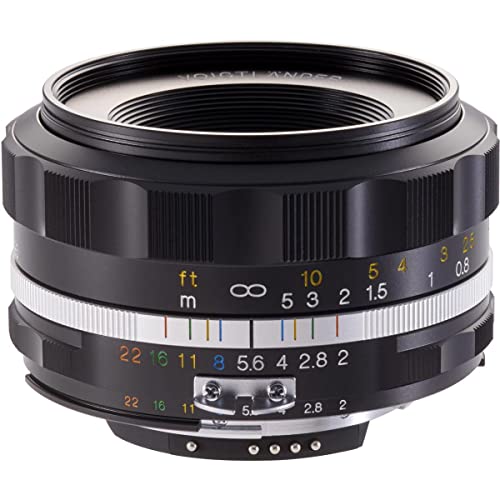
Voigtländer Ultron 40mm
$479.00

Yanuoda 420
$58.49

Benoison 420-800mm f/8
$51.67
Lensbaby Sol 45 Sony
$199.95
Kenko AT-X 10-17mm
$399.99
Ynlens YN50mm F1.8N Nikon
$102.00
Spec Comparison
TL;DR: The Kenko Tokina ATX‑i 100 mm f/2.8 macro delivers true 1:1 magnification, fast aperture and a unique one‑touch focus clutch, but requires an in‑body motor for autofocus on Nikon DSLRs.
This lens packs a 100 mm focal length, a maximum aperture of f/2.8 and a 24° diagonal angle of view, giving you a fairly tight framing for close‑up work. Its 9 straight‑edged diaphragm blades and 1:1 maximum magnification let you capture life‑size detail with smooth bokeh, while the working distance of 115 mm lets you stay a comfortable distance from your subject.
At 1.1574268755 pounds, the ATX‑i is noticeably heavier than the Voigtländer Ultron 40mm (0.60625 pounds) and the Meike 85mm (386 g). Its 95.2 mm height and 73 mm diameter also exceed the compact 45.99 mm dimensions of the Voigtländer, making it one of the larger macro options in this nine‑lens set. The 55 mm filter thread is a touch larger than the 52 mm thread found on the Ynlens 50mm, but still fits standard filter kits.
Reviewers consistently praise the lens for its “high sharpness from center to corners” even wide open at f/2.8, and they love the convenience of the one‑touch focus clutch for instant AF/MF switching. The downside is that autofocus works only on Nikon DSLRs with an in‑body focus motor, leaving entry‑level bodies on manual focus only. Users also note that the front filter and aperture rings feel more plastic than metal, and the lens lacks both image stabilization and a tripod collar.
Optically, the lens uses 9 elements in 8 groups and a 55 mm filter size, with a minimum aperture of f/32 at infinity and f/64 at 1:1 magnification. The 115 mm working distance gives you room for lighting accessories, and the 9‑blade diaphragm contributes to a pleasant out‑of‑focus quality.
Pros
Cons
Best for: Macro photographers who need true 1:1 reproduction and portrait shooters who want a fast aperture with smooth bokeh, provided they have a Nikon body with an in‑body focus motor.
Avoid if: You own an entry‑level Nikon DSLR that relies on autofocus, or you need built‑in image stabilization and a fully metal build.
“Sharp as a razor – even at f/2.8, edge-to-edge.”
“The focus clutch is a game‑changer – switching to manual is instant.”
TL;DR: The Nikon AF‑Zoom 70‑300mm f/4‑5.6G offers a 4.3× telephoto range in a 425 g plastic body, but it's $16,499 price and lack of VR keep it niche.
This lens spans 70 mm to 300 mm, delivering a 4.3× zoom ratio while staying under half a kilogram (425 g). Its maximum aperture shifts from f/4 at the wide end to f/5.6 at full telephoto, and it sports nine straight‑edged diaphragm blades for decent bokeh control.
Compared with the eight other lenses in this roundup, the Nikon sits at the high‑end of the price spectrum, making it pricier than the Kenko Tokina 100 mm Macro. It is lighter than the Benoison 420‑800 mm (717 g) but heavier than the Ynlens 50 mm (203 g). In length it exceeds the Voigtländer 40 mm (45.99 mm) while remaining shorter than the Yanuoda 420 (238.8 mm). Its filter thread of 62 mm matches the Benoison, yet it lacks the built‑in hood found on the Kenko AT‑X 10‑17 mm.
User feedback highlights the lens’s portability and budget‑friendly nature for a telephoto zoom. Professional reviewers praise its sharpness when you stop it down between 70 mm and 135 mm, thanks to the Super Integrated Coating that tames flare. Common complaints focus on noticeable softness beyond 200 mm, the absence of Vibration Reduction, and the slower, noisier screw‑drive autofocus that requires a body with an internal motor.
Internally, the optical formula comprises 13 elements in 9 groups, delivering a maximum reproduction ratio of 0.26×. The minimum focusing distance is 1.5 m, and the lens accepts 62 mm screw‑on filters. Its construction uses a plastic barrel and mount, and it lacks internal focusing or a Silent Wave Motor.
Pros
Cons
Best for: Beginner to intermediate photographers who need a lightweight telephoto zoom for travel, portraits, or occasional wildlife without breaking the bank.
Avoid if: You require low‑light handheld shooting, fast sports action, or a lens with VR; the $16,499 price tag may feel steep for those needs.
“Great for the price”
“Perfect for birding and sports when on a tripod”
TL;DR: The Meike 85mm f/1.8 delivers full‑frame portrait quality with a fast f/1.8 aperture, 9‑blade circular diaphragm and a lightweight 386 g build, all for $179.99.
The lens’s most eye‑catching spec is its f/1.8 maximum aperture on an 85 mm focal length, giving a diagonal angle of view of 28.5°. A 9‑blade circular diaphragm (9 blades) promises smooth, creamy bokeh that reviewers frequently praise.
Compared with the other eight lenses in this roundup, the Meike is significantly lighter than the Benoison 420‑800 mm (which tips the scales at 717 g) and offers a much larger maximum aperture than the Lensbaby Sol 45 Sony’s f/3.5. Its 77 mm overall length is comparable to the Kenko Tokina ATX‑i 100 mm Macro, while its 67 mm filter thread is larger than the Ynlens YN50mm’s 52 mm thread.
Users consistently highlight the lens’s sharpness across the frame and its “killer” low‑light performance, noting the natural colour rendering and low chromatic aberration. Professional reviewers echo these points, calling the optics “excellent” from f/2.8 onward. The downside that surfaces in both consumer and expert feedback is a moderate autofocus speed that struggles with fast‑moving subjects, and users reported AF instability in early firmware versions. The lens doesn’t have full weather sealing, so harsh conditions require extra protection.
Additional technical details include a minimum focus distance of 0.9 m (E/Z/X/L mounts) or 0.85 m (EF/F mounts), a 6‑group/9‑element design, and a multi‑layer nano coating that helps control flare. The STM focus motor on E‑type mounts delivers quieter operation for video, while the DC motor on EF/F versions provides reliable manual focus override.
Pros
Cons
Best for: Buyers in the mid price range seeking the best quality at that price point
Avoid if: Reliability and user satisfaction are your top concerns
“Blown away by how much better it focuses and the colors are fantastic!”
“Bokeh like wow! Colors are beautiful.”
TL;DR: The Voigtländer Ultron 40mm f/2 offers a bright aperture, compact all‑metal build, and manual focus precision for Nikon F‑mount users at $479, though it shows vignetting at its widest setting.
Its standout spec is the f/2.0 maximum aperture on a 40 mm focal length, paired with a tiny 45.99 mm length and a weight of 0.60625 pounds (274.9 g). This makes the lens both bright and pocket‑sized, ideal for on‑the‑go shooting.
Compared with the eight peers, the Ultron is lighter than the Kenko Tokina 100 mm macro (over 1 lb) and the Kenko 10‑17 mm zoom (350 g), and it’s shorter than the Kenko’s 71 mm length. It’s also more compact than the Meike 85 mm (around 75‑79 mm long) and far smaller than the Benoison 420‑800 mm super‑telephoto. Only the Ynlens 50 mm (203 g) undercuts its weight, but the Ultron still wins on aperture speed versus the Kenko 10‑17 mm’s f/3.5‑4.5 range.
Users love the lens’s retro all‑metal feel and the “smooth, pleasing bokeh” from its 9 curved diaphragm blades. Professional reviewers praise its high contrast and sharpness even wide open, while everyday shooters call it their favorite portrait and street prime. The main complaints focus on noticeable vignetting on full‑frame at f/2 and soft corners that improve after stopping down to f/4, plus the limitation of manual focus only.
Technical notes: the optical formula includes 6 elements in 5 groups with a double‑sided aspherical element and ultra‑high‑index glass. An extended helicoid focus throw gives precise manual focus, and built‑in CPU contacts let you control the aperture from Nikon bodies. The lens accepts 52 mm filters and features an engraved aperture ring with color‑coded depth‑of‑field markings.
Pros
Cons
Best for: Film and digital Nikon F‑mount shooters who value manual focus, compact build, and portrait or street photography.
Avoid if: You need fast autofocus, require even illumination for landscape or architecture, or prefer fully electronic lenses.
“Perfect size and weight”
“Top‑notch color rendering and sharpness”
TL;DR: The Yanuoda 420‑800 mm f/8.3 manual‑focus zoom delivers super‑telephoto reach at $59.39, but its variable aperture and lack of autofocus limit it to bright, static subjects.
The standout specification is the 420–800 mm focal length range, giving you an equivalent of roughly 672–1280 mm on APS‑C sensors. It ships for $59.39 and weighs 880 g, with a compact 66.0 mm height, 66.0 mm width, and 238.8 mm length. A manual aperture ring lets you set f/8.3 at the wide end, closing to f/16 at 800 mm.
Compared with the Benoison 420‑800 mm f/8, Yanuoda offers a similar zoom range but is a bit heavier (880 g vs 717 g) and has a metal housing versus the aluminium alloy of the Benoison. Its dimensions essentially match, with both lenses measuring around 66–67 mm in height and width and about 240 mm in length. While many of the other lenses in this roundup focus on wide‑angle or macro work, Yanuoda is the only super‑telephoto zoom, positioning it as the most reach‑centric option.
Everyday users praise the lens for its “fun factor” and the ability to capture the moon or perched birds without a heavy tripod setup. Professional reviewers note that it’s a solid learning tool for manual focusing, but they also point out softness and chromatic aberrations at the longest focal lengths. The lack of autofocus and the f/16 aperture at 800 mm mean you’ll need bright daylight and a sturdy tripod to get sharp results.
The lens covers full‑frame sensors and includes T‑mount adapters for Canon EF/EF‑S, Nikon F, and Sony E mounts, plus a tripod ring for added stability. Its metal construction promises durability, and the manufacturer provides a 12‑month warranty for peace of mind.
Pros
Cons
Best for: Beginners and hobbyists who want ultra‑long reach for moon and static wildlife photography without breaking the bank.
Avoid if: You need fast autofocus for moving subjects, low‑light performance, or professional‑grade image quality.
“funniest lens in my kit”
“surprisingly capable under good light”
TL;DR: The Benoison 420‑800mm f/8.3 manual zoom gives super‑telephoto reach at $67.99, but its softness at the long end and lack of autofocus mean it’s best for static subjects on a tripod.
This lens’s headline spec is the 420–800 mm focal‑length range paired with a maximum aperture of f/8.3, giving you a reach that most DSLR lenses can’t match without costing hundreds of dollars. The aluminium alloy housing keeps the body sturdy while the 62 mm filter thread lets you add basic protection. At just 717 g, it’s light enough to carry on a tripod without adding excessive bulk.
Compared with the eight other lenses in this roundup, the Benoison is noticeably lighter than the Yanuoda 420 (which tips the scales at 880 g) and it carries a longer zoom than the Ynlens 50 mm prime. It’s also more affordable than the Meike 85 mm, the Lensbaby Sol 45, and the Nikon 70‑300 mm, while offering a far greater focal length than any of those options. In terms of size, the Benoison’s 240 mm length exceeds the compact dimensions of the Voigtländer 40 mm and the Kenko 10‑17 mm, but those lenses serve very different focal ranges.
Reviewers consistently praise the lens for moon and bird photography, noting that the extreme reach lets hobbyists capture distant subjects that would otherwise be out of reach. Professional reviewers highlight the ultra‑long reach at this price point, but they also warn that image quality drops off toward 800 mm, with noticeable softness and chromatic aberration. Because the lens lacks autofocus, electronic contacts, and image stabilization, users say a sturdy tripod’s essential and focusing’s easiest with live‑view magnification.
Pros
Cons
Best for: Entry‑level buyers or those on a tight budget
Avoid if: You need powerful performance or professional‑grade features
“Great for the moon!”
“Perfect for birdwatching from a distance”
TL;DR: At $199.95, the Lensbaby Sol 45 Sony delivers a 45 mm focal length with a fixed f/3.5 aperture and an 8.5° tilt mechanism, earning a user rating of 4.5 / 5 for its dreamy, creative look.
The standout feature is its 8.5° tilt mechanism, which lets you position a sharp “sweet spot” while the surrounding area falls into smooth bokeh. Combined with a 45 mm focal length and a fixed f/3.5 maximum aperture, the lens offers a distinctive, artistic look without any electronic contacts.
Compared with the other eight lenses in this roundup, the Sol 45 is notably compact and light. The Meike 85mm F1.8 tips the scales at 386 g, whereas the Sol 45 weighs just 123 g on a Nikon F mount. Its 65 mm mirrorless length is shorter than the Meike’s 77 mm overall length and the Kenko AT‑X 10‑17mm’s 71 mm barrel. Even the Ynlens YN50mm F1.8N Nikon, at 203 g and 60 mm long, is heavier and longer than the Sol 45. Heavier peers such as the Voigtländer Ultron 40mm (0.60625 pounds) and the Kenko Tokina ATX‑i 100mm macro (1.1574268755 pounds) further underline the Sol 45’s lightweight advantage.
Users consistently praise the lens for its “dreamy, soft‑blurred” images, especially for flowers and close‑ups, earning a 4.5 / 5 user rating. Reviewers highlight the simple, intuitive operation and the solid all‑metal build. The trade‑off most mention is the fixed f/3.5 aperture, which reduces exposure flexibility, and the fact that the sweet‑spot isn’t razor‑sharp. Professional reviewers echo these points, noting the creative potential but also the limited appeal for those who need fast autofocus or weather sealing.
It provides a 34.9° angle of view on APS‑C sensors and a minimum focus distance of 355 mm, giving a maximum magnification of 0.17×. Two adjustable hinged bokeh blades let you shape the out‑of‑focus area, though engaging them reduces the aperture to f/5. A 46 mm filter thread accommodates standard filters, and focus lock ensures consistent positioning during shoots.
Pros
Cons
Best for: Value-conscious buyers seeking quality at $199.95
Avoid if: You need advanced features or professional‑grade performance
“Perfect for flower close-ups with soft blur”
“Well-made and fun to use”
TL;DR: The Kenko AT‑X 10‑17mm offers a unique 180°‑to‑100° zoom fisheye view on APS‑C bodies for $399.99, with solid build, internal focusing and a water‑repellent coating.
This is the world’s first zoom fisheye lens, delivering a 180° diagonal field of view at 10 mm and narrowing to 100° at 17 mm. Its minimum focus distance is just 140 mm, letting you get remarkably close to subjects while keeping the lens length constant at 71 mm thanks to internal focusing. The built‑in hood and six‑blade hexagonal diaphragm round out a compact, weather‑resistant package.
At 350 g, the lens is heavier than the Ynlens YN50mm (203 g) but lighter than the Meike 85mm (386 g). Its 70 mm diameter is comparable to the Kenko Tokina ATX‑i 100mm macro’s 73 mm, yet the overall length is far shorter than that macro’s 95 mm. In terms of field of view, the 180° extreme dwarfs the Voigtländer Ultron 40mm’s 57° diagonal and the Lensbaby Sol 45’s 34.9° APS‑C view, making it the widest option in this lineup.
Reviewers love the creative freedom the zoom fisheye provides, especially for underwater and ultra‑wide street shots, and they praise the water‑repellent coating for durability. Professional reviewers note the lens’s excellent corner‑to‑corner sharpness even at close focus. Common complaints focus on the inherent barrel distortion of fisheye optics, occasional purple fringing in high‑contrast backlit scenes, and autofocus struggles on peripheral points.
Optically, the lens packs 10 elements in 8 groups, including aspherical (F&R) elements and one super‑low‑dispersion element for aberration control. It features a six‑blade hexagonal diaphragm, internal focusing, and an autofocus system with a manual clutch override. Because the front element curves sharply, you can't attach standard filters.
Pros
Cons
Best for: Creative photographers who want an ultra‑wide fisheye on APS‑C bodies, especially for experimental, underwater or street art shots.
Avoid if: You need a rectilinear wide‑angle lens, full‑frame compatibility, or a lens with extensive user reviews and proven track records.
“the most fun I’ve had with a lens in a long while”
“Awarded the lens 87% in testing”
TL;DR: The Ynlens YN50mm f/1.8N offers a bright aperture, metal mount and solid optics for $102, making it a capable entry‑level prime for Nikon shooters who value size and price.
This lens’s standout spec is its f/1.8 maximum aperture on a 50 mm focal length, paired with a 46° diagonal angle of view. The 7‑blade diaphragm and multi‑coated glass give a smooth bokeh and decent central sharpness when you stop down. Its metal bayonet mount and gold‑plated electronic contacts add a premium feel compared with many budget primes.
At 203 g, the YN50mm is considerably lighter than the aluminium‑housing Benoison 420‑800mm and the heavier Yanuoda 420, and it also tips the scale against the Meike 85mm, which weighs around 420 g. In terms of price, it sits above the sub‑$70 ultra‑telephoto options but remains far cheaper than the Meike, Lensbaby, Kenko, Voigtländer and Tokina lenses, which all carry higher price tags.
Users consistently praise the lens’s value‑for‑money, noting sharp centers and pleasing bokeh, especially when you stop down to f/2.8‑f/4. Professional reviewers echo the bright aperture and metal mount as strong points. The most common complaints revolve around a noisy, slower autofocus in low light and softness toward the edges when shooting wide open. Some owners also mention that the barrel feels plastic, which can feel cheap despite the metal mount.
Pros
Cons
Best for: Entry-level buyers or those on a tight budget
Avoid if: You want the best value‑per‑dollar in its price range
“Sharp images with beautiful bokeh”
“Autofocus works great”
Breakdown
Kenko Tokina ATX-i 100mm Macro F2.8
Pros
Nikon 70-300mm f/4-5.6
Pros
Cons
Meike 85mm F1.8
Cons
Voigtländer Ultron 40mm
Pros
Based on scoring data and product specs
Personalized picks
Best Overall Pick
Kenko Tokina ATX-i 100mm Macro F2.8
Best OverallBest for: Those prioritizing quality and willing to pay for premium performance
Nikon 70-300mm f/4-5.6
Best for: Audiophiles and enthusiasts seeking premium sound quality and advanced features
$177.99-$371.01 vs winner
Skip Ynlens YN50mm F1.8N Nikon if…
You want the best value-per-dollar in its price range
The Kenko Tokina ATX‑i 100mm Macro f/2.8 takes the top spot thanks to its true 1:1 magnification, a fast f/2.8 maximum aperture and a solid 9‑blade diaphragm that delivers pleasing bokeh. Its 55 mm filter thread stays fixed while focusing, so polarizers and graduated filters stay in place, and the included BH‑551 plastic hood protects the front element. Made in Japan from metal and high‑grade plastic, the lens weighs 525 g and comes with a 3‑year warranty.
Nikon 70‑300mm f/4‑5.6, the runner‑up, shines when you need extra reach for wildlife or sports on a budget. Its 70‑300 mm focal range (4.3× zoom) and 1.5 m minimum focus distance let you capture distant subjects, while the 9 straight‑edged diaphragm blades keep highlights under control. At 425 g it’s lightweight enough for handheld shooting, and the included HB‑26 hood helps reduce flare.
Pick the Kenko Tokina ATX‑i 100mm Macro today and add the most versatile F‑mount lens to your kit.
The Kenko Tokina ATX‑i 100mm Macro f/2.8 delivers true 1:1 magnification, a 9‑blade diaphragm and a manual aperture ring for just $549, making it far cheaper than most dedicated macro lenses while still providing full‑frame coverage.
Please sign in to leave a review
No reviews yet. Be the first to review!
