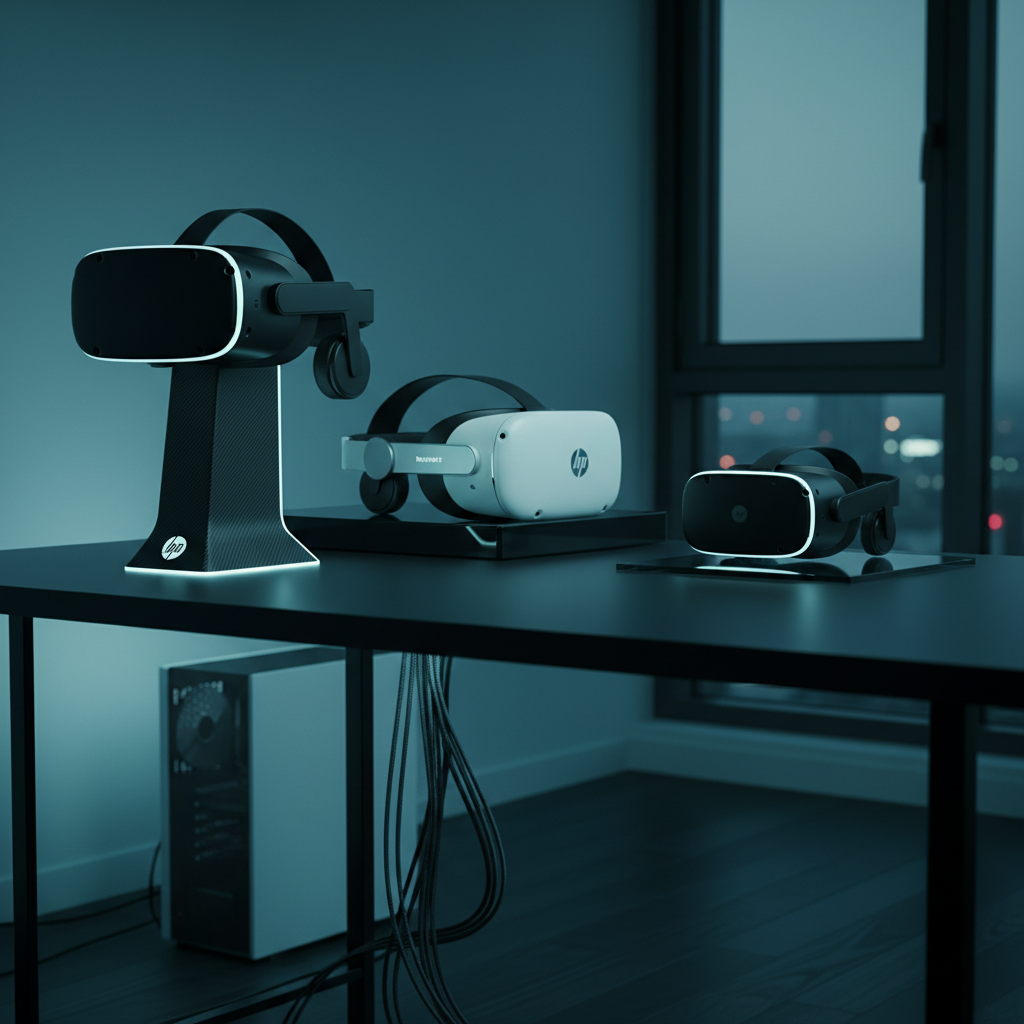
When you line up the four inside‑out PC VR headsets, the most unexpected detail is that the budget‑friendly Meta Rift S carries the highest user rating—4.3 out of 5 from 18,751 reviews—while the absolute cheapest, the DPVR E4 Pro at $499.99, sits at a modest 3.4 rating. All four models ship with sensor‑free tracking, but they differ wildly in price, from $499.99 up to $69,300.00 for the HP Reverb G2, and in specs like field of view, which ranges from 114° to 116°.
To help you navigate, we’ve grouped them by the price‑tier map you’ll see throughout the guide: the DPVR E4 Pro and Meta Rift S fill the budget slot, while the Meta Rift S Mini and HP Reverb G2 sit in the premium tier. Each tier balances cost against features such as pixel density, refresh rate, and weight, so you can match a headset to your PC’s power and your comfort preferences.
Next, we’ll break down how each model performs in real‑world use cases, so you can decide which headset fits your setup best.

Meta Rift S
Provides two controllers and a compact 278 mm depth, delivering strong value for its $628.33 price.
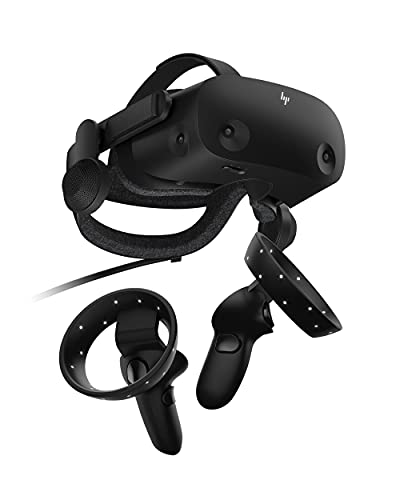
HP Reverb G2
Ideal for enthusiasts who demand premium visuals, though it costs about $68,672 more than the Meta Rift S.
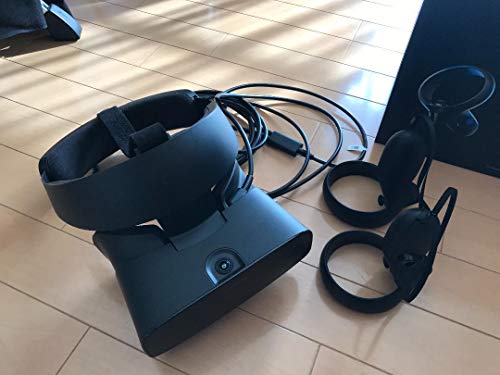
Meta Rift S Mini
Its 307 mm height and 391 mm length make it a more compact premium option, fitting tighter spaces where the larger Rift S and Reverb G2 feel bulky.
Score Analysis
Key score advantages vs. runner-up (HP Reverb G2)
Price Range
Meta Rift S
$628.33
HP Reverb G2
$69,300.00
Meta Rift S Mini
$764.68

DPVR E4 Pro
$499.99
Spec Comparison
TL;DR: The Meta Rift S offers inside‑out tracking, a 115° field of view and 80 Hz LCD at $628, delivering solid comfort and ease of use for PC gamers who're willing to accept a modest refresh rate.
The headset’s standout spec is its five front‑facing cameras that enable sensor‑free, inside‑out tracking, paired with a 115° field of view and a fast‑switch LCD delivering 1280 × 1440 pixels per eye at 80 Hz. At 500 g, the unit feels balanced thanks to the halo‑style headband, and the 536 PPI pixel density helps keep the screen‑door effect low.
Compared with the DPVR E4 Pro, the Rift S is heavier than the 280 g E4 Pro but still offers a comparable 115°‑116° field of view. The Meta Rift S Mini shares the same 500 g weight and 115° FOV, while the HP Reverb G2 is noticeably heavier at 1.1 lb and pushes a higher 90 Hz refresh rate, though it also comes at a premium price.
Users consistently praise the comfortable halo strap and the plug‑and‑play setup that requires no external sensors. Professional reviewers note the headset’s accurate Oculus Insight tracking, but many mention that the LCD panel can appear grainy and the fixed 80 Hz refresh rate may cause motion discomfort in fast‑paced titles. The headset runs on a single USB 3.0 + DisplayPort cable and includes spatial audio speakers with a 3.5 mm headphone jack.
Pros
Cons
Best for: Budget-conscious buyers seeking a reliable entry-level option
Avoid if: You need advanced features or professional‑grade performance
“The halo strap is so much more comfortable than the original Rift.”
“Set up in under 10 minutes—no sensors to mount!”
TL;DR: The HP Reverb G2 offers a stunning 2160 × 2160 per‑eye LCD display at 90 Hz, but its $69,300 price and 114° field of view make it a premium choice for professionals.
The HP Reverb G2 features a 2160 × 2160 pixels per‑eye LCD panel, delivering 9.3 million total pixels, and a 90 Hz refresh rate that keeps motion smooth. At 1.1 pounds, it feels balanced, and the integrated off‑ear speakers sit just 10 mm from the ear.
The Reverb G2 weighs 1.1 lb, noticeably heavier than the Meta Rift S Mini and Meta Rift S, which each weigh about 500 g. Its 114° field of view is a degree narrower than the 115°‑116° offered by those headsets, while its 90 Hz refresh rate outpaces their 80 Hz panels. The headset also uses four inside‑out cameras, whereas the Rift S models rely on five front‑facing cameras, which can affect tracking volume.
Professional reviewers praise the headset’s razor‑sharp visuals and the mechanical IPD slider that spans 60‑68 mm, noting the precise fit for users who need accurate depth perception. Everyday users note the comfort of the magnetic fabric cushions and the off‑ear audio, but many report tracking hiccups during rapid head movements and a feeling of limited immersion due to the narrower field of view.
The system requires a Windows 10 May 2019 update or later, a GPU at least as powerful as an NVIDIA GTX 1080, and 8 GB of RAM. It connects via a 6‑meter hybrid cable and includes two ergonomic 6‑DOF motion controllers. The headset’s IPD adjustment is a mechanical slider, and the structured weight is listed as 1.1 lb (499 g).
Pros
Cons
Best for: Those prioritizing quality and willing to pay for premium performance
Avoid if: You're shopping on a tight budget — it's priced at $69300.00
“The clarity is stunning—no screen door effect at all.”
TL;DR: The Meta Rift S Mini offers a 115° field of view, 1280 × 1440 per‑eye resolution, and inside‑out tracking on a 500 g headset for $760.77, delivering solid comfort and reliable performance for PC gamers.
The headset’s most eye‑catching spec delivers a 115° field of view and a per‑eye resolution of 1280 × 1440 pixels, totaling 2560 × 1440 pixels across the display. Its fast‑switch LCD runs at a fixed 80 Hz refresh rate, and five front‑facing cameras enable inside‑out 6DoF tracking.
Compared with its peers, the Mini matches the Meta Rift S in weight (both 500 g) and field of view (115°), but weighs more than the DPVR E4 Pro, which weighs 280 g. The HP Reverb G2 lists a higher refresh rate of 90 Hz, while the Mini stays at 80 Hz. In terms of field of view, the DPVR E4 Pro is slightly wider at 116°, and the HP Reverb G2 is a degree narrower at 114°, placing the Mini squarely in the middle.
Reviewers consistently praise the comfortable halo headband and the integrated spatial audio, noting that the single‑cable setup makes plug‑and‑play straightforward. However, users frequently mention the LCD panel’s screen‑door effect and the software‑only IPD adjustment as noticeable trade‑offs. Professional reviewers also point out that the fixed 80 Hz refresh lags behind higher‑refresh competitors.
Pros
Cons
Best for: Those prioritizing quality and willing to pay for premium performance
Avoid if: You need advanced features or professional‑grade performance
“The halo strap is so much more comfortable than the original Rift.”
“Set up in under 10 minutes—no sensors to mount!”
TL;DR: The DPVR E4 Pro delivers a 3664 × 1920 LCD display, 116° field of view, and a feather‑light 280 g build for under $499.99, making it a comfortable high‑resolution PC VR option.
At just 280 g, the DPVR E4 Pro is one of the lightest headsets in its class, and it packs a single fast LCD panel with a total resolution of 3664 × 1920 (1832 × 1920 per eye). The display can run at 72 Hz, 90 Hz, or up to 120 Hz, giving you a smooth visual experience, while the 116° field of view adds an immersive sense of space.
Compared with the Meta Rift S and its Mini variant, which both weigh about 500 g, the E4 Pro feels considerably lighter on the head. Its 116° field of view is a degree wider than the Rift S’s 115°, and the headset’s 120 Hz top refresh rate outpaces the Rift S’s 80 Hz. The HP Reverb G2 also trails in refresh speed at 90 Hz and has a slightly narrower 114° field of view, while its weight of 1.1 pounds makes it heavier than the DPVR.
Users consistently praise the headset’s comfort and the clear 3664 × 1920 display, especially noting the 90° flip‑up mechanism for quick real‑world checks. Professional reviewers highlight the lightweight build and solid inside‑out 6DoF tracking using four visible‑light cameras. The main trade‑offs are the software‑based IPD adjustment (54‑74 mm), which can feel less precise than a physical slider, and an early‑stage firmware and driver setup that some users say is unintuitive.
Technically, the E4 Pro uses SteamVR compatibility to access over 7,000 titles, and its controllers run on 1.5 V 1500 mAh AA batteries for roughly 5‑6 hours of play. The headset connects via DisplayPort 1.4 and USB 3.2, and it includes a 3.5 mm audio jack, built‑in microphone, and integrated speakers.
Pros
Cons
Best for: PC VR enthusiasts who prioritize comfort, high‑resolution visuals, and a lightweight design for extended gaming or simulation sessions.
Avoid if: You need a highly precise physical IPD mechanism, a longer warranty, or a completely hassle‑free plug‑and‑play experience.
“Super lightweight, I love the flip up and binocular overlaps very nice.”
“Very good, love the lightweight design.”
Breakdown
Meta Rift S
Pros
HP Reverb G2
Cons
Meta Rift S Mini
Pros
DPVR E4 Pro
Cons
Based on scoring data and product specs
Personalized picks
Best Overall Pick
Meta Rift S
Best Budget PickBest for: Budget-conscious buyers seeking a reliable entry-level option
HP Reverb G2
Best for: Those prioritizing quality and willing to pay for premium performance
$69,300.00+$68,671.67 vs winner
Skip DPVR E4 Pro if…
Reliability and user satisfaction are your top concerns
Meta Rift S takes the top spot with a solid 4.3/5 rating from 18,751 reviewers, a generous 115° field of view and a crisp 1280 × 1440 px resolution per eye. Its five‑camera inside‑out tracking system (Oculus Insight) delivers reliable motion capture, and the headset weighs just 500 g, keeping it comfortable for extended play.
The runner‑up, HP Reverb G2, shines when you need its 2160 × 2160 px per‑eye resolution for simulation or design work. It offers a 2160 × 2160 px per‑eye resolution and a 90 Hz refresh rate, paired with a 114° field of view, making detailed scenes feel smooth and immersive.
Looking at the other tiers, the DPVR E4 Pro at $499.99 is the best budget pick, delivering the lowest entry price in the lineup. For those who want premium fidelity, the HP Reverb G2 stands out with its high resolution and faster refresh, making it the top premium alternative.
Pick the Meta Rift S today for the most balanced VR experience without breaking the bank.
The Meta Rift S and the Meta Rift S Mini both weigh about 500 g and use a single tethered cable, making them easy to manage on a small desk. The HP Reverb G2’s 6‑meter hybrid cable adds length but its weight is similar (≈ 499 g), while the DPVR E4 Pro is the lightest at 280 g but relies on a battery pack.
Please sign in to leave a review
No reviews yet. Be the first to review!
