Rankings
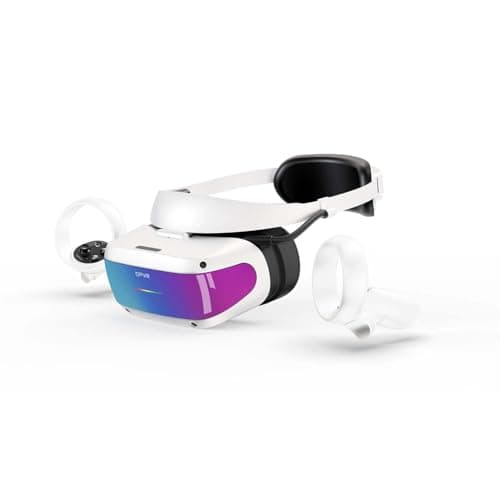
The DPVR E4 is a lightweight PC-tethered headset offering a crisp high-resolution display, wide FOV and 120 Hz refresh, with inside-out tracking and comfortable flip-up design. It shines for comfort-focused gamers but suffers from software-only IPD adjustment and early-stage firmware quirks.
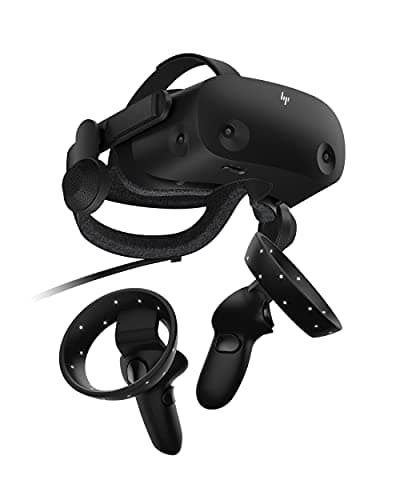
The HP Reverb G2 delivers ultra-high-resolution visuals and comfortable ergonomics for PC-based VR, targeting professionals and enthusiasts who value clarity over a wide field of view. Its inside-out tracking and Valve-tuned audio are strong points, but the modest FOV and occasional tracking issues limit fast-paced gaming.
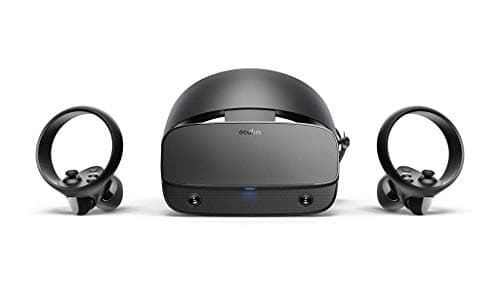
The Oculus Rift S is a PC-powered VR headset with inside-out tracking and a halo strap, offering easy setup but limited by its fixed 80 Hz refresh and LCD display.
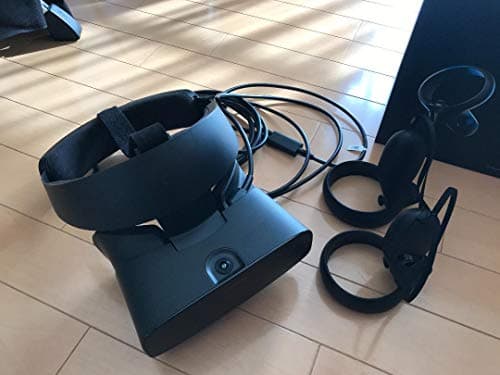
The Rift S is a PC-tethered headset that offers a comfortable design, wide FOV and reliable inside-out tracking. Its LCD display and fixed refresh rate limit visual fidelity, and it depends on a powerful PC and a single cable.
| Attribute | | | | |
|---|---|---|---|---|
1,843,200 pixelsbest | 2,160 pixels | — | — | |
80 Hz | 90 Hz | 80 Hz | 120 Hzbest | |
| ↓ lower better | 500 g | 499 g | 500 g | 280 gbest |
115 degrees | 114 degrees | 115 degrees | 116 degreesbest | |
— | — | — | 5.5 hoursbest | |
— | 1 yearsbest | — | 0.25 years |
Click an attribute name to sort · Green = best, red = worst (relative to this comparison)
| Attribute | | | | |
|---|---|---|---|---|
Tracking(1) | ||||
Tracking System | Inside-out | inside-out | inside-out | inside-out |
Compatibility(1) | ||||
Supported Device Type | PC | pc | PC | PC |
Audio(1) | ||||
Audio Output | Integrated speakers | off-ear speakers | speakers | Integrated speakers |
Accessories(1) | ||||
Included Controller Type | Oculus Touch (2nd generation) | motion controllers | Touch | Wireless controllers |
Warranty(1) | ||||
Warranty Period (years) | — | 1 years | — | 0.25 years |
Display(4) | ||||
Resolution per Eye (pixels) | 1843200 pixels | 2160x2160 pixels | 1280x1440 pixels | 1832x1920 pixels |
Refresh Rate (Hz) | 80 Hz | 90 Hz | 80 Hz | 120 Hz |
Field of View (degrees) | 115 degrees | 114 degrees | 115 degrees | 116 degrees |
Display Type | Fast-switch LCD | LCD | LCD | LCD |
Build & Design(1) | ||||
Weight (g) | 500 g | 499 g | 500 g | 280 g |
Products in the top-left offer the best value (high score, low price).
Reviewers praised the Rift S for its comfortable halo strap and sensor-free setup, but criticized its LCD panel, fixed refresh rate, and lack of future-proof features.
Users like the comfort and quick setup, yet complain about the blurry display, AA-battery controllers, and the headset being discontinued.
“The halo strap is so much more comfortable than the original Rift.”
“Set up in under 10 minutes-no sensors to mount!”
“Passthrough+ is a lifesaver when someone walks into the room.”
Reverb G2 prioritizes resolution and clarity, whereas Rift S trades visual quality for ease of setup and comfort.
Rift S offers a more affordable entry with comfortable design, while the Reverb G2 targets users needing the highest possible resolution for simulation and professional use.
DPVR E4 is better for users prioritizing comfort and refresh rate; Reverb G2 wins on raw pixel density.
Professional reviewers commend the Reverb G2 for its unparalleled LCD resolution and comfortable design, while criticizing its limited FOV and inconsistent inside-out tracking.
Users love the razor-sharp visuals and off-ear speakers, but report tracking instability, cable tangling, and facial pressure during extended use.
Professional reviewers praised the Rift S for its comfortable halo headband, reliable inside-out tracking, and straightforward single-cable setup, calling it a solid incremental upgrade over the original Rift. However, they criticized its LCD display, fixed 80 Hz refresh rate, and lack of a standalone mode, noting that the headset feels like a transitional product in a market moving toward wireless solutions.
Everyday users love the Rift S for its comfort, ease of setup, and dependable tracking, especially appreciating the integrated audio and Passthrough+ safety feature. Common complaints focus on the grainy LCD display, software-only IPD adjustment, occasional driver or tracking glitches, and the inconvenience of the tether.
Professional reviewers praise the DPVR E4 for its feather-light weight, crisp high-resolution panel, wide field of view and smooth 120 Hz refresh rate, noting the flip-up design and Meta-style controllers make it comfortable and intuitive. However, they also point out early-stage firmware hiccups, a software-only IPD adjustment that can be imprecise, and a relatively narrow sweet spot.
Everyday users overwhelmingly highlight the headset's comfort and visual clarity, repeatedly calling it super lightweight and appreciating the flip-up feature and clear, wide display. Common complaints revolve around the initial firmware setup, fixed strap slots, audio leakage, and occasional fit issues for larger glasses.
