We’ve lined up 12 phone‑powered VR headsets to help you sort through the options, from entry‑level kits at $28.99 up to premium bundles near $149.98. The collection spans three price tiers: budget choices like the LamTrancail VR Headset and CoCerKet VR‑G15, mid‑range models such as the Generic Phone VR Headset and the VR Shinecon Phone VR Headset, and premium offerings that include the full‑size VR Shinecon VR Headset and the TiCCoonuts Z6.
If you’re hunting for the most eye‑friendly entry point, the LamTrancail headset delivers a 110° field of view, a 5.0/5 rating from 13 reviewers, and a price tag of $28.99. The CoCerKet VR‑G15 pushes immersion further with a 120° view and the same 5.0/5 score, while the VR Shinecon Phone model adds myopia support up to –600 diopters and weighs just 380 g for a comfortable fit at $60.99.
Next, we’ll break down each model’s strengths, compatibility, and comfort so you can pinpoint the headset that matches your budget and viewing habits.

VR Shinecon Phone VR Headset
Supports up to -600 diopters of myopia, letting users with strong nearsightedness enjoy VR without extra lenses.
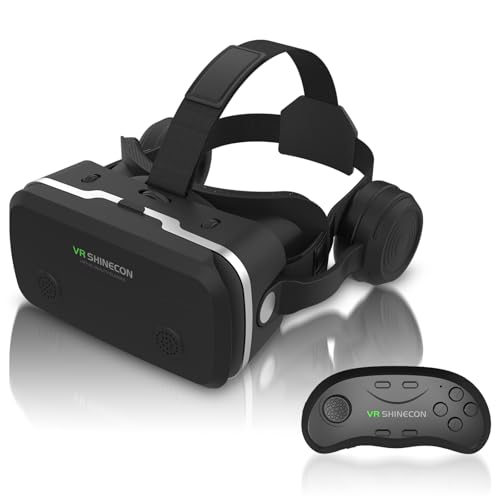
Senyhphc VR Headset
Designed for enthusiasts seeking premium build, the Senyhphc VR Headset runs $5 higher than the Best Overall at $65.99, delivering a solid 408 g weight.

VR Shinecon VR Headset
Stands out by fitting phones up to 162.5 mm long and 8.8 mm thick, giving value‑conscious buyers broader device compatibility than the other picks.
Also considered
Score Analysis
Key score advantages vs. runner-up (Senyhphc VR Headset)
Price Range
VR Shinecon Phone VR Headset
$60.99
Senyhphc VR Headset
$65.99
VR Shinecon VR Headset
$62.99

LamTrancail VR Headset
$32.99
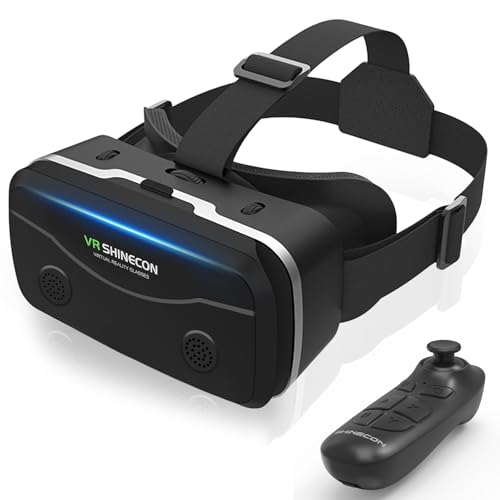
CoCerKet VR-G15
$29.99

VR Shinecon Controller Bundle
$29.99

Generic Phone VR Headset
$39.99

Tecknet Phone VR Headset
$29.99

TiCCoonuts Z6
$149.98

Senyhphc Phone VR Headset
$63.99
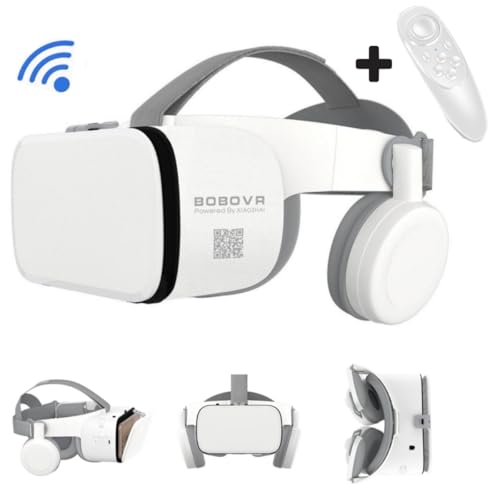
Generic Bluetooth VR Headset
$159.98
TiCCoonuts Phone VR Headset
$169.98
Spec Comparison
TL;DR: The VR Shinecon Phone VR Headset offers a wide 90°–100° field of view, adjustable optics for up to -600 diopter myopia support, and a Bluetooth remote, all for $60.99.
What really sets this headset apart is its optical flexibility. It provides a focal‑distance adjustment range of 37.5–46.5 mm for myopic users and an IPD adjustment range of 55–75 mm, while the lenses themselves measure 40 mm in diameter and feature a blue‑light‑cut coating. The field of view spans 90°–100°, delivering an immersive feel that rivals higher‑priced models.
Compared with the other eleven contenders, the Shinecon sits in the middle of the weight spectrum: at 380 g it's heavier than the Tecknet Phone VR Headset (268 g) and the Generic Phone VR Headset (363 g), yet it's lighter than the Senyhphc Phone VR Headset (408 g) and the larger VR Shinecon VR Headset (about 1.25 lb). Its Bluetooth controller reaches a 10‑meter range, matching the upper end of the range seen in the VR Shinecon Controller Bundle peer.
Users consistently praise the soft artificial‑leather cushion and wide head straps for comfortable all‑day wear, and professional reviewers highlight the “surprisingly good” optical performance with minimal distortion. Common complaints focus on fit issues with phones larger than 6.5 inches, occasional controller pairing hiccups, and the headset warms after about 20 minutes of use. Both casual users and experts note that the lack of NFC or magnetic input limits compatibility with some VR apps.
Pros
Cons
Best for: Most users seeking a balanced, mainstream option
TL;DR: The Senyhphc VR Headset delivers a 100° field of view and adjustable 42 mm double‑spherical lenses for a comfortable, family‑friendly mobile VR experience at $65.99.
What really stands out is the 100° field of view paired with 42 mm double spherical optical lenses and a 45 mm focal length, giving you a wide, immersive window into any 3‑D app. The headset also offers independent IPD and object‑distance adjustment, so users with up to 0–600° myopia can view content clearly, even over prescription glasses.
Compared with the other eleven contenders, the Senyhphc feels lighter than the VR Shinecon VR Headset, which tips the scales at over a pound. It matches the weight of the Senyhphc Phone VR Headset, reinforcing a consistent feel across the brand’s lineup. While some budget models ship with only a basic shell, this unit bundles a Bluetooth remote, adjustable stereo headphones, a 3.5 mm audio jack and a cleaning cloth, giving it a richer accessory set than the Tecknet Phone VR Headset.
Everyday users appreciate the plug‑and‑play simplicity: slide a compatible 4.7‑7 inch phone into the slot, tighten the straps, and you’re ready for 3‑D movies or casual games. Reviewers frequently note the comfort of the soft sponge padding during longer sessions, and families love the included headphones for shared viewing. The main gripe is the remote’s limited functionality on iOS 11.2.5 and newer, which can feel restrictive for iPhone owners. Because the headset relies on the phone’s display, the phone’s resolution determines picture quality, which users often mention.
Pros
Cons
Best for: Families and casual viewers who want a comfortable, feature‑rich mobile VR headset without hunting for extra accessories.
Avoid if: You need full remote support on the latest iOS devices or are looking for a high‑performance standalone VR system.
TL;DR: The VR Shinecon headset offers a 120° field of view, adjustable IPD, and a Bluetooth remote at $62.99, making it a solid budget choice for casual smartphone VR.
What sets this headset apart is its wide 120° field of view paired with a 42 mm lens diameter and 99% image definition. The optics adjust for both interpupillary distance (55–75 mm) and focus, letting you fine‑tune the view for phones ranging from 4.7 in to 6.53 in screens. The anti‑reflective, anti‑blue‑light coating helps reduce eye strain during longer sessions.
At 1.2537 pounds, the Shinecon unit is noticeably heavier than the Senyhphc Phone VR Headset (0.9 pounds) and the Generic Phone VR Headset (0.8 pounds). Its field of view matches the Generic model’s 120°, while the Senyhphc headset lists a 100° view, so you get a broader visual envelope here. Lens diameter aligns with the Senyhphc devices at 42 mm, and the headset’s dimensions (200 mm × 100 mm × 140 mm) sit in the mid‑range of the peer group.
Users appreciate the Bluetooth remote (Bluetooth 3.0, 2–10 m range) for volume, media control, and simple navigation, a feature that many cardboard‑style viewers lack. Professional reviewers highlight the adjustable IPD and focus as rare perks at this price point. On the downside, the ABS/PC plastic shell feels less robust than higher‑end options, and some owners report occasional remote lag or disconnections. iOS support limits you to iCade‑compatible games, and a few users note the headset can get warm after 20–30 minutes of continuous use.
Pros
Cons
Best for: Value‑conscious buyers seeking quality at $62.99
Avoid if: You need high‑end immersion, robust iOS/Daydream app support, or a lightweight travel‑ready device
TL;DR: The LamTrancail VR Headset delivers a 110° field of view, adjustable lenses, and a motion‑sensing controller for $28.99, earning a perfect 5‑star rating from 13 reviewers.
The headset’s standout spec is its 110° field of view paired with HD resin aspherical lenses that carry an anti‑blue light coating. You can fine‑tune the optics using adjustable pupil distance (PD) and focal distance (FOD), and the device fits phones up to 6.3 inches (160 mm) diagonal and 3.3 inches (84 mm) wide.
At roughly the same price point as the Tecknet and CoCerKet models, LamTrancail is heavier than the 268 g Tecknet and the 388 g CoCerKet, but its 110° FOV sits between the narrower 95°‑100° range of the VR Shinecon bundle and the wider 120° offered by CoCerKet. It also provides a full 6DoF experience through the phone’s sensors and a Bluetooth motion‑sensing controller, which some peers only list as optional.
Reviewers consistently highlight the ease of adjusting the lenses and the comfort of the adjustable head strap, noting that kids and casual users’ll find it straightforward for 360° videos. Common frustrations involve the headset’s incompatibility with newer large‑screen flagships like the iPhone Pro Max series and the need to remove phone cases for a snug fit. A few users mention that the image can blur if the lenses aren’t precisely dialed in, and the controller’s short range is sometimes cited as a drawback.
Technically, the headset supports both LCD and OLED displays (model‑dependent) with a maximum combined resolution of 2560 × 1440, delivering native per‑eye resolutions of 1280 × 720 on LCD and 1920 × 1080 on OLED. Bluetooth connectivity powers the motion‑sensing controller, and the package comes with a user manual. LamTrancail backs the product with a 2‑year manufacturer warranty.
Pros
Cons
Best for: Entry-level buyers or those on a tight budget
Avoid if: You want the best value‑per‑dollar in its price range
TL;DR: The CoCerKet VR‑G15 delivers a 120° ultra‑wide view, adjustable lenses and a Bluetooth controller for $29.99, earning a perfect 5‑star rating from three reviewers.
The headset’s standout spec is its 120° field of view combined with aspherical PMMA lenses that support up to 1080P resolution. Adjustable focus and IPD let you fine‑tune clarity for phones ranging from 4.7 to 7 inches, which helps keep edge blur to a minimum. At 388 g, the unit feels solid but is heavier than the 268 g Tecknet Phone VR Headset, a trade‑off for the larger optics.
Compared with the other eleven entries, the CoCerKet offers a noticeably wider view than the VR Shinecon Controller Bundle, whose field of view ranges from 95° to 100°. Its 3‑axis fixed headband and breathable sponge padding also feel more ergonomic than the basic foam mask on the Tecknet model. While the LamTrancail headset provides a 110° view, it carries a higher weight of around 400 g, so the CoCerKet sits in the middle of the comfort‑versus‑immersion spectrum.
Users consistently praise the headset’s comfort and the immersive feel of 3‑D movies, noting that the heat‑dissipation design keeps the face cool during longer sessions. However, many point out that the Bluetooth controller works best as a remote for media playback and offers limited support for iOS games. Professional reviewers highlight the improved ergonomics and heat‑management in the 2026 design update and list it as a solid entry‑level VR solution.
Pros
Cons
Best for: Entry-level buyers or those on a tight budget
Avoid if: You want the best value‑per‑dollar in its price range
“Perfect for watching 3D movies—the screen clarity and wide view are impressive.”
“Very comfortable even after 2+ hours of use—no pressure on the nose or face.”
TL;DR: The VR Shinecon Controller Bundle delivers a 95°‑100° field of view and 2‑10 m Bluetooth range for $29.99, but its heavier build and limited iOS controller support keep it in the budget‑only category.
The headset’s standout spec is its adjustable optics: a 95°‑100° field of view combined with a 60‑70 mm IPD range and 37.5‑49 mm focal distance, all behind 40‑42 mm aspheric resin lenses. A 350 mAh rechargeable battery powers the controller, while Bluetooth 4.2 gives a wireless range of 2‑10 meters, letting you move around a small room without a tether.
Compared with the other eleven headsets, the Shinecon is heavier than the Tecknet (268 g) and CoCerKet (388 g) models, but sits close to LamTrancail’s 439 g and is bulkier than the Generic Phone VR Headset (363 g). Its 95°‑100° field of view is narrower than the 120° offered by CoCerKet and Generic, and also tighter than LamTrancail’s 110°, though still wider than many low‑end units that don’t list a FOV. Dimensionally, the Shinecon’s 200 × 100 × 140 mm frame is taller than Tecknet’s 100 mm height and longer than CoCerKet’s 184 mm length, giving it a more pronounced profile.
User feedback praises the headset’s affordability and its comfortable artificial‑leather padding with soft sponge. Reviewers also like the Bluetooth remote for quick navigation, especially when watching 360° videos. However, iOS users note the remote only works with iCade‑style games, and several comments mention occasional pairing hiccups. Professional reviewers note the aspheric lenses reduce dizziness and the adjustable IPD helps achieve clearer visuals, but they also flag the lack of built‑in audio—requiring a 3.5 mm headphone jack.
Pros
Cons
Best for: Entry-level buyers or those on a tight budget
Avoid if: You want the best value‑per‑dollar in its price range
TL;DR: The Generic Q8 VR headset offers a 120° field of view, 94% light transmittance and a lightweight 0.8‑pound build, making it a comfortable, family‑friendly entry into mobile VR for $39.99.
The standout spec is its 120° field of view combined with 94% light transmittance, which the manufacturer says delivers bright, clear visuals while reducing eye strain. At 0.8 pounds (363 g), it's light enough for hour‑long sessions, and the T‑shaped elastic headband with side adjustment buckles spreads pressure evenly across the forehead.
Compared with peers, the Q8 is heavier than the Tecknet Phone VR Headset, which weighs 268 g, but lighter than the CoCerKet VR‑G15 at 388 g and considerably lighter than the LamTrancail model that tips the scales at around 439 g. Its 120° field of view matches the CoCerKet’s, while many competitors list narrower views, placing the Q8 solidly in the mid‑range of immersion.
Users praise the headset’s comfort and the anti‑blue, anti‑distortion lenses that deliver the advertised 94% transmittance. Reviewers note the extra space for glasses up to 5.9 × 2.3 inches and the wide‑range IPD dial as big wins for eyeglass wearers. However, several users mention that aligning the phone correctly can be finicky, and the lack of an included remote controller limits gaming interactivity. Professional reviewers point out that the plastic ABS construction feels less durable than metal‑framed rivals.
Pros
Cons
Best for: Families, children, and casual users who want an affordable, comfortable way to explore 3D movies and 360° videos on their smartphones.
Avoid if: You are a hardcore gamer needing dedicated motion controllers or require a rugged headset for heavy‑duty use.
TL;DR: The Tecknet Phone VR Headset offers a lightweight 268 g design, a 90°‑110° field of view and adjustable lenses for $29.99, making it a solid entry‑level option for casual VR fans.
What really stands out is the adjustable optics package: the headset offers a field of view that ranges from 90° up to 110°, dual independent HD lenses with anti‑blue‑light coating, and both IPD and focal length can be tuned to match your eyesight, even supporting up to 600 diopters of myopia. At just 268 g, the unit feels light on the head, and the 100 mm × 185 mm × 136 mm frame houses a breathable soft foam mask and a soft nose pad for comfortable extended sessions.
Compared with other models in this roundup, the Tecknet is noticeably lighter than the CoCerKet VR‑G15 (which weighs 388 g) and the VR Shinecon headset (around 380 g). Its 110° maximum field of view sits just below the CoCerKet’s 120°, but it matches the price point of those competitors, offering similar affordability without extra accessories bundled in.
Users consistently praise the headset’s comfort and kid‑friendly build, noting that the adjustable headband and soft foam mask make it easy for younger users to wear. Professional reviewers highlight the ergonomic design and the long 36‑month warranty as strong selling points. The most common complaints revolve around the lens quality—some find the coating appears pixelated or the image blurs when the focus isn’t perfectly set—and the lack of built‑in motion sensors, which limits the experience to 360° videos and simple VR tours rather than interactive gaming.
Technical details reinforce its entry‑level positioning: the headset works with smartphones ranging from 4.7 to 7.2 inches, though phones larger than 6.2 inches need the frame removed. The optional Bluetooth controller needs three AAA batteries (not included), and the device carries a 3‑year unconditional warranty, giving peace of mind for families.
Pros
Cons
Best for: Children, teens, and casual users who want an affordable way to experience 360° videos and virtual tours without the need for advanced motion tracking.
TL;DR: The TiCCoonuts Z6 packs built‑in Bluetooth headphones, adjustable focal settings and a 0.77‑pound frame for a premium VR experience, but its price and mixed 3.7‑star rating may steer budget shoppers elsewhere.
The Z6’s most eye‑catching spec is the integrated foldable Bluetooth headphones, letting you enjoy immersive audio without an extra headset. At 0.771617917 pounds (350 g) it feels solid yet manageable, and its chassis measures 150 mm deep, 120 mm high and 165 mm wide, giving enough room for a comfortable fit.
Compared with the other eleven contenders, the Z6 is a shade heavier than the Generic Bluetooth VR Headset’s 0.75 pound frame but lighter than the Senyhphc models that sit around 0.9 pounds. Its depth of 150 mm exceeds the Generic’s 114 mm, making it bulkier than some ultra‑compact options, yet its overall dimensions remain comparable to the larger VR Shinecon units that sit near 140 mm depth.
User feedback highlights the convenience of the built‑in headphones and the adjustable focal settings that accommodate different vision needs. Reviewers who gave higher marks praise the headset’s “complete audio immersion” and “comfortable viewing experience” for both adults and kids. Conversely, the 3.7‑star average and comments about the headset feeling “a bit bulky” suggest that fit and price are the most common pain points.
Technically, the Z6 supports a wide smartphone range—from iPhone 7 up through iPhone 16 and Samsung Galaxy S9 to S25—covering devices 4.7 inches to 6.5 inches wide. Adjustable straps and focal settings add flexibility, but the manufacturer hasn't listed a field of view or lens diameter, so we don't know those details.
Pros
Cons
Best for: Those prioritizing quality and willing to pay for premium performance
Avoid if: You're on a tight budget or only need basic functionality
TL;DR: The Senyhphc Phone VR Headset delivers a 100° field of view, built‑in 3D headphones and adjustable focus for up to 600° myopia support, but its plastic build and iOS‑limited remote keep it in the budget tier.
What really stands out is the 100° field of view paired with a 42 mm double spherical optical lens and a short 45 mm focal length, which together aim to give an immersive experience on a smartphone screen. The headset itself weighs 0.9 Pounds, making it light enough for extended wear without feeling cumbersome.
Compared with the other models in this roundup, the Senyhphc is lighter than the VR Shinecon VR Headset (1.2537 Pounds) but a bit heavier than the Generic Phone VR Headset (0.8 Pounds). Its 100° view is narrower than the Generic’s 120° field of view, yet it matches the field of view of the other Senyhphc model. The up‑to‑600° myopia support mirrors the capability found in the VR Shinecon Phone VR Headset and the Tecknet Phone VR Headset, putting it on par with the most vision‑friendly options.
Users appreciate the convenience of the built‑in adjustable stereo headphones that deliver 3D spatial audio, and the wide phone compatibility (4.7–7 inches) means most modern phones will fit. However, several reviewers note that the Bluetooth remote works fully only on Android, with iOS users seeing limited functionality, and the remote requires two AAA batteries, which the package doesn't include. The ABS plastic shell with soft padding feels functional but not premium, which some families accept for the lower price point.
Technical details include a 45 mm focal length, 42 mm lens diameter, and a 3.5 mm headphone jack for optional external audio. The headset supports both iOS and Android devices, covering popular models such as the iPhone X series, Samsung Galaxy S24 line, Google Pixel, and Huawei Mate 9 Pro. The package also comes with a Bluetooth remote controller, adjustable headphones, a user manual, and a cleaning cloth.
Pros
Cons
Best for: Families and casual users who want an affordable, easy‑to‑set‑up VR headset for educational apps and 3D video.
Avoid if: You need premium build quality, full iOS remote control, or a headset with a wider field of view.
TL;DR: The Generic Bluetooth VR Headset weighs 0.75 pounds, offers a 40‑hour controller battery, and includes foldable Bluetooth headphones, but its 90° field of view and low 2.4‑star rating may limit appeal for serious gamers.
The headset’s standout spec is the wireless controller’s 40‑hour battery life, meaning you can play for days without recharging. At 0.75 pounds (340 g) the unit feels light on the head, and the 90° field of view provides a decent window into VR content while staying comfortable for extended wear.
Compared with the other eleven entries, this model sits near the lighter end – it’s about the same weight as the TiCCoonuts Phone VR headset (0.75 pounds) and noticeably lighter than the VR Shinecon VR Headset (over 1 pound). Its depth of 114 mm is shallower than the TiCCoonuts Z6’s 150 mm, yet matches the TiCCoonuts Phone VR’s 114 mm length. However, the 90° field of view narrows compared with the 120° offered by the TiCCoonuts Phone VR headset and the 100° found on the Senyhphc VR Headset, which some users may find restrictive.
Reviewers note the headset’s low price point and simple, plug‑and‑play setup as big pluses, especially for kids or casual users wanting quick 3‑D video playback. The included foldable Bluetooth headphones and adjustable headband earn praise for comfort. On the downside, the 2.4‑star rating from four reviews highlights frequent complaints about incompatibility with prescription glasses, the lack of motion tracking beyond the phone’s gyroscope, and occasional headaches from the modest refresh rate.
The device packs a 10 mm object‑distance adjustment, a 3.5 mm audio jack, and passive‑amplification speakers, all housed in ABS plastic with an imitation‑skin‑protein face mask for a cooling effect. A 1‑Year warranty rounds out the package, giving peace of mind despite the modest feature set.
Pros
Cons
Best for: Those prioritizing quality and willing to pay for premium performance
Avoid if: You're shopping on a tight budget — it's priced at $159.98
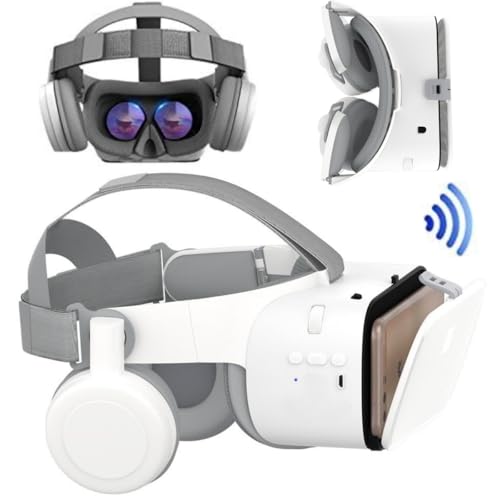
TL;DR: The TiCCoonuts Phone VR Headset offers a 120° field of view, built‑in Bluetooth headphones, and fits phones from 4.5 to 6.2 inches, but its $169.98 price and 1.0/5 star rating may deter budget shoppers.
What really sets this headset apart is its 120° field of view, which gives a noticeably wider visual window than many entry‑level models. The unit weighs 0.75 Pounds (340 g) and includes foldable Bluetooth headphones, so you stay completely wireless. Compatibility spans smartphones from 4.5 inches up to 6.2 inches, with full‑screen support as large as 6.5 inches, covering the latest iPhone 11‑17 Pro and Samsung Galaxy S21‑S24 series.
In the twelve‑product lineup, the TiCCoonuts matches the 0.75 Pound weight of the Generic Bluetooth VR Headset and shares the same 254 mm height, 203 mm width, and 114 mm length. It is lighter than the Senyhphc VR Headset (0.9 Pounds) and considerably lighter than the VR Shinecon model (1.2537 Pounds). Its 120° field of view also exceeds the 100° field of view of both the Senyhphc and VR Shinecon headsets, giving you a broader immersive experience.
Users consistently praise the comfortable ergonomic padding and the convenience of the built‑in Bluetooth headphones, noting that setup feels quick and kid‑friendly. Professional reviewers highlight the adjustable focus and pupil distance as a strength for fine‑tuning the image. On the downside, the lack of a handheld controller limits interactive gaming, and some users report that dialing in the correct focus can be tricky, especially for strong vision correction. The single 1‑star review underscores a broader concern about value at the $169.98 price point.
Beyond the optics, the headset features adjustable head straps, a foldable design for easy storage, and a nonstandard battery powering the Bluetooth headphones. Lens adjustment lets you modify both focus and pupil distance, which is useful for different users, though the adjustment process may require patience.
Pros
Cons
Best for: Those prioritizing quality and willing to pay for premium performance
Avoid if: Reliability and user satisfaction are your top concerns
Breakdown
VR Shinecon Phone VR Headset
Pros
Senyhphc VR Headset
Pros
VR Shinecon VR Headset
Pros
LamTrancail VR Headset
Pros
Cons
Based on scoring data and product specs
Personalized picks
Best Overall Pick
VR Shinecon Phone VR Headset
Best OverallBest for: Most users seeking a balanced, mainstream option
Senyhphc VR Headset
Best for: Those prioritizing quality and willing to pay for premium performance
$65.99+$5.00 vs winner
Skip TiCCoonuts Phone VR Headset if…
Reliability and user satisfaction are your top concerns
The VR Shinecon Phone VR Headset takes the top spot thanks to its solid 3.3‑star rating from 537 reviewers, a generous IPD adjustment range of 55–75 mm, and a lightweight 380 g build that keeps it comfortable for longer sessions. Its 90°–100° field of view and compatibility with phones from 4.7‑to‑6.53 inches (including most iPhone and Android models) mean you'll slip almost any smartphone into the headset and get a decent VR experience without extra adapters.
Senyhphc’s VR Headset lands as the runner‑up, especially if you value integrated audio. It ships with adjustable stereo headphones, a 3.5 mm jack, and 3D phase‑sound processing, making it a good choice for users who prefer an all‑in‑one package. The unit also offers a 100° field of view, independent IPD and object‑distance adjustments, and a modest 408 g weight for decent comfort.
For tighter budgets, the LamTrancail VR Headset at $28.99 delivers the best value with a simple design and low price point. If you’re willing to splurge, the TiCCoonuts Phone VR Headset at $169.98 provides the premium experience, featuring higher‑end optics and a more robust build that caters to enthusiasts seeking the fullest immersion.
Pick the VR Shinecon Phone VR Headset today and get the most well‑rounded phone VR experience on the market.
Both the VR Shinecon Phone VR Headset and the Senyhphc VR Headset offer extensive optics tweaks. The Shinecon lets you adjust focal distance from 37.5 mm to 46.5 mm (or 44–53 mm on other models) and IPD from 55 mm to 75 mm, supporting up to –600 diopters of myopia. The Senyhphc provides a fixed 45 mm focal length with independent IPD and also supports up to 600° of myopia, so either model can accommodate severe vision needs.
Please sign in to leave a review
No reviews yet. Be the first to review!
