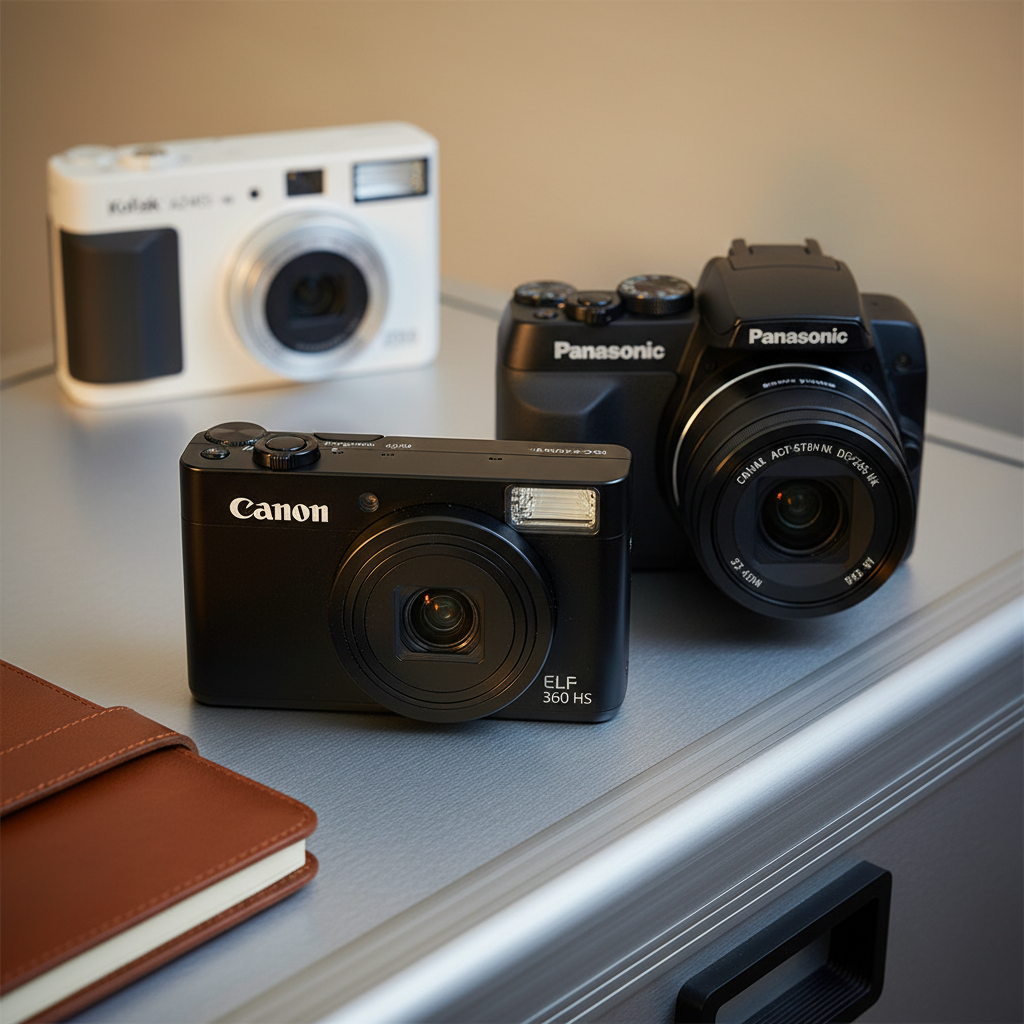
We compared 13 point‑and‑shoot cameras that all include optical image stabilization, and the data showed a surprise: the premium‑priced Canon model that tops the list at $659.00 actually carries a slightly lower user rating (4.2/5) than the mid‑range contenders, both of which sit at 4.3/5. That means you can get the highest‑scoring experience without splurging on the most expensive option.
Our roundup spans three price tiers. In the budget camp you’ll find the Kodak AZ405‑WH at $229.20 and the Sony DSC‑WX300/W at $298.00, both deliver solid zoom ranges for everyday travel. The mid‑range segment features the Panasonic DC‑FZ80DK for $497.99 and the Canon ELPH 360 HS Black for $499.00, each offering strong specs such as the ELPH’s 12× optical zoom and a 4.3/5 rating from over 1,600 reviewers. At the premium end, the Canon SX30 IS and the Canon Cameras US model bring larger bodies and higher zoom counts, with the latter also supporting 4K video. In the sections that follow, we’ll break down how each camera’s strengths and quirks line up with different shooting scenarios.
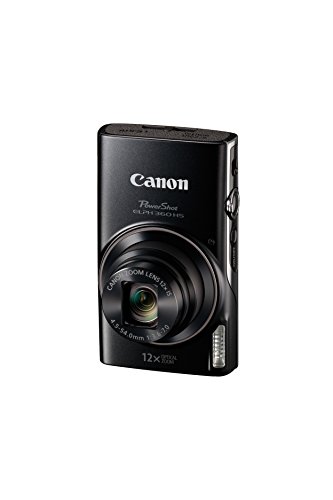
Canon ELPH 360 HS Black
Offers 800 mAh battery delivering about 180 shots per charge, balancing cost and reliability for a proven, high‑quality point‑and‑shoot.

Panasonic DC-FZ80DK
Ideal for mainstream users who want a reliable camera; at $497.99 it’s just $1.01 cheaper than the Canon, offering similar popularity and strong brand confidence.
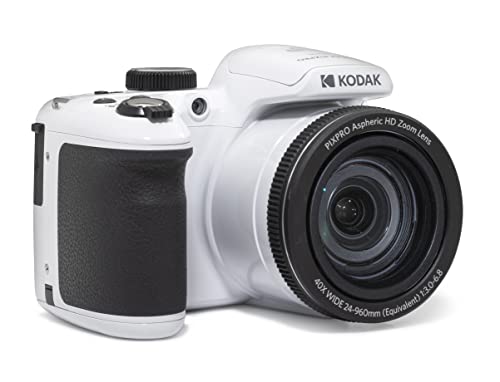
Kodak AZ405-WH
Stands out with roughly 120 minutes of continuous video recording and about 300 shots per charge, catering to entry‑level buyers seeking longer video runs on a tight budget.
Also considered
Score Analysis
Key score advantages vs. runner-up (Panasonic DC-FZ80DK)
Price Range
Canon ELPH 360 HS Black
$499.00
Panasonic DC-FZ80DK
$497.99
Kodak AZ405-WH
$249.00

Canon Cameras US Point and Shoot Digital Camera
$649.00

Sony H400
$561.06
Canon SX30 IS
$518.00

Sony DSC-WX300/W 18 MP Digital Camera
$298.00
Sony Cyber-shot HX1
-$0.01

Nikon COOLPIX S6400
-$0.01

Canon PowerShot A3400
-$0.01

Fujifilm FinePix F200EXR
-$0.01

Sony DSC-W350 14.1MP Digital Camera
-$0.01
Nikon COOLPIX S6000
$333.33
Spec Comparison
TL;DR: The Canon PowerShot ELPH 360 HS packs a 12× optical zoom with image stabilization, a 20.2 MP sensor and Wi‑Fi/NFC into a feather‑light 0.32‑lb body, perfect for travel snapshots.
What really sets this camera apart is its 12× optical zoom paired with Canon’s Intelligent Optical Image Stabilizer, letting you capture distant subjects without blur. The 20.2 MP 1/2.3" BSI CMOS sensor, driven by a DIGIC 4+ processor, delivers vibrant daylight images despite the compact form factor.
At 0.32 pounds (145.15 g), the ELPH 360 HS is noticeably lighter than most peers in the roundup, such as the Panasonic DC‑FZ80DK (1.41 pounds) and the Nikon COOLPIX S6000 (1.0 pound). Its 800 mAh battery provides about 180 shots per charge, which is smaller than the Panasonic’s 895 mAh unit that supports longer video runtimes. The camera’s 3.0‑inch LCD shows roughly 461,000 dots, a higher resolution than the 230,000‑dot screens found on several competitors.
Users consistently praise the powerful zoom and pocket‑size convenience, noting that it outshines smartphone zoom for family trips and everyday outings. However, reviewers also flag noisy images above ISO 800 and the f/7.0 aperture at the telephoto end, making low‑light scenes grainy. Wi‑Fi and NFC pairing can be finicky, and the 180‑shot battery life means you’ll need to recharge after a day of shooting.
Pros
Cons
Best for: Buyers willing to invest in a proven, high-quality option
Avoid if: You need advanced features or professional‑grade performance
TL;DR: The Panasonic DC‑FZ80DK offers a massive 60× optical zoom, 18.1 MP sensor, and 4K video in a lightweight 1.41‑lb body, earning 4.3‑star praise from 3,749 reviewers.
The standout feature is its 60× optical zoom, covering a 20–1200 mm equivalent focal length, and an extra 120× intelligent zoom for distant subjects. It records 4K UHD video at 3840×2160 30 fps and can shoot continuously at 10 fps, while the 1/2.3"-type MOS sensor delivers 18.1 MP stills. Panasonic lists battery life at 90 minutes, and the camera can capture about 330 shots per charge.
Compared with other point‑and‑shoots in this roundup, the FZ80DK is heavier than the Canon ELPH 360 HS (0.32 lb) but lighter than the Canon SX30 IS (1.32 lb). Its 60× optical zoom far exceeds the 12× zoom of the ELPH 360 HS and the 40× zoom of the SX30 IS, giving it the longest reach among the peers while still fitting in a compact hand‑held form.
Everyday users praise the camera’s ease of use, the “superzoom” feel, and the ability to capture 4K video without breaking the bank. Reviewers often call it a solid gift for travel or wildlife outings. Common complaints focus on the small 1/2.3" sensor, which limits low‑light performance, the lack of Wi‑Fi or Bluetooth for wireless sharing, and a menu system that can feel cumbersome. Reviewers also describe the built‑in flash button as noisy.
Pros
Cons
Best for: Travel photographers, wildlife and nature enthusiasts, and casual shooters who want DSLR‑like control with a superzoom in a pocketable package.
Avoid if: You need advanced low‑light performance, RAW video, or robust wireless connectivity for remote shooting.
“Given as a gift, he loves it”
“It feels good in the hand and the zoom range is outstanding”
TL;DR: The Kodak AZ405‑WH packs a 40× optical zoom, 20.68 MP BSI sensor and AA‑battery convenience into a compact 0.96‑lb body, ideal for beginners chasing distant subjects.
What really sets this camera apart is its 40× optical zoom (24 mm‑960 mm equivalent) paired with Optical Image Stabilization, letting you capture wildlife or sports from far away without blur. The sensor delivers 20.68 MP of effective resolution, and the camera can record up to 120 minutes of Full HD video at 1080/30 fps on a single set of four AA batteries.
Compared with its peers, the AZ405‑WH is heavier than the Sony DSC‑WX300/W’s 0.37 lb body, yet lighter than the Nikon COOLPIX S6000 at roughly 1.0 lb. Its 3.0‑inch fixed TFT LCD (460,000 dots) also out‑sizes the Nikon’s 2.7‑inch screen, giving you a clearer view for framing. While the Sony models rely on built‑in rechargeable packs, Kodak’s AA‑battery design offers the convenience of quick swaps in the field.
Users appreciate the long zoom reach and the simplicity of automatic modes, noting that the camera’s panorama and face‑detect features add fun without extra setup. However, several reviewers flag the video output as inconsistent—some only see 720p despite the 1080p claim—and lament the lack of an electronic viewfinder, which can make composition tough in bright sunlight. The plastic chassis, while lightweight, feels less rugged than metal‑body alternatives.
Beyond the zoom, the AZ405‑WH offers a 1/2000‑sec fastest shutter, ISO settings up to 3200 (native), and a pop‑up flash with a wide‑range of 0.5 m‑7.5 m at ISO 800. Storage holds about 67 MB internal memory, but you can expand to 512 GB via SD/SDHC/SDXC cards. The camera’s dimensions—114.3 mm × 81.6 mm × 84.4 mm—keep it pocket‑friendly for travel.
Pros
Cons
Best for: Casual shooters, beginners, and travelers who need a long‑reach zoom and appreciate AA‑battery flexibility.
Avoid if: You prioritize 4K video, a rugged build, or a viewfinder for bright‑light shooting.
TL;DR: The Canon point‑and‑shoot packs a 40× optical zoom, 20.3 MP sensor and 4K video into a compact 0.60625‑pound body, but its $659 price tags it as a premium travel camera.
This model’s standout spec is the 40× optical zoom (24–960 mm equivalent) paired with Optical Image Stabilizer and Zoom Framing Assist, letting you capture distant subjects without shaking the frame. The camera also shoots 4K UHD video at 3840 × 2160 at 29.97 fps and offers a 3.0‑inch tilt‑type LCD that flips up 180° for selfies or vlogging.
Compared with the other 12 cameras in this roundup, the Canon is lighter than most – the Panasonic DC‑FZ80DK and Canon SX30 IS weigh over 1 pound each – yet a bit heavier than the Sony DSC‑WX300 (0.37 pounds) and the Canon ELPH 360 HS (0.32 pounds). Its 40× zoom outstrips the 12× zoom of the ELPH 360 HS and the modest zoom ranges of the other peers, while its continuous‑shoot speed of up to 10 fps matches the Panasonic’s 10 fps burst capability. Battery life sits at 265 shots per charge, which is lower than Sony’s approx 500‑shot rating.
Reviewers praise the extreme zoom and the crisp 4K video, noting that the built‑in Wi‑Fi and Bluetooth make sharing footage to a smartphone effortless. Professional reviewers also highlight the effective OIS at long focal lengths, calling it a solid travel companion. The trade‑off is the small 1/2.3‑inch sensor, which can introduce noise above ISO 800, and the lack of a viewfinder that some users miss in bright sunlight.
Pros
Cons
Best for: Those prioritizing quality and willing to pay for premium performance
Avoid if: You're shopping on a tight budget — it's priced at $659.00
TL;DR: The Sony H400 packs a massive 63× optical zoom, a 20.1 MP CCD sensor, and Optical SteadyShot stabilization, but it doesn't have RAW support, Wi‑Fi and only records VGA video.
The standout feature of the H400 is its 63× optical zoom, covering a 24.5–1550 mm 35 mm‑equivalent range, paired with a 20.1 MP Super HAD CCD sensor. This combination lets you capture distant subjects with respectable detail, while the built‑in Optical SteadyShot helps keep images sharp at full reach. The camera also offers a 2.95‑in LCD and a 0.2‑in electronic viewfinder with 201,000‑dot resolution for framing in bright conditions.
Compared with the other twelve cameras in this roundup, the H400’s zoom far exceeds the Nikon COOLPIX S6400’s 12× optical zoom and the Canon PowerShot A3400’s modest 28–140 mm focal range. Its battery life of up to 300 shots outlasts Nikon’s 160‑shot rating and Canon’s 180‑shot rating, matching the Kodak AZ405’s 300‑shot count. However, the H400’s 2.95‑in LCD is slightly smaller than the 3.0‑in screens on the Nikon, Fujifilm FinePix F200EXR, and Sony DSC‑W350. Its continuous‑shooting speed of 0.71 fps trails the Canon A3400’s 0.8–1.0 fps and is dramatically slower than the Sony HX1’s 10 fps. The camera limits video to VGA (720p‑equivalent) at 30 fps, whereas the Kodak model can record full 1080 p at 30 fps.
Users appreciate the camera’s simplicity, long battery life, and the ability to photograph wildlife or sports from afar without lugging a heavy lens. Professional reviewers highlight the effective Optical SteadyShot stabilization and the EVF’s 201k‑dot clarity as useful aids when zoomed in. The most common complaints revolve around the absence of RAW capture, the low‑resolution video, and the lack of Wi‑Fi or Bluetooth for easy sharing.
Under the hood, the H400 runs Sony’s BIONZ image‑processing engine and houses a 55 mm filter thread, a 122 mm depth, and a body weight of 658 g with battery and media installed. The camera’s focus range starts at 0.39 in on the wide end and reaches 11.48 ft on the telephoto side, giving flexibility for both macro and distant shots.
Pros
Cons
Best for: Casual shooters who want extreme zoom reach and easy operation without the complexity of interchangeable lenses.
TL;DR: The Canon SX30 IS packs a 35× optical zoom, 4.5‑stop lens‑shift stabilization and a fully articulated 2.7‑inch LCD, but its 720p video, lack of RAW and hefty 1.32 Pounds body keep it in the enthusiast niche.
The standout spec is the 35× optical zoom that spans 24 mm to 840 mm equivalent, paired with lens‑shift optical image stabilization rated at 4.5 stops. That reach lets you capture distant wildlife or sports subjects without swapping lenses, and the built‑in hot shoe lets you add a Canon Speedlite for extra light.
At 1.32 Pounds, the SX30 IS is heavier than the Canon ELPH 360 HS, Nikon COOLPIX S6000, Sony WX300 and Kodak AZ405, yet a touch lighter than the Panasonic DC‑FZ80. Its 35× zoom dwarfs the ELPH 360’s 12× optical zoom, and the 400‑shot EVF battery life exceeds the 180‑shot life of the ELPH 360, the 210‑shot life of the Nikon, and the roughly 300‑shot life of the Kodak. The 2.7‑inch LCD matches the Nikon’s size but shares the same 230,000‑dot resolution, and reviewers note that its resolution feels low‑resolution compared with modern screens.
Professional reviewers praise the camera’s color accuracy and DSLR‑like handling, especially the manual exposure modes and the articulated screen for tricky angles. However, users regularly point out the absence of RAW capture, the 720p HD video ceiling, and the modest 202,000‑dot EVF that can feel cramped. Continuous shooting tops out at 1.0–1.3 fps at full resolution, which many consider slow for fast action.
Pros
Cons
Best for: Enthusiasts who need extreme zoom for travel, wildlife, or sports and appreciate manual controls and optical stabilization.
Avoid if: You need RAW shooting, high‑resolution video, a lightweight pocket camera, or built‑in Wi‑Fi/Bluetooth connectivity.
TL;DR: The Sony DSC‑WX300 packs an 18 MP sensor, 20× optical zoom and Wi‑Fi into a 0.37‑lb, pocket‑sized body, delivering solid travel shots while keeping costs modest.
At the heart of the WX300 sits an 18.2 MP Exmor R CMOS sensor paired with a 20× optical zoom lens that covers 4.3–86 mm (25–500 mm equivalent). The camera also offers a 3.0‑inch Clear Photo/TFT LCD with 460,800‑dot resolution, and built‑in Wi‑Fi for remote shooting and image transfer. Its rechargeable NP‑BX1 battery delivers roughly 500 shots per charge, plus about 250 minutes of video playback.
Weighing just 0.37 lb (166 g with battery), the WX300 is lighter than the Nikon COOLPIX S6000’s 1.0‑lb body and the Kodak AZ405’s 0.96‑lb chassis, yet a touch heavier than the Canon ELPH 360’s 0.32‑lb frame. Battery endurance also outpaces those rivals, with about 500 shots versus Nikon’s 210, Kodak’s 300 and Canon ELPH’s 180. The 3.0‑inch screen is larger than the Nikon’s 2.7‑inch LCD, giving you a clearer view when composing shots.
Travelers and casual shooters appreciate the camera’s pocketable size and the convenience of Wi‑Fi, which makes sharing images on the go a breeze. Professional reviewers highlight the 20× zoom and Optical SteadyShot as strong points for close‑up and handheld shooting. However, users frequently mention that the 1/2.3‑type sensor starts to produce noticeable noise once ISO 800 is reached, limiting its usefulness in dim environments.
The WX300 tops out at ISO 12800, but real‑world performance tends to drop off earlier, as users note in feedback. Burst shooting reaches roughly 10 fps with a 0.1‑second interval, and the camera can capture 1080p video at 50 fps, employing Optical SteadyShot during recording. With a 20× optical zoom and additional Clear Image Zoom extensions (up to 53× at 10 M), you can get detailed subjects from a distance without sacrificing too much image quality.
Pros
Cons
Best for: Entry-level buyers or those on a tight budget
Avoid if: You need advanced features or professional‑grade performance
TL;DR: The Sony Cyber-shot HX1 packs a 20× optical zoom, 10 fps burst shooting and 1080p video into a compact bridge body with a tilting 3.0‑inch LCD.
The standout spec is the 20× optical zoom paired with a fast f/2.8‑f/5.2 Sony G‑Lens, giving you a 28–560 mm equivalent range that dwarfs the 12× zoom of the Nikon COOLPIX S6400 and the 4× zoom of the Sony DSC‑W350. It also shoots at 10 fps with up to 10 full‑resolution frames per burst, a speed that far outpaces the 0.8–1.0 fps of the Canon PowerShot A3400 and the sub‑1 fps rates of the Sony H400.
In battery endurance the HX1 pulls ahead with roughly 390 shots per charge, noticeably higher than the 180 shots listed for the Canon A3400, the 300‑shot figures for the Sony H400 and Kodak AZ405, and the 160 shots of the Nikon S6400. The trade‑off is size: at 453 g (body only) it’s heavier than the Nikon’s 150 g and the Fujifilm FinePix F200EXR’s ~180 g, but it’s still comparable to the Kodak’s 436 g. Its 3.0‑inch LCD (230,400 dots) matches the Nikon’s screen size and out‑resolves the Fujifilm’s ~230,000‑dot panel, while the 0.2‑inch EVF (≈201,000 dots) shares the same dimensions as the Sony H400’s viewfinder.
Professional reviewers praised the HX1’s long reach and its burst rate of 10 fps, but they also noted a mediocre EVF that lags in low light and a tilting LCD that suffers from reflections under bright sunlight. Users echo these points, appreciating the 1080p HD video (≈12 Mbps fine bitrate) and the built‑in Sweep Panorama mode, while wishing for an external flash hot shoe and a microphone input, both absent from the spec sheet.
Pros
Cons
Best for: Enthusiast photographers who want DSLR‑like controls, a long 20× zoom, and full‑HD video in a compact bridge camera.
Avoid if: You need advanced features or professional‑grade performance.
TL;DR: The Nikon COOLPIX S6400 packs a 12× optical zoom, 16 MP BSI‑CMOS sensor and a 3‑inch touchscreen into a 150 g, ultra‑compact body, but its low‑resolution screen and modest battery life limit its appeal for power users.
The standout spec is the 12× optical zoom paired with Optical Vibration Reduction, letting you reach 25–300 mm equivalents while keeping handheld shake in check. It also offers a 10 fps burst rate, a 3.0‑inch resistive touchscreen with 460,000‑dot resolution, and a 16.0‑MP BSI‑CMOS sensor that handles ISO 125‑3,200 natively.
Compared with the other twelve cameras in this roundup, the S6400’s 160‑shot battery life sits just below the Canon PowerShot A3400’s approx 180‑shot rating, yet it outpaces the Sony H400’s 300‑shot claim in terms of speed, delivering a much faster 10 fps burst versus H400’s 0.71 fps. Its 12× optical zoom is stronger than the Sony DSC‑W350’s 4× and the Fujifilm FinePix F200EXR’s unspecified zoom, but falls short of the Sony Cyber‑shot HX1’s 20× reach. The 460,000‑dot screen outshines the Fujifilm’s ~230,000‑dot LCD, though both fall short of many modern panels.
Reviewers consistently praise the camera’s lightweight 150 g chassis and the convenience of a touchscreen that makes scene‑mode selection quick. Professional testers highlight the optical VR and the 12× zoom as useful for travel photography. On the flip side, users note the resistive touchscreen feels less responsive than capacitive alternatives, the 460k‑dot display looks grainy by today’s standards, and low‑light performance drops off after ISO 800. The lack of Wi‑Fi, Bluetooth or GPS also means you’ll need to transfer files manually.
Pros
Cons
Best for: Casual travelers and beginners who value a lightweight camera with a long optical zoom and easy touchscreen controls, and who don’t need high‑resolution screens or extensive wireless connectivity.
“ordentliche Kamera”
TL;DR: The Canon PowerShot A3400 IS packs a 16 MP CCD sensor, 5× optical zoom with Intelligent IS, and a 3‑inch touch LCD into a lightweight 125 g body, but its battery and video are modest.
What really stands out is the 5× optical zoom paired with Canon’s Intelligent Optical Image Stabilization, which helps keep images sharp at the 28–140 mm (35 mm equivalent) range. The lens opens to f/2.8 at the wide end, giving a brighter start‑point than many entry‑level compacts, and the DIGIC 4 processor drives a 16.0 MP effective resolution (4608 × 3456 px max).
Compared with the other cameras in this roundup, the A3400’s zoom sits between the Sony DSC‑W350’s 4× optical zoom and the Nikon COOLPIX S6400’s 12×, while falling short of the Sony HX1’s 20× reach. Battery life at roughly 180 shots per charge is lower than the Sony H400’s up to 300 shots and the Fujifilm FinePix F200EXR’s 230‑shot rating, but it exceeds the Nikon S6400’s 160‑shot claim. The 3‑inch LCD shows about 230,000 dots, matching the Fujifilm’s screen but offering less detail than the Nikon’s 460,000‑dot panel. At 125 g, the A3400 is lighter than the Nikon (150 g), Fujifilm (180‑190 g) and far lighter than the Kodak AZ405 (436 g).
Everyday users highlight the responsive touch‑screen and the ease of the Help button, noting that the Intelligent IS really reduces blur in handheld shots. Professional reviewers echo the praise for the bright f/2.8 wide‑angle lens and the sharp 16 MP stills. The most common complaints focus on the modest battery life, the low‑resolution LCD, and the limited video capability—only 720p at 25 fps with no Full HD option. The camera also lacks manual exposure or focus controls and doesn't support RAW files.
Pros
Cons
Best for: Beginners and casual shooters who want a compact camera with touch controls, optical stabilization, and a bright wide‑angle lens.
Avoid if: You need advanced features or professional‑grade performance.
“Great camera for the price”
“Touchscreen is cool and useful”
TL;DR: The Fujifilm FinePix F200EXR packs a 12‑MP Super CCD EXR sensor, 5× optical zoom with dual image stabilization, and a 230‑shot battery into a compact 180‑190 g body.
This camera’s standout feature is its 12.0 MP Super CCD EXR sensor paired with dual (sensor‑shift + electronic) image stabilization, giving you strong dynamic range and low‑light capability in a pocket‑sized package. The 5× optical zoom (6.4–32.0 mm, f/3.3–f/5.1) covers a useful 28–140 mm equivalent range, and the ISO range runs from 100 to 3200 natively, with expanded settings to 6400 and 12800 at reduced resolution.
When you line it up against the other 12 contenders, the F200EXR’s 230‑shot CIPA battery life beats the Canon PowerShot A3400’s roughly 180‑shot claim and the Nikon COOLPIX S6400’s 160‑shot rating, though it falls short of the Sony H400’s up‑to‑300‑shot figure. Its 5× optical zoom sits between the Sony DSC‑W350’s 4× and the Nikon’s 12×, while the 4.4× digital zoom outperforms the Sony HX1’s 2× but trails the W350’s 8×. The 3.0‑inch LCD shows about 230,000 dots, roughly half the 460,000‑dot screen on the Nikon S6400, and the camera weighs 180–190 g with the battery, a bit heavier than Nikon’s 150 g body.
Reviewers consistently praise the camera’s dynamic‑range handling and low‑light performance, crediting the EXR sensor and film‑simulation modes (Provia, Velvia, Astia, B&W, Sepia) for a “DSLR‑like” look in a compact. The downside that shows up most often is the lack of HD video—only VGA (640×480) at 30 fps comes—and the absence of RAW capture, which limits post‑processing flexibility. The continuous‑shoot speed of 1.4 fps at full resolution also feels sluggish for fast action.
Beyond the basics, the F200EXR offers EXR‑mode flexibility: in high‑ISO/low‑noise or D‑Range priority modes you get 6 MP output with better noise control or wider tonal range. Dual Capture Wide Dynamic Range mode merges two 6 MP exposures for richer detail, and the built‑in flash provides red‑eye reduction and a range of 0.6–4.3 m (ISO Auto). USB 2.0 connectivity lets you transfer files to a computer, while the internal ~48 MB memory provides a modest safety net if you forget a card.
Pros
Cons
Best for: Enthusiast photographers who want strong image quality, dynamic range, and creative color profiles in a truly portable camera.
Avoid if: You need advanced features or professional‑grade performance
TL;DR: The Sony DSC‑W350 packs a 14.1 MP Super HAD CCD sensor, a 4× Carl Zeiss optical zoom (26–105 mm equivalent) and Optical SteadyShot into a pocket‑friendly body.
The standout spec is the 14.1 MP effective sensor paired with a Carl Zeiss Vario‑Tessar lens that offers a 4× optical zoom range of 4.7–18.8 mm (26–105 mm equivalent) and an aperture of f/2.7–f/5.7. A 2.7‑inch LCD provides live view and playback, while the BIONZ image processor drives image handling.
Compared with the other 12 cameras in this roundup, the W350’s 4× optical zoom is modest – the Sony Cyber‑shot HX1 delivers 20× optical zoom and the Nikon COOLPIX S6400 reaches 12×. Its 2.7‑inch screen’s also smaller than the 3‑inch displays found on the HX1, Nikon and Fujifilm FinePix F200EXR, though the H400’s LCD lists at 2.95 in. Optical SteadyShot distinguishes the W350, a feature peer specs don’t highlight.
Reviewers praise the camera’s ultra‑compact size and the handy Sweep Panorama mode that stitches wide scenes in a single click. Professional reviewers note the low geometric distortion of the 26 mm wide‑angle lens and the effectiveness of Optical SteadyShot for handheld shots. Common complaints revolve around a weak flash, modest battery endurance and a slower shot‑to‑shot interval, which can be noticeable in fast‑moving situations.
Pros
Cons
Best for: Beginners, casual shooters, and travelers who want a lightweight camera with easy controls and solid image stabilization.
Avoid if: You need advanced features or professional‑grade performance.
TL;DR: The Nikon COOLPIX S6000 packs a 7× optical zoom, 4‑way VR stabilization, and a lightweight all‑metal body into a compact 2.7‑inch LCD camera, but lacks Wi‑Fi and RAW support.
The standout feature pairs a 7× optical zoom with 4‑way VR lens‑shift stabilization, helping keep images steady in everyday shooting. The camera weighs just 1.0 pounds (156 g body‑only) and can capture about 210 shots per charge, making it easy to slip into a pocket for travel. Its 2.7‑inch LCD offers 230,000 dots of resolution, and the 14.2 MP CCD sensor delivers images up to 4320 × 3240 pixels.
Compared with the Sony DSC‑WX300, the S6000 is noticeably heavier than Sony’s 0.37‑pound model but lighter than the Panasonic DC‑FZ80’s 1.41‑pound body. Its 7× zoom is less extensive than the Canon ELPH 360 HS’s 12× optical zoom, while the battery life of 210 shots falls short of Sony’s roughly 500‑shot rating and Kodak’s about 300‑shot estimate. Nonetheless, the S6000’s all‑metal construction feels sturdier than many plastic‑cased peers.
Everyday users praise the camera’s portability and the ease of its automatic modes. Professional reviewers note the quick startup and responsive autofocus, which complement the built‑in Best Shot Selector that captures ten frames and saves the sharpest. Common complaints focus on noise at higher ISO settings, the absence of Wi‑Fi for wireless sharing, and the lack of RAW files for advanced editing.
Under the hood, the S6000 uses a 1/2.3‑inch CCD sensor with an ISO range of 100–3200. While it doesn’t support manual exposure modes, the camera includes 16 scene modes, face detection for up to 12 faces, and in‑camera editing tools like D‑Lighting and Quick Retouch. Video recording maxes out at 720p (1280 × 720) for up to 29 minutes per clip.
Pros
Cons
Best for: Entry-level buyers or those on a tight budget
Avoid if: You need advanced features or professional‑grade performance
“ordentliche Kamera”
Breakdown
Canon ELPH 360 HS Black
Pros
Panasonic DC-FZ80DK
Pros
Kodak AZ405-WH
Cons
Canon Cameras US Point and Shoot Digital Camera
Pros
Cons
Based on scoring data and product specs
Personalized picks
Best Overall Pick
Canon ELPH 360 HS Black
Best ValueBest for: Buyers willing to invest in a proven, high-quality option
Panasonic DC-FZ80DK
Best for: Most users looking for a well-reviewed, reliable mainstream option
$497.99-$1.01 vs winner
Skip Nikon COOLPIX S6000 if…
You need advanced features or professional-grade performance
Winner: The Canon ELPH 360 HS Black takes the top spot thanks to its solid 4.3/5 rating from 1,608 reviewers, a lightweight 0.32 pounds body, and a 12× optical zoom paired with Intelligent Optical Image Stabilization that keeps shots steady even at the full 300 mm equivalent range.
Runner‑up: The Panasonic DC‑FZ80DK shines as the best choice if you need extreme reach for wildlife or distant subjects, offering a massive 60× optical zoom (20–1200 mm equivalent) and 4K UHD video (3840×2160 @ 30 fps) while still delivering 10 fps continuous shooting. At 1.41 pounds it’s a bit heftier, but its 330‑shot battery life and USB‑C charging keep you shooting longer.
For tighter budgets, the Kodak AZ405‑WH stands out at $229.20 as a reliable entry‑level option. The mid‑range sweet spot remains the Panasonic DC‑FZ80DK, balancing zoom power and 4K video for under $500. If you prefer a premium experience, the Canon Cameras US Point‑and‑Shoot model commands $659.00 and delivers higher‑end features and build quality.
Pick the Canon ELPH 360 HS Black today and enjoy versatile, stabilized shooting without breaking the bank.
The Canon ELPH 360 HS Black, priced at $499, is highlighted as the best value because it balances a compact design, 12× optical zoom, and Intelligent IS while staying under $500. Its feature set and price give it a clear edge over the slightly more expensive alternatives.
Please sign in to leave a review
No reviews yet. Be the first to review!
