⚡ Quick Answer
It might catch you off guard that the budget‑tier Crucial X10 Pro, priced at $205.36 and carrying a 4.2‑star rating from 3,829 reviews, lands as the “Best pick” in our lineup of 8 portable SSDs. Its 2100 MB/s sequential read and 2000 MB/s write speeds punch well above its price‑point, showing that high performance isn’t limited to premium models.
We’ve grouped the eight drives into three price tiers. The budget segment includes the Netac Extreme at $76.99 (4.0 ★), the Corsair EX400U 2TB at $199.99 (4.0 ★), and the Crucial X10 Pro. Mid‑range options are the SanDisk Creator Pro at $229.99 (4.7 ★) and the Teamgroup T‑Force M200 at $219.99 (4.3 ★). The premium tier features the Samsung X5 for $699.00 (4.4 ★), the Samsung T9 at $709.18 (4.7 ★) with a massive 4 TB capacity, and the SanDisk Extreme PRO 4TB USB‑C at $899.99 (4.5 ★). Across the board you’ll see read speeds ranging from 2000 MB/s up to 4,000 MB/s, and weights from a feather‑light 42 g to a sturdier 172 g.
Next, we’ll break down each drive’s strengths, durability, and ideal use‑cases so you can match the right SSD to your workflow.
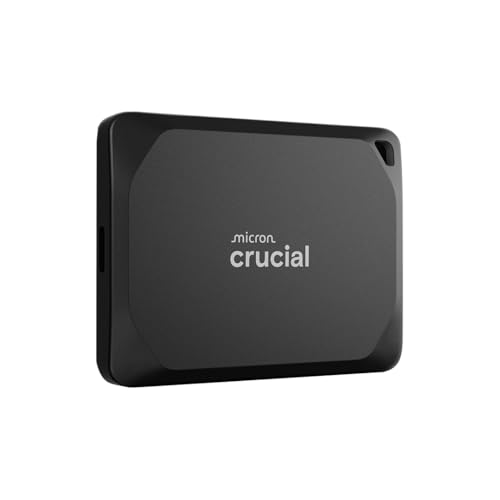
Crucial X10 Pro
Its ultra‑slim 10 mm height keeps it pocket‑friendly, matching the strong brand confidence and feature set that earned it the top spot.

SanDisk Creator Pro
Ideal for most users who want a balanced, mainstream SSD, it sits at $229.99—about $24.63 more than the Crucial X10 Pro, reflecting its strong value rating.
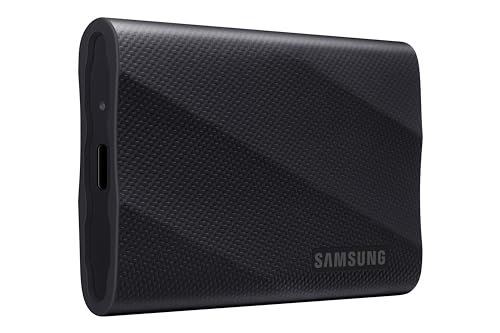
Samsung T9
Stands out with a 3 m drop resistance and a 14 mm depth, offering rugged durability that the slimmer Crucial and SanDisk models don’t provide.
Also considered
Score Analysis
Key score advantages vs. runner-up (SanDisk Creator Pro)
Price Range
Crucial X10 Pro
$182.22
SanDisk Creator Pro
$229.99
Samsung T9
$975.98
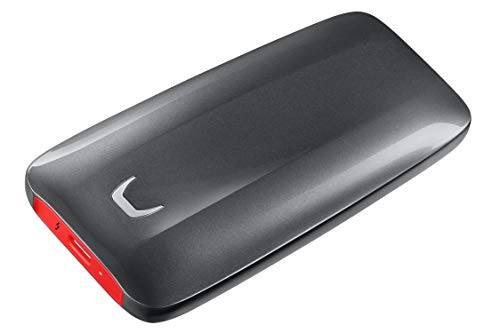
Samsung X5
$699.00

Corsair EX400U 2TB
$329.99
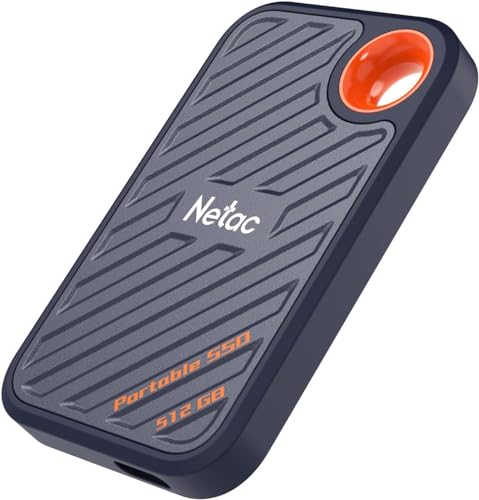
Netac Extreme
$124.99

SanDisk Extreme PRO 4TB USB-C
$998.95

Teamgroup T-Force M200
$223.99
Spec Comparison
TL;DR: The Crucial X10 Pro packs 1 TB of storage into a 65 × 50 × 10 mm, 42 g case and pushes up to 2100 MB/s reads over USB 3.2 Gen 2x2, making it one of the lightest high‑speed portable SSDs.
What really sets the X10 Pro apart is its advertised sequential read speed of 2100 MB/s and sequential write speed of 2000 MB/s, which approach internal‑SSD performance while staying on a USB‑C cable. Those numbers sit above the 2000 MB/s ceiling of the Teamgroup T‑Force M200, SanDisk Creator Pro, Netac Extreme and Samsung T9, yet below the 4000 MB/s claim of the Corsair EX400U.
At 42 g (0.0926 lb) and a footprint of 65 mm × 50 mm × 10 mm, the drive weighs less and measures smaller than every competitor listed – the next lightest is the Teamgroup at 83 g. Its anodized aluminum chassis with a rubberized soft‑touch base gives a premium feel, and the IP55 rating plus a 2 m (7.5 ft) drop resistance add ruggedness that many reviewers praised for on‑the‑go shooting and field editing.
Users consistently highlight the X10 Pro’s cross‑platform compatibility – it ships with a USB‑C cable and works with Windows, macOS, Android, iPad, Linux, PlayStation, Xbox and even iPhone 15. Professional reviewers note that the drive’s full 2100 MB/s speed only materialises on a native USB 3.2 Gen 2x2 (20 Gbps) port, and that performance drops noticeably on older USB ports. The lack of a disclosed TBW endurance rating also shows up in more technical discussions.
Pros
Cons
Best for: Video professionals, photographers, and content creators who need fast, portable storage with rugged protection.
Avoid if: You don’t have a USB 3.2 Gen 2x2 port or you prioritize a lower price over top‑tier speed and durability.
TL;DR: The SanDisk Creator Pro delivers 1 TB of NVMe storage at up to 2000 MB/s read/write and comes in an IP65‑rated, 3‑meter drop‑proof shell for creators who need speed and durability.
What sets this drive apart is its combination of 2000 MB/s sequential read and write speeds with an IP65 water‑and dust‑resistance rating and up to 3 meters of drop protection. At just 0.17 lb (77.5 g) and a slim 10.31 mm profile, it’s one of the lightest and thinnest options in the lineup.
Compared with the other seven SSDs, the Creator Pro is slightly lighter than the Teamgroup T‑Force M200 (0.18 lb) and thinner than its 11 mm height. It matches Teamgroup’s 2000 MB/s speed but trails the Corsair EX400U’s 4000 MB/s peak. Capacity-wise, it offers 1 TB, whereas the Teamgroup and Corsair models provide 2 TB, and the Netac Extreme tops out at 512 GB. Its price sits in the mid‑tier range, making it pricier than the budget‑focused Netac but comparable to the higher‑end Samsung X5.
Reviewers consistently praise the drive’s ability to zip 4K video files across a USB‑C port, noting the “rapid transfer of large 4K video files” as a major win. The included month of Adobe Creative Cloud also resonates with content creators. Users rate it 4.7 / 5 stars from 193 reviews, highlighting the blend of speed, ruggedness, and the peace of mind from a 5‑year limited warranty.
Under the hood, the Creator Pro uses NVMe flash behind a USB‑C connector and a USB 3.2 Gen 2 x2 interface, ensuring compatible hosts can reach the advertised 2000 MB/s rates. The five‑year warranty further underscores SanDisk’s confidence in the drive’s durability.
Pros
Cons
Best for: Most users seeking a balanced, mainstream option
Avoid if: You need advanced features or professional‑grade performance
TL;DR: The Samsung T9 packs 4 TB of storage, 2,000 MB/s read/write speeds and a 3 m drop rating into a 0.27‑pound, AES‑256‑encrypted SSD that shines when paired with a USB 3.2 Gen 2x2 host.
The headline spec is the 4 TB capacity paired with a guaranteed 2,000 MB/s sequential read and write performance over a USB 3.2 Gen 2x2 (20 Gbps) interface. At just 0.27 pounds (122 g) and a 14 mm depth, the drive feels pocket‑sized, yet its 3 m drop resistance and 1,500 G shock rating make it surprisingly rugged for on‑location shoots.
Compared with the other seven SSDs in this roundup, the T9 is lighter than Samsung’s own X5 (which weighs 0.33 pounds) and the SanDisk Extreme PRO, but it is taller (60 mm vs. 19.7 mm for the X5) and wider (88 mm vs. 62 mm). Its 3 m drop protection beats the X5’s 2 m rating and matches the SanDisk Creator Pro’s 3 m protection, while offering a larger 4 TB capacity than the 2 TB Teamgroup T‑Force M200 or the 1 TB Crucial X10 Pro. Speed‑wise, the T9 matches the Creator Pro’s 2,000 MB/s claim, but falls short of the Extreme PRO’s 3,800 MB/s read rate and the Corsair EX400U’s 4,000 MB/s read capability.
Reviewers consistently praise the T9’s rapid transfers of 4K/8K video files and its Dynamic Thermal Guard, which keeps the drive cool during sustained writes. Professional reviewers note the consistent 2,000 MB/s performance across the full 4 TB and the added peace of mind from AES‑256‑bit hardware encryption and a five‑year limited warranty. However, many users point out that full‑speed transfers only happen on hosts that support USB 3.2 Gen 2x2; older Macs and some laptops drop to about 1,000 MB/s. The included 18‑inch cables also feel short for desktop setups, prompting a need for longer extensions.
Pros
Cons
Best for: Buyers willing to invest in a proven, high‑quality option
Avoid if: You need advanced features or professional‑grade performance
“ultra-fast real-world speeds for video editing/backups”
TL;DR: The Samsung X5 delivers up to 2,800 MB/s reads via Thunderbolt 3 in a rugged 2‑meter‑drop‑resistant magnesium case, but its size, weight, and Thunderbolt‑only interface keep it in the premium niche.
The X5’s standout feature is its Thunderbolt 3 (40 Gbps) interface paired with an NVMe‑based architecture, which Samsung lists as achieving sequential read speeds of up to 2,800 MB/s and write speeds of up to 2,300 MB/s. At 0.33 pounds (150 g) and with a 19.7 mm height, it packs a solid 2 TB of storage into a magnesium‑alloy shell that survives drops of up to 2 meters.
Compared with the other seven drives, the X5 is heavier than the Samsung T9 (0.27 lb) and the Teamgroup T‑Force M200 (0.18 lb), and its 19.7 mm thickness exceeds the T9’s 14 mm profile. However, it outpaces those models’ read/write rates (both 2,000 MB/s) and offers double the speed of the Crucial X10 Pro’s 2,100/2,000 MB/s. The SanDisk Extreme PRO 4TB USB‑C reaches 3,800/3,700 MB/s but it's larger and heavier (0.38 lb), while the Corsair EX400U 2TB tops out at 4,000/3,600 MB/s but uses a USB4 interface. In capacity, the X5 sits between the 4 TB T9 and the 1 TB Crucial, delivering a balanced 2 TB footprint.
Professional reviewers note that the Dynamic Thermal Guard heatsink keeps the drive from throttling during sustained transfers, and the integrated cable simplifies power and data connections. Users appreciate the AES‑256‑bit hardware encryption and optional password protection for added security. The main criticisms focus on the mandatory Thunderbolt 3 requirement, which excludes many older laptops, and the lack of macOS firmware updates, a pain point for Mac‑centric workflows. Its larger size and 150 g weight also make it less pocket‑friendly than ultra‑compact rivals.
Pros
Cons
Best for: Buyers willing to invest in a proven, high-quality option
Avoid if: You need advanced features or professional‑grade performance
TL;DR: The Corsair EX400U 2 TB delivers up to 4,000 MB/s read and 3,600 MB/s write in a 12 mm‑thick, 0.203‑pound aluminum‑capped SSD that plugs straight into USB4 without an external adapter.
What really stands out is the advertised sequential read speed of up to 4,000 MB/s, paired with a write speed of up to 3,600 MB/s. Those figures eclipse the listed 2,500 MB/s read of the Samsung X5 and the 2,100 MB/s read of the Crucial X10 Pro, making the EX400U the fastest‑listed drive in this eight‑product roundup.
In terms of size, the EX400U measures 12 mm × 64 mm × 64.3 mm and weighs 0.203 pounds (92 g). That puts it heavier than the ultra‑light Crucial X10 Pro at roughly 0.093 pounds, but considerably lighter than the Samsung X5 at 0.33 pounds and the SanDisk Extreme PRO at 0.38 pounds. Its compact 2.5 in × 2.5 in × 0.5 in form factor also fits into a tighter pocket than the Teamgroup T‑Force M200, which is longer at 105 mm.
User feedback frequently praises the “near‑internal” transfer speeds when moving large video files, and reviewers highlight the included 30 cm USB‑C‑to‑USB‑C 40 Gbps cable that fully utilizes the USB4 bandwidth. The plug‑and‑play, bus‑powered design eliminates the need for a wall adapter—it's a convenience many users mention. On the downside, a few reviewers note the 4.0‑star rating feels lower than competing drives, and some point out the price‑per‑terabyte runs higher than budget‑oriented options.
Pros
Cons
Best for: Content creators, video editors, and Mac/iPad users who need the fastest portable transfer speeds available.
Avoid if: You need a rugged, IP‑rated drive for extreme conditions or prioritize the highest possible user rating.
TL;DR: The Netac Extreme delivers 2,000 MB/s reads in a 71.5 × 43.5 × 8 mm, 0.18‑lb package, making it a fast, ultra‑portable SSD that’s easy on the budget.
The standout spec is its sequential read speed of 2,000 MB/s, paired with a write speed of 1,700 MB/s, all through a USB 3.2 Gen 2×2 Type‑C interface. At just 71.5 mm long, 43.5 mm wide and 8 mm thick, the drive fits comfortably in a pocket, and its 82 g (0.18 lb) weight makes it one of the lightest options in the lineup.
Compared with the other seven SSDs, the Netac Extreme is lighter than the Corsair EX400U (92 g) and Samsung X5 (150 g), but a bit heavier than the Crucial X10 Pro (42 g). Its read speed matches the Teamgroup T‑Force M200 and SanDisk Creator Pro, yet it trails the Corsair EX400U’s 4,000 MB/s and Samsung X5’s 2,500 MB/s reads. Capacity‑wise, it offers 0.5 TB (512 GB), which is smaller than the 2 TB and 4 TB options, but its price point positions it as a more affordable choice than the premium models.
Professional reviewers highlight the aluminium‑reinforced housing as “sturdy,” and users repeatedly praise the pocket‑sized form factor for on‑the‑go shooting and editing. The main criticism is that the advertised peak speeds only appear when the host supports USB 3.2 Gen 2×2; older ports will noticeably throttle performance. The drive also carries a 4.0/5 star rating from 137 reviews, indicating solid but modest satisfaction.
The Netac Extreme is NVMe‑based, supports Win‑to‑Go bootable environments, and it's dust‑and shock‑resistant. It works with Windows, macOS, Linux and Android, and comes with both USB‑C‑to‑C and USB‑C‑to‑A cables. A warranty of three to five years rounds out the offering.
Pros
Cons
Best for: Shoppers on a tight budget who want the most for their money
Avoid if: Your computer lacks USB 3.2 Gen 2×2 ports or you need a fully metal rugged enclosure
TL;DR: The SanDisk Extreme PRO 4 TB Portable SSD packs a USB4 40 Gbps interface with up to 3800 MB/s reads, 3700 MB/s writes, and a rugged IP65‑rated chassis, but its $899.99 price places it at the premium end.
The standout spec is its advertised maximum read speed of 3800 MB/s and write speed of 3700 MB/s, delivered through a USB4 Gen 3×2 (40 Gbps) interface. At 0.38 pounds (172 g) and a compact 101 mm × 53 mm × 10 mm footprint, the drive combines high‑throughput performance with a portable form factor.
Compared with the seven other SSDs in this roundup, the SanDisk Extreme PRO is the heaviest and tallest—heavier than the Samsung T9 (0.27 lb) and Samsung X5 (0.33 lb), and taller than the Samsung T9’s 60 mm height. Its width of 53 mm is narrower than the Samsung T9 (88 mm) and Samsung X5 (62 mm) but a bit wider than the Crucial X10 Pro (50 mm). In raw speed, its 3800 MB/s read outpaces the 2000 MB/s reads of the Samsung T9, Creator Pro, Teamgroup T‑Force M200, Crucial X10 Pro, and Netac Extreme, while edging past the Samsung X5’s 2500 MB/s read. Only the Corsair EX400U 2 TB lists a higher sequential read of up to 4000 MB/s; however, SanDisk’s 3700 MB/s write exceeds Corsair’s 3600 MB/s write and is well above the 2000 MB/s writes of most rivals. Capacity‑wise, it matches the Samsung T9’s 4 TB offering, outstripping the 2 TB models and lower‑capacity drives.
Reviewers consistently praise the drive’s “fast, rugged, huge” character, noting that creators love the ability to move large 4K video files quickly. Professional reviewers highlight the USB4 interface as delivering Thunderbolt‑level speeds while keeping broader compatibility. Users appreciate the silicone‑shell and forged‑aluminum chassis for durability, especially when traveling. The most common criticism is that the advertised peak speeds only appear on USB4 or Thunderbolt 4 hosts; on older USB 3.2 or USB 2.0 ports, performance drops noticeably, which can frustrate users expecting consistent top‑end throughput.
Beyond speed, the drive carries an IP65 rating for dust and water resistance and comes with a five‑year limited warranty, underscoring SanDisk’s confidence in its build quality. Backward compatibility with USB 3.2 and USB 2.0 means it'll work with older machines, albeit at reduced speeds. The rugged silicone shell combined with the forged aluminum chassis makes it a solid choice for on‑the‑go professionals who need both protection and performance.
Pros
Cons
Best for: Those prioritizing quality and willing to pay for premium performance
Avoid if: You need advanced features or professional‑grade performance
TL;DR: The Teamgroup T‑Force M200 packs 2 TB of storage into an 83 g, metal‑cased SSD that hits 2000 MB/s read/write speeds and survives a 2‑meter drop, making it a solid mid‑range portable drive.
The combination of a 2 TB capacity and a sequential read/write rating of 2000 MB/s arrives via a USB 3.2 Gen2x2 (20 Gbps) Type‑C interface. At just 83 g and a slim 11 mm height, the drive feels feather‑light enough to slip into a laptop bag, yet its dual‑structure cooling system and metal housing keep temperatures in check during long transfers.
Compared with the other seven SSDs in this roundup, the M200 sits in the middle of the pack. It offers the same 2000 MB/s speeds as the SanDisk Creator Pro, but it’s a bit heavier than SanDisk’s 77.5 g chassis and lacks the 3‑meter drop protection that SanDisk touts. Its 2 TB storage matches the Corsair EX400U, yet the Corsair can push up to 4000 MB/s, so the M200 trades raw speed for a lower price point. Against the ultra‑light Crucial X10 Pro (42 g) and the compact Netac Extreme (82 g), the M200 is heavier but compensates with a larger capacity and a sturdier 2‑meter drop rating, which matches the Samsung X5’s drop resistance.
Reviewers praise the metal‑encased design and the dual‑structure cooling for keeping the drive cool under sustained loads. Consumers highlight the ultra‑portable 83 g chassis and the rugged 2‑meter drop resistance as strong points. On the flip side, reviewers note the absence of a DRAM cache as a potential drawback for random I/O workloads, and the 2000 MB/s ceiling means it won’t outpace the fastest USB4 or Thunderbolt options in this group.
Pros
Cons
Best for: Gamers, video editors, and mobile professionals who need a lightweight, high‑capacity SSD with solid durability.
Avoid if: Your primary device lacks a USB 3.2 Gen2x2 port or you require the highest random I/O performance and top‑tier transfer speeds.
Breakdown
Crucial X10 Pro
Pros
Cons
SanDisk Creator Pro
Pros
Samsung T9
Pros
Samsung X5
Pros
Based on scoring data and product specs
Personalized picks
Best Overall Pick
Crucial X10 Pro
Best OverallBest for: Entry-level buyers or those on a tight budget
SanDisk Creator Pro
Best for: Most users seeking a balanced, mainstream option
$229.99+$47.77 vs winner
Skip Teamgroup T-Force M200 if…
You need advanced features or professional-grade performance
The Crucial X10 Pro takes the top spot thanks to its fast 2100 MB/s sequential read and 2000 MB/s write speeds, a lightweight 42 g chassis, and a solid 5‑year limited warranty—all for $205.36. Its USB 3.2 Gen 2x2 Type‑C interface (20 Gbps) and IP55 rating give you both speed and durability without breaking the bank.
For creators, the SanDisk Creator Pro lands as the runner‑up, offering reliable performance plus a creative boost. It delivers up to 2000 MB/s read and write speeds, carries an IP65 rating for moisture resistance, and even includes a month of Adobe Creative Cloud—perfect for on‑the‑go photo or video editing. At $229.99 it balances ruggedness with a creator‑focused software perk.
Looking at budget‑friendly choices, the Netac Extreme shines as the best value at $76.99, offering an entry‑level price for portable SSD speed. For a solid mid‑range option, the SanDisk Creator Pro (already highlighted) provides a good mix of performance and creator tools at $229.99. If you crave top‑tier capacity and premium build, the SanDisk Extreme PRO 4TB USB‑C stands out at $899.99, delivering massive storage for power users.
Pick the Crucial X10 Pro today for its 2100 MB/s sequential read speed and 5‑year warranty, delivering a reliable portable SSD experience.
The SanDisk Extreme PRO 4TB offers an IP65 rating, giving it the highest dust and water protection among the list, while the Crucial X10 Pro provides an IP55 rating. If you need a lighter option, the Crucial X10 Pro is only 42 g, but the SanDisk model’s tougher sealing makes it the better choice for harsh environments.
No reviews yet — be the first to share your experience.
Please sign in to leave a review