Rankings
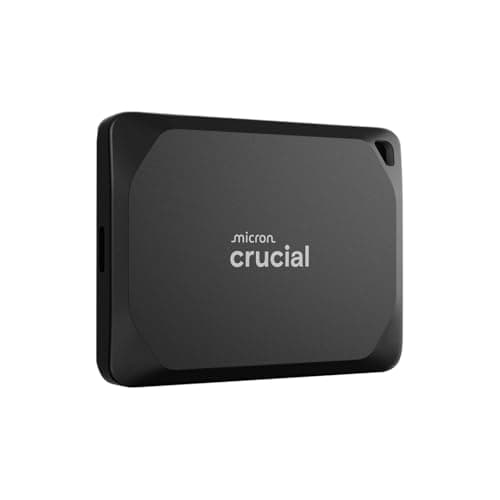
The Crucial X10 Pro 1TB delivers top-tier USB-C performance and robust IP55 protection, making it ideal for creators on the move. Its premium price, lack of endurance specs, and reliance on a USB-C-only cable are trade-offs. Best suited for video professionals needing fast, encrypted, rugged storage.
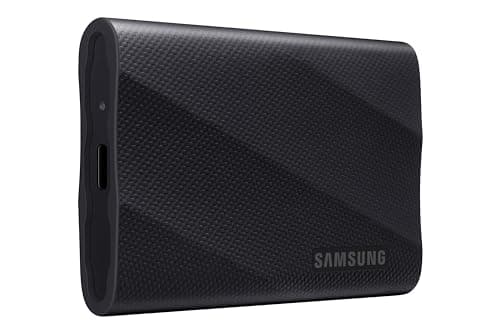
The Samsung T9 4TB Portable SSD pushes performance to 2,000 MB/s with a massive 4 TB capacity and rugged drop and shock protection. Its limitations include the need for a USB 3.2 Gen 2x2 host and the lack of an IP rating, making it less suited for harsh environments. Ideal for creators who need ultra-fast, high-capacity portable storage and robust durability.
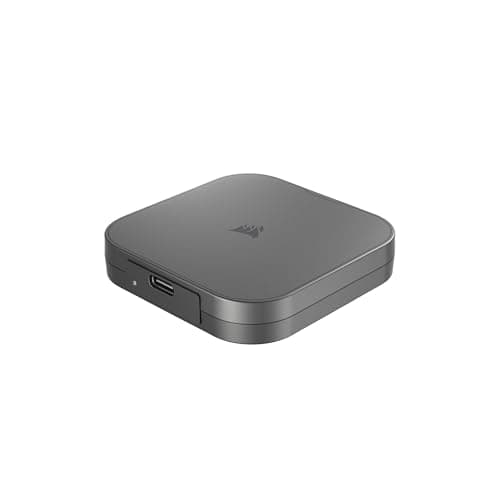
The Corsair EX400U 2TB is a ultra-compact USB4 SSD delivering near-internal speeds with a lightweight aluminum-plastic build and MagSafe support. Its main trade-off is the lack of rugged IP protection and dependence on a USB4 host for full performance. Ideal for content creators and professionals who need fast, portable storage on modern computers.
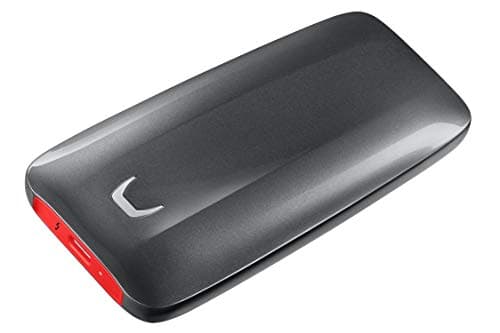
Samsung's X5 2TB Portable SSD achieves up to 2,800 MB/s read and 2,300 MB/s write speeds via Thunderbolt 3, coupled with AES-256 hardware encryption and a magnesium-alloy chassis with dynamic thermal guard. Its reliance on Thunderbolt 3, higher price, and bulkier form factor limit its appeal to users without such ports. Perfect for power users and editors who demand workstation-class performance on the go.
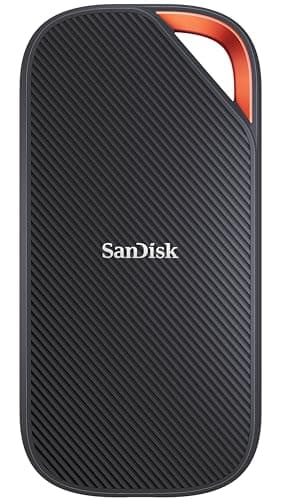
The SanDisk Extreme PRO 4TB Portable SSD offers Thunderbolt-class speeds up to 3800 MB/s and a rugged, IP65-rated enclosure. Its drawbacks are limited performance on legacy ports and the absence of encryption or bundled software. Best suited for power users who have USB4/Thunderbolt 4 systems and need massive fast storage.
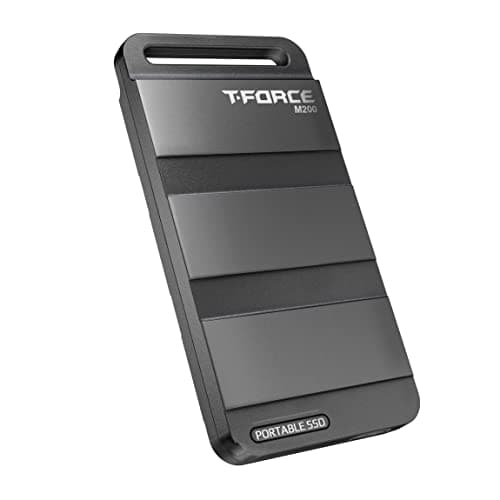
The Teamgroup T-Force M200 2TB is a lightweight, metal-encased portable SSD delivering up to 2000 MB/s via USB 3.2 Gen2x2 and featuring 2 m drop resistance and graphene cooling. Its trade-offs include dependence on the newest USB interface and the absence of DRAM cache, which could limit random performance. Suited for gamers and creators who have compatible ports and need fast, rugged on-the-go storage.
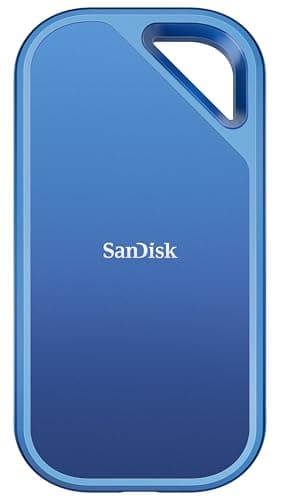
The SanDisk Creator Pro 1TB Portable SSD delivers high-speed 2000 MB/s transfers and rugged IP65 protection. Its main trade-off is the need for a USB 3.2 Gen 2 x2 port to unlock full performance and the lack of hardware encryption. Ideal for creative professionals who need fast on-the-go editing with robust durability.
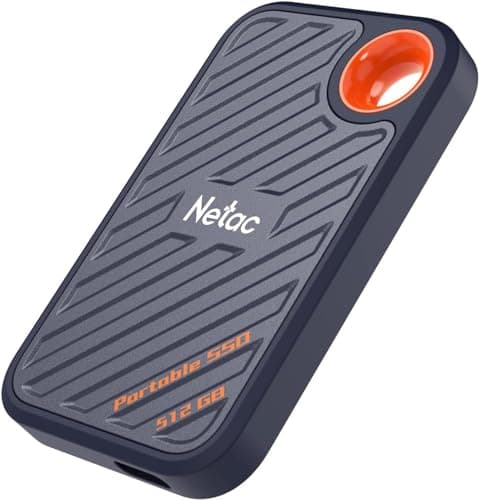
The Netac ZX20 512 GB Extreme Portable SSD delivers flagship NVMe speeds in an ultra-light, pocket-sized package, ideal for on-the-go creators. Its performance hinges on having a USB 3.2 Gen 2x2 host, and the plastic-aluminium hybrid case may feel less robust than metal alternatives. Best for users who need maximum speed in the smallest form factor and have compatible ports.
| Attribute | | | | | | | | |
|---|---|---|---|---|---|---|---|---|
1,000 GB | 1,024 GB | 4,000 GB | 2,048 GB | 2,000 GB | 512 GB | 4,096 GBbest | 2,000 GB | |
2,100 MB/s | 2,000 MB/s | 2,000 MB/s | 2,800 MB/s | 4,000 MB/sbest | 2,000 MB/s | 3,800 MB/s | 2,000 MB/s | |
2,000 MB/s | 2,000 MB/s | 2,000 MB/s | 2,300 MB/s | 3,600 MB/s | 1,700 MB/s | 3,700 MB/sbest | 2,000 MB/s | |
| ↓ lower better | 42 gbest | 77.5 g | 122 g | 150 g | 92 g | 82 g | 172 g | 83 g |
5 yearsbest | 5 yearsbest | 5 yearsbest | 3 years | 3 years | 4 years | 5 yearsbest | 5 yearsbest | |
— | — | — | 45 °Cbest | — | — | — | — |
Click an attribute name to sort · Green = best, red = worst (relative to this comparison)
| Attribute | | | | | | | | |
|---|---|---|---|---|---|---|---|---|
Connectivity(1) | ||||||||
Interface | USB 3.2 Gen 2x2 | USB 3.2 Gen 2 x2 | USB 3.2 Gen 2x2 | Thunderbolt 3 | USB4 Type‑C | USB 3.2 Gen 2x2 | USB4 Gen 3×2 (40Gbps) | USB 3.2 Gen2x2 Type-C |
Performance(2) | ||||||||
Sequential Read Speed (MB/s) | 2100 MB/s | 2000 MB/s | 2000 MB/s | 2800 MB/s | 4000 MB/s | 2000 MB/s | 3800 MB/s | 2000 MB/s |
Sequential Write Speed (MB/s) | 2000 MB/s | 2000 MB/s | 2000 MB/s | 2300 MB/s | 3600 MB/s | 1700 MB/s | 3700 MB/s | 2000 MB/s |
Build & Design(2) | ||||||||
Weight (g) | 42 g | 77.5 g | 122 g | 150 g | 92 g | 82 g | 172 g | 83 g |
Dimensions (L×W×H) (mm) | 65×50×10 mm mm | 110.8 x 57.83 x 10.31 mm mm | 88x60x14 mm | 119×20×61 mm mm | 12×64×64.3 mm mm | 71.5×43.5×8 mm mm | 101 x 53 x 10 mm mm | 55.5×11×105 mm mm |
Storage(2) | ||||||||
Capacity (GB) | 1000 GB | 1024 GB | 4000 GB | 2048 GB | 2000 GB | 512 GB | 4096 GB | 2000 GB |
NAND Type | TLC | — | — | — | — | NVMe | — | — |
Power & Compatibility(3) | ||||||||
Power Source | USB bus-powered | USB | Bus-powered | Thunderbolt | bus-powered | Bus-powered via USB | USB | — |
Operating Temperature (°C) | — | — | — | 45 °C | — | 0-70 °C | — | — |
Compatible Operating Systems | Windows, macOS, Android, iPad, PC, Linux, PlayStation, Xbox, iPhone 15 | — | — | Windows, macOS | Windows 10/11, macOS 13+, iOS/iPadOS 13+ | Windows, macOS, Linux, Android | — | Windows 10, Windows 8.1, macOS 10.11+, Linux 2.6+, PlayStation 4 (v4.50+), PlayStation 5, Chrome OS, Xbox |
Reliability & Security(1) | ||||||||
IP Rating | IP55 | IP65 | — | — | — | — | IP65 | — |
General(2) | ||||||||
Warranty (years) | 5 years | 5 years | 5 years | 3 years | 3 years | 4 years | 5 years | 5 years |
Included Accessories | USB-C cable | — | USB‑C to USB‑C 18 in, USB‑C to USB‑A 18 in | — | 30 cm USB‑C to USB‑C 40 Gbps 60 W PD cable, 7 cm USB‑C cable with 90° connector | USB Type‑C to C cable, USB Type‑C to A cable, Protective sleeve | — | USB Type‑C to Type‑C cable |
Products in the top-left offer the best value (high score, low price).
Professional reviewers hail the X10 Pro as the current benchmark for USB-based external SSDs, praising its record-setting 2100 MB/s read speed, rugged IP55 construction, and built-in 256-bit AES encryption.
Everyday users overwhelmingly value the drive's raw speed, pocket-size portability, and cross-platform compatibility, especially for video editing and console storage.
“ultra-fast real-world speeds for video editing/backups”
Choose the SanDisk if weight and price are top priorities and encryption is not required; choose the T9 for higher security and a longer warranty.
Choose Samsung T9 if you prioritize a solid metal build and are willing to accept a bit more weight and cost.
Professional reviewers commend the T9 4TB for delivering blazing-fast 2,000 MB/s transfers, robust 3 m drop protection, and enterprise-grade AES-256 encryption, while noting that its peak performance is gated by the need for USB 3.2 Gen 2x2 hosts and the lack of an IP rating for environmental protection.
Everyday users rave about the drive's pocket-sized portability and real-world speed gains for video editing and backups, but many express frustration when the device falls back to 1,000 MB/s on older computers and cite the short supplied cables and occasional heat during long writes as pain points.
Professional reviewers overwhelmingly praise the X5 for its blistering real-world performance, noting read speeds around 2.5 GB/s and write speeds over 2 GB/s that closely match the advertised figures. They highlight the dramatic speed advantage over the T5 and USB-based competitors, the ability to transfer large 4K video files in seconds, and the rugged magnesium-alloy build with 6-foot drop resistance. However, they also point out the mandatory Thunderbolt 3 interface, lack of macOS firmware support, larger footprint, and high price as notable drawbacks that limit its appeal to users without Thunderbolt ports or tight budgets.
Professional reviewers overwhelmingly praise the X5 for its blistering real-world performance, noting read speeds around 2.5 GB/s and write speeds over 2 GB/s that closely match the advertised figures. They highlight the dramatic speed advantage over the T5 and USB-based competitors, the ability to transfer large 4K video files in seconds, and the rugged magnesium-alloy build with 6-foot drop resistance. However, they also point out the mandatory Thunderbolt 3 interface, lack of macOS firmware support, larger footprint, and high price as notable drawbacks that limit its appeal to users without Thunderbolt ports or tight budgets.
Professional reviewers praise the EX400U for its tiny footprint, blazing USB4 performance, and hassle-free plug-and-play experience. The inclusion of a full-length 40 Gbps cable and the ability to operate without a separate power brick were highlighted as strong points, while the drive's speed is consistently described as comparable to internal SSDs.
Professional reviewers praise the Netac ZX20 family for delivering flagship-class NVMe speeds in a pocket-sized chassis, with an aluminium alloy version that feels rugged enough for field work. However, they caution that the full speed potential is gated behind USB 3.2 Gen 2×2 connectivity, so users with legacy ports will not see the advertised performance.
Consumer feedback is sparse; product listings emphasize the drive's portability and speed, and no recurring complaints appear in the available data. Buyers seem attracted to the lightweight design and included cables, while the lack of extensive user reviews leaves overall sentiment neutral.
Professional reviewers commend the Extreme PRO USB4 SSD for its Thunderbolt-class speeds, rugged construction, and real-world bandwidth that validates the advertised numbers. However, they caution that the full performance envelope is only reachable on USB4 or Thunderbolt 4 hosts, and that 4K random write performance has slipped compared to earlier USB 3.2 models, with endurance data still missing.
Everyday users largely echo the reviewers' praise for blazing transfer rates and the drive's durability, especially for on-the-go creators. The most common complaints revolve around slower speeds on legacy ports and the absence of clear endurance specifications, though no widespread reliability issues have been reported.
Professional reviewers, such as Guru3D, commend the M200 for its striking metal-encased, graphene-cooled design, ultra-light weight, and rugged drop resistance, while noting that its advertised 2000 MB/s speeds place it among the top tier of USB 3.2 Gen 2x2 portable SSDs. The lack of DRAM and reliance on the newest USB interface are seen as trade-offs that may affect performance on older hardware.
No consumer reviews or ratings were found in the available sources, so everyday user sentiment cannot be assessed at this time.
