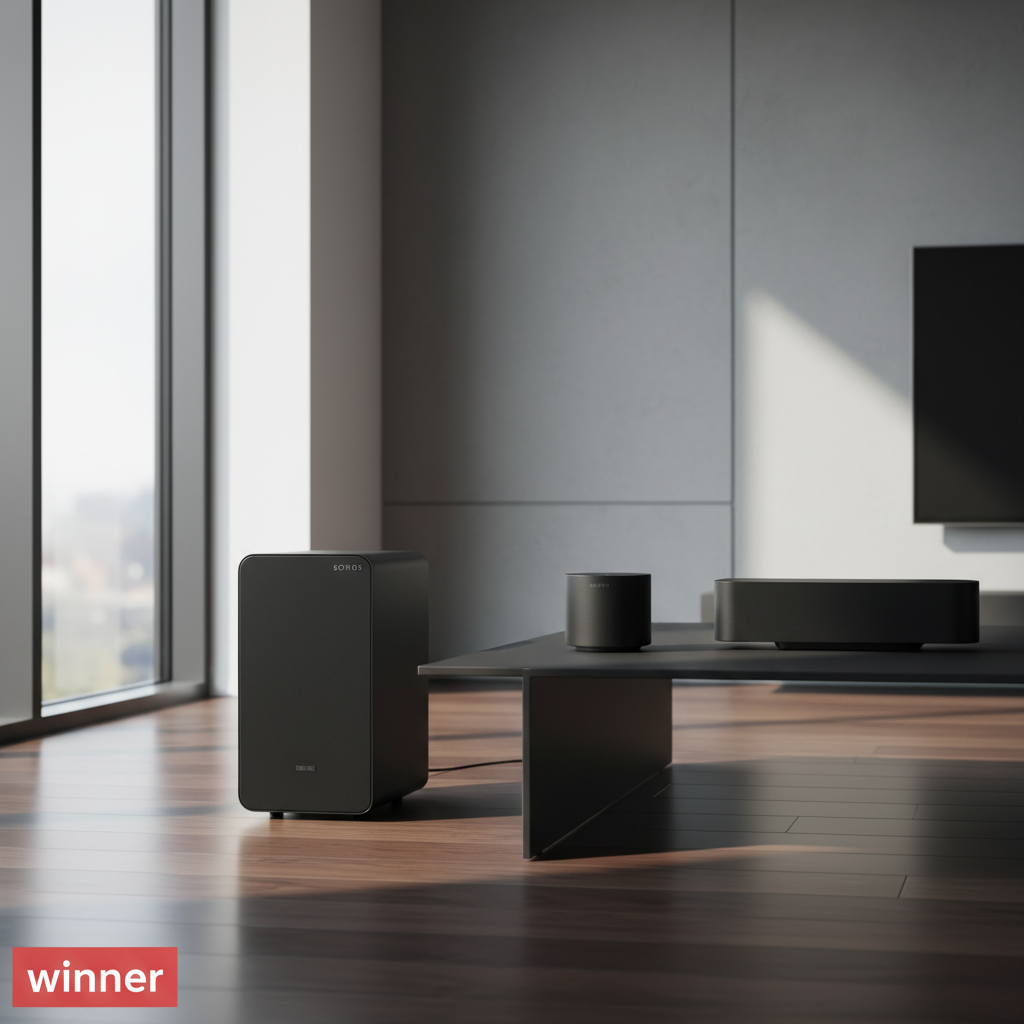
Sonos offers a surprisingly diverse lineup for whole‑home audio, and we compared eight models spanning budget, mid‑range and premium tiers. Prices stretch from $209.90 for the Era 100 up to $864.99 for the Sub G4US1BLK, while ratings hover between 4.3 and 4.7 stars. Below we break the picks down by room size and listening goal.
For a dedicated home‑theater or large‑living‑room setup, the Sub G4US1BLK takes the crown. At $864.99 it earned a 4.7/5 rating from 433 reviewers and delivers 25 Hz bass with its two 6‑inch force‑canceling drivers, keeping the low end tight even on big TV screens. Its wireless integration and automatic room calibration make it the premium choice for serious bass lovers.
In tighter spaces a more compact solution shines. The Sub Mini, priced at $499.00 with a 4.6/5 rating from 1,305 reviews, fits comfortably on a bookshelf thanks to its 228 mm depth and still reaches 25 Hz. If you need a full‑featured speaker rather than a sub, the Era 100 offers true‑stereo sound for $209.90 and a solid 4.3/5 rating, making it the best budget pick. Next, we explore each model’s strengths and trade‑offs.

Sonos Sub 4
Offers 10/100 Mbps Ethernet connectivity, ensuring stable wired streaming for premium performance.

Sonos Sub Mini
Ideal for mainstream listeners who want reliable bass without breaking the bank—priced at $499, it’s $365.99 less than the top‑tier SUBG4US1BLK.

Sonos Era 100
Stands out with 100 watts total amplification, delivering full‑range sound in a compact 177.8 mm depth—an entry‑level option the others don’t offer.
Also considered
Score Analysis
Key score advantages vs. runner-up (Sonos Sub Mini)
Price Range
Sonos Sub 4
$864.99
Sonos Sub Mini
$399.00
Sonos Era 100
$219.00

Sonos Five
$599.00
Sonos Arc Ultra
-$0.01

Sonos PLAY:1
$819.91

Sonos Beam Gen 2 Black
$369.00

Sonos Ray
$219.00
Spec Comparison
TL;DR: The Sonos Sub packs two 6‑inch force‑canceling drivers, delivers 25 Hz bass, and integrates wirelessly with Sonos, but its large size and $864.99 price make it a premium‑only choice.
The Sub’s standout hardware is its pair of 6‑inch force‑canceling drivers powered by two Class‑D digital amplifiers, reaching down to 25 Hz and offering a crossover range of 50–110 Hz. At 26.46 Pounds and measuring 158.0 mm × 401.9 mm × 389.1 mm, it’s a solidly built unit that can sit vertically or horizontally.
Compared with the other seven entries, the Sub is heavier than the Sonos Five (13.999 pounds) and the Sonos Sub Mini (13.999 pounds), and it also out‑sizes the Sonos Ray (95 mm × 71 mm × 559 mm) and the Sonos PLAY:1 (119.38 mm × 162.56 mm × 119.38 mm). Its driver size of 6 inches exceeds the PLAY:1’s 3.5‑inch mid‑woofer, and its depth of 158 mm is deeper than the Five’s 205 mm but shallower than the Sub Mini’s 228 mm.
Reviewers consistently praise the Sub’s deep, articulate bass and the convenience of app‑driven calibration; PCMag notes it can deliver “both subtle bass anchoring and serious deep bass thunder.” Users love the automatic room tuning via the Sonos app, though many mention the glossy black finish attracts fingerprints and the footprint can dominate a small room. The lack of an LFE input also limits pairing with non‑Sonos gear; CNET highlighted this point.
Connectivity relies on 802.11b/g (2.4 GHz) Wi‑Fi and a 10/100 Mbps Ethernet port, while the Sonos app handles bass tuning and phase settings (0° or 180°). Dual acoustic ports and a ported enclosure help reduce cabinet resonance, and the unit includes a join button and LED indicator for easy network setup.
Pros
Cons
Best for: Those prioritizing quality and willing to pay for premium performance
Avoid if: You're shopping on a tight budget — it's priced at $864.99
TL;DR: The Sonos Sub Mini delivers room‑filling bass down to 25 Hz in a compact, sealed cabinet, earning 4.6‑star ratings and weighing 13.999353637 pounds for small‑to‑medium Sonos setups.
At the core of the Sub Mini, dual inward‑facing 6‑inch custom woofers, driven by two Class‑D digital amplifiers, reach a frequency response as low as 25 Hz. The unit measures 228 mm deep, 303 mm high and 228 mm wide, and its acoustically sealed cabinet helps keep distortion to a minimum.
Compared with the other seven speakers in this roundup, the Sub Mini is heavier than the Beam Gen 2 (6.3493131456 pounds) and the Ray (4.299014109 pounds), matches the weight of the Sonos Five (13.999353637 pounds), and is lighter than the full‑size SUBG4 (26.46 pounds). Its depth of 228 mm exceeds the Five’s 205 mm depth, while its width is narrower than the Five’s 364 mm width. In connectivity, the Sub Mini supports both 2.4 GHz and 5 GHz bands via 802.11a/b/g/n, a broader range than the Beam’s Wi‑Fi 5 (802.11ac) and the SUBG4’s 802.11b/g (2.4 GHz only).
User feedback highlights the Sub Mini’s ability to add “big bass for a smaller price,” with many noting the wireless convenience and the sleek matte‑white finish. Professional reviewers praise the force‑canceling design that reduces cabinet buzz, while everyday owners love the deep, distortion‑free low end in movies and music. The main trade‑off is that Trueplay calibration works only on iOS devices, and the system limits you to a single Sub Mini per room.
Pros
Cons
Best for: Small to medium‑sized rooms such as bedrooms, home offices, or compact living rooms that already run a Sonos system.
Avoid if: You need deep bass for large home‑theater spaces or lack an iOS device for Trueplay calibration.
TL;DR: The Sonos Era 100 packs a 100‑watt, dual‑tweeter stereo system into a 4.45‑lb, Wi‑Fi 6‑enabled speaker for $209.90, delivering solid sound and smart‑home control in a compact footprint.
The Era 100’s standout spec is its 100‑watt total amplification paired with three Class‑D amplifiers—one for each driver—plus a 25% larger mid‑woofer and dual 25.4 mm tweeters, which the manufacturer says creates detailed stereo separation and deeper bass.
Compared with the other seven speakers in this roundup, the Era 100 is a bit heavier than the Sonos Ray (which weighs about 4.30 lb) but lighter than the Sonos Beam Gen 2 (around 6.35 lb). Its depth of 177.8 mm and height of 183.4 mm make it deeper and taller than the Ray’s 95 mm × 71 mm profile, while its 129.5 mm width is far narrower than the Ray’s 559 mm width. In the larger‑speaker tier, the Era 100 is slimmer than the Sonos Arc Ultra’s 1178 mm width and shorter than the Sub Mini’s 303 mm height.
Users highlight the dual tweeters and larger woofer for delivering “rich stereo sound,” and many reviewers praise it. Professional reviewers note the rare combo of Wi‑Fi 6 and Bluetooth 5.0, and they kudos the USB‑C line‑in for connecting legacy devices. Common complaints revolve around the lack of Google Assistant, a sub‑bass that feels weak on bass‑heavy tracks, and the fact that adapters for 3.5 mm line‑in or Ethernet aren’t included.
Beyond the drivers, the speaker runs on a 12 V corded power source with a 1828.8 mm cable, supports AirPlay 2, and offers built‑in Alexa and Sonos Voice control. Trueplay tuning automatically adapts the EQ to your room, and the far‑field microphone array handles voice commands even from across the room.
Pros
Cons
Best for: Compact indoor spaces where you want high‑quality stereo sound, smart‑home integration, and flexible wireless connectivity.
Avoid if: You need Google Assistant, deep sub‑bass performance, or a battery‑powered portable speaker.
“Best sound I’ve heard from a single compact speaker”
“Trueplay made a noticeable difference in my living room”
TL;DR: The Sonos Five delivers room‑filling, high‑fidelity sound with six Class‑D amplifiers and three 70 mm woofers, but it’s limited to 2.4 GHz Wi‑Fi and lacks Bluetooth.
What really sets the Five apart is its six Class‑D digital amplifiers paired with three 70 mm mid‑woofers and three 20 mm tweeters, giving it the power to fill large rooms with deep bass and a wide soundstage. It weighs 13.999353637 pounds and measures 205 mm deep, 154 mm high and 364 mm wide, a solid presence that underscores its premium build.
Compared with the other seven Sonos models in this roundup, the Five is heavier than the Beam Gen 2 and the Ray, yet matches the Sub Mini’s weight. It also offers more drivers than the Beam and Ray, which focus on fewer speakers, and it provides a line‑in jack that the Beam and Era 100 do not list. While the Sub Mini and SUBG4US1BLK are dedicated sub‑woofers, the Five combines full‑range performance in a single cabinet.
User feedback consistently praises the Five’s powerful, clean sound and the effectiveness of Trueplay calibration in tricky rooms. Reviewers note the deep bass and ultra‑wide soundstage as major strengths, while some point out the dark tonal balance at low volumes and the absence of Bluetooth streaming. The Wi‑Fi‑only 802.11b/g (2.4 GHz) connectivity and iOS‑only Trueplay also generate frequent discussion.
Beyond the audio core, the Five supports AirPlay 2, includes a 3.5 mm analog line‑in, and resists humidity—useful for bathrooms or kitchens. Its quad‑core 1.3 GHz processor, 1 GB SDRAM (Audiolab) and 4 GB NV storage keep the system responsive, while the Sonos S2 app handles setup and regular firmware updates.
Pros
Cons
Best for: Audiophiles and vinyl enthusiasts who want high‑fidelity, Wi‑Fi‑only multi‑room sound with deep bass.
Avoid if: You need Bluetooth streaming, 5 GHz Wi‑Fi, or Android‑only Trueplay support.
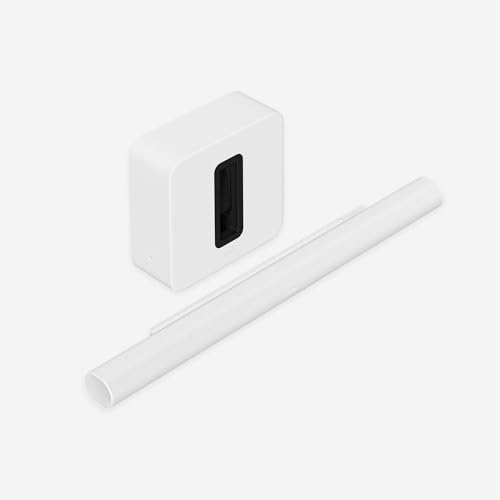
TL;DR: The Sonos Arc Ultra pairs a 15‑amplifier Class‑D soundbar with a wireless Sub 4, delivering 9.1.4 Dolby Atmos immersion, deep bass and AI‑tuned dialogue clarity for large‑screen home theaters.
The standout hardware is the 15 Class‑D digital amplifiers that drive six mid‑woofers, seven 0.75″ tweeters and a dedicated Sound Motion™ woofer, all housed in a 110 mm‑deep, 75 mm‑high, 1178 mm‑wide chassis weighing 5900 g. Its 16 GB SDRAM and quad‑core A55 processor give the bar ample headroom for Dolby Atmos, Dolby TrueHD and DTS Digital Surround (pass‑through only).
Compared with the other seven Sonos models, the Arc Ultra is substantially larger and heavier than the Era 100 (around 4.45 lb) and the Ray (about 4.30 lb). It's depth of 110 mm also exceeds the Beam Gen 2’s 95 mm, and the Arc Ultra’s 15 amplifiers dwarf the Beam’s five Class‑D units. While the Beam lacks Bluetooth for audio input, the Arc Ultra includes Bluetooth 5.3, and its Wi‑Fi 6 connectivity outpaces the Ray’s Wi‑Fi 5.
Users rave about the “rich, detailed, spatially expansive” soundstage and the “deep, tuneful bass” that the Sub 4 adds, especially after Trueplay calibration. Professional reviewers note the “clean, precise, three‑dimensional” audio and praise Speech Enhancement for crystal‑clear dialogue. The main complaints focus on the absence of HDMI inputs—forcing all sources through the TV’s HDMI port—and the lack of native DTS decoding, which can disappoint AV enthusiasts.
Pros
Cons
Best for: Home‑theater enthusiasts with large TVs who are already in the Sonos ecosystem and value immersive Dolby Atmos sound.
Avoid if: You prefer products with extensive real‑world feedback and proven track records, or need multiple HDMI inputs and native DTS support for gaming or AV rigs.
TL;DR: The Sonos PLAY:1 bundle packs a 3.5‑inch aluminum‑cone driver, two Class‑D amps and up to 1411 kbps streaming into a compact 119 mm cube, but its $819 price tags it as a premium entry‑level speaker.
The speaker relies on two independent Class‑D digital amplifiers feeding a 3.5‑inch aluminum‑cone mid‑woofer, and it can handle streams up to 1411 kbps. It supports only 802.11b/g 2.4 GHz Wi‑Fi and a 10/100 Mbps Ethernet port, while the power input accepts 120/240 V AC at 50–60 Hz. At 15.0 pounds and measuring 119.38 mm × 162.56 mm × 119.38 mm, it offers a solid build in a surprisingly small footprint.
Compared with the other seven speakers in this roundup, the PLAY:1 is heavier than the Sonos Ray (which weighs about 4.3 pounds) but lighter than the Sonos SUBG4US1BLK (over 26 pounds). It is slightly heavier than the Sonos Five (roughly 14 pounds) while sharing the same two‑Class‑D‑amplifier architecture as the Sonos Sub Mini. In terms of size, the PLAY:1 is more compact than the Five (which is deeper) and the Sub Mini, yet deeper than the Ray’s 95 mm depth. It supports only 2.4 GHz Wi‑Fi, whereas the Beam Gen 2 uses dual‑band Wi‑Fi, giving the PLAY:1 an older‑generation network profile.
Users consistently praise the speaker’s effortless Sonos‑app setup and the clarity of mids and treble, especially for vocals and podcasts. Professional reviewers note the same high‑frequency fidelity, while both professionals and everyday owners report bass distortion when the volume reaches the maximum—a limitation of the small woofer. The lack of Bluetooth and any analog inputs also surfaces in complaints, and a few users mention occasional Wi‑Fi hiccups in weak networks.
Beyond audio, the unit is humidity‑resistant, making it suitable for damp rooms, and it operates from 0 °C to 40 °C. A 1/4‑inch‑20 threaded insert on the back lets you mount it on walls or stands, adding placement flexibility without needing a separate bracket.
Pros
Cons
Best for: Those prioritizing quality and willing to pay for premium performance
Avoid if: You're on a tight budget or only need basic functionality
TL;DR: The Sonos Beam Gen 2 delivers Dolby Atmos sound in a compact 25.6‑in‑wide bar, with five Class‑D amps, voice‑assistant integration and Wi‑Fi 5 connectivity for a solid entry‑level multi‑room experience at $479.99.
The Beam’s standout hardware is its five Class‑D digital amplifiers powering a driver array of four full‑range mid‑woofers, one tweeter and three passive radiators. Coupled with Dolby Atmos support via Dolby Digital Plus and Dolby TrueHD over eARC, it packs immersive audio into a 25.6 × 2.7 × 3.9 in footprint.
Compared with the other seven Sonos models in this roundup, the Beam sits between the lighter Sonos Ray (about 4.3 lb) and the heavier Sub Mini (about 14 lb). It also offers more amplifiers than the Sub Mini’s two Class‑D amps, and it’s the only product that lists Dolby Atmos among the peer‑verified specs.
Users consistently praise the Beam’s clear dialogue and the Speech Enhancement mode that makes movies and TV shows easy to follow. The HDMI ARC/eARC link and Wi‑Fi 5 (802.11ac) dual‑band connection earn marks for reliable streaming, while the built‑in far‑field microphone array and Alexa/Google Assistant integration add hands‑free convenience. Professional reviewers note the premium sound for small‑to‑medium rooms, but they also point out the lack of Bluetooth audio input, iOS‑only Trueplay calibration, and modest bass response in larger spaces.
Pros
Cons
Best for: Small to medium living rooms or bedrooms where space is limited, owners of existing Sonos ecosystems.
Avoid if: You need native Bluetooth audio input, strong bass for large spaces, or Android‑only Trueplay calibration.
“Love the Sonos Beam... Great quality sound in a small package... I have them on both my big screen TVs.”
“Expensive but worth it”
TL;DR: The Sonos Ray delivers clear, balanced sound in a compact 22‑inch, 4.3‑lb package for $219, offering easy Sonos integration but limited bass and no HDMI or voice assistant.
At just 4.299014109 pounds and measuring 71 mm high × 559 mm wide × 95 mm deep, the Ray packs four Class‑D digital amplifiers into a slim 22‑inch footprint. It runs a quad‑core 1.4 GHz A‑53 CPU, 1 GB SDRAM and 4 GB NV storage, delivering 2.0‑channel stereo sound from two tweeters, two full‑range mid‑woofers and two passive bass reflex ports.
Compared with other Sonos models in this roundup, the Ray is lighter than the Beam Gen 2 (6.3493131456 lb) and far lighter than the Sub Mini (13.999353637 lb). Its width of 559 mm makes it considerably wider than the Era 100’s 129.5 mm chassis, but its overall depth of 95 mm is shallower than the Arc Ultra’s 110 mm. With four Class‑D amps it trails the Beam Gen 2’s five‑amp design and the Arc Ultra’s fifteen‑amp architecture, yet it still offers more amplification than the Sub Mini’s two‑amp setup.
Everyday users note the Ray’s clear, balanced sound and especially its dialogue clarity; professional reviewers echo this point and highlight its crisp mids and easy Trueplay tuning. The compact matte finish and optional wall‑mount keep it discreet in small living rooms, while the Sonos S2 app makes multi‑room grouping straightforward.
The unit connects via a single 1.5 m optical cable and a 10/100 Mbps Ethernet port, but it lacks HDMI or HDMI‑ARC, so you’ll need an external adapter for newer TVs. Wi‑Fi operates on 802.11b/g/n (2.4 GHz only), and the soundbar supports Dolby Digital 5.1 and DTS Digital Surround, though Dolby Atmos isn’t available. Night Sound, Speech Enhancement and adjustable EQ let you fine‑tune playback for late‑night movies or music.
Pros
Cons
Best for: Budget‑conscious buyers seeking a reliable entry‑level option
Avoid if: You need advanced features or professional‑grade performance
“Much better than my TV speakers”
“Easy setup with the Sonos app”
Breakdown
Sonos Sub 4
Pros
Cons
Sonos Sub Mini
Pros
Sonos Era 100
Pros
Cons
Sonos Five
Pros
Cons
Based on scoring data and product specs
Personalized picks
Best Overall Pick
Sonos Sub 4
Best ValueBest for: Those prioritizing quality and willing to pay for premium performance
Sonos Sub Mini
Best for: Most users looking for a well-reviewed, reliable mainstream option
$399.00-$465.99 vs winner
Skip Sonos Ray if…
You need advanced features or professional-grade performance
We’re naming the Sonos SUBG4US1BLK the clear winner of this round‑up. Its 4.7/5 rating from 433 reviews shows strong user approval, and the two 6‑inch force‑canceling drivers deliver deep, room‑filling bass that pairs with the full Sonos ecosystem via 802.11b/g Wi‑Fi. At 26.46 Pounds (12,001.7 g) it’s a solidly built sub that fits both vertical and horizontal placements, and it carries a list price of $864.99.
The runner‑up is the Sonos Sub Mini, ideal if you need a compact sub for a smaller living area or tighter budget. It packs dual 6‑inch woofers into a sealed cabinet that stands upright only, and its 4.6/5 rating from 1,305 reviews reflects consistent satisfaction. Weighing 13.999353637 pounds and measuring 228 mm × 303 mm × 228 mm, it slots neatly under a bookshelf or TV stand while still delivering the same 25 Hz frequency response as its larger sibling.
For tighter wallets, the Sonos Era 100 at $209.90 offers the most affordable entry into Sonos’ multi‑room world, delivering clear sound and full app control. The Sub Mini also serves as the best mid‑range choice, balancing price and performance for apartments or secondary rooms.
Pick the Sonos SUBG4US1BLK today and get the most powerful, feature‑rich sub for your multi‑room setup.
Yes. The SUBG4US1BLK is listed as compatible with the Sonos Arc Ultra and can be added via the Sonos app to provide deep bass for movies and music. Both units connect through the Sonos ecosystem over Wi‑Fi, so they sync automatically.
Please sign in to leave a review
No reviews yet. Be the first to review!
