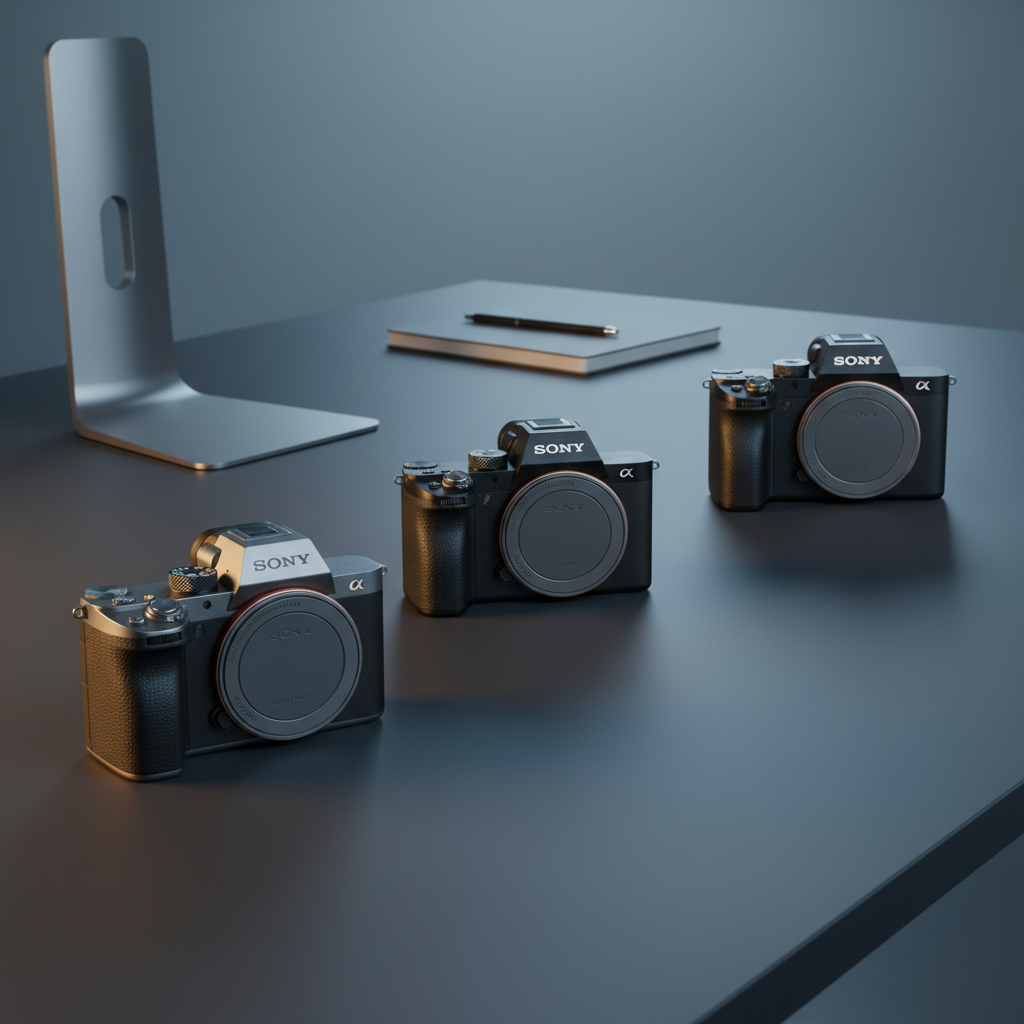
Choosing a Sony mirrorless camera can feel overwhelming, especially with eight models spanning budget, mid‑range and premium tiers. Prices stretch from $433 for the entry‑level Alpha a5000 up to $1,898 for the full‑frame a7 III, while the a6400 and a6600 sit in the premium bracket with features like 0.02‑second AF acquisition. The mid‑range a6000 offers a solid balance, and the budget lineup includes the a5000, a3000 and a6100.
The a6400 tops performance, with a 4.6/5 rating from 1,146 reviewers and 425 phase‑detect AF points covering 84 % of the frame. For the best value, the a5000 stands out at $433 and weighs just 0.59 lb, making it ultra‑portable for beginners. Travelers will appreciate the a6000’s 4.5/5 score from 1,709 reviews and its 92 % AF coverage. The a7 III offers full‑frame power and has a 4.6/5 rating from 2,329 reviewers.
The following sections break down each camera’s strengths so you can match a Sony mirrorless to your shooting style.
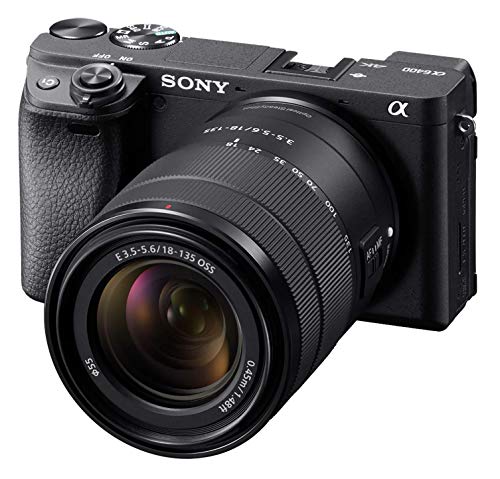
Sony a6400
Offers 89 assignable functions and 8 custom buttons, giving extensive on‑camera customization.

Sony Alpha a6100
Ideal for photographers who need solid battery endurance—about 380 EVF shots or 420 LCD shots—while saving roughly $450 compared with the a6400.

Sony Alpha a5000
Stands out with 25 focus points and a CIPA‑rated 420‑shot battery, delivering performance backed by those specs at a $433 price point that the a6400 and a6100 don’t match.
Also considered
Score Analysis
Key score advantages vs. runner-up (Sony Alpha a6100)
Price Range
Sony a6400
$1,498.00
Sony Alpha a6100
$948.00
Sony Alpha a5000
$438.00

Sony a6000
$881.97

Sony a7 III
$1,898.00

Sony Alpha a6600
$1,599.00

Sony a7C II
$3,179.95
Sony a3000
$598.00
Spec Comparison
TL;DR: At $1,248, the Sony a6400 packs a 24.2‑MP APS‑C sensor, 0.02‑second AF, 425 focus points and 4K video in a compact, flip‑up body praised by creators.
The standout specification is its ultra‑fast autofocus: the camera achieves 0.02‑second AF acquisition and offers 425 phase‑detect plus 425 contrast‑detect points that cover 84% of the image area. Real‑time Eye AF works on both humans and animals, and AI‑based Real‑time Tracking adds another layer of precision for moving subjects.
Compared with the other seven Sony mirrorless models in this roundup, the a6400 sits in the middle of the weight range at 1.61 pounds—heavier than the a6000 (0.76 lb) and a5000 (0.59 lb), but lighter than the a6600 (1.83 lb) and a7 III (1.75 lb). Its LCD battery life of 540 shots outpaces the a6000’s 360‑shot rating while falling short of the a6600’s 810‑shot claim. The a6400 also delivers far more autofocus points than the a6000 and a5000, which list only 25‑179 points, matching the a6600’s 425‑point system. Pricing-wise, it's pricier than the entry‑level a6000 and a5000 but less expensive than the flagship a6600 and a7 III.
User sentiment repeatedly highlights the camera’s quick focus and the convenience of its fully 180° upward‑tilting 3.0‑inch touchscreen (921,600‑dot resolution) for vlogging and self‑portrait shooting. Professional reviewers echo this praise, noting the “world‑fast 0.02 s AF acquisition” and the 4K video mode that records 3840 × 2160 at 24/25/30 fps with full pixel readout and no crop. The same reviewers, however, point out that the grip can feel less comfortable during long handheld sessions and that the touchscreen may lag behind expectations. Experts and everyday users note that the body resists dust and moisture but isn’t fully weather‑sealed, a limitation mentioned by both experts and everyday users.
Additional technical perks include 89 assignable functions, eight custom buttons, Clear Image Zoom up to 2×, built‑in interval shooting (1–60 sec intervals, up to 9,999 shots), and a solid 1080 mAh battery that charges via USB. Video creators also benefit from HLG, S‑Log2/3, and up to 29‑minute clip lengths, while photographers can capture up to 116 JPEG frames or 46 RAW frames in the buffer before the write‑speed slows.
Pros
Cons
Best for: Enthusiast photographers and content creators who need ultra‑fast autofocus, high‑quality 4K video, and a versatile flip‑up screen.
Avoid if: You’re on a tight budget, need full weather sealing, or require features like in‑body stabilization or dual card slots.
TL;DR: The Sony Alpha a6100 packs a 24.2 MP APS‑C sensor, 425‑point hybrid AF and 4K video into a 1.02‑lb body for $798, making it a strong entry‑level mirrorless option.
The standout feature is its hybrid autofocus system – 425 phase‑detection plus 425 contrast‑detection points with Real‑time Eye AF for humans and animals, and Real‑time Tracking. Paired with a burst rate of 11 fps with AF/AE tracking, the camera can chase fast subjects while keeping focus locked. Its 24.2 MP sensor delivers detail, and the oversampled 4K video (derived from a 6K capture area) gives crisp footage at up to 30 fps, while Full HD can reach 120 fps for smooth slow‑motion.
Compared with the other seven cameras in this roundup, the a6100 is lighter than the a6600 (1.83 lb) and the a6400 (1.61 lb) but heavier than the a5000 (0.59 lb). Its LCD‑based battery life of roughly 420 shots beats the a6000’s 360‑shot rating, though it falls short of the a6600’s 810‑shot claim. Autofocus coverage is a clear win: the a6000 lists only 179 phase‑detection points, while the a6100 offers 425 of each type, giving it a decisive edge for tracking subjects.
Users consistently praise the fast 425‑point hybrid AF, noting that the eye‑detect works well for both portraits and pet photography. Reviewers also highlight the compact 3.0‑inch touchscreen (921,600‑dot resolution) that tilts 180° upward, making self‑recording easy for vloggers. The main criticisms focus on the lack of in‑body image stabilization, the absence of a headphone jack for audio monitoring, and a modest battery life of about 420 shots that limits long shooting sessions.
Additional technical notes: the kit lens covers 16–50 mm (f/3.5–5.6) with a 40.5 mm filter thread and weighs 116 g. Connectivity includes Bluetooth 4.1, 802.11b/g/n Wi‑Fi and NFC for quick pairing. The camera’s body measures 66.8 mm × 59.4 mm × 119.9 mm and houses a 1080 mAh, 7.2 V battery.
Pros
Cons
Best for: Vloggers, travel photographers, and beginners who need fast autofocus, 4K video, and a lightweight, easy‑to‑carry mirrorless system.
Avoid if: You want the best value‑per‑dollar in its price range or need professional‑grade stabilization and longest battery endurance.
TL;DR: The Sony Alpha a5000 packs a 20.1 MP APS‑C sensor, 3‑inch flip‑up LCD and 420‑shot battery into a 0.59‑lb, $433 body that’s perfect for beginners on a budget.
The a5000’s standout spec is its 20.1 MP APS‑C CMOS sensor paired with the BIONZ X processor, delivering detailed stills while the 3.0‑inch LCD (460,800‑dot resolution) tilts 180° for easy framing and selfies. Battery life lists 420 shots per charge, and the camera can shoot continuously at 4.0 fps.
Compared with the other seven cameras in this roundup, the a5000 is lighter than the a6000 (0.59 lb vs 0.76 lb) and far more compact than the a3000, whose height and width are 128 mm and 91 mm versus the a5000’s 63 mm and 36 mm. It also carries a lower price tag than the a3000’s $598.00 and the a6000’s $898.00. While the a6000 offers 179 phase‑detect AF points, the a5000 relies on 25 contrast‑detect points, matching the a3000’s contrast‑detect count. Like the a3000, the a5000 lacks a viewfinder, but it adds built‑in Wi‑Fi for quick sharing.
User feedback highlights the camera’s sharp image quality and pocketable size, with many praising the flip‑up screen for quick selfies and the Wi‑Fi for easy social‑media uploads. Common criticisms focus on the absence of a viewfinder, a relatively modest 420‑shot battery, and the lack of an external flash shoe, which limits low‑light flexibility.
Pros
Cons
Best for: Beginners stepping up from smartphones or point‑and‑shoots, and travelers who need a lightweight, budget‑friendly mirrorless camera.
Avoid if: You need a viewfinder, extensive battery life, external flash support, or the fastest autofocus performance.
TL;DR: The Sony a6000 packs a 24.3 MP APS‑C sensor, 179‑point hybrid AF covering 92 % of the frame and 11 fps burst speed into a compact 0.76‑lb body for solid image quality and speed at a mid‑range price.
The camera’s most distinctive hardware is its hybrid autofocus system: 179 phase‑detection points combined with 25 contrast points give 92 % coverage of the image area, and the BIONZ X processor drives a continuous‑shoot rate of 11 fps. Those numbers translate into quick subject lock‑on and the ability to capture fast action without missing a beat.
Compared with the other seven Sony mirrorless options in this roundup, the a6000 sits in the middle of the weight spectrum—heavier than the a5000 (0.59 lb) but lighter than the a6100 (≈1.02 lb), a6400 (1.61 lb) and a6600 (1.83 lb). Its battery life of 360 shots trails the a6100’s listed 380‑420 shots, while the burst speed matches the a6100 and a6400’s 11 fps. In autofocus depth, the a6000’s 179 phase points are fewer than the 425 points found in the a6400 and a6600, so it offers solid but not top‑tier coverage.
User feedback consistently praises the camera’s 11 fps speed and 24.3 MP image quality, with many highlighting the crisp results and the ease of sharing photos via Wi‑Fi. Common complaints focus on the modest 360‑shot battery, the absence of in‑body image stabilization, and the lack of modern video features such as 4K recording or an external microphone input.
Technical context rounds out the picture: the APS‑C sensor measures 23.5 × 15.6 mm (366.6 mm²), delivering a maximum still resolution of 6000 × 4000 pixels. The body dimensions—120 mm tall, 66.9 mm wide and 45.1 mm deep—keep the camera comfortably pocketable, while the 0.76‑lb weight makes it easy to carry on long shoots or travel trips.
Pros
Cons
Best for: Enthusiast photographers, travelers, street shooters and beginners who want a well‑reviewed, capable APS‑C camera without a premium price tag.
Avoid if: You need 4K video, in‑body stabilization, or extended battery endurance for long‑duration shoots.
TL;DR: The Sony a7 III delivers a 24.2 MP full‑frame sensor, 693‑point hybrid AF and 5‑axis IBIS, but its $1,898 price makes it a premium choice.
The a7 III’s standout spec is its 24.2‑megapixel back‑illuminated Exmor R CMOS sensor paired with 693 phase‑detection AF points and Eye AF, giving fast and accurate focus even in challenging light. A 5‑axis in‑body image stabilization system helps keep handheld shots steady, while a continuous‑shooting rate of up to 10 fps lets you capture action without missing a beat. The battery delivers roughly 710 shots per charge, and the 2.36‑million‑dot EVF offers a clear view for composition.
Compared with the other Sony mirrorless options in this roundup, the a7 III sits near the top in both capability and heft. It weighs 1.75 pounds, making it heavier than the a6400 (1.61 pounds) and the a6000 (0.76 pounds) but lighter than the a6600 (1.83 pounds). Its 693 AF points outnumber the 425 points the a6400 and a6600 list, and far exceed the 179 points the a6000 lists. Battery life of 710 shots also surpasses the 540‑shot LCD rating of the a6400 and the 360‑shot rating of the a6000, giving you more shooting time per charge.
Reviewers consistently praise the camera’s dynamic range, which stretches up to 15 stops, and its low‑light performance that stays clean at high ISO values. Users love the reliable Eye AF for portrait work and the solid 5‑axis IBIS that steadies video clips. On the downside, several reviewers note the 4K 30p mode applies a 1.2× crop, limiting ultra‑wide framing, and the lack of internal 10‑bit video recording can be a deal‑breaker for professional videographers. Rolling‑shutter artifacts in fast motion and a deep menu system also surface in user feedback.
Additional technical highlights include 14‑bit uncompressed RAW capture, a 2.36‑million‑dot electronic viewfinder with 0.78× magnification, and a 3.0‑inch rear LCD that tilts up 107° and down 41°. The camera records 4K UHD video at up to 100 Mbps and supports S‑Log2, S‑Log3 and HLG profiles for color‑grading flexibility. Built‑in Wi‑Fi (2.4 GHz) and Bluetooth keep connectivity simple, while the magnesium‑alloy chassis and weather sealing add durability for outdoor shoots.
Pros
Cons
Best for: Buyers willing to invest in a proven, high‑quality option
Avoid if: You need advanced features or professional‑grade performance
TL;DR: The Sony Alpha a6600 delivers ultra‑fast 0.02 sec autofocus, 5‑axis IBIS and 24.2 MP image quality, but its premium $1,599 price and single‑card slot keep it aimed at serious hybrid shooters.
The standout spec delivers 0.02‑second AF acquisition speed with 425 phase‑detect and 425 contrast‑detect points, letting eye‑AF track both humans and animals in real time. Its 5‑axis sensor‑shift IBIS further steadies handheld shots and video.
At 1.83 pounds, the a6600 is a bit heavier than the a6400 (1.61 pounds) but still lighter than the a7 III (1.75 pounds). Battery endurance shines with 810 LCD shots per charge, well above the a6400’s 540 shots and the a6000’s 360 shots. AF coverage matches the a6400 at 84% of the sensor, while the a6000 reaches 92%.
Users rave about the eye‑AF reliability and the long battery life, noting the camera feels solid thanks to its magnesium‑alloy body and weather‑seal. Professionals point out the single SD slot and the lack of 4K 60 fps as trade‑offs, and some mention occasional overheating during extended 4K recording. The camera still offers 11 fps burst shooting, 4K video up to 100 Mbps, a 921.6k‑dot (720 × 480) 3.0‑inch tilting touchscreen, and a viewfinder that refreshes up to 120 fps.
Pros
Cons
Best for: Buyers willing to invest in a proven, high‑quality option
Avoid if: You need advanced features or professional‑grade performance
TL;DR: The Sony a7C II packs a 33 MP full‑frame sensor, 94% AF coverage and 7‑stop IBIS into a 514 g, ultra‑compact body, making it a strong hybrid choice for creators on the move.
The standout spec is the 33.0 MP Exmor R BSI sensor paired with the BIONZ XR processor and a dedicated AI co‑processor, delivering high‑resolution stills and fast 10 fps burst shooting. Its autofocus system covers 94% of the frame with 759 phase‑detection points for stills and 495 for video, plus real‑time eye‑AF for humans, animals and birds.
Compared with the other seven Sony cameras in this roundup, the a7C II is heavier than the entry‑level a5000 (0.59 lb) but lighter than the a6400 (1.61 lb) and a6600 (1.83 lb). Its depth of 63 mm is slimmer than the a3000’s 85 mm and close to the a6100’s 66.8 mm. In autofocus capability it outstrips the a6000’s 179 phase‑detect points and the a6400’s 425 points, while offering broader coverage than the a6000’s 92%.
User sentiment praises the camera’s portability and the speed of its eye‑AF, especially for travel and street shooting. Professional reviewers highlight the AI‑driven subject recognition and the refined grip with dual control dials. Common complaints focus on the single SD card slot, the 1.5× Super 35 crop when shooting 4K60p, and the EVF’s 2.36 M‑dot resolution, which some find lower than higher‑end models. Battery life reaches 530 shots using the EVF and 560 shots on the LCD, which can feel limited during extended video work.
The a7C II also supports 10‑bit 4:2:2 4K video up to 60p (with a 1.5× crop), XAVC S/I codecs up to 600 Mbps, and offers full‑frame 4K30p from the sensor. Connectivity includes a 3.5 mm mic and headphone jack, Bluetooth 5.0, Wi‑Fi dual‑band, and a USB‑C port with streaming capability. The bundle adds a Sigma 24‑70mm f/2.8 Art lens, 128 GB memory card, filter set, and cleaning accessories.
Pros
Cons
Best for: Content creators, vloggers, travel and street photographers who want a compact full‑frame with strong AI autofocus and 4K video capability.
Avoid if: You need dual card slots, unlimited 4K recording without crop, or professional‑grade video endurance.
TL;DR: The Sony a3000 offers a 20.1 MP APS‑C sensor, full‑coverage EVF and 470‑shot battery at a budget price, making it a solid entry‑level mirrorless for travel and beginners.
The a3000’s 20.1 megapixel APS‑C CMOS sensor delivers 12.8 EV of dynamic range, and the camera can capture up to 3.5 fps (claimed) in continuous mode. Its 3.0‑inch fixed TFT LCD has 230k dots, while the electronic viewfinder provides 100 % coverage with 0.47× magnification. A fast 1/160 s max sync speed and a built‑in flash with a 6.0 m guide number (ISO 200) round out the core specs. The NP‑FW50 battery rates at 470 shots per charge, and USB charging adds convenience on the go.
At 411 g, the a3000 weighs more than the a5000’s 0.59 lb body but less than the a6100’s 1.016875 lb and the a6400’s 1.61 lb. Its 25‑point contrast‑detect AF system matches the a5000’s 25 points and the a6000’s 25 contrast points, though it lacks the phase‑detect arrays found in higher‑end models. Battery life of 470 shots exceeds the a5000’s 420‑shot rating and the a6000’s 360‑shot rating, yet falls short of the a6400’s 540‑shot LCD rating and the a6600’s 810‑shot rating. The 3.0‑inch screen size is the same as the a5000’s, while many peers sport larger or higher‑resolution displays.
Reviewers appreciate the camera’s image quality, noting that the 20.1 MP sensor delivers “excellent” photos for its class. The DSLR‑style grip and full‑coverage viewfinder make handling comfortable, especially for users moving up from compact cameras. Everyday shooters also like the USB charging and the variety of creative picture effects. However, the contrast‑detect only AF can feel sluggish on moving subjects, and the lack of wireless connectivity means you can’t share images directly from the camera.
Beyond the basics, the a3000 supports RAW (Sony ARW 2.3) and offers an ISO range of 100–16000, with a low‑light ISO of 1068 for sports. It includes a suite of creative styles—Standard, Vivid, Portrait, Landscape, Sunset, B&W—and picture effects like Toy Camera and Miniature. The built‑in flash and optional OSS lenses give some stabilization, though the body itself lacks in‑body image stabilization.
Pros
Cons
Best for: Entry-level buyers or those on a tight budget
Avoid if: You need advanced features or professional‑grade performance
Breakdown
Sony a6400
Pros
Sony Alpha a6100
Pros
Cons
Sony Alpha a5000
Pros
Sony a6000
Cons
Based on scoring data and product specs
Personalized picks
Best Overall Pick
Sony a6400
Best OverallBest for: Buyers willing to invest in a proven, high-quality option
Sony Alpha a6100
Best for: Users with specific technical requirements or compatibility needs
$948.00-$550.00 vs winner
Skip Sony a3000 if…
You need advanced features or professional-grade performance
The Sony a6400 takes the top spot with a solid 4.6/5 rating from 1,146 reviewers, a fast 0.02‑second AF acquisition time and 24.2 MP resolution that delivers detailed stills. Its 8 fps continuous‑shooting (11 fps with mechanical shutter) and 540‑shot LCD battery life extend shooting time, while the fully articulating 3.0‑inch touchscreen and 100 % EVF coverage make framing easy.
The runner‑up, Sony Alpha a6100, shines for creators who need a lightweight travel companion at $798.00. It offers 11 fps with AF/AE tracking, 425 phase‑detect AF points, and 4K video up to 30 fps, all wrapped in a compact 461 g body. The tilting 3.0‑inch touchscreen and about 420‑shot LCD battery life let you capture on‑the‑go footage without missing a beat.
For tighter budgets, the Sony Alpha a5000 delivers the best value at $433.00, making it a solid entry‑level choice. The Sony a6000 serves as the best mid‑range option at $898.00, balancing performance and price. If you crave premium features, the Sony a7 III stands out as the top‑tier pick at $1,898.00, offering full‑frame capabilities for demanding shoots.
Pick the Sony a6400 today and you'll enjoy a versatile, high‑performance mirrorless camera that fits most shooting scenarios.
The Sony a6400 is a strong pick for travel vlogging because it offers a fully tilting 180° upward‑facing touchscreen, 4K video at up to 30 fps, and real‑time Eye AF for both humans and animals. It also provides a solid battery life of about 540 shots on the LCD and a weather‑resistant body, while still being compact enough to carry on the go.
Please sign in to leave a review
No reviews yet. Be the first to review!
