⚡ Quick Answer
It’s a bit of a surprise that the $24.99 Amazon Fire TV Stick 4K Plus not only anchors the low end of our price range but also carries a 4.7‑out‑of‑5 rating from 105,885 reviews – one of the highest scores across the lineup. Eleven streaming devices span the $24.99 to $211.75 spectrum, from pocket‑size sticks to full‑featured boxes, each promising Wi‑Fi 6 or Wi‑Fi 6E connectivity.
Our roundup is organized into three price tiers. The budget tier includes the Fire TV Stick 4K Plus, Onn 4K Plus, Xiaomi TV Stick 4K 2nd Gen Black, and Roku Ultra. Mid‑range options are the Fire TV Cube and It’s Brazilian onn 4K Pro. The premium tier features the Shysky H96 Max M9, Mecool KM2 Plus 4GB, Minix U8K‑Ultra, and Zidoo Z9X PRO, each offering richer RAM, larger storage, or more advanced audio‑video support.
Below is a breakdown of each model’s strengths, specs, and ideal use cases, helping you match the right device to your home‑theater or streaming needs.

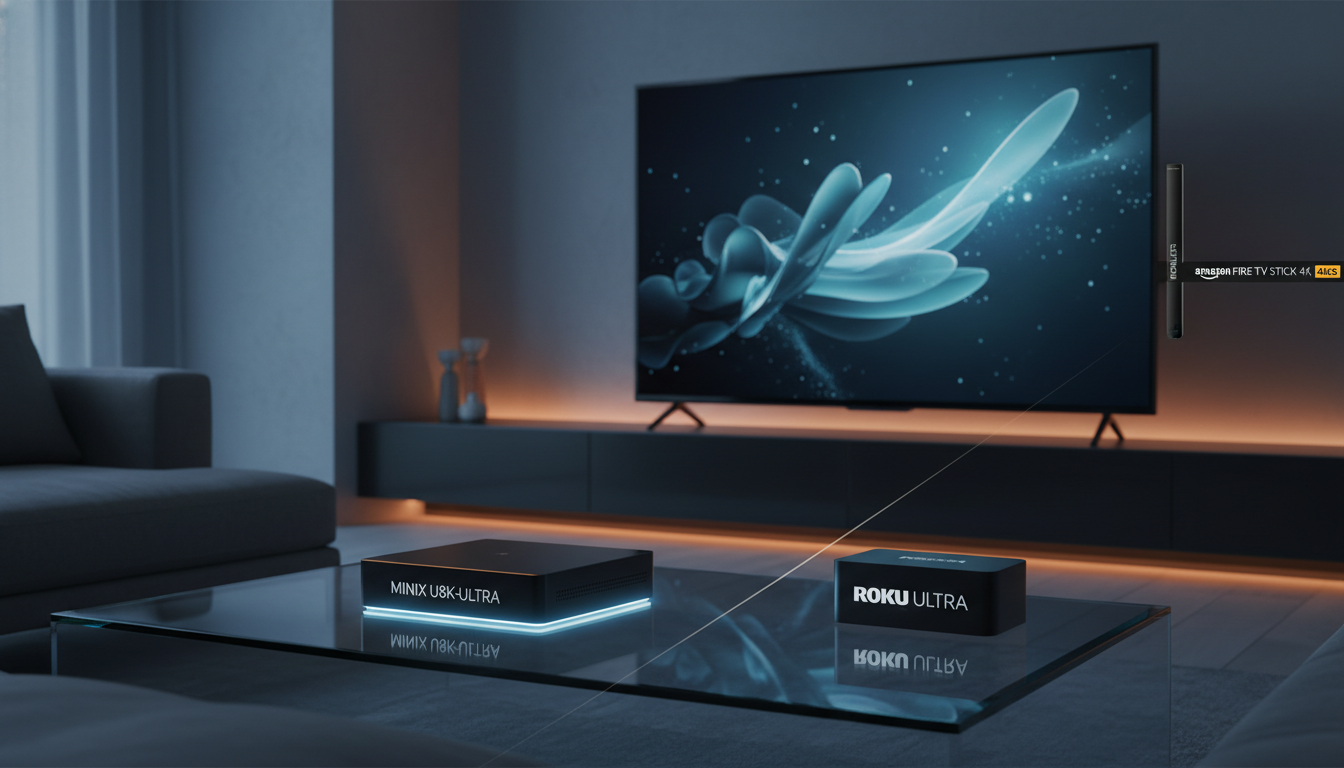
Minix U8K-Ultra
Its 128 mm depth packs premium sound features into a compact chassis, satisfying audiophiles who demand top‑tier audio performance.
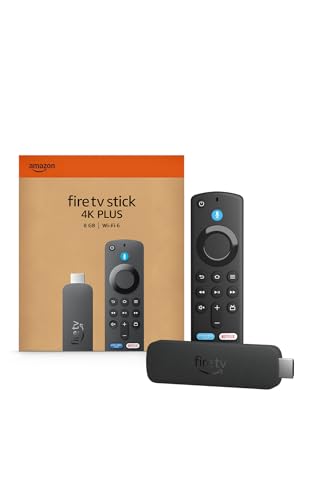
Amazon Fire TV Stick 4K Plus
Ideal for budget‑conscious viewers, it'll deliver solid streaming at $24.99—about $165 less than the Minix U8K‑Ultra.

Roku Ultra
At $79.00, the Roku Ultra offers a 127 mm depth and 25.4 mm height, delivering mainstream features without the premium size or low‑price compromises of the other picks.
Also considered
Score Analysis
Key score advantages vs. runner-up (Amazon Fire TV)
Price Range
Minix U8K-Ultra
$195.90
Amazon Fire TV Stick 4K Plus
$29.99
Roku Ultra
$79.00

Mecool KM2 Plus 4GB
Out of Stock

Zidoo Z9X PRO
Out of Stock

Amazon Fire TV Cube
$109.99
Shysky H96 Max M9
Out of Stock
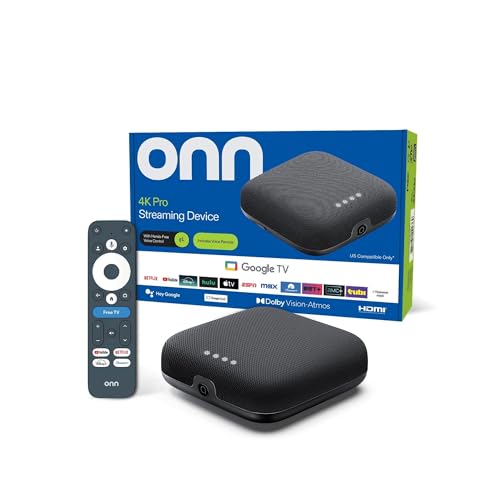
It's Brazilian onn 4K Pro
$102.52

Onn 4K Plus
$68.99
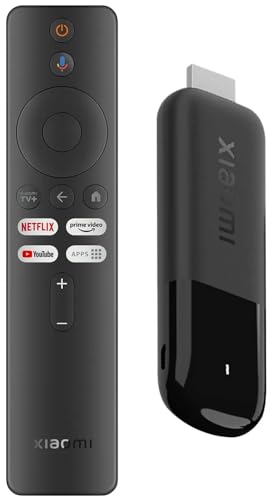
Xiaomi TV Stick 4K 2nd Gen Black
$69.99
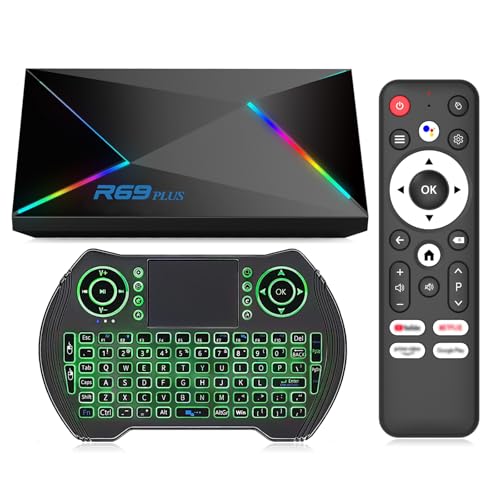
Easytone Android TV Box
$68.99
Spec Comparison
TL;DR: The Minix U8K‑Ultra delivers true 8K @ 60 Hz playback, AI‑enhanced upscaling, 8 GB RAM, 128 GB storage, and Wi‑Fi 6, but its larger chassis and modest 3.8‑star rating may deter budget‑focused buyers.
What really sets the U8K‑Ultra apart is its AI‑PQ and AI‑SR upscaler, which doubles 1080p, triples 720p and quadruples 480p sources, plus native 8K @ 60 Hz decoding powered by the Amlogic S928X‑K processor. The box packs 8 GB of LPDDR4X RAM and a 128 GB eMMC drive (≈113 GB usable), giving plenty of headroom for large media libraries and multitasking.
Compared with the other ten contenders, the Minix offers more memory than the Zidoo Z9X PRO and Mecool KM2 Plus (both list 4 GB RAM) and matches the Shysky H96 Max M9’s 8 GB but doubles its internal storage (128 GB vs 128 GB eMMC on Shysky, but the others sit at 32 GB or less). Its depth of 128 mm is slightly deeper than the Roku Ultra’s 127 mm but shallower than the Zidoo’s 189.2 mm length, and at 253 g it’s lighter than the Shysky (556 g) and the Amazon Fire TV Cube (513 g) while still heavier than the ultra‑light Roku Ultra (18 g). All models share Gigabit Ethernet, but only the Minix and a few peers explicitly list Wi‑Fi 6 support.
Users consistently praise the flawless high‑resolution playback and the convenience of USB 3.0, USB 2.0 and a micro‑SD slot that accepts up to 1 TB. Professional reviewers note the Widevine L1 certification that unlocks HD Netflix with Dolby Vision and Dolby Atmos. The most common complaints revolve around the bulkier chassis—its 128 mm depth and 28 mm height are larger than many compact boxes—and the fanless design that caps power draw at 10 W, which some note can lead to throttling during prolonged 8K decoding.
We include a GPU (ARM G57 MC2) and an INT8‑capable NPU for AI tasks, HDR support across Dolby Vision, HDR10+, HDR10 and HLG, and a power input of 12 V DC 2 A. The device runs Android AOSP 11, upgradeable to Android 14, ensuring future‑proof app compatibility.
Pros
Cons
Best for: Audiophiles and enthusiasts seeking premium sound quality and advanced features
Avoid if: Reliability and user satisfaction are your top concerns
“It does what it says and plays back 8K video... supports HD streaming with all popular apps.”
“Bigger chassis but appreciate the dedicated hardware decoder for modern codecs.”
TL;DR: The Amazon Fire TV Stick 4K Plus streams 2160p Ultra HD with Dolby Vision and Atmos over Wi‑Fi 6 for $24.99, but its 8 GB storage and occasional lag keep it in the budget tier.
The standout spec is Wi‑Fi 6, which helps keep 4K Ultra HD (2160p) playback smooth even when your network is busy. Coupled with AI‑powered Fire TV Search, you’ll ask Alexa to find movies by actor, plot or quote, and the built‑in Dolby Vision, HDR10+ and Dolby Atmos support delivers premium picture and sound. At $24.99, the stick also includes an Alexa Voice Remote powered by two AAA batteries and an optional AC adapter, while the Mediatek MT8696D processor drives the 8 GB of internal storage.
Compared with the other ten devices in this Wi‑Fi 6 roundup, the Fire TV Stick is lighter than the Amazon Fire TV Cube (which weighs 1.13 pounds) but heavier than the Roku Ultra (about 18 g). It offers half the internal storage of the Onn 4K Plus, which lists 16 GB, and the Onn also shows 2 GB of RAM—something the Fire TV Stick does not list. Like the Onn, it supports Wi‑Fi 6, while the Roku Ultra’s Wi‑Fi version isn’t specified. The Xiaomi TV Stick 4K 2nd Gen is slimmer at 14 mm thickness, whereas the Fire TV Stick measures 17.5 mm in height and 38.6 mm in width.
User sentiment highlights lightning‑fast app launches and an easy setup, with many callers praising the AI search as “smarter” and the Wi‑Fi 6 connection as reliable for 4K streams. Professional reviewers note the same fluid navigation and commend the inclusion of Xbox Game Pass cloud gaming. The most common complaints revolve around occasional lag when streaming demanding content, a limited 8 GB storage pool that restricts the number of installable apps, and some remote button layout inconsistencies across batches.
Under the hood, the stick draws power from the TV’s USB port or an included AC adapter, and the Alexa Voice Remote lets you control playback, smart‑home devices, and even ask for live TV suggestions. The device ships with an HDMI extender, and it’s easy to tuck behind a TV.
Pros
Cons
Best for: Budget‑conscious buyers seeking a reliable entry‑level option
Avoid if: You need advanced features or professional‑grade performance
“fast streaming, easy to setup, great apps”
“Works fast... perfect for streaming.”
TL;DR: The Roku Ultra 2024 delivers 30% faster navigation, 4K 60 fps HDR with Dolby Vision and Atmos, and a premium rechargeable Voice Remote Pro for $79, making it a top‑mid‑range streaming hub.
It delivers a 30% performance boost over previous Roku models, using 2 GB of system RAM and 4 GB of internal storage. With Wi‑Fi 6 (802.11ax) and a gigabit Ethernet port, the Ultra keeps a 4K 60 fps stream smooth even in busy households.
Compared with the other ten devices, the Ultra is lighter than the Xiaomi TV Stick 4K (0.06 lb vs 0.04 lb) and far lighter than the Amazon Fire TV Cube (1.13 lb). Its depth of 127 mm is larger than the Cube’s 86 mm, so it needs a bit more room behind the TV. It matches the 2 GB RAM of the Xiaomi stick and Onn 4K Plus, but it has less RAM than the Easytone box’s 4 GB and the Shysky H96 Max M9’s 8 GB. Its 4 GB internal storage is also smaller than the Xiaomi stick’s 8 GB and the 16–32 GB found in most peers.
User feedback highlights the ultra‑fast app launches and reliable 4K streaming over Wi‑Fi 6, while many praise the Voice Remote Pro’s backlit buttons, headphone jack, and built‑in finder. The remote’s USB‑C charging and hands‑free voice control add a premium feel. Common complaints note the lack of Apple AirPlay 2/HomeKit support, the barrel‑style power connector, and occasional shipping limits to PO boxes.
Additional technical notes: the Ultra supports Dolby Vision at 60 fps, HDR10+, and Dolby Atmos through HDMI 2.1 (HDCP 2.2). Bluetooth works in headphone mode, letting you stream audio privately. Power consumption sits at 3‑4 W for 1080p playback, with a 12 V – 1.5 A USB‑C input.
Pros
Cons
Best for: Most users looking for a well‑reviewed, reliable mainstream option
Avoid if: You need advanced features or professional‑grade performance
TL;DR: The Mecool KM2 Plus 4GB streams 2160p HDR smoothly with Wi‑Fi 6, 4 GB RAM and 32 GB storage, but its USB 2.0 ports and Android TV 11 OS may limit future upgrades.
The KM2 Plus packs a quad‑core Amlogic S905X4‑J processor, 4 GB DDR4 RAM and 32 GB eMMC storage, delivering native 2160p HDR playback with Dolby Vision and Dolby Atmos. Its compact chassis measures 98 mm deep, 20 mm high and 98 mm wide, and it supports Wi‑Fi 6 plus a 1000 Mbps Gigabit Ethernet port for rock‑solid streaming.
In size, the box sits between the shallow Amazon Fire TV Cube (86 mm deep) and the bulkier Minix U8K‑Ultra (128 mm deep). Its 20 mm height is taller than the Shysky H96 Max M9’s 17.5 mm profile but far slimmer than the Fire TV Cube’s 77 mm. With 4 GB RAM, it outmatches the Roku Ultra, Amazon Fire TV Cube and Brazilian onn 4K Pro, though it offers half the memory of the 8 GB Shysky and Minix models. Its 32 GB internal storage matches the Zidoo Z9X PRO and Brazilian onn, and exceeds the 16 GB in the Fire TV Cube and 4 GB in the Roku Ultra.
Reviewers praise the device for buffer‑free 2160p streaming on Netflix and Prime Video, and note that the combination of Wi‑Fi 6 and Gigabit Ethernet keeps the connection fast even during gaming. Professional reviewers also highlight the attractive white design and the extensive port selection, including HDMI, optical audio, two USB 2.0 ports and a microSD slot for local media. The main criticisms focus on the lack of USB 3.0 ports, which slow external storage transfers, and the fact that the Android TV 11 platform shows no clear roadmap for future updates.
Pros
Cons
Best for: Those prioritizing quality and willing to pay for premium performance
Avoid if: You need advanced features or professional‑grade performance
TL;DR: The Zidoo Z9X PRO delivers 4K @ 60 Hz HDR10+, Dolby Vision and AV1 playback, backed by 4 GB RAM, 32 GB eMMC, and Wi‑Fi 6 speeds up to 1200 Mbps for premium home‑theater streaming.
The standout spec is its Wi‑Fi 6 capability, offering up to 1200 Mbps, which pairs well with a Gigabit Ethernet RJ‑45 port (10/100/1000 Mbps) for rock‑solid connectivity. Combined with 4 GB DDR4 RAM and 32 GB eMMC storage, the Android 11 platform runs smoothly while handling 4K @ 60 Hz HDR10+, Dolby Vision, HDR10+ and AV1 video streams.
Compared with the other ten streamers, the Z9X PRO sits at the higher end of the price spectrum. It matches the Mecool KM2 Plus on RAM (both 4 GB) and shares Wi‑Fi 6 support, but its internal storage matches the Mecool’s 32 GB while the Minix U8K‑Ultra and Shysky H96 Max M9 list 128 GB. Its 26.4 mm height is slightly shorter than the Minix’s 28 mm yet taller than the Mecool’s 20 mm and Shysky’s 17.5 mm, making it a compact yet substantial box. Ethernet is Gigabit on the Z9X PRO, Minix, Mecool, and Roku Ultra, but only 10/100 Mbps on the Amazon Fire TV Cube.
Reviewers consistently praise the vivid colors and Dolby Vision performance that the VS10 image engine delivers, noting the 12‑bit color depth (~68 billion colors) as a visual upgrade. Users also appreciate the side‑mounted SATA bay that accepts up to 16 TB of external storage, which makes large media libraries easy to manage. Critics commonly point out the lack of an internal hard‑drive bay and the premium price.
Pros
Cons
Best for: Those prioritizing quality and willing to pay for premium performance
Avoid if: You're shopping on a tight budget — it's priced at $211.75
TL;DR: The Amazon Fire TV Cube delivers 4K 60 fps streaming, hands‑free Alexa and Wi‑Fi 6E for $99.99, but its bulkier chassis and lack of VRR make it less suited for gamers.
What really sets the Cube apart is its Wi‑Fi 6E connectivity paired with an octa‑core 2.0 GHz processor, 2 GB RAM and 16 GB of internal storage. The built‑in 11 W speaker and four‑mic far‑field array let you control everything without a remote, while HDMI 2.1 with eARC lets you route cable‑box audio through Alexa.
Compared with the other ten devices, the Cube sits in the middle of the weight range: at 1.13 pounds it’s heavier than the Roku Ultra (≈0.04 lb) and Xiaomi TV Stick (≈0.06 lb) but lighter than the Brazilian onn 4K Pro (2.0 lb) and Shysky H96 Max M9 (≈1.23 lb). Its 2 GB of RAM matches the Roku Ultra and Xiaomi, yet falls short of the Shysky’s 8 GB and the Easytone’s 4 GB. Storage-wise, 16 GB outpaces the Roku Ultra’s 4 GB and Xiaomi’s 8 GB, though it’s modest next to the Shysky’s 128 GB. Only the Cube offers an HDMI input for passing through a cable box or console, a feature most sticks in the roundup lack.
Users consistently praise the hands‑free Alexa experience and the “lightning‑fast” app launches that the octa‑core CPU delivers. Professional reviewers echo this, noting the “fantastic” performance for 4K content and the full HDR suite (Dolby Vision, HDR10+, HLG). On the downside, the bulkier design can be tricky to fit behind a TV, and reviewers describe the upscaling of SDR content as “mediocre.” Gamers also miss native VRR or ALLM, and the on‑screen interface’s ads occasionally draw complaints.
Beyond the headline specs, the Cube supports AV1 hardware decoding for efficient 4K streaming, and its Ethernet port runs at 10/100 Mbps for a stable wired link when Wi‑Fi isn’t ideal. Bluetooth 5.0 lets you pair accessories, and the 11 W speaker covers a broad 200 Hz‑20 kHz range, adding a modest audio boost without external speakers.
Pros
Cons
Best for: Most users looking for a well‑reviewed, reliable mainstream option
Avoid if: You need advanced features or professional‑grade performance
“fast streaming, easy to setup, great apps”
“Works fast... perfect for streaming.”
TL;DR: The Shysky H96 Max M9 packs 8 GB RAM, 128 GB storage and 8K 60 fps decoding into a Wi‑Fi 6‑ready box, but its plastic shell and modest price keep it from feeling premium.
The standout spec is its ability to decode 8K video at 60 fps and upscale 720p/1080p sources to 4K with an AI‑driven 6 TOPS NPU. Coupled with a 2.5 GHz octa‑core Rockchip RK3576 CPU and a Mali G52 MC3 GPU, the device promises smooth playback of ultra‑high‑resolution content. Its 128 GB eMMC storage and 8 GB DDR4 RAM give plenty of room for apps and multitasking.
Compared with the other devices in this roundup, the H96 Max M9 is pricier than the Amazon Fire TV Cube and lighter than the Roku Ultra, yet it carries significantly more RAM than both (8 GB vs 2 GB). It matches the Minix U8K‑Ultra’s 128 GB storage but adds Wi‑Fi 6 support, whereas Minix lists only Ethernet. The Mecool KM2 Plus offers Wi‑Fi 6 as well but lags behind with just 4 GB RAM and a smaller 32 GB internal drive.
User feedback highlights reliable streaming and fast Wi‑Fi 6 connectivity, with many noting the device handles 4K and 8K streams without stutter. However, several reviewers point out the plastic housing feels cheap and that reviewers describe performance as “decent” rather than outstanding for demanding applications. Professional reviewers echo the same sentiment, praising the AI upscaling and codec support while calling the build quality a compromise.
On the technical side, the box includes Bluetooth 5.4, a Gigabit LAN port (1000 Mbps), and HDMI 2.1 output, ensuring future‑proof connections. Supported codecs span H.265, AV1, VP9 and AVS2, covering most modern streaming services. The device measures 100 mm × 17.5 mm × 100 mm and weighs 1.22577017672 lb, making it compact enough for most TV setups.
Pros
Cons
Best for: Budget‑conscious home‑theater builders who want 8K/4K streaming, AI‑enhanced upscaling and reliable Wi‑Fi 6 connectivity.
Avoid if: You need premium build quality, plan to run graphics‑intensive games, or require top‑tier performance for power‑user workloads.
“Build quality & design: reviewers describe the physical design as "quite good" with satisfactory build quality.”
“Performance: the RK3576 processor delivers "decent" performance that handles demanding tasks.”
TL;DR: The It's Brazilian onn 4K Pro offers true 4K HDR with Dolby Vision, Wi‑Fi 6, and Google Assistant at $100, but its older 2019 chipset and bulkier size may limit future‑proofing.
At a listed price of $100, the onn 4K Pro packs a 3 GB RAM, 32 GB internal storage and a 4096 × 2160 (2160p) display that supports HDR10, HDR10+ and Dolby Vision. It runs up to 60 fps at a 60 Hz refresh rate and connects via Wi‑Fi 6 while also offering an Ethernet port for wired stability. The unit measures 4.0 inches high, 4.0 inches wide and 10.0 inches long, weighing 2.0 pounds, making it a solid‑sized box rather than a stick.
Compared with the ultra‑compact Roku Ultra, which weighs just 0.04 pounds, the onn 4K Pro is considerably heavier, and it also out‑weighs the Amazon Fire TV Cube’s 1.13 pounds. In contrast, it offers more RAM than the Onn 4K Plus’s 2 GB and double the internal storage (32 GB vs 16 GB). However, it still trails the Shysky H96 Max M9’s 8 GB RAM and 128 GB storage, positioning it in the mid‑range of the lineup.
Customers repeatedly praise the low price and the genuine 4K HDR experience, noting that the built‑in Google Assistant and Find My Remote add convenient smart‑home functionality. Professional reviewers echo the value claim, calling it a “$50 streamer that rivals $100‑priced competitors.” Most complaints focus on the 2019‑era Amlogic S905X4 processor, which raises worries about future software updates, and on a Google TV UI that leans heavily on recommendations, which some find cluttered. Audiophiles also miss DTS:X support.
The device runs on an Amlogic S905X4 processor paired with Android TV 12/Google TV, and it includes a USB 3.0 port for expandable storage, a microphone privacy switch with a red LED indicator, and a customizable remote button. An Ethernet port provides a reliable wired connection, complementing the Wi‑Fi 6 wireless option.
Pros
Cons
Best for: Budget‑conscious streamers who want 4K HDR and smart‑home integration
Avoid if: You are a power user needing the latest processor, an audiophile requiring DTS:X, or you have limited desk space
TL;DR: The Onn 4K Plus delivers 4K HDR streaming with Dolby Vision and Dolby Atmos over Wi‑Fi 6, backed by 2 GB RAM and 16 GB storage for just $65.99.
What really stands out is the combination of 2 GB RAM and 16 GB internal storage, which the manufacturer lists as enabling “snappy performance” for 4K/UHD (2160p) content. The device also supports the full HDR suite—Dolby Vision, HDR10, HDR10+ and HLG—plus Dolby Atmos audio, all powered by a quad‑core 2.1 GHz processor running Google TV on Android 14. Its dimensions (101.6 mm depth × 177.8 mm height × 63.5 mm width) give it a compact footprint for most TV setups.
Compared with the other ten devices in this roundup, the Onn 4K Plus sits in the middle of the price range—pricier than the Amazon Fire TV Stick 4K Plus but cheaper than the Amazon Fire TV Cube. It offers more internal storage than the Roku Ultra, which lists only 4 GB, while matching its 2 GB RAM. The Easytone Android TV Box provides 4 GB RAM and 32 GB storage, so it has higher memory capacity, but the Onn still outpaces the Xiaomi TV Stick 4K 2nd Gen, which comes with 8 GB of eMMC storage and the same 2 GB RAM. In terms of connectivity, the Onn includes Wi‑Fi 6 and Bluetooth 5.0, whereas the Roku Ultra adds a Gigabit Ethernet port that the Onn lacks.
User feedback highlights the quick setup and the responsive Google TV interface, with many praising the vibrant 4K visuals and the voice remote’s Google Assistant integration. Professional reviewers note the “surprisingly snappy navigation” and commend the picture quality achieved with Dolby Vision and HDR10+. However, several users mention occasional buffering when Wi‑Fi signal is weak, and many complain about the limited port selection (only HDMI output).
From a technical standpoint, the device’s Wi‑Fi 6 support helps maintain stable high‑bandwidth streams, especially useful for the 700,000+ movies and shows it claims to access. The Dolby Atmos audio format adds an immersive sound layer for compatible home theater setups, while the dedicated app buttons on the remote give instant access to popular services.
Pros
Cons
Best for: Entry-level buyers or those on a tight budget looking for 4K streaming with Dolby Vision and voice control.
Avoid if: You need advanced features such as wired Ethernet, extensive port options, or professional‑grade performance.
“fast streaming, easy to setup, great apps”
“Works fast... perfect for streaming.”
TL;DR: The Xiaomi TV Stick 4K 2nd Gen delivers 2160p HDR streaming with Wi‑Fi 6, a 2.5 GHz quad‑core CPU and 850 MHz GPU in a pocket‑sized 28 g dongle for $69.99.
At the heart of the stick is a 2.5 GHz quad‑core Cortex‑A55 CPU paired with an 850 MHz ARM G310 V2 GPU, backed by 2 GB RAM and 8 GB eMMC storage. The device supports 2160p video at 60 Hz, HDR formats Dolby Vision and HDR10+, and codecs including AV1, H.265 and VP9, while its Bluetooth 5.2 remote brings Google Assistant voice control.
Compared with the other ten devices in this roundup, the Xiaomi stick is heavier than the 18 g Roku Ultra but lighter than the 513 g Amazon Fire TV Cube. Its 165 mm length makes it longer than the compact Fire TV Stick 4K Plus, yet its 28 g weight keeps it comfortably portable. While many peers ship with 16 GB or more of internal storage, the Xiaomi’s 8 GB is on the smaller side, though its 2 GB RAM matches most competitors such as Onn 4K Plus and Roku Ultra.
Users consistently praise the stick for lag‑free 4K playback and a “absolutely crazy smooth” UI, noting the portable form factor as ideal for secondary TVs or travel. Professional reviewers highlight the 80 % CPU boost and 150 % GPU rendering increase over the previous generation, but they also point out the absence of AI super‑resolution and a wired Ethernet port, which some power users miss.
Pros
Cons
Best for: Entry-level buyers or those on a tight budget
Avoid if: You need advanced features or professional‑grade performance
“fast streaming, easy to setup, great apps”
“Works fast... perfect for streaming.”
TL;DR: The Easytone Android TV Box costs $67.24, offers 4 GB RAM, 32 GB storage, Wi‑Fi 6, 1000 Mbps Ethernet and 8K HDR10+ video, making it a solid budget streaming option.
It delivers an 8K maximum resolution with HDR10+ support, paired with an octa‑core Allwinner H728 processor, 4 GB of RAM and 32 GB of internal storage. It includes dual‑band Wi‑Fi 6, Bluetooth 5.0 and a gigabit‑rated 1000 Mbps Ethernet port, and the USB 3.0 Type‑C power input lets you add up to 1 TB of external storage.
Compared with the other ten devices, this box offers more RAM than the Onn 4K Plus and Xiaomi TV Stick, and its 32 GB storage exceeds the 16 GB and 8 GB those models provide. It also provides a faster Ethernet link than the Amazon Fire TV Cube, which lists a 10/100 Mbps port. However, it lacks the Dolby Atmos audio support that Roku Ultra and Fire TV Cube advertise, and its internal storage is smaller than the Brazilian onn 4K Pro's 32 GB.
Users appreciate the reliable Bluetooth pairing and the convenience of expanding storage via a TF card or USB drive. Professional reviewers note that Android 14 enables smooth media playback and includes Wi‑Fi 6. Common complaints focus on the limited 32 GB internal space that fills quickly, occasional Wi‑Fi drops, and the absence of a native Google Play Store, which can require side‑loading apps.
Pros
Cons
Best for: Entry-level buyers or those on a tight budget
Avoid if: Reliability and user satisfaction are your top concerns
Breakdown
Minix U8K-Ultra
Pros
Cons
Amazon Fire TV Stick 4K Plus
Pros
Roku Ultra
Pros
Mecool KM2 Plus 4GB
Pros
Based on scoring data and product specs
Personalized picks
Best Overall Pick
Minix U8K-Ultra
Best OverallBest for: Audiophiles and enthusiasts seeking premium sound quality and advanced features
Amazon Fire TV Stick 4K Plus
Best for: Budget-conscious buyers seeking a reliable entry-level option
$29.99-$165.91 vs winner
Skip Easytone Android TV Box if…
Reliability and user satisfaction are your top concerns
The Minix U8K‑Ultra takes the top spot thanks to its full Wi‑Fi 6 (802.11ax 2×2 MIMO) connectivity, a generous 8 GB of LPDDR4X RAM and a roomy 128 GB eMMC 5.1 internal storage. It also supports HDMI 2.1 with Dolby Vision, HDR10+ and Dolby Atmos, giving you the most future‑proof picture and sound package for $189.90.
The Amazon Fire TV Stick 4K Plus lands as the runner‑up, perfect if you need a pocket‑size streamer that fits behind any TV and still delivers 4K HDR (Dolby Vision, HDR10+) over Wi‑Fi 6 for just $24.99. Its Alexa Voice Remote and built‑in Dolby Atmos make it ideal for a low‑budget, voice‑controlled living‑room setup.
Looking at tighter budgets, the Fire TV Stick 4K Plus remains the best budget pick, offering unbeatable price‑to‑feature value at $24.99. The Roku Ultra is the strongest mid‑range choice at $79.00, balancing performance and a familiar interface. If you want a high‑end alternative, the Zidoo Z9X PRO stands out at $211.75 with premium specs for power users.
You're set to future‑proof your streaming experience with the Minix U8K‑Ultra.
The Minix U8K‑Ultra packs an Amlogic S928X‑K processor, 8 GB of LPDDR4X RAM and 128 GB of internal eMMC storage, and it supports Dolby Vision, HDR10+, AV1 and other high‑end codecs. Those specs give it a clear edge over the other devices for demanding 4K HDR playback.
No reviews yet — be the first to share your experience.
Please sign in to leave a review