⚡ Quick Answer
Dolby Atmos‑enabled streaming media players have finally become affordable enough for most households, and we’ve narrowed the field to seven contenders. From the $35.99 ONN Android TV 4K budget box up to the $199.00 Nvidia SHIELD Pro premium unit, the lineup spans the full price spectrum while all supporting immersive Atmos sound. Each device earned solid user feedback, with the Roku Ultra pulling a 4.5/5 rating from 7,366 reviews and the Amazon Fire TV Cube holding a 4.4/5 score across 15,796 reviews.
If you’re building a main‑room home‑theater, the premium tier – Amazon Fire TV Cube, RockTek G2 Chromecast ($159.99), and Nvidia SHIELD Pro – offers the strongest processing power and connectivity options. For a secondary bedroom or a compact setup, the mid‑range Roku Ultra delivers 4K HDR and Atmos at $79.00, while the budget tier (ONN Android TV 4K, Roku Ultra LT at $49.75, and Xiaomi TV Stick 4K at $69.99) gives you solid performance without breaking the bank.
We’ll break down each model’s audio formats, storage, and remote features so you can match the right player to your space, budget, and listening preferences.

Amazon Fire TV Cube
Its 11 W built-in speaker delivers strong Dolby Atmos sound while staying compact at 86 mm depth, earning top value and feature scores.

Nvidia SHIELD Pro
Ideal for power‑hungry gamers or 4K enthusiasts willing to spend about $99 more than the Fire TV Cube for premium performance.

Roku Ultra
Stands out with an ultra‑slim 25.4 mm height, fitting tight TV cabinets where the bulkier Fire Cube and Shield would struggle.
Also considered
Score Analysis
Key score advantages vs. runner-up (Nvidia SHIELD Pro)
Price Range
Amazon Fire TV Cube
$109.99
Nvidia SHIELD Pro
$199.00
Roku Ultra
$79.00

Roku Ultra LT
$49.00
ONN Android TV 4K
$38.75

RockTek G2 Chromecast
Out of Stock
Xiaomi TV Stick 4K 2nd Gen Black
$69.99
Spec Comparison
TL;DR: The Amazon Fire TV Cube packs a 2.0 GHz octa‑core CPU, 2 GB RAM, 16 GB storage and hands‑free Alexa in a 1.13‑lb box that delivers 4K 60 fps Dolby Vision and Dolby Atmos.
What really sets the Cube apart is its built‑in Alexa with a four‑mic far‑field array, letting you launch apps, control smart‑home devices and switch HDMI sources without touching a remote. Under the hood sits an octa‑core 2.0 GHz processor, 2 GB RAM and 16 GB of internal storage, while the HDMI 2.1 port includes eARC and HDCP 2.3 for full‑featured 4K 60 fps playback. The device also supports Dolby Vision, HDR10+, HDR10 and HLG, and its 11 W speaker covers 200 Hz‑20 kHz, delivering on‑box audio across that range.
Compared with the other six players, the Cube is noticeably heavier than the Roku Ultra (≈0.04 lb), the Xiaomi TV Stick (≈0.06 lb) and the ONN Android TV (≈0.75 lb), but its 86 mm depth is shallower than the Roku Ultra’s 127 mm. It offers far more internal storage than the Roku Ultra’s 4 GB and the Xiaomi stick’s 8 GB, matching the Nvidia SHIELD Pro’s 16 GB while keeping a slimmer footprint than the Shield’s larger chassis. Its Ethernet port limits speed to 10/100 Mbps, slower than the RockTek G2 Chromecast’s gigabit Ethernet, yet its Wi‑Fi 6E radio gives it a modern wireless edge that the others don’t list.
Reviewers consistently praise the Cube’s lightning‑fast app launches and the convenience of hands‑free Alexa, especially the ability to control a cable box through the HDMI input. Professional outlets note the “fantastic” octa‑core performance and the full HDR suite with AV1 decoding. On the downside, users report that SDR upscaling can look flat on premium displays, and the lack of native VRR or ALLM may disappoint gamers. The bulkier design also draws comments about placement challenges, and the interface’s ads can feel intrusive.
Pros
Cons
Best for: Buyers willing to invest in a proven, high-quality option
Avoid if: You're on a tight budget or only need basic functionality
TL;DR: The NVIDIA SHIELD TV Pro delivers AI‑enhanced 4K 60 FPS streaming, Dolby Atmos sound and GeForce NOW gaming, but its $199 price and 16 GB internal storage make it a premium, power‑user‑focused box.
The standout feature is AI‑enhanced upscaling that pushes any source to 4K 60 FPS, backed by a 256‑core NVIDIA GPU and a Tegra X1+ processor that reviewers note runs about 25 % faster than its predecessor. With 3 GB of RAM, a 40 W power adapter and 16 GB of built‑in storage, the SHIELD Pro delivers smooth 4K HDR (Dolby Vision, HDR10) playback and cloud gaming via GeForce NOW.
At $199 it sits in a higher price tier than the Amazon Fire TV Cube, and at 2.1 pounds it’s noticeably heavier than the feather‑light Roku Ultra (under 0.04 pounds). It also offers more internal storage than the Roku Ultra LT’s 4 GB and double the RAM of the ONN Android TV 4K’s 2 GB. While the RockTek G2 Chromecast lists Gigabit Ethernet, the SHIELD adds HDMI 2.0b with HDCP 2.2 and supports Dolby Vision, which the RockTek model does not list.
Consumers repeatedly praise the device for buttery‑smooth 4K streaming, reliable Plex integration and regular NVIDIA firmware updates that keep the Android 11 platform fresh. Users appreciate the hands‑free Google Assistant remote, though some mention occasional voice‑control hiccups and Wi‑Fi drops. The limited 16 GB internal storage draws frequent complaints, prompting many to add external USB drives or a microSD card.
Pros
Cons
Best for: Buyers willing to invest in a proven, high-quality option
Avoid if: You need advanced features or professional‑grade performance
“best for PC game streaming to TV”
TL;DR: The 2024 Roku Ultra delivers 30% faster performance, 4K HDR with Dolby Atmos, and a premium rechargeable remote, all in a compact 18 g package for $79.
Roku’s newest Ultra model packs 2 GB of RAM and 4 GB of internal storage, giving it a 30% speed boost over earlier Roku players. It supports Dolby Vision at 60 fps, HDR10+, HLG, and Dolby Atmos, so you get cinema‑grade picture and sound without additional gear. The device measures 127 mm deep, 25.4 mm high, and 124.5 mm wide, and it weighs just 18 g (about 0.04 lb), making it one of the lightest players in this group.
Compared with its peers, the Ultra is noticeably lighter than the Xiaomi TV Stick 4K (28 g) and far lighter than the Amazon Fire TV Cube (513 g) or the Roku Ultra LT (167 g). It offers Gigabit Ethernet and HDMI 2.1, features the Xiaomi and RockTek devices lack. Its 4 GB of storage is less than the Xiaomi stick’s 8 GB, but its Wi‑Fi 6 connectivity and 2 GB RAM give it a smoother 4K streaming experience than many competitors that only list older Wi‑Fi standards.
Reviewers consistently praise the “ultra‑fast” app launches and the convenience of the Voice Remote Pro, which includes backlit buttons, a headphone jack, and a remote‑finder feature. The remote charges via USB‑C, eliminating the need for disposable batteries. Some users note the barrel‑style power connector can be awkward, and the lack of Apple AirPlay 2/HomeKit limits integration for iOS‑centric households. Some users report that shipping to PO boxes and certain U.S. territories is problematic.
From a technical standpoint, the Ultra draws just 3–4 W when streaming 1080p video, with higher consumption at 4K. It supplies power through a 12 V – 1.5 A USB‑C input or the barrel connector. With Wi‑Fi 6 (802.11ax) and a Gigabit Ethernet port, it handles high‑bandwidth 4K streams reliably, even in busy network environments.
Pros
Cons
Best for: Most users looking for a well‑reviewed, reliable mainstream option
Avoid if: You have limited desk space or need portability
TL;DR: The Roku Ultra LT delivers 4K HDR with Dolby Atmos at a $49.75 price, a compact 127 mm depth and 167 g weight, and a smooth quad‑core experience backed by a 4.6‑star rating.
What really stands out is the combination of a quad‑core 1.5 GHz ARM Cortex A55/A53 CPU and 2 GB of RAM, which reviewers say makes navigation feel quick and app launches snappy on a 4K 3840 × 2160 display running at 60 fps. Dolby Vision, HDR10, HDR10+ and HLG all support, and Dolby Atmos audio is built‑in, so you get premium picture and sound without a separate sound system.
Compared with the other six players, the Ultra LT is lighter than the Amazon Fire TV Cube (1.13 lb) and the Nvidia SHIELD Pro (2.1 lb), but a bit heavier than its sibling Roku Ultra, which tips the scales at just 0.04 lb. Its 2 GB of RAM matches the ONN Android TV 4K and the Xiaomi TV Stick, yet falls short of the Nvidia’s 3 GB. Ethernet runs at 10/100 Mbps—the same as the Fire TV Cube—but is slower than the RockTek G2’s gigabit Ethernet. Dolby Atmos support lines up with the ONN, Fire TV Cube and Nvidia devices, giving it solid audio credibility.
User feedback frequently praises the sharp 4K picture and the responsive UI, noting that the voice remote’s private‑listening headphones add convenience. Professional reviewers highlight the solid quad‑core processor and Wi‑Fi 5 connectivity as strong foundations, while reviewers repeatedly mention the lack of a USB port as a drawback for anyone who wants to plug in external drives. The remote uses a single lithium‑polymer battery, though its exact runtime isn’t disclosed.
Pros
Cons
Best for: Budget‑conscious buyers seeking a reliable entry‑level option
Avoid if: You need extensive USB connectivity or expect a fully feature‑rich device with gigabit Ethernet
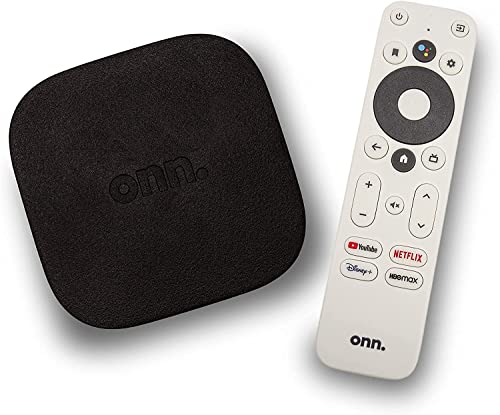
TL;DR: The ONN Android TV 4K streams 4K HDR video with Dolby Vision and Dolby Atmos at a $35.99 price, but its 2 GB RAM and lack of Ethernet keep it in the entry‑level camp.
The standout spec is its full‑stack HDR support – Dolby Vision, HDR10 and HDR10+ – paired with Dolby Atmos passthrough, which delivers a native 3840 × 2160 resolution. At 340 g (about 0.75 lb) it’s a solid‑weight box that packs 2 GB of RAM and 8 GB of internal storage, running Google TV on an Amlogic S905Y2 processor.
Compared with the other six players, the ONN sits in the middle of the weight range: it’s heavier than the Roku Ultra LT (167 g) and the ultra‑light Roku Ultra (18 g) as well as the Xiaomi stick (28 g), but lighter than the Nvidia SHIELD Pro (250 g). Its 8 GB storage outstrips the Roku Ultra’s 4 GB and matches the Xiaomi stick, yet it falls short of the Fire TV Cube and Nvidia SHIELD Pro, both at 16 GB. RAM is on par with most peers (Roku Ultra LT, Roku Ultra, Xiaomi, Fire TV Cube all list 2 GB) but below Nvidia’s 3 GB. The biggest functional gap is Ethernet – the ONN offers only Wi‑Fi, while the Roku Ultra and RockTek G2 include wired ports.
Users consistently praise the vivid 4K picture and immersive Atmos sound, noting that the voice‑enabled remote and built‑in Chromecast make everyday streaming effortless. Professional reviewers echo the picture quality, calling it comparable to pricier units, but they flag the 2 GB RAM as a source of occasional lag and the missing Ethernet as a limitation for stable wired connections. Reviewers describe the plastic chassis as modest, and the 8 GB storage can feel tight after installing many apps.
Under the hood, the device supports AV1, VP9, H.264 and H.265 codecs, connects via 802.11a/b/g/n/ac Wi‑Fi and Bluetooth 4.0, and offers a single HDMI output plus a USB 3.0 Type‑A port for external drives. The remote runs on two AAA batteries and integrates Google Assistant for hands‑free control.
Pros
Cons
Best for: Budget‑conscious buyers seeking a reliable entry‑level option
Avoid if: You need advanced features or professional‑grade performance
TL;DR: The RockTek G2 delivers 4K HDR streaming with Dolby Atmos, 4 GB RAM, 32 GB storage, and fast Gigabit Ethernet, but its premium $159.99 price and un‑certified Android 14 may limit some apps.
The RockTek G2 packs a quad‑core Amlogic S905X4 CPU at 2.0 GHz, a Mali‑G31 GPU, 4 GB of LPDDR4 RAM and 32 GB of eMMC 5.1 storage, all inside a 1.0 × 4.5 × 4.5 in. chassis. It drives 4K UHD (3840×2160) at 60 Hz and supports HDR10, HDR10+, Dolby Vision, HLG, plus native AV1, HEVC and VP9 decoding. Audio passes through Dolby Atmos and DTS‑HD in a 7.1‑channel layout, while the built‑in Chromecast and voice‑enabled Bluetooth/IR remote add convenience.
Compared with the six other players in this roundup, the G2 offers more RAM than the 3 GB on the Nvidia SHIELD Pro and the 2 GB found on every other listed device. Its 32 GB internal storage doubles the 16 GB of the Shield Pro and Fire TV Cube, and far exceeds the 8 GB or less of the remaining models. Ethernet runs up to 1000 Mbps, which outpaces the 10/100 Mbps Ethernet on the Fire TV Cube, and the Wi‑Fi 6 dual‑band connection reaches up to 450 Mbps—well above the older Wi‑Fi standards of the competition. All of this comes at a higher price point than the other options, and the product’s weight isn’t provided in the specs.
Professional reviewers note the G2’s strong 4K streaming and gaming performance thanks to its CPU/GPU combo, and users frequently commend the smooth high‑bitrate playback and the handy voice‑search remote. However, the modified Android 14 isn’t Google‑certified, which leads to occasional Play Store access issues and missing Widevine L1/Netflix 4K support. Thermal throttling kicks in at 65 °C after extended HDR playback, causing brief frame‑rate dips, and the HDMI port, advertised as 2.1, actually functions as 2.0b without VRR or ALLM.
In practice, the G2’s extensive codec support—AV1, HEVC, VP9—means you can stream directly from local storage or major services without extra transcode. The Miracast screen‑mirroring and Bluetooth 5.0+ connectivity round out a feature set that feels more premium than most budget‑oriented boxes, though the lack of Google certification may be a deal‑breaker for some.
Pros
Cons
Best for: Those prioritizing quality and willing to pay for premium performance
Avoid if: Reliability and user satisfaction are your top concerns
“Excellent 4K@60fps playback with Dolby Vision/HDR10+/AV1 support and auto frame rate/color space matching”
“Modified Android 14 lacks Google certification, leading to inconsistent Play Store/Widevine L1/Netflix 4K support.”
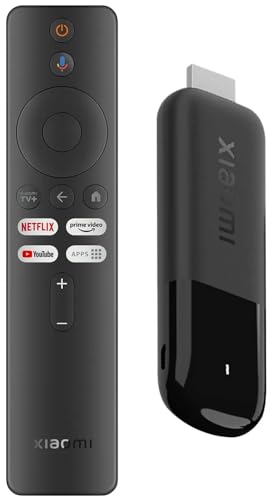
TL;DR: The Xiaomi TV Stick 4K 2nd Gen delivers 4K HDR video, Dolby Atmos sound and Wi‑Fi 6 in a pocket‑sized dongle for $69.99, offering solid performance for budget‑focused cord‑cutters.
This stick packs a quad‑core Cortex‑A55 CPU running at 2.5 GHz and an ARM G310 V2 GPU clocked to 850 MHz, backed by 2 GB of RAM and 8 GB of eMMC storage. The combination lets you stream 4K (3840 × 2160) content with Dolby Vision and HDR10+ support, while the built‑in Dolby Atmos, DTS:X and DTS HD decoders handle immersive audio.
At 0.0617 lb, the device is heavier than the ultra‑light Roku Ultra (≈0.04 lb) but far lighter than the Amazon Fire TV Cube (≈1.13 lb) and Nvidia SHIELD Pro (≈2.1 lb). It's 2 GB RAM matches the Roku Ultra, Roku Ultra LT, Fire TV Cube and ONN Android TV 4K, yet falls short of the Nvidia SHIELD’s 3 GB. Internal storage sits at 8 GB, which tops Roku Ultra’s 4 GB but trails the Fire TV Cube’s 16 GB and Nvidia SHIELD’s 16 GB; it aligns with the ONN’s 8 GB offering.
Everyday users praise the stick for lag‑free 4K streaming and a responsive Google TV interface, noting the portable form factor as a major convenience. Professional reviewers call its performance “exceptionally smooth” for a device of this size, highlighting the 80 % CPU boost and 150 % GPU rendering increase over the previous generation. The absence of an AI super‑resolution feature and a wired Ethernet port are the most common criticisms.
Pros
Cons
Best for: Entry‑level buyers or those on a tight budget
Avoid if: You need advanced features or professional‑grade performance
“pretty much the same spec as we usually get on larger TV boxes”
“absolutely crazy smooth”
Breakdown
Amazon Fire TV Cube
Pros
Nvidia SHIELD Pro
Pros
Cons
Roku Ultra
Pros
Roku Ultra LT
Pros
Based on scoring data and product specs
Personalized picks
Best Overall Pick
Amazon Fire TV Cube
Best OverallBest for: Buyers willing to invest in a proven, high-quality option
Nvidia SHIELD Pro
Best for: Buyers willing to invest in a proven, high-quality option
$199.00+$89.01 vs winner
Skip Xiaomi TV Stick 4K 2nd Gen Black if…
You need advanced features or professional-grade performance
Amazon Fire TV Cube takes the top spot thanks to its strong Dolby Atmos support, 4K 60 fps playback and an extensive feature set for $99.99. It ships with a 4K‑compatible HDR suite that includes Dolby Vision and HDR10+, and its Wi‑Fi 6E (802.11ax) keeps streaming smooth even on busy networks. The 4.4‑star rating from 15,796 reviewers shows broad user satisfaction, while the HDMI 2.1 port with eARC ensures high‑quality audio delivery.
The Nvidia SHIELD Pro earns runner‑up status if you want a gaming‑ready streaming box. Its 256‑core NVIDIA GPU, AI‑enhanced upscaling to 4K 60 fps, and built‑in GeForce NOW support turn the device into a low‑latency cloud‑gaming hub. With 3 GB RAM, Dolby Atmos audio and a gigabit Ethernet port, it handles demanding titles and high‑fidelity sound without breaking a sweat.
For tighter budgets, the ONN Android TV 4K at $35.99 offers a solid entry point with basic 4K streaming. The Roku Ultra at $79.00 balances price and performance, delivering a familiar interface and reliable HDR support for most households. If you’re after the most premium experience, the Nvidia SHIELD Pro remains the go‑to choice for gamers and power users who need extra processing muscle.
Pick the Amazon Fire TV Cube now and enjoy Dolby Atmos streaming without compromise.
The Xiaomi TV Stick 4K 2nd Gen is the smallest, measuring just 40 mm × 90 mm × 165 mm and weighing only 28 g, making it ideal for tight spaces. If you need built‑in speakers and an IR extender, the Amazon Fire TV Cube is still very compact at 86 mm × 77 mm × 86 mm and 513 g.
No reviews yet — be the first to share your experience.
Please sign in to leave a review