Rankings
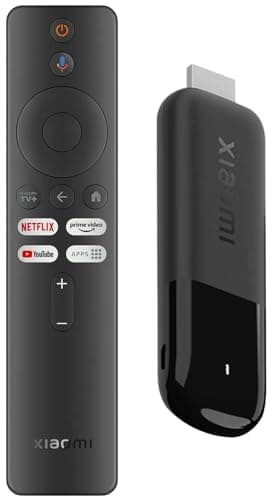
The Xiaomi TV Stick 4K (2nd Gen) offers a powerful quad-core processor, Wi-Fi 6, and premium Dolby Vision/Atmos support in a tiny form factor. Its main trade-offs are the absence of an Ethernet port and limited internal storage. Best suited for travelers and budget-conscious cord-cutters who prioritize smooth 4K playback and voice control.
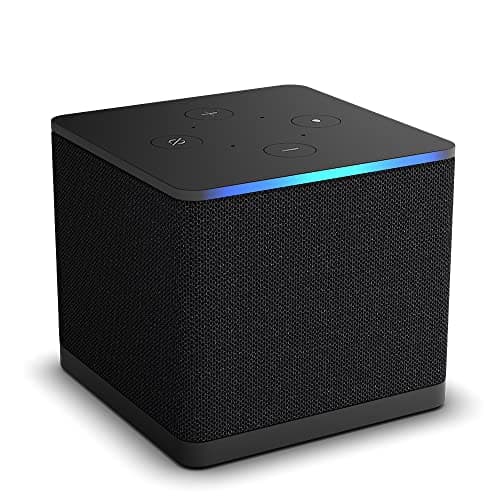
The Amazon Fire TV Cube is a hands-free 4K Ultra HD player with built-in Alexa, HDMI input and support for Dolby Vision and Dolby Atmos. Its drawbacks include a bulkier form factor, lack of gaming-focused features like VRR/ALLM, and occasional ad-heavy UI. Best suited for Alexa-centric households that want seamless voice control and premium video/audio.
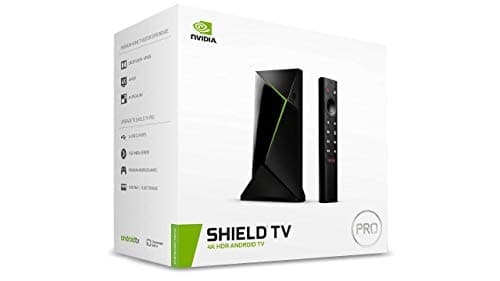
The NVIDIA SHIELD TV Pro is a high-performance Android TV box with AI upscaling, Dolby Vision/Atmos and GeForce NOW cloud gaming, offering a feature-rich home-theater experience. Its limitations include modest internal storage, lack of AV1 support and a bulkier chassis. Best for power users and gamers who need expandable storage and top-tier performance.
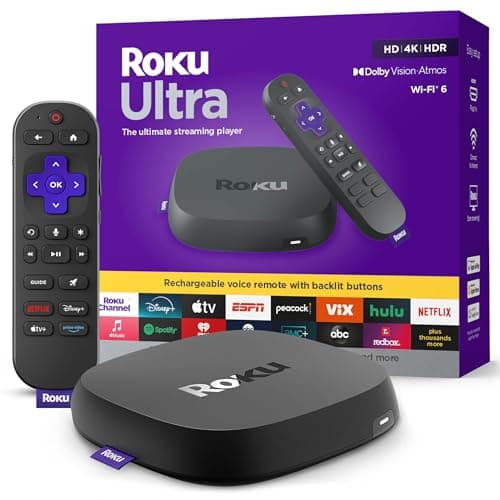
The Roku Ultra 2024 is Roku's fastest streaming player, delivering 4K HDR10+/Dolby Vision video, Dolby Atmos audio and a premium rechargeable voice remote. Trade-offs include the lack of Apple AirPlay/HomeKit and a barrel-style power connector that some users find inconvenient. Best for users who want top-tier performance and premium features in a Roku ecosystem.
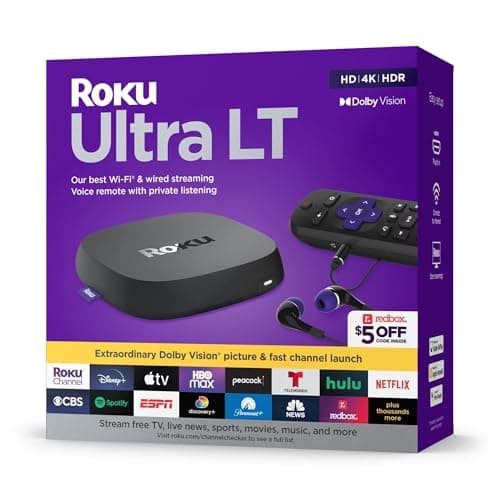
The Roku Ultra LT (2023) delivers full-size Roku Ultra performance in a compact form, featuring Ethernet, Dolby Vision HDR and a voice remote with private-listening headphones. Its main compromises are the absence of a USB port and occasional Wi-Fi reliability issues. It suits budget-conscious 4K TV owners who value wired stability and a robust remote experience.
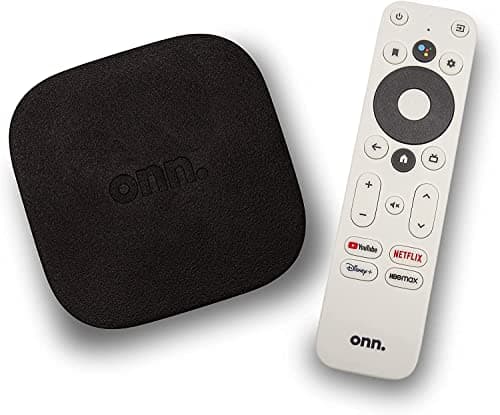
The ONN Android TV 4K UHD device provides 4K HDR with Dolby Vision and Dolby Atmos, a Google Assistant voice remote, and built-in Chromecast. Its modest 2 GB RAM, lack of Ethernet, and older Android TV 10 OS limit performance and future-proofing. Suitable for budget-friendly cord-cutters who prioritize the Google TV ecosystem over premium specs.
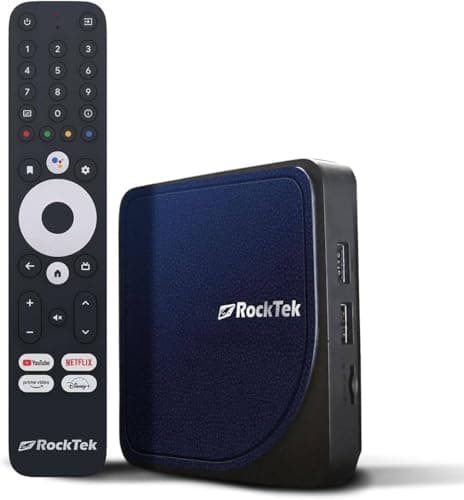
The RockTek G2 is a feature-rich Android TV 14 box delivering 4K HDR10+, Dolby Vision, Dolby Atmos and fast Wi-Fi 6 plus Gigabit Ethernet, all controlled via a voice-enabled Bluetooth remote. However, its non-certified Android firmware and thermal throttling can affect app compatibility and sustained performance. It targets budget-conscious viewers who prioritize advanced video/audio codecs and wired connectivity.
| Attribute | | | | | | | |
|---|---|---|---|---|---|---|---|
2 GB | 3 GB | 2 GB | 2 GB | 2 GB | 4 GBbest | 2 GB | |
16 GB | 16 GB | 4 GB | — | 8 GB | 32 GBbest | 8 GB | |
| ↓ lower better | 513 g | 250 g | 18 gbest | 167 g | 340 g | — | 28 g |
| ↓ lower better | — | 7.5 W | 3.5 Wbest | — | — | 10 W | — |
2 countbest | 1 count | 1 count | 1 count | 1 count | 1 count | 1 count | |
60 Hzbest | 60 Hzbest | — | 60 Hzbest | — | 60 Hzbest | 60 Hzbest | |
1 years | 1 years | 2 yearsbest | 1 years | — | 1 years | 1 years |
Click an attribute name to sort · Green = best, red = worst (relative to this comparison)
| Attribute | | | | | | | |
|---|---|---|---|---|---|---|---|
Performance(3) | |||||||
RAM (GB) | 2 GB | 3 GB | 2 GB | 2 GB | 2 GB | 4 GB | 2 GB |
Processor | Octa-core 2.0 GHz | NVIDIA Tegra X1+ | — | Quad-core ARM Cortex A55/A53 1.5GHz | Amlogic S905Y2 | Amlogic S905X4-K Quad-core ARM Cortex-A55 @ 2.0GHz | Quad-core Cortex-A55 2.5GHz |
GPU | ARM Mali G52-MP2 800 MHz | 256-core NVIDIA GPU | — | — | — | ARM Mali-G31 MP2 | ARM G310 V2 |
Storage(1) | |||||||
Internal Storage (GB) | 16 GB | 16 GB | 4 GB | — | 8 GB | 32 GB | 8 GB |
Connectivity(3) | |||||||
Wi‑Fi Standard | Wi‑Fi 6E | Wi‑Fi 5 | Wi‑Fi 6 | Wi‑Fi 5 | Wi‑Fi 5 | Wi‑Fi 6 | Wi‑Fi 6 |
Bluetooth Version | Bluetooth 5.0 | 5.0 | — | — | 4.0 | 5.0+ | 5.2 |
Ethernet Port | true | true | true | true | false | true | false |
Power(1) | |||||||
Power Consumption (W) | — | 7.5 W | 3.5 W | — | — | 10 W | — |
Ports(1) | |||||||
HDMI Ports (count) | 2 count | 1 count | 1 count | 1 count | 1 count | 1 count | 1 count |
Software(1) | |||||||
Operating System | Fire OS 7 | Android 11 | — | Roku OS | Google TV | Android TV 14 (modified, non-certified) | Google TV |
Display(1) | |||||||
Maximum Video Resolution | 4K UHD | 4K | 4K | 4K 3840x2160 60fps | 4K | 3840x2160 | 4K 3840x2160 |
Controls(1) | |||||||
Remote Type | Alexa Voice Remote | Hands‑free Google Assistant remote | Rechargeable Voice Remote Pro with backlit buttons | Voice remote with private‑listening headphones | IR with voice | Bluetooth/IR remote with voice search, backlit keys | Bluetooth voice remote with Google Assistant |
Audio(1) | |||||||
Supported Audio Formats | Dolby Atmos, Dolby Audio/MAT, DTS, DTS-HD, AAC-LC, AC3, eAC3, FLAC, MP3, PCM/Wave, Vorbis | Dolby Atmos, DTS‑X, Dolby Digital Plus | — | — | Dolby Atmos, Dolby Digital Plus | Dolby Atmos, DTS-HD | MP3, AAC, RM, FLAC |
Build & Design(2) | |||||||
Weight (g) | 513 g | 250 g | 18 g | 167 g | 340 g | — | 28 g |
Dimensions (L×W×H) (mm) | 77 x 86 x 86 mm mm | 6.26 x 3.86 x 1.02 inches mm | 4.9 x 5.0 x 1.0 inches mm | 124.4×25.4×127 mm mm | — | 25.4x114.3x114.3 mm mm | 90×40×165 mm mm |
General(1) | |||||||
Warranty (years) | 1 years | 1 years | 2 years | 1 years | — | 1 years | 1 years |
Products in the top-left offer the best value (high score, low price).
Professional reviewers praise the Fire TV Cube for its powerful octa-core CPU, comprehensive HDR and Dolby Atmos support, and the unique hands-free Alexa with HDMI input that simplifies switching between streaming and live sources. However, they note the mediocre SDR upscaling, lack of gaming-focused features like VRR/ALLM, and a bulkier form factor compared to slimmer competitors.
Everyday users consistently highlight the convenience of hands-free Alexa, rapid app launches, and excellent 4K/Dolby Vision picture quality, while expressing frustration over intrusive ads, occasional voice-recognition hiccups, and sub-par upscaling of non-4K content.
“best for PC game streaming to TV”
“"Fast app loading, vivid colors, easy voice control." - User reviews (5/5)”
“Excellent 4K@60fps playback with Dolby Vision/HDR10+/AV1 support and auto frame rate/color space matching”
Roku Ultra suits users focused on a vast streaming library and ease of use; SHIELD Pro excels for those needing superior performance and gaming.
Fire TV Cube is ideal for Alexa-centric households; SHIELD Pro is the choice for gamers and media enthusiasts demanding top-tier performance.
Choose Ultra 2024 for top performance and premium remote; Ultra LT is a budget option for basic 4K streaming.
Choose Shield Pro for premium gaming, AI upscaling and guaranteed app certification; choose Rocktek G2 for budget 4K streaming with AV1 support.
Professional reviewers commend the SHIELD TV Pro as a high-performance media powerhouse, emphasizing its AI upscaling, 25% faster Tegra X1+ CPU, dual USB expandability, and robust GeForce NOW 4K cloud gaming. However, they note the hardware design has not changed since 2019 and that it lacks newer interfaces like HDMI 2.1 and AV1 decoding, making it feel a step behind the latest competitors.
Everyday users praise the device for smooth 4K streaming, excellent Plex integration, reliable NVIDIA firmware updates, and powerful GeForce NOW gaming. Recurring complaints focus on the limited 16 GB internal storage, occasional Wi-Fi drops, voice-control glitches, lack of AV1 support, and a setup process that can be daunting for non-technical owners.
Professional reviewers hail the Roku Ultra 2024 as the most powerful and fastest Roku device, emphasizing its lightning-fast interface, seamless 4K/Dolby Vision/HDR10+ playback, and premium remote that together deliver a cinematic experience for any living-room setup.
Everyday users consistently praise the ultra-fast app launches, smooth 4K streaming over Wi-Fi 6, and the convenience of the Voice Remote Pro with its finder and headphone jack, while recurring complaints focus on shipping limitations, the barrel-style power connector, and occasional Wi-Fi range concerns.
Professional reviewers commend the Ultra LT for delivering a full-size Roku Ultra experience in a smaller, cheaper package, especially noting its solid 4K 60 fps performance, Dolby Vision support, and Ethernet stability. However, they flag the missing USB port and limited GPU details as notable compromises.
Everyday users consistently highlight the device's sharp 4K picture, fast UI, and convenient voice remote with headphones, while recurring complaints focus on the lack of USB connectivity and occasional Wi-Fi reliability issues.
Professional reviewers agree that the ONN 4K streaming box punches far above its weight class, delivering impressive 4K HDR picture quality, Dolby Atmos audio, and a responsive Google TV experience despite its modest hardware. They commend its value, fast boot times, and solid Wi-Fi performance, while noting the lack of Ethernet and limited RAM as the primary trade-offs.
Everyday users echo the reviewers' praise for price-to-performance, highlighting quick app loading, vibrant 4K streaming, and the convenience of the voice remote and built-in Chromecast. Recurring complaints focus on occasional lag, limited internal storage, no wired networking option, and a basic plastic build.
Professional reviewers commend the Rocktek G2 for its impressive 4K HDR and AV1 decoding, fast Wi-Fi 6 networking, and convenient voice-enabled remote, positioning it as a strong budget alternative to premium boxes. However, they caution that the non-certified Android fork, thermal throttling, and HDMI mis-labeling diminish its appeal for power users who need guaranteed app certification and advanced gaming features.
Consumers generally appreciate the G2's ability to deliver smooth 4K streaming, reliable casting, and high-quality audio without breaking the bank. Common praise centers on its codec support and network performance, while recurring complaints focus on software update irregularities, remote connectivity issues, and occasional heating during long sessions.
Professional reviewers praise the Xiaomi TV Stick 4K (2nd Gen) for delivering performance on par with much larger TV boxes, highlighting its smooth interface and substantial CPU/GPU improvements, while noting the lack of AI upscaling as the main drawback.
Everyday users consistently commend the device for its lag-free 4K streaming, portable form factor, and responsive UI, with few complaints aside from the missing AI super-resolution capability.
