DJI Mini 5 Pro
Its 2788 mAh battery gives the longest flight time in the class, delivering up to 36 minutes aloft.

DJI Mini 4K Combo
Ideal for budget‑conscious flyers who still want DJI reliability, it comes in at $389—about $370 less than the Mini 5 Pro.

Potensic ATOM
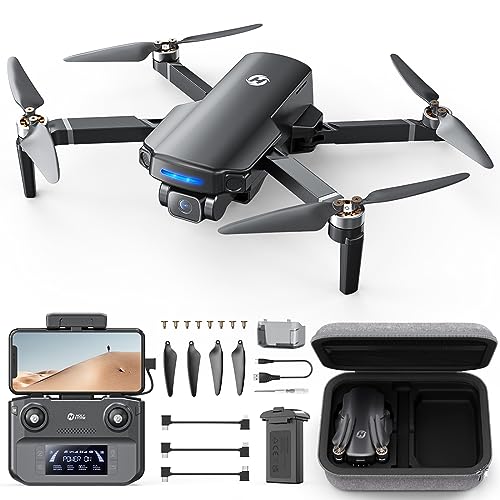
Stands out with a 15 W fast‑charge capability, letting you get back in the air quicker than the higher‑priced DJI models.
Also considered
TL;DR: The DJI Mini 4K Combo packs 4K video, a 31‑minute flight window and 10 km O2 transmission into a 0.54‑pound, sub‑250‑gram drone, but it carries a premium $389 price tag.
The standout spec is the 31‑minute max flight time on a single 2250 mAh battery, which tops the 18‑minute limit of the DJI Neo and outlasts the 20‑minute window of the Holy Stone HS360S. Coupled with a 100 Mbps video bitrate and a true 12 MP, 24 mm (35 mm‑equivalent) sensor, the Mini 4K delivers crisp 4K footage that beginners can capture without extra gear.
Compared with the other nine drones in this roundup, the Mini 4K is heavier than the ultra‑light DJI Neo (0.30 pounds) but still lighter than the Potensic ATOM (0.55 pounds). Its battery capacity sits just above the Potensic ATOM’s 2230 mAh cell and well beyond the Neo’s 1435 mAh pack, while the Potensic ATOM SE pushes a larger 2500 mAh battery at the cost of a bulkier frame. Transmission range reaches 10 km under FCC rules, surpassing the 6 km CE limit of the Mini 4K and far exceeding the 3 km range of the Holy Stone HS360S.
User feedback repeatedly praises the beginner‑friendly one‑tap takeoff/landing and reliable GPS Return‑to‑Home, noting that most first‑time flyers feel confident after a single session. Professional reviewers highlight the DJI O2 transmission’s low interference and the 3‑axis mechanical gimbal’s ±0.01° vibration stability, which together keep footage steady even in 10.7 m/s (≈38 kph) winds. The downside that surfaces in both consumer and expert commentary is the lack of obstacle‑avoidance sensors and the modest f/2.8 aperture, which limits low‑light performance despite the 12 MP sensor.
Pros
Cons
Best for: Buyers willing to invest in a proven, high‑quality option — the DJI Mini 4K Combo offers Battery Capacity: 2250 mAh
Avoid if: You're shopping on a tight budget — it's priced at $389.00
TL;DR: The Holy Stone HS210 Green is a lightweight, 38 g nano‑drone with a 48.8 m control range and three batteries that together give up to 21 minutes of flight, ideal for kids and beginners.
The HS210 ships with three 250 mAh batteries that together provide a total flight time of 21 minutes, while each individual charge delivers about 7 minutes aloft. At just 38 g (0.08 lb) and a compact 30 mm height by 80 mm length and width, it’s easy to toss into a backpack for indoor play. Its 2.4 GHz controller reaches roughly 48.8 m, giving enough room for beginners to practice without losing the link.
Compared with the other nine drones in this roundup, the HS210 is notably lighter than the Holy Stone HS110D, which weighs about 0.33 lb. However, its per‑battery flight time of 7 minutes falls short of the HS110D’s 10‑minute claim, even though the HS110D’s two‑battery pack nets a similar total of around 20 minutes. The HS210’s 48.8 m range is modest next to the longer ranges listed for higher‑end models, but it’s adequate for the indoor‑focused use cases this drone targets.
Users consistently praise the drone’s durable construction, especially the full‑propeller guards that keep little hands safe. Beginner‑friendly features like auto‑hover, headless mode, and 3‑D flip tricks are highlighted as easy to master. On the downside, reviewers note the short 7‑minute bursts per charge, the 40–60 minute charging window for each battery, and a camera that produces grainy 1080p footage. A few owners also report occasional signal interference, which can be frustrating in crowded Wi‑Fi environments.
Pros
Cons
Best for: Entry-level buyers or those on a tight budget — the Holy Stone HS210 Green offers Capacity: 250 mAh
Avoid if: You need advanced features or professional‑grade performance
“perfect for beginners”
“easy to fly indoors.”
TL;DR: The Force1 U77 is a $22.99 indoor drone with hand‑gesture control, 360° obstacle avoidance, and a 380 mAh battery that delivers about 6 minutes of flight per charge.
What really sets the Force1 U77 apart is its hand‑gesture control system, which lets you launch and steer the drone by simply moving your palm—no remote or app required. The built‑in 360° motion sensors provide obstacle avoidance and ceiling detection, while a blue‑and‑green LED ring plus a crystal dome project kaleidoscopic patterns for a lively visual display. Power comes from a 380 mAh, 3.7 V Li‑Po battery that charges in 60 minutes and fuels a 6‑minute flight.
At $22.99, the U77 lands firmly in the budget tier, making it cheaper than many of the higher‑priced peers in this roundup. Its weight range of 45.4–141.7 g means it’s heavier than the Holy Stone HS190’s 35 g frame, yet still light enough for indoor play. The 6‑minute flight time sits squarely within the HS190’s 5‑7 minute window, while the 60‑minute charge cycle is longer than the HS190’s 40‑minute charge time. Unlike some competitors, the U77 includes 360° obstacle avoidance, a feature not listed for all other models.
Reviewers consistently praise the intuitive hand‑sensor operation and the eye‑catching LED light show, calling it perfect for family fun and STEM demonstrations. Professional reviewers highlight the advanced sensor array that helps prevent ceiling collisions, a notable safety edge. The most common complaints focus on the brief 6‑minute flight window and the relatively long charging period, as well as the fact that the internal battery isn’t user‑replaceable, limiting extended sessions.
Pros
Cons
Best for: Shoppers on a tight budget who want the most for their money — the Force1 U77 offers Battery Capacity: 380 mAh
Avoid if: You need advanced features or professional‑grade performance
“My 9-year-old loves it — so easy to use and doesn’t break when it hits the wall.”
“The lights are amazing — turns our living room into a mini planetarium.”
TL;DR: The Potensic ATOM packs a 2230 mAh battery, 15 W fast charging, and a sub‑250 g frame that folds to 88 × 143 × 58 mm, delivering solid performance for hobbyists willing to pay a premium.
The ATOM’s 2230 mAh battery paired with a 15 W charger means a full charge takes about 100 minutes, and the parallel charging hub can top‑off another unit in 78 minutes. At roughly 0.55 lb, the drone stays under the 250 g registration threshold while still offering a 219 mm diagonal span for stable flight.
Compared with the DJI Neo, the ATOM is heavier but boasts a significantly larger battery capacity, which should translate to longer airtime per charge. It also carries a higher price tag than the Neo, while its weight is about the same as the Potensic ATOM SE. Overall, it sits in the premium tier of the ten‑drone roundup.
Users repeatedly praise the long flight endurance and the convenience of the fast‑charging hub, noting that the compact folded size fits easily in a backpack. Professional reviewers highlight the smooth 3‑axis gimbal and the fact that the sub‑250 g weight avoids mandatory registration in many regions. The main criticisms focus on the absence of obstacle‑avoidance sensors and a fixed‑focus lens that limits close‑up shots.
Pros
Cons
Best for: Performance-focused buyers and enthusiasts who want top specs and premium build quality — the Potensic ATOM offers Capacity: 2230 mAh
Avoid if: You're on a tight budget or only need basic functionality
TL;DR: The Holy Stone HS190 is a ultra‑light 35 g nano drone that folds into its controller, offers beginner‑friendly flight modes, but only manages 5–7 minutes of airtime per charge.
The standout spec of the HS190 is its featherlight build – the manufacturer lists the quadcopter at just 35 g (about 0.08 lb) and a compact 30 mm height with a 114 mm square footprint. Its fold‑into‑controller design means it literally fits in your pocket, and the included propeller guards add a layer of durability for novice pilots.
Compared with the other nine drones in this roundup, the HS190 sits at the low‑end of the price spectrum, a few dollars more than the Force1 U77 but well below the mid‑range Holy Stone HS210 and the higher‑end DJI models. It is lighter than the HS210’s 0.08 lb frame, yet its battery capacity of 220 mAh trails the Force1’s 380 mAh and the HS210’s 250 mAh, which translates to a slightly shorter 5–7 minute flight window versus the Force1’s 6 minutes and the HS210’s 7 minutes. Its transmitter range of 30–50 m is also modest next to the longer ranges listed for the larger drones.
User feedback repeatedly praises the HS190’s portability and the peace of mind provided by the spare propellers, propeller guards, and a propeller‑locking mechanism. Reviewers note that the altitude‑hold and headless modes make hovering almost effortless for children, while professional reviewers highlight the 6‑axis gyro stabilization and one‑key takeoff/landing as solid beginner features. The most common complaints focus on the brief 5–7 minute flight time and the drone’s inability to cope with outdoor wind, as well as the lack of any camera or GPS capability.
Technically, the HS190 packs a 6‑axis gyro, three speed settings (low, medium, high), 360° rapid spin capability, and LED navigation lights. It supports forward, backward, left and right 3D flips, and offers one‑key return in headless mode. The package ships with a 2.4 GHz transmitter, four spare propellers, propeller guards, a propeller crowbar, USB charging cable, screwdriver and user manual, ensuring you have the basics to get flying right out of the box.
Pros
Cons
Best for: Entry-level buyers or those on a tight budget — the Holy Stone HS190 offers Battery Capacity: 220 mAh
Avoid if: You need advanced features or professional‑grade performance
TL;DR: The Potensic ATOM SE offers 4K video, a 31‑minute flight window, and a 4 km transmission link in a sub‑250 g foldable package, making it a solid mid‑range choice for beginners.
The drone packs a 12 MP sensor with a wide 118° field of view and electronic image stabilization, delivering 4K video without a mechanical gimbal. Its 2500 mAh battery powers up to 31 minutes of flight, and the whole unit weighs just 0.55 pounds, keeping it under the 249 g regulatory threshold.
Compared with the DJI Neo, the ATOM SE is heavier but offers a dramatically longer flight time (31 minutes vs. 18 minutes) and a far greater transmission range (4 km vs. the Neo’s shorter range). It also outlasts the Holy Stone HS360S, which tops out at 20 minutes, while weighing a bit more than that model. The price sits slightly above the Neo’s, positioning the ATOM SE as a pricier but feature‑rich option in the mid‑range tier.
Users repeatedly praise the long endurance and the convenience of the foldable design, noting that the extra battery included feels like good value. However, many point out the lack of a 3‑axis gimbal, which can make footage wobble in breezy conditions, and they mention the mandatory app registration as a minor hurdle. Professional reviewers echo these points, highlighting the solid plastic chassis and reliable 4 km PixSync 2.0 link, but they caution that the 1.5‑hour charging time is slower than some competing fast‑charge solutions.
From a technical standpoint, the ATOM SE supports GPS, GLONASS, Galileo and BeiDou for precise positioning, and its optical flow system helps indoor stability. Brushless motors provide consistent thrust, while the transmission latency sits at 200 ms, delivering responsive control even at the maximum horizontal speed of 16 m/s.
Pros
Cons
Best for: Most users looking for a well‑reviewed, reliable mainstream option — the Potensic ATOM SE offers Capacity: 2500 mAh
Avoid if: You're shopping on a tight budget — it's priced at $198.99
TL;DR: The Holy Stone HS360S offers 4K video, a 20‑minute flight, and a 10,000‑ft control range at a $167.99 price, making it a solid mid‑range choice for hobbyists.
The standout spec on the HS360S is its 4K UHD camera (3840 × 2160) paired with an 85° wide‑angle lens that can tilt up to 90° (0° to –90°). Coupled with a control range of 3048 meters (10,000 ft) and a 500‑meter FPV live‑view distance, you can capture high‑resolution footage from a considerable distance. The drone weighs about 0.47 lb, keeping it portable while still sturdy enough for stable flight.
Compared with the other nine drones in this roundup, the HS360S is heavier than the DJI Neo (≈0.30 lb) but lighter than the Potensic ATOM SE (≈0.55 lb). Its 20‑minute flight time exceeds the DJI Neo’s 18‑minute claim, and the 3048‑meter range dwarfs the typical sub‑100‑meter ranges seen in many entry‑level models. While the Potensic ATOM SE lists a 118° field of view, the HS360S’s 85° lens still delivers crisp 4K video, and its dual intelligent batteries give you up to two flight sessions before recharging.
Users consistently praise the HS360S for its ease of use, especially the one‑key takeoff/landing and GPS‑assisted return‑to‑home, which many beginners find reassuring. Professional reviewers note the digital stabilization via a shock‑absorption holder, though they also point out the lack of a mechanical 3‑axis gimbal, which can lead to slightly shakier footage. A recurring complaint involves occasional battery defects and occasional hiccups with the return‑to‑home function, so keeping an eye on battery health is advisable.
Beyond the camera, the HS360S packs brushless motors, altitude hold, and a multi‑sensor system for stable hovering. The 5 GHz FPV transmission helps maintain a clear live feed up to 500 meters, and the drone supports up to a 32 GB TF card for ample storage. Its foldable design (173 × 104 × 56 mm folded) makes it travel‑friendly, and the included accessories—two intelligent batteries, extra propellers, and a carrying bag—add real value.
Pros
Cons
Best for: Most users looking for a well‑reviewed, reliable mainstream option — the Holy Stone HS360S offers Charging Time per Battery: 5–7 hours
“Easy to use for first-time pilots”
“Great value for the price”
TL;DR: The DJI Mini 5 Pro packs a 1‑inch 50 MP sensor, 4K 120 fps video and up to 36 minutes of flight in a sub‑250 g frame, making it the most capable mini drone of 2026.
What really sets the Mini 5 Pro apart is its 1‑inch 50 MP CMOS sensor paired with 4K video at 120 fps and a Li‑DAR front‑facing obstacle sensor. The camera can zoom 2× digitally while maintaining a 84° field of view and a 24 mm (35 mm‑equiv) focal length, delivering professional‑grade footage from a pocket‑sized platform.
Compared with the other nine drones in this roundup, the Mini 5 Pro is a touch heavier than the DJI Mini 4K Combo’s 0.54 lb frame, but it offers a longer flight envelope—36 minutes versus the Combo’s 31 minutes on a single battery. Its 50 MP stills dwarf the 12 MP sensors found in the Potensic ATOM, Holy Stone HS360S and DJI Neo, and its Li‑DAR avoidance isn’t listed for any competitor.
Reviewers consistently praise the drone’s image quality, noting the 1‑inch sensor’s dynamic range and low‑light performance. Users also love the convenience of 42 GB internal storage and the bright 700‑nit RC‑2 screen, which stays readable in bright sunlight. Professional feedback highlights the high‑bitrate 150 Mbps 4K video and the visual‑navigation return‑to‑home that works without GPS.
Technical extras round out the package: the transmission system reaches up to 20 km under FCC rules, the internal storage holds plenty of 4K footage, and the gimbal offers a 225° roll rotation. The drone can ascend at 10 m/s, cruise at 18 m/s in sport mode, and handle winds up to 12 m/s, all while operating between –10 °C and 40 °C.
Pros
Cons
Best for: Performance‑focused buyers and enthusiasts who want top specs and premium build quality — the DJI Mini 5 Pro offers Battery Capacity: 2788 mAh
Avoid if: You're shopping on a tight budget — it's priced at $759.00
Breakdown
DJI Mini 5 Pro
Pros
Cons
DJI Mini 4K Combo
Pros
Cons
Potensic ATOM
Pros

Potensic ATOM SE
Pros
Cons
Based on scoring data and product specs
Personalized picks
Best Overall Pick
DJI Mini 5 Pro
Best OverallBest for: Performance-focused buyers and enthusiasts who want top specs and premium build quality — the DJI Mini 5 Pro offers Battery Capacity: 2788 mAh
DJI Mini 4K Combo
Best for: Buyers willing to invest in a proven, high-quality option — the DJI Mini 4K Combo offers Battery Capacity: 2250 mAh
$269.00-$490.00 vs winner
Skip Holy Stone HS190 if…
You need advanced features or professional-grade performance
We crown the DJI Mini 5 Pro as the clear winner. It tips the scales at just 0.55 lb (249.9 g) while offering up to 36 minutes of flight on a single charge. Its 50 MP 1‑inch CMOS sensor captures 4K video at 120 fps, and the hybrid 2× zoom adds flexibility. With omnidirectional LiDAR‑enabled obstacle sensing and a 20 km FCC transmission range, it delivers the most capable, safe flying experience in the sub‑250‑gram class.
The runner‑up, the DJI Mini 4K Combo, shines when you need extended airtime without breaking the bank. Each 2250 mAh battery gives you 31 minutes of flight, and the kit supports up to three batteries for a total of 93 minutes. It records 4K video at up to 30 fps, stays under the 249 g registration threshold, and costs $389, making it ideal for hobbyists who value longer sessions over the ultra‑high‑end specs of the Mini 5 Pro.
For tighter budgets, the Force1 U77 stands out as an ultra‑low‑price entry point at $22.99, perfect for casual flyers. In the mid‑range, the Potensic ATOM SE offers a solid feature set for under $200, delivering good value without sacrificing core performance.
Pick the DJI Mini 5 Pro today and start shooting professional‑grade aerial footage right away.
Please sign in to leave a review
No reviews yet. Be the first to review!