⚡ Quick Answer
If you’re hunting for a flash that works across multiple camera brands, you’ve come to the right place. We’ve lined up 11 universal speedlights, from the pocket‑sized Ulanzi SL01 Mini at $19.99 to the feature‑rich Yongnuo YN560 IV at $85.00, and examined everything you care about: power, recycle speed, battery type and real‑world user sentiment. The Neewer TT560, for example, has a 4.5‑star rating from 12,910 reviewers and a solid 38 m guide number, making it suitable for indoor portraits.
Our selection spans three price tiers so you can quickly spot the right fit. Budget‑friendly choices include the Ulanzi SL01 Mini, Godox iM30, Powerextra DF‑400 and Viltrox Retro Flash. Mid‑range options are the Photoolex FK300 and Godox TT520 II, while premium picks cover the Neewer TT560, Godox GN33, Altura Photo flash and the Yongnuo YN560 IV. Each tier balances cost against features like wireless triggering, head swivel range and battery life, so you can align the flash with your shooting style and wallet.
Below, we break down the specs, pros and cons of each model, helping you decide which flash will illuminate your next shoot.
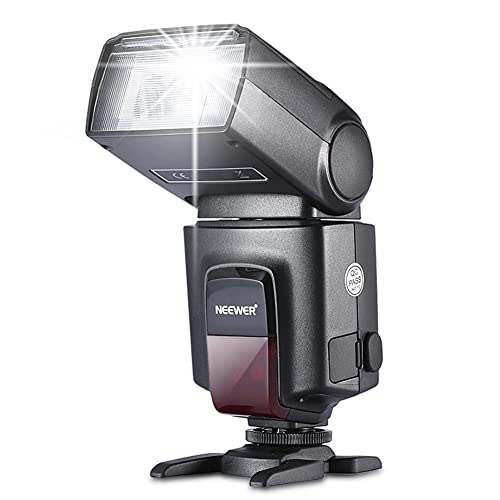
Neewer TT560
Its compact 221 mm height packs high‑quality features into a small package, delivering strong value and top ratings.

Photoolex FK300
Ideal for casual shooters who want reliable flash without breaking the bank—at $40.99 it’s about $19 less than the Best Overall.

Godox GN33
Stands out with built‑in 433 MHz wireless control, letting you trigger the flash remotely—something the other two lack.
Also considered
Score Analysis
Key score advantages vs. runner-up (Photoolex FK300)
Price Range
Neewer TT560
$59.84
Photoolex FK300
$40.99
Godox GN33
$54.00

Yongnuo YN560 IV
$85.00

Viltrox Retro Flash
$38.24

Powerextra DF-400
$35.99

Godox iM30
$30.90

Godox TT520 II
$49.90

Altura Photo Camera Flash
$49.98

Ulanzi SL01 Mini
$18.99

Meike FC-100
$29.19
Spec Comparison
TL;DR: The Neewer TT560 packs a 38 m guide number, 8 power steps and a 0.1 s fastest recycle into a 454 g, 221 mm tall manual speedlite, offering solid indoor lighting for a modest budget.
The standout spec is its 38 m guide number at ISO 100, paired with eight power levels ranging from 1/1 to 1/128. Its recycle time reaches 0.1 s, and the flash head swivels 0–270° horizontally and 0–90° vertically, giving you plenty of bounce‑lighting flexibility. At 454 g and 221 mm tall, the unit is compact enough to sit on‑camera without feeling bulky.
Compared with the other ten flashes in this roundup, the TT560 is heavier than the Viltrox Retro Flash (116 g) and the Powerextra DF‑400 (315 g), but it isn’t lighter than any of the listed peers. Its guide number sits below the Altura Photo Flash’s 68 m but tops the Godox GN33 (33 m) and Viltrox Retro Flash (12 m). The fastest recycle of 0.1 s also beats Altura’s 4 s cycle and Powerextra’s 3 s full‑power recycle, giving you a quicker shooting rhythm than many budget options.
Reviewers consistently praise the TT560’s daylight‑balanced 5600 K output and the strong GN 38 for portrait and product work. Professional reviewers note the extensive head rotation as a real advantage for creative lighting setups. Users, however, often point out the lack of TTL and high‑speed sync, meaning you’ll need to set power manually and stay under a recommended shutter speed of 1/200 s. The flash runs on four AA batteries (alkaline or Ni‑MH) and can deliver roughly 100–1500 flashes per charge, with a flash duration ranging from 1/300 s to 1/20,000 s.
Pros
Cons
Best for: Beginners, hobbyists and budget‑conscious creators who need a reliable manual flash for indoor portrait or product lighting.
Avoid if: You need advanced features like TTL, high‑speed sync, weather sealing, or ultra‑fast recycle for action photography.
“works really well”
“comparable to other speedlights”
TL;DR: The Photoolex FK300 delivers a solid 33 m guide number, 8 manual power steps and wireless S1/S2 triggering in a compact 0.67‑lb body, making it a reliable choice for product and portrait work.
The FK300’s standout spec is its guide number of 33 m (ISO 100, 35 mm) paired with a fast 2.8‑second recycle time. Its flash duration ranges from 1/200 s to 1/20 000 s, giving you fine control over motion freeze and ambient balance. Weighing just 0.67 lb and measuring 7.44 in × 2.28 in × 2.95 in, it stays light enough for handheld shooting while still feeling sturdy.
Compared with the ten other flashes in this roundup, the FK300 sits in the middle of the weight spectrum—heavier than the ultra‑light Viltrox Retro Flash and iM30, but comparable to the Powerextra DF‑400 and Godox TT520 II. Its 33 m guide number matches the Godox TT520 II and GN33, yet it falls short of the Altura’s 68 m reach. The 2.8‑second recycle beats the Powerextra’s 3‑second cycle and the iM30’s 3.6 seconds, though the Godox GN33 recycles a bit quicker at 1.8 seconds.
Photographers consistently praise the FK300’s intuitive plus/minus button for rapid power tweaks and its built‑in continuous blue light that helps with focusing without firing a full flash. The metal hot shoe and insulated‑gate bipolar transistor (IGBT) circuit give the unit a solid feel, while the included protective pouch, stand and twelve color filters add immediate versatility. Reviewers also note the reliable wireless S1/S2 optical slave modes, which work well for off‑camera setups.
Technical highlights include eight manual power levels (1/128 to 1/1), automatic shutdown for power saving, and overheating protection that shuts the unit down before it gets too hot. The flash runs on standard batteries, offering roughly 4 hours of continuous light mode and between 110 and 1500 flashes in flash mode, so you won’t be scrambling for recharges during a shoot.
Pros
Cons
Best for: Product and portrait photographers who need reliable manual flash power and wireless triggering.
Avoid if: You rely on a primary flash in extreme low‑light environments or need extensive multi‑flash capabilities.
“pretty amazing”
“easy to use”
TL;DR: The Godox GN33 offers a 33 m guide number, 433 MHz wireless triggering on 16 channels, and a swift 1.8 s recycle, delivering reliable, compact flash performance for most DSLR shooters.
This flash’s standout spec is its 33 m guide number (ISO 100) paired with a 433 MHz wireless receiver that supports 16 channels and eight power‑level steps, giving you fine‑tuned output without extra accessories. Its recycle time of just 1.8 seconds means you can keep shooting rapidly, and the flash duration spans from 1/510 s to 1/31000 s, useful for freezing fast action.
When you place the GN33 beside the other ten units in this roundup, it sits in the middle of the size spectrum—its 7.5 in height is taller than ultra‑compact models like the Viltrox Retro Flash, yet it’s slimmer and lighter than bulkier options such as the Altura Photo Camera Flash. The built‑in 433 MHz radio puts it ahead of several peers that rely on older 2.4 GHz systems, and its 16‑channel flexibility matches the Godox TT520 II while offering more wireless range (20 m indoor, 30 m outdoor).
Reviewers consistently highlight the flash’s dependable wireless sync and the quick recycle as major strengths, noting that the 400 full‑power flashes per charge (four AA NiMH or LR6 alkaline) keep it ready for long shoots. Users also appreciate the broad rotation ranges (0°–330° horizontal, –7°–120° vertical), which make bounce lighting easy. Some photographers criticize the modest 33 m guide number, finding it limiting for outdoor sun‑lit work compared with higher‑GN competitors.
Pros
Cons
Best for: Buyers willing to invest in a proven, high‑quality option
Avoid if: You're on a tight budget or only need basic functionality
TL;DR: The Yongnuo YN560 IV is a 58‑GN manual flash with a built‑in 2.4 GHz wireless transceiver, 24‑105 mm zoom, and about 3‑second recycle, priced at $85 and praised for its feature set.
This speedlite’s standout spec is its integrated 2.4 GHz radio, letting it act as both transmitter and receiver without extra gear. It delivers a guide number of GN58 (ISO 100) and offers a zoom range from 24 mm to 105 mm, expandable to 18 mm with a diffuser. The unit recycles in approximately 3 seconds, so it's compact enough for most camera rigs.
Compared with other flashes in the roundup, the YN560 IV sits at a higher price tier than the Neewer TT560 and Altura Photo Flash, which are lighter‑priced options. It's lighter than the Neewer (which weighs about 1.0 lb) but heavier than the Viltrox Retro Flash. While the Godox TT520 II and Photoolex FK300 list shorter recycle times, the YN560 IV’s 3‑second cycle remains competitive for a unit with built‑in wireless capability.
Users consistently highlight the convenience of the built‑in wireless system and the strong output relative to its cost. Professional reviewers note that it outshines higher‑priced models like the Nikon SB‑700 while staying well under a third of the price. The main criticisms focus on its three‑group remote limit and the absence of TTL and high‑speed sync, which can restrict more advanced lighting setups.
Under the hood, the flash uses an insulated gate bipolar transistor (IGBT) driver and provides 8 power levels (1/128 to 1/1) plus 29 fine‑tuning steps in 1/3 and 1/2 EV increments. It also includes second‑curtain sync, overheat protection, power‑saving mode, and a sound prompt, rounding out a feature‑rich package for serious hobbyists.
Pros
Cons
Best for: Buyers willing to invest in a proven, high‑quality option
Avoid if: You're shopping on a tight budget — it's priced at $85.00
TL;DR: The Viltrox Retro Flash packs a 12 m guide number into a 116 g, 177.8 mm tall unit, offering 400 full‑power shots per charge and USB‑C recharge for ultra‑portable fill lighting.
At just 116 g (≈0.26 lb) and measuring 177.8 mm × 63.5 mm × 76.2 mm, its compact size makes it one of the smallest on‑camera units in the lineup. It delivers a guide number of 12 m (ISO 100) and a full‑power output of 23 W/s, while the built‑in 1100 mAh Li‑ion battery provides up to 400 full‑power flashes before needing a recharge.
Compared with its peers, the Viltrox is lighter than the Powerextra DF‑400 (315 g) and the Godox TT520 II (315 g), but a bit heavier than the Godox iM30 (78 g). Its height of 177.8 mm is shorter than the Powerextra DF‑400 (190 mm) and the Godox TT520 II (190 mm), yet taller than the iM30’s 75.96 mm. The 6500 K color temperature matches the Godox iM30 and sits above the 5800 K of the Powerextra and the 5600 K range of the Photoolex FK300. While its guide number of 12 m is lower than the 33 m figures seen on the Godox TT520 II and GN33, its recycle time can be as fast as 0.2 s, noticeably quicker than the 3‑second full‑power recycle of the Powerextra and the ~3.6 s of the iM30.
Professional reviewers praise the flash’s ultra‑compact, retro‑styled metal body with leather accents and note the reliable 7‑step manual power dial. Users love the feather‑light feel, the included white diffuser, and the long battery life that still delivers 10,000 flashes at 1/64 power. The most common criticisms focus on the modest 12 m guide number, the lack of TTL or bounce head, and a full‑power recycle that can stretch to 3.5 s, which makes fast‑action shooting a challenge.
Additional technical details include seven manual power levels (1/1 to 1/64), a fixed 28 mm flash coverage, a color temperature of 6500 K, and a sleep mode that engages after 15 minutes of inactivity. Sync options cover a hot‑shoe single‑contact and an optical slave (S1/S2), while you can refill the battery via the USB‑C port in roughly 50 minutes.
Pros
Cons
Best for: Street, travel, and casual photographers who need a discreet, pocketable fill flash for on‑the‑go shooting.
Avoid if: You regularly shoot weddings, sports, large groups, or any scenario demanding high power, long reach, or rapid burst firing.
“throw it in your bag everywhere”
“tiny flash with big promise”
TL;DR: The Powerextra DF-400 offers a GN 33 flash, 18–180 mm zoom and full head swivel for $35.99, making it a lightweight, budget‑friendly speedlite for beginners and hobbyists.
The DF-400 delivers a guide number of 33 (ISO 100/1 m) and an 18–180 mm zoom range, giving you enough reach for portraits and small‑group lighting. It provides eight power levels, a full‑head swivel of 0°–270° horizontally and 0°–90° vertically, and it weighs just 315 g, so it stays comfortable on‑camera or on a mini‑stand.
At $35.99, it sits below the Viltrox Retro Flash’s $38.24 price tag but above the Godox iM30’s $30.90 price. It’s heavier than the Viltrox and Godox iM30 units, yet comparable to the Photoolex FK300 and slightly lighter than the Meike FC-100. Its GN 33 matches the Godox TT520 II and GN33, surpassing the Viltrox’s GN 12 and the Godox iM30’s GN ≈15.
Users repeatedly praise the low price, the long battery life of 110–1500 flashes, and the included diffuser cap, mini stand and protective bag. Professional reviewers note the handy S1/S2 wireless slave modes for off‑camera work, while also pointing out the lack of TTL and high‑speed sync. The plastic build draws criticism for feeling fragile around the battery door, and the 3‑second full‑power recycle time slows fast‑action shooting.
Four AA alkaline cells supply power, and the flash can fire from 1/200 s down to 1/20 000 s, covering most indoor lighting needs. It lists a color temperature of 5800 K, giving a neutral daylight tone that works well with most camera sensors.
Pros
Cons
Best for: Budget-conscious buyers seeking a reliable entry-level option
Avoid if: You want the best value‑per‑dollar in its price range
“Cheap entry ($26) and great battery life up to 1500 flashes”
TL;DR: The Godox iM30 is a pocket‑sized, 0.17‑lb flash with a 15 m guide number and 3.6‑second recycle, ideal for travel and street shooters who value ultra‑light portability.
The iM30’s most eye‑catching spec is its size: at just 75.96 mm tall, 205.99 mm long and 71.5 mm wide it truly fits in a pocket, and it weighs only about 0.17 lb (78 g). Despite the tiny envelope it still delivers a fully manual flash with seven power steps and a guide number of roughly 15 m (ISO 100), enough for many on‑camera lighting situations.
When you line it up against the other ten flashes in this roundup, the iM30 is one of the lightest – the Meike FC‑100 tips the scales at about 0.73 lb and the Viltrox Retro Flash sits around 0.26 lb, both noticeably heavier. Only the Ulanzi SL01 Mini is lighter, at roughly 0.07 lb. In terms of output, the iM30’s 15 m guide number sits below the Godox TT520 II’s 33 m but is a shade higher than the Viltrox’s 12 m. Its 3.6‑second recycle is a bit slower than the Powerextra DF‑400’s 3‑second cycle and the Photoolex FK300’s 2.8 seconds, but still respectable for a budget‑tier flash.
User sentiment consistently praises how the iM30 “slips into pockets” and adds just enough light for street and travel work. Reviewers also note the intuitive, minimalistic controls despite the limited button layout. The fixed front‑facing head, however, draws criticism because it can’t swivel or bounce, restricting creative lighting. Professionals point out that the 15 m guide number is “more than bright enough for most direct‑flash scenarios,” yet they warn it may fall short for strong fill in bright daylight or large indoor venues.
The flash runs on two AAA alkaline or NiMH cells (rechargeable recommended) and offers two optical trigger modes: S1 fires on any burst, while S2 ignores pre‑flashes and fires on the second burst. It can deliver roughly 230 full‑power flashes per charge and operates from –10 °C to +50 °C, making it reliable for varied shooting conditions.
Pros
Cons
Best for: Travel and street photographers needing a lightweight, pocket‑sized flash with reliable manual control.
Avoid if: You need strong fill power in bright sunlight, bounce capabilities, or a more feature‑rich flash for studio work.
TL;DR: The Godox TT520 II costs $46.99, delivers a 33 m guide number, weighs 315 g, and offers 16‑channel 433 MHz wireless control for up to ≈15 m, making it a solid starter flash for manual shooters.
What really stands out is the 33 m guide number at ISO 100, which gives you enough punch for most indoor scenes without needing a separate power pack. The unit is also featherlight at 315 g, so you can mount it on‑camera or slip it into a bag without adding noticeable bulk.
Compared with the other ten flashes in this roundup, the TT520 II sits in the same price tier as the Godox GN33 and is lighter than the Neewer TT560, which tips the scales at about a pound. It shares the same 315 g chassis as the Powerextra DF‑400, but offers more wireless channels (16) than the Viltrox Retro Flash, which lists fewer connectivity options. In short, it balances cost, weight, and feature set better than many bulkier, pricier alternatives.
Reviewers consistently praise the flash’s compact size and the included pull‑out reflector, soft box, mini stand, and 2.4 GHz trigger as handy extras for beginners learning manual lighting. Professionals note the lack of TTL and high‑speed sync, meaning you’ll need to set power manually and may miss fast‑action shots. The auto‑standby timer (30 min in M mode, 60 min in S1/S2) and over‑heat protection that limits rapid firing are cited as useful safety features.
Beyond the basics, the TT520 II offers a 433 MHz wireless frequency with an approximate 15 m transmission range, letting you trigger the flash off‑camera without a cable. The flash duration ranges from 1/800 s to 1/2000 s (extended 1/300 s to 1/20000 s), giving you flexibility for subject motion control. Power comes from four AA batteries, so you won’t be locked into proprietary packs.
Pros
Cons
Best for: Beginner photographers seeking an inexpensive manual flash with solid power and basic wireless capability.
Avoid if: You need advanced features like TTL, high‑speed sync, or Sony camera compatibility.
TL;DR: The Altura Photo Camera Flash delivers a standout 68 m guide number and 1/8000 s high‑speed sync in a compact 6.5‑in body, but its 4‑second recycle can slow burst shooting.
The headline spec is the 68 m guide number at ISO 100, which outpaces every other flash in this eleven‑product roundup. Coupled with high‑speed sync up to 1/8000 s, the unit can freeze fast motion even in low light. A large backlit LCD mirrors camera settings—ISO, focal length, aperture, intensity, zoom—so you can dial in exposure without digging through menus.
When you line it up against the peers, Altura’s output outshines the competition; the nearest rival tops out at a 38 m guide number. It's heavier than the ultra‑light Godox GN33 (31 g) and Viltrox Retro (0.255 lb), yet lighter than the Neewer TT560 (1.0 lb). Its 4‑second recycle runs slower than the 1.8‑second recycle of the GN33 and the 3‑second full‑power recycle of the Powerextra DF‑400, so rapid‑fire sequences feel more paced.
User sentiment repeatedly praises the flash’s bright power and the intuitive LCD that displays camera‑matching data. Beginners appreciate the built‑in AF‑assist lamp and the memory function that saves custom settings. Professional reviewers highlight its reliable i‑TTL exposure and the convenience of a 2.4 GHz wireless transceiver with S1/S2 slave modes. The main complaints focus on the longer recycle when running on AA alkaline cells and occasional overheating alerts that pause shooting, especially during extended use on mirrorless bodies where FEC needs to be set manually.
The flash runs on four AA batteries (alkaline or Ni‑MH recommended) and includes a flip‑down wide‑angle diffuser, a hard diffuser, and a protective pouch with a belt strap. The head tilts 0‑90° vertically and swivels 0‑270° horizontally, giving you flexible bounce options. Overheat protection and a power‑saving sleep mode help preserve battery life during idle periods.
Pros
Cons
Best for: Beginner to intermediate Nikon DSLR and mirrorless shooters who want high output and versatile tilt/swivel head without breaking the bank.
Avoid if: You need the fastest recycle times, are on a tight budget, or require full professional‑grade high‑speed sync without quirks.
“reliable, user-friendly”
“bright with no delays”
TL;DR: The Ulanzi SL01 Mini is a $19.99, 33 g pocket‑sized flash with GN 8 output, 96 CRI colour accuracy and USB‑C charging, ideal for beginners and travel shooters on a budget.
At just 43 mm × 35 mm × 28 mm and weighing only 33 g (0.0727525 pounds), the SL01 Mini is truly pocket‑sized. It delivers a guide number of GN 8 (ISO 100) and a colour temperature of 6500K ± 8%, with a CRI of 96, so colours stay natural even in mixed lighting.
Compared with the other ten flashes in this roundup, the Ulanzi is the lightest – every peer listed weighs well over 0.17 pounds. It also carries the lowest price tag, making it more affordable than the Meike FC‑100 and the Godox iM30. On the power side, its GN 8 is lower than the ≈15 m guide number of the Godox iM30 and the 12 m of the Viltrox Retro Flash, so it’s best suited for close‑range fill rather than long‑distance illumination.
User feedback highlights the flash’s tiny form factor and the ease of USB‑C charging, which tops up the 250 mAh, 3.7 V battery in roughly 1 hour. Reviewers appreciate the four manual power levels (1/1, 1/2, 1/4, 1/8) and the quick 2‑second recycle at 1/4 power, though the 5‑second full‑power recycle draws criticism for fast‑action shooting. Users commonly complain about the lack of TTL and any bounce/tilt mechanism, especially when they need more automated exposure control.
Pros
Cons
Best for: Beginners, travel photographers and mobile content creators who need a tiny, easy‑to‑use fill flash on a tight budget.
Avoid if: You need advanced features like TTL, bounce/tilt heads, or professional‑grade output and speed.
“perfect for everyday carry”
“budget flash for creators”
TL;DR: The Meike FC-100 is a budget‑friendly 32‑LED macro ring flash with a 15 GN output, lightweight build and interchangeable rings, but its low power makes it best for beginners and video work.
The standout spec is its 32 high‑intensity LEDs delivering a guide number of 15 GN and an effective flash range of 5–150 cm at a color temperature of 5500 K. At 330 g (about 0.73 lb) and with dimensions of 80 × 60 × 120 mm, it’s compact enough to sit on any DSLR hot shoe without adding bulk.
Compared with the other ten flashes in this roundup, the FC‑100 is heavier than the ultra‑light Ulanzi SL01 Mini (≈33 g) and the Godox iM30 (≈78 g), but its weight is similar to the Powerextra DF‑400 (315 g) and Godox TT520 II (315 g). Its 15 GN sits between the Viltrox Retro Flash’s 12 m guide number and the Godox TT520 II’s 33 m, giving it modest power for macro work. Unlike many peers that only flash, the FC‑100 also offers continuous “full light” mode and half‑ring options, which most competitors don’t list.
User feedback highlights the low price point and the seven adapter rings (52–77 mm) that make it compatible with a wide range of lenses. Reviewers appreciate the ability to switch between continuous and flash modes for video or stills. However, several users note that the light output feels weak for true 1:1 macro, especially when trying to freeze moving insects, and the manual‑only control can lead to over‑exposure for those used to TTL automation.
Technically, the unit runs on four AA batteries (alkaline or Ni‑MH) and syncs at 1/100 s, which is sufficient for most handheld shots but slower than the sub‑second recycle times advertised by some rivals. The 7‑level luminance adjustment from –1.5 to +1.5 EV gives you fine‑tuned brightness without external modifiers.
Pros
Cons
Best for: Entry-level buyers or those on a tight budget
Avoid if: You need powerful performance or professional‑grade features
“decent, cheap for portable setups”
Breakdown
Neewer TT560
Pros
Photoolex FK300
Pros
Godox GN33
Pros
Yongnuo YN560 IV
Pros
Cons
Based on scoring data and product specs
Personalized picks
Best Overall Pick
Neewer TT560
Best OverallBest for: Buyers willing to invest in a proven, high-quality option
Photoolex FK300
Best for: Most users looking for a well-reviewed, reliable mainstream option
$40.99-$18.85 vs winner
Skip Meike FC-100 if…
You need powerful performance or professional-grade features
The Neewer TT560 takes the top spot as the best overall universal flash. It earns a solid 4.5‑star rating from 12,910 reviewers, and its guide number of 38 m (ISO 100) gives you plenty of reach for most shooting situations. With eight power levels and a rapid recycle window of 0.1–5 s, it’s ready to fire again almost instantly, while the standard 4 × AA battery setup keeps power costs low.
Runner‑up, the Photoolex FK300, offers finer power control and built‑in creative tools. It provides 22 power‑control levels and ships with 12 color filters, letting you shape light on the fly. Its 2.8‑second recycle time and guide number of 33 m (ISO 100) make it a reliable choice for indoor events or portrait work.
For tighter budgets, the Ulanzi SL01 Mini delivers the best value at $19.99, packing a compact design that’s easy to carry. The Photoolex FK300 also serves as a solid mid‑range pick at $40.99, balancing extra power settings with the included filters. If you’re willing to invest more, the Yongnuo YN560 IV stands out as the premium option at $85.00, offering a higher‑end build for demanding shooters.
Pick the Neewer TT560 today for reliable, powerful lighting that fits most photographers’ needs.
The Altura Photo Flash stands out with a guide number of 68 m (ISO 100) and high‑speed sync up to 1/8000 s, giving plenty of reach and the ability to freeze fast action in bright daylight. It also offers a full‑tilt and swivel head plus 2.4 GHz wireless control, making it a strong all‑round choice for outdoor shooting.
No reviews yet — be the first to share your experience.
Please sign in to leave a review