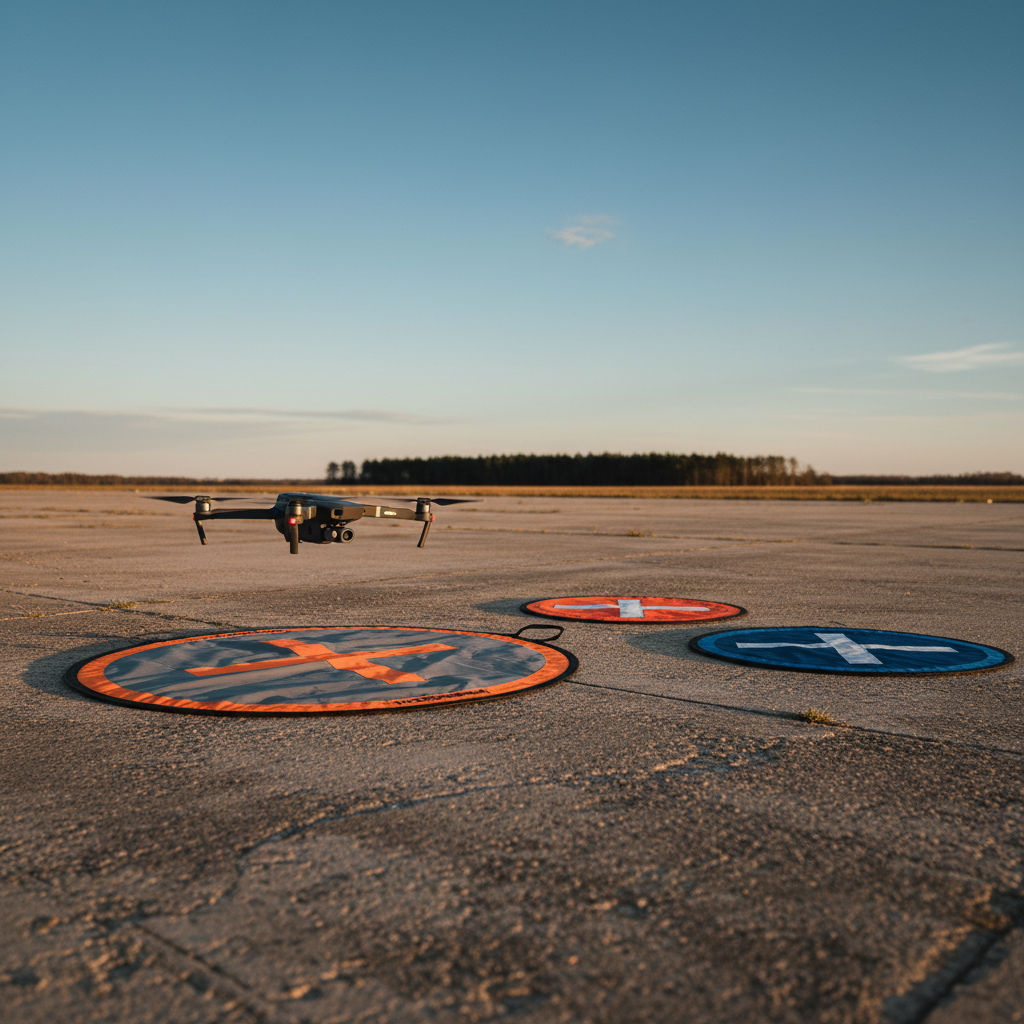
When you’re launching a UAV, a clean, stable surface can mean the difference between a smooth takeoff and a costly crash. That’s why we’ve compared five universal drone landing pads, ranging from pocket‑size mats to heavyweight, stake‑free pads designed for commercial work. The lineup includes two Hoodman pads, two Mcokoe options and a Veeniix model, each promising a non‑slip surface and easy transport. All five models fold for storage, but they differ dramatically in size, weight, and price, so you can match a pad to your budget and mission.
If you need a rugged, high‑visibility surface for professional surveys, the Hoodman 3‑foot pad stands out with a 36 in diameter, weighted perimeter and a 4.9‑star rating from 407 reviewers, all for $79.99. For everyday hobbyists who want performance without breaking the bank, the mid‑range Mcokoe Drone Landing Pad at $17.99 offers a 19.7 in square mat and a low‑profile 0.2 in thickness. Travelers on a shoestring will appreciate the ultra‑light Veeniix Foldable, which weighs just 9.9 oz, unfolds to 16.85 in, and comes in at $14.99.
Below we break down each model’s durability, portability and wind‑stability, helping you pick the pad that matches your flying style.

Hoodman 3-foot Landing Pad
Its 36 in deployed length gives you a spacious landing area while staying compact in its 13 in carry bag.
Mcokoe Drone Landing Pad
Ideal for casual hobbyists who need a solid 19.7 in pad, and it’s about $62 cheaper than the Hoodman premium option.
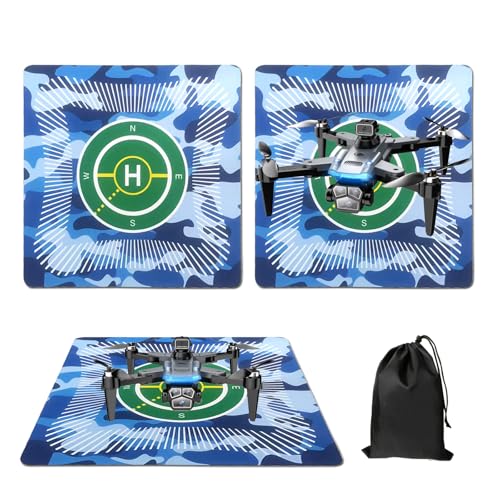
Mcokoe Landing Pad Blue
Stands out by supporting drones up to 30 cm diameter and folding to just 29.7 cm, ideal for tight‑space travel.
Also considered
Score Analysis
Key score advantages vs. runner-up (Mcokoe Drone Landing)
Price Range
Hoodman 3-foot Landing Pad
$79.99
Mcokoe Drone Landing Pad
$17.99
Mcokoe Landing Pad Blue
$12.99
Veeniix Foldable Landing Pad
$19.99

Hoodman 2-foot Landing Pad
$59.99
Spec Comparison
TL;DR: The Hoodman 3‑Foot Weighted Landing Pad folds to 33 % of its 36‑in deployed size, weighs 4.5 lb, and scores 4.9/5 stars, offering a bright, stake‑free, quick‑setup surface for professional‑grade drones.
When you unpack the Hoodman 3‑Foot Landing Pad, the first thing you notice is its generous 36 in (914 mm) square footprint and a thin 0.4 in (10 mm) profile. The pad folds down to a 33 % ratio, fitting into a 13 in (330 mm) diameter carry bag that measures just 3.7 in high, 15.3 in long and 15.2 in wide. Weighing 4.5 lb, the unit stays stable thanks to six triangular plastic inserts that add perimeter weight, while a spring‑loaded mechanism pops the pad open the moment you pull it from the bag. The bright orange fabric, printed with a black heliport symbol and compass rose, makes the landing zone instantly visible.
Compared with the other four pads in this roundup, the Hoodman offers the largest landing surface—far bigger than the smaller pads from Mcokoe and Veeniix. Its weighted perimeter also out‑matches the simple folding designs of the budget pads, delivering better wind stability. While it weighs more than the ultra‑light Veeniix option, the added mass contributes to the stake‑free stability that many users praise. It sits at a higher price point than the entry‑level models, but the 4.9‑star rating and robust construction justify the premium for professionals.
User reviews repeatedly call out the “excellent stability” in breezy conditions, noting that the six inserts keep the fabric from flapping under rotor wash. Pilots also love the quick‑setup spring system, which eliminates the need to manually spread out a flat mat. Professional reviewers highlight the UV‑resistant polyester with waterproof vinyl as a durable choice for outdoor work. The most common criticisms focus on the 4.5‑lb weight, which can feel cumbersome when packing for long hikes, and the fact that the 3‑ft diameter may not fully cover very large frames such as the Matrice 30T. A handful of users also wish the pad included built‑in lighting for night operations.
The pad’s material composition—denier polyester fabric laminated with waterproof vinyl—means you can wipe away debris with a wet towel, and the rust‑proof components stay clean after repeated use. Compatibility spans popular DJI models from the Mini series up to the Matrice 4E, making it a versatile addition to both recreational and commercial kits. The package ships with a single landing pad and a shoulder‑strap carry bag, so you have everything you need to protect your drone and the ground beneath it right out of the box.
Pros
Cons
Best for: Professional surveyors, cinematographers, and serious hobbyists who need a durable, high‑visibility landing surface.
Avoid if: You're on a tight budget, need coverage for very large drones, or require built‑in night‑visibility lighting.
“A must-have for my Matrice 30T”
“Never thought I’d use one… but now I can’t fly without it”
TL;DR: The Mcokoe universal drone landing pad folds to A4 size, offers a bright orange 19.7‑inch surface with 0.2‑inch thickness, and weighs about 500 g (brown) or 1 lb (yellow), delivering portable, eco‑friendly protection for small‑to‑medium drones.
The pad’s standout dimension is its 19.7 in square surface and ultra‑thin 0.2 in profile, which unfold to an 80 cm diameter. It folds with a single button into an A4‑sized package (210 × 297 mm) and ships with a storage bag, making it easy to slip into a backpack. The bright orange top layer, accented with reflective edge strips, stays visible in daylight and low‑light conditions, while a silicone ring around the perimeter prevents slipping on uneven ground.
Compared with the other contenders, this Mcokoe model matches the Mcokoe Blue pad’s 0.2‑inch thickness and 80 cm unfolded diameter, but it is lighter than the Hoodman 2‑foot (3.2 lb) and Hoodman 3‑foot (4.5 lb) pads, which also have much larger 24‑in and 36‑in diameters. It provides a bigger landing area than the Veeniix Foldable Pad’s 16.85‑inch footprint, though it is heavier than Veeniix’s 9.9‑oz (281 g) unit. In short, it sits in a sweet spot between ultra‑compact, lightweight options and the bulkier, heavyweight professional pads.
Users consistently praise the high‑visibility orange surface and the convenience of the one‑button fold, noting that the pad protects drone propellers from dust and grass. Professional reviewers highlight the reinforced stitching and the use of recycled rubber combined with PVC‑free Oxford fabric as durability boosters. Some owners report that the reflective edge strips can peel after prolonged outdoor exposure, and the 19.7‑inch diameter may feel tight for larger platforms such as the DJI Mavic 3. The pad operates reliably from –20 °C up to 60 °C, and its waterproof, UV‑resistant construction adds extra peace of mind.
The Mcokoe landing pad blends portability, visibility, and sustainable materials, making it a practical choice for hobbyists who travel or need a quick‑deploy surface on varied terrain.
Pros
Cons
Best for: Most users seeking a balanced, mainstream option
Avoid if: You prefer products with extensive real‑world feedback and proven track records
“A must-have for my Matrice 30T”
“Never thought I’d use one… but now I can’t fly without it”
TL;DR: The Mcokoe Blue Landing Pad folds to A4 size, offers an 80 cm high‑visibility surface and waterproof, UV‑resistant construction for $15.99, making it a solid budget pick for small‑to‑mid‑size drones.
This pad’s most eye‑catching spec is its 80 cm unfolded diameter, which translates to about a 0.5 m² landing area. It supports drones up to a 30 cm maximum diameter, folds with a one‑button mechanism to a compact 29.7 cm × 21 cm footprint, and weighs just 1.0 lb. The bright orange surface is paired with reflective edge strips, a thickened non‑slip silicone ring, and a diamond‑patterned top that boosts friction.
Compared with the Veeniix Foldable Landing Pad, the Mcokoe offers a much larger landing footprint (80 cm vs. a 17 in maximum drone footprint) but is heavier than Veeniix’s 9.9 oz unit. It sits comfortably between the budget Veeniix and the premium Hoodman options: it is lighter than the Hoodman 2‑foot model (3.2 lb) and far lighter than the Hoodman 3‑foot version (4.5 lb), yet its price point is only a notch above Veeniix and dramatically lower than either Hoodman model.
Everyday users rate the pad at 4.0 / 5 stars and frequently praise the high‑contrast orange surface for making visual landings easier, especially in low‑light conditions. Reviewers also note that the waterproof and UV‑resistant construction holds up well in rain or bright sun. Professional reviewers echo this, highlighting the pad’s suitability for field work where debris and uneven ground are common. The most common complaints revolve around wind stability—without anchoring points, winds can lift the mat in breezes over 15 mph—and the 80 cm diameter feeling snug for larger platforms such as the Mavic 3.
From a materials standpoint, the pad combines a synthetic rubber base (eco‑friendly and recycled) with a high‑density Oxford fabric top that is PVC‑free. It tolerates temperatures from –20 °C to 60 °C, making it reliable in both cold mornings and hot afternoons. The included storage bag folds the mat down to an A4‑sized package, perfect for backpacking or quick travel.
Pros
Cons
Best for: Entry-level buyers or those on a tight budget
Avoid if: Reliability and user satisfaction are your top concerns
“A must-have for my Matrice 30T”
“Never thought I’d use one… but now I can’t fly without it”
TL;DR: The Veeniix Foldable Landing Pad offers a 16.85‑inch square, waterproof nylon mat that folds flat, weighs just 9.9 oz, and supports drones up to a 17‑inch footprint for under $15.
This pad’s most eye‑catching spec is its 17 in (432 mm) maximum drone footprint, which fits a wide range of mini‑ and mid‑size drones. Unfolded, the surface measures 16.85 in × 16.85 in and is only 0.08 in thick, so it packs down to a thin, portable sheet without sacrificing stability.
Compared with the other four contenders, the Veeniix lands on the lightweight end of the spectrum—significantly lighter than the Mcokoe models that tip the scales at around 1 lb, and far more compact than the Hoodman 2‑foot option that expands to a 24‑in diameter. It also sits at the lower end of the price band, making it the most budget‑friendly choice among the lineup.
Reviewers consistently praise the high‑visibility color and the non‑slip nylon surface, noting that the double‑sided design lets you flip the pad when one side gets dirty. Professional reviewers highlight the practical, travel‑ready design, while everyday users love the waterproof capability for outdoor shoots. The main complaints revolve around the pad’s tendency to shift in light wind and its 16.85‑in size being a tight fit for larger drones such as the Mavic 3 Pro.
Technically, the pad uses nylon, folds along a single hinge, and stays waterproof, so you can land on wet grass or dusty concrete without worrying about damage. Its 0.08‑in thickness keeps the folded package slim enough to slip into a backpack, and the 9.9‑oz weight means it adds negligible load to your gear.
Pros
Cons
Best for: Beginner to intermediate pilots who need a compact, waterproof landing surface for travel and budget‑conscious shooting.
Avoid if: You regularly fly larger drones in windy conditions or require an anchored mat for maximum stability.
“A must-have for my Matrice 30T”
“Never thought I’d use one… but now I can’t fly without it”
TL;DR: The Hoodman 2‑foot Landing Pad offers a spring‑loaded, self‑deploying 24 in surface with weighted edges, but its $59.99 price and 3.2 lb weight make it a premium choice for serious hobbyists.
The standout feature is its instant‑deployment mechanism: a spring‑loaded design opens the pad the moment you pull it from the 13 in carry bag, and six triangular plastic inserts weight the perimeter for stake‑free stability on grass, sand, pavement, or uneven terrain. At 0.3 in thick, the pad stays low‑profile while still providing a durable polyester base with waterproof vinyl components and rust‑proof hardware.
Compared with the other four pads, the Hoodman 2‑foot is larger than the Mcokoe models (which sit at about 19.7 in square) and the Veeniix (max 17 in footprint), but smaller than the Hoodman 3‑foot’s 36 in diameter. It also weighs more than the Veeniix (9.9 oz) and the Mcokoe Blue (1 lb) while being lighter than the 3‑foot version’s 4.5 lb. All competitors fold into a 13 in bag, but the Hoodman 2‑foot’s spring‑loaded deployment sets it apart from the manual‑fold designs of the Mcokoe and Veeniix pads.
Users repeatedly praise the bright orange surface with a black heliport symbol and compass rose for quick visual alignment, and many reviewers call the weighted perimeter “excellent wind stability.” Professional reviewers note the rust‑proof components and the pad’s popularity among cinematographers and surveyors for reliable debris protection. However, several users mention that the 24 in diameter can feel tight for larger drones, and the listed weight of 3.2 lb confuses some users about portability.
Pros
Cons
Best for: Those prioritizing quality and willing to pay for premium performance
Avoid if: You're on a tight budget or only need basic functionality
“A must-have for my Matrice 30T”
“Never thought I’d use one… but now I can’t fly without it”
Breakdown
Hoodman 3-foot Landing Pad
Pros
Mcokoe Landing Pad Blue
Cons
Veeniix Foldable Landing Pad
Pros
Based on scoring data and product specs
Personalized picks
Best Overall Pick
Hoodman 3-foot Landing Pad
Best ValueBest for: Those prioritizing quality and willing to pay for premium performance
Mcokoe Drone Landing Pad
Best for: Most users seeking a balanced, mainstream option
$17.99-$62.00 vs winner
Skip Hoodman 2-foot Landing Pad if…
You're on a tight budget or only need basic functionality
The Hoodman 3‑foot Landing Pad takes the top spot thanks to its solid 4.9/5 rating from 407 reviewers, a generous 36 in (914 mm) square surface, and a built‑in 13 in (330 mm) carry bag that folds down to just 3.7 in (94 mm) high. At 4.5 lb the pad stays stable without stakes, and its bright orange fabric with a black heliport symbol makes positioning a drone easy even in bright daylight.
The Mcokoe Drone Landing Pad lands comfortably in the runner‑up slot, especially if you need a lightweight, portable solution for a variety of DJI Mini and Mavic models. It folds to an A4‑size (210 × 297 mm) bag, unfolds to a 19.7 in square surface with a thin 0.2 in profile, and its recycled‑rubber, PVC‑free construction adds a non‑slip silicone ring and waterproof protection for under‑$18.
For tighter budgets, the Veeniix Foldable Landing Pad offers the lowest price point at $14.99, making it a solid entry‑level pick. If you want a step up without splurging, the Mcokoe pad's still the best mid‑range choice at $17.99. The Hoodman 2‑foot Landing Pad, which costs $59.99, serves as the premium alternative for those who prefer a smaller footprint but still want Hoodman’s weighted‑perimeter stability.
Pick the Hoodman 3‑foot Landing Pad now and you'll give your drone a reliable, high‑visibility launch zone.
The Hoodman 3‑foot Landing Pad stays secure without stakes thanks to its six weighted triangular inserts and a 0.4‑inch thick, sturdy polyester‑vinyl construction. In contrast, the Veeniix Foldable Pad is only 0.08 in thick and weighs 9.9 oz, so it can shift more easily in gusty conditions.
Please sign in to leave a review
No reviews yet. Be the first to review!
