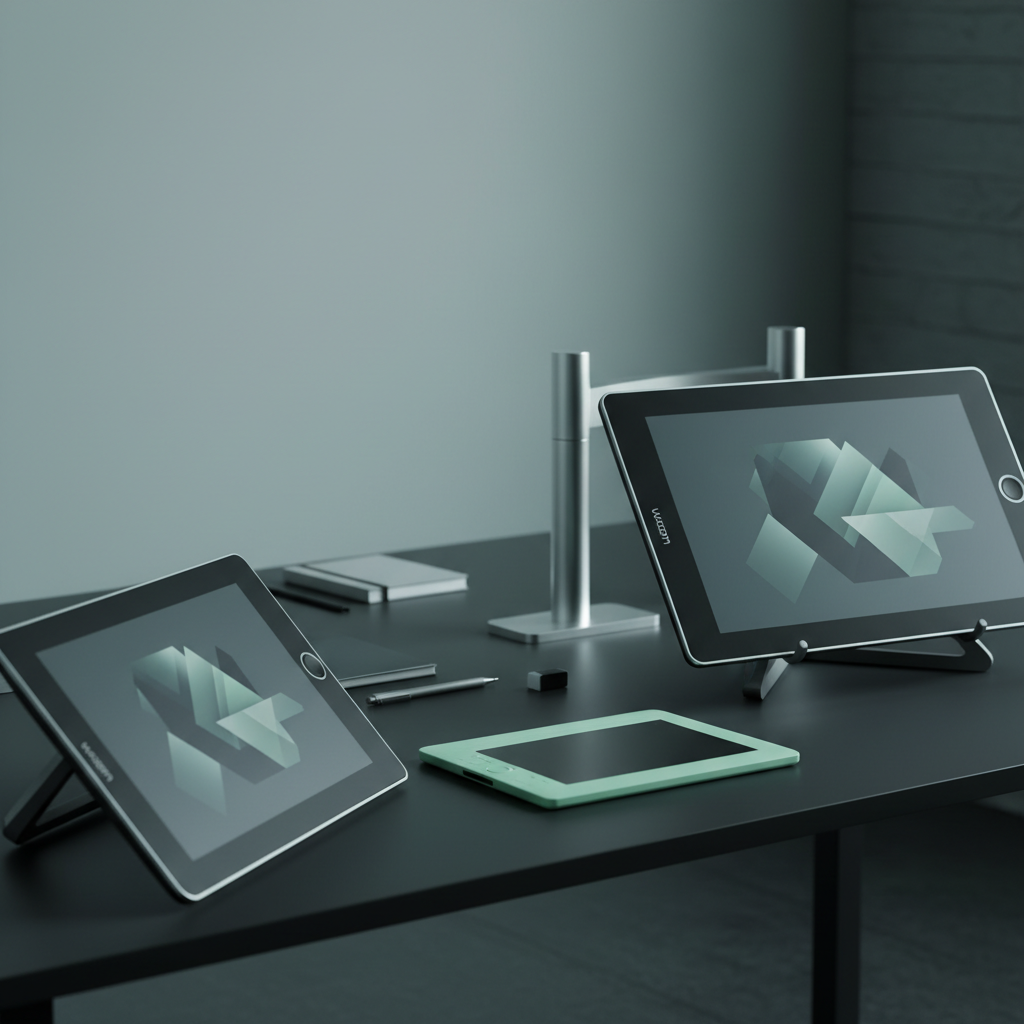
We’ve lined up 7 Wacom tablets to cover every creative need, from classroom sketching to studio‑level illustration. The lineup spans Wacom’s three price tiers: budget options like the Intuos Small at $37.00, a mid‑range pen display in the One 14 for $249.95, and premium models such as the Cintiq 16 at $645.00 and the Cintiq 22 at $999.95. Ratings range from 3.7/5 for the One 14 up to 4.6/5 for the Cintiq 16, giving you a clear sense of user satisfaction across the range.
If you’re just starting out or need a portable notebook‑sized tablet, the Intuos Small wins with its $37.00 price, a 4.5/5 rating and 4,096 pressure‑sensitive levels in a lightweight 0.50625‑lb body. For creators who want a full‑screen drawing experience without breaking the bank, the Cintiq 16 offers a 396 mm diagonal display, 8,192 pressure levels, tilt support and a 4.6/5 rating at $645.00—making it the best‑value premium pen display. When a modest on‑screen canvas is enough, the One 14 stands out with a 14.0‑inch Full HD screen, 98% sRGB coverage and a 3.7/5 rating for $249.95.
Below we’ll break down each tablet’s strengths, so you can match the right Wacom tool to your workflow.

Wacom Cintiq 16
Its compact 25.4 mm height keeps the footprint small, delivering solid performance for $645.

Wacom Cintiq 22
Ideal for professional artists needing a larger drawing surface, the 22‑inch model costs about $355 more than the Cintiq 16, offering extra screen real estate.

Wacom Intuos Small Bluetooth Pistachio
Stands out with 15‑hour battery life and quick 3.5‑hour charge, letting you sketch cordless for days—something the larger Cintiq models don’t offer.
Also considered
Score Analysis
Key score advantages vs. runner-up (Wacom Cintiq 22)
Price Range
Wacom Cintiq 16
$599.95
Wacom Cintiq 22
$999.95
Wacom Intuos Small Bluetooth Pistachio
$90.59

Wacom Intuos Medium Bluetooth
$129.95
Wacom Intuos Small
$39.95

Wacom Intuos Pro Medium Bluetooth
$329.95
Wacom One 14
$299.95
Spec Comparison
TL;DR: The Wacom Cintiq 16 delivers a 15.6‑inch Full HD IPS display with 8192‑level pressure‑sensitive Pro Pen 2, earning 4.6‑star ratings for its solid build and value at $645.
What really stands out is the 8192 levels of pressure sensitivity combined with ±60° tilt recognition, letting you vary line weight as naturally as a brush. The 396 mm diagonal (15.6‑inch) IPS panel shows 16.7 million colors and a 1000:1 contrast ratio, so details pop on the 1920 × 1080 pixel screen.
At $645.00 the Cintiq 16 is pricier than the Wacom One 14, yet it offers a full‑screen drawing surface that the One lacks. It weighs 4.18878 pounds, making it heavier than the Intuos Pro Medium Bluetooth (0.90609989682 pounds) but it's on par with the larger Cintiq 22, which shares the same weight.
Reviewers consistently praise the natural feel of the Pro Pen 2 and the vibrant, uniform brightness of the display. The most common complaints focus on the lack of touch input, a fixed 19° stand that can’t be adjusted, and the absence of built‑in express keys, which some users miss for shortcut workflows.
Technical notes include a 16:9 aspect ratio, 74% Adobe RGB and 72% NTSC color gamut, and a built‑in stand set at a fixed 19° tilt. The tablet ships with three replacement nibs, a detachable holder, and a 3‑in‑1 cable for plug‑and‑play connectivity.
Pros
Cons
Best for: Buyers willing to invest in a proven, high-quality option
Avoid if: You're on a tight budget or only need basic functionality
TL;DR: The Wacom Cintiq 22 delivers a 21.5‑inch Full HD, 8192‑level pressure pen display with a paper‑like anti‑glare surface, but its $999.95 price and 12 lb weight keep it in the premium, stationary‑studio niche.
What sets the Cintiq 22 apart is its generous active drawing area of 18.7 inches × 10.5 inches on a 21.5‑inch IPS panel. Combined with 8192 pressure levels and tilt recognition up to 60°, the Pro Pen 2 feels as precise as a real brush. The screen reaches 210 cd/m² brightness, 96% sRGB color coverage and a static contrast ratio of 1000:1, giving artists a reliable, color‑critical workspace.
In this seven‑product roundup the Cintiq 22 is larger than the 15.6‑inch Cintiq 16, yet it shares the same overall weight of 4.18878 pounds listed for that model. Compared with the ultra‑light Intuos Pro Medium Bluetooth (under 1 pound), the Cintiq 22 is considerably heavier, reinforcing its role as a desktop‑first device rather than a portable sketchpad.
Reviewers consistently praise the tablet’s natural, paper‑like feel thanks to the textured anti‑glare surface, and they note the convenience of a battery‑free Pro Pen 2. Common complaints focus on cable management—users mention the single 3‑in‑1 HDMI/USB/power cable can look cluttered—as well as the lack of multi‑touch gestures and built‑in speakers. Reviewers highlight the 25 ms response time and 178° viewing angles as solid for studio work, while they flag the $999.95 price tag as a premium investment.
Technical details round out the package: the unit includes a 60 W power adapter, one HDMI input, one USB‑A port, two customizable side switches, and three replacement nibs. The display runs at a Full HD 1920 × 1080 resolution, and the tablet itself weighs 12.35 lb, making it a stable, non‑portable workstation.
Pros
Cons
Best for: Buyers willing to invest in a proven, high-quality option
Avoid if: You're shopping on a tight budget — it's priced at $999.95
TL;DR: The Wacom Intuos Small Bluetooth Pistachio offers 4,096 pressure levels, a battery‑free pen and 15 hours of wireless use for $90.59, making it a solid entry‑level tablet for beginners.
The standout spec of the Intuos Small Bluetooth Pistachio is its 4,096 pressure‑sensitive levels, paired with a pen accuracy of ±0.01 in. That combination lets you vary line weight with subtle precision. The built‑in lithium‑ion battery delivers up to 15 hours of use before it needs a 3.5‑hour charge, and Bluetooth 4.2 provides a reliable wireless link. Its compact active drawing area measures 7.0 × 4.4 in (177.8 × 111.8 mm), fitting neatly on a desk while still offering enough space for sketching and note‑taking. At $90.59 and a rating of 4.5 stars from 35,340 reviewers, it's positioned as an affordable starter tablet.
Compared with the other six tablets in this roundup, the Pistachio sits between the regular Intuos Small and the Intuos Medium. It weighs 0.55 lb, which is a touch heavier than the Intuos Small’s 0.50625 lb but considerably lighter than the Intuos Medium’s 0.90625 lb. Its active area of 7.0 × 4.4 in outstrips the Intuos Small’s 6.0 × 3.7 in canvas, yet remains smaller than the Medium’s 215.90 mm length and 134.62 mm width. Battery life matches the Medium’s 15‑hour claim, while both the Small and Medium share the same four customizable ExpressKeys.
User feedback highlights the tablet’s natural pen feel and the convenience of wireless setup, especially in classroom and remote‑work scenarios. Reviewers also appreciate the bundled Clip Studio Paint Pro and Corel Painter Essentials trials, which add immediate value. On the downside, several users note the outdated Micro‑USB charging port and the lack of tilt support, which can hinder more advanced brush techniques. Professional reviewers echo these points, praising the pressure sensitivity and Bluetooth connectivity while calling out the missing tilt and multi‑touch gestures as notable omissions for power users.
The Intuos Small Pistachio relies on Electro‑Magnetic Resonance (EMR) technology, meaning the pen never needs a battery. Four ExpressKeys and two programmable pen buttons let you assign shortcuts for common actions, streamlining workflow. Bluetooth 4.2 ensures a stable connection to Windows 7 or later, macOS 10.11 or later, Chrome OS, and Android 6.0+ devices. The tablet’s slim profile—0.35 in height and 8.8 mm thickness—makes it easy to slip into a bag, while the 1.65 lb package weight keeps shipping straightforward. It blends portability with enough feature depth for newcomers.
Pros
Cons
Best for: Budget-conscious buyers seeking a reliable entry-level option
Avoid if: You need advanced features or professional-grade performance
“even 6-year-olds can use it easily”
“the comfort and precision of the pen”
TL;DR: The Wacom Intuos Medium Bluetooth offers a 215.90 mm × 134.62 mm active area, 4096‑level pressure sensitivity and up to 15 hours of battery life for $109.95.
The tablet’s standout feature is its battery‑free Wacom Pen 4K, which delivers 4096 pressure levels and ±0.25 mm pen accuracy, letting you control line weight with fine precision. Its active drawing area measures 215.90 mm in length and 134.62 mm in width, providing a comfortable workspace for hobbyist sketches and classroom notes.
Compared with the other six entries, the Intuos Medium is heavier than the Wacom Intuos Small Bluetooth Pistachio (0.55 lb) but lighter than the larger Cintiq 16 (1.65 lb). It also sports a larger active surface than the Small models, though it lacks the tilt support and 8192‑level pressure sensitivity that the Intuos Pro Medium Bluetooth provides. Unlike the screen‑based Cintiqs, it remains a pure pen‑tablet, keeping the price below those premium options.
Reviewers consistently praise the tablet’s natural pen feel, the convenience of Bluetooth connectivity, and the generous software bundle that includes Clip Studio Paint Pro and Corel Painter Essentials 8. Professional reviewers note the convenience of the four ExpressKeys and the plug‑and‑play setup, while common complaints focus on the outdated micro‑USB port, the absence of tilt support, and the active area of 215.90 mm × 134.62 mm may feel modest for detailed illustration work. Battery life of up to 15 hours and a charging time of approximately 3.5 hours keep it usable for long sessions.
Pros
Cons
Best for: Budget-conscious buyers seeking a reliable entry‑level option
Avoid if: You want the best value‑per‑dollar in its price range or need tilt support and a larger active area for professional illustration
“even 6-year-olds can use it easily”
“the comfort and precision of the pen”
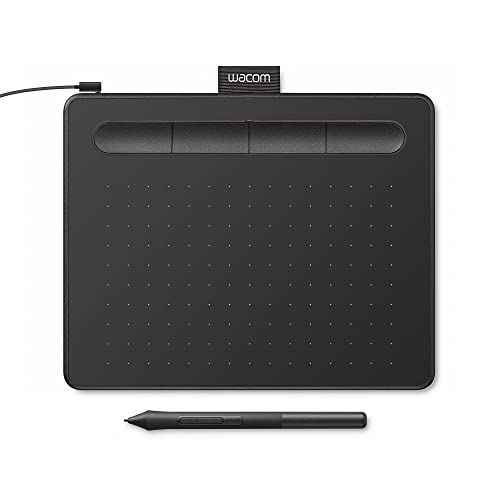
TL;DR: The Wacom Intuos Small delivers a battery‑free 4096‑level pen, a compact 6.0 × 3.7‑inch active area, and a solid software bundle for just $37.00, making it the most affordable entry‑level tablet in the lineup.
The tablet’s standout spec is its 4096 pressure‑sensitivity levels packed into a tiny 6.0 inches × 3.7 inches active drawing area. Paired with the battery‑free Wacom Pen 4K, you get lag‑free strokes that feel like pen on paper, all without worrying about charging. The device also sports four customizable ExpressKeys and two programmable pen buttons, giving quick access to shortcuts while you work.
At 0.50625 lbs, the Intuos Small is noticeably lighter than the Intuos Small Bluetooth Pistachio (0.55 lb) and far lighter than the Medium Bluetooth model (0.90625 lb). It also sits on the smaller end of the spectrum compared with the Intuos Pro Medium, which carries a heftier build. While it lacks the tilt support that Pro models offer, its lightweight chassis and modest footprint make it easier to transport than the larger tablets in this roundup.
Reviewers consistently praise the tablet’s plug‑and‑play compatibility with Chromebooks and the generous software bundle that includes a two‑year Clip Studio Paint Pro license. Users appreciate the easy setup and the “premium feel” of the PVC‑free construction for the price. Reviewers most often note the modest active area as a downside—it can feel restrictive for detailed illustration work—and they point out the lack of a built‑in screen or Bluetooth on the base model.
Pros
Cons
Best for: Budget‑conscious buyers seeking a reliable entry‑level option
Avoid if: You need advanced features or professional‑grade performance
“even 6-year-olds can use it easily”
“the comfort and precision of the pen”
TL;DR: The Wacom Intuos Pro Medium Bluetooth packs a magnesium‑alloy body, 8192‑level pressure, 10 ExpressKeys and 2 dials into a 4 mm‑thin, 0.90609989682‑pound tablet that shines in multi‑monitor studios.
The tablet’s standout spec is its 8192 pressure‑sensitivity levels combined with a 5080 LPI resolution, delivering the kind of line‑weight control that professionals demand. Its active drawing surface measures 264 mm × 147 mm (about 10.4 × 5.8 in), while the overall footprint stays compact at 291 × 206 mm. Ten customizable ExpressKeys and two mechanical dials sit just above the surface, letting you tweak settings without reaching for the keyboard.
Compared with the other six tablets in this roundup, the Intuos Pro Medium is lighter than the Wacom One 14 (1.653466965 pounds) and far lighter than any Cintiq model (both around 4.18878 pounds). Its 4 mm thickness undercuts the One 14’s 10 mm and the standard Intuos Medium Bluetooth’s 10.16 mm, though the tiny Intuos Small is thinner at 2.54 mm. Where the regular Intuos Medium Bluetooth offers only four ExpressKeys, this Pro version doubles that count and adds two mechanical dials that competitors don’t list.
Users consistently praise the Pro Pen 3’s lag‑free tracking and the tablet’s slim, sturdy magnesium chassis. Reviewers note that the 10 ExpressKeys and dials cut down workflow interruptions for video editors and 3D sculptors. The most common drawback mentioned is the premium price tag, which sits above entry‑level options, and a modest learning curve when mapping the many shortcuts. As a non‑screen tablet, it relies on an external monitor, which beginners note when they prefer an all‑in‑one drawing surface.
Pros
Cons
Best for: Professional illustrators, concept artists, video editors, and motion‑graphics creators who need precise pen control and on‑the‑fly shortcuts.
Avoid if: You’re a beginner seeking an on‑screen drawing experience or need a low‑cost tablet with a built‑in display.
“even 6-year-olds can use it easily”
“the comfort and precision of the pen”
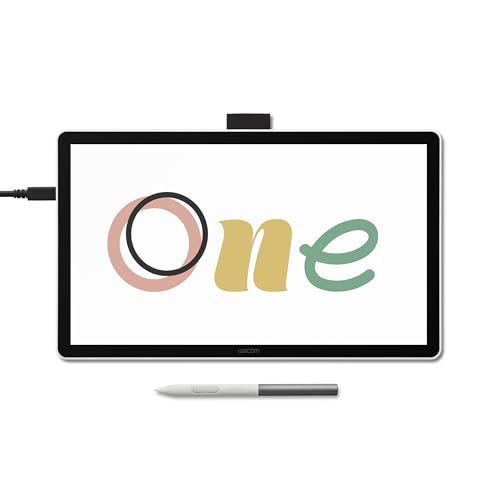
TL;DR: The Wacom One 14 offers a 14‑inch Full HD IPS screen with 98% sRGB coverage, a battery‑free pen with 4096 pressure levels, and a starter‑software bundle, but it lacks multi‑touch and a built‑in stand.
The standout feature is its 14.0‑inch IPS LCD that delivers 1920 × 1080 resolution, 285 cd/m² brightness and a 98% sRGB color gamut on an anti‑glare, anti‑fingerprint laminated glass surface, all with a tight 0.1611 mm pixel pitch. Direct bonding reduces parallax, giving a paper‑like feel that reviewers praise for comfort during long sketch sessions.
Compared with the other six tablets in this roundup, the One 14 provides a larger active drawing area of 309 mm × 174 mm versus the Intuos Medium Bluetooth’s 215.90 mm × 134.62 mm. At 1.653466965 pounds it weighs more than the Intuos Pro Medium (0.90609989682 pounds) and the Intuos Medium (0.90625 pounds), but still light enough for classroom portability. Its pen offers 4096 lpi resolution and 4096 pressure levels, which is half the 8192 levels that the Intuos Pro Medium provides. Unlike the Intuos Pro Medium’s 10 programmable ExpressKeys, the One 14 has none, so shortcut customization is more limited.
Everyday users love the matte, textured screen that feels more like paper than a glossy tablet, and they appreciate the battery‑free pen that never needs charging. Professional reviewers highlight the reliable driver experience and the generous software trials—including Clip Studio Paint Pro and Skillshare—that jump‑start creativity. The most common complaints focus on the absence of multi‑touch gestures, the need for a separate HDMI converter for HDMI‑only setups, and the lack of an integrated stand, which forces a third‑party mount purchase.
Pros
Cons
Best for: Beginner digital artists, students, and educators who want a portable pen display with solid color accuracy and a ready‑to‑use software bundle.
Avoid if: You need high‑end pressure sensitivity, extensive shortcut keys, or a built‑in stand for a seamless out‑of‑the‑box setup.
“Feels just like drawing on paper.”
“The pen is so responsive—perfect for sketching and inking.”
Breakdown
Wacom Cintiq 16
Pros
Wacom Cintiq 22
Pros
Cons
Wacom Intuos Small Bluetooth Pistachio
Pros
Cons
Wacom Intuos Medium Bluetooth
Pros
Cons
Based on scoring data and product specs
Personalized picks
Best Overall Pick
Wacom Cintiq 16
Best ValueBest for: Buyers willing to invest in a proven, high-quality option
Wacom Cintiq 22
Best for: Buyers willing to invest in a proven, high-quality option
$999.95+$400.00 vs winner
Skip Wacom One 14 if…
Reliability and user satisfaction are your top concerns
We’re naming the Wacom Cintiq 16 the clear winner. Its 396 mm (15.6‑inch) HD display shows 16.7 million colors, a 74% Adobe RGB gamut and 1000:1 contrast, while the 345 mm × 193 mm active drawing area provides a 345 mm × 193 mm space for detailed work. The included Pro Pen 2 delivers 8192 pressure levels and ±60° tilt, and users have rated it 4.6 / 5 from 3,127 reviews, all for a list price of $645.00.
The runner‑up is the Wacom Cintiq 22, ideal if you need a larger canvas for multi‑window illustration or complex layouts. Its 21.5‑inch IPS panel provides a 96% sRGB color gamut and a spacious 18.7 in × 10.5 in active area, letting you see more of your work at once. Reviewers give it 4.4 / 5 from 652 reviews, and it’s priced at $999.95, making it a solid step up for professionals who crave extra screen real‑estate.
Pick the Cintiq 16 today and start creating with a professional‑grade tablet that balances performance and price.
The Wacom Cintiq 16 provides a 15.6‑inch IPS display with 1920 × 1080 resolution, 8192 pressure levels and tilt support for about $645, making it the most cost‑effective pen‑display in the lineup.
Please sign in to leave a review
No reviews yet. Be the first to review!
