⚡ Quick Answer
Choosing a Wi‑Fi 6, 6E or 7 router can feel overwhelming, so we narrowed the field to eight models that span budget, mid‑range and premium tiers. From entry‑level dual‑band units to the latest Wi‑Fi 7 powerhouses, each option brings a different mix of speed, coverage and price.
If you’re watching the price tag, the Netgear R6700AX starts at $48.88 and the TP‑Link Archer AX21 lists at $52.20, earning 4.3‑star and 4.4‑star averages respectively from thousands of reviews. The AX21 delivers up to 1.8 Gbps combined Wi‑Fi speed with four high‑gain antennas, while the R6700AX packs a 1.5 GHz quad‑core processor and 512 MB RAM, delivering solid performance. Mid‑range choices like the TP‑Link Archer BE230 at $86.98 push total throughput to 3.6 Gbps, and the premium Netgear Nighthawk RS90 at $129.00 offers Wi‑Fi 7 speeds up to 3.6 Gbps and a 2.5 Gbps WAN port.
Each router’s strengths, ideal home size and device count are outlined so you can match the right Wi‑Fi solution to your lifestyle.

TP-Link Archer AX21
Its compact 40.9 mm height lets it fit discreetly on any shelf, and reviewers praise its strong entry‑level Wi‑Fi 6 performance.

TP-Link Archer BE230
Ideal for families needing solid coverage, this model costs $86.98, about $35 more than the budget pick, offering extra room‑size performance.

Netgear R6700AX
Stands out with a 2.25‑inch height and 9.27‑inch length, giving a roomy antenna layout while staying under $49, a cheaper alternative to the others.
Also considered
Score Analysis
Key score advantages vs. runner-up (TP-Link Archer BE230)
Price Range
TP-Link Archer AX21
$52.07
TP-Link Archer BE230
$87.00
Netgear R6700AX
$67.01

TP-Link Archer BE6500
$129.99
Eero 6
$89.99

Asus RT-AX1800S
$69.99

Netgear Nighthawk RS90
$129.00

Eero 7
$169.99
Spec Comparison
TL;DR: The TP‑Link Archer AX21 delivers up to 1.8 Gbps Wi‑Fi 6 speed, four high‑gain antennas and solid security for $52.20, making it a strong budget pick for small‑to‑medium homes.
At a list price of $52.20, the Archer AX21 tops out at a combined Wi‑Fi speed of up to 1,800 Mbps (574 Mbps on 2.4 GHz and 1,201 Mbps on 5 GHz). It packs four fixed high‑gain antennas, a dual‑core Broadcom processor and 256 MB of RAM, plus 16 MB of flash storage. The compact chassis measures 40.9 mm in height, 261 mm in length and 135 mm in width, and weighs 1.1 Pounds.
Compared with the other seven routers in this roundup, the AX21 shares a similar 1.1‑pound weight with the Netgear R6700AX but is shorter than the Asus RT‑AX1800S (56 mm tall). Its 256 MB of RAM matches the Asus unit but falls short of the 512 MB found in the Netgear and Eero 6 models. The flash memory is modest at 16 MB, whereas peers like the Netgear and Eero 6 provide 256 MB and 4 GB respectively. The dual‑core CPU is less powerful than the quad‑core processors in the Netgear R6700AX and the TP‑Link Archer BE6500, which may affect performance under heavy traffic.
Users consistently praise the quick Tether app setup and the router’s ability to stream 4K video without hiccups in apartments and small homes. Professional reviewers note the reliable 5 GHz throughput near 1.2 Gbps and the inclusion of WPA3, OpenVPN/PPTP and OneMesh support. Common complaints revolve around a weaker 2.4 GHz range in larger spaces, occasional firmware freezes and the fact that each device can only connect to a single band, capping individual speeds.
The AX21 uses OFDMA, beamforming and Target Wake Time to manage dozens of smart‑home devices efficiently. Its security suite includes a SPI firewall, guest network and WPA/WPA2/WPA3 options, while the built‑in VPN server adds a layer of privacy for remote access.
Pros
Cons
Best for: Budget‑conscious buyers seeking a reliable entry‑level option
Avoid if: You need extensive coverage for a large home or support for a very high number of simultaneous devices
“smooth for home office and smart TVs”
“fine for apartments, but lags with 30+ IoT devices”
TL;DR: The TP‑Link Archer BE230 delivers Wi‑Fi 7 speeds up to 3.6 Gbps with a 2.0 GHz quad‑core CPU, solid 2.4 GHz coverage, and strong security, but it doesn't have a 6 GHz band for true Wi‑Fi 7 performance.
The Archer BE230 is a dual‑band Wi‑Fi 7 router that pushes a combined throughput of 3.6 Gbps, split between 688 Mbps on 2.4 GHz and a fast‑moving 2 882 Mbps on 5 GHz. Its 2.0 GHz quad‑core processor gives it the headroom to manage multiple streams and the Multi‑Link Operation feature, which can use both bands at once for smoother connections.
At 1.21 pounds, the BE230 is heavier than the compact Eero 6 and the Asus RT‑AX1800S, yet it matches the weight of the TP‑Link Archer AX21 and Netgear R6700AX. In terms of raw 5 GHz speed, it outpaces the Asus model’s 1 201 Mbps rating, positioning it among the faster Wi‑Fi 7 options in this eight‑product roundup.
Users consistently praise the router’s ability to deliver gigabit‑level speeds when devices are nearby, and professional reviewers note its strong 2.4 GHz performance for IoT gadgets. Advanced security features like WPA3, HomeShield, and a built‑in VPN server add a layer of protection, while EasyMesh compatibility and beamforming help extend coverage in medium‑size homes. The inclusion of a USB 3.0 port and 2.5 Gbps WAN/LAN ports also future‑proof the unit for high‑speed internet plans.
Technical extras such as Multi‑Link Operation, dedicated IoT network support, and voice‑assistant integration (Alexa, Google Assistant) round out a feature set that feels more at home in a modern smart‑home environment.
Pros
Cons
Best for: Gamers and streamers with gigabit internet who need fast close‑range performance and robust security.
Avoid if: You have a large multi‑story house or rely heavily on Wi‑Fi 6E/7 devices that need a 6 GHz band.
“smooth for home office and smart TVs”
“fine for apartments, but lags with 30+ IoT devices”
TL;DR: The Netgear R6700AX packs a 1.5 GHz quad‑core CPU, 512 MB RAM and 256 MB flash into a compact 1.1 lb unit that delivers about 918 Mbps real‑world throughput for homes up to 1,500 sq ft.
The router’s standout hardware is its 1.5 GHz quad‑core Broadcom processor paired with 512 MB of RAM and 256 MB of flash storage. It is rated at a download throughput of 918.42 Mbps, and its coverage claim is up to 1,500 sq ft for roughly 20 devices.
Compared with the other seven entries, the R6700AX is heavier than the TP‑Link Archer AX21 (both at 1.1 lb) but lighter than the TP‑Link Archer BE230 (1.21 lb) and the TP‑Link Archer BE6500 (1.37 lb). It also outpaces the Asus RT‑AX1800S (0.82 lb) in weight, making it a solid mid‑weight option. In terms of memory, its 512 MB RAM doubles the 256 MB found in both the Archer AX21 and the Asus model, and its 256 MB flash exceeds the 16 MB of the Archer AX21 while falling short of the 4 GB flash listed for the Eero 6.
Reviewers consistently praise the easy Nighthawk app setup and the built‑in NETGEAR Armor security suite, noting that the router handles everyday streaming and gaming without hiccups. However, users also point out that real‑world speeds tend to lag behind the theoretical 600 Mbps / 1,200 Mbps split, and the three fixed antennas can limit fine‑tuning in larger or obstacle‑filled rooms.
The device supports Wi‑Fi 6 (802.11ax) with OFDMA, MU‑MIMO, Beamforming+ and 1024‑QAM across two streams, and it offers four gigabit LAN ports plus a gigabit WAN port. Its dimensions are 9.27 × 7.26 × 2.25 in, and it runs on 100‑240 V input.
Pros
Cons
Best for: Budget‑conscious buyers seeking a reliable entry‑level option
“outstanding close-range speeds (918 Mbps via built-in Speedtest)”
“decent performance across clients, good cooling”
TL;DR: The TP‑Link Archer BE6500 delivers up to 6.5 Gbps total Wi‑Fi 7 throughput, covers up to 2,400 sq ft, and packs a 2.5 Gbps WAN/LAN port, but its $129.99 price puts it at the premium end of the list.
The router’s headline spec is the 6.5 Gbps total Wi‑Fi speed, using a 5 GHz band that can reach 5,764 Mbps and a 2.4 GHz band at 688 Mbps. Six external high‑performance antennas with beamforming support solid coverage across a home of up to 2,400 sq ft, and the device can handle up to 90 concurrent connections.
Compared with the other seven routers, the BE6500’s wireless capacity outstrips the Netgear Nighthawk RS90’s 3.6 Gbps and the Eero 7’s 1.8 Gbps maximum speed. Its coverage area also exceeds the RS90’s 2,000 sq ft and is larger than the 1,500 sq ft per node the Eero 6 offers. While the RS90 and the BE6500 both sport a 2.5 Gbps WAN, the BE6500 adds a 2.5 Gbps LAN port and three 1 Gbps LAN ports, giving more wired flexibility than most peers. At 1.37 lb it is a touch heavier than the 1.34‑lb Eero 7 but lighter than the bulkier Netgear RS90. Its price sits above the budget‑friendly options like the Archer AX21 and the Asus RT‑AX1800S, positioning it as a premium choice.
Reviewers consistently praise the router’s ability to sustain 4K/8K streams and low‑latency gaming, noting that the six antennas and beamforming keep signal strong in three‑bedroom setups. Professional feedback highlights the Multi‑Link Operation, 4K‑QAM, and Multi‑RUs as useful Wi‑Fi 7 features, while also calling out the absence of a dedicated 6 GHz band that prevents full exploitation of Wi‑Fi 7 spectrum. Users also appreciate the 2.5 Gbps ports for fast wired connections to NAS devices or gaming rigs, though some consider the $129.99 price a steep trade‑off for those who don’t need top‑tier speeds.
Pros
Cons
Best for: Buyers willing to invest in a proven, high‑quality option
Avoid if: You're shopping on a tight budget — it's priced at $129.99
“smooth for home office and smart TVs”
“fine for apartments, but lags with 30+ IoT devices”
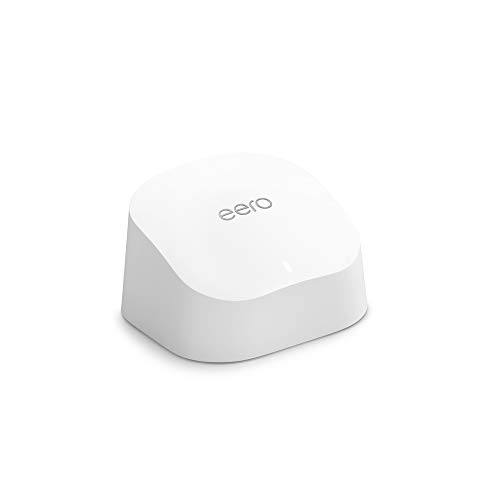
TL;DR: The eero 6 offers a quad‑core 1.2 GHz processor, 512 MB RAM and 4 GB flash storage, covering up to 5,000 sq ft with three nodes while keeping a light 0.66 lb footprint.
The system’s standout hardware includes a quad‑core 1.2 GHz processor, 512 MB of RAM and 4 GB of flash storage, all packed into a compact unit that’s only 0.66 lb. Each node delivers up to 500 Mbps wireless speed and 900 Mbps wired speed, and a single node covers 1,500 sq ft, giving a total of 5,000 sq ft when you use the three‑pack.
At 0.66 lb, the eero 6 is lighter than the 0.82 lb Asus RT‑AX1800S and the 1.21 lb TP‑Link Archer BE230, making it easy to place on a shelf or mount discreetly. Its per‑node coverage of 1,500 sq ft is modest compared with the 2,000 sq ft coverage advertised by the Netgear Nighthawk RS90, and the 500 Mbps wireless ceiling is lower than the multi‑gigabit speeds (688 Mbps + 2,882 Mbps) listed for the Archer BE230.
Reviewers consistently praise the hassle‑free setup, the reliable whole‑home coverage and the smooth Alexa integration, noting that the optional Zigbee hub adds a handy smart‑home touch. The most common complaints focus on the dual‑band limit—no 6 GHz band—and the modest 500 Mbps wireless speed, which some power users find restrictive. Two Gigabit Ethernet LAN ports per node are sufficient for most families but may feel limiting for small‑office setups.
Pros
Cons
Best for: Most users looking for a well‑reviewed, reliable mainstream option
Avoid if: You're shopping on a tight budget — it’s priced at $89.99
TL;DR: The Asus RT-AX1800S delivers solid Wi‑Fi 6 speeds, AiMesh flexibility and a 3‑year warranty at a budget‑friendly $58.99, though its coverage can feel limited in larger homes.
The router’s standout spec is its dual‑band throughput: up to 574 Mbps on 2.4 GHz and a brisk 1 201 Mbps on 5 GHz, backed by a dual‑core MIPS 1004Kc processor running at 880 MHz and 256 MB of RAM. Its 128 MB flash storage and four external fixed antennas give you the core Wi‑Fi 6 features—OFDMA, MU‑MIMO, Beamforming and 1024‑QAM—without breaking the bank.
Compared with the other seven routers in this roundup, the RT‑AX1800S weighs less than the TP‑Link Archer AX21 (1.1 pounds) and the Netgear R6700AX (≈1.1 pounds), yet it stands taller than the Archer AX21’s 40.9 mm height. It also weighs more than the Eero 6 (0.66 pounds), so it sits in the middle of the pack on size and heft. While it lacks the massive 6.5 Gbps total speeds of the TP‑Link Archer BE6500, it undercuts those premium models on price and still offers the essential Wi‑Fi 6 performance most households need.
Users consistently praise the easy setup and the free lifetime AiProtection suite, noting that the router “feels solid” and integrates smoothly into existing Asus AiMesh networks. Professional reviewers highlight the inclusion of AiMesh compatibility as a strong point for future expansion. On the flip side, several owners report that the 2.4 GHz band can drop in crowded environments and that the signal fades faster than they'd like in larger apartments, a sentiment echoed by the “average long‑range coverage” comment from Tom’s Hardware.
The device ships with four Gigabit LAN ports, a single Gigabit WAN, and a power input of 110‑240 V AC with a 12 V DC, 1.5 A output. Its compact footprint—230 mm × 134 mm × 56 mm—fits neatly on a shelf or desk, and the three‑button front panel (WPS, Reset, Power) keeps everyday control simple. With a 3‑year warranty, you've got peace of mind alongside the budget price.
Pros
Cons
Best for: Budget‑conscious buyers seeking a reliable entry‑level option
Avoid if: You need advanced features or professional‑grade performance
TL;DR: The Netgear Nighthawk RS90 delivers Wi‑Fi 7 speeds up to 3.6 Gbps, covers up to 2,000 sq ft for 50 devices, and packs a quad‑core 2.0 GHz processor in a compact black chassis for $129.00.
The standout spec delivers Wi‑Fi 7 dual‑band throughput of up to 3.6 Gbps, powered by a quad‑core 2.0 GHz processor and an ultra‑powerful antenna array. With a listed coverage area of up to 2,000 sq ft. and support for up to 50 devices, it targets households that need fast, stable connections for gaming, 4K/8K streaming, and video calls. Wired performance matches modern multi‑gigabit ISP plans, offering a maximum WAN speed of 2.5 Gbps and four 1 Gbps LAN ports.
Compared with the other seven routers in this roundup, the RS90 sits in a premium price tier—higher than budget options like the Asus RT‑AX1800S and the TP‑Link Archer AX21. Its 3.6 Gbps Wi‑Fi speed outpaces many Wi‑Fi 6 models but falls short of the TP‑Link Archer BE6500’s 6.5 Gbps total speed and its 2,400 sq ft. coverage. Unlike the Eero 7, which supports mesh networking, the RS90's a standalone unit, so scaling to larger homes requires a separate solution.
Users consistently praise the router’s high speed and reliable 2,000 sq ft. coverage, noting that the app‑based setup feels straightforward even with many connected devices. Professional reviewers highlight the integrated NETGEAR Armor suite and WPA3 security as strong out‑of‑the‑box protections. The most common complaints focus on the lack of USB ports for local storage or printer sharing, the dual‑band design that omits a 6 GHz band, and the absence of mesh compatibility, which limits expansion.
Additional technical context includes a 12 V/1.5 A power adapter, a compact footprint of 7.2 × 2.6 × 4.8 inches, and a black finish that blends with modern décor. The router ships with a 2 m Ethernet cable and a quick‑start guide, making the first‑time install quick for most users.
Pros
Cons
Best for: Buyers willing to invest in a proven, high‑quality option
Avoid if: Reliability and user satisfaction are your top concerns
“seamless performance”
“missed for NAS”
TL;DR: The eero 7 delivers Wi‑Fi 7 speeds up to 1.8 Gbps, covers 2,000 sq ft, supports 120+ devices, and adds a built‑in Thread/Zigbee hub for $139.99.
The standout spec of the eero 7 is its Wi‑Fi 7 support combined with a maximum wireless speed of 1.8 Gbps, all packed into a compact 130 mm × 130 mm × 64 mm unit that weighs just 1.34 lb. It promises coverage of 2,000 sq ft and can handle more than 120 devices, making it a solid choice for medium‑sized homes with many smart gadgets.
Compared with its peers, the eero 7 is slightly lighter than the TP‑Link Archer BE6500 (1.34 lb vs 1.37 lb) but offers a smaller coverage footprint (2,000 sq ft vs 2,400 sq ft). Unlike the Netgear Nighthawk RS90, which lists a quad‑core 2.0 GHz processor, eero 7 doesn’t list processor details, yet it still provides two 2.5 GbE Ethernet ports—more wired uplinks than the Archer BE6500’s single 2.5 GbE LAN port.
User sentiment highlights the eero 7’s reliable, fast Wi‑Fi and the convenience of its integrated Thread and Zigbee hub, which many reviewers say simplifies Alexa‑compatible smart‑home setups. Professional reviewers note the dual‑band (2.4 GHz / 5 GHz) design limits future‑proofing because it lacks a 6 GHz band, a common complaint when many devices compete for the same spectrum. Automatic software updates keep the firmware current without user effort.
Pros
Cons
Best for: Buyers willing to invest in a proven, high‑quality option
Avoid if: You're on a tight budget or only need basic functionality
Breakdown
TP-Link Archer AX21
Pros
TP-Link Archer BE230
Pros
Netgear R6700AX
Pros
Cons
TP-Link Archer BE6500
Pros
Cons
Based on scoring data and product specs
Personalized picks
Best Overall Pick
TP-Link Archer AX21
Best Budget PickBest for: Budget-conscious buyers seeking a reliable entry-level option
TP-Link Archer BE230
Best for: Most users looking for a well-reviewed, reliable mainstream option
$87.00+$34.93 vs winner
Skip Eero 7 if…
You're on a tight budget or only need basic functionality
We’re naming the TP‑Link Archer AX21 the clear winner. At $52.20 it undercuts most Wi‑Fi 6 routers, yet it still ships with a 4.4‑star rating from 23,863 reviewers. The unit delivers up to 1,800 Mbps combined speed across its dual‑band radios and packs four fixed high‑gain antennas, giving you solid coverage without breaking the bank.
The Archer BE230 earns the runner‑up spot if you need Wi‑Fi 7 performance for a busy smart‑home or a home‑office with multiple 4K streams. It supports the 802.11be standard, pushes a total throughput of 3.6 Gbps, and runs on a 2.0 GHz quad‑core processor. With 2.5 Gbps WAN/LAN ports, four wireless streams and dedicated IoT networking, it serves high‑density environments.
Looking at the other price tiers:
Pick the Archer AX21 today and get reliable Wi‑Fi 6 performance without overspending.
The TP‑Link Archer BE6500 offers coverage up to 2,400 sq ft and can handle up to 90 devices, making it suitable for large households. The Archer AX21 does not list coverage or device capacity, so the BE6500 is the safer choice for extensive needs.
No reviews yet — be the first to share your experience.
Please sign in to leave a review