Rankings
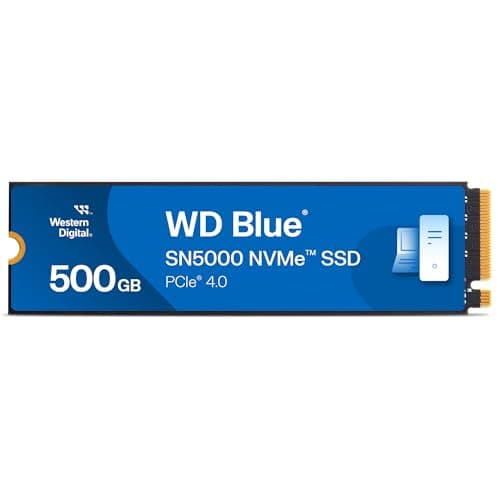
The WD Blue SN5000 500 GB is a budget-friendly PCIe 4.0 NVMe SSD delivering strong 5,000 MB/s reads and respectable endurance, ideal for mainstream upgrades. Its DRAM-less design keeps power low, though write performance and thermal handling lag behind premium models.
The KIOXIA BG6 512 GB SSD delivers PCIe 4.0 x4 performance in an ultra-compact 2230 form factor, using a DRAM-less HMB design with strong sequential speeds, low power draw, and optional hardware encryption, making it ideal for ultrathin laptops and fanless systems.

The KIOXIA 512 GB PCIe 3.0 SSD provides near-enterprise endurance and top-tier sequential performance in an ultra-compact 2230 form factor, with optional hardware encryption, making it suitable for thin laptops and light-duty data-center boot scenarios.
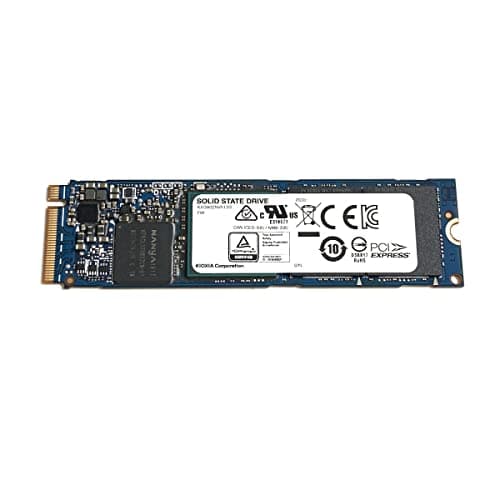
The KIOXIA XG6 512 GB is a power-efficient PCIe 3.0 NVMe SSD aimed at thin-and-light OEM laptops, offering strong sequential speeds, high endurance and optional hardware encryption.
The WD SN730 256 GB is a fast, power-efficient PCIe Gen3 x4 SSD with strong endurance, but its lack of DRAM and modest capacity make it less ideal for power users.
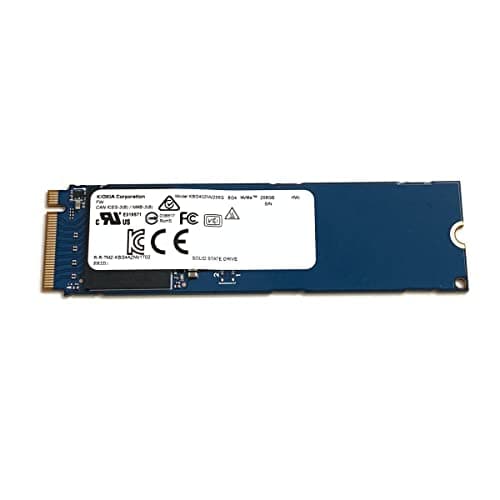
The KIOXIA BG4 256 GB SSD offers solid read performance and ultra-low power in a compact M.2 2280 form factor, targeting OEM and budget-conscious upgrades, but its DRAM-less design and modest write speeds limit suitability for heavy workloads.
Dell's 512 GB Class 40 M.2 2280 SSD offers solid PCIe 4 performance and good endurance for Dell laptops and desktops, though the lack of DRAM and limited benchmark data keep it from the high-end tier.
The Dell 512 GB Class 35 M.2 2230 NVMe SSD packs PCIe 4 x4 speed into a tiny footprint, making it ideal for ultrabooks and space-constrained devices, though thermal management and OEM-only availability can be drawbacks.
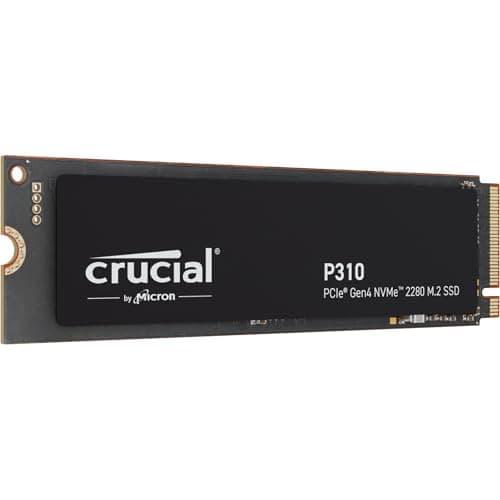
The Crucial P310 2 TB is a budget-friendly PCIe Gen4 x4 NVMe SSD that delivers flagship-class sequential speeds and strong random performance in a compact M.2 2280 package. Its DRAM-less architecture and QLC NAND keep costs low but limit endurance and sustained write consistency.

The Dell 512 GB Class 40 M.2 NVMe SSD offers mainstream PCIe 3.0 performance and excellent Dell system compatibility, though detailed endurance data and DRAM cache are not disclosed.
The KIOXIA XG6 256 GB SED is a secure, power-efficient PCIe 3.0 SSD with strong random performance, aimed at business laptops and thin-client PCs, though its sequential write speed and capacity are limited.
The KIOXIA BG4 512 GB SSD offers a low-power, thin solution with decent sequential performance and optional encryption, targeting ultrabooks and OEM deployments. Its lack of DRAM and modest endurance keep it from high-performance gaming or workstation use.
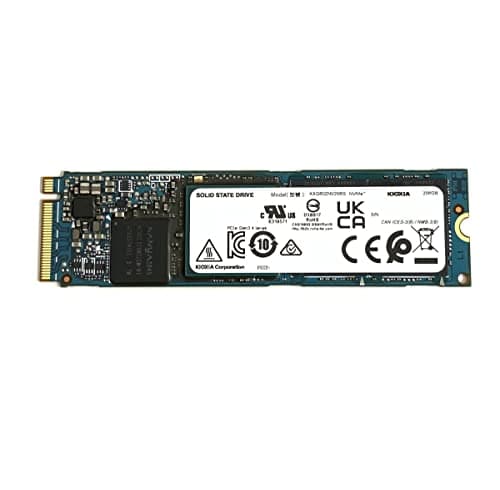
The KIOXIA XG6 256 GB SSD balances low power consumption and solid random performance for thin laptops and OEM use, but its PCIe 3.0 interface and modest endurance keep it out of high-end gaming or workstation categories.
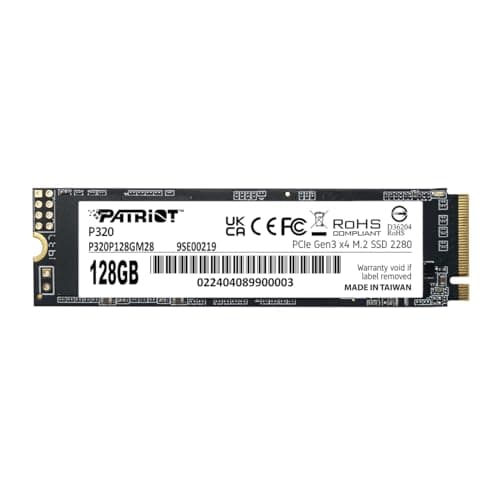
The Patriot P320 128 GB is an entry-level NVMe SSD that delivers decent boot-time performance while keeping power draw and size to a minimum, but its low capacity and modest write speeds limit its usefulness for heavier workloads.
| Attribute | | | | | KIOXIA XG6 256GB SED | KIOXIA BG4 512GB | Western Digital SN730 256GB | | | KIOXIA BG5 512GB | Dell SNP228G44 512GB | | | Dell SNP223G43 |
|---|---|---|---|---|---|---|---|---|---|---|---|---|---|---|
512 GB | 128 GB | 512 GB | 500 GB | 256 GB | 512 GB | 256 GB | 512 GB | 256 GB | 512 GB | 512 GB | 2,000 GBbest | 256 GB | 512 GB | |
4,400 MB/s | 1,600 MB/s | 3,100 MB/s | 5,000 MB/s | 3,050 MB/s | 2,200 MB/s | 3,150 MB/s | 2,500 MB/s | 2,000 MB/s | 4,400 MB/s | — | 7,100 MB/sbest | 3,050 MB/s | 3,500 MB/s | |
4,000 MB/s | 1,000 MB/s | 2,800 MB/s | 4,000 MB/s | 1,550 MB/s | 1,400 MB/s | 2,100 MB/s | 1,750 MB/s | 800 MB/s | 4,000 MB/s | — | 6,000 MB/sbest | 1,550 MB/s | 3,000 MB/s | |
350,000 IOPS | — | 325,000 IOPS | 460,000 IOPS | 270,000 IOPS | 330,000 IOPS | 270,000 IOPS | — | 200,000 IOPS | 350,000 IOPS | 400,000 IOPS | 1,000,000 IOPSbest | 270,000 IOPS | — | |
700,000 IOPS | — | 335,000 IOPS | 770,000 IOPS | 335,000 IOPS | 150,000 IOPS | 280,000 IOPS | — | 150,000 IOPS | 700,000 IOPS | 450,000 IOPS | 1,200,000 IOPSbest | 335,000 IOPS | — | |
300 TBW | 60 TBW | 300 TBW | 300 TBW | 150 TBW | 250 TBW | 200 TBW | — | 110 TBW | 300 TBW | 200 TBW | 440 TBWbest | 150 TBW | — | |
— | 0 years | 5 yearsbest | 5 yearsbest | 5 yearsbest | — | 5 yearsbest | 5 yearsbest | — | — | 5 yearsbest | 2 years | — | 5 yearsbest | |
| ↓ lower better | 4.7 W | — | 4.1 W | 6.3 W | 4 W | 3.1 W | 0.1 Wbest | — | 3 W | 4.7 W | 5 W | — | 4 W | — |
Click an attribute name to sort · Green = best, red = worst (relative to this comparison)
| Attribute | | | | | KIOXIA XG6 256GB SED | KIOXIA BG4 512GB | Western Digital SN730 256GB | | | KIOXIA BG5 512GB | Dell SNP228G44 512GB | | | Dell SNP223G43 |
|---|---|---|---|---|---|---|---|---|---|---|---|---|---|---|
Performance(6) | ||||||||||||||
Sequential Read Speed (MB/s) | 4400 MB/s | 1600 MB/s | 3100 MB/s | 5000 MB/s | 3050 MB/s | 2200 MB/s | 3150 MB/s | 2500 MB/s | 2000 MB/s | 4400 MB/s | 3500-4500 MB/s | 7100 MB/s | 3050 MB/s | 3500 MB/s |
Sequential Write Speed (MB/s) | 4000 MB/s | 1000 MB/s | 2800 MB/s | 4000 MB/s | 1550 MB/s | 1400 MB/s | 2100 MB/s | 1750 MB/s | 800 MB/s | 4000 MB/s | 2500-3500 MB/s | 6000 MB/s | 1550 MB/s | 3000 MB/s |
Random Read IOPS (IOPS) | 350000 IOPS | — | 325000 IOPS | 460000 IOPS | 270000 IOPS | 330000 IOPS | 270000 IOPS | — | 200000 IOPS | 350000 IOPS | 400000 IOPS | 1000000 IOPS | 270000 IOPS | — |
Random Write IOPS (IOPS) | 700000 IOPS | — | 335000 IOPS | 770000 IOPS | 335000 IOPS | 150000 IOPS | 280000 IOPS | — | 150000 IOPS | 700000 IOPS | 450000 IOPS | 1200000 IOPS | 335000 IOPS | — |
Interface | PCIe 3.0 x4 | PCIe Gen3 x4 | PCIe 3.0 x4 | PCIe Gen 4.0 x4 | PCIe 3.0 x4 | PCIe Gen3 x4 | PCIe Gen3 x4 NVMe | PCIe 3.0 x4 | PCIe 3.0 x4 | PCIe 4.0 x4 | PCIe 4.0 x4 NVMe 1.4 | PCIe Gen4 x4 | PCIe Gen3 x4 | NVMe PCIe Gen 4.0 x4 |
DRAM Cache (Yes/No) | false | false | true | false | false | false | false | false | false | false | false | false | false | false |
Security(1) | ||||||||||||||
Hardware Encryption | true | — | true | true | true | true | — | — | false | true | — | — | true | true |
Storage(6) | ||||||||||||||
Capacity (GB) | 512 GB | 128 GB | 512 GB | 500 GB | 256 GB | 512 GB | 256 GB | 512 GB | 256 GB | 512 GB | 512 GB | 2000 GB | 256 GB | 512 GB |
Form Factor | M.2 2230 | M.2 2280 | M.2 2280 S2 | M.2 2280 | M.2 2280 S2 | M.2 2280 | M.2 2280 | M.2 2280 | M.2 2280 | M.2 2230 | M.2 2280 | M.2 2280 | M.2 2280 | M.2 2230 |
NAND Type | — | 3D NAND (budget-tier) | 96-layer BiCS FLASH TLC | TLC | 96-layer BiCS FLASH TLC | TLC | 96-layer 3D NAND | TLC NAND | TLC | TLC | TLC | QLC | TLC | TLC |
Endurance (TBW) (TBW) | 300 TBW | 60 TBW | 300 TBW | 300 TBW | 150 TBW | 250 TBW | 200 TBW | — | 110 TBW | 300 TBW | 200 TBW | 440 TBW | 150 TBW | — |
Warranty Period (years) | — | 0 years | 5 years | 5 years | 5 years | — | 5 years | 5 years | — | — | 5 years | 2 years | — | 5 years |
MTBF (hours) | 1500000 hours | — | 1500000 hours | — | 1500000 hours | 1500000 hours | 1750000 hours | — | 1500000 hours | 1500000 hours | — | — | 1500000 hours | — |
Power & Energy(3) | ||||||||||||||
Idle Power Consumption (W) | 0.003 W | — | 0.003 W | — | 0.003 W | — | 0.03 W | — | 0.005 W | 0.003 W | 0.05 W | — | — | — |
Active Power Consumption (W) | 4.7 W | — | 4.1 W | 6.3 W | 4.0 W | 3.1 W | 0.1 W | — | 3.0 W | 4.7 W | 5 W | — | 4.0 W | — |
Operating Temp (Max) (°C) | 85 °C | — | 95 °C | — | 95 °C | 85 °C | — | — | 85 °C | 85 °C | 70 °C | 70 °C | 85 °C | — |
Design & Build(2) | ||||||||||||||
Weight (g) | 2.8 g | 10 g | 7.0 g | 5.7 g | 7 g | 8.3 g | 9 g | 22.7 g | 2.5 g | 2.8 g | 45.4 g | 7 g | 7 g | 9 g |
Thickness (mm) | 2.23 mm | 22 mm | 2.23 mm | 2.54 mm | 2.23 mm | 2.38 mm | 2.54 mm | 2.54 mm | 2.23 mm | 2.23 mm | 2.38 mm | 2.38 mm | 2.23 mm | 2.5 mm |
Products in the top-left offer the best value (high score, low price).
Professional analysts praise the XG8 variant for delivering near-enterprise endurance and top-tier sequential performance, while the BG6 version is lauded for its ultra-compact size and power efficiency; both are noted to suffer from the lack of DRAM cache and possible throttling under sustained loads.
Everyday users highlight fast system boot and reliable operation, but express frustration with limited retail availability and occasional throttling during prolonged writes.
“smooth boot times and fast application loading compared to HDDs”
“no issues after months of use”
“smooth boot times, fast application loading, and reliable performance”
Crucial P3 suits budget-conscious consumers; KIOXIA BG4 is preferable for OEM, embedded, or security-focused deployments.
Professional reviewers praise the P320 for its attractive price-to-performance ratio, solid thermal and data-integrity features, and a reassuring five-year warranty, but they caution that the 128 GB capacity is barely enough for a modern Windows OS and that the drive is not aimed at demanding workloads.
Everyday users are generally satisfied, highlighting faster boot and app load times, easy installation, and reliable operation over months, while repeatedly noting the drive's limited storage space and modest write speeds as the main drawbacks.
Professional reviewers praise the XG6 for its reliable, high-efficiency operation, noting consistent performance and excellent power efficiency, while pointing out the lack of Gen4 support and suggesting better-value Gen4 drives for DIY enthusiasts.
Everyday users appreciate fast boot and app loads, low heat and reliability, but complain about limited retail availability, occasional throttling during long writes, and the absence of a management tool.
Professional reviewers view the SN5000 as a solid upgrade from SATA and PCIe 3.0 SSDs, highlighting its TLC NAND, dynamic SLC cache, and budget-friendly pricing. While they commend its value and lack of a required heatsink, they caution that real-world pricing and the drive's lower write performance keep it from challenging premium offerings.
Everyday users generally praise the drive for fast boot times, reliable operation, and the long warranty, but many complain about fulfillment errors, unresponsive seller support, and occasional heat buildup during intensive tasks.
Professional reviewers would likely commend the XG6 SED for its solid security features, high random I/O performance, and power-efficient design, while noting the drawbacks of a PCIe 3.0 interface and lack of DRAM cache for sustained workloads.
Everyday users appreciate easy installation, reliable boot performance, and hardware encryption, but complain about limited capacity, occasional write speed throttling, and confusion between standard and SED models.
Professional reviewers note the BG4 series delivers a solid mix of speed and efficiency for entry-level NVMe storage, though it falls short of top-tier Gen4 drives due to the absence of DRAM.
Everyday users praise easy installation, consistent everyday performance, and low heat/power, while some report confusion over variant sizes and occasional write-speed throttling after cache depletion.
Professional reviewers note that the SN730 256GB delivers the advertised sequential speeds and is well suited for low-power ultrabooks, but its lack of DRAM and lower performance relative to larger capacity SKUs make it less compelling for power users.
Everyday users appreciate the quick boot and app load times, reliability, and long warranty, while some complain about limited capacity and occasional BIOS compatibility hiccups.
Professional reviewers note that Dell's Class 40 SSD is positioned as a mainstream NVMe drive that prioritizes system compatibility and stability over peak performance, using cost-effective TLC NAND and likely Host Memory Buffer.
Everyday users praise the SSD for easy installation, immediate performance gains, reliability and quiet operation, while complaining about the lack of published speed/endurance specs and limited use outside Dell machines.
Professional reviewers view the BG4 as a solid, cost-effective boot drive for OEM and budget systems, praising its low power draw and compact design while noting the lack of DRAM and modest write speeds make it unsuitable for sustained, write-intensive workloads.
Everyday users appreciate the noticeable speed boost over SATA drives and the low heat generation, but complain about slower write performance and occasional inconsistency during heavy multitasking.
Professional reviewers praise the BG6 512 GB for bringing true PCIe 4.0 performance to the ultra-compact 2230 size, noting its impressive sequential speeds, low power draw, and solid endurance, while cautioning about the lack of onboard DRAM and potential thermal throttling.
Everyday users appreciate the drive's speed boost, tiny size, and price-to-performance ratio, but report occasional performance slow-downs after the SLC cache is depleted and frustration over limited retail availability.
Professional reviewers note that Dell's Class 40 SSDs are dependable and well-tuned for Dell machines, but employ cost-focused controllers and lack the raw performance of flagship retail drives.
Everyday users generally appreciate faster boot times and smooth multitasking, though many mention difficulty finding drivers or firmware outside Dell's portal and occasional throttling under heavy loads.
Professional reviewers rate the P310 at 3.5/5, praising its strong sequential and random write performance, compact design, and energy-efficient HMB implementation, but they caution about its QLC endurance, lack of DRAM, and premium price unless discounted.
Everyday users on Walmart give the drive a perfect 5-star rating, highlighting its lightning-fast speeds, plug-and-play installation, and reliability for gaming and general use. Minor complaints mention its mid-range speed positioning and lack of a heatsink.
Professional reviewers praise the XG6 for its efficient power draw, solid endurance, and balanced performance for OEM thin-and-light laptops, while noting it isn't the fastest Gen3 option and lacks PCIe 4.0.
Everyday users appreciate fast boot times and smooth multitasking, but many complain about the limited 256 GB capacity and write-speed slowdown once the cache is depleted.
Professional reviewers note that the drive hits a sweet spot for modern ultraportables, offering PCIe Gen 4 bandwidth in a tiny 2230 package, but caution that limited thermal headroom often necessitates additional cooling.
Everyday users overwhelmingly praise the SSD for plug-and-play ease, noticeable speed boosts, and broad compatibility, while recurring complaints focus on thermal throttling, firmware inconsistencies, and higher price.
