Rankings
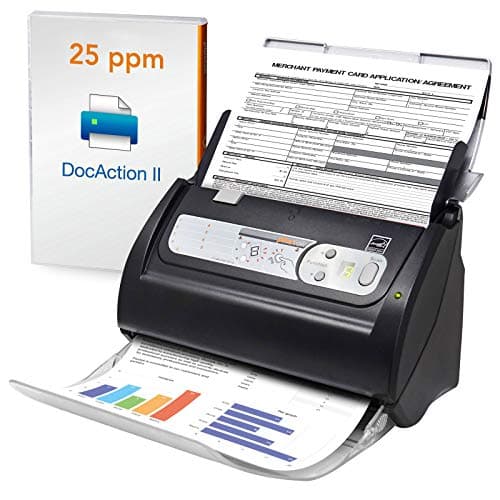
The Plustek PS186 is a compact duplex sheet-fed scanner offering true two-sided scanning, barcode handling and FTP integration, making it suitable for small-office document workflows. Its limitations include lack of support for books, manual handling of duplex pages, and only USB 2.0 connectivity. Ideal for users who need efficient scanning of flat documents with barcode automation.
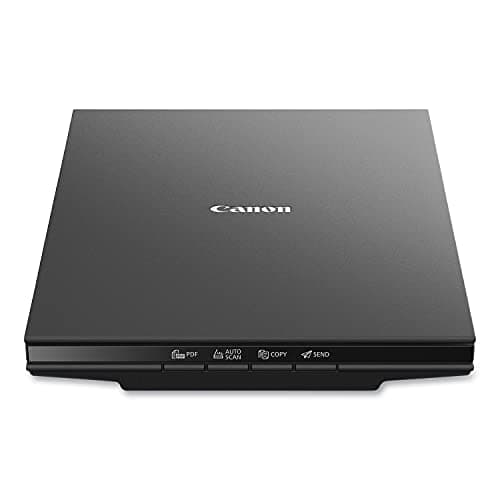
The Canon CanoScan LiDE 300 is a compact flatbed scanner delivering 2400 × 2400 dpi optical resolution and fast 10-second A4 color scans. It lacks an automatic document feeder and modern connectivity options, making it best suited for home users and occasional scanning tasks.
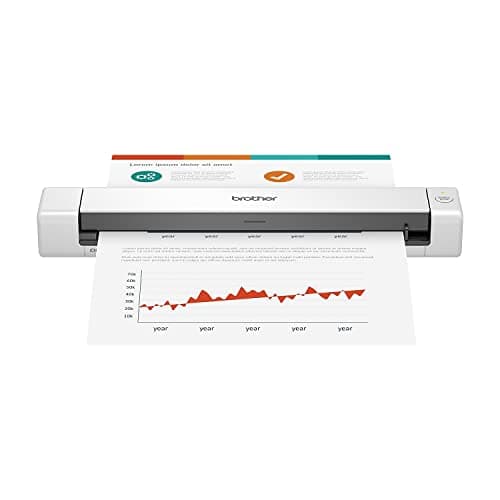
The Brother DS-640 is a compact, USB-powered scanner delivering 600 dpi color scans and built-in OCR, ideal for mobile, occasional scanning tasks. Its lack of duplex capability and an automatic feeder limit its usefulness for higher-volume or double-sided work. Best suited for travelers and home-office users needing quick single-page scans.
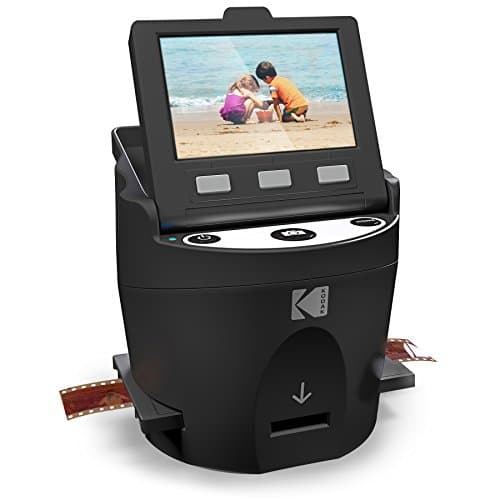
The Kodak SCANZA (RODFS35) is a compact, standalone film and slide scanner that quickly digitizes 35 mm and other legacy formats with an under-2-second per frame speed. Its film handling can be cumbersome and it lacks advanced software, which may affect consistency for demanding users. Ideal for hobbyists and collectors who need a portable, fast solution for occasional film digitization.
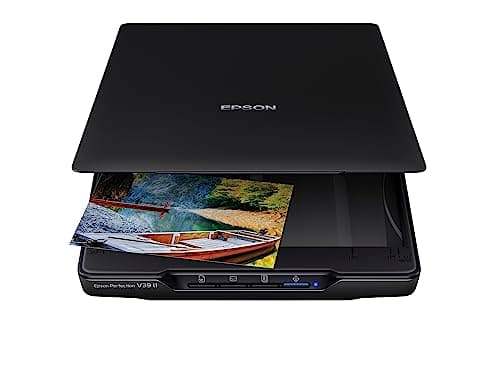
The Epson Perfection V39 II is a compact flatbed scanner offering exceptional 4800 dpi resolution and USB-bus power for space-saving use. It lacks an automatic feeder and is limited to A4-size media, which can slow high-volume tasks. Best suited for home users and photographers needing high-detail scans in a small footprint.
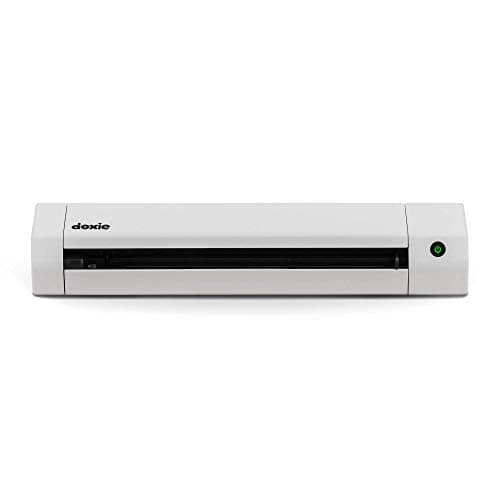
The Doxie Go SE offers true portable scanning with battery power, internal storage and ABBYY OCR, making it convenient for field work. Its slow scan speed, lack of an ADF and limited resolution reduce suitability for high-volume or high-detail tasks. Ideal for freelancers and mobile professionals needing occasional on-the-go digitization.
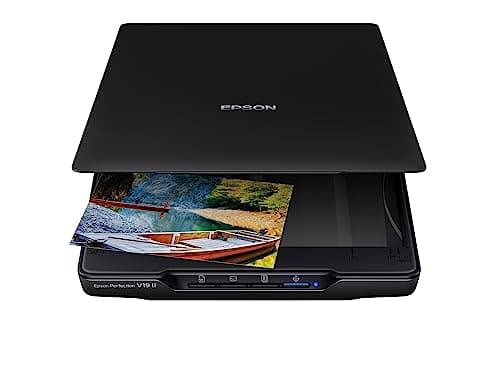
The Epson Perfection V19 II provides 4800 dpi resolution in a lightweight, USB-powered flatbed with one-touch PDF and OCR functions. Its limitations are the absence of an ADF, reliance on a micro-USB connector, and no wireless capability. It fits well for students and casual users needing portable high-resolution scanning.
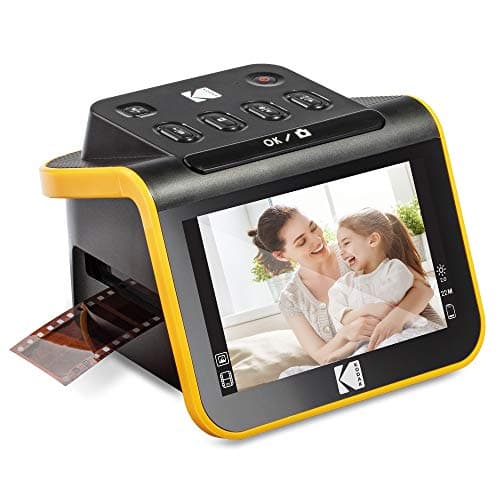
The Kodak Slide N Scan (RODFS50) is a portable, standalone film digitizer with a 5-inch LCD and HDMI output, ideal for hobbyists converting 35 mm slides. Its 14 MP native sensor limits high-detail work and manual loading slows workflow. Best suited for casual users who need quick, on-the-go digitization of common film formats.
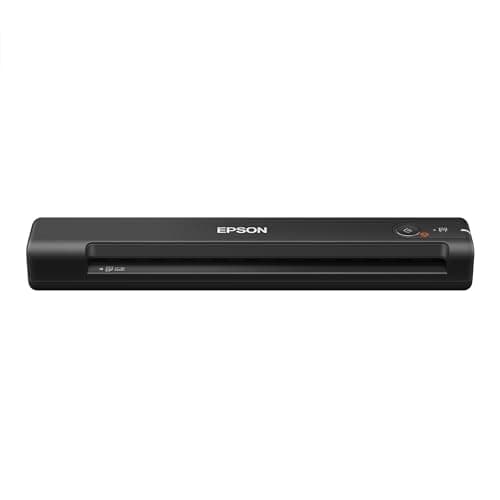
The Epson ES-50 is a compact, USB-powered portable scanner offering 600 dpi resolution and built-in OCR for on-the-go document capture. Its single-sheet feed and slower multi-page performance make it unsuitable for high-volume scanning tasks. Perfect for mobile professionals needing occasional single-page scans.
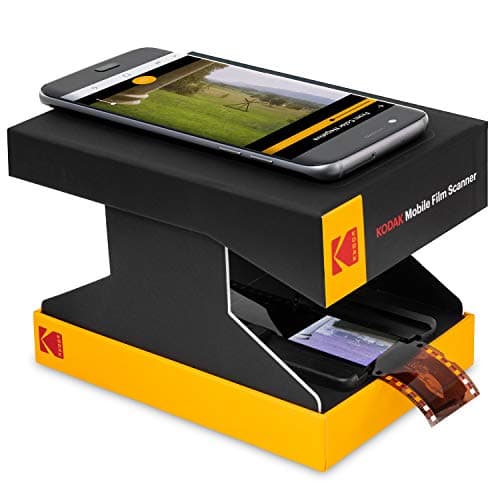
The Kodak RODMFS50 is a portable, battery-powered film scanner with a built-in 5-inch LCD and HDMI output for on-the-go digitization of 35 mm media. Its trade-offs are low native resolution and slow manual feeding, making it less suitable for professional archival work. Best for hobbyists and travelers who need quick standalone scans.
| Attribute | | | | | | | | | | |
|---|---|---|---|---|---|---|---|---|---|---|
— | 2,400 dpi | 600 dpi | — | 4,800 dpibest | 600 dpi | 600 dpi | 4,800 dpibest | — | 600 dpi | |
— | — | 10 ppm | — | 3 ppm | 16 ppm | 7.5 ppm | 6 ppm | — | 25 ppmbest | |
— | — | 1 pages | — | 1 pages | — | — | — | — | 50 pagesbest | |
— | 48 bitsbest | — | — | 48 bitsbest | — | — | 48 bitsbest | — | 24 bits | |
| ↓ lower better | — | 4.5 W | — | — | 2.5 Wbest | — | — | 2.5 Wbest | — | — |
50 mm | 297 mm | 1,828.8 mm | — | 297 mm | 215.9 mm | — | 297 mm | — | 2,500 mmbest | |
| ↓ lower better | 0.454 kg | 1.633 kg | 0.27 kg | 0.454 kg | 1.41 kg | 0.467 kg | 0.535 kg | 1.41 kg | 0.249 kgbest | 1.66 kg |
— | 1 yearsbest | 1 yearsbest | — | 1 yearsbest | 1 yearsbest | 1 yearsbest | 1 yearsbest | 1 yearsbest | — |
Click an attribute name to sort · Green = best, red = worst (relative to this comparison)
| Attribute | | | | | | | | | | |
|---|---|---|---|---|---|---|---|---|---|---|
Features(2) | ||||||||||
Duplex Scanning | — | false | false | — | false | false | — | false | — | true |
ADF Capacity (pages) | — | — | 1 pages | — | 1 pages | — | — | — | — | 50 pages |
Power & Energy(1) | ||||||||||
Power Consumption (Operating) (W) | — | 4.5 W | — | — | 2.5 W | — | — | 2.5 W | — | — |
Performance(3) | ||||||||||
Optical Resolution (dpi) | — | 2400 dpi | 600 dpi | — | 4800 dpi | 600 dpi | 600 dpi | 4800 dpi | — | 600 dpi |
Scan Speed (pages per minute) (ppm) | — | — | 10 ppm | — | 3 ppm | 16 ppm | 7.5 ppm | 6 ppm | — | 25 ppm |
Color Depth (bits) | — | 48 bits | — | — | 48 bits | — | — | 48 bits | — | 24 bits |
Connectivity(1) | ||||||||||
USB Version | USB 2.0 | USB 2.0 | USB 2.0 | USB 2.0 | USB 2.0 | USB 3.0 | — | USB 2.0 | — | USB 2.0 |
Design & Build(3) | ||||||||||
Maximum Document Size (mm) | 50 mm | 297 mm | 1828.8 mm | — | 297 mm | 215.9 mm | — | 297 mm | — | 2500 mm |
Weight (kg) | 0.454 kg | 1.633 kg | 0.27 kg | 0.454 kg | 1.41 kg | 0.4665 kg | 0.535 kg | 1.41 kg | 0.249 kg | 1.66 kg |
Dimensions (W×D×H) | 136x134x95 | 9.9 x 1.7 x 14.5 inches | 271.8 x 33.0 x 45.7 mm | 4.7244 x 4.99999 x 4.7244 inches | 9.9 x 14.4 x 1.5 inches | 55.88×35.56×302.26 mm | 2.25 x 1.75 x 12.2 in (W x H x D) | 9.9 x 14.4 x 1.5 inches | 11×15.5×4 mm | 127.5×263.1×148.1 mm |
Software(1) | ||||||||||
Included Software Packages (packages) | — | 2 packages | 3 packages | — | 1 packages | 1 packages | — | 3 packages | 1 packages | 1 packages |
Sensors(2) | ||||||||||
Light Source | — | RGB LED | — | — | LED | — | — | LED | LED | — |
Image Sensor Type | CMOS | CIS | CIS | CMOS | CIS | — | — | CIS | — | — |
Products in the top-left offer the best value (high score, low price).
Professional reviewers commend the Kodak RODFS50 for its user-friendly, standalone design and versatile film adapters, making it a solid choice for hobbyists who need quick, on-the-go digitization.
Everyday users generally praise the scanner's simplicity, portability, and ability to produce ready-viewable JPEGs on a TV, especially for family photo preservation. Common complaints revolve around the manual film loading process, limited resolution for large prints, and the restriction to certain film formats and SD card capacity.
“fits in bags, survives cold weather/truck use”
“perfect handling of varied paper without jams”
“black lines appear after initial uses even on flat paper”
Select LiDE 300 for everyday document and photo scanning with quick cloud sharing; pick V39 if you prioritize ultra-high photo resolution.
Select the Scanza if you need Super 8 capability; otherwise the RODFS50 offers a larger screen and HDMI output for a more versatile standalone experience.
Professional reviewers and Canon's own marketing portray the LiDE 300 as a sleek, affordable flatbed that offers high-resolution 2400 dpi scans and fast 10-second A4 color capture. They emphasize its ease of use via four EZ buttons, Auto Scan, and direct cloud upload, positioning it as an ideal low-cost solution for home and small-office environments.
While direct user reviews are scarce in the data, the product description suggests everyday users appreciate its simplicity, compact footprint, and one-touch operation. The lack of an ADF and limited macOS support are noted as potential drawbacks for power users.
Professional reviewers commend the ES-50 for its tiny footprint, solid 600 dpi output and USB-only simplicity, making it a handy tool for occasional mobile scans. However, they criticize its sluggish multi-page performance, lack of duplex automation, and limited feature set compared to newer Epson models that add wireless and higher resolution.
Everyday users repeatedly praise the scanner's portability, easy one-touch operation and reliable OCR, noting it outperforms phone apps for receipts and documents. Common complaints focus on black-line artifacts, the need to reinstall drivers, and the slow, manual process required for multi-page or duplex scanning.
Professional reviewers consider the Scanza a versatile, fast, and portable solution for digitizing a variety of legacy film formats. They appreciate its comprehensive adapter set and solid build, but note that film loading can be cumbersome and the lack of built-in advanced editing software may require post-processing on a computer.
Professional reviewers commend the V19 II for its low price, high 4800 dpi resolution, and fast 10-second letter-size scans, emphasizing its suitability for casual home and student use. They appreciate the OCR and photo-restoration tools but note the outdated Micro-USB port, limited batch software, and lack of an ADF as drawbacks for power users.
Everyday users consistently praise the scanner's lightweight, portable nature and reliable performance, especially the quick scan times and easy one-touch PDF/OCR functions. The most common criticisms revolve around the Micro-USB connector and the ScanSmart software's limited batch processing capabilities.
Professional reviewers praise the DS-640 for its excellent scan quality, vibrant color reproduction, and reliable OCR at a budget price, emphasizing its suitability for portable, occasional use. However, they consistently point out the lack of duplex scanning and an automatic feeder as significant drawbacks for any workflow that involves double-sided or multi-page documents.
Everyday users love the scanner's speed, portability, and ease of use, frequently mentioning the 3-second page scans and clear image output. Common complaints revolve around the missing duplex function, occasional paper jams, and a software installation process that can be slower than expected.
Professional reviewers and editors are not directly quoted in the sources, but manufacturer and retailer descriptions highlight the V39 II's high-resolution 4800 dpi clarity, quick 10-second scans at 300 dpi, and useful software tools such as Easy Photo Fix and OCR, positioning it as a reliable, space-saving solution for home scanning needs.
The available data contain no user reviews or direct consumer feedback, indicating that everyday users have not publicly shared detailed praise or complaints in the sources examined.
Professional reviewers commend the Kodak RODFS50 for its simplicity, built‑in 5‑inch preview screen and multi‑format adapters, positioning it as a solid entry‑level solution for hobbyists who need quick, standalone digitization. However, they consistently point out its low native resolution, manual feed speed and software quirks—especially the unreliable delete function—as significant drawbacks for any serious archival or bulk‑scanning work.
Professional reviewers commend the Kodak RODFS50 for its simplicity, built-in 5-inch preview screen and multi-format adapters, positioning it as a solid entry-level solution for hobbyists. Everyday users love the scanner's portability, USB power and the ability to view scans instantly on the built-in screen or a TV, but recurring frustrations involve the delete-button bug, edge cropping and slow manual feeding.
Professional reviewers praise the PS186 for its efficient dual-sided scanning, robust image processing, barcode auto-naming and FTP capabilities, noting its Energy Star rating and compact footprint as strong points, while criticizing its inability to handle books, the need to load each side of duplex documents separately, and its modest ADF capacity.
Everyday users appreciate the scanner's small size, lightweight build, rapid scanning speed and overall value, but commonly complain about the cumbersome handling of two-sided documents and the lack of support for scanning bound materials.
