Rankings
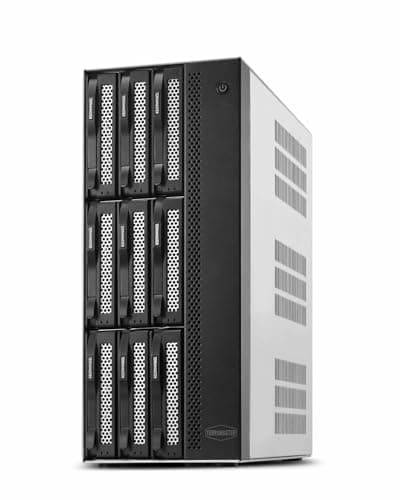
A 9-bay desktop NAS powered by an Intel i7-1255U, dual 10 GbE, and up to 216 TB raw capacity, targeting creative professionals and SMBs needing high throughput and flexible RAID.
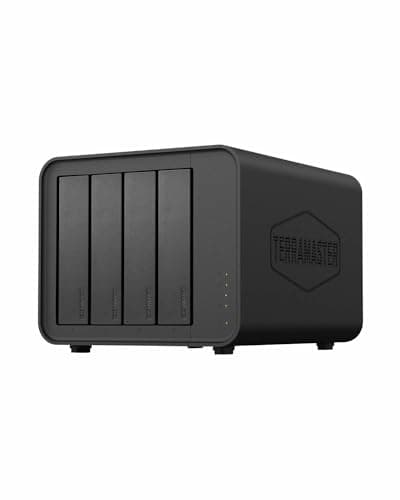
The TerraMaster F4-424 Pro is a high-performance 4-bay NAS aimed at business and media-centric use, featuring an 8-core Intel i3-N305 CPU, 32 GB DDR5 RAM and dual 2.5 GbE ports, supporting 4K 60 fps transcoding and NVMe caching.
A 1U rack-mountable 4-bay NAS with up to 32 TB capacity, quad-core CPU, dual 2.5 GbE ports and strong security features, suited for SMBs, but limited by modest memory and lack of SSD cache or snapshots.
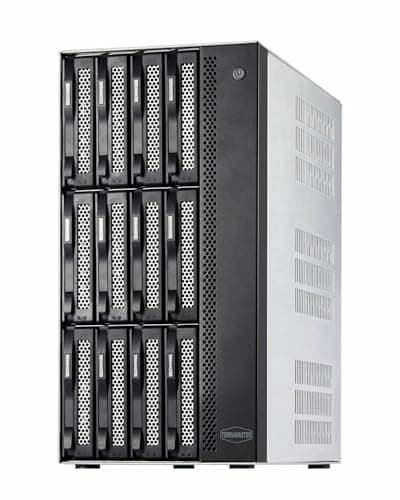
A 12-bay high-performance NAS with an i7 CPU, dual 10 GbE, and up to 288 TB storage, suited for SMBs and power users needing virtualization and media services.
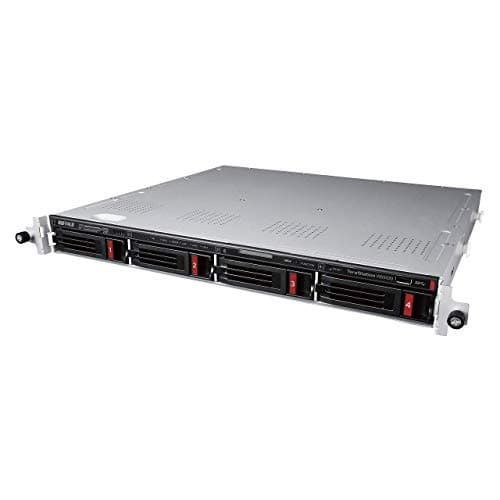
The TeraStation WS5420RN is a 4-bay 1U rackmount NAS running Windows Server IoT 2025, offering 48 TB of storage, 10 GbE networking and built-in NovaBACKUP. It provides a turnkey Windows-first solution but is constrained by a modest CPU and limited RAM.
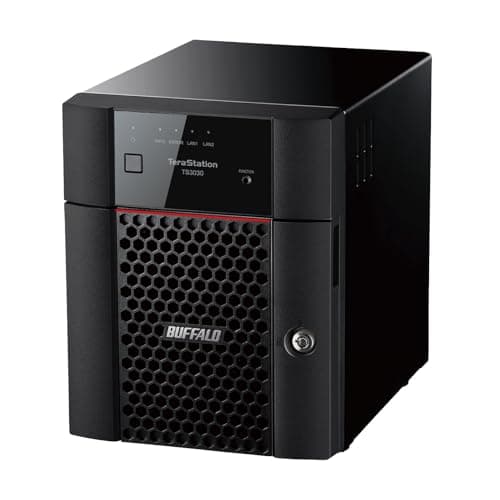
The TeraStation 3430DN is a 4-bay desktop NAS aimed at SMBs, offering 32 TB of storage, strong security features, and dual Ethernet ports. It provides reliable 24/7 operation but is limited by modest RAM and lack of SSD caching.
A secure, rack-mountable 4-bay NAS with built-in drives, 2.5 GbE networking and strong encryption, aimed at small offices and home labs, but constrained by modest memory and lack of performance-enhancing features.
The TeraStation Essentials 2025 is a 4-bay NAS with pre-installed HDDs, 2.5 GbE networking and strong security features, aimed at small-office environments that value data protection and remote management. It offers solid reliability but lacks advanced features like snapshots and high-speed networking.
The TeraStation 3230DN is a compact 2-bay NAS with 2.5 GbE networking and strong security features, aimed at small-to-medium businesses. It offers solid performance for basic workloads but is limited by modest RAM and lack of SSD caching.
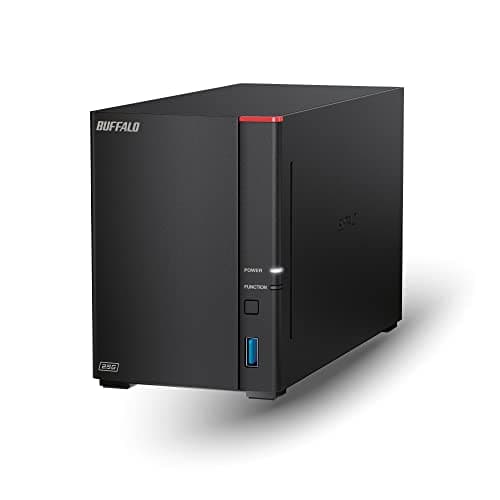
The Buffalo LinkStation 720 is a 2-bay NAS that ships with drives pre-configured in RAID 1, offering simple plug-and-play storage with 2.5 GbE and basic backup features.
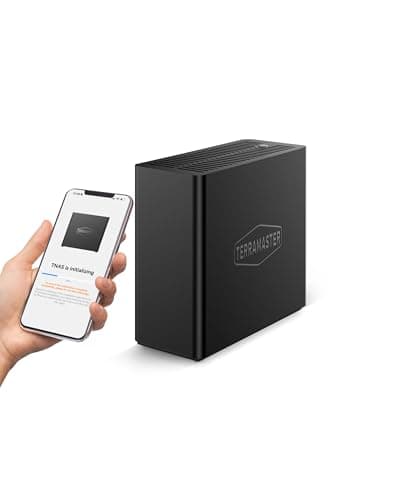
A compact 4-bay all-SSD NAS with an Intel N95 CPU, 5 GbE, and strong media capabilities, ideal for home media enthusiasts.
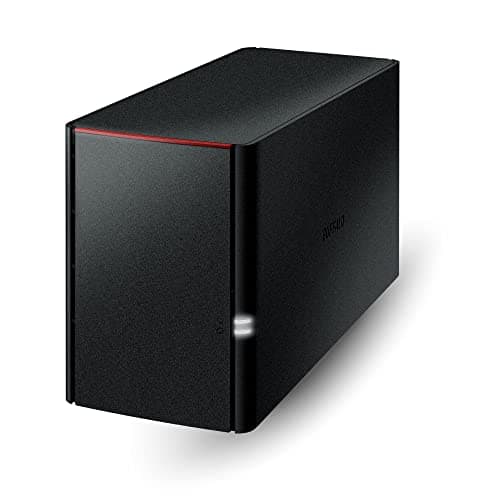
The LinkStation SoHo 220 is an entry-level 2-bay NAS offering 8 TB of pre-installed storage with basic RAID options. It excels in simplicity and low power draw but falls short on performance, security, and modern connectivity features.
A 1U 4-bay rackmount NAS with an Intel i3 CPU, dual 10 GbE, and up to 96 TB raw capacity, aimed at SMBs needing fast backup and media streaming.
| Attribute | | | | | | Buffalo TeraStation TS3430RN | | | Buffalo TS3230DN | Buffalo TeraStation TS3420R | | Terramaster U4-500 | |
|---|---|---|---|---|---|---|---|---|---|---|---|---|---|
288 TBbest | 216 TB | 32 TB | 88 TB | 16 TB | 32 TB | 8 TB | 16 TB | 16 TB | 32 TB | 32 TB | 96 TB | 48 TB | |
12best | 9 | 4 | 4 | 2 | 4 | 2 | 4 | 2 | 4 | 4 | 4 | 4 | |
10 Gbpsbest | 10 Gbpsbest | 2.5 Gbps | 2.5 Gbps | 2.5 Gbps | 2.5 Gbps | 1 Gbps | 2.5 Gbps | 2.5 Gbps | 2.5 Gbps | 5 Gbps | 10 Gbpsbest | 10 Gbpsbest | |
10best | 10best | 4 | 8 | 6 | 4 | — | 4 | 4 | — | 4 | 6 | 2 | |
16 GB | 16 GB | 2 GB | 32 GBbest | 2 GB | 2 GB | 0.256 GB | 2 GB | 2 GB | 1 GB | 8 GB | 8 GB | 8 GB | |
| ↓ lower better | 115 W | — | — | 33 W | 48 W | — | 48 W | 85 W | — | 100 W | 32 Wbest | — | — |
| ↓ lower better | 24.5 dB | — | — | 21 dB | — | — | — | — | — | — | 19 dBbest | 34.5 dB | — |
2 years | 2 years | 3 yearsbest | 2 years | 2 years | 3 yearsbest | 3 yearsbest | 3 yearsbest | 3 yearsbest | 3 yearsbest | 2 years | 2 years | 3 yearsbest |
Click an attribute name to sort · Green = best, red = worst (relative to this comparison)
| Attribute | | | | | | Buffalo TeraStation TS3430RN | | | Buffalo TS3230DN | Buffalo TeraStation TS3420R | | Terramaster U4-500 | |
|---|---|---|---|---|---|---|---|---|---|---|---|---|---|
Security(2) | |||||||||||||
Hardware Encryption | true | true | true | true | — | true | false | true | true | true | true | true | true |
OS Compatibility | TOS 6 | TOS 6 | Windows 10/11/Server 2016–2022, macOS 12+, Chrome OS | TOS 5.0 | Proprietary | — | Windows 11/10/8.1/8/7/Vista/Server 2003–2012 R2, macOS up to 10.12 (Sierra) and later | — | Windows 10/11/Server 2016/2019/2022, macOS 12+, Chrome OS | Windows, macOS, Linux | TOS 6 | TOS 6 | Windows Server IoT 2025 |
Performance(6) | |||||||||||||
CPU Model | Intel i7-1255U | Intel i7-1255U | Annapurna Labs Alpine AL-524 Quad-Core CPU | Intel Core i3-N305 | — | Annapurna Labs Alpine AL524 Quad-core CPU | ARMADA 370 (Dual‑Issue ARM) | Annapurna Labs Alpine AL-214 | Annapurna Labs Alpine AL524 | Annapurna Labs Alpine AL214 | Intel N95 | Intel i3-1215U | Dual-core Atom |
CPU Cores | 10 | 10 | 4 | 8 | 6 | 4 | — | 4 | 4 | — | 4 | 6 | 2 |
System Memory (GB) | 16 GB | 16 GB | 2 GB | 32 GB | 2 GB | 2 GB | 0.256 GB | 2 GB | 2 GB | 1 GB | 8 GB | 8 GB | 8 GB |
Ethernet Speed (Gbps) | 10 Gbps | 10 Gbps | 2.5 Gbps | 2.5 Gbps | 2.5 Gbps | 2.5 Gbps | 1 Gbps | 2.5 Gbps | 2.5 Gbps | 2.5 Gbps | 5 Gbps | 10 Gbps | 10 Gbps |
Power Consumption (Active) (W) | 115 W | — | — | 33 W | 48 W | — | 48 W | 85 W | — | 100 W | 32 W | — | — |
Noise Level (dB) | 24.5 dB | — | — | 21 dB | — | — | — | — | — | — | 19 dB | 34.5 dB | — |
Build & Design(3) | |||||||||||||
Weight (kg) | 7.9 kg | — | 7.30 kg | 1.905 kg | 2.31 kg | 12.61 kg | 2.72 kg | 7.08 kg | 4.31 kg | 7.7 kg | 0.6 kg | 6.2 kg | — |
Power Supply Type | 500W internal | — | — | Internal | — | — | — | — | — | — | external | — | — |
Warranty Period (years) | 2 years | 2 years | 3 years | 2 years | 2 years | 3 years | 3 years | 3 years | 3 years | 3 years | 2 years | 2 years | 3 years |
Connectivity(3) | |||||||||||||
Supported Network Protocols | — | — | CIFS/SMB, AFP, FTP, FTPS, SFTP, NFS, TCP/IP, iSCSI | IPv4/IPv6, CIFS/SMB, NFS, FTP, SFTP, HTTPS, SSH, iSCSI, SNMP | — | CIFS/SMB, AFP, FTP, FTPS, SFTP, NFS, TCP/IP, iSCSI | TCP/IP, CIFS/SMB, AFP, FTP, FTPS | — | CIFS/SMB, AFP, FTP, FTPS, SFTP, NFS, TCP/IP, iSCSI | TCP/IP, SMB, AFP, NFS, FTP, SFTP, WebDAV | — | — | — |
Link Aggregation Support | true | true | — | true | — | — | false | false | — | — | true | true | — |
USB Ports | 4 | 4 | 2 | 2 | 3 | 3 | 1 | 2 | 2 | 2 | 3 | 4 | — |
Storage & Capacity(4) | |||||||||||||
Maximum Raw Capacity (TB) | 288 TB | 216 TB | 32 TB | 88 TB | 16 TB | 32 TB | 8 TB | 16 TB | 16 TB | 32 TB | 32 TB | 96 TB | 48 TB |
Drive Bays | 12 | 9 | 4 | 4 | 2 | 4 | 2 | 4 | 2 | 4 | 4 | 4 | 4 |
RAID Support | Single, RAID 0, 1, 5, 6, 10, JBOD, TRAID, TRAID+ | RAID 0, 1, 5, 6, 10, TRAID, TRAID+ | RAID 0, RAID 1, RAID 5, RAID 6, RAID 10, JBOD | TRAID, RAID 0, RAID 1, RAID 5, RAID 6, RAID 10, JBOD, Single | RAID 0, RAID 1, JBOD | RAID 0,1,5,6,10,JBOD | RAID 0, RAID 1, JBOD | RAID 0, 1, 5, 6, 10, JBOD | RAID 0, RAID 1, RAID 10, JBOD | RAID 0,1,5,6,10,JBOD | TRAID, TRAID+, RAID 0, 1, 5, 6, 10, JBOD, Single | RAID 0, 1, 5, 6, 10, JBOD, Single, TRAID, TRAID+ | RAID 0, RAID 5, RAID 6 |
Supported Drive Types | SATA | SATA | 3.5" SATA III | 3.5" SATA HDD, 2.5" SATA HDD, SATA SSD | SATA III 3.5" HDD | 3.5" SATA III | 3.5" SATA II HDD | HDD (CMR) | 3.5" SATA III | 3.5" SATA III | PCIe 3.0/4.0/5.0 NVMe M.2 2280 | SATA III, NVMe PCIe 4.0 x4 (caching) | 3.5" SATA |
Products in the top-left offer the best value (high score, low price).
Professional reviewers praise the T12-500 Pro for its desktop-class i7 processor, dual 10 GbE connectivity, and flexible TRAID system, noting enterprise-level performance at a competitive price, while calling out the lack of redundant power and plastic drive trays.
Professional reviewers commend the T9-500 Pro for its high-end Intel i7 processor, dual 10 GbE ports, and metal chassis, noting enterprise-level performance, while pointing out the diskless nature and less mature TOS 6 UI.
“Set up in under 30 minutes. Perfect for our 20-person office. Security features give us confidence.”
“The fan can get noisy during heavy use, but overall it's reliable.”
“I wish it had SSD caching for faster access to hot files.”
Everyday users rave about blazing transfer speeds over 10 GbE and easy RAID configuration, but note fan noise, a learning curve with TOS, and the need to buy drives separately.
Professional reviewers commend the TeraStation 3430DN for its solid reliability, strong security posture and straightforward deployment, noting the 2.5 GbE port and closed-system architecture set it apart in the SMB segment.
Everyday users appreciate the plug-and-play experience, dependable uptime, and robust security features, especially the ransomware detection, while noting fan noise and limited RAM as drawbacks.
Professional reviewers praise the F4-424 Pro for its unmatched CPU power, abundant DDR5 memory, and advanced media capabilities such as 4K 60 fps transcoding with AV1 support. The dual M.2 slots and TRAID flexibility are highlighted as strong differentiators, while the plastic enclosure, lack of 10 GbE, and limited physical security features are noted as drawbacks.
Everyday users appreciate the fast performance, smooth 4K streaming, and the convenience of NVMe caching, often noting the ample RAM as a major plus. Recurring complaints focus on the non-upgradable memory, the cheap-feel plastic chassis, and the missing front USB and security lock.
Reviewers commend its plug-and-play simplicity and solid transfer speeds, but note the lack of an app ecosystem and limited advanced features.
Users love the quick setup and RAID-1 reliability, while some complain about fan noise and limited extensibility.
Professional reviewers praise the TeraStation 3430RN for its rock-solid reliability, robust security suite and straightforward deployment, highlighting the pre-configured RAID, rail kit and 2.5 GbE networking as key strengths. They note, however, that the modest 2 GB of non-ECC RAM, lack of SSD cache and absence of snapshot capabilities make it less suitable for high-performance or mission-critical scenarios.
Everyday users consistently commend the NAS for its easy setup, dependable day-to-day performance and strong security features, especially the ransomware detection and two-factor authentication. Recurring complaints focus on slower-than-advertised transfer speeds, limited memory causing performance hiccups, and the desire for snapshot functionality and lighter hardware.
Professional reviewers view the LS220D0802B as a budget-oriented, plug-and-play NAS that sacrifices performance and security for simplicity and cost.
Everyday users appreciate the straightforward setup and reliable operation, but complain about slow transfer speeds and the lack of encryption.
Professional reviewers praise the TeraStation Essentials for its security-first architecture, reliable Japanese build quality, and responsive 24/7 US support, positioning it as a solid, low-maintenance NAS for SMBs that value data protection over advanced feature sets.
Everyday users highlight the device's ease of setup, robust encryption, and dependable remote management, while noting the lack of a mobile app and slower RAID rebuilds as drawbacks.
Professional reviewers describe the TeraStation 3230DN as a reliable, secure and easy-to-deploy NAS for small businesses, emphasizing its 2.5 GbE networking, TAA compliance and closed-system security.
Everyday users are generally satisfied, praising the quick setup, fast 2.5 GbE transfers, robust ransomware protection and sturdy build, while noting limited memory and lack of SSD cache as drawbacks.
Professional reviewers view the TeraStation Essentials as a solid, security-focused NAS that delivers enterprise-grade features at a modest price, highlighting its built-in drives, 2.5 GbE port and comprehensive warranty, while noting the omission of iSCSI, failover and SSD caching as trade-offs for its lower cost.
Everyday users praise the device for its straightforward, out-of-the-box setup, reliable support and robust security, but commonly express concerns about limited memory, the default RAID5 capacity reduction and the lack of performance-enhancing features such as SSD cache or 10 GbE.
Professional reviewers praise the F4 SSD as a breakthrough in compact, high-performance NAS design, highlighting its small footprint, quiet dual-fan cooling, upgradable RAM, 5 GbE + HDMI 2.1 connectivity, and robust hardware transcoding. Criticisms focus on limited PCIe lanes, lack of ECC memory, and single 5 GbE port.
Everyday users appreciate the silent operation, tiny form factor, straightforward setup, and flexible TRAID storage, while noting concerns about potential bottlenecks and missing physical security features.
Professional reviewers consider the U4-500 a performance leader in the SMB NAS segment, lauding its dual 10 GbE ports, DDR5 memory, and TOS 6 feature set, while noting limitations such as lack of PCIe expansion and modest base RAM.
Everyday users highlight easy setup, fast backup and streaming, but complain about fan noise, a learning curve for RAID/caching, and occasional software glitches.
Professional reviewers describe the WS5420RN as a Windows-first NAS that delivers day-one readiness with pre-installed drives and a familiar Windows Server interface, eliminating CAL licensing and adding value through NovaBACKUP and VSS snapshots.
Everyday users praise the quick Windows-like setup, seamless Azure/OneDrive integration and built-in backup, while noting limited RAM, fan noise and lack of a mobile app as drawbacks.
