Rankings
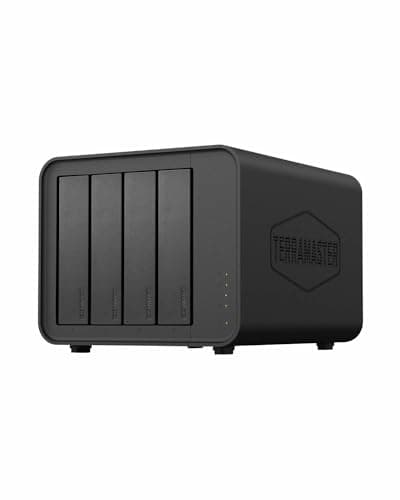
The TerraMaster F4-424 Pro is a high-performance 4-bay NAS aimed at business and media-centric use, featuring an 8-core Intel i3-N305 CPU, 32 GB DDR5 RAM and dual 2.5 GbE ports, supporting 4K 60 fps transcoding and NVMe caching.
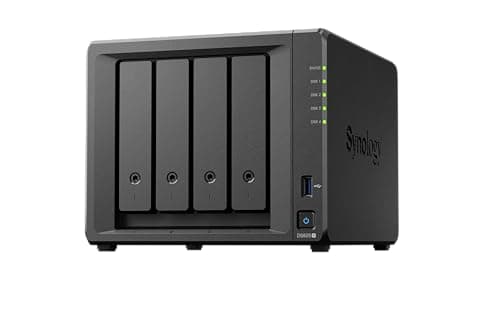
The DS925+ is a powerful 4-bay NAS aimed at prosumers and small businesses, offering an AMD Ryzen CPU, dual 2.5 GbE networking, SSD caching and extensive DSM features, though it lacks native 10 GbE and enforces a Synology-only drive policy.
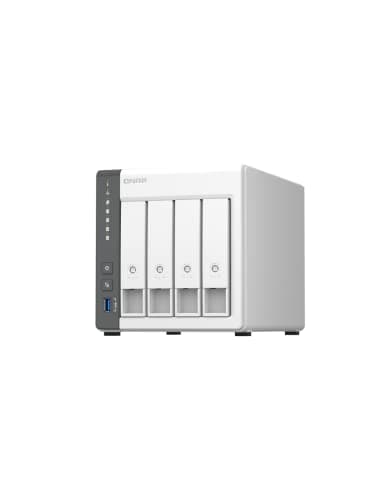
The QNAP TS-433-4G-US is a compact 4-bay NAS powered by an ARM Cortex-A55 CPU, offering AI-driven photo management, dual Ethernet (including 2.5 GbE), hardware encryption and low power consumption for home and small-office use.
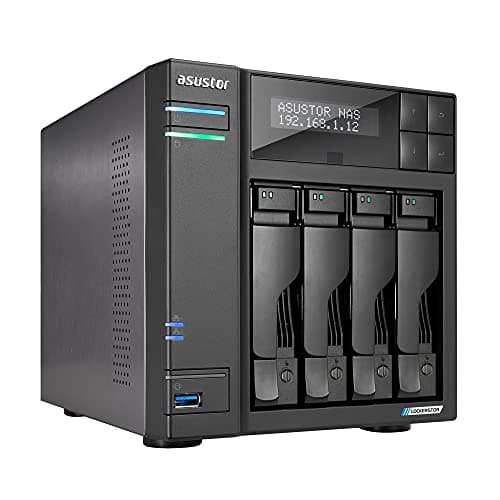
The Asustor Lockerstor 4 Gen2 (AS6704T) is a high-performance 4-bay NAS aimed at power users and small businesses, offering up to 88 TB raw capacity, extensive RAID options, dual 2.5 GbE networking and four M.2 NVMe slots. It delivers fast file transfers and 4K media handling, though it lacks native 10 GbE and requires tools for drive installation.
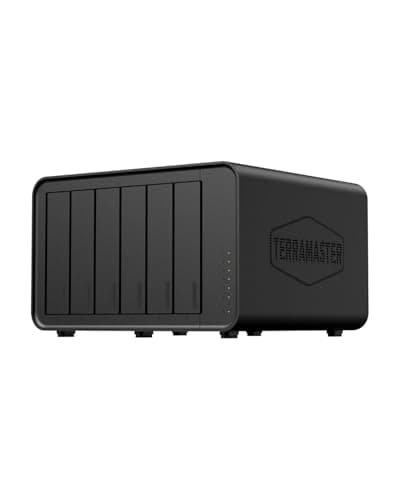
The TerraMaster F6-424 is a 6-bay NAS powered by an Intel N95 quad-core CPU, 8 GB DDR5 RAM (expandable to 32 GB) and dual 2.5 GbE ports, delivering high-performance storage, 4K hardware transcoding and extensive RAID options for SMBs and power users.
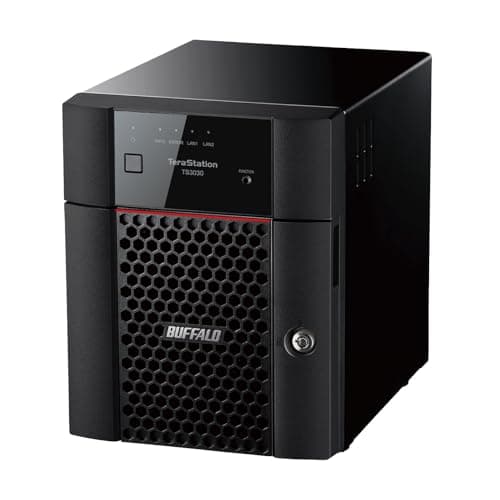
The TeraStation 3430DN is a 4-bay desktop NAS aimed at SMBs, offering 32 TB of storage, strong security features, and dual Ethernet ports. It provides reliable 24/7 operation but is limited by modest RAM and lack of SSD caching.
The TeraStation Essentials 2025 is a 4-bay NAS with pre-installed HDDs, 2.5 GbE networking and strong security features, aimed at small-office environments that value data protection and remote management. It offers solid reliability but lacks advanced features like snapshots and high-speed networking.
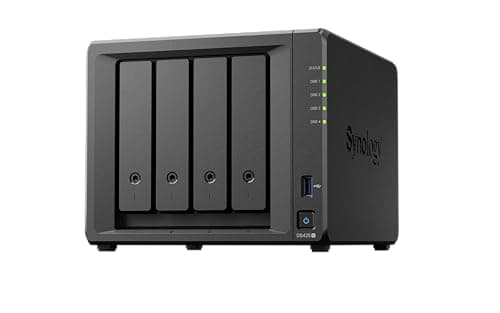
The DS425+ is a 4-bay NAS with 2.5 GbE networking and dual M.2 slots, offering quiet operation and DSM 7.2+ features, aimed at home offices and small businesses.
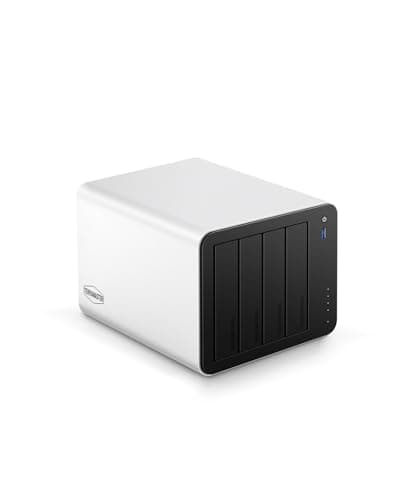
The TerraMaster F4-425 Plus is a high-performance 4-bay NAS featuring an Intel N150 quad-core CPU, 16 GB DDR5 memory, dual 5 GbE networking and three M.2 NVMe slots. It targets homelab enthusiasts and small-business users who need ample RAM and fast hybrid storage, though its UI and expandability lag behind some competitors.
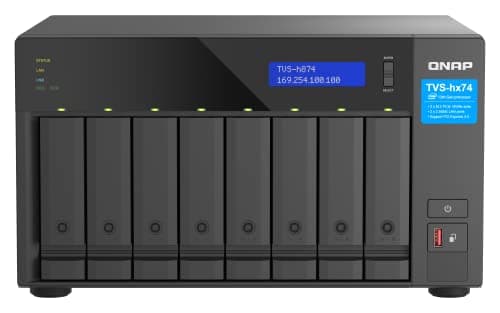
The QNAP TVS-h874-i7-32G-US is a high-performance 8-bay tower NAS with a 12-core Intel i7, ZFS data protection and extensive PCIe Gen4 expandability, aimed at professional and enterprise environments.
| Attribute | | | | | | | | | | |
|---|---|---|---|---|---|---|---|---|---|---|
144 TB | 154 TB | 88 TB | — | 88 TB | 32 TB | 16 TB | 120 TB | 200 TBbest | 80 TB | |
6 | 8best | 4 | 4 | 4 | 4 | 4 | 4 | 4 | 4 | |
2.5 Gbps | 2.5 Gbps | 2.5 Gbps | 2.5 Gbps | 2.5 Gbps | 2.5 Gbps | 2.5 Gbps | 5 Gbpsbest | 2.5 Gbps | 2.5 Gbps | |
4 | 12best | 8 | 4 | 4 | 4 | 4 | 4 | 4 | 4 | |
8 GB | 32 GBbest | 32 GBbest | 4 GB | 4 GB | 2 GB | 2 GB | 16 GB | 4 GB | 2 GB | |
| ↓ lower better | 43 W | 98.959 W | 33 W | 22.54 Wbest | 35 W | — | 85 W | 62 W | 37.91 W | 28.25 W |
| ↓ lower better | 22 dB | — | 21 dB | — | 17.6 dBbest | — | — | 33 dB | 20.5 dB | 21.6 dB |
2 years | 3 yearsbest | 2 years | 2 years | 3 yearsbest | 3 yearsbest | 3 yearsbest | 2 years | 3 yearsbest | 3 yearsbest |
Click an attribute name to sort · Green = best, red = worst (relative to this comparison)
| Attribute | | | | | | | | | | |
|---|---|---|---|---|---|---|---|---|---|---|
Security(1) | ||||||||||
OS Compatibility | TOS | QuTS hero | TOS 5.0 | QTS 5.0.1+ | — | Windows 10/11/Server 2016–2022, macOS 12+, Chrome OS | — | TOS 6.0.783 | DSM 7.2 | DSM 7.2+ |
Performance(6) | ||||||||||
CPU Model | Intel N95 | Intel Core i7-12700E | Intel Core i3-N305 | ARM Cortex-A55 quad-core 2.0 GHz | Intel Celeron N5105 | Annapurna Labs Alpine AL-524 Quad-Core CPU | Annapurna Labs Alpine AL-214 | Intel N150 | AMD Ryzen V1500B | Intel Celeron J4125 |
CPU Cores | 4 | 12 | 8 | 4 | 4 | 4 | 4 | 4 | 4 | 4 |
System Memory (GB) | 8 GB | 32 GB | 32 GB | 4 GB | 4 GB | 2 GB | 2 GB | 16 GB | 4 GB | 2 GB |
Ethernet Speed (Gbps) | 2.5 Gbps | 2.5 Gbps | 2.5 Gbps | 2.5 Gbps | 2.5 Gbps | 2.5 Gbps | 2.5 Gbps | 5 Gbps | 2.5 Gbps | 2.5 Gbps |
Power Consumption (Active) (W) | 43 W | 98.959 W | 33 W | 22.54 W | 35 W | — | 85 W | 62 W | 37.91 W | 28.25 W |
Noise Level (dB) | 22 dB | — | 21 dB | — | 17.6 dB | — | — | 33 dB | 20.5 dB | 21.6 dB |
Build & Design(3) | ||||||||||
Weight (kg) | 2.7 kg | 7.3 kg | 1.905 kg | 2.07 kg | 3.5 kg | 7.30 kg | 7.08 kg | 2.9 kg | 2.26 kg | 2.18 kg |
Power Supply Type | Internal | 350W | Internal | External AC adapter | 90 W AC adapter | — | — | External | 100-120W adaptive | External 90W AC adapter |
Warranty Period (years) | 2 years | 3 years | 2 years | 2 years | 3 years | 3 years | 3 years | 2 years | 3 years | 3 years |
Connectivity(3) | ||||||||||
Supported Network Protocols | IPv4/IPv6, CIFS/SMB, NFS, FTP, SFTP, iSCSI, SNMP, HTTPS, SSH | — | IPv4/IPv6, CIFS/SMB, NFS, FTP, SFTP, HTTPS, SSH, iSCSI, SNMP | — | — | CIFS/SMB, AFP, FTP, FTPS, SFTP, NFS, TCP/IP, iSCSI | — | — | SMB1–3,NFSv3–v4.1,iSCSI,HTTP/HTTPS,SNMP,LDAP,CalDAV | — |
Link Aggregation Support | true | true | true | — | true | — | false | true | true | — |
USB Ports | 2 | 3 | 2 | 3 | 2 | 2 | 2 | 4 | 3 | 2 |
Storage & Capacity(4) | ||||||||||
Maximum Raw Capacity (TB) | 144 TB | 154 TB | 88 TB | — | 88 TB | 32 TB | 16 TB | 120 TB | 200 TB | 80 TB |
Drive Bays | 6 | 8 | 4 | 4 | 4 | 4 | 4 | 4 | 4 | 4 |
RAID Support | Single, JBOD, RAID 0, 1, 5, 6, 10, TRAID, TRAID+ | RAID 0,1,5,6,10,50,60,JBOD,Single | TRAID, RAID 0, RAID 1, RAID 5, RAID 6, RAID 10, JBOD, Single | RAID 0, 1, 5, 6, JBOD | Single, JBOD, RAID 0, RAID 1, RAID 5, RAID 6, RAID 10 | RAID 0, RAID 1, RAID 5, RAID 6, RAID 10, JBOD | RAID 0, 1, 5, 6, 10, JBOD | TRAID, TRAID+, RAID 0, 1, 5, 6, 10, JBOD, Single | Synology Hybrid RAID,Basic,JBOD,RAID 0,RAID 1,RAID 5,RAID 6,RAID 10 | SHR, Basic, JBOD, RAID 0, RAID 1, RAID 5, RAID 6, RAID 10 |
Supported Drive Types | 3.5" SATA HDD, 2.5" SATA HDD, 2.5" SATA SSD | 3.5" SATA HDD, 2.5" SATA SSD | 3.5" SATA HDD, 2.5" SATA HDD, SATA SSD | 3.5" SATA HDDs, 2.5" SATA SSDs and HDDs | 3.5"/2.5" SATA HDD/SSD | 3.5" SATA III | HDD (CMR) | SATA III | 3.5" SATA HDD,2.5" SATA SSD,M.2 2280 NVMe SSD | 3.5"/2.5" SATA |
Products in the top-left offer the best value (high score, low price).
Professional reviewers praise the F6-424 for its powerful Intel N95 processor, dual 2.5 GbE networking and flexible RAID options, noting that it delivers enterprise-level performance at a mid-range price. However, they caution that the base 8 GB of RAM and the less-polished TOS UI may require upgrades or adjustments for power users.
Everyday users appreciate the easy, tool-free drive installation and the smooth 4K media playback via Plex, but many report that the device can lag under heavy multi-user scenarios and wish for more RAM out of the box. The size of the chassis also draws mixed feedback.
“The raw processing power is amazing for running multiple VMs”
“Flexible storage options are great, but the fans get loud under load”
“PCIe Gen4 slots let me add a 10 GbE card later, future-proofing the device”
Choose TerraMaster if 10 GbE and higher CPU performance are critical; choose DS425+ for quieter operation and DSM reliability.
Asustor is suitable for users needing more hardware headroom, while DS425+ is better for those who value DSM's ecosystem and low noise.
Professional reviewers praise the TVS-h874-i7 for delivering enterprise-class performance in a compact tower, highlighting its powerful 12-core CPU, ZFS-based data integrity features, and PCIe Gen4 expandability.
Everyday users appreciate the raw processing power, flexible storage options, and energy-saving features, but many note the audible fan noise during intensive tasks and find the initial configuration of ZFS and virtualization tools challenging.
Professional reviewers praise the F4-424 Pro for its unmatched CPU power, abundant DDR5 memory, and advanced media capabilities such as 4K 60 fps transcoding with AV1 support. The dual M.2 slots and TRAID flexibility are highlighted as strong differentiators, while the plastic enclosure, lack of 10 GbE, and limited physical security features are noted as drawbacks.
Everyday users appreciate the fast performance, smooth 4K streaming, and the convenience of NVMe caching, often noting the ample RAM as a major plus. Recurring complaints focus on the non-upgradable memory, the cheap-feel plastic chassis, and the missing front USB and security lock.
Professional reviewers describe the TS-433 as a smartly designed home NAS that balances performance, AI features, and affordability. They commend its AI-driven photo management and 2.5 GbE connectivity, but caution that the ARM CPU and fixed 4 GB RAM limit software compatibility and future expandability.
Everyday users appreciate the device's easy setup, quiet operation, and especially the fast, accurate AI photo organization. The 2.5 GbE port is frequently praised for speeding up backups and streaming, while common frustrations revolve around limited RAM, occasional performance slowdowns under load, and the lack of SSD cache or broader app support.
Professional reviewers rate the AS6704T extremely highly, with PCMag giving it a perfect 5.0/5.0 "Exemplary" score for its blazing speeds, robust hardware and extensive app library.
Everyday users love the AS6704T's raw performance, flexible M.2 and 2.5 GbE options, and the breadth of apps that let them run Plex, Docker and VMs with ease.
Professional reviewers commend the TeraStation 3430DN for its solid reliability, strong security posture and straightforward deployment, noting the 2.5 GbE port and closed-system architecture set it apart in the SMB segment.
Everyday users appreciate the plug-and-play experience, dependable uptime, and robust security features, especially the ransomware detection, while noting fan noise and limited RAM as drawbacks.
Professional reviewers praise the TeraStation Essentials for its security-first architecture, reliable Japanese build quality, and responsive 24/7 US support, positioning it as a solid, low-maintenance NAS for SMBs that value data protection over advanced feature sets.
Everyday users highlight the device's ease of setup, robust encryption, and dependable remote management, while noting the lack of a mobile app and slower RAID rebuilds as drawbacks.
Reviewers praise the powerful Intel CPU, generous DDR5 memory and dual 5 GbE ports, but criticize the dated TOS interface, lack of PCIe expansion and limited HDMI functionality.
Users love the silent operation, strong RAM for Docker/VMs and hardware transcoding, while common complaints revolve around the unusable HDMI port, UI clunkiness and desire for faster PCIe 4.0 NVMe slots.
Professional reviewers praise the DS925+ for its powerful AMD Ryzen processor, dual 2.5 GbE networking, and flexible SSD caching, noting enterprise-grade performance in a compact form factor, while criticizing the loss of 10 GbE and strict drive ecosystem.
Everyday users appreciate fast file transfers, quiet operation, and the ease of DSM, but some are disappointed by the locked-down drive ecosystem and lack of 10 GbE for future-proofing.
Professional reviewers consider the DS425+ an evolutionary update that modernizes networking with 2.5 GbE and adds dual M.2 slots, but they caution that the aging J4125 processor and limited memory cap its performance for demanding virtualization or transcoding tasks.
Everyday users appreciate the silent, "library-quiet" operation and the speed boost from 2.5 GbE, finding the setup straightforward and the DSM interface user-friendly, while noting the lack of 10 GbE and occasional instability with the USB-C expansion.
