Rankings
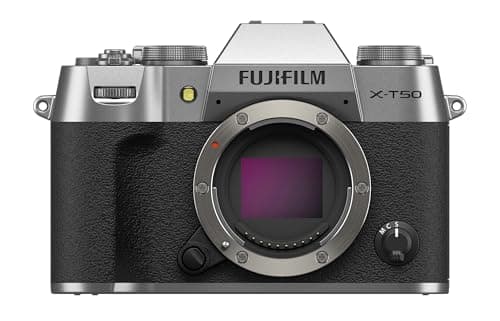
The Fujifilm X-T50 packs a flagship-class 40.2 MP X-Trans sensor, 7-stop IBIS, and professional-grade 6.2K video into a compact, lightweight magnesium-alloy body. It targets enthusiasts and hybrid creators who need high-resolution stills and strong video features, while accepting trade-offs like a single card slot and occasional overheating.
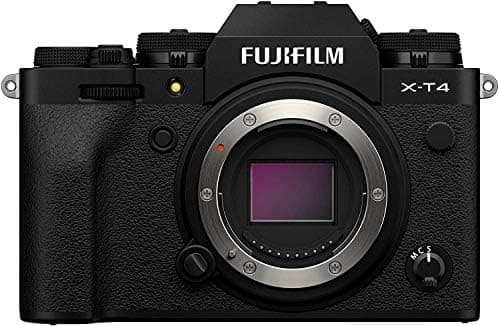
The Fujifilm X-T4 is a 2020-released APS-C mirrorless camera that combines a 26.1 MP sensor, advanced hybrid AF, 5-axis IBIS and robust 4K/60p video in a weather-sealed, ergonomically designed body. It excels for hybrid shooters who need high-quality stills and video, though it lacks a native headphone jack and has a complex menu.
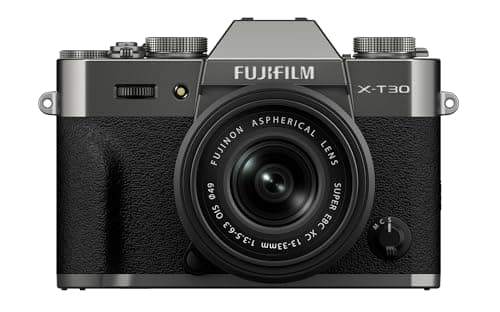
The Fujifilm X-T30 III pairs a 26.1 MP APS-C X-Trans sensor with the X-Processor 5, delivering 6.2K video and fast 425-point hybrid AF in a compact, retro-styled body. It excels in image quality and usability, though battery endurance and lack of IBIS are notable drawbacks.
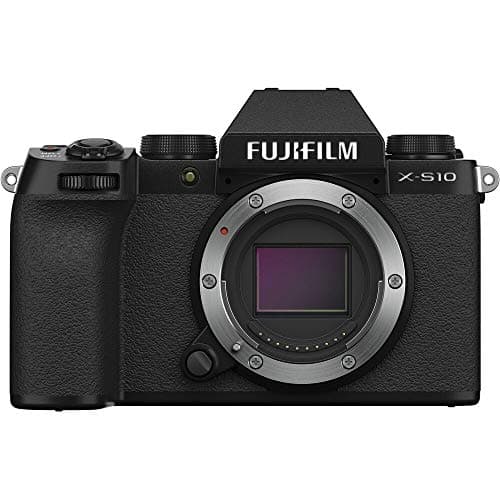
The Fujifilm X-S10 is a compact, DSLR-styled APS-C mirrorless camera that blends flagship-level image quality with strong video features, a fully articulating touchscreen and effective IBIS. It lacks weather sealing and a dual card slot, and its battery endurance is modest, making it ideal for hybrid shooters who prioritize portability over ruggedness.
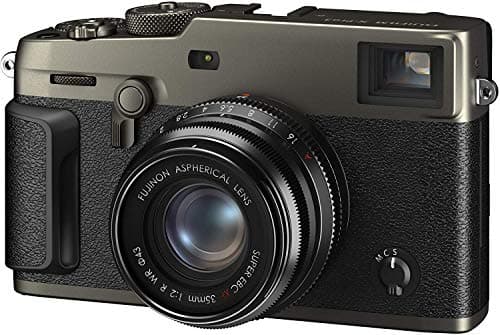
The Fujifilm X-Pro3 delivers premium image quality, a unique hybrid viewfinder and a rugged titanium body with extensive weather sealing. Its hidden tilting LCD and lack of IBIS make it less suited for video creators, but it excels for street and documentary photographers.
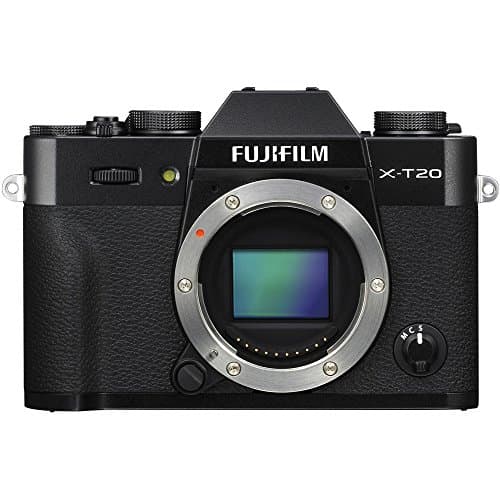
The Fujifilm X-T20 offers flagship-level image quality and 4K video in a compact, retro-styled magnesium-alloy body. While its battery life and lack of weather sealing limit professional use, it remains a strong choice for enthusiasts and street photographers.
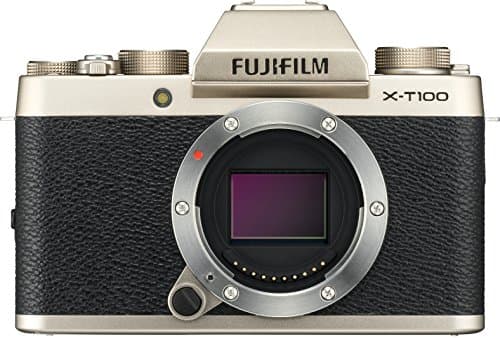
The Fujifilm X-T100 body-only version offers the same 24.2 MP APS-C sensor, retro styling, and high-resolution EVF as the kit model, making it a solid choice for enthusiasts who already own lenses. It delivers strong still-image performance and connectivity, but its video and autofocus capabilities are limited for demanding creators.
The Fujifilm X-T100 is an entry-level APS-C mirrorless camera aimed at beginners, offering a 24.2 MP sensor, fully articulating touchscreen and solid EVF, but its 4K video is capped at 15 fps and it lacks weather sealing. It provides good still-image quality and connectivity for its price point.
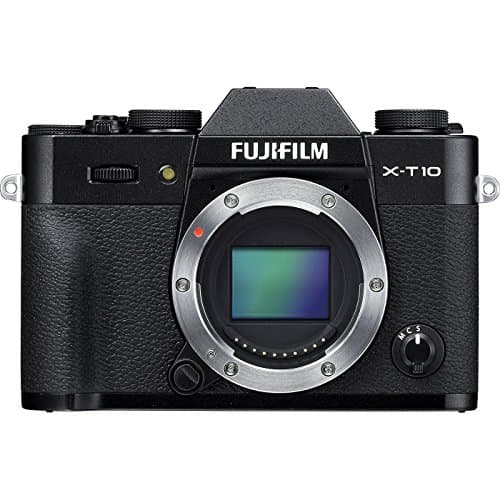
The Fujifilm X-T10 is a compact, retro-styled APS-C mirrorless camera from 2015 that delivers strong image quality, tactile analog controls and a high-resolution EVF, but it lacks weather sealing, a fully articulating touchscreen and 4K video. It is well suited for enthusiasts and travelers who value portability and color science.
| Attribute | | | | Fujifilm X-T100 Body | | | | | |
|---|---|---|---|---|---|---|---|---|---|
26.1 MP | 26.1 MP | 26.1 MP | 24.2 MP | 26.1 MP | 24.3 MP | 24.2 MP | 40.2 MPbest | 16.3 MP | |
325 shots | — | 440 shots | 430 shots | 600 shots | 350 shots | 430 shots | 740 shotsbest | 350 shots | |
51,200 ISObest | 51,200 ISObest | 51,200 ISObest | 51,200 ISObest | — | 51,200 ISObest | 51,200 ISObest | 51,200 ISObest | 51,200 ISObest | |
| ↓ lower better | 465 g | 329 gbest | 1,089 g | 448 g | 607 g | 383 g | 448 g | 438 g | 381 g |
425 pointsbest | 425 pointsbest | 425 pointsbest | 91 points | 425 pointsbest | 325 points | 91 points | 425 pointsbest | 77 points | |
30 fps | 59.94 fps | 29.97 fps | 15 fps | 60 fpsbest | 29.97 fps | 15 fps | 60 fpsbest | — | |
2,360,000 dots | 2,360,000 dots | 3,690,000 dotsbest | 2,360,000 dots | 3,690,000 dotsbest | 2,360,000 dots | 2,360,000 dots | 2,360,000 dots | 2,360,000 dots | |
3 inchesbest | 3 inchesbest | 3 inchesbest | 3 inchesbest | 3 inchesbest | 3 inchesbest | 3 inchesbest | 3 inchesbest | 3 inchesbest |
Click an attribute name to sort · Green = best, red = worst (relative to this comparison)
| Attribute | | | | Fujifilm X-T100 Body | | | | | |
|---|---|---|---|---|---|---|---|---|---|
Sensor & Image(2) | |||||||||
Effective Megapixels (MP) | 26.1 MP | 26.1 MP | 26.1 MP | 24.2 MP | 26.1 MP | 24.3 MP | 24.2 MP | 40.2 MP | 16.3 MP |
Image Processor | X-Processor 4 | X-Processor 5 | X-Processor 4 | — | X-Processor 4 | X-Processor Pro | Fujifilm X-Processor | X-Processor 5 | EXR Processor II (dual CPU) |
Autofocus(2) | |||||||||
Autofocus Points (points) | 425 points | 425 points | 425 points | 91 points | 425 points | 325 points | 91 points | 425 points | 77 points |
Autofocus System | Hybrid AF | Intelligent Hybrid | Hybrid | Hybrid AF | Hybrid AF | Hybrid | Hybrid AF | Hybrid AF | Hybrid AF |
Battery & Power(3) | |||||||||
Battery Life (CIPA) (shots) | 325 shots | — | 440 shots | 430 shots | 600 shots | 350 shots | 430 shots | 740 shots | 350 shots |
Weight (g) | 465 g | 329 g | 1089 g | 448 g | 607 g | 383 g | 448 g | 438 g | 381 g |
Weather Sealing | false | — | true | false | true | false | — | true | — |
Video(2) | |||||||||
4K Video Support | true | true | true | true | true | true | true | true | false |
4K Frame Rate (fps) | 30 fps | 59.94 fps | 29.97 fps | 15 fps | 60 fps | 29.97 fps | 15 fps | 60 fps | — |
Display(2) | |||||||||
LCD Resolution (pixels) | 1040000 pixels | 1620000 pixels | 1620000 pixels | 1040000 pixels | 1620000 pixels | 1040000 pixels | 1040000 pixels | 1620000 pixels | 920000 pixels |
EVF Resolution (dots) | 2360000 dots | 2360000 dots | 3690000 dots | 2360000 dots | 3690000 dots | 2360000 dots | 2360000 dots | 2360000 dots | 2360000 dots |
Storage(1) | |||||||||
Memory Card Slot Type | Single SD (UHS-I) | SD (UHS-I) | SD | Single SD (UHS-I) | Dual SD (UHS-II) | SD | SD (UHS-I) | SD (UHS-II) | Single SD (UHS-I) |
Products in the top-left offer the best value (high score, low price).
Professional reviewers praise the X-S10 for delivering flagship-level image quality and video performance in a mid-tier, affordable package, highlighting the 26.1 MP sensor, 5-axis IBIS and versatile touchscreen, while noting the lack of weather sealing and a single UHS-I card slot as drawbacks for demanding users.
Everyday users love the camera's image quality, effective stabilization, and the convenience of the articulating screen for vlogging. Common criticisms focus on the modest battery life, absence of weather sealing, and the bottom-mounted card slot that complicates quick swaps.
“The screen flips out perfectly for vlogging and the IBIS works like a charm.”
“Great image quality and color science, but I wish it had weather sealing.”
“Battery dies after a short shoot; need spare batteries.”
Professional reviewers commend the X-T30 III for its blend of classic design and cutting-edge performance, highlighting the standout 6.2K video, AI-driven autofocus, and superior color science via Film Simulations.
Everyday users love the camera's retro feel, intuitive controls, and the lightweight stabilized kit lens, but note limited battery endurance and the single card slot.
Professional reviewers laud the X-Pro3 for its film-like shooting experience, color science and build quality, while criticizing the lack of IBIS, limited 4K video and hidden LCD.
Everyday users love the stunning colors, durable construction and dual card slots, but complain about the hidden screen, no IBIS and modest video features.
Professional reviewers commend the X-T100 for its stylish retro design, excellent still-image quality, and value-driven feature set such as the high-resolution EVF and articulating screen, while criticizing the 15 fps 4K video, average autofocus and lack of weather sealing.
Everyday users appreciate the camera's vintage look, intuitive controls, seamless Wi-Fi/Bluetooth connectivity, and the convenience of the flip-up screen for vlogging. The most common complaint mirrors the experts: the limited 4K video capability, which many found disappointing.
Professional reviewers rate the X-T4 extremely highly, with PCMag giving it a perfect 5/5 and calling it the best APS-C camera available, while DPReview scores it 88/100 and highlights its added IBIS, faster shooting, and larger battery.
Everyday users praise the X-T4 for its tactile controls, film simulations, ergonomic design, effective IBIS, and the versatile vari-angle screen, often describing it as a "forever camera." Common complaints focus on the missing headphone jack, a confusing menu system, ISO dial limitations, and occasional overheating during prolonged 4K video capture.
Professional reviewers praise the X-T20 for its flagship image quality, fast hybrid AF and 4K video, but criticize its modest battery life, lack of weather sealing and limited video ergonomics.
Everyday users love the vintage design, tactile controls and JPEG color output, yet frequently mention short battery life and a cramped grip.
Professional reviewers view the X-T100 as a stylish, capable entry-midrange mirrorless camera that brings Fujifilm's celebrated image quality and Film Simulation modes to a compact body with an EVF.
Everyday users love the X-T100 for its image quality, retro gold aesthetic, and convenient articulating screen, but they repeatedly complain about the choppy 4K video and autofocus hunting.
Professional reviewers commend the X-T50 for delivering flagship-level image quality and color science in a compact body, highlighting the new Film Simulation dial, the high-resolution sensor, and robust 7-stop IBIS.
Everyday users appreciate the camera's sharp image quality, intuitive film simulation controls, and solid battery life, though they note the single card slot and occasional overheating during long video sessions.
Professional reviewers praised the X-T10 for delivering flagship-level image quality, a high-resolution EVF, and tactile analog controls in a compact, affordable package, while noting the lack of weather sealing and an aging sensor as drawbacks for demanding users.
Everyday users love the X-T10's retro look, lightweight body, and the ability to capture vivid, film-like photos straight out of the camera. Common praise centers on the physical dials, Wi-Fi convenience, and good low-light performance, while recurring complaints focus on limited battery life, low-light autofocus hunting, and the non-articulating LCD.
