Rankings
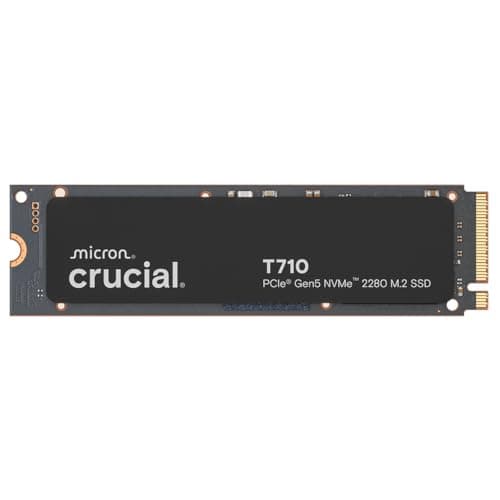
The Crucial T710 4TB PCIe Gen5 NVMe SSD delivers top-tier random performance, low power draw, and hardware encryption in a single-sided, lightweight package, making it ideal for gamers and creators, though capacity is capped at 4 TB and cooling is essential for sustained loads.
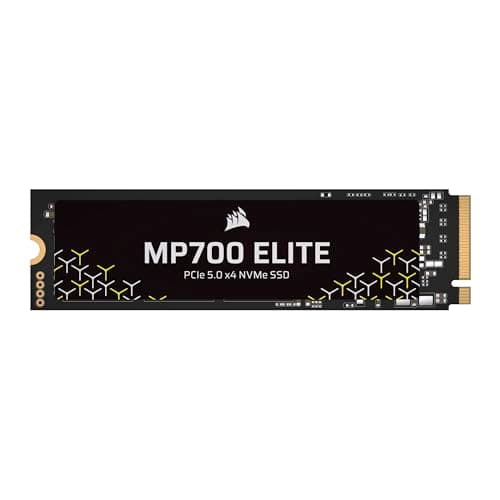
The Corsair MP700 Elite 4 TB is a PCIe 5.0 x4 NVMe SSD that pushes sequential performance into the 10 GB/s range while offering high endurance and a five-year warranty. Its lack of DRAM and need for proper cooling keep it from being the absolute fastest in random workloads.
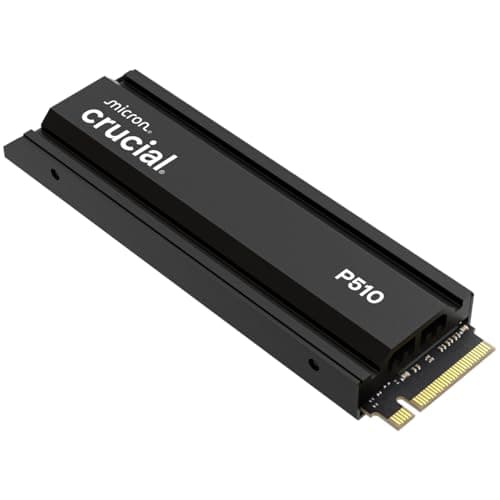
The Crucial P510 2TB is a budget-friendly PCIe 5.0 NVMe SSD that delivers flagship-class sequential speeds while keeping power draw and heat low. Its DRAM-less design and single-sided form factor make it ideal for laptops and consoles, though it trails the very fastest Gen5 models.
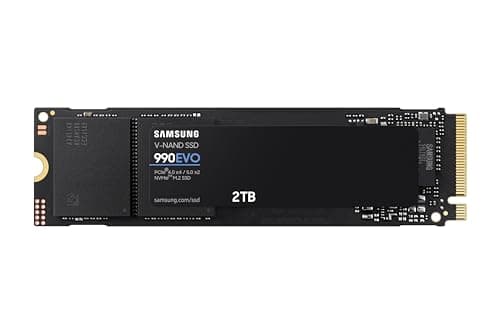
The Samsung 990 EVO 2TB balances high performance with power efficiency, offering up to 5,000 MB/s read and 4,200 MB/s write while remaining DRAM-less. Its dual-mode PCIe support and strong endurance make it a versatile choice for mainstream desktops and laptops.
The WD SN730 256 GB offers solid PCIe Gen3 performance with very low power draw and a robust warranty, making it ideal for ultrabooks and low-power desktops. Its lack of DRAM and limited capacity keep it from competing with higher-end Gen4 drives.
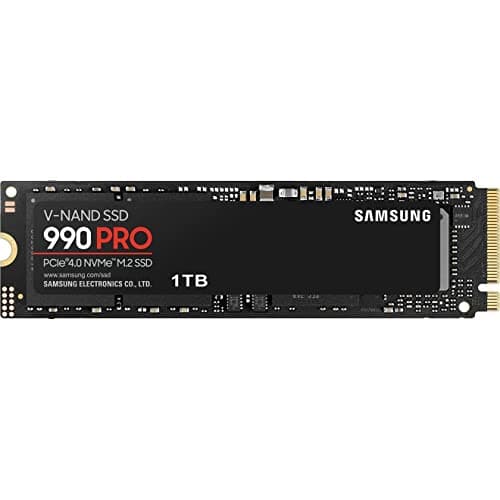
The Samsung 990 PRO 1TB is a flagship PCIe 4.0 SSD offering blistering sequential speeds, a DRAM cache, and strong security, aimed at high-performance desktops, workstations, and PS5 owners.
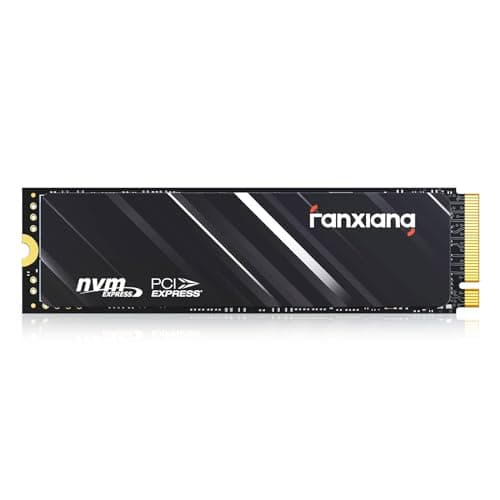
The Fanxiang 1 TB PCIe 4.0 NVMe SSD delivers flagship-class sequential speeds and strong endurance at a budget-friendly price, targeting gamers and PC enthusiasts. Its DRAM-less design and occasional quality concerns keep it from being a premium-grade option.
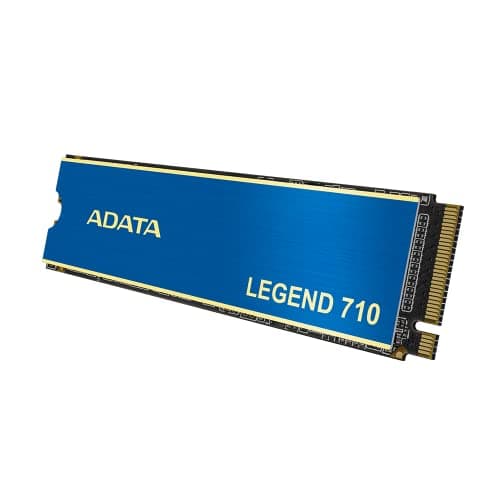
The Legend 710 is a DRAM-less M.2 SSD with a built-in heat sink, delivering solid Gen3 performance and strong security features, ideal for creators and gamers on older platforms. Its main drawbacks are the lack of DRAM and a speed ceiling compared to newer Gen4/5 drives.
The ADATA Legend 860 delivers flagship Gen4 sequential performance and PS5-ready speeds, backed by solid endurance and a long warranty, making it ideal for gamers and creators upgrading from older drives. Its lack of DRAM and unclear random I/O performance limit its suitability for heavy workstation workloads.
The Crucial P310 1TB PCIe Gen4 NVMe SSD offers flagship-class sequential and random performance in a compact, single-sided M.2 2280 package, backed by a five-year warranty, but its DRAM-less QLC design reduces endurance and security features.
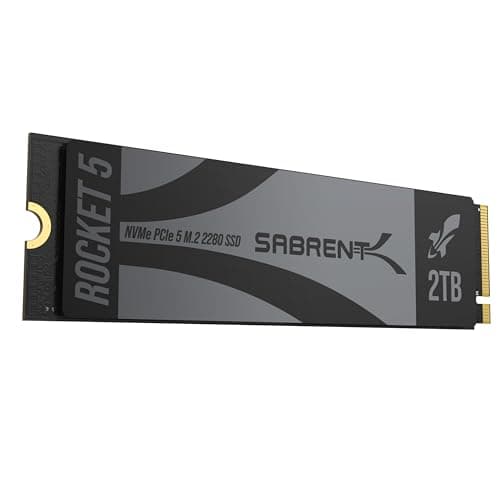
The Sabrent Rocket 5 2 TB is a high-end PCIe Gen 5 SSD that delivers impressive sequential reads up to ~10 GB/s in real-world tests, targeting enthusiasts with compatible motherboards, though its price and occasional reliability questions temper its appeal.
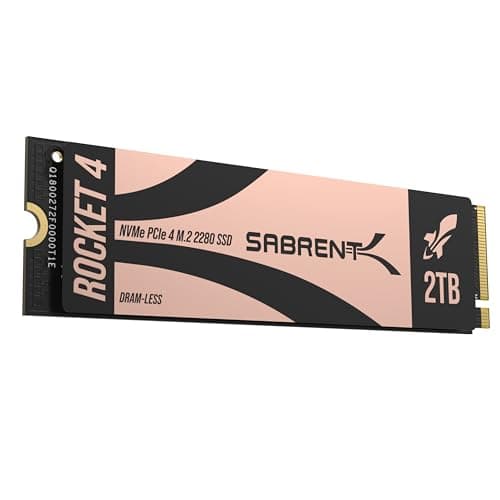
The Sabrent Rocket 4 2 TB is a PCIe 4.0 x4 M.2 SSD offering strong sequential and random performance at a value-focused price, though it lacks an included heatsink and has modest endurance compared to flagship models.
| Attribute | | | | | | | | | | ADATA Legend 860 | | Western Digital SN730 256GB |
|---|---|---|---|---|---|---|---|---|---|---|---|---|
2,000 GB | 4,000 GBbest | 1,000 GB | 2,000 GB | 1,000 GB | 2,000 GB | 2,000 GB | 1,024 GB | 1,000 GB | 1,000 GB | 4,000 GBbest | 256 GB | |
10,250 MB/s | 14,900 MB/sbest | 7,450 MB/s | 5,000 MB/s | 7,100 MB/s | 5,000 MB/s | 11,000 MB/s | 2,400 MB/s | 4,800 MB/s | 6,000 MB/s | 9,400 MB/s | 3,150 MB/s | |
— | 13,800 MB/sbest | 6,900 MB/s | 4,200 MB/s | 6,000 MB/s | 4,400 MB/s | 9,500 MB/s | 1,800 MB/s | 4,800 MB/s | 4,000 MB/s | 8,100 MB/s | 2,100 MB/s | |
— | 2,200,000 IOPSbest | 1,200,000 IOPS | 700,000 IOPS | 1,000,000 IOPS | 1,000,000 IOPS | 1,500,000 IOPS | 200,000 IOPS | — | — | — | 270,000 IOPS | |
— | 2,200,000 IOPSbest | 1,550,000 IOPS | 800,000 IOPS | 1,200,000 IOPS | 950,000 IOPS | 1,500,000 IOPS | 150,000 IOPS | — | — | — | 280,000 IOPS | |
— | 2,400 TBWbest | 600 TBW | 1,200 TBW | 220 TBW | 400 TBW | 1,200 TBW | 520 TBW | 700 TBW | 320 TBW | 2,400 TBWbest | 200 TBW | |
2 years | 5 yearsbest | 5 yearsbest | 5 yearsbest | 5 yearsbest | 2 years | 5 yearsbest | 3 years | 3 years | 5 yearsbest | 5 yearsbest | 5 yearsbest | |
— | 4 GBbest | 1 GB | 0 GB | 0 GB | — | 0 GB | 0 GB | 0 GB | — | 0 GB | 0 GB |
Click an attribute name to sort · Green = best, red = worst (relative to this comparison)
| Attribute | | | | | | | | | | ADATA Legend 860 | | Western Digital SN730 256GB |
|---|---|---|---|---|---|---|---|---|---|---|---|---|
Performance(4) | ||||||||||||
Sequential Read Speed (MB/s) | 10250 MB/s | 14900 MB/s | 7450 MB/s | 5000 MB/s | 7100 MB/s | 5000 MB/s | 11000 MB/s | 2400 MB/s | 4800 MB/s | 6000 MB/s | 9400 MB/s | 3150 MB/s |
Sequential Write Speed (MB/s) | — | 13800 MB/s | 6900 MB/s | 4200 MB/s | 6000 MB/s | 4400 MB/s | 9500 MB/s | 1800 MB/s | 4800 MB/s | 4000 MB/s | 8100 MB/s | 2100 MB/s |
Random Read IOPS (IOPS) | — | 2200000 IOPS | 1200000 IOPS | 700000 IOPS | 1000000 IOPS | 1000000 IOPS | 1500000 IOPS | 200000 IOPS | — | — | — | 270000 IOPS |
Random Write IOPS (IOPS) | — | 2200000 IOPS | 1550000 IOPS | 800000 IOPS | 1200000 IOPS | 950000 IOPS | 1500000 IOPS | 150000 IOPS | — | — | — | 280000 IOPS |
Interface(1) | ||||||||||||
Interface | PCIe Gen5 x4 | PCIe Gen5 x4 | PCIe Gen4 x4 | PCIe 4.0 x4 / PCIe 5.0 x2 | PCIe Gen4 x4 | PCIe Gen4 x4 | PCIe 5.0 x4 | PCIe Gen3 x4 | PCIe Gen4 x4 NVMe | PCIe Gen4 x4 | PCIe 5.0 x4 | PCIe Gen3 x4 |
Storage(3) | ||||||||||||
Capacity (GB) | 2000 GB | 4000 GB | 1000 GB | 2000 GB | 1000 GB | 2000 GB | 2000 GB | 1024 GB | 1000 GB | 1000 GB | 4000 GB | 256 GB |
NAND Type | TLC | TLC | V-NAND TLC | TLC | QLC | TLC | TLC | 3D TLC | 3D TLC | 3D NAND | TLC | 96-layer 3D NAND |
DRAM Cache (GB) | — | 4 GB | 1 GB | 0 GB | 0 GB | — | 0 GB | 0 GB | 0 GB | — | 0 GB | 0 GB |
Security(1) | ||||||||||||
Hardware Encryption | — | true | true | true | false | — | true | true | — | — | — | — |
Power & Thermal(2) | ||||||||||||
Active Power Consumption (W) | — | — | 5.4 W | 5.5 W | — | — | — | — | — | — | — | 0.1 W |
Idle Power Consumption (W) | — | — | 0.05 W | 0.06 W | — | — | — | — | — | — | — | 0.03 W |
Reliability(3) | ||||||||||||
Endurance (TBW) (TBW) | — | 2400 TBW | 600 TBW | 1200 TBW | 220 TBW | 400 TBW | 1200 TBW | 520 TBW | 700 TBW | 320 TBW | 2400 TBW | 200 TBW |
Warranty Period (years) | 2 years | 5 years | 5 years | 5 years | 5 years | 2 years | 5 years | 3 years | 3 years | 5 years | 5 years | 5 years |
MTBF (hours) | — | 1500000 hours | 1500000 hours | 1500000 hours | — | 1800000 hours | — | 1500000 hours | 2000000 hours | 2000000 hours | — | 1750000 hours |
Physical(1) | ||||||||||||
Weight (g) | 7.38 g | 7.3 g | 9 g | 9.07 g | 10 g | 8 g | 30 g | 9 g | 7 g | 6.5 g | 8.6 g | 9 g |
Products in the top-left offer the best value (high score, low price).
Professional reviewers note the Rocket 5's impressive Gen 5 bandwidth on paper but observe real-world peaks around 10.25 GB/s, making it only marginally faster than top Gen4 drives, and they point out the high price-to-performance ratio and some reliability concerns.
Everyday users praise the blazing speed and noticeable load-time reductions, yet many express disappointment that the advertised 14 GB/s is rarely achieved and voice concerns about long-term durability and missing mounting hardware.
“You will not achieve the advertised speed of up to 14GB/s... best I got was 10.25GB/s. So barely faster than a Samsung PCIe Gen 4 NVMe.”
“Great performance / price”
“You cannot go wrong with Sabrent, I have never had an issue.”
Professional reviewers praise the T710 as a major leap over the T705, highlighting its best-in-class QD1 random performance, low power draw and effective thermal design, while noting slight sequential speed gaps against Samsung's 990 Pro.
Everyday users report noticeably faster game load times, smoother video editing workflows and appreciate the single-sided form factor, with complaints mainly about throttling in poorly cooled small-form-factor rigs and limited stock.
Professional reviewers praise the 990 PRO for its blistering sequential speeds and low power draw, but note early firmware bugs and that its gaming performance trails the very best competitors.
Users love the dramatic boot-time reductions and quiet operation, though some experienced early firmware-related health issues.
Professional reviewers praise the 990 EVO for its flexible dual-mode PCIe support, strong power efficiency, and single-sided design, noting that while peak speeds lag behind flagship models, the drive delivers balanced performance and future-proof connectivity.
Everyday users rate the drive highly, highlighting easy installation, rapid system responsiveness, and noticeable speed gains over older drives, while noting the lack of a heatsink and concerns about the DRAM-less design.
Professional reviewers praise the P310 for its flagship-level speeds, cool operation, and value, noting its low endurance, DRAM-less design, and lack of hardware encryption make it less suitable for heavy-write or security-critical scenarios.
Everyday users overwhelmingly rate the drive highly, highlighting the immediate boost in system responsiveness, easy installation, and suitability for gaming and general use, with only minor complaints about the missing heatsink.
Professional reviewers praise the Rocket for its TLC NAND paired with DRAM, solid Phison E16-class controller, and overall value, while noting it trails top-tier Gen4 SSDs in raw speed and endurance.
Everyday users highlight the drive's speed and affordability, appreciating the free cloning software, but many note the missing mounting screw, lack of an included heatsink, and occasional early failures.
Professional reviewers view the P510 as a solid, budget-oriented Gen5 SSD that delivers the promised speeds while keeping power draw and heat low. They praise its value proposition and suitability for laptops and consoles, but note that the lack of onboard DRAM and modest advantage over top Gen4 models make it less compelling for enthusiasts seeking the absolute fastest performance.
Everyday users appreciate the drive's easy installation, noticeable system responsiveness, and reliable operation without thermal issues. However, many express disappointment that the real-world speed uplift over their existing Gen4 SSDs isn't as dramatic as advertised, especially for gaming scenarios.
Professional reviewers commend the Legend 710 for its solid thermal design, consistent sequential performance, and robust security features, while noting the DRAM-less architecture and Gen3 speed ceiling as limitations.
Everyday users appreciate the included heat sink and stable performance, but complain about bulkiness, occasional slower random writes, and inconsistent benchmark numbers.
Reviewers highlight the drive's blazing Gen4 performance and value, while noting the lack of DRAM cache and occasional quality inconsistencies.
Users love the speed and price, but some report incompatibility and early failures.
Professional reviewers would likely praise the Legend 860 for its high sequential speeds, PS5 compatibility, and solid endurance, positioning it as a cost-effective Gen4 alternative to flagship drives. However, they would note the absence of DRAM as a drawback for heavy random-I/O tasks.
Everyday users commend the drive for delivering fast load times in games, quick system boots, and dependable performance during video editing. Common praise centers on the PS5 upgrade experience and the long warranty, while recurring complaints involve warranty inconsistencies, occasional stock shortages, and uncertainty about the necessity of a heatsink for console installation.
Professional reviewers laud the MP700 Elite for its breakthrough sequential speeds and solid endurance, noting it delivers PCIe 5.0 performance at a relatively affordable price. However, they caution that random I/O lags behind DRAM-equipped rivals, real-world gains over high-end PCIe 4.0 SSDs are modest, and the drive needs proper cooling to sustain peak performance.
Everyday users praise the drive's lightning-fast boot and game loading times, especially with DirectStorage, and appreciate its reliability when paired with a heatsink. Common complaints focus on thermal throttling without adequate cooling, modest day-to-day speed improvements over PCIe 4.0 drives, and occasional confusion over the MP700 product line.
Professional reviewers view the WD SN730 256GB as a dependable, power-efficient mid-range SSD that delivers the advertised speeds but falls short of the burst performance seen in DRAM-backed or higher-capacity models.
Everyday users praise the drive for its quick boot and app load times, reliability, and the peace of mind provided by a five-year warranty. Common complaints focus on limited capacity, occasional BIOS compatibility hiccups, and slower write performance when handling large files.
