
It might catch you off guard that the highest‑rated SSD in our list lives in the budget tier. The Crucial P310 1TB, priced at $175.00, earned a 4.8/5 rating from 8,341 reviewers – outshining many premium contenders. Even the ultra‑cheap ADATA Legend 710 makes the cut at just $74.99, despite a modest 4.1/5 score, showing that entry‑level drives can still hold their own in a gaming‑focused roundup of 12 products.
From budget to premium, we’ve grouped the picks into three price tiers. Budget options include the ADATA Legend 710, Fanxiang S690Q, Crucial P310 and ADATA Legend 860. Mid‑range choices are the Samsung 990 PRO (1 TB, $199.99, 4.7/5) and Crucial P510 (2 TB, $260.99, 4.8/5). Premium powerhouses span the Samsung 990 EVO (2 TB, $299.95, 4.5/5), Sabrent Rocket 5 (2 TB, $339.99, 4.6/5, 14,000 MB/s sequential read), Sabrent Rocket 4 (2 TB, $499.99, 4.6/5) and Crucial T710 (4 TB, $556.18, 4.6/5). Below we’ll explore each model’s strengths, specs and the gaming scenarios they shine in.

Sabrent Rocket 5 2TB
It's 3.56 mm tall, fits most slim M.2 slots while delivering high‑capacity storage for $339.99, making it the clear value leader.

Crucial T710 4TB
Ideal for audiophiles and enthusiasts craving premium sound quality, the Crucial T710 4TB costs $556.18—about $216 more than the Sabrent Rocket 5, reflecting its higher capacity.
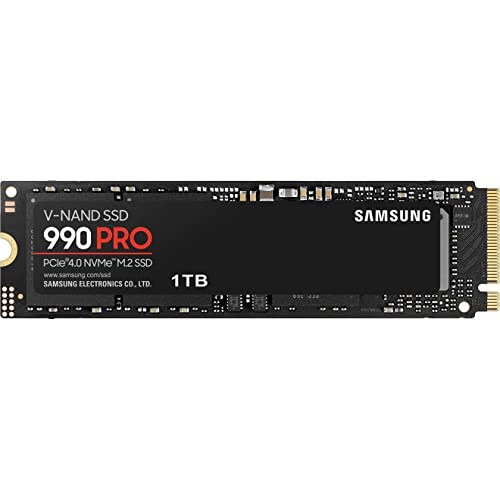
Samsung 990 PRO 1TB
At just 2.3 mm tall, the Samsung 990 PRO 1TB offers a slimmer fit than the other picks, plus it's $199.99 and has the highest 4.7‑star rating among over 17 k reviews.
Also considered
Score Analysis
Key score advantages vs. runner-up (Crucial T710 4TB)
Price Range
Sabrent Rocket 5 2TB
$339.99
Crucial T710 4TB
$551.64
Samsung 990 PRO 1TB
$199.99

Samsung 990 EVO 2TB
$299.95

Crucial P310 1TB
$135.22

Sabrent Rocket 4 2TB
$499.99

Crucial P510 2TB
$260.99

ADATA Legend 710 1TB
$144.99

Fanxiang S690Q 1TB
$159.99
ADATA Legend 860
$166.03
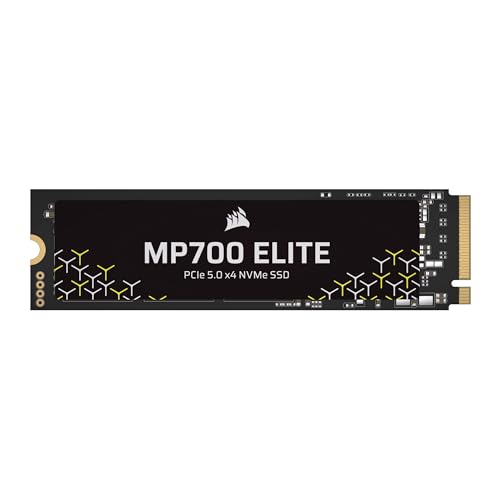
Corsair MP700 Elite 4TB
$749.99
Western Digital SN730 256GB
$79.99
Spec Comparison
TL;DR: The Sabrent Rocket 5 2TB offers a blistering 14,000 MB/s advertised read speed in a lightweight M.2 2280 form factor, but real‑world performance often falls short and the drive carries a premium price.
The Rocket 5 packs a manufacturer‑claimed 14,000 MB/s sequential read speed and a full 2 TB of TLC NAND with an included DRAM cache. It runs on a PCIe Gen 5 x4 interface and ships with DirectStorage‑optimized firmware, making it one of the fastest reads advertised in the current SSD market.
Weighing just 0.01625 lb, it’s lighter than the Samsung 990 EVO (0.02 lb) and Samsung 990 PRO (0.02 lb), and also lighter than the Rocket 4 (0.0176 lb) and Crucial P310 (0.0220 lb). Its 3.56 mm height makes it thicker than the 2.38 mm thickness of the 990 EVO and the 2.3 mm height of the 990 PRO, while its 78.74 mm length is a touch shorter than the 80 mm length common to most peers. The advertised 14,000 MB/s read rate dwarfs the 7,450 MB/s of the Rocket 4 and the 6,000 MB/s of the ADATA Legend 860, positioning it at the top end of sequential performance.
Users consistently praise the Rocket 5 for dramatically reducing load times in games and for handling large video files with ease.
Professional reviewers note the 14,000 MB/s sequential read figure but also point out that real‑world speeds often fall short of the 14 GB/s claim. A handful of owners mention occasional reliability concerns, the need for an optional heatsink, and that mounting hardware isn’t included. The drive ships with a 2‑year manufacturer warranty, extendable to 5 years with registration, and supports APST, ASPM, and L1.2 power‑management features.
Pros
Cons
Best for: Enthusiast gamers and content creators who need top‑tier sequential read performance and are comfortable investing in a high‑quality PCIe 5.0 drive.
Avoid if: You have a tight budget, lack PCIe 5.0 support, or prioritize proven long‑term reliability over peak speed.
“You will not achieve the advertised speed of up to 14GB/s... best I got was 10.25GB/s. So barely faster than a Samsung PCIe Gen 4 NVMe.”
“Great performance / price”
TL;DR: The Crucial T710 4TB PCIe Gen5 SSD packs up to 14,500 MB/s sequential reads, 2.2 million IOPS, a 5‑year warranty, and a low‑power design, but its premium $556.18 price limits it to gamers and creators who need top‑tier performance.
The headline spec that sets the T710 apart is its sequential read speed of up to 14,500 MB/s and write speed of up to 13,800 MB/s, backed by a 4 GB LPDDR4 DRAM cache. Random performance also tops the class with up to 2.2 million IOPS for both reads and writes, and Micron rates the drive at 2,400 TBW endurance. Micron’s 276‑layer TLC NAND runs at 3,600 MT/s, while the Silicon Motion SM2508 controller delivers PCIe Gen5 x4, NVMe 2.0 connectivity.
Compared with the other eleven contenders, the T710 is lighter than the Sabrent Rocket 4 (0.01609 lb vs 0.01764 lb) and the Corsair MP700 Elite (0.01609 lb vs 0.01887 lb), yet a shade heavier than the Sabrent Rocket 5 (0.01609 lb vs 0.01625 lb). Its 14,500 MB/s read rate outpaces the Rocket 4’s 7,450 MB/s and the MP700 Elite’s 10,000 MB/s, and it edges the Rocket 5’s 14,000 MB/s by a small margin. Random IOPS of 2.2 million dwarf the Rocket 4’s 1,000,000 IOPS and the Samsung 990 PRO’s 1.2 million IOPS. Endurance matches the MP700 Elite at 2,400 TBW, far above the Rocket 4’s ~400 TBW.
User reviews repeatedly mention dramatically faster game load times and smoother 4K/8K video editing, crediting the single‑sided PCB and DirectStorage‑optimized firmware. Professional reviewers praise its thermal efficiency, especially when paired with the optional aluminum heatsink, noting the drive stays cooler than many Gen5 rivals. Some owners flag throttling in cramped cases lacking airflow and point out the firmware‑update process can be confusing.
Additional technical notes include a 5‑year limited warranty, AES‑256 hardware encryption with TCG Opal 2.01+, and a 24 % lower average power draw than prior Crucial Gen5 models. The drive fits the standard M.2 2280 form factor (22 mm × 80 mm × 3.15 mm) and operates safely between 0 °C and 70 °C.
Pros
Cons
Best for: Gamers who want lightning‑fast load times and DirectStorage support, plus creators handling large 4K/8K video projects.
Avoid if: You need more than 4 TB of storage or are shopping on a tight budget — it’s priced at $556.18.
“Noticeably faster game load times and OS responsiveness”
“No throttling when paired with motherboard heatsinks or the included cooler”
TL;DR: The Samsung 990 PRO 1TB delivers up to 7,450 MB/s read, 6,900 MB/s write, and 1.55 M IOPS write performance, making it a fast, power‑efficient choice for gamers.
What really sets the 990 PRO apart is its sequential throughput: Samsung lists 7,450 MB/s for reads and 6,900 MB/s for writes, using an 8 nm controller and a 1 GB Low‑Power DDR4 cache. Random performance also impresses, with up to 1,200,000 IOPS (QD32) reads and 1,550,000 IOPS (QD32) writes, while staying under 0.05 W when idle.
Compared with other SSDs in this roundup, the 990 PRO outpaces the ADATA Legend 860’s 6,000 MB/s sequential read and the Fanxiang S690Q’s 4,800 MB/s read speed. Its random read figure of 1,200,000 IOPS also exceeds the Crucial P310’s listed 1,000,000 IOPS. Even the Samsung 990 EVO, which shares the same form factor, lists lower random performance numbers, placing the 990 PRO among the highest‑performing drives.
Users consistently praise the drive’s blistering load times and the fact that it stays cool under load, thanks to Samsung’s nickel‑coated controller. However, early firmware updates caused rapid health degradation, according to reports, and the heatsink variant can clash with some motherboard M.2 shields. The package also omits any installation screws or mounting kit—it's a small inconvenience for DIY builders.
Pros
Cons
Best for: Most users looking for a well‑reviewed, reliable mainstream option
Avoid if: You need advanced features or professional‑grade performance
“Super fast boot and app load times”
“outdated firmware leading to rapid wear-leveling counter drops (e.g., losing 10% of drive life in 10 hours of use)”
TL;DR: The Samsung 990 EVO 2TB delivers up to 5,000 MB/s read, 4,200 MB/s write and 70% better power efficiency in a lightweight, single‑sided M.2 2280 package, but its DRAM‑less design and $299.95 price keep it from being a flagship.
The drive’s headline numbers are its sequential speeds—up to 5,000 MB/s read and 4,200 MB/s write—paired with random performance of up to 700,000 IOPS (QD32) and 800,000 IOPS write. It runs on a Samsung Piccolo controller, uses a DRAM‑less architecture with 400–500 MB Host Memory Buffer, and fits a single‑sided 80 mm × 22 mm × 2.38 mm footprint weighing just 0.02 pounds (9.0 g). Power consumption stays low at 5 mW in device‑sleep, 60 mW idle and an average 5.5 W read/4.7 W write, which Samsung claims it's a 70% efficiency gain over the previous generation.
Compared with the other eleven entries, the 990 EVO is heavier than the Sabrent Rocket 5 (0.01625 lb) but far lighter than the Crucial P510 (0.066 lb). The Rocket 5 offers a 14,000 MB/s sequential read claim, but its warranty is only two years (five with registration) versus Samsung’s five‑year limited coverage. The 990 PRO 1TB shares the same 0.02 lb weight and single‑sided form factor, yet it includes 1 GB DRAM and higher random IOPS, making it faster in pure throughput but offering less capacity. Endurance sits at 1,200 TBW—well above the Fanxiang S690Q’s 700 TBW and the Crucial P310’s 220 TBW, though ADATA’s Legend 860 lists 640 TBW for a 2 TB model.
Consumer reviews consistently highlight the ease of installation, rapid OS boot times and a clear performance jump over older SATA or PCIe 3.0 drives. Professional reviewers note the drive’s stable operation on both PCIe 4.0 × 4 and PCIe 5.0 × 2 modes and praise the 70% power‑efficiency improvement. The main complaints revolve around the DRAM‑less design, which can throttle under sustained heavy writes, and the lack of an included heat‑spreader sticker for users who push the drive hard.
Pros
Cons
Best for: Most users looking for a well‑reviewed, reliable mainstream option
Avoid if: You need advanced features or professional‑grade performance
“Super fast boot and app load times”
“outdated firmware leading to rapid wear-leveling counter drops (e.g., losing 10% of drive life in 10 hours of use)”
TL;DR: The Crucial P310 1TB delivers blazing PCIe Gen4 speeds up to 7100 MB/s read and 6000 MB/s write, with a compact single‑sided design and a 5‑year warranty, all for $175.
The drive’s headline numbers include its sequential performance – up to 7100 MB/s read and 6000 MB/s write – and its random IOPS rating of 1,000,000 IOPS read and 1,200,000 IOPS write. It’s a DRAM‑less SSD that relies on a Host Memory Buffer, packs a 2.3 mm height, 80 mm length, 11.25 mm thickness and 22 mm width, and weighs 0.0220462262 pounds (10 g). A 5‑year limited warranty backs the 1 TB capacity.
Compared with the other eleven entries, the P310’s read speed outpaces the ADATA Legend 860’s listed 6,000 MB/s and the Fanxiang S690Q’s 4,800 MB/s. Its endurance of 220 TBW is modest – lower than the ADATA Legend 860’s 320 TBW and far below the Fanxiang S690Q’s 700 TBW. Dimensionally it matches the Samsung 990 PRO at 2.3 mm height, but at 0.0220462262 pounds it’s a touch heavier than the 990 PRO’s 9.0 g. Random write performance sits at 1,200,000 IOPS, slightly below the Samsung 990 PRO’s 1,550,000 IOPS, and far above the ADATA Legend 710’s 200,000 IOPS.
Reviewers consistently praise the instant boost in game load times and the quiet, heat‑free operation thanks to its single‑sided layout. Professional reviewers note the “fast performance comparable to higher‑priced Gen4 drives” and the solid thermals without a heatsink. The main criticisms focus on the low 220 TBW endurance, the DRAM‑less design that may throttle under sustained random writes, and the absence of hardware encryption, which some security‑conscious users find limiting. The drive uses a Phison PS5027‑E27T controller, 3D QLC NAND (Micron 232‑layer) and ships with Acronis Data Recovery and Crucial Storage Executive software.
Pros
Cons
Best for: Gamers and PC builders who want top Gen4 speeds on a budget.
Avoid if: You need high endurance for continuous video rendering or hardware encryption for enterprise security.
“Everything just feels faster—apps load almost instantly.”
“Installation was simple, drive was detected right away.”
TL;DR: The Sabrent Rocket 4 2TB delivers up to 7,450 MB/s read, 6,400 MB/s write and 1 M IOPS on a tiny 0.08‑in profile, but its $499.99 price puts it in the premium tier.
What really stands out is the sequential performance: up to 7,450 MB/s read and 6,400 MB/s write, which uses an onboard DRAM cache and a Phison‑E16‑class controller. At 2 TB capacity the drive packs a lot of speed into a 0.08‑in (2.0 mm) tall, 0.87‑in (22.1 mm) wide M.2 2280 form factor that weighs just 0.01763698096 lb (8 g).
Compared with the other eleven SSDs in this roundup, the Rocket 4 sits toward the higher end of the price spectrum and offers a premium mix of speed and endurance. It’s heavier than the ultra‑light Crucial T710 4TB but lighter than the Corsair MP700 Elite, and its 1.8 million‑hour MTBF puts it on par with the Sabrent Rocket 5 while exceeding many older Gen4 drives that lack published reliability figures.
Reviewers consistently praise the drive for lightning‑quick game loads and fast system boots, noting the “blazing‑fast” read/write rates. Professional reviewers also highlight the benefit of TLC NAND paired with DRAM for sustained workloads. On the downside, users frequently mention that they recommend adding a heatsink for prolonged gaming sessions and note that the package does not include a mounting screw, adding a small extra step during installation.
Pros
Cons
Best for: Those prioritizing quality and willing to pay for premium performance
Avoid if: You're shopping on a tight budget — it's priced at $499.99
“You will not achieve the advertised speed of up to 14GB/s... best I got was 10.25GB/s. So barely faster than a Samsung PCIe Gen 4 NVMe.”
“Great performance / price”
TL;DR: The Crucial P510 2TB SSD packs a 5‑year warranty, 4.8‑star rating from 559 reviewers, and a lightweight 0.0661386786‑lb design for solid Gen5 performance at $260.99.
The drive offers 2 TB of storage and comes with a 5‑year limited warranty, which adds confidence for long‑term use. Reviewers have given it a strong 4.8/5 rating based on 559 opinions, indicating broad satisfaction. At 0.0661386786 pounds, it’s noticeably heavier than many other contenders in this roundup.
When you line it up against the competition, the P510 is heavier than the Samsung 990 EVO (0.02 pounds), Samsung 990 PRO (0.02 pounds), Sabrent Rocket 5 (0.01625 pounds), Crucial P310 (0.0220462262 pounds), and Fanxiang S690Q (0.01543235834 pounds). That extra mass is still modest, but it does make the P510 one of the bulkier M.2 options here.
Consumer feedback highlights the drive’s reliability and the noticeable boost in boot‑up and app‑load times. Users also praise its low heat output and power efficiency, noting that it runs cooler than many Gen5 peers. Professional reviewers point out the single‑sided design as a win for laptop and PS5 upgrades, while also calling out the DRAM‑less architecture as a possible limiter for sustained random workloads.
Technically, the P510 uses a PCIe 5.0 ×4 interface with a DRAM‑less controller that leans on host memory buffers. It supports Active Garbage Collection, Device Sleep, Dynamic Write Acceleration, ECC, a multi‑step data integrity algorithm, SMART monitoring, and TRIM. These features together aim to keep performance consistent and data safe over the drive’s lifespan.
Pros
Cons
Best for: Most users looking for a well‑reviewed, reliable mainstream option
Avoid if: You're shopping on a tight budget — it's priced at $260.99
TL;DR: The ADATA Legend 710 1TB packs a built‑in aluminum heat sink, delivers up to 2,400 MB/s reads and 1,800 MB/s writes, and retails for $74.99, making it a solid budget gaming SSD.
The standout feature is its integrated aluminum heat sink, which helps keep temperatures in check during long gaming sessions. The drive offers a maximum sequential read speed of 2,400 MB/s and a write speed of 1,800 MB/s, and an AS SSD Benchmark scores it at 2,946. At 0.01984160358 pounds (9 g with heat sink) and a compact 80 × 22 mm footprint, it fits most M.2 2280 slots without sacrificing durability.
Compared with the Western Digital SN730 256 GB, the Legend 710’s sequential speeds are lower than the SN730’s 3,150 MB/s read and 2,100 MB/s write, and its height of 3.13 mm with heat sink is slightly thicker than the SN730’s 2.54 mm profile. It's heavier than the Fanxiang S690Q, which weighs 0.01543235834 pounds, but its thickness of 3.13 mm is a touch slimmer than the Fanxiang’s 3.2 mm. Random read performance (200,000 IOPS) trails the Crucial P310’s 1,000,000 IOPS, reflecting the impact of its DRAM‑less design.
Reviewers praise the heat sink for preventing throttling, noting stable performance during large file transfers and faster game load times. In practice, the lack of onboard DRAM can cause a dip in random performance when multitasking heavily, and the sustained write speed falls to about 639 MB/s after the 256 GB dynamic SLC cache is exhausted. Professional testers also highlight the drive’s AES‑256‑bit encryption and a 1,500,000‑hour MTBF, while the 520 TBW endurance is modest for heavy write workloads.
Pros
Cons
Best for: Buyers in the budget price range seeking the best quality at that price point
Avoid if: Reliability and user satisfaction are your top concerns
“Users appreciate the included heat sink, noting stable performance during long file transfers and gaming sessions”
“smooth system boot and application load times”
TL;DR: The Fanxiang S690Q 1TB delivers PCIe Gen4 speeds of 4800 MB/s, weighs just 0.015 lb, and offers a budget‑friendly entry point for PS5‑compatible gaming builds.
The drive’s headline spec is its 4800 MB/s sequential read and write performance, matching the upper‑mid tier of Gen4 SSDs while staying in the $150 price bracket. Its 7 g (0.015 lb) weight makes it one of the lightest M.2 2280 options, easing thermal load on cramped console bays.
Compared with the other eleven contenders, the Fanxiang weighs less than the Samsung 990 PRO (0.02 lb) and the Crucial P310 (0.022 lb). It shares the same 1 TB capacity as the Samsung and ADATA Legend 860, yet its list price costs less than those premium models. While the ADATA Legend 710 weighs about 0.0198 lb, the Fanxiang’s graphite heat‑dissipation sticker gives it a comparable thermal profile without the extra mass of a heatsink.
Reviewers consistently praise the drive’s “blazing speed” and the ease of installing a single‑sided, PS5‑compatible module. The lack of on‑board DRAM frequently draws attention; the SSD relies on Host Memory Buffer (HMB) and an SLC cache to sustain performance, which some users note can lead to variable results across firmware revisions. A handful of owners have reported occasional incompatibility with older laptops or certain mini PCs, echoing the “inconsistent quality” warnings in community feedback.
Technically, the S690Q runs on a PCIe Gen4 x4 interface with NVMe 1.4 protocol and 3D TLC NAND. Its endurance rating is 700 TBW and the manufacturer cites a 2,000,000‑hour MTBF, indicating long‑term reliability for typical gaming workloads. The drive operates at 3.3 V ±5% and includes a graphite heat‑dissipation sticker to keep temperatures in check during extended play sessions.
Pros
Cons
Best for: Budget-conscious buyers seeking a reliable entry-level option
Avoid if: You need advanced features or professional‑grade performance
“AMAZING performance for music production and large file storage”
“Great product for the price”
TL;DR: The ADATA Legend 860 delivers up to 6,000 MB/s sequential reads, PS5‑optimized 5,000 MB/s reads, and 640 TBW endurance for $180, making it a solid mid‑range gaming SSD.
The Legend 860’s headline spec is its 6,000 MB/s sequential read speed (and up to 5,000 MB/s sequential write on the 2 TB model), paired with a PS5‑optimized 5,000 MB/s read mode. It runs on the SMI SM2264 controller over a PCIe Gen4 x4 interface and carries a 2,000,000 hour MTBF rating.
Compared with peers, its 6,000 MB/s read outpaces the Fanxiang S690Q’s 4,800 MB/s, while its 640 TBW endurance for the 2 TB capacity sits near the Fanxiang’s 700 TBW for a 1 TB drive. At 9.5 g with heatsink, it’s slightly lighter than the Crucial P310’s 10 g, yet a touch heavier than the Samsung 990 PRO’s 9.0 g. Unlike the Samsung, the Legend 860 lacks a dedicated DRAM cache (Samsung lists 1 GB), relying instead on Host Memory Buffer, which reviewers note can curb sustained random performance.
Users consistently praise the drive for lightning‑quick game load times and a smooth PS5 upgrade experience, highlighting its 6,000 MB/s sequential speeds and the 5‑year warranty. Professional reviewers, however, flag the absence of DRAM as a drawback for workstation‑type workloads, and some owners have reported confusion over whether the warranty is five or three years depending on the retailer.
Pros
Cons
Best for: Value-conscious buyers seeking quality at $180.00
Avoid if: You need advanced features or professional‑grade performance
“Users appreciate the included heat sink, noting stable performance during long file transfers and gaming sessions”
“smooth system boot and application load times”
TL;DR: The Corsair MP700 Elite 4TB packs a PCIe 5.0 x4 controller that hits up to 10,000 MB/s reads, 8,500 MB/s writes and offers 2,400 TBW endurance, but it carries a premium $749.99 price tag.
The standout spec is the 10,000 MB/s sequential read speed, which pushes past the 7,450 MB/s ceiling of the Sabrent Rocket 4 and sits below the 14,000 MB/s peak of the Sabrent Rocket 5. Its 8,500 MB/s write figure also outpaces most PCIe 4.0 drives in this group. At 8.56 g, the MP700 Elite is a touch heavier than the lighter Crucial T710 (7.3 g) and Sabrent Rocket 5 (7.37 g), yet still well within the typical M.2 2280 weight range.
Users consistently praise the lightning‑fast boot and game‑load times, especially when DirectStorage is enabled, and they appreciate the five‑year warranty for peace of mind. The downside that surfaces in many comments is thermal throttling when the drive runs without an added heatsink, and many describe the real‑world speed gains over high‑end PCIe 4.0 SSDs as modest. Professional reviewers note the sequential performance “breaks the 10 GB/s barrier” but also point out that random 4K I/O suffers without onboard DRAM.
Technically, the MP700 Elite uses a Phison PS5031‑E31T controller, 218‑layer 3D TLC NAND and relies on Host Memory Buffer (HMB) instead of a dedicated DRAM cache. It conforms to the M.2 2280 form factor (22 mm × 80 mm × 2.38 mm) and operates safely up to 70 °C. The drive ships without an integrated heatsink, so pair it with a motherboard or add‑on cooler to keep temperatures in check.
Pros
Cons
Best for: Enthusiast gamers and creators who prioritize peak sequential performance and are comfortable investing in premium storage.
Avoid if: You’re on a tight budget, need strong random I/O without a DRAM cache, or your system lacks PCIe 5.0 support.
TL;DR: The Western Digital SN730 256 GB SSD delivers 3,150 MB/s sequential reads, 280,000 IOPS random writes, and a five‑year warranty for just $55, making it’s a solid budget pick for lightweight gaming builds.
This drive’s headline spec is its 3,150 MB/s sequential read speed, paired with 270,000 IOPS random reads and 280,000 IOPS random writes. At 2.54 mm thick, 81.28 mm long, 22.86 mm wide, and weighing only 9 g, it fits comfortably in any M.2 2280 slot while keeping power draw low—100 mW active, 30 mW idle, and just 3.5 mW in extreme sleep.
Compared with its peers, the SN730 is more affordable than the ADATA Legend 710 and the Fanxiang S690Q, yet it outpaces the Legend 710’s 2,701.67 MB/s sequential read and 200,000 IOPS random read numbers. It also offers a lighter profile than the Fanxiang’s 0.0154‑pound package and a longer MTBF than the 2,000,000‑hour rating the model lists. However, it lacks the DRAM cache found on higher‑end drives like the Samsung 990 PRO, which can affect sustained write performance.
Professional reviewers note the SSD’s solid mid‑range specs and praise its power efficiency—ideal for ultrabooks and compact desktops. Users consistently mention fast boot times and reliable operation, but they also flag the limited 256 GB capacity and occasional slower write speeds on large file transfers. The drive uses 96‑layer 3D NAND, endures up to 200 TBW of writes, and comes with a five‑year limited warranty.
Pros
Cons
Best for: Shoppers on a tight budget who want the most for their money
Avoid if: You need advanced features or professional‑grade performance
Breakdown
Sabrent Rocket 5 2TB
Pros
Crucial T710 4TB
Pros
Cons
Samsung 990 PRO 1TB
Pros
Samsung 990 EVO 2TB
Cons
Based on scoring data and product specs
Personalized picks
Best Overall Pick
Sabrent Rocket 5 2TB
Best ValueBest for: Buyers willing to invest in a proven, high-quality option
Crucial T710 4TB
Best for: Audiophiles and enthusiasts seeking premium sound quality and advanced features
$551.64+$211.65 vs winner
Skip Western Digital SN730 256GB if…
You need advanced features or professional-grade performance
We’re calling the Sabrent Rocket 5 2TB the clear winner. It ships at $339.99, carries a 4.6‑star rating from 3,149 reviews, and hits a manufacturer‑claimed sequential read speed of 14,000 MB/s on a PCIe Gen5 x4 interface. The drive also includes DRAM cache and a 2‑year warranty (extendable to five years with registration), giving you both speed and peace of mind for a gaming rig.
The runner‑up is the Crucial T710 4TB, which shines if you need massive storage for a huge game library and want a low‑profile heatsink that fits a PlayStation 5. It offers up to 14,500 MB/s sequential reads, 4 TB of capacity, and a five‑year limited warranty, plus AES‑256 hardware encryption for added data security.
For tighter budgets, the Western Digital SN730 256 GB at $55.00 delivers a solid entry‑level SSD for lighter game installs. If you’re after a mid‑range performer, the Samsung 990 PRO 1TB ($199.99) balances price and high‑speed PCIe Gen4 performance. And for those who want top‑tier capacity and endurance, the Corsair MP700 Elite 4TB ($749.99) offers premium specs and a solid warranty.
Pick the Sabrent Rocket 5 2TB today and give your gaming PC the fastest, most reliable storage available.
The Sabrent Rocket 5 is listed with a sequential read speed of 14,000 MB/s, while the Crucial T710 tops out at about 14,500 MB/s. The T710’s slight edge comes with a higher price tag, so the Rocket 5 offers a stronger value proposition for most gamers.
Please sign in to leave a review
No reviews yet. Be the first to review!
