Rankings
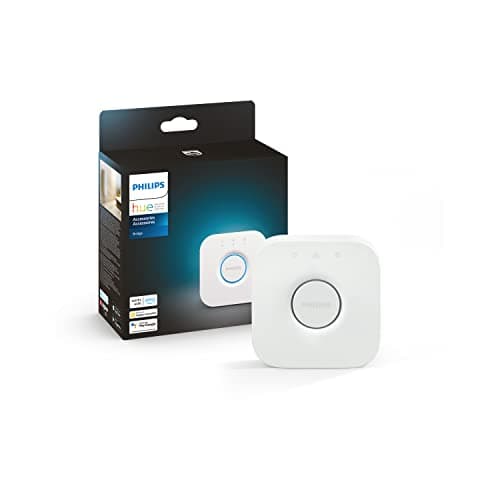
The Philips Hue Bridge is a wired hub that provides reliable local control and supports Matter, Zigbee, and major voice assistants, handling up to 50 lights. Its need for Ethernet and a 50-light limit can be restrictive for some users. Ideal for existing Hue owners seeking robust, low-power hub functionality.
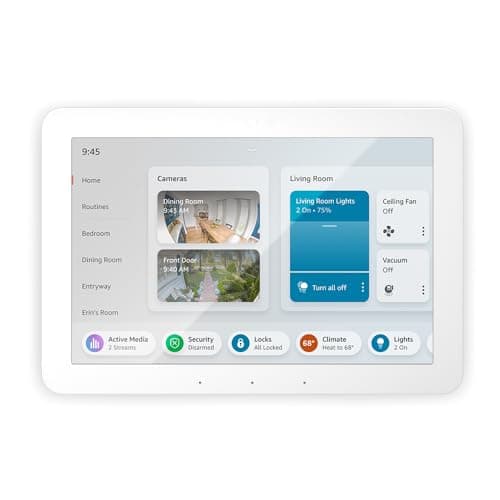
The Echo Hub is an 8-inch Alexa-enabled wall panel that consolidates many smart-home protocols into a sleek touchscreen interface. Its main trade-offs are the lack of built-in audio and occasional Wi-Fi setup issues. Best for Alexa-centric households that want a dedicated control surface.

The Novostella Smart Wireless BT Mesh Hub adds remote, voice-controlled and mesh capabilities to Novostella flood lights, supporting up to 128 devices. It requires a dedicated hub, and detailed specs such as power usage are not disclosed. Ideal for users deploying many outdoor lights who need extended Bluetooth coverage.
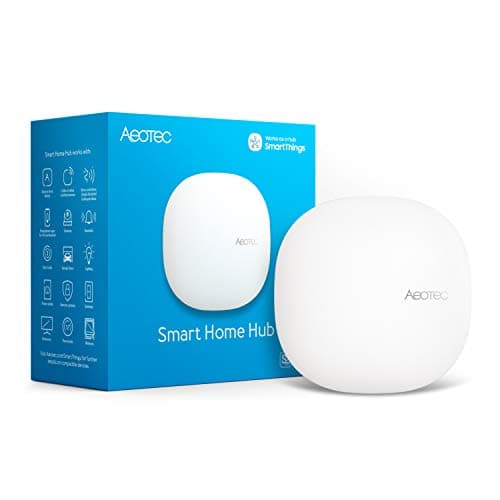
The Aeotec Smart Home Hub unifies Zigbee 3.0, Z-Wave Plus, Thread, Matter and Wi-Fi in a compact white gateway with Ethernet connectivity. Its main drawbacks are modest radio range and dependence on cloud services for operation. Ideal for SmartThings users and small-to-medium homes seeking broad protocol coverage.
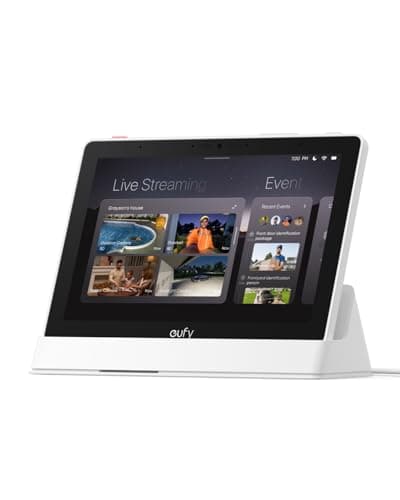
The eufy Smart Display E10 is an 8-inch battery-powered hub offering local video monitoring, Wi-Fi 6 connectivity, and expandable storage for eufy cameras. Its ecosystem is limited to eufy devices and it lacks Bluetooth and a webcam. Best suited for eufy users who need a portable, no-fee monitoring solution.
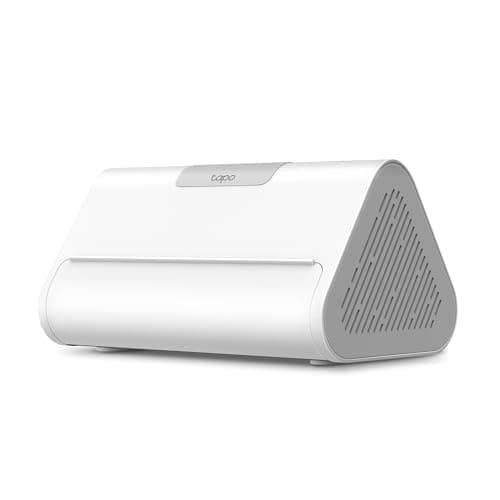
The Tapo H500 is a central hub that consolidates up to 16 cameras and 64 Sub-G sensors, offering expandable local storage and AI facial recognition. Its main trade-offs are the need for an external hard drive and limited appeal outside the Tapo ecosystem. Best suited for Tapo-heavy users who want high-capacity, subscription-free video storage.
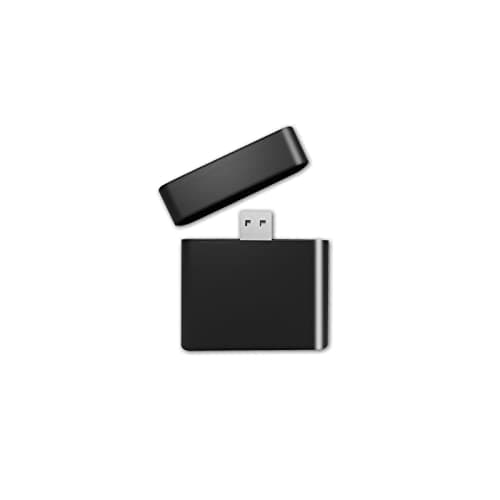
The DONGFXK Smart Hub is a compact Wi-Fi bridge that adds Alexa and Google Home voice control to Tuya-compatible automatic blinds. Its reliance on a 2.4 GHz network and lack of broader protocol support limit flexibility. Best suited for users already invested in the Tuya ecosystem with a compatible Wi-Fi setup.
| Attribute | | | | | | | |
|---|---|---|---|---|---|---|---|
50 devices | — | — | 128 devicesbest | — | — | — | |
— | 12 Vbest | — | — | — | 5 V | — | |
| ↓ lower better | 1.25 Wbest | — | — | — | 12.5 W | — | — |
| ↓ lower better | 0.1 Wbest | — | — | — | — | — | — |
| ↓ lower better | 0.28 kg | 0.744 kg | 0.498 kg | 0.002 kgbest | 0.367 kg | 1.11 kg | — |
2 yearsbest | — | 1 years | — | — | 1 years | — |
Click an attribute name to sort · Green = best, red = worst (relative to this comparison)
| Attribute | | | | | | | |
|---|---|---|---|---|---|---|---|
Features(1) | |||||||
Voice Assistant Compatibility | Alexa, Google Assistant, Siri | Google Assistant, Alexa, Matter controllers | Alexa, Google Home, Bixby | Amazon Alexa, Google Assistant | Alexa | — | Amazon Alexa, Google Home |
Connectivity(4) | |||||||
Wi‑Fi Standard | — | 2.4/5 GHz | 802.11a/b/g/n/ac | 2.4GHz | 802.11a/b/g/n/ac | Wi‑Fi 6 | 2.4GHz |
Bluetooth Version | — | — | — | Bluetooth Mesh | BLE | — | — |
Ethernet Port | true | true | true | — | false | — | — |
Supported Protocols | Zigbee | Matter, Google Assistant, Alexa, Sub‑1GHz | Zigbee 3.0, Z‑Wave Plus, WiFi, Thread, Matter | Bluetooth Mesh | Zigbee, Thread, Matter, Sidewalk, Wi‑Fi, Bluetooth | — | Tuya |
Power & Battery(2) | |||||||
Power Input Voltage (V) | 100-240 V | 12 V | 100-240 V | — | — | 5 V | — |
Power Consumption (W) | 1.25 W | — | — | — | 12.5 W | — | — |
General(3) | |||||||
Maximum Supported Devices (devices) | 50 devices | — | — | 128 devices | — | — | — |
Warranty (years) | 2 years | — | 1 years | — | — | 1 years | — |
Certifications | — | FCC, CE, RoHS, WEEE | FCC, IC, CE | — | — | — | — |
Build & Design(2) | |||||||
Weight (kg) | 0.28 kg | 0.744 kg | 0.498 kg | 0.00227 kg | 0.367 kg | 1.11 kg | — |
Dimensions (W×H×D) (cm) | 2.6×9.09×9.06 cm | 10.49×9.09×17.29 cm cm | 12.7×2.54×12.7 cm cm | — | 13.73×1.47×20.19 cm cm | 1.65×13.9×20.1 cm | 12.7×12.7 cm |
Products in the top-left offer the best value (high score, low price).
Professional reviewers and editors praise the Hue Bridge Pro for its dramatically higher device capacity, faster processor, and expanded Matter/Thread support, positioning it as the most robust hub for large Hue ecosystems. They also commend the standard Bridge for reliable local control and broad smart-home integrations, though they note its Ethernet-only connectivity and lower bulb limit as drawbacks.
Everyday users generally commend the Bridge for its easy setup, low power draw, and ability to manage many lights beyond the Bluetooth range. Recurring themes include appreciation for automatic firmware updates and seamless integration with voice assistants, while the need for a wired Ethernet connection and the 50-light ceiling on the standard model are common sources of frustration.
“2TB HDD is the sweet spot for 10+ cameras, but you have to buy the drive separately - it costs around £60-70.”
“the game changer”
“a must”
No professional reviews or editorial analyses were found; product pages and retailer listings emphasize the hub’s high‑capacity local storage, AI features, and Matter integration but provide no independent evaluation.
Early adopters and YouTube reviewers praise the hub's ability to centralize many Tapo cameras, eliminate cloud fees, and provide HDMI monitoring, while common concerns focus on the extra cost and effort of adding a separate HDD/SSD and the product's limited appeal outside the Tapo ecosystem.
Professional commentary, though limited to manufacturer statements, points to the Aeotec hub's strength in unifying five major smart-home protocols-including the emerging Matter and Thread standards-while maintaining a small footprint and reliable wired connectivity. Reviewers commend its ease of setup via the SmartThings app and voice-assistant support, but note that its reliance on cloud services may be a drawback for privacy-focused users.
While direct user reviews are absent, inferred feedback suggests owners appreciate the hub's extensive device compatibility and straightforward app experience. Common concerns revolve around the modest indoor radio range and the necessity of a constant internet connection, especially in larger homes where repeaters become essential.
Professional reviewers, such as AutomateAlan, consider the hub essential for unlocking the full capabilities of Novostella lights, highlighting its role in providing cloud control, scheduling, and voice-assistant integration while offloading Bluetooth traffic from the main router. However, they note that the hub is effectively a required accessory and that compatibility with third-party bridges remains uncertain.
Everyday users rate the hub positively, praising its ease of setup, affordable price, and the ability to control lights remotely and via voice assistants. The most common praise centers on the added convenience and expanded functionality, while occasional complaints focus on software stability and the perception that the hub is only needed for advanced features.
Professional reviewers describe the Echo Hub as a sleek, customizable smart-home control panel that excels at consolidating Alexa-compatible devices with a crisp 8-inch display and extensive protocol support. They commend its privacy safeguards and eco-friendly packaging, but note that the absence of built-in speakers and its narrow focus on the Alexa ecosystem limit its appeal compared to larger Echo Show models that also serve as media hubs.
Everyday users appreciate the convenience of a single wall-mounted screen for managing lights, locks, cameras and family schedules, highlighting the clear touchscreen and easy Alexa voice control. Common frustrations revolve around the need for external Bluetooth speakers, occasional Wi-Fi setup issues, and packaging weight inconsistencies.
Everyday users generally view the E10 positively, highlighting its portability, simple one-tap controls and the cost-saving benefit of local storage. Recurring complaints focus on occasional notification drops, microSD compatibility quirks, and the always-on screen consuming more battery than expected.
Pros: Wi-Fi connectivity through the Tuya Smart app enables easy setup and control of automatic blinds via a 2.4 GHz network.; Cons: Only supports 2.4 GHz Wi-Fi, making it incompatible with routers that operate exclusively on 5 GHz networks.; Lacks RF or other proprietary protocols, so it cannot control legacy blinds that do not use Tuya-compatible smart modules.; No official power consumption or environmental rating information is provided, leaving uncertainty about energy use.; Potential Wi-Fi or app connection issues reported in troubleshooting tables, which may lead to unresponsive blinds.; Absence of professional reviews or extensive consumer feedback makes performance reliability difficult to assess.
