Rankings
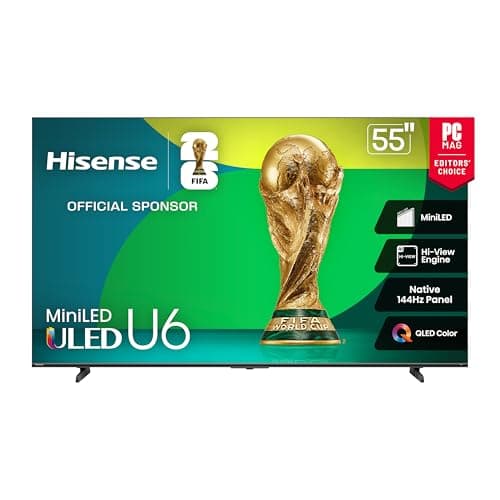
Hisense's 55-inch U6 Series offers a Mini-LED QLED panel with a native 144 Hz refresh rate, 1000-nit brightness and extensive HDR support, making it a strong choice for gamers and bright-room viewing. The built-in 20 W speakers are weak and uniformity issues can appear in high-contrast scenes. Ideal for gamers and sports fans who prioritize performance over audio.
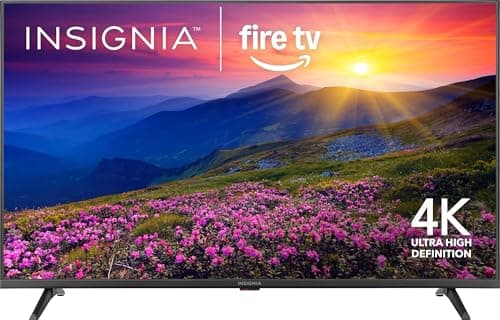
The Insignia 70" F50 Series delivers a large 4K quantum-dot screen with Fire TV and Alexa, offering strong value for budget-focused families. Its 60 Hz panel, modest brightness, and lack of local dimming restrict high-dynamic-range performance and fast-action motion. Ideal for casual streaming and movies in moderately lit living spaces.
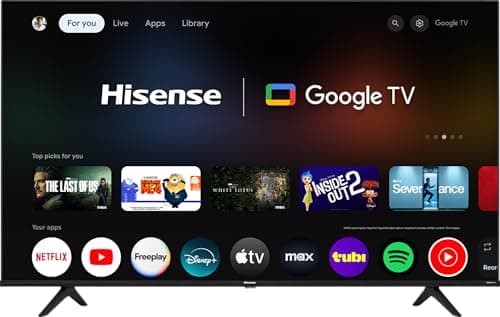
The Hisense 55-inch A6 Series is an entry-level 4K UHD Google TV that delivers Dolby Vision HDR and a full-array LED panel at an affordable price. Its modest 300-nit brightness and lack of local dimming limit performance in bright rooms. Best suited for budget-conscious viewers seeking basic 4K smart features and casual gaming.
Panasonic's 75-inch TH-75CQE1W is a professional-grade IPS display with 24 W stereo speakers and 24/7 operation capability for commercial environments. Its 400-nit brightness and absence of HDR reduce suitability for high-dynamic-range content, and its large size and power draw make it less ideal for residential use. Suited for offices, retail spaces or signage where reliability and wide viewing angles are key.
| Attribute | | | | |
|---|---|---|---|---|
70 inches | 55 inches | 54.6 inches | 75 inchesbest | |
60 Hz | 144 Hzbest | 60 Hz | — | |
3 | — | 3 | 4best | |
60 Wbest | 20 W | 16 W | 24 W | |
| ↓ lower better | 60 Wbest | — | 125 W | 307 W |
350 nits | 1,000 nitsbest | 300 nits | 400 nits | |
1 | — | 2best | — | |
| ↓ lower better | 24.3 kg | 19.5 kg | 11.5 kgbest | 36.8 kg |
Click an attribute name to sort · Green = best, red = worst (relative to this comparison)
| Attribute | | | | |
|---|---|---|---|---|
Features(1) | ||||
Smart Platform | Fire TV | Fire TV | Google TV | — |
Power(1) | ||||
Power Consumption (W) | 60 W | — | 125 W | 307 W |
Build & Design(1) | ||||
Weight (kg) | 24.3 kg | 19.5 kg | 11.5 kg | 36.8 kg |
Display(5) | ||||
Screen Size (inches) | 70 inches | 55 inches | 54.6 inches | 75 inches |
Refresh Rate (Hz) | 60 Hz | 144 Hz | 60 Hz | — |
Panel Type | LED | VA Mini-LED QLED | LED | IPS/ADS |
HDR Support | true | true | true | false |
Brightness (nits) | 350 nits | 1000 nits | 300 nits | 400 nits |
Connectivity(3) | ||||
HDMI Ports | 3 | — | 3 | 4 |
USB Ports | 1 | — | 2 | — |
Wi‑Fi Standard | Wi‑Fi | Wi‑Fi 6 | 802.11ac | — |
Audio(2) | ||||
Speaker Power (W) | 60 W | 20 W | 16 W | 24 W |
Audio Technology | DTS Virtual:X, DTS Studio Sound | Dolby Atmos | DTS Virtual:X | — |
Performance(1) | ||||
VRR Max Frame Rate (Hz) | — | 144 Hz | 60 Hz | — |
Products in the top-left offer the best value (high score, low price).
Professional reviewers view the Insignia F50 as a solid entry-level 70-inch TV that benefits from a quantum-dot color boost and a user-friendly Fire TV/ Alexa experience, but they criticize its modest brightness, lack of local dimming, and basic motion handling, positioning it as a budget option rather than a premium performer.
Everyday users generally praise the large screen, easy setup, clear 4K upscaling, and the convenience of Alexa voice control, while recurring concerns focus on the modest built-in audio, limited brightness in bright rooms, and occasional confusion over weight and dimension specs.
“perfect size and sound & picture quality is great. I definitely would recommend”
Hisense is the better choice for those wanting Dolby Vision and Google TV; Insignia suits the most price-sensitive buyers.
Professional reviewers consider the Hisense U6 a standout value proposition for gamers, emphasizing its native 144Hz panel, Mini-LED contrast, low input lag, and strong HDR support. While the AI processing and upscaling are praised, critics note average contrast outside gaming modes and a modest speaker system, positioning the TV as a solid mid-range choice with room for improvement in audio and uniformity.
Everyday users love the buttery-smooth 144Hz gaming experience, vibrant QLED colors, and bright 1000-nit panel that handles bright rooms. Common praise centers on the easy Fire/Google TV setup and HDR immersion, while recurring complaints focus on weak built-in speakers, occasional interface lag, and blooming or uniformity issues in high-contrast scenes.
Professional editors highlight the Hisense A6 as a compelling value proposition, emphasizing its Dolby Vision HDR, FilmMaker Mode for accurate color reproduction, AI UHD Upscaler for improved upscaling, and robust gaming support via Game Mode Plus. While they commend the Google TV ecosystem and DTS Virtual:X audio, they note the modest 300-nit brightness, lack of local dimming, and absence of premium HDR formats as drawbacks compared to higher-priced competitors.
Everyday users consistently praise the TV's straightforward setup, the precise stand width that matches their furniture, and the solid build reflected in the heavy shipping box. The removable screen film and built-in Chromecast are also mentioned positively, while no major complaints surface in the available feedback.
