Rankings
The LG 27GR95QE-B UltraGear OLED is a premium 27-inch QHD gaming monitor delivering a blazing 240 Hz refresh rate, 0.03 ms response time, perfect blacks, and a wide DCI-P3 color gamut. It targets high-performance gamers who demand ultra-fast motion clarity and color fidelity, though it has modest peak brightness and potential burn-in concerns.
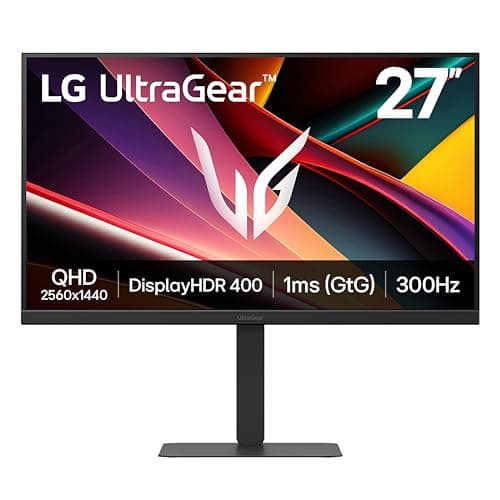
The LG 27G640A-B is a 27-inch QHD IPS gaming monitor that combines a blistering 300 Hz refresh rate with excellent color coverage and a fully adjustable stand. It targets competitive gamers and creators who need high speed and accurate colors, while offering USB-C docking and dual adaptive-sync support.
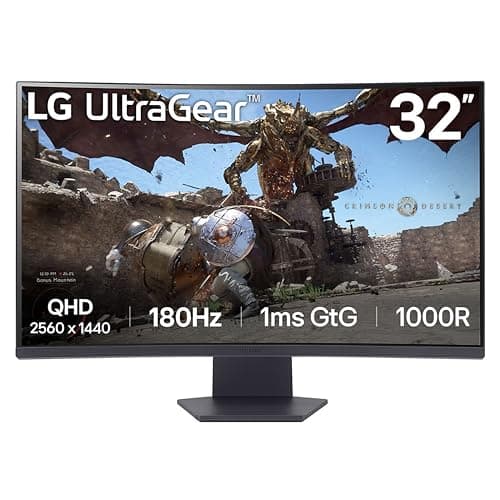
The LG 32GS60QC-B UltraGear is a 32-inch QHD VA gaming monitor featuring a 1000R curvature, 180 Hz refresh rate, 1 ms response time, and HDR10 support. It offers deep blacks and high contrast but suffers from VA-related ghosting, limited ergonomics, and modest HDR performance.
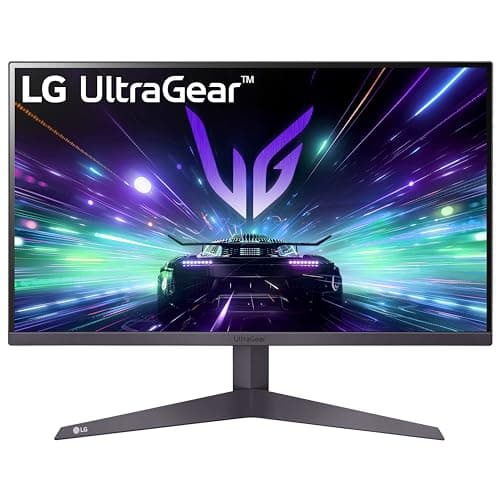
The LG 27GS50F-B is a 27-inch Full HD VA gaming monitor offering a high 180 Hz refresh rate, 1 ms MBR response, and a suite of gaming features like FreeSync and Black Stabilizer. It provides deep blacks and fast motion but lacks height adjustment and has limited HDR impact.
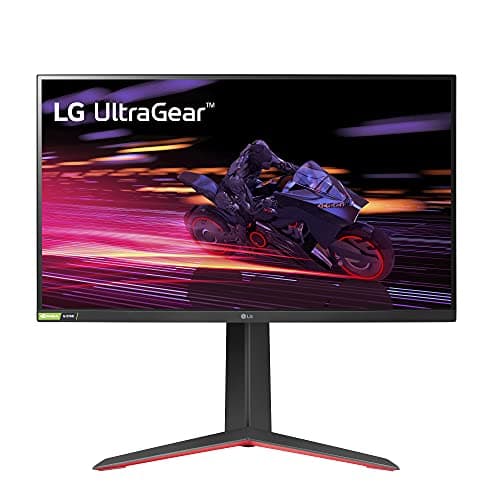
The LG 27GP750-B is a 27-inch Full HD IPS gaming monitor offering a blistering 240 Hz refresh rate, 1 ms response time and strong colour accuracy. It combines adaptive-sync support for both NVIDIA and AMD GPUs with a fully adjustable ergonomic stand, making it a value-focused choice for competitive gamers.
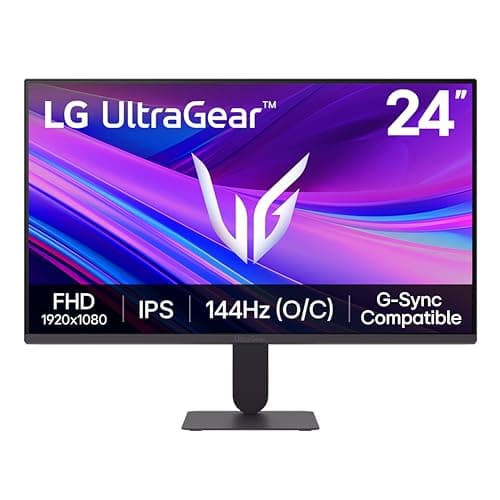
The LG 24G411A-B UltraGear is a 24-inch IPS gaming monitor offering 144 Hz overclocked refresh, HDR10, and dual adaptive-sync support at an affordable price. It excels in color accuracy and smooth motion but lacks ergonomic flexibility and has modest HDR brightness.
| Attribute | | | | | LG 27GR95QE-B | |
|---|---|---|---|---|---|---|
31.5 inchesbest | 27 inches | 27 inches | 27 inches | 27 inches | 24 inches | |
180 Hz | 240 Hz | 180 Hz | 300 Hzbest | 240 Hz | 144 Hz | |
2,560 pixelsbest | 1,920 pixels | 1,920 pixels | 2,560 pixelsbest | 2,560 pixelsbest | 1,920 pixels | |
1,440 pixelsbest | 1,080 pixels | 1,080 pixels | 1,440 pixelsbest | 1,440 pixelsbest | 1,080 pixels | |
| ↓ lower better | 1 ms | 1 ms | 5 ms | 1 ms | 0.03 msbest | 5 ms |
300 nits | 400 nitsbest | 250 nits | 400 nitsbest | 200 nits | 250 nits | |
3,000 | 1,000 | 3,000 | 1,300 | 1,500,000best | 1,500 | |
1best | 1best | 1best | 1best | 1best | 1best |
Click an attribute name to sort · Green = best, red = worst (relative to this comparison)
| Attribute | | | | | LG 27GR95QE-B | |
|---|---|---|---|---|---|---|
Display(10) | ||||||
Screen Size (inches) | 31.5 inches | 27 inches | 27 inches | 27 inches | 27 inches | 24 inches |
Panel Type | VA | IPS | VA | IPS | OLED | IPS |
Resolution (Horizontal) (pixels) | 2560 pixels | 1920 pixels | 1920 pixels | 2560 pixels | 2560 pixels | 1920 pixels |
Resolution (Vertical) (pixels) | 1440 pixels | 1080 pixels | 1080 pixels | 1440 pixels | 1440 pixels | 1080 pixels |
Refresh Rate (Hz) | 180 Hz | 240 Hz | 180 Hz | 300 Hz | 240 Hz | 144 Hz |
Response Time (ms) | 1 ms | 1 ms | 5 ms | 1 ms | 0.03 ms | 5 ms |
Adaptive Sync | AMD FreeSync Premium | G-Sync Compatible, FreeSync Premium | AMD FreeSync | G-Sync Compatible, FreeSync Premium | NVIDIA G-SYNC Compatible, AMD FreeSync Premium | FreeSync, G-SYNC Compatible |
Brightness (nits) | 300 nits | 400 nits | 250 nits | 400 nits | 200 nits | 250 nits |
Contrast Ratio | 3000 | 1000 | 3000 | 1300 | 1500000 | 1500 |
Color Gamut | 99% sRGB | 99% sRGB | 72% NTSC | 95% DCI-P3, 99% sRGB | DCI-P3 98.5% | 99% sRGB |
Connectivity(1) | ||||||
HDMI Ports | 2 | 2 | 2 | 2 | 2 | 1 |
Warranty(1) | ||||||
Warranty Period (months) | 12 months | 12 months | 24 months | 12 months | 3 months | 12 months |
Ergonomics(3) | ||||||
Height Adjustment | false | true | false | true | true | false |
Tilt Range (degrees) | 20 degrees | -5 to 15 degrees | 20 degrees | -5 to 20 degrees | 20 degrees | 25 degrees |
Swivel Range (degrees) | — | — | — | 30 degrees | 60 degrees | — |
Power(1) | ||||||
Typical Power Consumption (W) | 23 W | 45 W | 17.1 W | 45 W | 74 W | 16 W |
Audio(1) | ||||||
Built‑in Speakers | false | — | false | true | false | false |
Products in the top-left offer the best value (high score, low price).
Professional reviewers acknowledge the monitor's strong contrast, immersive curvature, and high refresh rate, but criticize its VA-related motion handling, limited ergonomics, and only token HDR support.
Everyday users love the monitor's immersive curve, deep blacks, and gaming-specific features, but repeatedly complain about ghosting, VRR flicker, and the lack of height adjustment. HDR is generally considered disappointing.
“the cheapest 27-inch 240 Hz gaming monitor with a decent IPS panel”
“strong ergonomics and reliable FreeSync/G-Sync compatibility”
“HDR looks flat and not significantly different from SDR.”
Professional reviewers highlight the LG 27GP750-B as a value king, noting its rare combination of a 240 Hz IPS panel, solid adaptive-sync performance, low input lag, and factory-calibrated colors that outshine many TN competitors while matching them in speed. The ergonomics and anti-glare finish also receive strong praise, positioning it as a top choice for serious gamers seeking performance without a premium price.
Everyday users consistently praise the monitor's buttery-smooth gameplay, high brightness, and the fully adjustable stand, while also valuing the vibrant colors and borderless design for multi-monitor setups. Common complaints revolve around the low pixel density of a 1080p panel on a 27" screen, occasional backlight bleed, and the need to use DisplayPort for the full 240 Hz experience.
Professional reviewers praise the LG 27GS50F-B for its standout 180 Hz refresh rate and high contrast VA panel, noting fluid motion and deep blacks, while criticizing the underwhelming HDR10 implementation and the lack of height adjustment.
Everyday users consistently commend the monitor's smooth gameplay, effective black stabilizer, and sleek borderless design, while common complaints focus on the flat HDR experience, a wobbly stand, and the inability to use crosshair and FPS counter together.
Professional reviewers hail the 27G640A-B as a best-in-class 1440p gaming monitor, emphasizing its 300 Hz refresh rate, IPS color accuracy, and fully adjustable stand. They commend the rare inclusion of USB-C with Power Delivery and the practical gaming suite, while noting that HDR performance is modest and HDMI bandwidth is limited to 1440p@120 Hz.
Everyday users rave about the monitor's fluid gameplay, ergonomic flexibility, and vibrant colors, often calling it a game-changer and best-in-class for coding or reading. Common complaints revolve around occasional dust under the panel, underwhelming HDR brightness, firmware hiccups, and a slightly soft anti-glare surface.
Professional reviewers laud the LG OLED for delivering unprecedented motion clarity and contrast, calling the 0.03 ms response time and 240 Hz panel a game-changing combination, while noting lower peak brightness versus mini-LED rivals and HDMI 2.1 stability quirks.
Everyday users rave about the deep blacks, zero motion blur, vibrant colors, and the convenience of the remote control, especially in competitive shooters and dual-monitor setups. Recurring complaints focus on early signs of OLED burn-in, the bulky external power brick, and occasional HDMI compatibility hiccups.
Professional reviewers praise the 24G411A-B for delivering IPS color accuracy and G-SYNC compatibility at a budget price, noting its smooth 144 Hz performance and useful gaming aids, while cautioning that HDR is modest and the stand lacks height or swivel adjustments.
Everyday users rate the monitor around 4.2-4.4/5, highlighting its crisp visuals, smooth gameplay, and Black Stabilizer, but complain about limited ergonomics, occasional ghosting in dark scenes, and underwhelming HDR due to low brightness.
