Rankings
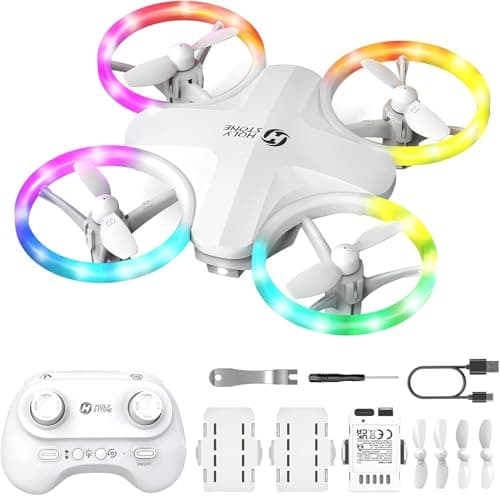
The Holy Stone HS180 is a compact LED-equipped mini drone that excels with durable prop guards and up to 21 minutes of total flight from three batteries. Its trade-offs are loud noise, short per-battery runtime and limited outdoor range. Best suited for kids and absolute beginners who want an indoor-focused, easy-to-fly toy.
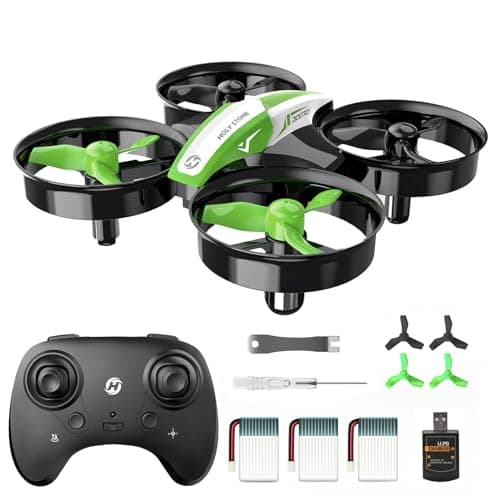
The Holy Stone HS210 is an ultra-lightweight indoor trainer drone that offers quick, responsive control and three batteries for extended play. Its limitations include short per-battery flight time, loud buzzing noise and a modest 50 m range with no camera. It is best for absolute beginners and budget-conscious users focused on learning basic flight skills.
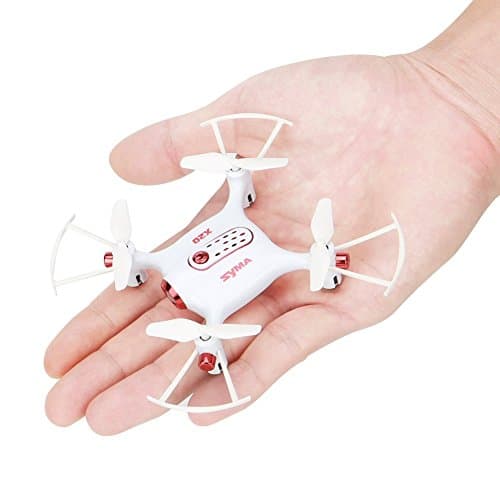
The SYMA X20 pocket drone packs auto-hover, altitude hold and 360° flips into an ultra-compact ABS body with protective guards and LED lights. Its short 5-7 minute flight time and 20 m range, plus the need for separate AA batteries, limit longer sessions. Suited for teens and beginners seeking a pocket-sized indoor flyer.
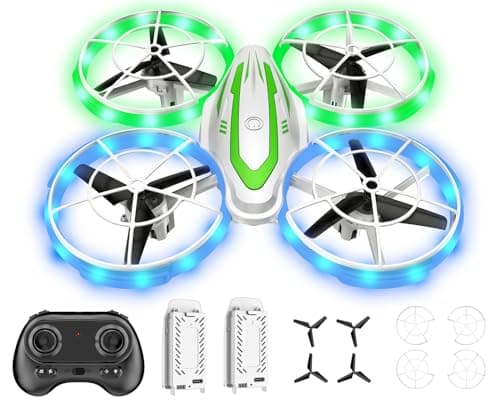
The Redrie X29 is a foldable mini quadcopter offering a 1080p adjustable-angle FPV camera and a suite of beginner-friendly flight modes, backed by two batteries for up to 25 minutes of combined flight time. Its lightweight construction leads to shaky video and poor stability in windy conditions, and charging each battery takes up to 1.5 hours. Best suited for kids and casual indoor flyers seeking fun stunts.
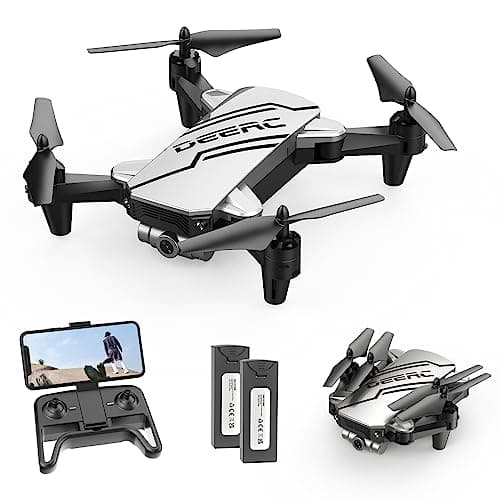
The DEERC D20 is a lightweight, beginner-friendly mini drone featuring a 720p FPV camera and robust propeller guards. Its short 10-minute per-battery flight time, limited 40 m range, and wind sensitivity restrict outdoor performance. Ideal for kids and new pilots seeking an affordable, easy-to-fly indoor drone.
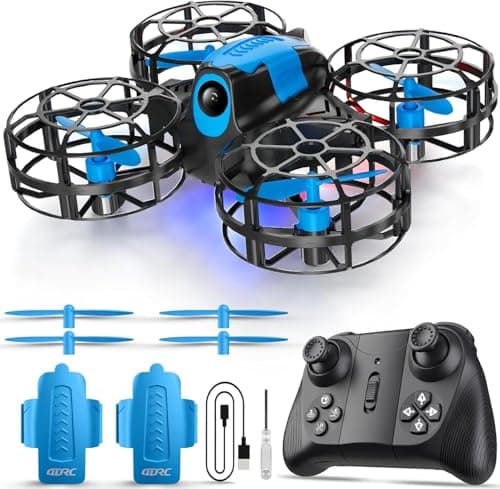
The 4DRC V18 is a palm-sized mini drone featuring a 360° grid frame for crash protection, altitude hold, headless mode and 360° flips, with a modest 6-12 minute flight time per charge. Its tiny battery limits endurance and it lacks a camera, while wind tolerance is low. Ideal for young beginners who want a safe, portable drone for indoor play.
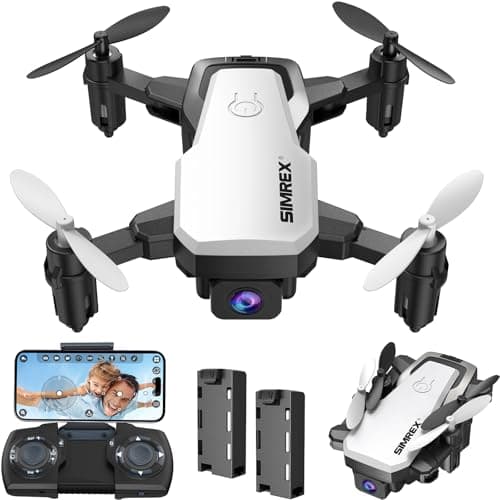
The SIMREX X300C is a foldable mini quadcopter with a 720p camera, dual-battery support for up to 18 minutes, and beginner-friendly features like headless mode and altitude hold. Unstable hovering, short per-battery flight time and modest camera quality limit its outdoor usability. It fits kids and indoor hobbyists looking for an inexpensive, easy-to-fly drone.
| Attribute | | | | | | | |
|---|---|---|---|---|---|---|---|
1,200 mAhbest | 250 mAh | — | 180 mAh | — | 138 mAh | 500 mAh | |
25 minutesbest | 9 minutes | 21 minutes | — | 18 minutes | 10 minutes | 9 minutes | |
| ↓ lower better | 480 g | 38 g | 45 g | 100 g | 200 g | 69 g | 26 gbest |
— | 18 km/hbest | 9 km/h | — | — | — | — | |
— | 50 m | — | 20 m | — | 40 m | 105 mbest | |
| ↓ lower better | 75 minutes | 50 minutesbest | — | — | 60 minutes | 80 minutes | 80 minutes |
— | — | — | — | — | 0.9 MPbest | — | |
— | 120 mbest | — | — | — | — | — |
Click an attribute name to sort · Green = best, red = worst (relative to this comparison)
| Attribute | | | | | | | |
|---|---|---|---|---|---|---|---|
Flight Performance(2) | |||||||
Maximum Speed (km/h) | — | 18 km/h | 9 km/h | — | — | — | — |
Control Range (m) | — | 50 m | — | 20 m | 30-45 m | 40 m | 105 m |
Battery & Power(4) | |||||||
Battery Capacity (mAh) | 1200 mAh | 250 mAh | — | 180 mAh | — | 138 mAh | 500 mAh |
Flight Time (minutes) | 25 minutes | 9 minutes | 21 minutes | 5-7 minutes | 18 minutes | 10 minutes | 9 minutes |
Charging Time (minutes) | 75 minutes | 50 minutes | — | 50-110 minutes | 60 minutes | 80 minutes | 80 minutes |
Battery Type | Lithium-ion | Lithium-ion Polymer | — | Li-ion/Li-po | Li-polymer | Lithium Polymer | — |
Build & Design(3) | |||||||
Weight (g) | 480 g | 38 g | 45 g | 100 g | 200 g | 69 g | 26 g |
Dimensions (L×W×H) (cm) | 17.3×3.8×18.3 cm cm | 3.0 x 8.0 x 8.0 cm cm | 3.0 x 11.0 x 11.0 cm cm | 10.5×2.5×10.5 cm cm | 5 x 23 cm cm | 130×90×170 cm | 10.2×5.1×10.2 cm cm |
Body Material | ABS | — | Tough | ABS | — | — | ABS plastic |
Camera(1) | |||||||
Video Resolution | 1080p | — | — | — | 720p | 720p | — |
Products in the top-left offer the best value (high score, low price).
Professional reviewers commend the REDRIE X29 for its beginner-focused design, intuitive app control and a rich set of fun flight modes that make learning to fly enjoyable. However, they also note significant drawbacks such as shaky camera output, wind sensitivity due to its lightweight frame, and a fragile build that may not withstand rough handling.
Everyday users generally love how easy the X29 is to pick up and fly, especially praising the one-key controls, stunt features and the inclusion of two batteries. Recurring frustrations revolve around shorter-than-expected flight times, instability in windy conditions, shaky video footage, and durability concerns with propellers and the remote's phone holder.
“perfect for first drone”
“fun stunt modes and camera selfies”
“super durable”
HS180 is better for very young kids who enjoy lights; HS210 provides a more agile, lighter experience for slightly older beginners.
HS180 is better for kids who want bright lights and longer play, while HS210 is a basic alternative.
Professional reviewers consider the HS210 a solid entry-level trainer, praising its feather-light build, instant control response, and affordability, while noting that its lack of camera, short battery life, and limited range keep it firmly in the indoor-training niche.
Everyday users consistently highlight the drone's quick, lag-free handling and portability, but they are frustrated by the brief flight times, long charging cycles, loud noise, and difficulty keeping the tiny aircraft in sight, especially outdoors.
Professional reviewers consistently praise the HS180 as an easy-to-fly, beginner-friendly quadcopter with durable prop guards, three batteries for up to 21 minutes of total flight, altitude hold, one-key takeoff, headless mode, and eye-friendly LED lights. They also note its noise level and limited range make it best suited for indoor or calm-day outdoor use.
Everyday users love the drone's stability, simple controls, bright LED patterns and the durability that survives crashes, while repeatedly mentioning the loud noise and the need to change batteries every seven minutes as the main annoyances.
Professional reviewers commend the X20 for its extreme portability, stable indoor hover, and intuitive one-key controls, noting it as a solid starter quad. However, they consistently criticize its brief flight time, limited 20-meter range, and lack of any camera or app features.
Everyday users echo the professional praise for size, stability, and fun flip capabilities, especially appreciating the prop guards and responsive controls. The dominant complaints revolve around the short 3‑5 minute flight duration, wind sensitivity, and the inconvenience of needing separate AA batteries and long charge times.
Professional reviewers praise the X300C for its beginner-friendly handling, solid build quality, and thoughtful packaging that includes extra propellers and protective foam. They highlight the fun factor of one-key flips and the convenience of a foldable frame, but consistently criticize its unstable hover, short battery endurance, sub-par camera performance, and inability for outdoor use in wind.
Everyday users appreciate the drone's compact, travel-ready design, the protective packaging, and the responsive controls that make learning to fly easy. However, they repeatedly complain about the drone's inability to hold a steady hover, the battery draining far faster than promised, the camera delivering lower-resolution footage than expected, and the lack of suitability for outdoor use due to wind sensitivity.
Professional reviewers describe the DEERC D20 as a fun, easy-to-fly mini drone that excels in sturdiness and value, highlighting its crash-resistant props, intuitive auto-takeoff/land, altitude hold, 720p FPV streaming, and the inclusion of two batteries for extended play, while noting the lack of onboard storage and modest range as minor drawbacks.
Everyday users love the D20 for its beginner-friendly operation, stable altitude hold, entertaining flips and lights, and the value of two batteries and a carrying case, but they commonly criticize the short flight time, wind sensitivity, occasional app connectivity issues, limited range, and the camera's performance in low light.
Professional reviewers highlight the V18's impressive hover time for its tiny battery, compact FPV-like size, and especially its 360° grid frame that makes crashes virtually harmless. They commend the intuitive one-click controls, altitude hold and headless mode that flatten the learning curve, while noting the modest real-world flight time, basic toy construction and limited wind tolerance as the main drawbacks.
Everyday users consistently praise the drone's ease of use for children, its crash-proof grid frame and pocket-sized portability, describing it as fun for indoor stunts and quick learning. The most common complaints revolve around the short battery life, fragile propellers and poor performance in windy conditions, with several noting the slow charging process.
