Rankings
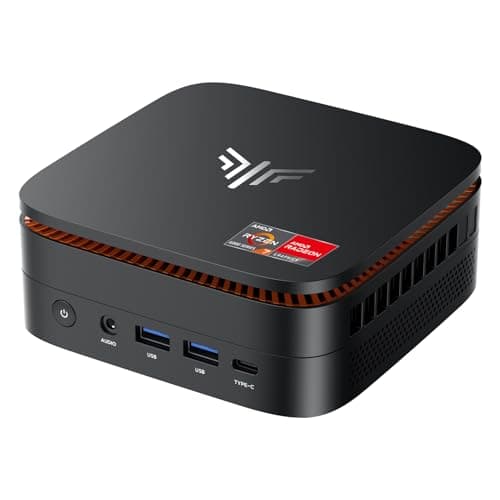
The KAMRUI Hyper H1 packs a desktop-class Ryzen 7 6800H and Radeon 680M iGPU into a 5-inch square chassis, delivering 32 GB DDR5 memory, 1 TB NVMe storage and triple-4K display capability for office, media and light-gaming scenarios.
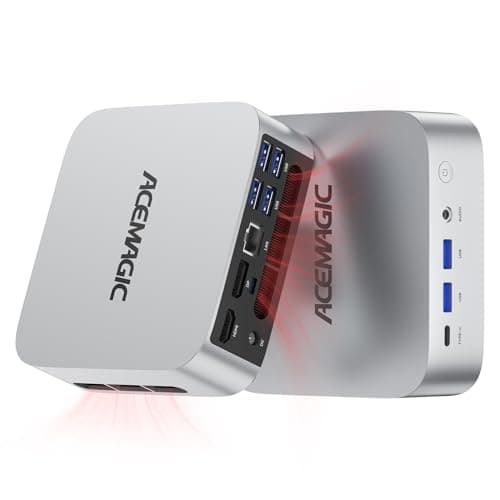
The ACEMAGIC M1 Mini PC delivers desktop-grade performance in a compact 5-inch square chassis, featuring an i9-11900H, 32 GB RAM and a 1 TB PCIe 4.0 SSD. It excels at productivity and multi-monitor setups but lacks a discrete GPU and power-delivery USB-C.
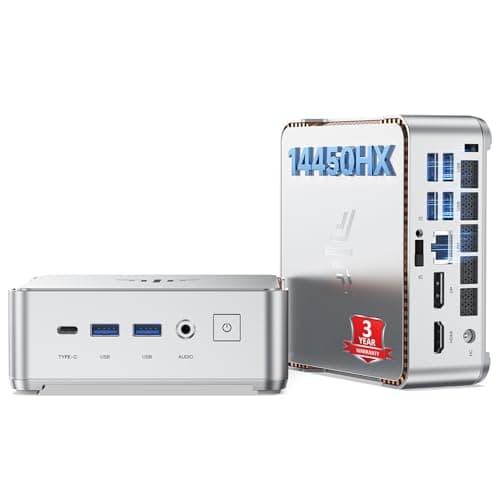
The KAMRUI Hyper H2 pairs a 10-core Intel i5-14450HX with 32 GB DDR4 RAM and a 1 TB PCIe 4.0 SSD, delivering desktop-class performance in a compact VESA-mountable chassis with extensive I/O and triple-4K support.
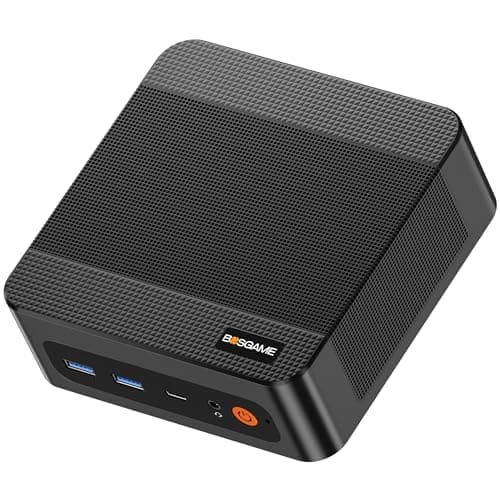
The BOSGAME P6 packs a high-end Ryzen 9 6900HX and 32 GB of LPDDR5X into a sub-5-inch chassis, offering triple-4K output, fast PCIe 4.0 storage and advanced cooling. It excels at multitasking and content-creation workloads but is limited by non-upgradeable memory and modest graphics.
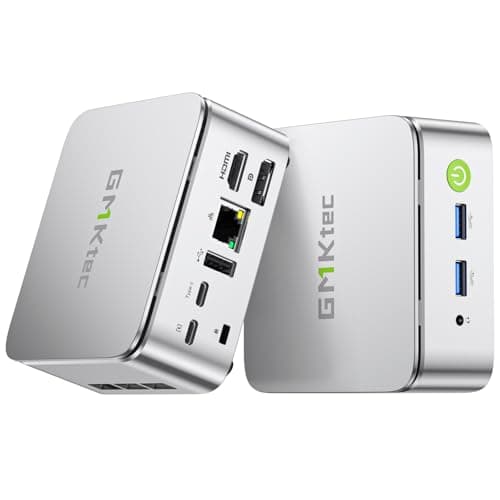
The GMKtec G10 combines a Ryzen 5 3500U with 16 GB DDR4 RAM and a 1 TB NVMe SSD, providing solid integrated graphics, triple-4K support and 2.5 G Ethernet in a lightweight, VESA-mountable design.
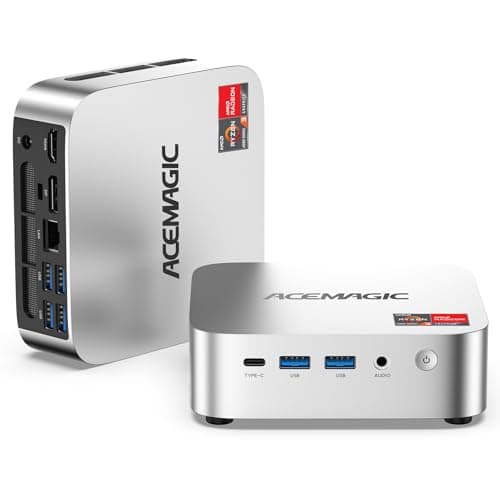
The ACEMAGIC K1 Mini PC delivers quad-core Ryzen 3 4300U performance, triple-4K output, and a rich port selection in an ultra-compact chassis, suited for media and office tasks but limited by older wireless standards and potential thermal throttling.
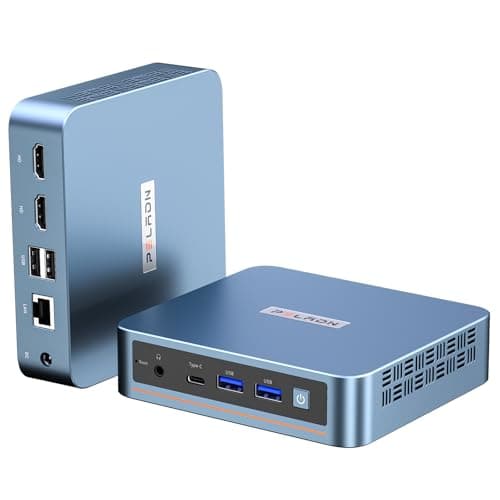
The PELADN WI-6 Mini PC is an ultra-compact, fan-cooled desktop powered by an Intel N100 processor, offering 16 GB RAM, 512 GB NVMe storage and triple 4K display support. It delivers low-power efficiency and strong media capabilities, though connectivity and Bluetooth lag behind newer standards.
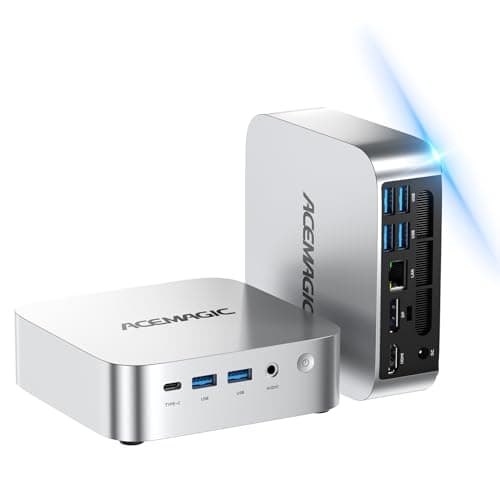
The ACEMAGIC K1 Mini PC pairs a 12-core Intel i5-12600H with triple-4K output in a compact, VESA-mountable chassis. It offers strong CPU performance and expandability but is constrained by integrated graphics and a relatively high-wattage adapter.
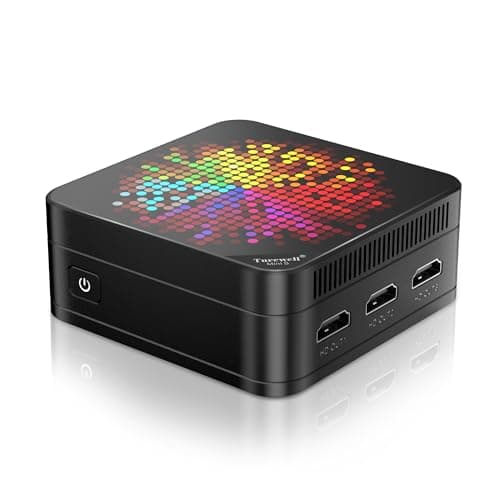
A palm-sized Windows 11 mini PC with a quad-core N95 processor, 16 GB DDR5 RAM and 512 GB SSD, offering triple-4K HDMI and dual-Gigabit Ethernet for office and light-media use.
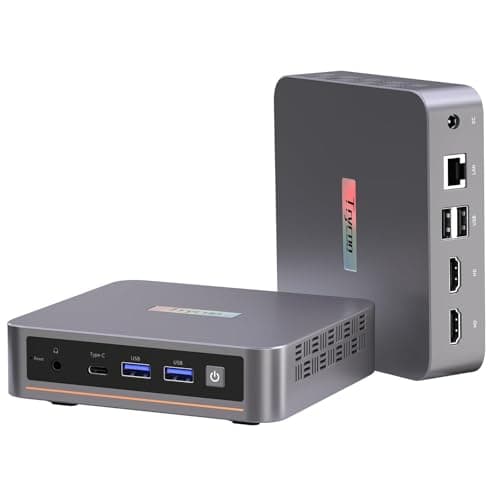
The Trycoo WI-6 N150 delivers noticeable performance gains over older Celeron mini PCs, with triple-4K display capability, 16 GB RAM and a 512 GB SSD in a very small chassis. It is well suited for office, digital signage and light media tasks, though storage speed and graphics are limited.
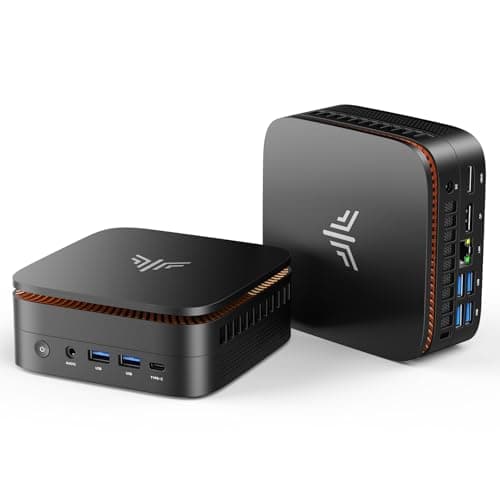
The Pinova P1 offers a budget-friendly Ryzen 4300U APU, 16 GB DDR4 RAM and triple-4K support in a tiny, energy-efficient form factor, ideal for office and light-media use.
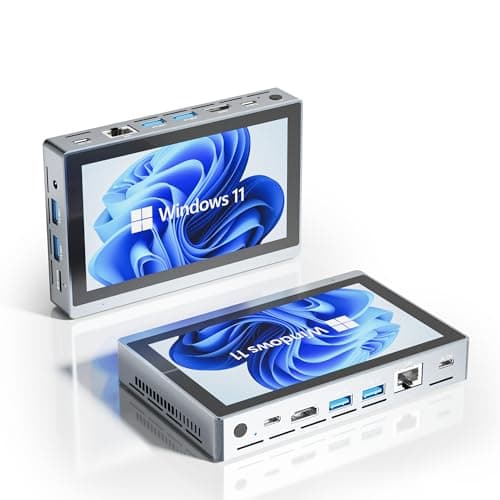
The HIGOLEPC Mini PC delivers a full Windows 11 Pro experience in a pocket-size chassis, with useful enterprise features like TPM 2.0 and dual-monitor support. Its low-power Celeron CPU and eMMC storage limit demanding workloads, and the short battery life restricts mobile use.
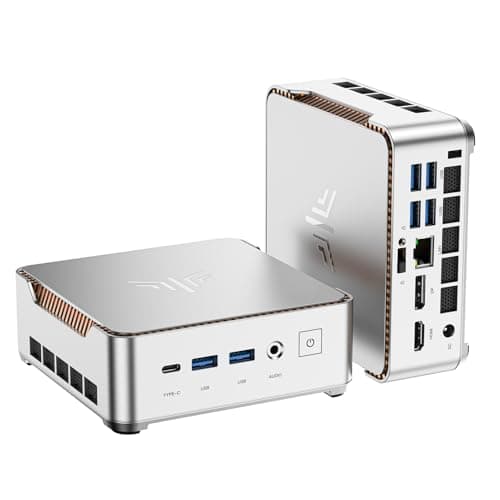
The KAMRUI Pinova P2 Mini PC is a compact, budget-friendly desktop powered by an AMD Ryzen 3 4300U, offering 16 GB RAM, 512 GB SSD and triple 4K display support, targeting everyday productivity and media streaming.
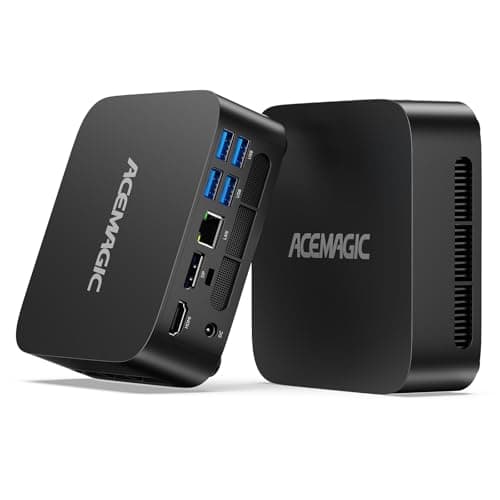
The ACEMAGIC K1 Mini PC delivers solid 4K multimedia performance in an ultra-compact chassis with extensive connectivity. While its port selection and VESA-mountability are strong points, older wireless standards and thermal throttling limit its appeal for power users.
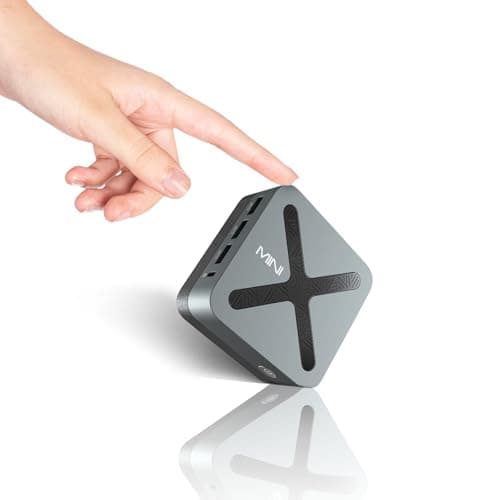
The MINIX Z97 delivers a tiny, quiet mini PC with triple-4K output and dual Ethernet, ideal for business and digital signage, but its fixed RAM and lack of USB-C limit expandability and connectivity.
| Attribute | | | | | | | | | | | | | | | |
|---|---|---|---|---|---|---|---|---|---|---|---|---|---|---|---|
4 | 8 | 10 | 4 | 4 | 4 | 8 | 4 | 4 | 12best | 4 | 8 | 4 | 4 | 4 | |
16 GB | 32 GBbest | 32 GBbest | 16 GB | 16 GB | 16 GB | 32 GBbest | 16 GB | 16 GB | 16 GB | 16 GB | 32 GBbest | 16 GB | 12 GB | 16 GB | |
8 | 16best | 16best | 4 | 4 | 4 | 16best | 4 | 4 | 16best | 4 | 16best | 4 | 4 | 4 | |
2.1 GHz | 3 GHz | 2.4 GHz | 2.7 GHz | 2.7 GHz | 2.7 GHz | 3.3 GHz | 2.7 GHz | 2 GHz | 2.7 GHz | 0.8 GHz | 3.2 GHz | 3.4 GHzbest | — | 2 GHz | |
3.7 GHz | 4.9 GHzbest | 4.8 GHz | 3.7 GHz | 3.7 GHz | 3.7 GHz | 4.9 GHzbest | 3.7 GHz | 3.6 GHz | 4.5 GHz | 3.4 GHz | 4.7 GHz | 3.4 GHz | 3.6 GHz | 2.9 GHz | |
1,000 GB | 1,024 GBbest | 1,024 GBbest | 1,000 GB | 1,024 GBbest | 512 GB | 1,000 GB | 512 GB | 512 GB | 512 GB | 512 GB | 1,024 GBbest | 512 GB | 512 GB | 256 GB | |
2.5 Gbpsbest | 2.5 Gbpsbest | 1 Gbps | 1 Gbps | 1 Gbps | 1 Gbps | 1 Gbps | 1 Gbps | 1 Gbps | 1 Gbps | 1 Gbps | 2.5 Gbpsbest | 1 Gbps | 1 Gbps | 1 Gbps | |
| ↓ lower better | 15 W | 45 W | 55 W | 15 W | 15 W | 28 W | 45 W | 28 W | 15 W | 30 W | 6 Wbest | 28 W | 15 W | 12 W | 15 W |
Click an attribute name to sort · Green = best, red = worst (relative to this comparison)
| Attribute | | | | | | | | | | | | | | | |
|---|---|---|---|---|---|---|---|---|---|---|---|---|---|---|---|
Performance(5) | |||||||||||||||
CPU Cores | 4 | 8 | 10 | 4 | 4 | 4 | 8 | 4 | 4 | 12 | 4 | 8 | 4 | 4 | 4 |
CPU Threads | 8 | 16 | 16 | 4 | 4 | 4 | 16 | 4 | 4 | 16 | 4 | 16 | 4 | 4 | 4 |
Base Clock (GHz) | 2.1 GHz | 3.0 GHz | 2.4 GHz | 2.7 GHz | 2.7 GHz | 2.7 GHz | 3.3 GHz | 2.7 GHz | 2.0 GHz | 2.7 GHz | 0.8 GHz | 3.2 GHz | 3.4 GHz | — | 2.0 GHz |
Boost Clock (GHz) | 3.7 GHz | 4.9 GHz | 4.8 GHz | 3.7 GHz | 3.7 GHz | 3.7 GHz | 4.9 GHz | 3.7 GHz | 3.6 GHz | 4.5 GHz | 3.4 GHz | 4.7 GHz | 3.4 GHz | 3.6 GHz | 2.9 GHz |
CPU TDP (W) | 15 W | 45 W | 55 W | 15 W | 15 W | 28 W | 45 W | 28 W | 15 W | 30 W | 6 W | 28 W | 15 W | 12 W | 15 W |
Build & Design(1) | |||||||||||||||
Weight (kg) | 1.04 kg | 1.335 kg | 1.338 kg | 0.39 kg | 0.63 kg | 0.816 kg | 0.539 kg | 0.85 kg | 0.662 kg | 0.8 kg | 0.27 kg | 0.48 kg | 0.544 kg | 0.18 kg | 0.62 kg |
Memory(2) | |||||||||||||||
RAM Capacity (GB) | 16 GB | 32 GB | 32 GB | 16 GB | 16 GB | 16 GB | 32 GB | 16 GB | 16 GB | 16 GB | 16 GB | 32 GB | 16 GB | 12 GB | 16 GB |
RAM Type | DDR4 | DDR4 | DDR4 | DDR4 | DDR4 | DDR4 | LPDDR5X | DDR4 | DDR4 | DDR4 | DDR4 | LPDDR5 | DDR5 | LPDDR5X | DDR4 |
Storage(2) | |||||||||||||||
Storage Capacity (GB) | 1000 GB | 1024 GB | 1024 GB | 1000 GB | 1024 GB | 512 GB | 1000 GB | 512 GB | 512 GB | 512 GB | 512 GB | 1024 GB | 512 GB | 512 GB | 256 GB |
Storage Type | SSD | NVMe PCIe 4.0 | NVMe PCIe 4.0 | NVMe | NVMe SSD | NVMe PCIe 3.0 SSD | NVMe PCIe 4.0 | SATA | SATA M.2 | NVMe PCIe 3.0 | NVMe SSD | NVMe PCIe 3.0 | M.2 SATA SSD | NVMe | eMMC |
Ports(2) | |||||||||||||||
USB‑C/3.0 Ports | 3 | 6 | 7 | 7 | 6 | 7 | 3 | 5 | 2 | 1 | 2 | 6 | 3 | 3 | 4 |
HDMI Ports | 1 | 1 | 1 | 1 | 1 | 1 | 1 | 1 | 2 | 1 | 2 | 1 | 3 | 2 | 1 |
Connectivity(3) | |||||||||||||||
Wi‑Fi Standard | Wi‑Fi 5 | Wi‑Fi 6 | Wi-Fi 6 | Wi‑Fi 5 | Wi‑Fi 5 | Wi‑Fi 5 | Wi‑Fi 6E | Wi‑Fi 6 | Wi‑Fi 5 | Wi‑Fi 6 | Wi-Fi 5 | Wi-Fi 6 | Wi-Fi 5 | Wi‑Fi 6 | Wi‑Fi 5 |
Bluetooth Version | 5.0 | 5.2 | 5.2 | 4.2 | 4.2 | 4.2 | 5.3 | 5.2 | 4.2 | 5.2 | 4.2 | 5.2 | 5.0 | 5.2 | 5.0 |
Ethernet Speed (Gbps) | 2.5 Gbps | 2.5 Gbps | 1 Gbps | 1 Gbps | 1 Gbps | 1 Gbps | 1 Gbps | 1 Gbps | 1 Gbps | 1 Gbps | 1 Gbps | 2.5 Gbps | 1 Gbps | 1 Gbps | 1 Gbps |
Power & Warranty(2) | |||||||||||||||
Power Adapter Wattage (W) | 65 W | 65 W | — | — | — | 65 W | — | 65 W | 36 W | 120 W | 36 W | — | — | 36 W | 24 W |
Warranty Period (months) | 12 months | 36 months | 24 months | — | 18 months | 18 months | 12 months | 24 months | — | 12 months | 12 months | 12 months | 12 months | 12 months | 12 months |
Products in the top-left offer the best value (high score, low price).
Professional reviewers view the G10 as a smart compromise: an older Zen+ CPU paired with a capable Vega 8 GPU, 2.5 GbE Ethernet, and triple-4K output deliver strong value, while the lack of Wi-Fi 6, Thunderbolt and newer silicon are noted as drawbacks.
Everyday users appreciate the smooth performance for office work, multi-monitor productivity, and the ability to upgrade RAM and storage, while noting fan noise at high loads and limited Wi-Fi speed.
“Runs Office, Teams, and 4K YouTube smoothly - perfect for home office.”
“Triple monitor setup works flawlessly - great for trading dashboards.”
“Loud when fan kicks in, but keeps CPU cool during video encoding.”
Professional reviewers praise the M1 as a compact productivity workhorse with strong CPU, ample memory and clean Windows 11 Pro install, but note the missing USB-C power delivery, modest Wi-Fi performance and lack of a discrete GPU.
Everyday users love the small footprint, fast performance and VESA-mountability, while some complain about HDMI glitches, slower Wi-Fi and the plastic case.
Reviewers praise the H2 for its strong CPU, abundant memory and fast storage, but note the lack of DDR5 and integrated graphics limit its gaming appeal.
Everyday users appreciate multitasking, abundant ports and 4K media handling, while criticizing fan noise, weight and the mismatch between marketing and actual gaming performance.
Professional reviewers praise the Pinova P1 for its outstanding price-to-performance ratio, noting the Ryzen 4300U delivers solid everyday speed, dual-4K playback and low power draw, while cautioning it isn't designed for AAA gaming or heavy content creation.
Everyday users appreciate smooth performance for office work, media playback and multi-monitor setups, but report occasional SSD size mismatches, fan noise under load, and limited USB-C functionality.
Reviewers highlight the K1's excellent price-to-performance ratio and multi-monitor support, while cautioning that the thermal solution may limit sustained heavy workloads.
Everyday users enjoy the smooth 4K playback and compact design, but report overheating, fan noise, and outdated Wi-Fi/Bluetooth as pain points.
Professional reviewers view the K1 as a value-oriented mini PC that punches above its weight in connectivity and 4K video support, thanks to the efficient Zen 2 CPU and compact design. They praise its rich port selection and VESA-mount capability, but note the older Wi-Fi/Bluetooth standards and thermal throttling as drawbacks for power users.
Everyday users love the tiny footprint, reliable 4K playback, and abundant ports, often using it as an HTPC or lightweight office machine. The most common complaints revolve around heat buildup leading to throttling and occasional audio jack problems, as well as disappointment over the lack of Wi-Fi 6.
Professional reviewers label the BOSGAME P6 as a productivity powerhouse, highlighting its desktop-class CPU, excellent storage expandability, and innovative vapor-chamber cooling, while noting the lack of Thunderbolt/USB4 and limited graphics for gaming.
Everyday users consistently praise the P6 for its snappy multitasking performance, triple-4K display capability, compact footprint and quiet operation, though they note the soldered RAM and missing 2.5 Gbps Ethernet as drawbacks.
Professional reviewers praise the Pinova P2 for its plug-and-play Windows 11 experience, rare triple-4K support, quiet operation and solid upgrade options, but note single-channel memory, integrated graphics limits and occasional missing OS.
Everyday users highlight the device's value, silent fan, easy setup and reliable multi-monitor support, while recurring complaints focus on single-channel RAM performance hit and OS inconsistencies.
Reviewers commend the performance uplift, solid build and triple-4K capability, while noting the lack of NVMe support and modest graphics power.
Customers appreciate the tiny footprint, silent operation and ability to run three 4K monitors, but mention missing USB-C ports and occasional HDMI audio quirks.
Professional reviewers commend the K1 for its powerful CPU, abundant connectivity and space-saving design, while noting the integrated graphics and lack of DDR5 limit its appeal for gaming or high-end content creation.
Everyday users love the K1's reliability, quiet operation and VESA-mountability, but some report storage capacity concerns and occasional mix-ups with AMD-based models.
Professional reviewers note that the Intel N100 processor delivers a significant performance uplift while maintaining very low power draw, making the WI-6 an excellent choice for HTPCs, digital signage and light office work.
Everyday users praise the WI-6 for its fast, responsive performance, tiny footprint, and hassle-free Windows 11 Pro setup. Common complaints revolve around outdated Wi-Fi/Bluetooth and warmth under load.
Reviewers commend the H1 for leveraging a high-end mobile CPU and strong integrated graphics, offering performance comparable to many laptops while staying ultra-compact.
Users highlight the surprising power, fast boot times and smooth multitasking across multiple 4K screens, though they note fan noise and limited USB-C features.
Professional reviewers praise the solid quad-core performance, dual-Gigabit Ethernet and triple-4K display capability, but note the outdated Wi-Fi 5 and lack of USB-C as drawbacks.
Users rate it highly for smooth everyday performance, quiet operation and multi-monitor support, while complaining about Wi-Fi 5 and limited storage.
Professional reviewers praise the Z97 for its notable CPU uplift over N100 chips, quiet cooling, and native Windows 11 Pro, positioning it as a strong choice for multi-monitor productivity, digital signage, and light media tasks.
Everyday users love the tiny form factor, VESA mounting, and the ability to run three 4K monitors simultaneously. Recurring complaints focus on the soldered RAM, missing USB-C, occasional HDMI flicker, and fan noise under sustained load.
Professional reviewers note that the device delivers a full Windows 11 Pro experience in a remarkably small package, with strong enterprise features like TPM 2.0 and versatile I/O. However, they caution that the Celeron N5095 and eMMC storage limit its ability to handle demanding workloads, and thermal throttling can affect sustained performance.
Everyday users appreciate the mini PC's pocket-size convenience, easy Windows setup, and dual-monitor capability, often using it as a secondary PC or HTPC. Common frustrations revolve around heat buildup, limited storage, short battery life, and insufficient power for heavier applications like Photoshop or video editing.
