Rankings
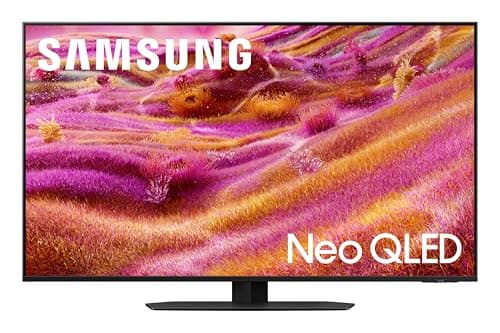
The Samsung 65-inch QN90F Neo QLED offers a Mini-LED panel with 720 dimming zones, a 165 Hz refresh rate and Dolby Atmos sound, delivering premium picture and gaming performance. Its higher power draw and lack of Dolby Vision, plus a premium price tag, are the main trade-offs. Best suited for gamers, sports fans and bright-room viewers who want top-tier visuals and audio.
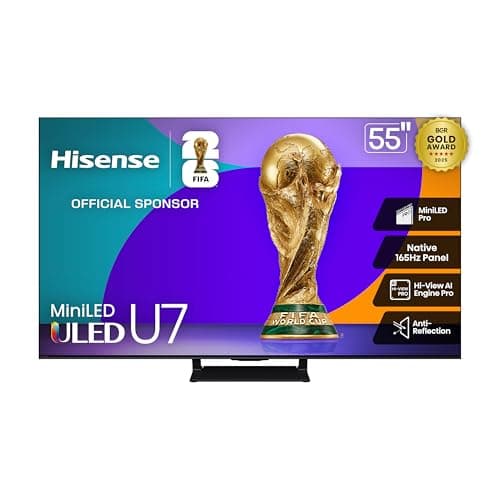
The Hisense 55" U7 Series is a Mini-LED Pro ULED TV offering a dazzling 3000 nits peak brightness and up to 165 Hz refresh for premium gaming and HDR performance. Audio details are sparse and weight data is inconsistent, which may affect mounting decisions. Ideal for enthusiastic gamers and bright-room viewers who prioritize visual performance over audio fidelity.
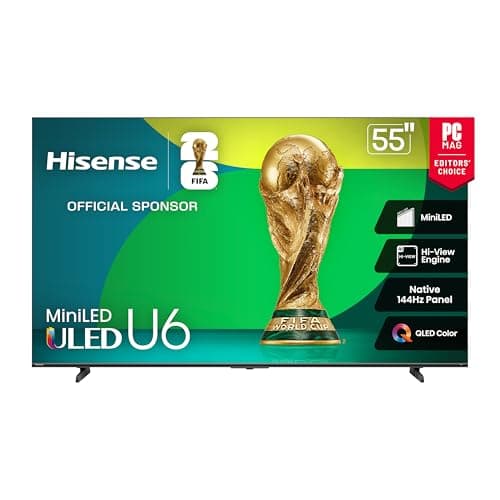
The Hisense 55" U6 Series is a Mini-LED QLED 4K TV delivering a native 144 Hz refresh rate and 1000 nits brightness, making it strong for gaming and bright-room HDR. Its built-in speakers are modest and uniformity can be inconsistent, which may require a soundbar or calibration. Best suited for budget-conscious gamers and families who value high refresh and vibrant colors.
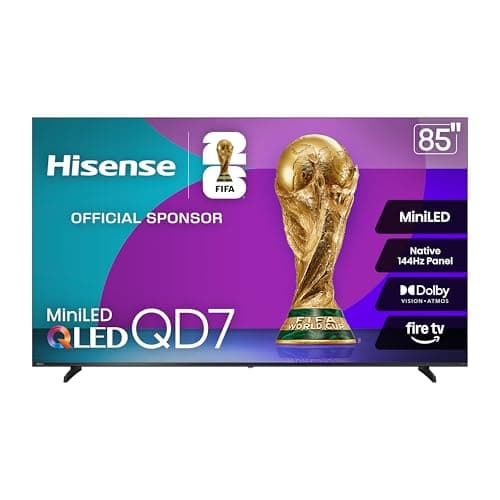
The Hisense 85-inch QD7N is a large Mini-LED QLED TV that offers cinematic picture quality, a native 144 Hz panel and robust gaming features. Its heavyweight build and modest two-channel audio are notable compromises. Ideal for gamers and home-theater enthusiasts who prioritize picture performance over built-in sound and ease of installation.
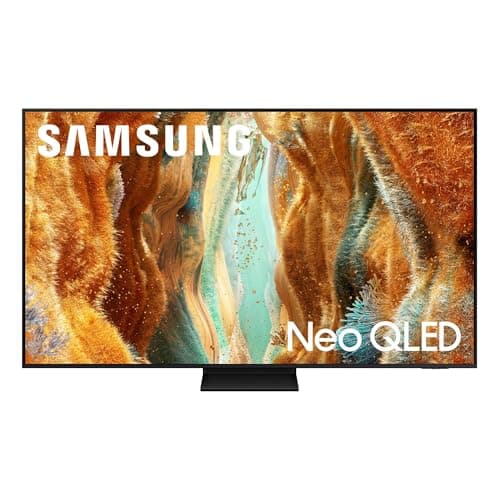
The Samsung 65-inch Neo QLED QN70F delivers premium 4K Mini-LED performance with vibrant colors, deep blacks and up to 144 Hz gaming support. Its high power draw, heavy weight and occasional UI quirks keep it from being a flawless choice, making it ideal for gamers and bright-room viewers who value top-tier picture quality and smart-home integration.
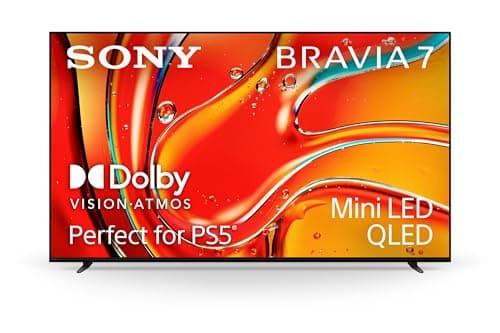
The Sony 65-inch BRAVIA 9 (K-65XR70) is a 2024 Mini LED QLED 4K TV delivering exceptional contrast, vivid colors, and PS5-optimized gaming features. Its heavy chassis and limited HDMI 2.1 ports are notable trade-offs. Best suited for gamers and home-theater enthusiasts seeking premium picture and audio.
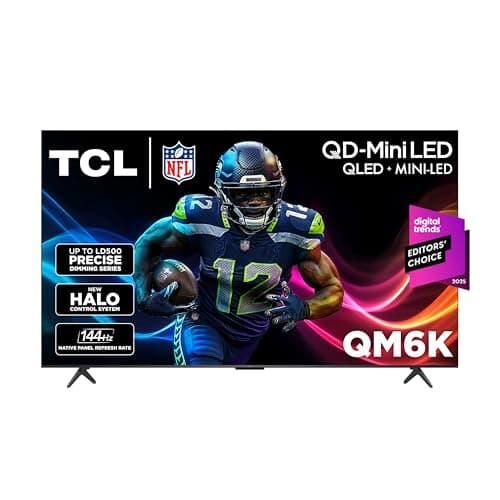
The TCL 55QM6K is a 55-inch 4K Mini LED QLED TV with a 144 Hz native refresh rate and Google TV platform, delivering bright colors and strong gaming performance. Its peak brightness and black uniformity fall short of premium flagships, and the unit is relatively heavy. Best suited for budget-conscious gamers seeking smooth 4K gaming.
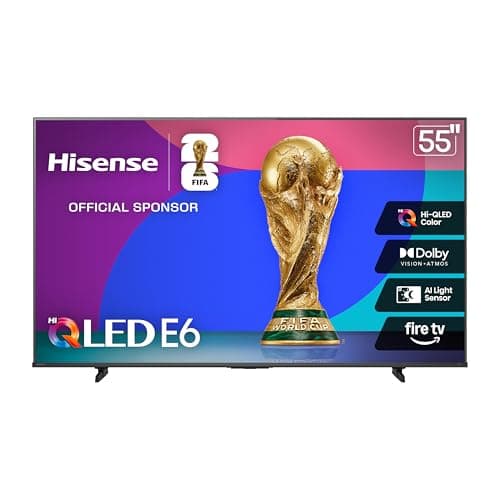
The Hisense 55-inch E6 Cinema Series is a mid-range 4K Smart TV that combines Hi-QLED color depth with extensive HDR formats and gaming-ready features. Its 60 Hz panel and limited disclosed connectivity are modest drawbacks. Best suited for viewers who want vibrant picture quality and gaming features without paying premium flagship prices.
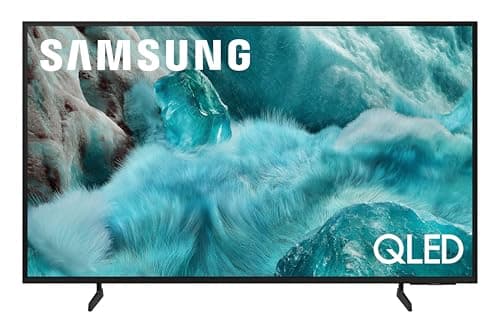
The Samsung 55-inch Q7F is a QLED TV that shines with vivid colors, Vision AI processing and ultra-low gaming latency. Its edge-lit backlight and moderate power draw limit contrast depth and energy efficiency. Ideal for gamers and streaming fans who value AI-enhanced picture and built-in voice assistants.
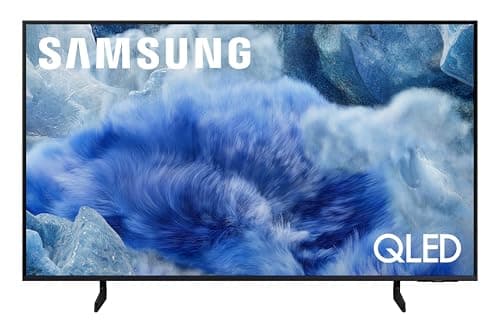
The Samsung 43-inch Q8F is an entry-level QLED TV that offers vivid colors, Dual-LED contrast and a glare-free screen, making it great for bright-room viewing and casual 1080p gaming. Its 60 Hz panel, limited HDMI ports and lack of HDMI 2.1 gaming features restrict high-performance use. Best suited for small rooms, secondary setups and users who value smart-home integration over top-tier gaming specs.
| Attribute | | | | | | | | | | |
|---|---|---|---|---|---|---|---|---|---|---|
54.6 inches | 55 inches | 55 inches | 42.5 inches | 85 inchesbest | 65 inches | 65 inches | 55 inches | 55 inches | 65 inches | |
144 Hz | 60 Hz | 200 Hzbest | 60 Hz | 144 Hz | 144 Hz | 120 Hz | 165 Hz | 144 Hz | 165 Hz | |
— | — | — | 3 | 4best | — | 4best | 4best | 4best | 4best | |
— | — | — | — | 20 W | — | — | — | 20 W | 60 Wbest | |
| ↓ lower better | 10 ms | — | 6.8 msbest | — | — | — | — | — | — | — |
| ↓ lower better | 231 W | — | — | 94 Wbest | 330 W | 141 W | — | — | — | 137 W |
| ↓ lower better | 12.4 kg | 9.3 kg | 11.113 kg | 8.2 kgbest | 37.09 kg | 21.8 kg | 28.3 kg | 15.1 kg | 19.5 kg | 27.5 kg |
6,000best | — | — | — | — | — | — | — | — | — |
Click an attribute name to sort · Green = best, red = worst (relative to this comparison)
| Attribute | | | | | | | | | | |
|---|---|---|---|---|---|---|---|---|---|---|
Features(1) | ||||||||||
Smart Platform | Google TV | Fire TV | Tizen OS | Tizen OS | Google TV | Tizen | Google TV | Google TV | Fire TV / Google TV | Tizen OS |
Display(4) | ||||||||||
Screen Size (inches) | 54.6 inches | 55 inches | 55 inches | 42.5 inches | 85 inches | 65 inches | 65 inches | 55 inches | 55 inches | 65 inches |
Refresh Rate (Hz) | 144 Hz | 60 Hz | 200 Hz | 60 Hz | 144 Hz | 144 Hz | 120 Hz | 165 Hz | 144 Hz | 165 Hz |
Panel Type | HVA | Hi-QLED | QLED | QLED | Mini‑LED QLED | Neo QLED | Mini LED QLED | Mini-LED Pro, QLED (Quantum Dot), VA | VA Mini-LED QLED | Neo QLED |
Brightness (nits) | — | — | — | — | — | — | — | 3000 nits | 1000 nits | — |
Performance(2) | ||||||||||
Processor | AIPQ PRO with Deep Learning AI | 2 cores | Quad-core Q4 AI | Q4 AI Processor | MediaTek MT9618 (4‑core Cortex‑A73 1.4 GHz) | NQ4 AI Gen2 Processor | Cognitive Processor XR | 4-core processor | Hi-View AI Engine | NQ4 AI Gen3 |
Input Lag (ms) | 10 ms | — | 6.8 ms | — | — | — | — | — | — | — |
Audio(2) | ||||||||||
Speaker Power (W) | — | — | — | — | 20 W | — | — | — | 20 W | 60 W |
Audio Technology | Onkyo 2.1 | Dolby Atmos | — | — | Dolby Atmos/DTS | — | S-Force Front Surround, S-Master Digital Amplifier, Voice Zoom 3, Auto Surround, Ready for 360 Spatial Sound Personalizer | Dolby Atmos | Dolby Atmos | Object Tracking Sound+ with Dolby Atmos |
Connectivity(3) | ||||||||||
HDMI Ports | — | — | — | 3 | 4 | — | 4 | 4 | 4 | 4 |
USB Ports | — | — | — | — | 1 | — | 2 | 1 | 2 | — |
Wi‑Fi Standard | — | Wi‑Fi 6 | — | — | 802.11ac | — | — | WiFi 6E | Wi‑Fi 6 | — |
Power & Design(4) | ||||||||||
Power Consumption (W) | 231 W | — | — | 94 W | 330 W | 141 W | — | — | — | 137 W |
Weight (kg) | 12.4 kg | 9.30 kg | 11.113 kg | 8.2 kg | 37.09 kg | 21.8 kg | 28.3 kg | 15.1 kg | 19.5 kg | 27.5 kg |
Width (with stand) (mm) | 1229.36 mm | 1236 mm | 1234 mm | 965.2 mm | 1892.3 mm | 1451.7 mm | 1448 mm | 1227 mm | 1227 mm | 1446 mm |
Height (with stand) (mm) | 774.7 mm | 716 mm | 792 mm | 614.7 mm | 1092.2 mm | 890.4 mm | 857 mm | 714 mm | 714 mm | 891 mm |
Products in the top-left offer the best value (high score, low price).
Professional reviewers consider the TCL 55QM6K a well-rounded, value-focused TV that shines in gaming thanks to its high refresh rate, FreeSync support, and responsive Google TV platform. While its picture is bright and colorful, it falls short of flagship HDR performance and lacks a premium audio system, positioning it as a solid mid-range choice rather than a top-tier contender.
Everyday owners praise the TV's vibrant colors, deep blacks in bright rooms, and smooth gaming experience, especially on the PS5. Common complaints revolve around motion-processing artifacts in Dolby Vision, the TV's relatively heavy weight, and the modest built-in audio, leading users to recommend external sound solutions.
“65-inch no regrets, PS5 and movies great.”
“colors are more vivid and accurate”
“fluid and immersive”
Opt for Q8F when size, price and basic QLED quality are priorities; upgrade to QN90F for top-tier brightness, gaming performance and premium features.
Professional reviewers commend the E6 for its vivid QLED color reproduction, unusually comprehensive HDR support, and gaming-ready features such as Game Mode Plus with VRR and HDMI 2.1. The Motion Rate 120 processing and AI-driven picture enhancements are highlighted as delivering crisp motion, while the overall package is described as offering exceptional value for a budget-mid segment TV.
Everyday users consistently praise the TV's striking color accuracy, the convenience of built-in Fire TV and Alexa, and the low input lag that makes gaming feel responsive. The AI Light Sensor and upscaler receive positive remarks for improving comfort and picture quality on older content, while the fixed stand width and missing dimension details are the most common practical concerns.
Professional editors commend the Q7F for its vivid Quantum Dot color reproduction, AI-driven picture optimization, and impressive low-latency gaming features, but they caution that the edge-lit backlight and lack of ENERGY STAR certification limit its contrast performance and energy efficiency compared to higher-end mini-LED rivals.
Everyday users praise the abundant free streaming content, integrated voice assistants, and sleek design, while recurring concerns focus on backlight uniformity, inconsistent weight information, and the TV's moderate power consumption.
Professional reviewers praise the Q8F for its vivid QLED colors, Dual LED contrast, Glare-Free screen and AI-driven picture optimization, noting that it delivers premium visual performance in a compact form. However, they point out the 43-inch model's limitations: a 60 Hz panel, only three HDMI ports and the absence of HDMI 2.1 gaming features, which keep it from competing with higher-end Samsung QLEDs for serious gamers.
Everyday users consistently highlight the TV's razor-sharp, responsive image, vibrant colors and glare-free viewing, calling it perfect for movies, sports and 1080p gaming in small rooms. Setup is described as straightforward, and the compact, lightweight design is appreciated, with no notable complaints surfacing in the March 2026 reviews.
Professional reviewers commend the QD7N for delivering premium picture performance at a relatively affordable price, especially its Mini-LED contrast, QLED color volume and gaming-centric features like 144 Hz VRR and FreeSync. The Google TV platform is also praised for its breadth of apps and voice integration. However, critics point out the modest 2-channel audio and the potential for local-dimming haloing, suggesting a soundbar for a complete home-theater experience.
Everyday buyers consistently highlight the TV's impressive visual quality, vibrant colors and smooth motion, making it a hit for movies, sports and gaming. Common complaints revolve around the limited built-in audio power and occasional dimming artifacts, while the heavy chassis is mentioned as a practical drawback during installation.
Professional reviewers highlight the QN70F's precise Mini LED backlight, AI-driven Vision AI personalization, and powerful 4K upscaling as standout features, noting its high brightness, Pantone-validated colors and strong HDR performance. They also point out UI navigation shortcomings and mixed reports on the backlight architecture, but overall position it as a premium 2025 offering in Samsung's lineup.
Everyday users consistently praise the TV's vivid colors, deep blacks, high brightness and smooth gaming experience, as well as the convenience of the battery-free solar remote and the sleek, thin design.
Professional reviewers and editors emphasize the Sony BRAVIA 9's standout contrast and brightness thanks to the XR Backlight Master Drive, while praising its color accuracy from XR Triluminos Pro and the real-time processing power of the Cognitive Processor XR. The TV's audio capabilities, including Dolby Atmos and DTS:X, receive strong commendation, and its PS5-specific gaming features are highlighted as industry-leading. Criticisms focus on the unit's considerable weight, the lack of disclosed peak brightness and dimming zone data, and a limited number of HDMI 2.1 ports.
Everyday users generally praise the vivid HDR performance, smooth motion handling, and the ease of connecting a PlayStation 5, noting the Google TV platform's convenience. Common complaints revolve around the TV's heavy chassis, the scarcity of detailed brightness specifications, and the desire for more HDMI 2.1 inputs and clearer power-usage information.
Professional reviewers commend the Hisense U7 series for its dazzling peak brightness, high refresh rate, and robust HDR support, positioning it as a strong contender for gamers and sports fans, while noting minor drawbacks such as potential HDMI bandwidth loss and inconsistent weight data.
Everyday users highlight the TV's vibrant colors, smooth gaming experience, and reassuring 2-year warranty, though they lament the scarcity of detailed reviews and occasional confusion over weight specifications.
Professional reviewers consider the Hisense U6 a standout value proposition for gamers, emphasizing its native 144Hz panel, Mini-LED contrast, low input lag, and strong HDR support. While the AI processing and upscaling are praised, critics note average contrast outside gaming modes and a modest speaker system, positioning the TV as a solid mid-range choice with room for improvement in audio and uniformity.
Everyday users love the buttery-smooth 144Hz gaming experience, vibrant QLED colors, and bright 1000-nit panel that handles bright rooms. Common praise centers on the easy Fire/Google TV setup and HDR immersion, while recurring complaints focus on weak built-in speakers, occasional interface lag, and blooming or uniformity issues in high-contrast scenes.
Professional reviewers praise the QN90F for its outstanding picture quality, matte Glare Free screen, and robust gaming capabilities, noting the improved NQ4 AI Gen3 processor and 720-zone Mini LED dimming as key upgrades over the QN90D. They highlight the high refresh rate, HDMI 2.1 support, and precise contrast, while pointing out the lack of Dolby Vision and higher power consumption as drawbacks.
Everyday users consistently commend the QN90F for its breathtaking 4K visuals, deep contrast, and smooth AI-enhanced motion, often stating that the built-in speakers are sufficient and the TV is easy to set up. Overall sentiment is highly positive with no major complaints reported.
