Rankings
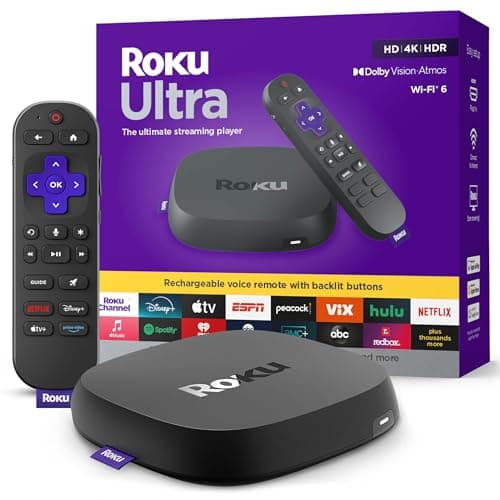
The Roku Ultra 2024 is Roku's fastest streaming player, offering 30% quicker performance, Wi-Fi 6, Gigabit Ethernet and premium Dolby Vision/HDR10+/Dolby Atmos support. Its lack of Apple AirPlay 2/HomeKit and a barrel-style power connector are notable trade-offs. Best for cord-cutters seeking top-tier performance and a feature-rich remote for a cinematic home-theater experience.
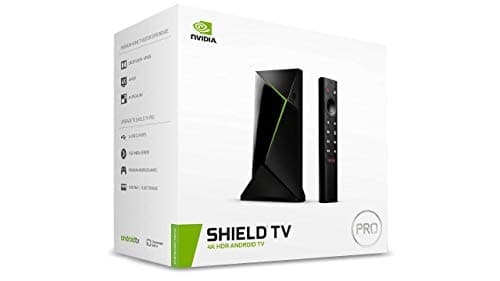
The NVIDIA Shield TV Pro is a high-performance Android TV player featuring a Tegra X1+ processor, AI upscaling, and support for Dolby Vision, Atmos, and GeForce NOW gaming. Its limited 16 GB internal storage and lack of HDMI 2.1/AV1 keep it from being future-proof. Targeted at power users and gamers who value expandability and top-tier media capabilities.
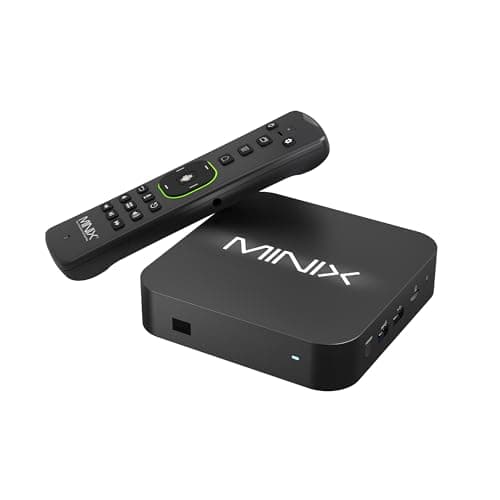
The MINIX U8K-Ultra is an Android-based 8K media player delivering true 8K@60Hz playback with AI-enhanced upscaling and full Dolby Vision/Atmos support. Its fanless design and larger chassis can limit sustained performance and placement flexibility. Ideal for home-theater enthusiasts who prioritize top-tier video quality and connectivity.
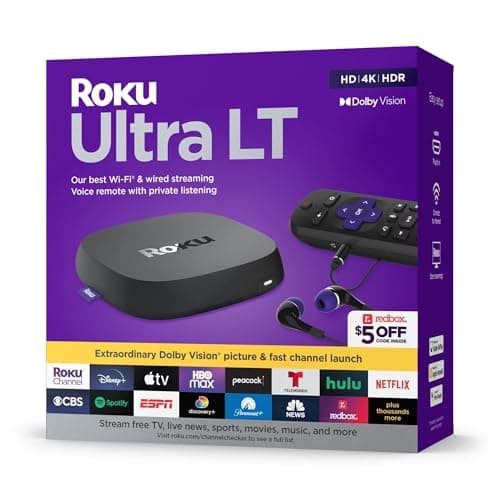
The Roku Ultra LT offers a compact 4K HDR streaming experience with a quad-core processor, Dolby Vision support, and a voice remote featuring private-listening headphones. Its omission of a USB port and reliance on a microSD slot limit local media options. Best suited for 4K TV owners seeking wired stability and premium HDR without a full-size Ultra.
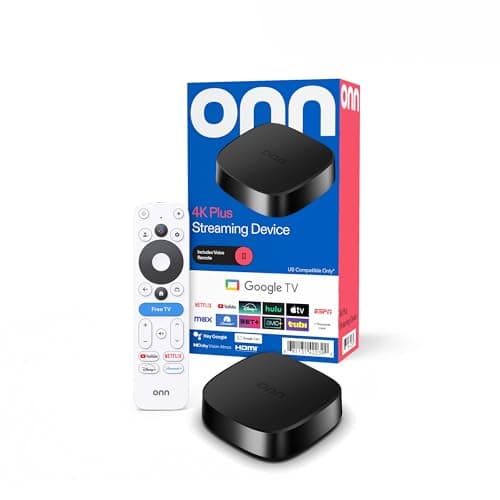
Premium Choice Co Onn 4K Plus provides budget-friendly 4K streaming with Wi-Fi 6, Dolby Vision and a Google Assistant voice remote, backed by 16 GB storage. The absence of an Ethernet port and limited RAM constrain its capabilities. Perfect for cost-conscious users who prioritize wireless streaming and Google TV.
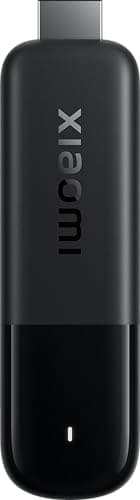
The Xiaomi TV Stick 4K (2nd Gen) is a pocket-sized Google TV dongle that offers 4K HDR streaming with AV1 decoding and Dolby Vision/Atmos support. Its main compromises are limited internal storage and the absence of an Ethernet port. It is ideal for travelers and budget-conscious cord-cutters who need a compact 4K streaming solution.
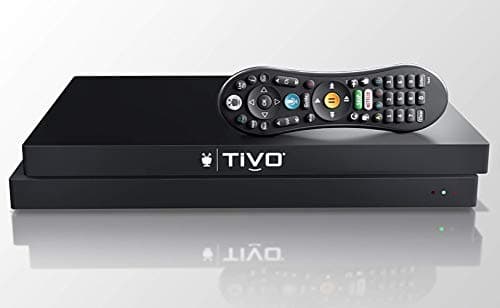
TiVo EDGE for Cable combines a six-tuner DVR with 4K HDR, Dolby Vision, and Dolby Atmos in a robust set-top box. Its premium price and lack of some popular streaming apps make it less accessible for budget shoppers. It targets cable subscribers needing extensive recording and high-quality playback.
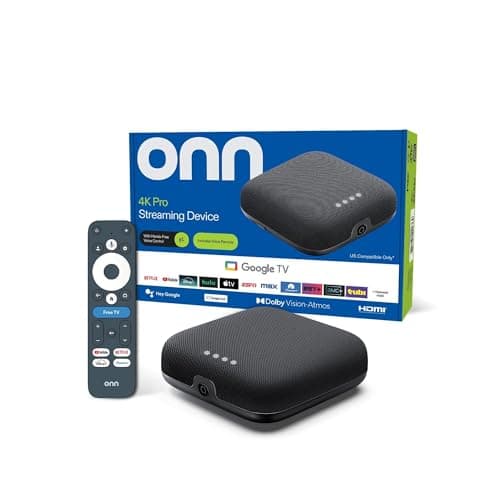
The It's Brazilian onn 4K Pro delivers true 4K HDR with Dolby Vision, Wi-Fi 6, Ethernet and 32 GB storage in a compact box. Its older 2019 processor and limited audio codec support temper its future-proofing. Best suited for budget-focused 4K streamers who value Google Assistant integration.
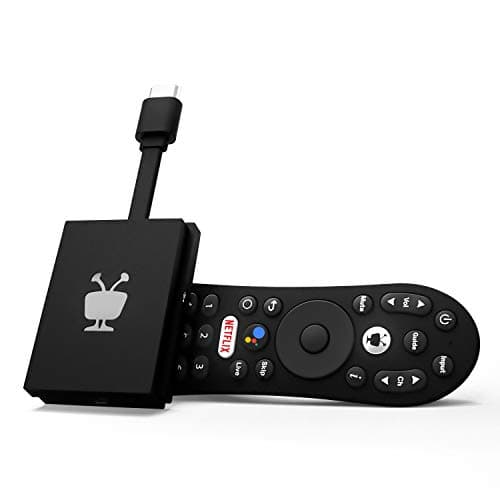
TiVo Stream 4K is an Android TV dongle that aggregates multiple streaming apps and live TV into a single 4K Dolby Vision interface with voice control. It suffers from an outdated Android 9 OS, modest 2 GB RAM and no wired Ethernet, which can affect performance. It works well for casual viewers seeking a unified streaming experience.
| Attribute | | | | | | | | | |
|---|---|---|---|---|---|---|---|---|---|
2 GB | 3 GB | 2 GB | 2 GB | 2 GB | 8 GBbest | 3 GB | 1 GB | 2 GB | |
4 GB | 16 GB | — | 8 GB | 16 GB | 128 GB | 32 GB | 2,048 GBbest | 8 GB | |
— | 60 Hzbest | 60 Hzbest | 60 Hzbest | — | 60 Hzbest | 60 Hzbest | — | 60 Hzbest | |
| ↓ lower better | 3.5 Wbest | 7.5 W | — | 5 W | — | 10 W | — | — | — |
| ↓ lower better | 18 gbest | 250 g | 167 g | — | — | 253 g | 907.184 g | 2,258.9 g | 44 g |
Click an attribute name to sort · Green = best, red = worst (relative to this comparison)
| Attribute | | | | | | | | | |
|---|---|---|---|---|---|---|---|---|---|
Performance(3) | |||||||||
Processor | — | NVIDIA Tegra X1+ | Quad-core 1.5 GHz ARM Cortex A55/A53 | Amlogic S905Y2 | Quad-core 2.1 GHz | Amlogic S928X-K (Cortex-A76 + Quad-Core Cortex-A55) | Amlogic S905X4 | — | Amlogic S905X5M Quad-core Cortex-A55 |
GPU | — | 256-core NVIDIA GPU | — | Mali-G31 | — | ARM G57 MC2 | — | — | ARM G310 V2 @ 850 MHz |
RAM (GB) | 2 GB | 3 GB | 2 GB | 2 GB | 2 GB | 8 GB | 3 GB | 1 GB | 2 GB |
Storage(1) | |||||||||
Internal Storage (GB) | 4 GB | 16 GB | — | 8 GB | 16 GB | 128 GB | 32 GB | 2048 GB | 8 GB |
Display(1) | |||||||||
Maximum Resolution | 4K | 4K | 4K | 4K | 4K | 8K | 4K | 4K | 4K |
Power(1) | |||||||||
Power Consumption (W) | 3.5 W | 7.5 W | — | 5 W | — | 10 W | — | — | — |
Software(1) | |||||||||
Operating System | Roku OS | Android 11 (Android TV) | Roku OS | Android 9.0 | Google TV | Android AOSP 11 | Android TV 12 | — | Google TV |
Audio(1) | |||||||||
Supported Audio Formats | Dolby Atmos | Dolby Atmos, DTS-X, Dolby Digital Plus | Dolby Atmos | MPEG, AAC, HE‑AAC, OGG, OGA, FLAC, ALAC, Ape, M4A, RM, MPEG‑1/2 Layers I/II, Dolby Digital/Plus, Dolby Atmos, DTS, WMA, WMA Pro | Dolby Atmos | Dolby Atmos, HDMI 2.1, Optical S/PDIF, 3.5mm jack | Dolby Atmos, Dolby Digital Plus | Dolby Atmos, analog audio | DTS:X, DTS HD, Dolby Atmos, MP3, AAC, RM, FLAC |
Ports(1) | |||||||||
HDMI Version | 2.1 | HDMI 2.0b | HDMI 2.0 | 2.0a | — | 2.1 | — | 2.0 | — |
Connectivity(3) | |||||||||
Bluetooth Version | — | Bluetooth 5.0+LE | — | 4.2 | 5.0 | — | unspecified | — | 5.2 |
Wi‑Fi Standard | Wi‑Fi 6 | 802.11ac | 802.11ac | 802.11ac | Wi‑Fi 6 | Wi‑Fi 6 | Wi‑Fi 6 | unspecified | 802.11ax |
Ethernet Port | true | true | true | false | — | true | true | true | false |
Controls(1) | |||||||||
Remote Type | Rechargeable Voice Remote Pro with backlit buttons | Hands-free Google Assistant Remote | Voice Remote with Private-Listening Headphones | voice remote | Voice remote | — | remote with backlight | voice remote | Bluetooth remote |
Build & Design(2) | |||||||||
Weight (g) | 18 g | 250 g | 167 g | — | — | 253 g | 907.184 g | 2258.9 g | 44 g |
Dimensions (W×H×D) (mm) | 124.46×25.4×127 mm mm | 159x98x26 mm mm | 124.4x25.4x127 mm mm | 53×16×77 mm mm | 63.5 x 177.8 x 101.6 mm mm | 28x128x128 mm | 101.6×101.6×254 mm mm | 254×101.6×304.8 mm mm | 29.4×16.8×106.8 mm mm |
Products in the top-left offer the best value (high score, low price).
Professional reviewers hail the Roku Ultra 2024 as the most powerful and fastest Roku device, emphasizing its lightning-fast interface, seamless 4K/Dolby Vision/HDR10+ playback, and premium remote that together deliver a cinematic experience for any living-room setup.
Everyday users consistently praise the ultra-fast app launches, smooth 4K streaming over Wi-Fi 6, and the convenience of the Voice Remote Pro with its finder and headphone jack, while recurring complaints focus on shipping limitations, the barrel-style power connector, and occasional Wi-Fi range concerns.
“best for PC game streaming to TV”
“Fast app loading, vivid colors, easy voice control.”
“Fast setup, vibrant 4K colors/detail on YouTube/Netflix, reliable Google Assistant voice search, and value for smooth streaming without lag”
Choose Ultra 2024 for top performance and premium remote; Ultra LT is a budget option for basic 4K streaming.
Roku Ultra suits users focused on a vast streaming library and ease of use; SHIELD Pro excels for those who need superior performance and gaming.
Professional reviewers commend the SHIELD TV Pro as a high-performance media powerhouse, emphasizing its AI upscaling, 25% faster Tegra X1+ CPU, dual USB expandability, and robust GeForce NOW 4K cloud gaming. However, they note the hardware design has not changed since 2019 and that it lacks newer interfaces like HDMI 2.1 and AV1 decoding, making it feel a step behind the latest competitors.
Everyday users praise the device for smooth 4K streaming, excellent Plex integration, reliable NVIDIA firmware updates, and powerful GeForce NOW gaming. Recurring complaints focus on the limited 16 GB internal storage, occasional Wi-Fi drops, voice-control glitches, lack of AV1 support, and a setup process that can be daunting for non-technical owners.
Professional reviewers commend the Ultra LT for delivering a full-size Roku Ultra experience in a smaller, cheaper package, especially noting its solid 4K 60 fps performance, Dolby Vision support, and Ethernet stability. However, they flag the missing USB port and limited GPU details as notable compromises.
Everyday users consistently highlight the device's sharp 4K picture, fast UI, and convenient voice remote with headphones, while recurring complaints focus on the lack of USB connectivity and occasional Wi-Fi reliability issues.
Professional reviewers commend the TiVo Stream 4K for its content aggregation that simplifies browsing across multiple services and for delivering solid 4K Dolby Vision and Dolby Atmos performance at a budget price. However, they criticize the modest Amlogic S905Y2 processor, the lack of Ethernet, and the outdated Android 9.0 operating system, noting these as trade-offs for the dongle's compact form factor.
Everyday users praise the device for its easy setup, responsive voice remote, and the "headache-free" unified recommendations that make managing multiple streaming accounts simple. Recurring complaints focus on the limited 8 GB internal storage, occasional app lag, the need for AAA batteries in the remote, and the absence of a wired Ethernet connection for more stable streaming.
Professional reviewers commend the onn 4K Plus for its surprisingly snappy navigation, excellent 4K HDR picture quality, and premium feel given its 2 GB RAM and 16 GB storage, while also noting strong sideloading capabilities. However, they criticize the absence of an Ethernet port and limited connectivity options, and caution that performance hinges on the user's internet speed and TV capabilities.
Everyday users praise the device for its quick setup, vibrant 4K visuals, reliable Google Assistant voice control, and overall value, but commonly mention occasional buffering on weak networks, limited storage without sideloading, and the lack of Ethernet or USB ports as drawbacks.
Professional reviewers commend the U8K-Ultra for its reliable 8K@60Hz decoding, Dolby Vision/Atmos support, ample RAM and storage, and stable performance, while noting that AI upscaling is helpful but not revolutionary and that the fanless design and larger size are minor drawbacks.
Everyday users consistently praise the flawless high-resolution playback, expandability via USB and micro-SD, and the robust hardware decoder, with occasional concerns about the bulkier chassis and the limited thermal headroom of the fanless design.
Professional reviewers commend the onn 4K Pro for delivering premium-grade video features, Wi-Fi 6 and Google Home integration at a sub-$50 price, but they caution that the dated 2019 processor and the UI's recommendation-heavy design could limit its longevity and user experience.
Everyday users love the low price, true 4K HDR performance and the convenience of built-in Google Assistant, while common frustrations revolve around the older chipset, missing DTS:X audio, a cluttered recommendation UI and the lack of a USB-C power connector.
Professional reviewers commend the EDGE for Cable's premium video and audio capabilities, intuitive voice search, and a superior program guide, while also noting its refined hardware design and the benefit of owning the device outright. The main criticisms focus on its steep price tag and the missing Disney+ and Apple TV+ apps, which may deter users seeking a fully integrated streaming experience.
Professional reviewers rave about the Xiaomi TV Stick 4K (2nd Gen)'s ultra-smooth Google TV experience, rapid 6 nm quad-core CPU/GPU performance and its ability to decode AV1 4K @ 60 fps, positioning it as a high-performance yet budget-friendly streaming stick. However, they note the absence of AI upscaling and an Ethernet port, which may be drawbacks for power users seeking wired reliability or advanced image enhancement.
Everyday users consistently commend the device's responsive interface, reliable 4K streaming and ultra-compact form factor that fits anywhere, while repeatedly mentioning the frustration of limited 8 GB storage and occasional power or remote setup quirks.
