Rankings
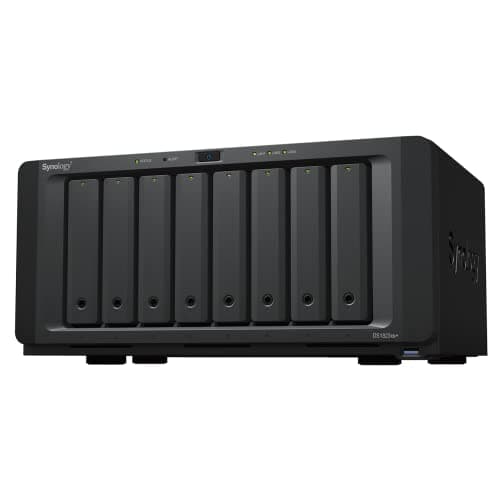
The Synology DS1823xs+ is an 8-bay, high-performance NAS featuring an AMD Ryzen CPU, ECC memory, and enterprise-grade throughput. Its single power supply and desktop-only chassis limit mission-critical deployments despite the impressive speed and scalability. Ideal for SMBs, content creators, and IT pros needing ultra-fast file serving and large, expandable storage.
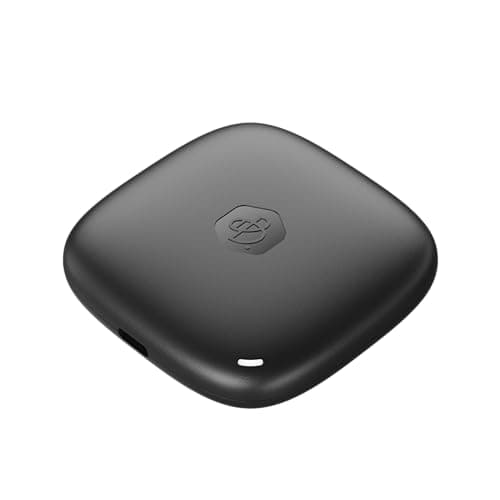
The Synology BeeDrive 1TB is a portable NVMe SSD delivering up to 1050 MB/s via USB-C 3.2 Gen 2 and includes proprietary BeeDrop wireless photo backup. Its limited 1 TB capacity and reliance on Synology-only software restrict flexibility. Ideal for hybrid workers and mobile photographers needing fast, on-device backup.
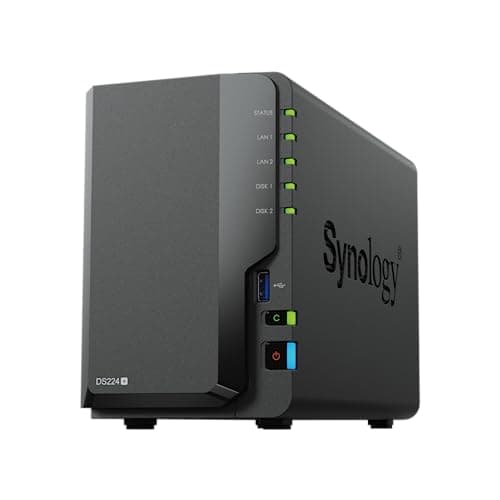
The Synology DS224+ is a compact 2-bay NAS delivering up to 108 TB of storage with an Intel Celeron processor and dual Gigabit Ethernet. Its limited bays, modest memory ceiling, and lack of SSD caching restrict high-performance or large-scale deployments. Best suited for home users or small teams needing reliable file sharing and basic surveillance.
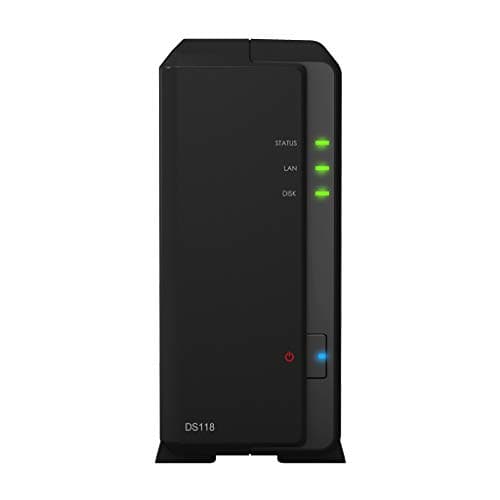
The Synology DS118 is a compact 1-bay NAS offering low power use and 4K transcoding capability. Its single-bay layout and limited memory mean no RAID protection and constrained performance for heavy workloads. Ideal for home users or small offices needing quiet, basic storage and media streaming.
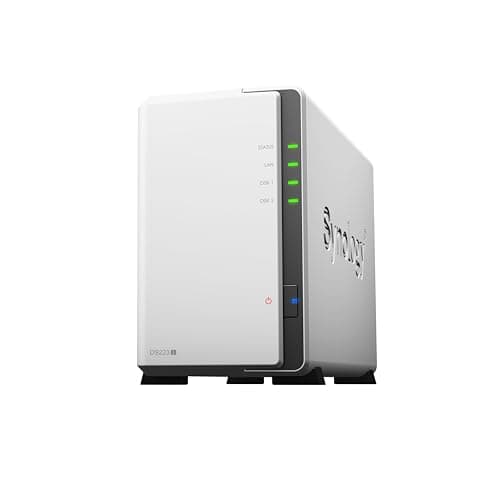
The Synology DiskStation DS223j is an entry-level 2-bay NAS that offers ultra-quiet operation, low power draw, and an easy-to-use DSM interface for basic backups and media streaming. Its limitations include modest 1 GB RAM, a single gigabit Ethernet port, and non-hot-swap drive bays. It is best for home users or beginners needing simple, energy-efficient storage.
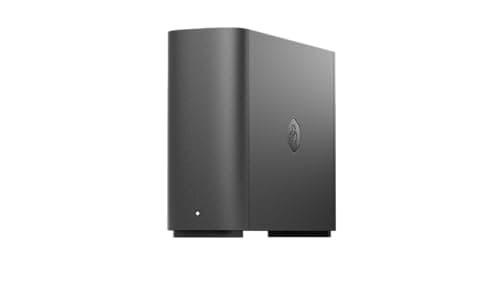
The Synology BeeStation BST150-4T is a compact 4 TB personal cloud device that excels in ease of setup and multi-cloud syncing. Its trade-offs include limited RAM, a single Ethernet port, and no expandability. Best suited for individuals or small households needing simple, subscription-free central storage.
| Attribute | | | | | | |
|---|---|---|---|---|---|---|
108 TB | 108 TB | 200 TBbest | 1 TB | 4 TB | 1 TB | |
2 | 2 | 8best | 1 | — | — | |
4best | 4best | 4best | 4best | 4best | — | |
1.7 GHz | 2 GHzbest | — | 1.4 GHz | 1.7 GHz | — | |
1 GB | 2 GB | 8 GBbest | 1 GB | 1 GB | — | |
— | — | 3,100 MB/sbest | 113 MB/s | — | 1,050 MB/s | |
— | — | 2,600 MB/sbest | 112 MB/s | — | 1,050 MB/s | |
2 | 2 | 3best | 2 | 2 | — |
Click an attribute name to sort · Green = best, red = worst (relative to this comparison)
| Attribute | | | | | | |
|---|---|---|---|---|---|---|
Storage(3) | ||||||
Storage Capacity (TB) | 108 TB | 108 TB | 200 TB | 1 TB | 4 TB | 1 TB |
Drive Bays | 2 | 2 | 8 | 1 | — | — |
RAID Support | true | true | true | false | — | — |
Performance(5) | ||||||
CPU Model | Realtek RTD1619B | Intel Celeron J4125 | AMD Ryzen V1780B | Realtek RTD1296 | Realtek RTD1619B | — |
CPU Clock Speed (GHz) | 1.7 GHz | 2.0 GHz | — | 1.4 GHz | 1.7 GHz | — |
Memory (RAM) (GB) | 1 GB | 2 GB | 8 GB | 1 GB | 1 GB | — |
Sequential Read Speed (MB/s) | — | — | 3100 MB/s | 113 MB/s | — | 1050 MB/s |
Sequential Write Speed (MB/s) | — | — | 2600 MB/s | 112 MB/s | — | 1050 MB/s |
Connectivity(3) | ||||||
USB Ports | 2 | 2 | 3 | 2 | 2 | — |
Ethernet Ports | 1 | 2 | 4 | 1 | 1 | — |
Ethernet Speed (Gbps) | 1 Gbps | 1 Gbps | 10 Gbps | 1 Gbps | 1 Gbps | — |
Power(2) | ||||||
Power Consumption (Idle) (W) | 4 W | — | 28.37 W | 9.4 W | 1.65 W | — |
Power Consumption (Active) (W) | 16.31 W | 15 W | 87.93 W | — | 7.85 W | — |
Build & Design(3) | ||||||
Weight (kg) | 0.87 kg | 1.3 kg | 6.2 kg | 0.7 kg | 0.82 kg | 0.043 kg |
Dimensions (H×W×D) (cm) | 10.0×22.6×16.5 cm cm | 16.5x10.8x23.22 cm | 31.98x45.99x36.99 cm | 16.6x7.1x22.4 cm | 25.2×25.8×11.5 cm cm | 6.5 x 6.5 x 1.5 cm cm |
Noise Level (dB) | 18.2 dB | 22 dB | 23.6 dB | 16.7 dB | — | — |
Compliance(1) | ||||||
Certifications | — | — | CE, RoHS | — | — | RoHS, FCC, CE, BSMI, VCCI, RCM, KC, UKCA, BIS |
Products in the top-left offer the best value (high score, low price).
Professional reviewers describe the DS223j as a budget-friendly entry into Synology's lineup, commending its energy-efficient design, ultra-quiet operation, and the robust DSM software suite. However, they criticize the modest 1 GB of RAM, the single 1 GbE network port, and the entry-level CPU as constraints that limit the device to basic file serving and backup tasks.
Everyday users appreciate the DS223j for its straightforward setup, near-silent operation, and low power draw, often highlighting its reliability for personal backups and modest media streaming. Recurring complaints focus on slow network transfer speeds, limited RAM causing sluggishness under load, and occasional fan noise when the unit is busy.
Professional reviewers, such as StorageReview, commend the DS224+ for its Intel Celeron J4125 processor that speeds up file indexing and improves web app responsiveness, positioning it as an efficient, low-power NAS for home and small-office use. The DSM platform and integrated surveillance licenses are also praised for adding versatile functionality without extra cost.
While direct user reviews are scarce, the product's quiet operation, low energy use, and easy-to-manage DSM interface are generally appreciated by home users and remote workers seeking a reliable, low-maintenance storage solution.
Professional reviewers highlight the DS1823xs+ as a powerhouse for business environments, emphasizing its blazing sequential throughput, high IOPS capability, and the flexibility to expand to 18 bays or upgrade networking via PCIe. They also commend its quiet operation and the mature DSM software suite, while noting the absence of a redundant power supply and the desktop-only chassis as limitations for mission-critical or rack-mounted deployments.
User feedback is scarce in the available sources; the product is primarily marketed toward professional users, and no specific everyday‑consumer reviews or complaints were found.
Professional reviewers consider the DS118 a capable entry-level NAS that delivers impressive sequential throughput and 4K transcoding performance while maintaining low power consumption and noise. They commend its DSM software suite and note that it offers hardware comparable to higher-bay models at a lower price, but they also point out the inherent limitations of a single-bay design, fixed 1 GB RAM, and an ARM CPU for more demanding tasks.
Home and small-office users generally praise the DS118 for its easy setup, quiet operation, and reliable media streaming capabilities, especially the 4K transcoding on modest hardware. Recurring complaints focus on the limited RAM, lack of RAID redundancy, and occasional USB speed throttling.
Professional reviewers such as Dong Knows Tech praise the BeeDrive as a solid personal backup solution with outstanding 1050 MB/s performance, cool operation and useful AI-driven photo backup.
Everyday users appreciate the effortless wireless photo backup and the drive's portability, highlighting how it frees phone storage without cloud fees.
