Rankings
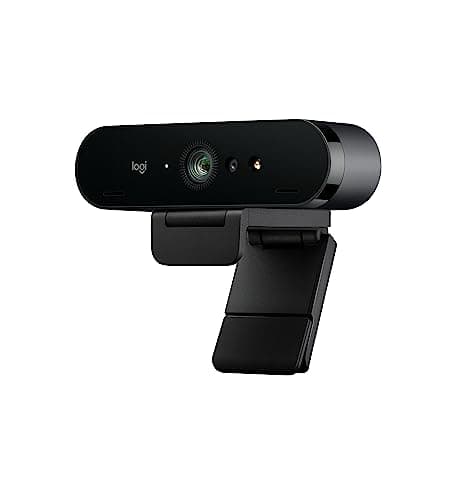
The Logitech Brio 4K webcam offers ultra-high-definition 4K video with HDR and adjustable fields of view, plus advanced autofocus and dual noise-canceling microphones. Its bulkier build, need for USB 3.0, and 30 fps cap at 4K can be restrictive for some users. Targeted at professionals requiring top-tier video quality and Windows Hello authentication.
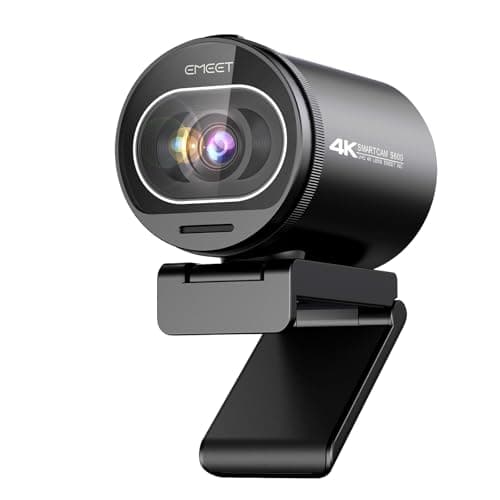
The EMEET S600 delivers 4K video with a very wide 88° field of view and fast PDAF autofocus, making it ideal for high-quality streaming. Its main trade-offs are bright default exposure and the need to drop to 1080p for 60 fps, plus a modest sensor size for low-light scenes. Best suited for creators who prioritize resolution and convenience over ultra-high frame rates.
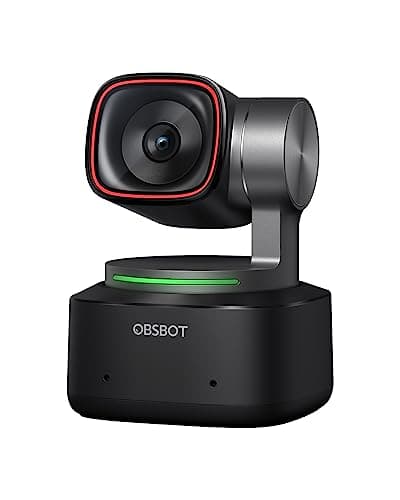
The OBSBOT Tiny 2 provides premium 4K video with a large 1/1.5" sensor, HDR, and AI-driven PTZ tracking across multiple modes, including voice control. It is heavier and lacks built-in lighting, making it less portable than smaller models. Targeted at content creators and educators who need top-tier image quality and intelligent framing.
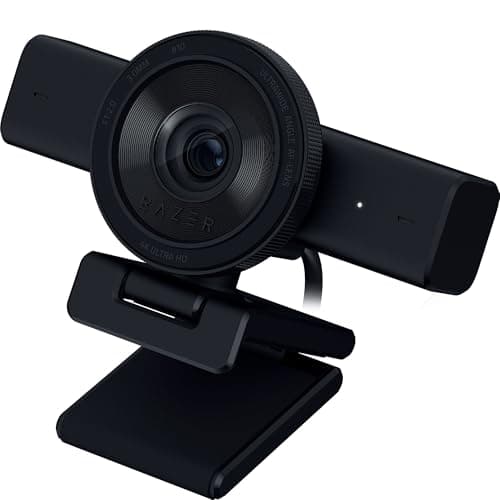
The Razer Kiyo V2 offers 4K video, AI-driven auto-framing, and a built-in noise-reduced microphone, targeting creators who need high detail and smart software tools. Its 30 FPS cap at 4K, heavy chassis, and color-tuning requirements are notable trade-offs. Ideal for streamers and gamers who prioritize feature richness over compactness.
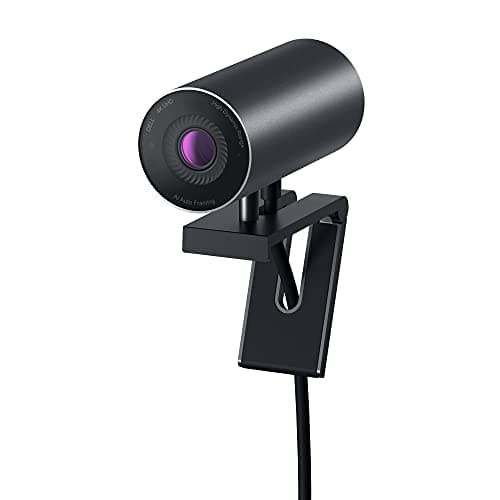
The Dell UltraSharp WB7022 delivers premium 4K HDR video with AI auto-framing and a solid aluminum build, targeting professional video conferencing. Its lack of an internal microphone, heavier weight, and some monitor compatibility limits make it less versatile for all users. It is best for executives and content creators who prioritize top-tier image quality and can provide separate audio equipment.
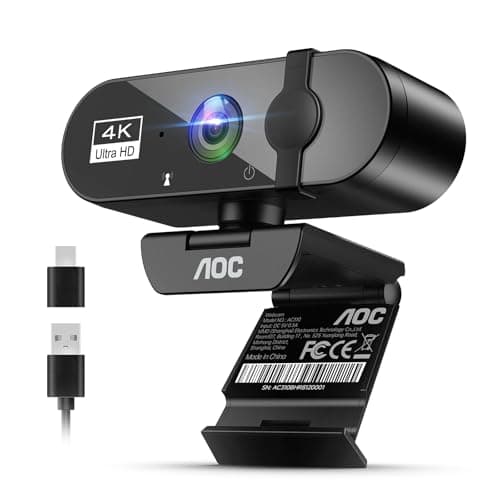
The AOC 4K Webcam delivers true 4K video at 30 fps with an ultrawide 90° view, auto-focus and a sliding privacy cover, making it strong for group calls and huddle rooms. Its fixed focus, edge distortion, and modest microphone performance are trade-offs. It is best for budget-conscious users needing high-resolution group video.
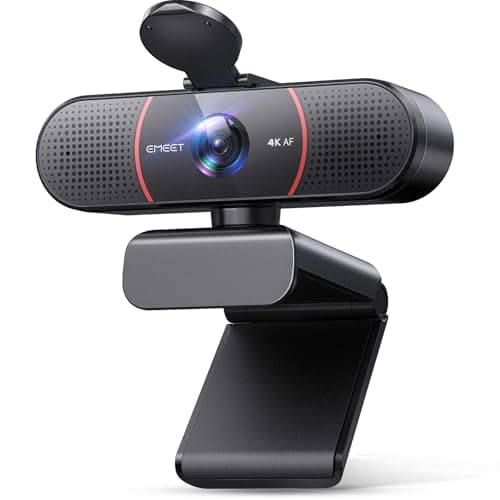
The EMEET C960 offers true 4K video with reliable PDAF autofocus and a 360° rotatable head, making it a solid choice for professional video calls. Its drawbacks include occasional graininess in challenging lighting and a short USB-A cable that can restrict setup options. Ideal for business professionals and content creators who value straightforward 4K performance.
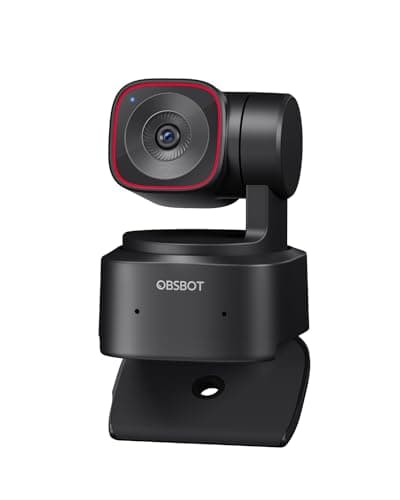
The OBSBOT Tiny 2 Lite offers 4K video at 60 fps with HDR, AI tracking PTZ and gesture control, delivering a feature-rich streaming experience. Missing details on weight, USB connectivity and low-light capability limit a full assessment of its robustness. It is well-suited for creators who need high-resolution video and AI-driven framing in a compact package.
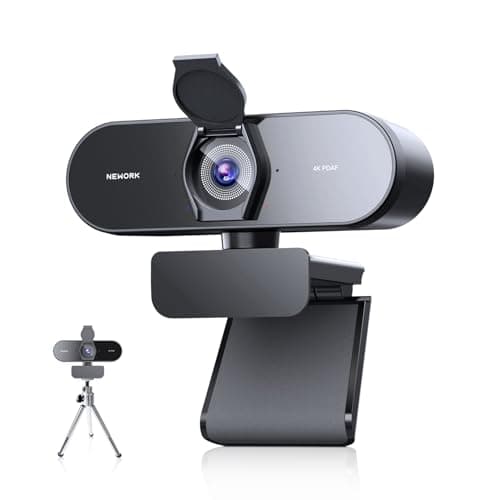
The Nework EasyCam 502 provides 4K video together with 1080p @ 60 fps, dual autofocus systems and dual noise-cancelling microphones, delivering a versatile solution for professional calls. Limitations include a modest 1-year warranty and lack of HDR or digital zoom, which keep it from being a premium-class device. It is best for educators and streamers who need high-resolution video with reliable audio.
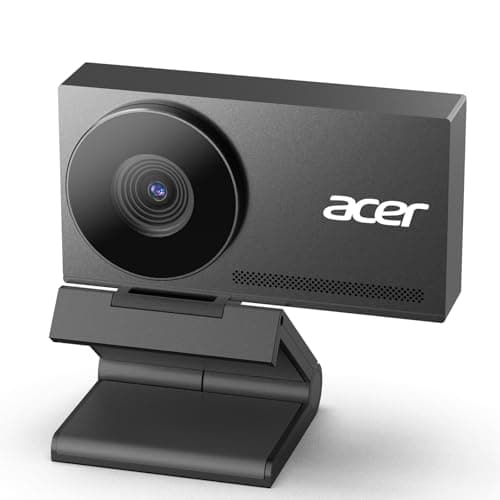
The Acer WBC-0E01 is a compact 4K webcam with a premium metal body and fast PDAF autofocus, delivering sharp video in bright settings. Its low-light performance and reliance on USB 2.0 limit real-world resolution on many computers. Best suited for creators and streamers who work in well-lit environments and value a sturdy, lightweight design.
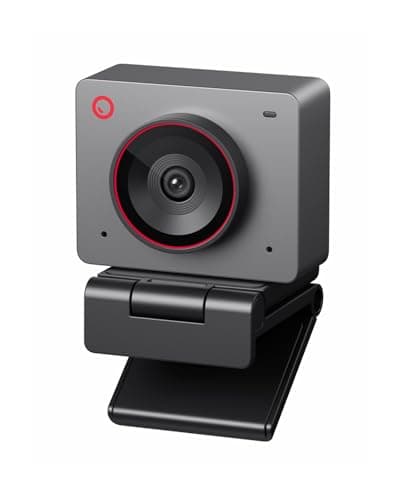
The OBSBOT Meet 2 offers ultra-compact 4K video at 60 fps with AI auto-framing, dual noise-cancelling microphones, and a magnetic privacy shutter. Its main limitations are a short detachable cable and USB 2.0 bandwidth that caps performance. Best suited for mobile professionals needing portable high-resolution video and AI tracking.
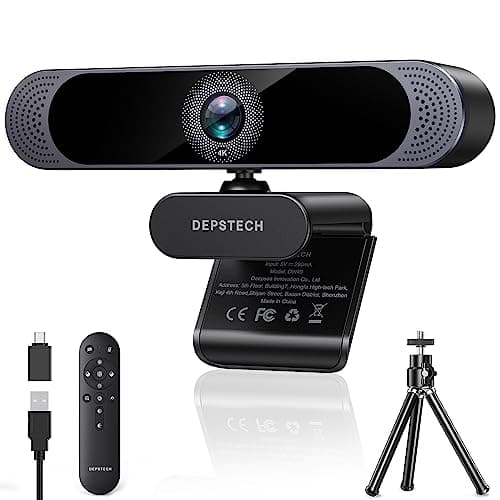
The DEPSTECH 4K webcam delivers true 4K video with remote-controllable autofocus, 3× digital zoom and dual noise-canceling microphones, offering a feature-rich option for budget-conscious users. Its limitations include the lack of a privacy cover, a maximum of 30 fps and a modest 1-year warranty, which may affect long-term confidence. Best suited for users who want 4K quality and remote control functionality without premium pricing.
| Attribute | | | | | | | | | | | | |
|---|---|---|---|---|---|---|---|---|---|---|---|---|
60 fps | 90 fpsbest | 60 fps | 60 fps | 30 fps | 30 fps | 60 fps | 60 fps | 30 fps | 60 fps | — | 30 fps | |
79.4 degrees | 90 degrees | — | 88 degrees | — | 90 degrees | 79 degrees | 93 degreesbest | 73 degrees | — | — | 90 degrees | |
2best | 2best | 1 | 2best | 2best | — | 2best | 1 | 2best | — | 2best | — | |
| ↓ lower better | 40.5 gbest | 65 g | 143 g | 100 g | — | 159 g | 130 g | 499 g | 136 g | — | 50 g | 594 g |
4 x | 5 xbest | 4 x | 4 x | 3 x | — | — | — | — | — | — | 5 xbest | |
1.5 m | — | — | 1.524 m | — | — | — | 2 mbest | 1.6 m | — | 2 mbest | 2 mbest | |
1 years | 1 years | 1 years | 2 years | 1 years | 1 years | 1 years | 1 years | 2 years | 1 years | 1 years | 3 yearsbest |
Click an attribute name to sort · Green = best, red = worst (relative to this comparison)
| Attribute | | | | | | | | | | | | |
|---|---|---|---|---|---|---|---|---|---|---|---|---|
Audio(2) | ||||||||||||
Microphone Count | 2 | 2 | 1 | 2 | 2 | — | 2 | 1 | 2 | — | 2 | — |
Microphone Type | Omnidirectional | omni-directional | — | noise-canceling | noise-canceling | Noise-Cancelling Built-in | noise-cancelling | built-in stereo omnidirectional with noise reduction | noise-canceling | Built-in | digital noise-reduction | — |
Image(4) | ||||||||||||
Video Resolution | 4K | 4K | 4K | 4K | 4K | 4K | 4K | 3840x2160 | 4K | 4K | 3840x2160 | 4K |
Maximum Frame Rate (fps) | 60 fps | 90 fps | 60 fps | 60 fps | 30 fps | 30 fps | 60 fps | 60 fps | 30 fps | 60 fps | — | 30 fps |
Field of View (degrees) | 79.4 degrees | 90 degrees | — | 88 degrees | — | 90 degrees | 79 degrees | 93 degrees | 73 degrees | — | — | 90 degrees |
Digital Zoom (x) | 4 x | 5 x | 4 x | 4 x | 3 x | — | — | — | — | — | — | 5 x |
Connectivity(4) | ||||||||||||
USB Interface | USB-C | USB‑A 3.0 | USB-C | USB | USB | USB-C | USB | USB‑C | USB | — | USB | USB‑C |
USB Version | USB 2.0 | USB 3.0 | USB 3.0 | 2.0/3.0 | — | — | — | — | 2.0/3.0 | — | USB 2.0 | USB 3.2 |
Operating System Compatibility | Windows 10+, macOS 11+ | Windows 10+, macOS 10.15+, ChromeOS, Linux | — | — | Windows XP/7/8/10/11, macOS | — | Windows, macOS, Linux | Windows 10/11, macOS 14+, PS5, Xbox, Nintendo Switch 2 | Windows 7/10/11, macOS 10.14+, Android TV 7.0+, Linux | — | — | — |
Cable Length (m) | 1.5 m | 1.5-2.2 m | — | 1.524 m | — | — | — | 2.0 m | 1.6 m | — | 2 m | 2 m |
Power(2) | ||||||||||||
Power Source | USB | USB | USB | USB | — | — | — | USB‑C | — | — | USB | USB |
Warranty (years) | 1 years | 1 years | 1 years | 2 years | 1 years | 1 years | 1 years | 1 years | 2 years | 1 years | 1 years | 3 years |
Build & Design(3) | ||||||||||||
Weight (g) | 40.5 g | 65 g | 143 g | 100 g | — | 159 g | 130 g | 499 g | 136 g | — | 50 g | 594 g |
Dimensions (H×W×D) (mm) | 10.3x5.0x10.9 mm mm | 27x102x26.5 mm | 6.2x4.4x4.7 mm mm | 52x75x71 mm | 52x54x136 mm | 88.9x63.5x63.5 mm | 62x90x52 mm | 65×116×70 mm | 22x23x39 mm | 64.2×48.3×46.6 mm mm | 36x68x45 mm | 420x420x94 mm mm |
Mount Type | Magnetic clip | clip, tripod thread | Tripod | 1/4" thread | — | Monitor, Desk, Tripod | Tripod Included | Universal pivoting with 1/4‑20 tripod thread | 1/4" thread | — | Standard monitor mount | magnetic |
Products in the top-left offer the best value (high score, low price).
Professional reviewers consistently praise the Obsbot Meet 2 for its ultra-compact form factor, impressive 4K image quality, and sophisticated AI auto-framing that works in both landscape and portrait modes. They commend its fast PDAF autofocus, dual noise-canceling microphones, and seamless USB-C plug-and-play setup, while noting the short detachable cable, USB 2.0 bandwidth limitation, and lack of built-in lighting as the primary drawbacks.
Everyday users love how tiny and lightweight the webcam is, often comparing its size to a thumb drive, and they value the sharp 4K video and reliable AI tracking during calls. The dual microphones receive positive feedback for clear audio, and the magnetic privacy cover is appreciated. Recurring frustrations center on the short cable length, occasional software hiccups, and the need for external lighting in dim environments.
“thumbdrives weigh more”
“affordable & adorable”
“way too short”
Choose the Brio if you need a longer cable and wider FOV, but prefer the Meet 2 for ultra-compact AI-driven use.
Opt for the Tiny 2 Lite if you need gimbal-stabilized movement; otherwise, the Meet 2 offers a lighter, cable-friendly solution with AI framing.
Choose Tiny 2 for superior image quality and full AI suite; choose Tiny 2 Lite for a lighter, more portable solution.
Select the S600 when you need variable frame rates or adjustable FOV and are comfortable with USB-C; otherwise the C960 4K is better for pure 4K quality and ease of use.
Professional reviewers consider the Brio 4K a top-tier business webcam, emphasizing its crystal-clear 4K video, adaptive RightLight 3 HDR lighting, and integrated dual microphones. They commend its adjustable field of view and Windows Hello support, while noting its bulkier build, 30 fps ceiling for 4K, and the need for a robust USB 3.0 connection for optimal performance.
Everyday users love the webcam's stunning 4K image quality and low-light capability, describing it as the best video they've seen and easy to set up for Zoom or Teams. Recurring complaints focus on occasional lag on weaker PCs, microphone echo in noisy rooms, and an unstable clip on thin screens.
Reviewers consistently commend the Tiny 2's large 1/1.5" sensor, dual-native ISO and PixGain HDR for delivering vivid, low-noise 4K video, while its AI-driven auto-tracking, auto-framing and 2-axis gimbal are praised as game-changing for hands-free streaming and presentations. Editors emphasize its versatility across professional use-cases, positioning it as a premium choice for creators who need top-tier image quality and intelligent framing.
Direct consumer reviews were not found in the research, so everyday user sentiment is unavailable; professional sources report reliable AI tracking and video quality without noted recurring issues.
Professional reviewers commend the S600 for its crisp 4K video at 30 FPS and its unusually wide 88° field of view, noting that the PDAF autofocus works smoothly. However, they criticize the default exposure being overly bright and the need to drop to 1080p for 60 FPS, and they compare it unfavorably to the higher-end S800.
Everyday users are enthusiastic about the webcam's 4K resolution, wide angle, and hassle-free plug-and-play setup, often mentioning the convenience of the privacy cover and tripod compatibility.
Professional reviewers commend the AOC 4K Webcam for delivering true 4K video at an aggressive price, emphasizing its ultrawide 90° field of view and convenient plug-and-play design, while noting trade-offs such as fixed-focus limitations, edge distortion, and modest microphone performance.
Everyday users appreciate the easy setup, wide field of view, and noticeable 4K quality for the low price, but commonly echo concerns about the fixed focus, edge distortion, and microphone not meeting streaming expectations.
Professional reviewers praise the EasyCam 502 for its exceptional 4K image quality, fast dual autofocus, and robust audio capture, noting that the built-in privacy cover and driver-free USB operation make it a hassle-free choice for business, education, and streaming environments.
Professional reviewers commend the Kiyo V2 for its Sony STARVIS sensor, ultra-wide lens, and AI-driven features that deliver low-light detail and convenient auto-framing, positioning it as a strong contender in the 4K streaming market. However, they criticize the muted out-of-the-box colors, the absence of 4K 60 FPS, and the relatively large chassis, especially for users who prioritize compactness or need full feature sets on non-Windows platforms.
Everyday users echo the praise for sharp 4K video, wide field of view, and the handy privacy shutter, while consistently noting the need for software tweaks to improve color and the inconvenience of the webcam's bulkier footprint. The built-in mic is generally appreciated, though some find it still captures background noise.
Professional reviewers commend the C960 4K for its solid build, premium feel, and sharp 4K image quality with reliable PDAF autofocus and effective auto light correction. They highlight the dual microphones and privacy cover as strong points, noting the narrower 73° field of view reduces distortion compared to earlier models.
Everyday users praise the webcam's sturdy construction, clear audio, reliable autofocus, and natural image quality, while commonly noting occasional graininess in challenging lighting and the inconvenience of a short USB-A cable.
Professional reviewers commend the Acer WBC-0E01 for its excellent image detail, rapid PDAF autofocus, and premium metal construction, especially in bright settings. They note the magnetic privacy cover as a standout convenience but criticize its weak low-light performance and the fact that many PCs cannot drive its full 4K capability, making it a solid budget alternative for well-lit environments.
Everyday users love the webcam's sharp video quality in bright rooms, its lightweight footprint, and the clear audio from the dual mics. Common complaints focus on the overly long cable, poor performance in dim lighting, and confusion over the listed weight, with many noting that the device often defaults to 1080p rather than the advertised 4K.
Professional reviewers commend the WB7022 for its exceptional 4K image quality, low-light performance, and robust aluminum build, emphasizing the value of AI Auto-Framing and seamless magnetic mounting. However, they point out the lack of an internal microphone, limited tilt adjustment, and incompatibility with certain Alienware monitors as notable drawbacks.
No specific consumer reviews were found in the source data; experts note general appreciation for build quality and image performance, but recurring user themes or complaints are not documented.
