Rankings
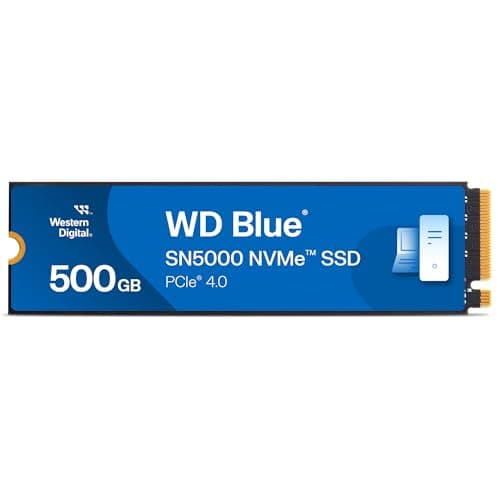
The WD Blue SN5000 500 GB is a budget-friendly PCIe 4.0 NVMe SSD delivering strong 5,000 MB/s reads and respectable endurance, ideal for mainstream upgrades. Its DRAM-less design keeps power low, though write performance and thermal handling lag behind premium models.
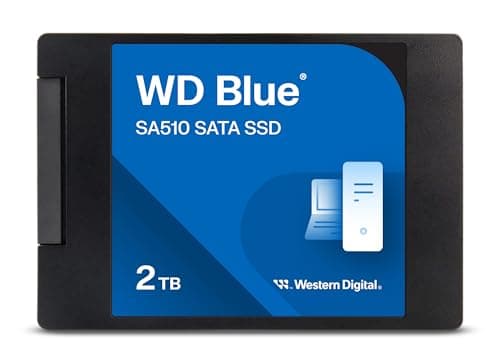
The WD Blue SA510 2TB is a reliable SATA SSD that delivers strong sequential performance, high endurance, and low power draw, making it ideal for legacy laptops and desktops. Its DRAM cache and 5-year warranty add confidence, though it lacks hardware encryption and NVMe-level speeds.
The WD SN730 256 GB is a fast, power-efficient PCIe Gen3 x4 SSD with strong endurance, but its lack of DRAM and modest capacity make it less ideal for power users.
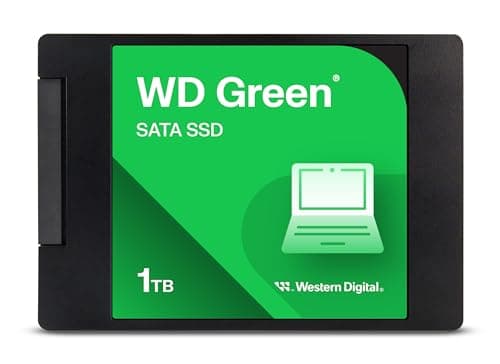
The WD Green 1TB SATA SSD is an energy-efficient, budget-friendly drive that delivers solid sequential speeds and includes useful software, making it a good choice for everyday computing and boot drives. Its lack of DRAM and modest endurance keep it from being ideal for heavy workloads.
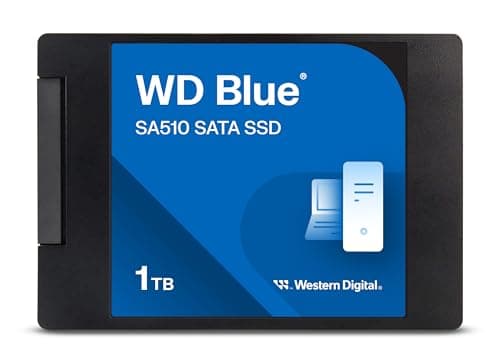
The WD Blue SA510 1 TB SATA SSD offers mainstream users a cost-effective upgrade with solid sequential performance, low power draw, and a generous five-year warranty. Its DRAM-less architecture and lack of encryption keep the price low but may limit performance in heavy-write scenarios.
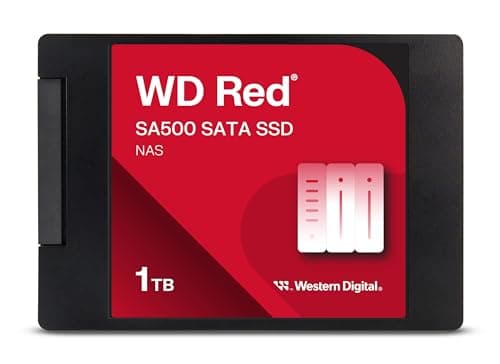
The WD Red SA500 is a reliable SATA-III SSD designed for 24/7 NAS operation, offering solid sequential and random performance along with high endurance and a 5-year warranty. Its lack of NVMe support and higher price make it less suitable for desktop or gaming builds.
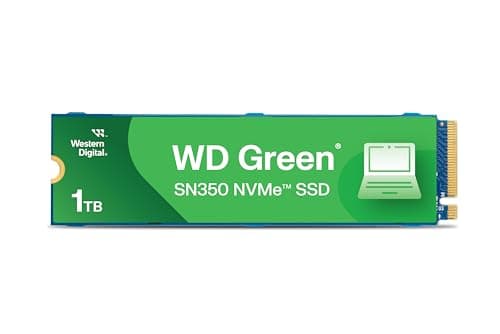
The WD Green SN350 offers fast PCIe Gen3 read performance and a very low price, making it a solid entry-level NVMe upgrade for laptops and desktops. Its QLC NAND limits endurance and write performance, and it may throttle under heavy loads.
| Attribute | | | | Western Digital SN730 256GB | | | |
|---|---|---|---|---|---|---|---|
1,000 GB | 500 GB | 1,000 GB | 256 GB | 2,000 GBbest | 1,000 GB | 1,000 GB | |
3,200 MB/s | 5,000 MB/sbest | 545 MB/s | 3,150 MB/s | 560 MB/s | 560 MB/s | 560 MB/s | |
2,800 MB/s | 4,000 MB/sbest | 525 MB/s | 2,100 MB/s | 520 MB/s | 520 MB/s | 530 MB/s | |
300,000 IOPS | 460,000 IOPSbest | 100,000 IOPS | 270,000 IOPS | 87,000 IOPS | 90,000 IOPS | 82,000 IOPS | |
400,000 IOPS | 770,000 IOPSbest | 80,000 IOPS | 280,000 IOPS | 83,000 IOPS | 82,000 IOPS | 85,000 IOPS | |
100 TBW | 300 TBW | 400 TBW | 200 TBW | 500 TBW | 400 TBW | 600 TBWbest | |
3 years | 5 yearsbest | 3 years | 5 yearsbest | 5 yearsbest | 5 yearsbest | 5 yearsbest | |
| ↓ lower better | 0.11 W | 6.3 W | 2.8 W | 0.1 W | 3 W | 0.06 Wbest | 0.06 Wbest |
Click an attribute name to sort · Green = best, red = worst (relative to this comparison)
| Attribute | | | | Western Digital SN730 256GB | | | |
|---|---|---|---|---|---|---|---|
Performance(6) | |||||||
Sequential Read Speed (MB/s) | 3200 MB/s | 5000 MB/s | 545 MB/s | 3150 MB/s | 560 MB/s | 560 MB/s | 560 MB/s |
Sequential Write Speed (MB/s) | 2800 MB/s | 4000 MB/s | 525 MB/s | 2100 MB/s | 520 MB/s | 520 MB/s | 530 MB/s |
Random Read IOPS (IOPS) | 300000 IOPS | 460000 IOPS | 100000 IOPS | 270000 IOPS | 87000 IOPS | 90000 IOPS | 82000 IOPS |
Random Write IOPS (IOPS) | 400000 IOPS | 770000 IOPS | 80000 IOPS | 280000 IOPS | 83000 IOPS | 82000 IOPS | 85000 IOPS |
Interface | PCIe Gen3 x4 | PCIe Gen 4.0 x4 | SATA III 6 Gb/s | PCIe Gen3 x4 NVMe | SATA III 6 Gb/s | SATA III | SATA III |
DRAM Cache (Yes/No) | — | false | false | false | true | false | true |
Security(1) | |||||||
Hardware Encryption | false | true | false | — | false | — | — |
Storage(6) | |||||||
Capacity (GB) | 1000 GB | 500 GB | 1000 GB | 256 GB | 2000 GB | 1000 GB | 1000 GB |
Form Factor | M.2 2280 | M.2 2280 | 2.5-inch | M.2 2280 | 2.5-inch | 2.5-inch | 2.5-inch |
NAND Type | QLC | TLC | 3D TLC | 96-layer 3D NAND | 3D TLC | TLC | TLC |
Endurance (TBW) (TBW) | 100 TBW | 300 TBW | 400 TBW | 200 TBW | 500 TBW | 400 TBW | 600 TBW |
Warranty Period (years) | 3 years | 5 years | 3 years | 5 years | 5 years | 5 years | 5 years |
MTBF (hours) | 1000000 hours | — | 1000000 hours | 1750000 hours | 2250000 hours | 2250000 hours | 2000000 hours |
Power & Energy(2) | |||||||
Idle Power Consumption (W) | — | — | 0.08 W | 0.03 W | 0.07 W | 0.036 W | 0.056 W |
Active Power Consumption (W) | 0.11 W | 6.3 W | 2.8 W | 0.1 W | 3 W | 0.06 W | 0.06 W |
Design & Build(2) | |||||||
Weight (g) | 7.5 g | 5.7 g | 32.7 g | 9 g | 60 g | 34.6 g | 37.4 g |
Thickness (mm) | 2.38 mm | 2.54 mm | 7.1 mm | 2.54 mm | 7.1 mm | 7.1 mm | 7 mm |
Products in the top-left offer the best value (high score, low price).
Professional reviewers commend the SN350 for delivering solid read performance and excellent value, but note that QLC endurance limits and lower write speeds keep it from competing with higher-end NVMe drives.
Everyday users overwhelmingly praise the noticeable boost in system responsiveness and low power draw, while some report occasional disconnections and higher temperatures under load.
“dramatically improved system performance, with boot times dropping from over 2 minutes to under 30 seconds”
“drive disconnection issues, requiring reseating”
“Works flawlessly”
Professional reviewers view the SN5000 as a solid upgrade from SATA and PCIe 3.0 SSDs, highlighting its TLC NAND, dynamic SLC cache, and budget-friendly pricing. While they commend its value and lack of a required heatsink, they caution that real-world pricing and the drive's lower write performance keep it from challenging premium offerings.
Everyday users generally praise the drive for fast boot times, reliable operation, and the long warranty, but many complain about fulfillment errors, unresponsive seller support, and occasional heat buildup during intensive tasks.
Professional reviewers from TechRadar and PCMag view the WD Green 1TB SSD as a solid, low-cost option for users replacing aging HDDs, praising its low power draw and reliable operation while noting the lack of DRAM and limited SLC cache hurt performance for power users.
Everyday users appreciate the noticeable boost in boot speed, the ease of cloning with bundled software, and the three-year warranty, but complain about slower write performance once the SLC cache is exhausted and occasional inconsistency when the drive is near full.
Professional reviewers note that the SN730 256GB delivers the advertised sequential speeds and is well suited for low-power ultrabooks, but its lack of DRAM and lower performance relative to larger capacity SKUs make it less compelling for power users.
Everyday users appreciate the quick boot and app load times, reliability, and long warranty, while some complain about limited capacity and occasional BIOS compatibility hiccups.
Professional reviewers consider the WD Blue SA510 a well-rounded, reliable SATA SSD that delivers excellent real-world performance, high endurance, and quiet operation, though they note its inherent speed ceiling and lack of hardware encryption.
Everyday users overwhelmingly praise the drive for fast boot and load times, quiet operation, and dependable reliability, while the most common complaints focus on the bundled Acronis cloning software and expectations of NVMe-level speeds.
Professional reviewers praise the WD Blue SA510 for its solid value, reliable SATA performance, and long warranty, noting that it fills the gap between budget and high-end SSD lines. They caution that the DRAM-less design may lead to performance throttling under sustained write loads and that it cannot compete with NVMe speeds.
Everyday users generally appreciate the noticeable speed boost, easy installation, and warranty confidence, especially when upgrading older laptops or desktops. Recurring complaints focus on early failures, occasional BIOS detection loss, slower write performance, and a cumbersome RMA experience.
Professional reviewers commend the SA500 for its mature Marvell controller, robust 3D TLC NAND, and strong endurance, noting consistent performance for NAS caching and demanding workloads.
Everyday users consistently praise the drive's plug-and-play reliability, noticeable performance gains over HDDs, and quiet operation, while complaining about the higher price and missing mounting accessories.
