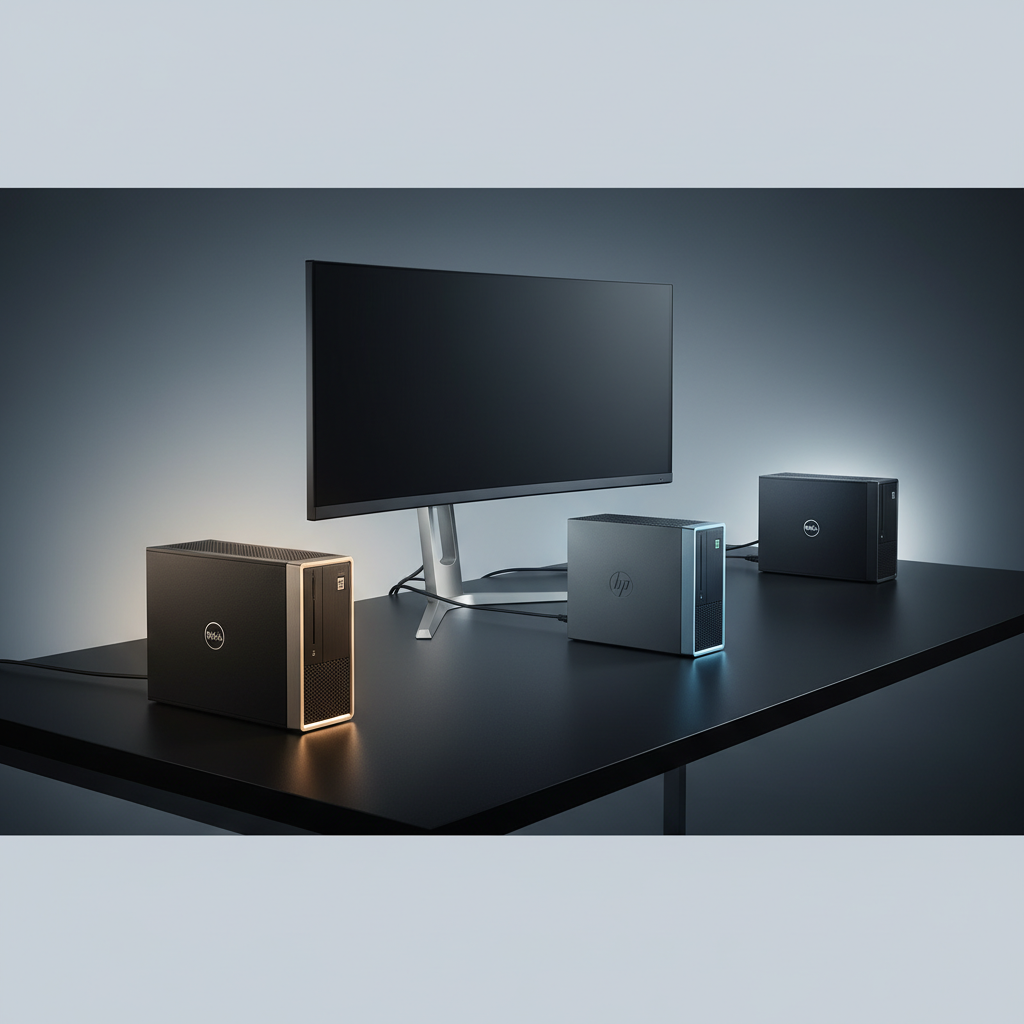
If you think the cheapest mini PC will also win the crowd, the data says otherwise. The Dell OptiPlex 7050 Micro, priced at $164.99, pulls a 4.2‑star rating from 819 reviews, nudging ahead of the $139.99 ASRock DeskMini H470W, which sits at 4.1 stars. That extra cost translates into a higher rating, even though both sit in the ultra‑compact space‑saving segment.
Our roundup examined 15 models that sit between $139.99 and $199.99. We grouped them into three price tiers: Budget options – ASRock DeskMini H470W, Dell OptiPlex 3040 Micro, HP EliteDesk 705 G4, and Lenovo ThinkCentre M93p; Mid‑range picks – Dell OptiPlex 7050 Micro and Peladn WI‑4; Premium choices – Lenovo ThinkCentre M900 Tiny, Minisforum GK41, HP ProDesk 600 G3, and DreamQuest Pro Base. Across the board, ratings range from 4.0 to 4.5 stars, and memory capacities stretch from 8 GB up to 64 GB, giving you plenty of flexibility for office work, digital signage, or a home‑theater rig.
Below we break down each tier, highlight the strengths that set the top contenders apart, and point out which specs might steer you toward one model or another.

Dell OptiPlex 7050 Micro
Its compact 7.2‑in depth and 7.0‑in height keep it under a foot, delivering desktop power in a tiny footprint.

HP ProDesk 600 G3
Ideal for professionals needing premium performance; at $198.87 it’s about $34 more than the Dell 7050, reflecting its higher‑end specs.

Dell OptiPlex 3040 Micro
Stands out with built‑in Gigabit Ethernet, ensuring fast wired networking at a $142 price, making it a good fit for tight‑budget setups that need reliable connectivity.
Also considered
Score Analysis
Key score advantages vs. runner-up (HP ProDesk 600)
Price Range
Dell OptiPlex 7050 Micro
$214.44
HP ProDesk 600 G3
$206.99
Dell OptiPlex 3040 Micro
$168.99

ASRock DeskMini H470W
$139.99

Peladn WI-4
$179.99

HP EliteDesk 705 G4
$168.99

DreamQuest Pro Base
$199.99

Lenovo ThinkCentre M93p
$159.11

Lenovo ThinkCentre M900 Tiny
$189.99

Minisforum GK41
$191.90

Lenovo ThinkCentre M900 Mini
$170.61

MSI Cubi AI
-$0.01

Kidwants KG1
$154.98

Udptcp TF-N2840
$99.99

Heigaolapc PC Stick J4115
$191.99
Spec Comparison
TL;DR: The Dell OptiPlex 7050 Micro delivers desktop‑class performance in a 7.2‑inch deep, VESA‑mountable chassis for $164.99, featuring an i5‑6500T, 16 GB RAM and a 256 GB SSD.
At just 7.2 in depth, 7.0 in height and 1.4 in width, the OptiPlex 7050 Micro fits into tight spaces and can be VESA‑mounted. Under the hood sits a 6th‑gen Intel Core i5‑6500T with a 2.5 GHz base clock that boosts to 3.1 GHz, paired with 16 GB of DDR4 RAM and a 256 GB SSD, delivering responsive office performance. The integrated Intel HD Graphics 530 runs at a 350 MHz base and can reach 1.15 GHz, supporting dual 4K outputs via HDMI 1.4 and DisplayPort 1.2.
Compared with the Peladn WI‑4, the OptiPlex is heavier than the 270 g unit but offers twice the standard RAM (16 GB vs 8 GB) and a larger 256 GB SSD versus the WI‑4’s unspecified storage. It is also lighter than the Lenovo ThinkCentre M93p, which tips the scales at 6.0 lb. The depth matches the Lenovo ThinkCentre M900 Mini at 182.9 mm, while the Dell OptiPlex 3040 Micro weighs more than twice as much at 4.1 lb. In terms of graphics, its 350 MHz GPU base is lower than the Peladn’s up‑to‑750 MHz, but matches the M900 Mini’s 350 MHz figure.
The model carries a 4.2/5 star rating from 819 reviews, with everyday users praising the tiny form factor and clean look when wall‑mounted, noting that it handles typical office apps without lag. Professional reviewers highlight its quiet operation and enterprise‑grade security features like TPM 2.0 and optional vPro. Some owners report occasional overheating under sustained load and miss the built‑in Wi‑Fi, which must be added via an optional M.2 card.
It includes five USB 3.1 Gen 1 Type‑A ports, a USB 3.1 Gen 1 Type‑C port, and a 10/100/1000 Mbps Gigabit LAN port for wired networking. Power comes from a 65 W internal supply, and the system ships with a 90‑day warranty. With two DIMM slots supporting up to 32 GB of DDR4 at 2133 MHz, you can expand memory if needed, though the slot count limits the upgrade path.
Pros
Cons
Best for: Value-conscious buyers seeking quality at $164.99
Avoid if: You need advanced features or professional-grade performance
“small size and clean look when mounted behind monitors”
“smooth performance for web browsing, Office apps, and video conferencing”
TL;DR: The HP ProDesk 600 G3 Mini delivers a 2.5 GHz i5‑6500T, 16 GB RAM and six USB‑A ports in a 34.3 mm‑tall, VESA‑mountable case for $198.87, offering solid business performance in an ultra‑compact footprint.
What really stands out is the I/O richness: six USB 3.1 Gen 1 Type‑A ports, a front‑facing USB‑C with charging, and two DisplayPort 1.2 outputs that support 4K @ 60 Hz, all paired with 16 GB of DDR4‑2400 memory and a base clock of 2.5 GHz.
Compared with the other 14 entries, the ProDesk is heavier than the DreamQuest Pro Base (500 g) and the Dell OptiPlex 7050 Micro (2.0 lb), but it offers more USB‑A connectivity than the Minisforum GK41’s four ports and double the RAM of the Heigaolapc PC Stick J4115’s 8 GB. Its 2.5 GHz base clock sits below the DreamQuest’s up‑to‑3.4 GHz, yet matches the Lenovo ThinkCentre M900 Tiny’s 2.5 GHz, positioning it solidly in the mid‑range performance tier.
Everyday users love how the 34.3 mm height lets the unit slip behind a monitor or into a cramped office nook, and the included VESA mount makes that mounting effortless. Reviewers repeatedly note the silent operation, but they also flag the lack of official Windows 11 support, the reliance on Intel HD Graphics 530 for all visual work, and the base model’s lack of built‑in Wi‑Fi. Some users observe CPU throttling under prolonged heavy loads, a typical trade‑off for the compact chassis.
On the technical side, the ProDesk runs a 6th‑gen Skylake i5‑6500T with four cores, four threads and a 6 MB cache. Security‑focused features include TPM 2.0 and a lock slot, while expandability offers generous options: two SODIMM slots (up to 32 GB), an M.2 2280 slot for PCIe NVMe or SATA SSDs, and a 2.5″ bay that can hold up to 2 TB HDD or 1 TB SSD. Optional Bluetooth 4.2 and Intel 8265 Wi‑Fi 5 can be added if needed.
Pros
Cons
Best for: Small‑office or enterprise settings that need a secure, upgradeable desktop with dual‑4K display capability and a tiny footprint.
Avoid if: You require native Windows 11 support, a dedicated graphics card, or built‑in Wi‑Fi for wireless‑only setups.
“Perfect for mounting behind”
TL;DR: The Dell OptiPlex 3040 Micro delivers 6th‑gen i5 performance, dual‑4K video and solid security in a 4.1‑pound, $142.00 package that fits almost anywhere.
At the heart of the OptiPlex 3040 Micro sits an Intel Core i5‑6500T with a 2.5 GHz base clock that can boost to 3.1 GHz, paired with 8 GB of DDR4 RAM and a 256 GB SATA SSD. This combination provides quick boot times and enough headroom for everyday office apps, while the 45.7 mm height and 182.9 mm depth let the unit slip behind a monitor or into a VESA mount.
With a list price of $142.00, it costs a few dollars more than the ASRock DeskMini H470W at $139.99, but it's noticeably cheaper than the Lenovo ThinkCentre M900 Mini ($148.89) and the HP EliteDesk 705 G4 ($153.80). Compared with the Dell OptiPlex 7050 Micro ($164.99), it offers a lower price while keeping a similar micro‑form factor footprint.
Professional reviewers praise its manageability and security tools, noting that the built‑in TPM 2.0, BIOS password support and Dell Data Protection make it a strong choice for IT departments. Everyday users echo the sentiment, highlighting the tiny chassis, fast SSD boot and the convenience of VESA mounting. The most common complaints revolve around the limited USB 3.0 port count (four total), the external 65 W power brick that can be easy to misplace, and the absence of integrated Wi‑Fi unless added as an option.
Beyond performance, the machine supports dual 4K displays via HDMI 1.4 and DisplayPort 1.2, and its two SO‑DIMM slots allow a maximum memory upgrade to 16 GB. Security‑focused features such as chassis intrusion detection and Intel Anti‑Theft Technology round out a solid business‑grade offering, though the lack of PCIe expansion means you can't add a discrete GPU.
Pros
Cons
Best for: Entry‑level buyers or those on a tight budget
Avoid if: You need advanced features or professional‑grade performance
“small size and clean look when mounted behind monitors”
“smooth performance for web browsing, Office apps, and video conferencing”
TL;DR: The ASRock DeskMini H470W packs up to 64 GB RAM, dual NVMe slots and three‑monitor support into a 1.92 L, 118 g chassis for under $150.
This barebone mini PC can accommodate up to 64 GB DDR4‑2933MHz memory across two SO‑DIMM slots, and it offers two M.2 slots (one PCIe Gen3 x4 and one PCIe Gen4 x4 for 11th‑gen CPUs) plus two 2.5″ SATA bays. All that fits inside a 1.92‑liter volume and a chassis that weighs just 118 g, with a maximum CPU cooler height of 46 mm.
Compared with the Dell OptiPlex 3040 Micro, which weighs 4.1 pounds, the DeskMini weighs only 118 g, making it much lighter. Its height of 228.6 mm is taller than the Lenovo ThinkCentre M900 Mini’s listed height of 34.5 mm, while its width of 127 mm is narrower than Dell’s 177.8 mm width, giving it a slimmer side profile than many peers.
Users frequently praise the tiny footprint and the ability to run three 4K displays, but they also note coil‑whine from the external 120 W power brick and that the stock passive heatsink with fan can throttle under sustained loads. Professional reviewers highlight the feature‑rich UEFI BIOS, while the HDMI port’s 4K @ 30 Hz limit and the difficulty of accessing the second M.2 slot are common complaints.
On the connectivity side, the DeskMini supports 10th‑ and 11th‑gen Intel Core CPUs (up to i9‑11900) on an LGA1200 socket, with a maximum CPU TDP of 65 W. It delivers 60 W USB‑C Power Delivery, a 120 W external adapter, Wi‑Fi 802.11ac, Bluetooth, and five USB 3.0 (USB 3.2 Gen1) ports—four rear Type‑A and one front Type‑C.
Pros
Cons
Best for: Entry-level buyers or those on a tight budget
Avoid if: You want the best value‑per‑dollar in its price range
“Users consistently rate it 5/5 for compactness and performance.”
“One user reported running Proxmox with 64GB RAM and i5-10400 stably for years.”
TL;DR: The Peladn WI‑4 delivers dual‑4K HDMI output, 8 GB RAM and a 256 GB SSD in a 0.5 L, fan‑cooled chassis for $169.99, making it a solid budget mini‑PC for everyday tasks.
The WI‑4 packs a 4‑core Intel Celeron N5095 CPU with a 2.0 GHz base clock and up to 2.9 GHz turbo, backed by 8 GB DDR4 SDRAM and a 256 GB M.2 NVMe SSD. Its dual HDMI 2.0 ports support two 4K displays at 60 Hz, and four USB 3.0 ports (5 Gbps) give you fast peripheral connectivity. At just 112 mm deep, 35 mm tall, 124 mm wide and 270 g, the unit fits easily on a desk or behind a monitor, and the included VESA bracket lets you mount it on the wall.
Compared with the Dell OptiPlex 7050 Micro, the Peladn is significantly shallower (112 mm vs 182.9 mm depth) and far lighter than Dell’s 2.0 lb weight. It's also a touch lighter than the Kidwants KG1, which tips the scales at 290 g. While the Lenovo ThinkCentre M93p is bulkier at 20 in depth, the WI‑4’s compact 0.5 L volume makes it one of the smallest options in this roundup.
Reviewers appreciate how smoothly the WI‑4 handles web browsing, office apps, and 4K video playback under Windows 11 Pro, and professional reviewers highlight the dual‑HDMI capability as a standout for productivity. The fan‑cooled design stays quiet during normal use, but several users note that sustained video encoding can cause the chassis to run hot. Linux users have flagged Realtek Ethernet and Wi‑Fi driver quirks, and reviewers see the Bluetooth 4.2 module as a step behind newer standards.
Pros
Cons
Best for: Most users seeking a balanced, mainstream option
“Perfect for office use and media streaming.”
“Tiny size, easy to mount behind monitor.”
TL;DR: The HP EliteDesk 705 G4 packs a Ryzen 5 PRO 2400GE quad‑core CPU, 256 GB NVMe SSD and enterprise‑grade security into a tiny $153.80 chassis, making it a solid budget mini‑PC for office or homelab use.
The standout hardware is the AMD Ryzen 5 PRO 2400GE processor, a quad‑core chip with a 3.2 GHz base clock that can boost to 3.8 GHz and a 4 MB L3 cache. Paired with 8 GB DDR4‑2933 SDRAM (expandable to 32 GB) and a 256 GB PCIe NVMe M.2 SSD, the system delivers fast everyday performance without a separate graphics card, thanks to integrated Radeon Vega 11 graphics.
Compared with other minis in the roundup, the EliteDesk is larger than the Lenovo ThinkCentre M900 Mini (depth 182.9 mm vs 269 mm) and heavier than the Dell OptiPlex 7050 Micro (2.0 lb vs 2.78 lb) but lighter than the Dell OptiPlex 3040 Micro (4.1 lb). It offers six USB 3.0 ports (two front, four rear), whereas the ThinkCentre M900 Mini does not list its USB count. The HP includes Bluetooth 5.0—matching the Kidwants KG1—while many peers omit Bluetooth entirely. Memory capacity matches the Lenovo ThinkCentre M900 Mini’s 32 GB maximum, and the HP’s dual‑SODIMM slots are on par with most competitors.
Reviewers appreciate the tiny footprint and the inclusion of Windows 10 Pro out of the box, noting that the device feels like a full‑size office PC in a compact case. Professional reviewers highlight the CPU’s 3.2 GHz base clock and the fast NVMe storage as a clear advantage over older SBCs. The most common complaint is fan noise that rises under sustained load, and the external power brick adds a bit of cable clutter on a desk.
Pros
Cons
Best for: Buyers in the budget price range seeking the best quality at that price point
Avoid if: You need advanced features or professional‑grade performance, such as silent operation, GPIO access, or heavy video‑transcoding workloads
“Raspberry Pi killer with a caveat”
“for ~€115, the HP unit includes a 256 GB NVMe SSD (worth €40+ new), 16 GB RAM, and a CPU with nearly double the single‑core performance of a Pi 5.”
TL;DR: The DreamQuest Pro Base packs a 3.4 GHz Intel N95 CPU, dual Gigabit LAN and triple‑4K display support into a $199.99, fan‑quiet mini PC that handles everyday tasks with ease.
At the heart of the Pro Base is an Intel 12th Gen Alder Lake‑N N95 processor that can boost up to 3.4 GHz across four cores and four threads, backed by 6 MB of Smart Cache. The board supplies four USB 3.2 Gen2 ports (10 Gbps each) and offers dual Gigabit Ethernet ports that each run at 1000 Mbps, a rarity in this price range. Video‑centric users will appreciate three‑screen 4K@60 Hz support via HDMI and USB‑C, while the intelligent silent fan only spins when the CPU hits roughly 55 °C.
Compared with other mini PCs in the roundup, the DreamQuest weighs noticeably less than the HP ProDesk 600 G3 (2.67 pounds) but a bit more than the Heigaolapc PC Stick J4115, which is under a pound. Its four USB 3.2 Gen2 ports double the bandwidth of the Minisforum GK41’s four USB 3.0 Gen1 ports (5 Gbps). Unlike the Peladn WI‑4, which lists a single Gigabit LAN port, DreamQuest’s dual‑LAN setup gives it a networking edge, and it also offers Wi‑Fi 5 or Wi‑Fi 6 where the Dell OptiPlex 7050 Micro’s wireless capabilities aren’t specified.
Reviewers consistently praise the silent operation and the ease of plugging in a Windows 11 Pro system straight out of the box. Users love the ability to drive three 4K monitors for office or digital‑signage work, and the low idle draw of about 1.4 W keeps electricity bills modest. On the downside, some owners note that certain models have soldered‑on RAM, preventing future upgrades, and the older Bluetooth 4.2 variant can feel sluggish with newer peripherals. A few users also report the fan becoming audible during prolonged heavy processing, and listings sometimes omit the HDMI cable.
Pros
Cons
Best for: Home and small‑office users needing a compact, low‑power desktop that can handle everyday tasks and multi‑monitor setups.
Avoid if: You need advanced gaming, heavy video editing, or professional‑grade graphics performance.
“The PC is silent at idle, consumes very little power, and handles all my office tasks smoothly. The build quality feels solid, and the ports are well‑placed.”
TL;DR: The Lenovo ThinkCentre M93p Tiny delivers solid business performance with an i5 processor, 8 GB DDR3, and four‑monitor support for $159, but its larger size, limited connectivity, and short warranty keep it from being a top‑tier mini PC.
This ultra‑small desktop packs an Intel Core i5‑4570T with a 2.9 GHz base clock (up to 3.6 GHz turbo) into a 20.0 in × 14.0 in × 3.0 in chassis that weighs 6.0 lb. It ships with 8 GB DDR3 SODIMM memory (expandable to 16 GB across two slots) and a 128 GB SSD, while offering five USB 3.0 ports—including one always‑on port—for fast peripheral connections.
Compared with many of the other 14 mini PCs in this roundup, the M93p is noticeably larger and heavier. For example, the Dell OptiPlex 7050 Micro and the Kidwants KG1 both sit under 2 lb and have footprints well under 8 in deep, whereas the M93p’s 20.0 in depth makes it one of the roomier options. Its maximum memory capacity of 16 GB also trails peers like the HP EliteDesk 705 G4 and the Peladn WI‑4, which list 32 GB limits.
Users appreciate the tiny form factor for cramped office desks and the ease of swapping the SSD, while the always‑on USB charging slot earns frequent praise for keeping phones powered. Professional reviewers note the quiet operation and the ability to drive up to four displays via one DisplayPort 1.2 and a VGA port. The most common complaints revolve around the lack of a native HDMI output, the absence of built‑in 5 GHz Wi‑Fi or Bluetooth (both require an add‑on), and the older 4th‑generation CPU that may feel dated for newer workloads.
Pros
Cons
Best for: Most users seeking a balanced, mainstream option
Avoid if: You need advanced features or professional‑grade performance
TL;DR: The Lenovo ThinkCentre M900 Tiny packs a 2.5 GHz quad‑core i5, 16 GB RAM and 4 GB/s NVMe storage into a 180 mm‑deep, 1.3 kg chassis for $190.48, earning a solid 4.5‑star rating.
This tiny desktop’s standout spec is its NVMe capability – up to 4 GB/s read/write speed – paired with a full‑size 256 GB SSD, which makes boot‑up and file access feel instant. It also ships with six USB 3.0 Type‑A ports and dual DisplayPort 1.2 outputs that can drive 4K@60 Hz displays, a rare combination at this price point.
Compared with other entries in the roundup, the M900 Tiny offers more USB 3.0 ports than the Minisforum GK41’s four, while its depth of 180.34 mm is deeper than the GK41’s 125 mm but slimmer than its 113 mm width. It’s heavier than the ultra‑light Peladn WI‑4 and the Heigaolapc PC Stick, yet still lighter than the Dell OptiPlex 7050 Micro, which weighs 2.0 lb. The single RJ‑45 Gigabit Ethernet port matches the GK41’s dual ports in functionality, and its 65 W power adapter keeps typical consumption around 30 W under load.
Users consistently praise the silent operation and the “invisible on the desk” form factor, noting that the dual 4K DisplayPort outputs are a big win for multi‑monitor setups. Professional reviewers highlight the strong quad‑core i5‑6500T performance for office workloads and the convenience of Intel vPro for remote management. The main complaints focus on the lack of built‑in HDMI/VGA and the missing dedicated GPU, which limits gaming or graphics‑heavy tasks.
Technical enthusiasts appreciate the dual‑channel DDR4‑2133 memory that can be expanded to 32 GB across two SODIMM slots, and the 350 MHz base / 1150 MHz boost clocks of the integrated Intel HD Graphics 530. The 90‑day warranty and pre‑installed Windows 11 Pro round out a business‑ready package that fits easily behind a monitor or in a VESA mount.
Pros
Cons
Best for: Office workers and IT admins who need a space‑saving, well‑managed PC with fast storage and dual‑4K display support.
Avoid if: You need a dedicated graphics card, HDMI/VGA connectivity, or a lower‑cost solution for basic tasks.
TL;DR: The Minisforum GK41 packs a fanless Celeron J4125, dual‑Gigabit LAN and 4K‑60Hz output into a 125 mm deep, VESA‑mountable chassis for under $200.
The GK41’s most eye‑catching spec is its dual Gigabit Ethernet ports, a rarity at this price point, plus a 4K @ 60 Hz HDMI and DisplayPort that let you run two 4K monitors simultaneously. Its compact shell measures 125 mm deep, 30 mm high and 113 mm wide, and it ships with 8 GB DDR4 soldered RAM running at 2133 MHz.
Compared with the ultra‑thin Heigaolapc PC Stick (height 140 mm, width 8.9 mm) the GK41 is noticeably bulkier, but it offers far more connectivity—four USB 3.0 ports versus the stick’s limited I/O. It’s lighter than the HP ProDesk 600 G3 (2.67 lb) yet heavier than the Peladn WI‑4 (net ≈ 270 g). Its 750 g gross weight still fits comfortably on a desk or behind a monitor, and the included 120 × 120 mm VESA mount makes wall‑mounting a breeze.
Reviewers consistently praise the silent, fanless operation and the convenience of dual‑LAN for home firewalls or digital signage. Professional reviewers note the solid value of the 2.5‑inch drive bay and M.2 slot, each supporting up to 2 TB. The downside is the soldered 8 GB of RAM, which can’t be upgraded, and a Celeron J4125 that struggles with heavy multitasking or gaming. Wi‑Fi 5 (802.11ac) and the lack of USB‑C or Thunderbolt also limit future‑proofing.
Pros
Cons
Best for: Home network firewalls, digital signage, light office work, and anyone who values silent, compact hardware with dual‑LAN.
Avoid if: You need heavy multitasking, gaming, video editing, or the ability to upgrade RAM.
“Perfect for my home firewall — runs pfSense flawlessly.”
“Silent and small — fits behind my monitor with VESA mount.”
TL;DR: For $148.89 you get a 3.2 GHz i5‑6500 mini PC with 8 GB RAM, dual 4K DisplayPort, six USB 3.0 ports and a tiny 1.1 L chassis, rated 4.0/5 by four reviewers.
The standout feature is its dual DisplayPort output – two ports that support up to 3840 × 2160 @ 60 Hz – paired with an Intel HD Graphics 530 that runs at a 350 MHz base and 1150 MHz boost. The i5‑6500 quad‑core processor runs at a 3.2 GHz base clock (3.6 GHz turbo) and the machine ships with 8 GB DDR4‑2133 SODIMM memory, expandable to 32 GB across two slots. At just 34.5 mm tall, 182.9 mm deep, 179 mm wide and 1.1 L in volume, it's truly a “tiny” device.
In the $150‑plus tier it is lighter than the HP EliteDesk 705 G4 (about 2.78 lb) and more compact than the Lenovo ThinkCentre M93p, which measures 508 mm deep and weighs 6.0 lb. Its depth matches the Dell OptiPlex 3040 Micro (182.9 mm) but its height of 34.5 mm is considerably slimmer than that model’s 45.7 mm. Compared with the ASRock DeskMini H470W, the M900 Mini occupies less volume (1.1 L vs 1.92 L) yet is heavier than the 118 g chassis of the ASRock. The Dell OptiPlex 7050 Micro shares the same depth but is bulkier at 177.8 mm tall and 2.0 lb. Kidwants KG1 is lighter at roughly 0.64 lb, but its 43 mm height exceeds the M900’s profile.
Users praise the ultra‑small footprint, quiet operation and VESA‑mount capability for office desks or wall‑mounted setups. Professional reviewers highlight the rare dual‑4K output and tool‑less access to the 512 GB M.2 slot and 2 TB SATA bay. However, recurring complaints focus on the Wi‑Fi antenna cable that can disconnect when the 2.5″ drive is removed, and the lack of modern ports such as USB‑C or HDMI. Microsoft hasn't officially supported Windows 11 on this device, which may limit future OS upgrades.
Pros
Cons
Best for: Entry‑level buyers or those on a tight budget who need a compact, reliable PC for office tasks and dual‑monitor setups.
Avoid if: You need advanced features, modern ports or professional‑grade performance for gaming or heavy graphics work.
TL;DR: The MSI Cubi AI packs an Intel Core Ultra 7 processor, 32 GB of onboard LPDDR5x memory, and a 47‑TOPS NPU into a 0.826‑liter chassis, delivering AI‑ready performance for compact workspaces.
The standout feature is the dedicated 47 TOPS neural processing unit, which lets you run local AI models without a separate accelerator. Coupled with dual 2.5 GbE Ethernet ports and two Thunderbolt 4 (USB‑C) ports that support up to 100 W power delivery, the Cubi AI can power a monitor while handling up to four displays via HDMI 2.1 and Thunderbolt.
At 1.39 pounds (630 g) it’s noticeably lighter than the Dell OptiPlex 3040 Micro’s 4.1‑pound chassis and the HP EliteDesk 705 G4’s roughly 2.78‑pound frame. Its 0.826‑liter volume is the smallest among the reviewed models, undercutting the ASRock DeskMini H470W’s 1.92‑liter footprint. While many peers only list basic USB‑C power delivery, the Cubi AI offers two Thunderbolt 4 ports with 40 Gbps throughput, giving it a clear connectivity edge.
Professional reviewers praised the built‑in Copilot button and the VESA‑mountable design (75×75 mm and 100×100 mm patterns), noting how easily the unit slips behind a monitor for digital signage or kiosk use. Users appreciate the AI acceleration and dual‑LAN redundancy, but they frequently mention that you can’t upgrade the soldered 32 GB of LPDDR5x RAM and that the active cooling fan becomes audible under sustained load. Because it ships as a barebones model, you’ll need to install an M.2 2280 SSD and your own operating system.
Pros
Cons
Best for: AI‑enhanced productivity, digital signage, or VESA‑mounted kiosk setups where on‑device inference and multiple displays matter.
Avoid if: You need upgradable memory, a completely silent system, or a pre‑installed operating system.
TL;DR: The Kidwants KG1 is a fanless mini PC that fits in the palm of your hand, offers 8 GB RAM, dual 4K HDMI, and an expandable 1 TB SSD slot for $159.98.
The KG1 runs on an Intel Celeron N4000 with a 1.1 GHz base clock that can turbo up to 2.6 GHz, paired with 8 GB of LPDDR4 RAM and an Intel UHD Graphics 600 GPU that reaches up to 650 MHz. It ships with 128 GB of eMMC storage, four USB 3.0 ports, and two HDMI 2.0 outputs that support 4K@60 Hz. At just 0.6393405598 pounds and a height of 43 mm, it’s one of the lightest and slimmest options in the lineup.
Compared with the other 14 contenders, the KG1 is lighter than the Lenovo ThinkCentre M93p (6 lb) and the Dell OptiPlex 7050 Micro (2 lb), and its 43 mm height is only a few millimetres taller than the Peladn WI‑4 (35 mm). It matches the Dell OptiPlex 3040 Micro’s four USB 3.0 ports, while the Lenovo M93p only offers a single USB 2.0 port. The passive, fan‑less cooling design also sets it apart from the bulkier, heavier desktops that rely on active cooling.
Users consistently praise the clean, VESA‑mountable chassis and the ability to add a 1 TB M.2 SATA SSD, but many note that the eMMC storage feels slower than a true SSD and that the Celeron CPU can stumble with heavy multitasking. Professional reviewers highlight the power‑efficient, thermally quiet operation as a strong point for office or digital‑signage use.
Connectivity includes Bluetooth 5.0, Wi‑Fi 5 (802.11ac) dual‑band, and Gigabit Ethernet for reliable wired networking. The pre‑installed Windows 11 Pro and Linux compatibility give you flexibility for both work and media‑center scenarios.
Pros
Cons
Best for: Home office workers, students, digital‑signage or media‑center setups that need a tiny, quiet PC.
Avoid if: You need high‑performance CPU power, fast SSD storage out of the box, or upgradeable memory for demanding tasks.
“Perfect for office use”
“Great for media center”
TL;DR: The Udptcp TF‑N2840 is a fanless, aluminum mini PC with dual Gigabit LAN, 4K HDMI output, and up to 8 GB DDR3L memory, priced at $99.99 for ultra‑budget builds.
This model’s most distinctive hardware is its passive‑cooling aluminum chassis combined with a dual‑core Intel Celeron N2840 that runs at a base frequency of 2.16 GHz and can boost to 2.58 GHz. It supports dual displays via one HDMI port and one VGA port, delivering a maximum resolution of 3840 × 2160 (4K) at 60 Hz. A single DDR3L SO‑DIMM slot limits memory to 8 GB at 1333 MHz, and it offers one USB 3.0 port alongside five USB 2.0 ports.
When you line it up against the other 14 entries, the TF‑N2840 is cheaper than the ASRock DeskMini H470W and the Dell OptiPlex 3040 Micro, but it also carries fewer high‑end specs. For example, the ASRock unit supports up to 64 GB of RAM, while the Udptcp tops out at 8 GB. It’s heavier than the HP EliteDesk 705 G4 (1259.9 g) and the Lenovo ThinkCentre M900 Mini (1.3 kg), yet still comparable to the Dell OptiPlex 3040 Micro’s 1860 g. The lack of an M.2 NVMe slot also puts it behind many peers that list faster storage options.
Users consistently praise the silent operation that comes from the fanless design and the rugged aluminum shell, noting that the dual Gigabit Ethernet ports make the box a solid choice for network appliances like pfSense or OPNsense firewalls. Professional reviewers highlight the built‑in RS232/RS485 serial ports as a boon for industrial automation. On the flip side, the dated Bay Trail architecture and the 8 GB DDR3L ceiling draw common complaints, especially from those expecting modern multitasking performance.
From a technical standpoint, the device runs on a 12 V input, drawing a typical 7.5 W and peaking at 15 W. Its operating temperature range spans 0 °C to 60 °C, and it can be stored from –40 °C up to 80 °C. Storage flexibility comes from one mSATA 3 Gb/s slot and one SATA 6 Gb/s connector, giving you two total storage bays.
Pros
Cons
Best for: Entry‑level buyers or those on a tight budget
Avoid if: You need advanced features or professional‑grade performance
TL;DR: The Heigaolapc PC Stick J4115 packs 8 GB RAM, 128 GB eMMC storage and a fanless Celeron processor into a 0.86‑pound stick that delivers silent 4K video for under $200.
This stick‑form mini PC measures just 140.0 mm × 49.0 mm × 8.9 mm and weighs 0.8598028218 pounds, making it one of the most portable options in the roundup. It runs on an Intel Celeron J4115 with a 1.5 GHz base frequency that can boost to 2.7 GHz, paired with 8 GB of LPDDR4 RAM at 2400 MHz and a 128 GB eMMC drive.
Compared with the other 14 contenders, the Heigaolapc is noticeably narrower than the Minisforum GK41’s 113 mm width, though the GK41 offers four USB 3.0 ports versus the stick’s two. At 0.8598028218 pounds it's lighter than the HP ProDesk 600 G3 (2.67 pounds) and the Dell OptiPlex 7050 Micro (2.0 pounds), and its fanless design avoids the moving‑part noise some bulkier minis generate.
Reviewers consistently praise the silent operation and plug‑and‑play convenience of the stick, especially for digital signage and classroom use. However, users note that the eMMC storage runs slower than SSD alternatives and that the soldered RAM and storage limit any future upgrades. Professional reviewers also point out that the fanless chassis runs warm under sustained heavy workloads.
From a technical standpoint, the device supports Wi‑Fi 5 (dual‑band 2.4/5 GHz) and Bluetooth 5.2, and it delivers 4K video at 3840 × 2160 @ 60 Hz via HDMI 2.0. The built‑in Gigabit Ethernet and a USB‑C port with >24 W PD give it solid connectivity for thin‑client or media‑center scenarios, while the included Windows 11 Pro OS readies it for business environments right out of the box.
Pros
Cons
Best for: Business digital signage, classroom thin clients, and home media centers that need silent 4K streaming.
Avoid if: You need high‑performance gaming, heavy multitasking, or upgradeable local storage.
Breakdown
Dell OptiPlex 7050 Micro
Pros
HP ProDesk 600 G3
Pros
Dell OptiPlex 3040 Micro
Pros
ASRock DeskMini H470W
Pros
Cons
Based on scoring data and product specs
Personalized picks
Best Overall Pick
Dell OptiPlex 7050 Micro
Best Mid-Range PickBest for: Value-conscious buyers seeking quality at $164.99
HP ProDesk 600 G3
Best for: Those prioritizing quality and willing to pay for premium performance
$206.99-$7.45 vs winner
Skip Heigaolapc PC Stick J4115 if…
You're on a tight budget or only need basic functionality
The Dell OptiPlex 7050 Micro takes the top spot with its solid 4‑core Intel Core i5‑6500T processor, 16 GB of DDR4 RAM and a 256 GB SSD—all for $164.99. Its 4.2‑star rating from 819 reviewers shows consistent satisfaction, and at just 2.0 lb it’s one of the lightest options you can mount behind a monitor.
The HP ProDesk 600 G3 lands as the runner‑up, ideal if you need extra connectivity and a ready‑to‑mount setup. It ships with a wired keyboard and mouse, a VESA‑mount bracket, six USB 3.1 ports plus VGA and dual DisplayPort outputs, and carries a 4.3‑star rating from 212 reviews—all for $198.87.
For tighter budgets, the Udptcp TF‑N2840 stands out at $99.99 as the most affordable mini PC in the list. If you’re willing to stretch for premium features, the DreamQuest Pro Base at $199.99 offers the highest‑end configuration among the alternatives.
Pick the Dell OptiPlex 7050 Micro today for the best value under $200.
The Dell OptiPlex 7050 Micro offers VESA‑mount compatibility (75 × 75 mm or 100 × 100 mm) in a 7 in‑deep chassis, making it ideal for tight desk or wall‑mount setups. The HP ProDesk 600 G3 also includes a VESA bracket, but its larger dimensions (34.3 mm height) take up a bit more space.
Please sign in to leave a review
No reviews yet. Be the first to review!
